Governance

FSI's research on the origins, character and consequences of government institutions spans continents and academic disciplines. The institute’s senior fellows and their colleagues across Stanford examine the principles of public administration and implementation. Their work focuses on how maternal health care is delivered in rural China, how public action can create wealth and eliminate poverty, and why U.S. immigration reform keeps stalling. 

FSI’s work includes comparative studies of how institutions help resolve policy and societal issues. Scholars aim to clearly define and make sense of the rule of law, examining how it is invoked and applied around the world. 

FSI researchers also investigate government services – trying to understand and measure how they work, whom they serve and how good they are. They assess energy services aimed at helping the poorest people around the world and explore public opinion on torture policies. The Children in Crisis project addresses how child health interventions interact with political reform. Specific research on governance, organizations and security capitalizes on FSI's longstanding interests and looks at how governance and organizational issues affect a nation’s ability to address security and international cooperation.

-

About the Seminar: What are the defining traits of an autocracy? Leading works answer this question in negative terms: autocracies are non-democracies. We propose instead a substantive definition of autocracy, which we believe better captures what scholars actually mean when they invoke the term. We define autocracy as exclusive rule. Between substantive autocracy and electoral democracy, there is a residual space, of regimes that do not fit under either concept. We call these regimes “non-autocratic non-democracies” or NANDs.  A substantive understanding of autocracy has important theoretical and empirical implications. Theoretically, it ensures that claims about the population of autocratic regimes are ontologically coherent, and that we do not end up calling barely non-democratic regimes autocracies. Empirically, our measure reveals that the post-Cold War era has been even less autocratic than it is normally portrayed, and that concerns about a global turn toward "autocratization" are likely overblown.
 

Read the paper


About the Speakers:

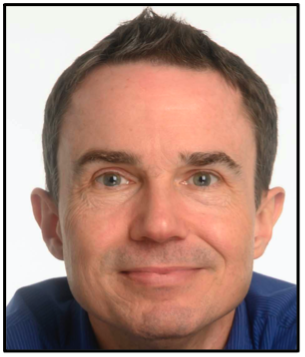
Jason Brownlee

Image
Jason Brownlee

Jason Brownlee, a former post-doctoral fellow at CDDRL, is now a professor of Government at the University of Texas at Austin, where he researches and teaches about authoritarianism US foreign policy, and Southwest Asian politics.

Ashley Anderson
Image
ashley_anderson.jpg

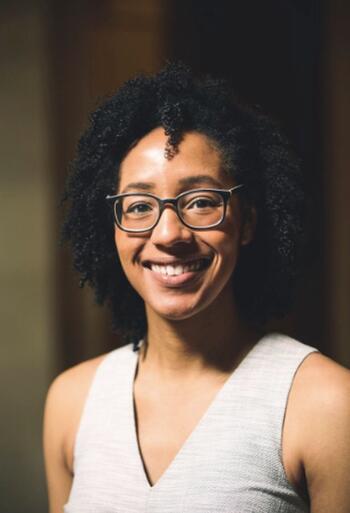
Ashley Anderson is an Assistant Professor at the University of North Carolina - Chapel Hill. Her research interests are concentrated in the Middle East where she studies issues of contentious politics, political mobilization and regime change.

Killian Clarke

Image
Killian Clarke Headshot

Killian Clarke is an Assistant Professor at Georgetown University’s School of Foreign Service, where he is affiliated with the Center for Contemporary Arab Studies. His research and teaching focuses on protest, revolutions, and regime change in the Middle East.


Autocracy: A Substantive Approach
Download pdf

Online, via Zoom.

Jason Brownlee Professor, Department of Government, University of Texas at Austin
Ashley Anderson University of North Carolina, Chapel Hill
Killian Clarke Assistant Professor, Georgetown University, School of Foreign Service
Seminars
-

About the Seminar: Better regulation or regulatory policy and governance has been on the agenda of Western governments for about 20 years. The OECD regularly publishes overviews and adopts recommendations.

In Germany, the adoption of the Normenkontrollrat Act in 2006 and the subsequent establishment of the National Regulatory Control Council (NKR) as the national oversight body marked the beginning of the Better Regulation Policy. The presentation explains the working methods of the NKR as well as the highlights of its work, especially with regard to efforts to reduce unnecessary bureaucracy, to improve the preparation of draft legislation, and to digitalize and modernize the administration in Germany.

Register Now

About the Speaker:

Image
Johannes
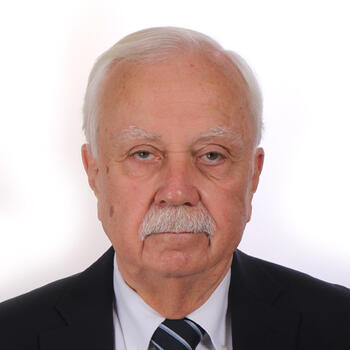
Dr. Johannes Ludewig, Chairman of NKR 2006-2021; Chairman of German Railways and afterwards Community of European Railways, Brussels 1997-2010; State Secretary Federal Ministry of Economics (1995-1997); Economic and Financial Advisor to the German Federal Chancellor, also responsible for the economic reconstruction of East Germany after Reunification 1990; PhD 1975 (University of Hamburg); MS 1972 (Stanford).


Online, via Zoom.

Dr. Johannes Ludewig
Seminars
-

For winter quarter 2021, CISAC will be hosting hybrid events. Many events will offer limited-capacity in-person attendance for Stanford faculty, staff, fellows, visiting scholars, and students in accordance with Stanford’s health and safety guidelines, and be open to the public online via Zoom. All CISAC events are scheduled using the Pacific Time Zone. 

SEMINAR RECORDING

This event is virtual only. This event will not be held in person.

David Sloss Professor of Law Santa Clara University
Seminars
0
ravi.jpg

Ravichandra Tadigadapa is a Coterminal MIP student from Mumbai, India. For his undergraduate degree at Stanford, Ravi is majoring in Economics and International Relations, with Honors in Democracy, Development, and The Rule of Law. His interests include economic development, global history, electoral politics, and democracy. In addition to experience working with political parties in India, Ravi has interned with the Ghana Center for Democratic Development, the Center for Policy Research, and the University Network for Human Rights. On campus, he has conducted research with the Cyber Policy Center and has worked on multiple India-related projects with the King Center on Global Development. He’s currently working on his undergraduate thesis, investigating the intellectual history of the Directive Principles of the Indian Constitution.

Master's in International Policy Class of 2023
CDDRL Honors Student, 2021-22
0
rsd21_040_1502a_-_jasdeep_singh_hundal.jpg

Jasdeep graduated from the Sciences Po Paris- UC Berkeley Dual BA program, where he graduated summa cum laude with BAs in Political Humanities and Sociology, and a minor in Data Science. During college, Jasdeep has interned with Save the Children Jordan, the Singapore Ministry of Foreign Affairs and a Singapore-Indian EdTech startup. He is interested in the governance of emerging technologies, notably artificial intelligence, and applying quantitative methods to energy policy. As a President Scholar with the Government of Singapore, he will be joining the Ministry of Foreign Affairs upon graduation. In addition to English, Jasdeep speaks French, Punjabi, Mandarin, and Bahasa Indonesia. Outside of the classroom, you can find Jasdeep cooking, or reading and watching films from countries he hopes to visit.

Master's in International Policy Class of 2023
0
rsd21_040_1780a_-_dulguun_batmunkh.jpg

Dulguun Batmunkh, from Ulaanbaatar, Mongolia, is pursuing a MA in international policy at Stanford School of Humanities and Sciences. She earned a bachelor’s degree in international relations from the National University of Mongolia, and a master’s degree in public policy from the University of Finance and Economics in Mongolia. Following her undergraduate studies, Dulguun worked as a Program Manager at the Konrad-Adenauer-Foundation in Mongolia, where she focused on designing and establishing civic education programs and sustainable collaboration platforms for promising young politicians and mid-career level women to promote their proactive participation at the political decision-making level.

Dulguun is involved in several youth-led initiatives of the United Nations and has served as the Secretary-General of the United Nations Youth Advisory Panel in Mongolia from 2013 to 2016. She is also a co-founder of the United Nations Association of Mongolia, which aims at filling the opportunity gap in Mongolia through implementing innovative projects that promote sustainable development. Before coming to Stanford, Dulguun served as the Development Cooperation Officer of the German Embassy in Ulaanbaatar and managed the conclusion of bilateral negotiations and project agreements between the German and Mongolian governments. She also initiated and co-chaired the development partners working group on technical and vocational education and training to enhance the knowledge management and cooperation between the multi-stakeholders in this sector.

Dulguun is a recipient of the President’s Scholarship of Mongolia and the Women's Scholarship for Peace by the UNODA. As a Knight-Hennessy-Scholar at Stanford University, she hopes to collaborate with and learn from a diverse group of outstanding peers, while strengthening her capacity to enhance multilateral development cooperation mechanisms with a particular focus on the education sector.

Master's in International Policy Class of 2023
0
rsd21_040_1181a_-_amanda_grace_leavell.jpg

Amanda Leavell is pursuing a Master’s in International Policy at Stanford University where she specializes in international security. She focuses on human rights, particularly the role of international organizations, humanitarian intervention, and the rights of children. Prior to her graduate studies, she worked for Human Rights Watch as a senior associate in the Children's Rights division, supporting research and advocacy on issues affecting children around the world. She has also served as a human rights fellow with Columbia University's Obama Oral History Project and an intern at Kiva and the US Department of State. At Stanford, Amanda is a Knight-Hennessy scholar, a community associate, and a graduate student assistant coach of the Varisity Women's Lacrosse team.

Master's in International Policy Class of 2022
0
sprague_headshot_-_david_t._b._sprague.jpg

David is an active duty Infantry Officer in the US Army assigned to study at Stanford University as a General Wayne A. Downing Scholar with the Combating Terrorism Center at West Point. David graduated West Point with a Bachelor of Science degree in systems engineering and has spent the past decade serving in conventional and special operations organizations deploying frequently to Afghanistan. David is eager to study cyber policy to gain understanding of the evolution of social media use and its effects on global security, specifically its use by state and non-state actors to precipitate or deter conflict. David intends to apply this education in future positions within the special operations community or conventional Army upon completion of his degree. David is moving to Stanford from the Seattle area with his wife and two children. David pretends to be able to surf and will attempt to reunite with the sport during the course of his studies at Stanford.

Master's in International Policy Class of 2022
News Type
News
Date
Paragraphs

During this multimedia course, Clayborne Carson, the editor of The Papers of Martin Luther King, Jr. and The Autobiography of Martin Luther King, Jr., and the director of the World House Project, will examine the lives of Martin and Coretta Scott King. We will follow Dr. King’s unexpected emergence as an internationally known nonviolence and human rights advocate. We will learn about the successes and challenges he experienced as the preeminent leader of the civil rights movement, and we will discuss the central role that Coretta Scott King played as a partner and activist during Martin’s life and afterward.

This course will highlight the crucial events that influenced Coretta’s and Martin’s lives, such as the 1955 Montgomery Bus Boycott, the 1960 sit-ins, the 1963 Birmingham Campaign and the March on Washington for Jobs and Freedom, as well as the 1965 Selma to Montgomery March. Further, we will look at the Kings’ involvement in the 1966 Chicago Freedom Movement Campaign and their effort to mobilize the 1968 Poor People's Campaign, which brought Martin to Memphis in the Spring of 1968. Finally, we will examine Coretta’s transformation from Martin’s partner into a leader of the movement to shape his legacy. In each session, Mira Foster, the director of education for the World House Project, will provide rich and rarely seen historical material, on-location filming, and other audiovisual documents, to help us understand what inspired and motivated these two remarkable people.

Hero Image
King at Press Conf
All News button
1
Subtitle

Available through Stanford Continuing Studies, "American Prophet: The Life and Legacy of Martin Luther King Jr." will run online for eight weeks on Thursdays from January 20 through March 10, 2022.

0
rsd21_040_1298a_-_corinna_ha.jpg

Corinna is pursuing the Master’s in International Policy specializing in global development and environmental sustainability, with a focus on sustainable food systems. She is committed to working toward a system that equitably provides food promoting human and planetary health. To that end, Corinna led the creation of new sustainability-focused ventures at an SME food processor in Kenya and established an outgrower model in Rwanda to promote egg consumption. While at Stanford, Corinna is supporting an Aquatic Blue Foods Coalition initiative to catalyze the development of a sustainable aquaculture sector in Africa. Before coming to Stanford, Corinna worked at Boston Consulting Group (BCG) in board- and executive-level strategic advisory. She graduated from McGill University with a Bachelor of Commerce as valedictorian. Over the weekends, Corinna can be found exploring new outdoor adventures across California and creating plant-based recipes.

Master's in International Policy Class of 2023
Subscribe to Governance