
FSI's research on the origins, character and consequences of government institutions spans continents and academic disciplines. The institute’s senior fellows and their colleagues across Stanford examine the principles of public administration and implementation. Their work focuses on how maternal health care is delivered in rural China, how public action can create wealth and eliminate poverty, and why U.S. immigration reform keeps stalling.
FSI’s work includes comparative studies of how institutions help resolve policy and societal issues. Scholars aim to clearly define and make sense of the rule of law, examining how it is invoked and applied around the world.
FSI researchers also investigate government services – trying to understand and measure how they work, whom they serve and how good they are. They assess energy services aimed at helping the poorest people around the world and explore public opinion on torture policies. The Children in Crisis project addresses how child health interventions interact with political reform. Specific research on governance, organizations and security capitalizes on FSI's longstanding interests and looks at how governance and organizational issues affect a nation’s ability to address security and international cooperation.


Larry Diamond: Transition traps
News Type
Commentary
Date
Paragraphs
After the peaceful mass uprising that toppled one of the world's oldest autocracies, it is now possible to imagine the emergence of a genuine democracy in Egypt-the most important country in the Arab world. The very possibility of it marks an historic turning point for the entire region. However, there is a long and often treacherous distance between the demise of an authoritarian regime and the rise of a democracy.
With no experience of democracy in recent decades, and no apparent government leadership that is committed to bringing it about, Egypt's transition faces more formidable challenges than the transitions that led to democracy in recent decades in countries like Spain, Greece, Argentina, Brazil, Chile, the Philippines, Poland, South Africa, Indonesia, and Ukraine. (Which isn't to say these were easy: We forget how difficult each of these transitions seemed at the time, and how fraught they were with dangers and uncertainties.) With an energized civil society and deep resources of youthful talent, creativity, and mobilizing skill, Egypt has a real chance to get to democracy in the next few years. But doing so will require a keen analysis of the numerous potential traps that could sandbag the process.
The first trap is the Machiavellian opaqueness of the aging generals who are now running the country. Beginning with the Defense Minister (and now junta leader) Mohamed Tantawi, until a few days ago a close ally of the deposed President Mubarak, Egypt's new military rulers cannot be trusted to structure the political process and emergent rules in a way that will favor genuine democracy. Their principal goal, it appears, is to preserve as much of the old order as possible-Mubarakism without Mubarak (the father or the son). This means another round of the old shell game of Arab regimes-what Daniel Brumberg has called "liberalized autocracy." The process of liberalization-which runs in cycles, and which countries like Morocco and Jordan have seen many iterations of-institutes just enough change in the rules and faces to give the appearance of movement toward democracy without any of the dangers (for the ruling elite). But the changes, imposed from above, stop well short of the sweeping institutional transformations that would open wide the political arena (and the functioning of government) while leveling the playing field.
In their initial "communiqués," Egypt's ruling generals show signs of treading down this duplicitous path. Their initial choices have evinced the seductive veneer of democratic change but the closure and control of authoritarian continuity. To begin with, there appears so far to be little consultation with democratic forces in determining the character and pace of transition. Despite opposition demands, emergency rule remains in place, and so do many political prisoners. The military's initial decisions have been unilateral and preemptory. We learn there will be a constitution drafted within two months, followed by a referendum. A respected retired judge will head the process. This will produce "amendments" to the now-suspended authoritarian constitution. But what will be the role for Egyptian opposition and civil society in this process? What will be the scope down the road to draft a completely new, more democratic and legitimate constitution with broad popular participation and support? Will the president to be elected later this year serve another imperial six-year term, or be a caretaker heading a neutral government until a new constitution can be adopted and fresh elections held? At this point, if anyone knows the answers to these questions, it is only the junta.
The military is talking about early presidential and legislative elections, within six months. What could be more democratic than that? But, in fact, after the fall of a longstanding autocracy, it typically takes a lot longer than six months to organize competitive, free, and fair elections. Think of the steps. A neutral and independent electoral administration must be established. This requires not just legal authorization but also new leadership, and recruitment, training, funding, and deployment of new staff and equipment. If Egypt's generals intend to have elections administered by the same Ministry of Interior that shamelessly rigged the vote for Mubarak and his ruling National Democratic Party (NDP), that will be a sure sign that they do not intend to deliver democracy-or are too incompetent and cavalier to care. Then, the next step must be to produce a new register of voters. Experts believe only a quarter of eligible Egyptians are registered to vote today. The exclusion was very useful to perpetuating autocracy but could be deadly for an emerging democracy. That will take months, money, and far-reaching organization to do even reasonably well.
It will be one thing to elect a new president and quite another to choose a new parliament in Egypt's transitional flux. The military now suggests the two elections can be held together within six months. But they will have very different logics and requirements. A presidential election will be much simpler. The old order will no doubt throw up a somewhat more palatable face, perhaps the former Foreign Minister Amr Moussa. The democratic opposition may well rally behind a single candidate (though the regime, no longer able to exclude a democratic alternative, will probably try to fragment the field with as many opposition candidates as possible). Still, voters will be faced with a few principal choices for national leadership, and it won't matter where people vote, so long as they are of voting age and only vote once. This kind of election can be done more roughly and quickly, tossing aside the voter register and just dipping every forefinger in indelible ink after it has marked a ballot for one presidential candidate or another. It will be important in this election-and every future one-to ensure transparency and citizen monitoring of the vote, as well as to have Egypt's judiciary oversee the balloting (as it did in previous elections until the judges got too good at it and Mubarak cut them out). But, otherwise, a presidential election won't be a complicated affair.
By contrast, new parliamentary elections present formidable challenges. First, Egyptians (and hopefully not just the military) must decide what electoral system will be used. This choice can invoke arcane debate, but it may be one of the most important that Egypt makes in pursuit of democracy. If the electoral rules are "majoritarian," in that they make it hard for small minorities to get elected, they will work to the disadvantage of not just small ideological tendencies but also the welter of new, emerging parties and political forces-many of them liberal and secular-that will just be taking shape and starting to test their strength. This will inflate the strength of the only two political forces that now have effective political organizations on the ground-the old ruling party and the Muslim Brotherhood (with a smattering of some of the other older opposition parties). If Egypt retains the current electoral system of two-member districts (with each voter getting two votes), these two established political forces could sweep most of the seats between them, marginalizing the moderates, polarizing the parliament and political system, and dooming democracy from the start. Creating a liberal center in democratic politics requires more than moral and technical support for these parties to function; it also requires rules that enable them to get traction.
A much better-and fairer-alternative would be to elect the new parliament using some form of proportional representation, so that parties would win seats roughly in proportion to their vote shares. That way, new parties could begin to gain a foothold in the political process. Perhaps ironically, the best way to do this might be the way Iraq now does, by using the existing governorates (29 in Egypt) as multimember districts, and having each district then elect a share of seats equivalent to its share of the population. This would allow for very proportional results, with districts generally containing ten to 25 seats, while still enabling some accountability and candidate familiarity at the local level.
A truly democratic parliamentary election in Egypt cannot be pulled off in six months. In fact, it might require well over a year to prepare. But the alternative would be to rush to a vote with a flawed system that would leave Egypt's new democratic forces on the margins not just of legislating but of constitution-making as well.
How a new permanent constitution will be drafted-if it is even intended by the military-also remains a mystery at this point. The worst option would be to have a closed and hurried process dominated from above by the military. But that seems to be what the junta intends for the transitional period. Successful democratic transitions either use an expert but broadly representative constitutional drafting commission, and then a popular referendum to confirm the draft, or an elected constitutional assembly (often acting simultaneously as a parliament), possibly followed also by a popular referendum (as in Iraq). Some have used all of these methods combined. Experience of recent decades underscores the importance for future democratic legitimacy and stability of eliciting extensive public dialogue and broad popular participation in the constitution-making process, with adequate preparation and civic education and widespread media exposure, as in South Africa. A thorough, inclusive, and deliberate process of constitutional drafting and debate can also help to breed a more democratic culture at both the elite and mass levels. A rushed and closed process perpetuates authoritarian mentalities (and, often, authoritarian rules as well).
Prior to all of this is the most basic question of who writes the rules, the timetable, and the mode of transition. Egypt has now entered a classic transition game where the authoritarian regime and the democratic opposition have sharply different interests and little basis for cooperation and trust. As an institution, Egypt's military may not be hated the way Mubarak and his cronies were, but many of the generals were Mubarak's cronies. And the military's core interests are not freedom and democracy for the people, but preserving their own power, wealth, privilege, and impunity. The core lesson of numerous prior transitions is the need for a negotiated way out of this potentially fatal impasse. Democrats want democracy with no guarantees to autocrats. Autocrats want guarantees, with no real democracy.
There is an obvious generic compromise, and every successful negotiated transition-from Spain and Brazil to Poland, South Africa, and Indonesia-has settled on a version of it. The old order gets to hang on to most of its wealth and privilege, along with military autonomy at least for a time. Few, if any, henchmen of the old order are prosecuted for their past crimes, unless it is for the last, desperate excesses of a few diehards trying to hang on during the transition. Real accountability waits for a later day. Democrats get democracy. Autocrats (mostly) retain their wealth and influence, but they cannot bid for power unless they play the democratic game. The Yale political scientist Robert Dahl coined a term for this type of bargain. He called it "mutual security." From the Spanish transition on, the generic bargain became known as a political pact.
Only a negotiated pact between Egypt's surviving authoritarian regime and its emergent democratic forces can steer the transition through the current treacherous straits to calmer and freer waters. For that to happen, Egypt's disparate democratic forces must unify in a broad negotiating front that unites the "outside" opposition of the youthful movements with the "inside" opposition of the "wise persons" and established parties who have so far dominated, on an ad hoc basis, the discussions with the old order.
Opposition unity will give Egypt's democrats strategic leverage; if negotiations stall due to regime intransigence, then the unified opposition can more credibly threaten to turn out people by the millions again in protest. But, if negotiations move forward to ensure the essential conditions for a democratic transition-an end to emergency rule; freedom of organization, expression, and assembly; judicial independence; and new and fair electoral administration-then a unified opposition can guarantee social peace and political stability. Opposition coherence enables clear negotiating priorities to level the playing field and ensure a democratic transition. It will also give the old order a clear set of interlocutors who can credibly commit to deliver popular support behind a difficult compromise agreement. No condition is more important for a successful transition.
The role for the United States and other international actors is not to dictate terms for the transition or structures for the new political order. That is not our place, and Egyptians of every political stripe will resent it. But international actors should offer training to political parties and technical and financial assistance to the new civil society organizations and state institutions needed to make democracy work. For the United States., this will mean millions of dollars in new assistance for democracy in Egypt-but that is a trifle compared to the $68 billion we have invested in dictatorship (even if it was to buy peace). No less importantly, other democracies (including leaders of recent democratic transitions) can encourage Egypt's opposition groups to coalesce and share lessons of the strategies and choices that have led to democratic outcomes. And the Obama administration can make it clear to Egypt's military rulers that nothing less than a real transition to democracy-with broad consultation, serious negotiations, and a new climate of freedom-will return Egypt to stability and a lasting partnership with the United States.
Hero Image

All News button
1
Students learn real-world policy skills
News Type
News
Date
Paragraphs
How do you effectively
advise senior-level policymakers when a political crisis emerges? Stanford
students taking the course U.S. Policy
Towards Northeast Asia (IPS 244), sponsored by the Walter H. Shorenstein
Asia-Pacific Research Center (Shorenstein APARC), are learning and putting into
practice these very skills. Over the ten weeks of the 2011 winter quarter,
students will learn about contemporary U.S. policy towards Japan, China, and
Korea, and about how to write and present policy-style memoranda to top-level
government decision makers. They will also take part in an in-class simulation
of a Six-Party meeting to negotiate North Korea's nuclear program.
Students cover a great deal of content in a short amount of time. "Ten weeks
goes by pretty quickly," says course leader Michael H. Armacost, the Shorenstein
Fellow at FSI and a former U.S. Ambassador to Japan and the Philippines. The
real-world approach to the course is similar to what you would find in a
professional international relations school, he explains. In previous years,
Armacost has taught the course both alone and as part of a team with other
former U.S. senior-level policy officials. The current course has been offered in the Ford Dorsey Program in International Policy Studies (IPS) for the last
three years. It is co-taught with Daniel C. Sneider, the associate director for
research at Shorenstein APARC and a former long-time foreign correspondent in
Asia; David Straub, the associate director of the Stanford Korean Studies
Program and a former U.S. senior foreign service officer; and Thomas Fingar,
the Oksenberg/Rohlen Distinguished Fellow at FSI and a former Chairman of the
National Intelligence Council.
In addition to providing a strong understanding of the U.S. foreign
policymaking process, each week of the course is dedicated to a different
aspect of the relationship of the United States with the countries of Northeast
Asia, including Taiwan and the Russian Federation. Students will closely
examine the history and dynamics between the great powers of the region; U.S.
security relations with Japan and China; East Asian regionalism;
democratization in South Korea; the North Korean nuclear crisis; and economics
and human rights in China.
Although the case studies that the policy-writing exercises are based upon are
hypothetical, they are closely tied to real-world issues and events. A previous
year's case study dealt with tensions between China and Japan over rival claims
to the Senkaku/Diaoyu Islands, anticipating the September 2010 conflict between
Japan and China in the waters around these islands. The simulation exercise,
another highlight of the course when students have the opportunity to
collaborate with one another, is also closely tied to current regional events.
In addition to the rich content of the course and the expertise of its
instructors, the diverse background of the students lends itself to the overall
learning experience. Some of the students are pursuing a master's degree
through IPS or the Center for East Asian Studies, while others come from the
Graduate School of Business and various other Stanford units. Each year, there
are always a few undergraduate students, who Armacost describes as "very
strong," as well as early-career foreign affairs and military officials from
Northeast Asia.
Interest in the course remains strong each year, and Shorenstein APARC will
continue to offer it in order to provide solid, real-world policy training for
the next generation of scholars and government officials.
Hero Image

All News button
1
Larry Diamond: Toppling of Egypt's regime will serve US., Israel
News Type
Commentary
Date
Paragraphs
The toppling of Egypt's modern-day pharaoh through peaceful mass protests, aided by Facebook and Twitter, marks a watershed for Egypt and the entire Arab world. Contrary to widespread anxieties in the U.S. foreign policy establishment, it will also serve the long-term interests of the United States - and Israel.
Many analysts of Egypt have been warning for years that the status quo under Hosni Mubarak was not sustainable. A repressive and deeply corrupt dictatorship was sitting on top of a social volcano - an increasingly young, urbanized, digitally connected population seething over the lack of freedom, dignity and economic opportunity. A quarter of Egypt's working-age youth are unemployed and many more under-employed. Over the past two decades, average incomes in Egypt stagnated while they doubled or tripled elsewhere in the region.
Think of what could have happened. Many observers (including myself) worried that the growing alienation of young Egyptians might flow in anti-American, anti-Israeli and radical Islamist directions. The inevitable eruption could have turned violent, resulting in the kind of bloody suppression that gripped Algeria in the early 1990s, when 200,000 died. Or it might have been hijacked by radical Islamists who would ride the popular revolution to power, as in Iran in 1979.
So far, none of these have happened. The millions of Egyptians who have poured into the streets of Cairo and other cities have not been chanting "down with America," nor have their protests been about Israel (or the Palestinians). Rather, they want freedom, justice and accountability in Egypt. They have mobilized for democratic change with extraordinary discipline, imagination and moderation. In the face of killings, provocations, arrests and torture, they have adhered to nonviolence as a sacred principle.
In achieving the first condition for Egypt's liberation, the departure of the pharaoh, through peaceful grassroots mobilization, a huge chip has been lifted from their shoulders. Now Egyptians feel a new sense of pride, confidence and empowerment. And they are beginning to view the United States in a fresh and more hopeful light, not because of President Obama's Cairo Speech in 2009 but because of what he said and subtly did in the last two weeks (after several rhetorical blunders by some in his administration). As the mass protests grew, Obama aligned the United States more explicitly behind the goal of peaceful democratic change, warned the regime against the use of force, and urged Mubarak to step aside. The experience could mark a turning point not just for Egypt but for Barack Obama personally. He now has the chance to nurture democratic change in the Arab world through artful diplomacy and timely assistance, where George W. Bush failed with blunter rhetoric and means.
Israel as well should be reassured by developments so far. Egypt's new (and hopefully temporary) military junta has quickly reaffirmed the country's treaty obligations. Few protesters are calling for abrogation of Egypt's peace with Israel. Most protesters resent Israel's treatment of the Palestinians and want an independent Palestinian state, but mainly they want to transform their own country politically and economically. They know their aspirations for human dignity and economic opportunity can only be met with far-reaching internal reforms, and that the worn-out theme of anti-Zionism is a divergence from that. Israel and its friends should thus welcome democratic change in Egypt. The only way to guarantee a lasting Middle East peace is to root negotiated agreements in the same democratic legitimacy that undergirds the stability and resilience of Israel's political system. As Thomas Friedman recently observed, it is a better bet to make peace with 82 million people than with one man.
The challenge now is to ensure that Egypt's revolution produces a genuine pluralist democracy. This is far from assured.
Egypt's military rulers may well seek to sabotage the transition and restore the old order with a slightly more democratic façade. Or the Muslim Brotherhood (which rejects violent means but clings to Islamist political ends) could gain the upper hand in popular mobilization or elections. But the second scenario will be much more likely to follow, rather than prompt, the first. If a democratic transition unfolds seriously and peacefully through negotiations and reform, and if democratic institutions are well designed, the Muslim Brotherhood will be a significant but minority player.
For Egypt, Mubarak's fall is only the first step along a tortuous path. If its transition leads to democracy, it will produce a much more reliable partner for peace and progress in the Middle East. That is why other democracies in the world should support it in every way possible.
Hero Image

All News button
1
Why Did Japan Stop Growing?
-
The Japanese economy has been stagnating for almost two decades. During this event, Takeo Hoshi will describe the findings of a report that he co-authored with Anil Kashyap of the Booth School of Business at the University of Chicago, the National Bureau of Economic Research (NBER), and the Federal Reserve Bank of Chicago. In the report, Hoshi and Kashyap utilized the neoclassical growth model in order to try to explain the causes of this stagnation and to identify policy choices that might help restore growth. Their focus was intentionally on longer-term issues, rather than the immediate challenges that are associated with the fallout from the global recession.
Looking at financial globalization and the collapse of the fixed exchange rate regime they found that by the end of the 1970s Japan could not rely on an undervalued currency to boost its exports. It had to rearrange its production system and other economic institutions to cope with globalization to reduce its reliance on external demand.
Japan's population structure was shifting and becoming increasingly elderly. Aging meant slower growth of the labor force. Declining fertility combined with aging eventually reduced the domestic saving that supported economic expansion during the rapid economic growth period.
Finally, monetary and fiscal policy performed poorly. The Bank of Japan consistently undershot its inflation objective. The government pursued massive fiscal stimulus during the 1990s and 2000s, so much so that Japan went from having the best debt position amongst advanced economies to the worst.
Hoshi is a Pacific Economic Cooperation Professor in international economic relations at the Graduate School of International Relations and Pacific Studies at the University of California, San Diego. He is also a research associate at the Tokyo Center for Economic Research, and is on the board of directors for Union Bank. His major research area is the study of the financial aspects of the Japanese economy, especially corporate finance and governance.
He is a recipient of the 2011 Reischauer International Education award, the 2006 Enjoji Jiro Memorial Prize, and the 2005 JEA-Nakahara Prize. Among his many publications is Corporate Financing and Governance in Japan: The Road to the Future (MIT Press, 2001), which received the Nikkei Award for the Best Economics Books in 2002.
Philippines Conference Room
Takeo Hoshi
0
Former Henri H. and Tomoye Takahashi Senior Fellow in Japanese Studies at the Freeman Spogli Institute for International Studies
Former Professor, by courtesy, of Finance at the Graduate School of Business
Takeo Hoshi was Henri and Tomoye Takahashi Senior Fellow at the Freeman Spogli Institute for International Studies (FSI), Professor of Finance (by courtesy) at the Graduate School of Business, and Director of the Japan Program at the Shorenstein Asia-Pacific Research Center (APARC), all at Stanford University. He served in these roles until August 2019.
Before he joined Stanford in 2012, he was Pacific Economic Cooperation Professor in International Economic Relations at the Graduate School of International Relations and Pacific Studies (IR/PS) at University of California, San Diego (UCSD), where he conducted research and taught since 1988.
Hoshi is also Visiting Scholar at Federal Reserve Bank of San Francisco, Research Associate at the National Bureau of Economic Research (NBER) and at the Tokyo Center for Economic Research (TCER), and Senior Fellow at the Asian Bureau of Finance and Economic Research (ABFER). His main research interest includes corporate finance, banking, monetary policy and the Japanese economy.
He received 2015 Japanese Bankers Academic Research Promotion Foundation Award, 2011 Reischauer International Education Award of Japan Society of San Diego and Tijuana, 2006 Enjoji Jiro Memorial Prize of Nihon Keizai Shimbun-sha, and 2005 Japan Economic Association-Nakahara Prize. His book titled Corporate Financing and Governance in Japan: The Road to the Future (MIT Press, 2001) co-authored with Anil Kashyap (Booth School of Business, University of Chicago) received the Nikkei Award for the Best Economics Books in 2002. Other publications include “Will the U.S. and Europe Avoid a Lost Decade? Lessons from Japan’s Post Crisis Experience” (Joint with Anil K Kashyap), IMF Economic Review, 2015, “Japan’s Financial Regulatory Responses to the Global Financial Crisis” (Joint with Kimie Harada, Masami Imai, Satoshi Koibuchi, and Ayako Yasuda), Journal of Financial Economic Policy, 2015, “Defying Gravity: Can Japanese sovereign debt continue to increase without a crisis?” (Joint with Takatoshi Ito) Economic Policy, 2014, “Will the U.S. Bank Recapitalization Succeed? Eight Lessons from Japan” (with Anil Kashyap), Journal of Financial Economics, 2010, and “Zombie Lending and Depressed Restructuring in Japan” (Joint with Ricardo Caballero and Anil Kashyap), American Economic Review, December 2008.
Hoshi received his B.A. in Social Sciences from the University of Tokyo in 1983, and a Ph.D. in Economics from the Massachusetts Institute of Technology in 1988.
Former Director of the Japan Program at the Shorenstein Asia-Pacific Research Center
CV
Document
hoshicv2016.pdf
(183.49 KB)
File title
hoshicv2016.pdf
Seminars
African Agricultural R&D and Productivity Growth in a Global Setting
-
Food and agricultural policy experts Prabhu Pingali and Philip Pardey will each speak on trends in productivity and investments in technology, survey of constraints to productivity, incentives and investment, and opportunities to raise productivity.
The Green Revolution - past successes, unfinished business, and the way forward
Pingali will review strategic components of the Green Revolution and its achievement and limits in terms of agricultural productivity improvement and broader impact at social, environmental and economic levels, including its impact on food and nutrition security. Lessons learned and the strategic insights these provide will be reviewed as the world is preparing a "redux" version of the Green Revolution with more integrative environmental and social impact combined with agricultural and economic development. Pingali will also point to core research & policy gaps that can enhance further spread and sustainable adoption of productivity enhancing technologies.
Image
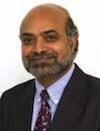
Prabhu Pingali is the Deputy Director of Agricultural Development at the Bill and Melinda Gates Foundation. Formerly, he served as Director of the Agricultural and Development Economics Division of the Food and Agriculture Organization (FAO) of the United Nations. Pingali was elected to the U.S. National Academy of Sciences as a Foreign Associate in May 2007, and he was elected Fellow of the American Agricultural Economics Association in 2006. Pingali was the President of the International Association of Agricultural Economists (IAAE) from 2003-06. Pingali has over twenty five years of experience in assessing the extent and impact of technical change in agriculture in developing countries, including Asia, Africa and Latin America.
African Agricultural R&D and Productiivity Growth in a Global Setting
Given the continuing importance of agriculture in most African economies, an in-depth understanding of the past and likely future productivity performance of African agriculture is key to assessing the overall economic growth and development prospects of the region. African agriculture operates in increasingly interconnected global commodity markets, so the relative productivity performance of African vis-à-vis rest-of-world agriculture is also relevant. This talk will present new evidence on African agricultural productivity performance and place that evidence in relation to the evolving pattern of agricultural productivity growth worldwide. Technological change is a principal driver of productivity growth, and new, updated evidence on the trends in R&D investments that give rise to these technological changes will also be presented and discussed. The productivity effects of R&D play out over comparatively long periods of time demanding a long-run look at these developments.
Image

Philip Pardey is Professor of Science and Technology Policy in the Department of Applied Economics, and Director of the University of Minnesota's International Science and Technology Practice and Policy (InSTePP) center. His research deals with the finance and conduct of R&D globally, methods for assessing the economic impacts of research, and the economic and policy (especially intellectual property) aspects of genetic resources and the biosciences. He is a Fellow of the American Agricultural Economics Association and a Distinguished Fellow of the Australian Agricultural and Resource Economics Society.
Bechtel Conference Center
Prabhu Pingali
Deputy director, Agricultural Development
Speaker
Bill & Melinda Gates Foundation
Philip Pardey
Professor of Science and Technology, Applied Economics
Speaker
University of Minnesota
Symposiums
Managing Food Price Volatility: Approaches at the Global, National and Household Levels
-
What does price instability have to do with food security? Price spikes hurt poor consumers, price collapses hurt farmers, and price risks reduce investment. Timmer's work suggests that food price instability also has a deeper and more insidious impact: it slows down economic growth and the structural transformation that is the pathway out of rural poverty. Food price instability really hurts the poor in both the short run and the long run.
"Food security is not a viable social objective unless it is also a profitable undertaking for input suppliers, farmers, and marketers of output. Consumers must then be able to afford to purchase this food, secure in the knowledge that it is safe and nutritious. Achieving food security within these constraints of a complex economic system is a challenge because both poor consumers and small farmers must be effective participants." -- Peter Timmer
Thom Jayne, Professor of International Development at Michigan State University, will join the conversation as a discussant following the main presentation.
Biography
C. Peter Timmer is a leading authority on agriculture and rural development who has published widely on these topics. He has served as a professor at Stanford, Cornell, three faculties at Harvard, and the University of California, San Diego, where he was also the dean of the Graduate School of International Relations and Pacific Studies. A core advisor on the World Bank's World Development Report 2008: Agriculture for Development, Timmer also works with several Asian governments on domestic policy responses to instability in the global rice market. He is an advisor to the Bill and Melinda Gates Foundation on agricultural development issues.
Bechtel Conference Center
Peter Timmer
Center on Food Security and the Environment
Encina Hall East, E400
Stanford, CA 94305
0
ptimmer63@gmail.com
Thomas D. Cabot Professor of Development Studies, Emeritus, Harvard University
C. Peter Timmer was a visiting professor at Stanford's Center on Food Security and the Environment in 2007. He is a leading authority on agriculture and rural development who has published widely on these topics. He has served as a professor at Stanford, Cornell, three faculties at Harvard, and the University of California, San Diego, where he was also the dean of the Graduate School of International Relations and Pacific Studies. A core advisor on the World Bank's World Development Report 2008: Agriculture for Development, Timmer also works with several Asian governments on domestic policy responses to instability in the global rice market. In 1992, he received the Bintang Jasa Utama (Highest Merit Star) from the Republic of Indonesia for his contributions to food security. He is an advisor to the Bill and Melinda Gates Foundation on agricultural development issues.
Timmer's work focuses on three broad topics: the nature of "pro-poor growth" and its application in Indonesia and other countries in Asia; the supermarket revolution in developing countries and its impact on the poor (both producers and consumers); and the structural transformation in historical perspective as a framework for understanding the political economy of agricultural policy.
Thom Jayne
Professor of International Development
Commentator
Michigan State University
Symposiums
Imperial Korea’s Western Capital (Sŏgyŏng): The Pyongyang Development Project, 1902-08
-
Except for specialists working on the period, the Korean Empire's (1897–1910) project to develop Pyongyang as the "Western Capital" (Sŏgyŏng) is not all that well known even among Korea historians. From the perspective of international relations, there can be no doubt that the Russo-Japanese War sealed independent Korea’s fate. All the same, in the last two decades or so, Korea’s own effort toward modernization has received more attention among historians who no longer dismiss the history of the Korean Empire as the tail end of the Chosŏn Dynasty. For sure, the official rhetoric that empires old and new have had two capitals conceals imperial Korea’s self-perceptions about its place in the civilized world of the past, the present, and the future. Moreover, scrutiny of the circumstances in which the government undertook the project before it came to a halt allows insight into the Korean Empire’s understanding of geopolitical realities at the time.
Eugene Y. Park is the Korea Foundation Associate Professor in History in the School of Arts and Sciences at the University of Pennsylvania. He is also the director of Penn's Korean Studies Program. Dr. Park completed his doctorate in East Asian languages and civilizations at Harvard in 1999 and has received numerous research grants and fellowships, including: a 2007–08 Seoul National University Kyujanggak Institute for Korean Studies Fellowship; a 2003–04 Korea Foundation Advanced Research Grant; a 1999–2000 Yale University Council on East Asian Studies Postdoctoral Fellowship; a 1996–97 Foreign Language and Area Studies Fellowship; and a 1995–96 Fulbright Fellowship. His research interests focus on the sociopolitical history of early modern Korea, and his current work examines the chungin ("middle people") to address questions of modernity, identities, and agency. His book, Between Dreams and Reality: The Military Examination in Late Chosŏn Korea, 1600–1894, was published by the Harvard University Asia Center in 2007. He has published chapters and articles in venues such as Journal of Social History and Yŏksa wa hyŏnsil.
Philippines Conference Room
Eugene Y. Park
Korea Foundation Associate Professor
Speaker
University of Pennsylvania
Seminars
Rees discusses human trafficking, conflicts, and the transformative power of human rights
News Type
News
Date
Paragraphs
On February 8, the Program on Human Rights' at the Center on Democracy, Development and the Rule of Law welcomed Madeleine Rees to speak as part of the Sanela Diana Jenkins Human Rights Series. A former UN High Commissioner on Human Rights in Bosnia, Rees now serves as the Secretary General of the Women's International League for Peace and Freedom (WILPF) based in Geneva.
Recounting her experience in the Balkans, Rees described the failure of international organizations to properly consider the role of gender in their work. Specifically, she highlighted the UN and other organizations' inability to control rampant human trafficking in the Balkans. According to Rees, human trafficking continues to undermine women's sense of security and societal rehabilitation efforts. To remedy social insecurity in post-conflict areas, Rees suggested that international projects must comprehensively and collaboratively address the problems in these societies, especially the conditions that the most vulnerable women face.
In this same vein, Rees declared a need for greater collaboration among women's rights NGO's, human rights institutions, universities and activists. She discussed the need to break down the barriers that exist between these stakeholders. She also emphasized the role of universities like Stanford to disseminate information and conduct research that helps organizations like WILPF to succeed. Noting the daunting challenges ahead, Rees concluded by reaffirming her commitment to the fight for human rights, saying, "The good thing about being a naïve idealist is that we don't give up."
All News button
1