Governance

FSI's research on the origins, character and consequences of government institutions spans continents and academic disciplines. The institute’s senior fellows and their colleagues across Stanford examine the principles of public administration and implementation. Their work focuses on how maternal health care is delivered in rural China, how public action can create wealth and eliminate poverty, and why U.S. immigration reform keeps stalling. 

FSI’s work includes comparative studies of how institutions help resolve policy and societal issues. Scholars aim to clearly define and make sense of the rule of law, examining how it is invoked and applied around the world. 

FSI researchers also investigate government services – trying to understand and measure how they work, whom they serve and how good they are. They assess energy services aimed at helping the poorest people around the world and explore public opinion on torture policies. The Children in Crisis project addresses how child health interventions interact with political reform. Specific research on governance, organizations and security capitalizes on FSI's longstanding interests and looks at how governance and organizational issues affect a nation’s ability to address security and international cooperation.

-

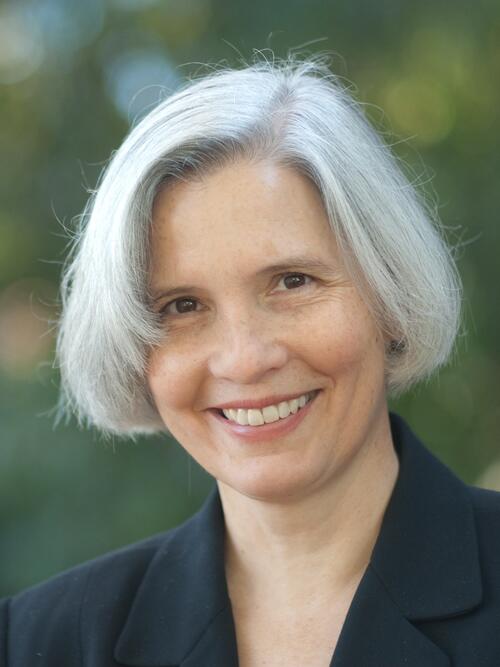
Helen Nissenbaum is Professor of Media, Culture and Communication, and Computer Science, at New York University, where she is also Senior Faculty Fellow of the Information Law Institute. Her areas of expertise span social, ethical, and political implications of information technology and digital media. Nissenbaum's research publications have appeared in journals of philosophy, politics, law, media studies, information studies, and computer science. She has written and edited four books, including Privacy in Context: Technology, Policy, and the Integrity of Social Life, which was published in 2010 by Stanford University Press. The National Science Foundation, Air Force Office of Scientific Research, Ford Foundation, U.S. Department of Homeland Security, and the U.S. Department of Health and Human Services Office of the National Coordinator have supported her work on privacy, trust online, and security, as well as several studies of values embodied in computer system design, including search engines, digital games, facial recognition technology, and health information systems.

Nissenbaum holds a Ph.D. in philosophy from Stanford University and a B.A. (Hons) from the University of the Witwatersrand. Before joining the faculty at NYU, she served as Associate Director of the Center for Human Values at Princeton University.

Sloan Mathematics Center

Helen Nissenbaum Professor of Media, Culture and Communication, and Computer Science Speaker New York University
Seminars
-

Abstract
The Internet has served as a tool in the struggle for freedom in the Arab Spring uprisings, from Tunisia--where bloggers made sure the struggle was heard around the world--to Syria, where revolutionaries have used YouTube to fill in the gaps the mainstream media has been unable to report. Though not a catalyst, social media has nonetheless played a role in organizing and disseminating information from protests this past year, from Tahrir Square to Zucotti Park.

Jillian York has studied the powerful role of social media in the Arab Spring, as well as the drawbacks of these dynamic tools, and speaks to their use throughout the past year in the Middle East and North Africa.


Jillian C. York is Director for International Freedom of Expression at the Electronic Frontier Foundation (EFF), where her work focuses on a range of issues including government Internet censorship, corporate social responsibility, export controls, surveillance technology, and online safety. She writes regularly about these and related issues for publications including Al Jazeera English, Bloomberg, Foreign Policy, the Guardian, and Al Akhbar English.

York is also a contributor to and on the board of Global Voices Online. Prior to joining the EFF, she worked at Harvard's Berkman Center for Internet and Society on a number of projects including the OpenNet Initiative and Herdict.

Sloan Mathematics Center

Jillian York Author and Director for International Freedom of Expression Speaker Electronic Frontier Foundation
Seminars
-

Abstract:
Stanford’s Knight fellowship program offers a unique opportunity for experienced journalists a space to rethink journalism by providing the space and time to innovate. Five teams of Knight fellows will share their ideas on using technology to push the boundaries of journalism. They will discuss ideas to empower non-professional journalists to create compelling news stories for the new media, using technology to share government information across boundaries, circumventing censorship and other ideas.

Presentations will be made by:

Grima Fantaye
Djordje Padejski
Deepa Fernandes
Emad Mekay
Michelle Holmes

and their teams.

Sloan Mathematics Center

Knight Fellows Speaker Stanford University
Seminars
-

Kathleen Reen is the Vice-President for Asia and New Media Programs with Internews. Reen leads media and information development programs across Asia, and a global Open Internet programs with a team of 12 international and local partner organizations. She has worked for Internews on a variety of assignments from Bosnia and Serbia, founding Internews’ program in Indonesia in as well as projects in Thailand, Cambodia, Timor, Pakistan and China. As Country Director in Indonesia she managed a project developing and implementing media legal reforms, training and productions, Internet access, and local media NGO-building efforts. In late 2004 she led Internews first humanitarian media efforts in Aceh after the devastating earthquake and tsunami.

A journalist and documentary producer by background, Reen worked in Eastern and Southern Europe and Southeast Asia before joining Internews. In 2005 she was a co-founder and first Director of the Global Forum for Media Development (GFMD). In 2006 she was selected as a fellow of the Asia Society’s “Asia 21″ program. In 2008 she became a fellow of the Flowfund, which supports the development of US domestic and global philanthropy with a focus on social entrepreneurs. She has helped establish several national and regional organizations in Asia that are devoted to media development and information. She represents Internews to the GNI – the Global Network Initiative, a multi-stakeholder initiative that seeks to improve freedom of expression and best practices for companies with NGOs and human rights organizations around the world.

Sloan Mathematics Center

Kathleen Reen VP Asia and Internet Initiatives Speaker Internews
Seminars
-

Abstract
Will mobile phones transform the lives of the world’s poor?  In this talk, I describe how innovative sources of data can provide new insight into the social and economic impacts of Mobile Money and other phone-based services in sub-Saharan Africa.  I will focus on a series of related projects in Rwanda, which exploit a terabyte-scale database of phone calls, text messages, and mobile money transfers to explore patterns of social interaction and, ultimately, provide insight into the role of mobile phones in the Rwandan economy.  Taken together, the results indicate that phones have had a positive impact on the lives of some people but, absent intervention, the benefits may not reach those with the greatest need.

Joshua Blumenstock is a Ph.D. candidate at U.C. Berkeley’s School of Information.  His research focuses on the economic and social impacts of information and communication technologies in developing countries.  In recent work, Blumenstock has shown how terabyte-scale data collected by mobile operators can be used to provide insight into the structure of informal insurance networks (Rwanda/Uganda); the socioeconomic impacts of mobile banking (Pakistan/Mongolia); and the effectiveness of anti-corruption campaigns (Afghanistan). He has received fellowships from the National Science Foundation, the Thomas J. Watson Foundation, and the Harvard Institutes of Medicine.  Blumenstock holds a Master's degree in Economics from U.C. Berkeley, and Bachelor’s degrees in Physics and Computer Science from Wesleyan University in Middletown, CT.

Sloan Mathematics Center

Joshua Blumenstock Ph.D. Candidate, School of Information Speaker UC Berkeley
Seminars
-

Abstract
Weinstein recently returned from two years on the National Security Council staff at the White House where we played a key role in thinking through a 21st century approach to fighting corruption and strengthening governance. One important initiative was President Obama’s Open Government Partnership (OGP), a multilateral effort involving more than 50 countries, hundreds of civil society groups, and leading technology companies, with the goal of making governments more transparent, more accountable, and more effective. Weinstein will offer a behind-the-scenes perspective on the creation of OGP, and discuss its promise and potential pitfalls.

Jeremy Weinstein recently returned to Stanford after serving as Director for Development and Democracy on the National Security Council staff at the White House between 2009 and 2011. In this capacity, he played a key role in the National Security Council’s work on global development, democracy and human rights, and anti-corruption, with a global portfolio. Among other issues, Weinstein was centrally involved in the development of President Obama’s Policy Directive on Global Development and associated efforts to reform and strengthen USAID, promote economic growth, and increase the effectiveness of U.S. foreign assistance across the board; led efforts at the White House to develop a robust international anti-corruption agenda, which included the creation of the G-20 Action Plan on Anti-Corruption, the design and launch of the Open Government Partnership, and the successful legislative passage and subsequent internationalization of a ground-breaking extractive industries disclosure requirement; and played a significant role in developing the Administration’s policy in response to the Arab Spring, including focused work on Egypt, Tunisia, Bahrain, Syria, Yemen, and others. Before joining the White House staff, Weinstein served as an advisor to the Obama campaign and, during the transition, served as a member of the National Security Policy Working Group and the Foreign Assistance Agency Review Team.

Sloan Mathematics Center

Jeremy M. Weinstein Associate Professor of Political Science and Senior Fellow, FSI Speaker Stanford University
Seminars
-

Abstract
Two and half years before there was anything called the “Arab Spring,” Wired contributing editor David Wolman traveled to Egypt to research and write about tech-savvy dissidents protesting against the Mubarak regime. Those same activists went on to play a central role in organizing the revolution that began on January 25, 2011. Wolman will share stories about his reporting, both from 2008 and during two trips in 2011, and discuss the role of social media in recent uprisings from Cairo to California.

David Wolman is an author and award-winning journalist. He is a contributing editor for Wired, and he has written for a variety of publications, including Outside, Mother Jones, Newsweek, Discover, Forbes, and Salon. Wolman is a former Fulbright journalism fellow in Japan and a graduate of Stanford University's journalism program. His latest book, The End of Money, will be out in February.

Sloan Mathematics Center

David Wolman Author and Contributing Editor Speaker Wired
Seminars
-

Abstract:

The 2012 Republic of China presidential and legislative elections to be held on January 14th mark the fifth presidential and seventh national legislative direct elections in Taiwan. Incumbent ROC President Ma Ying-jeou of the Kuomintang (KMT) enjoyed a landslide victory in 2008 over Democratic Progressive Party (DPP) candidate Hsieh Chang-ting, winning by over 2.2 million votes. Subsequent revelations of corruption by former President Chen Shui-bian of the DPP and various members of his administration further damaged the DPP's public image and electoral prospects.

In the intervening years, however, current DPP candidate Tsai Ing-wen and other members of the DPP have worked to revitalize their party's image, and as chairperson of the DPP Tsai established a special internal investigative committee to root out corruption in the party. A potentially complicating new factor in the race is the first-ever presidential bid by the People's First Party (PFP), led by candidate James Soong. Polling results to date have indicated the potential for a very close race between Ma and Tsai, with Soong also pulling a substantial portion of the vote that may affect the electoral outcome.

On the legislative side, the KMT won 81 out of 113 total seats in the Legislative Yuan in the 2008 elections, a circumstance that has facilitated the passage of various controversial measures supported by the Ma administration, including in particular the Economic Cooperation Framework Agreement (ECFA) with mainland China, and a significant shift in the composition of this body is likely to have a pronounced impact.

Regardless of the outcome, the results of the 2012 elections promise to offer much insight into the popular attitudes of the Taiwanese people and the prospects for future democratic consolidation and development in Taiwan. Ten days following the elections, Professors Shelly Rigger and Eric Chen-hua Yu will join us for a panel discussion to analyze the outcomes of these elections and discuss their relevance to the US and the world.

Speaker Bios:

Image
Shelley Rigger is the Brown Professor of East Asian Politics and Chair of Political Science at Davidson College in Davidson, North Carolina. She has a PhD in Government from Harvard University and a BA in Public and International Affairs from Princeton University. She has been a visiting researcher at National Chengchi University in Taiwan (2005) and a visiting professor at Fudan University in Shanghai (2006). Rigger is the author of two books on Taiwan’s domestic politics, Politics in Taiwan: Voting for Democracy (Routledge 1999) and From Opposition to Power: Taiwan’s Democratic Progressive Party(Lynne Rienner Publishers 2001). In 2011 she published Why Taiwan Matters: Small Island, Global Powerhouse, a book for general readers. She has published articles on Taiwan’s domestic politics, the national identity issue in Taiwan-China relations and related topics. Her current research studies the effects of cross-strait economic interactions on Taiwan and Mainland China. Her monograph, “Taiwan’s Rising Rationalism: Generations, Politics and ‘Taiwan Nationalism’” was published by the East West Center in Washington in November 2006.

Image

Eric Chen-hua Yu is an assistant research fellow of the Election Study Center and

jointly appointed as an assistant professor of political science at National Chengchi University in Taiwan. Before he returned to Taiwan to serve in his Alma mater in 2009, he has been a research fellow and program manager of Center on Democracy, Development, and the Rule of Law at Stanford’s Freeman Spogli Institute for International Studies since 2006. His research interests include public opinion, electoral politics, quantitative methods, and American politics. He also participates in a number of joint survey projects such as Taiwan Election and Democratization Studies (TEDS) and World Value Survey. Yu recently published academic articles on Taiwan’s domestic politics in
Taiwan Political Science Review, Journal of Electoral Studies, Review of Social Sciences, and Japanese Journal of Electoral Studies. Yu received a MS (2000) in Public Policy Analysis from the University of Rochester, and a Ph.D. in political science (2006) from Columbia University.

CISAC Conference Room

Shelly Rigger Professor of East Asian Politics and Chair of Political Science Speaker Davidson College

616 Serra St.
Encina Hall
Stanford, CA 94305

1
3x4200dpi[2]_self.JPG MS, PhD

Eric Yu was a research fellow and program manager for the Democracy in Taiwan program at CDDRL. His research interests included public opinion, electoral politics, federalism, and quantitative methods. He worked with Election Study Center at National Chengchi University (Taiwan) on a multi-year research project examining the relationship between public opinion and policy output at the local level in Taiwan. This project aimed to explore the extent to which local policy-makings respond to public opinions across a variety of policy dimensions. His recent studies also include the development of Taiwanese public attitudes toward cross-strait relations, the emergence of the third force under the new "single-district, two-ballot" electoral system for Taiwan's legislative elections, and mass policy preferences and their implications for political parties in Taiwan.

Yu received a BA (1995) in Political Science from the National Chengchi University in Taiwan, a MS (2000) in Public Policy Analysis from the University of Rochester, and a Ph.D. (2006) in Political Science from Columbia University.

Research Fellow and Program Manager for the Democracy in Taiwan Program
Eric Chen-hua Yu Assistant Research Fellow and Assistant Professor of Political Science Speaker Election Study Center; National Chengchi University
Panel Discussions
Authors
Francis Fukuyama
News Type
Commentary
Date
Paragraphs

In an article for the Jan./Feb. issue of Foreign Affairs, Francis Fukuyama traces the rise of liberal democracy through the 20th century which led to the growth of the middle class. Fukuyama cautions that recent economic and social trends - from globalization to the growth of the high-tech service economy - threaten the future of the democratic model. With the leftist agenda in retreat, Fukuyama calls for a new narrative to guide the future of history.

Hero Image
Occupy WSBB Logo
Occupy Wall Street protesters confront New York police on the Brooklyn Bridge on Oct. 1, 2011. | Motley News
All News button
1
-

Abstract:

     While the reelection of Taiwan’s president, Ma Ying-jeou, relieved concerns about an immediate deterioration in cross-Strait relations, the future of ties between Beijing and Taipei remain uncertain. Much will depend on the PRC’s policy. Moreover, calls in the United States either to abandon Taiwan or, conversely, to embrace it ever more closely as a hedge against the Mainland’s growing strength, have yet to play themselves out. Alan D. Romberg will address the implications of the election for these issues, as well as for Sino-American relations and for the region.

Speaker Bio:

     Alan Romberg is the director of the East Asia program at Stimson. 

     Before joining Stimson in September 2000, he enjoyed a distinguished career working on Asian issues, both in and out of government, including twenty years as a US Foreign Service Officer. Romberg was the principal deputy director of the State Department's Policy Planning staff and deputy spokesman of the department. He served in various capacities dealing with East Asia, including director of the Office of Japanese Affairs, member of the Policy Planning staff for East Asia, and staff member at the National Security Council for China. He served overseas in Hong Kong and Taiwan. 

     Additionally, Romberg spent almost ten years as the CV Starr Senior Fellow for Asian Studies at the Council on Foreign Relations, and was special assistant to the Secretary of the Navy. 

     Romberg holds an MA from Harvard University, and a BA from the Woodrow Wilson School of Public and International Affairs at Princeton University.

CISAC Conference Room

Alan Romberg Distinguished Fellow Speaker the Stimson Center
Seminars
Subscribe to Governance