Governance

FSI's research on the origins, character and consequences of government institutions spans continents and academic disciplines. The institute’s senior fellows and their colleagues across Stanford examine the principles of public administration and implementation. Their work focuses on how maternal health care is delivered in rural China, how public action can create wealth and eliminate poverty, and why U.S. immigration reform keeps stalling. 

FSI’s work includes comparative studies of how institutions help resolve policy and societal issues. Scholars aim to clearly define and make sense of the rule of law, examining how it is invoked and applied around the world. 

FSI researchers also investigate government services – trying to understand and measure how they work, whom they serve and how good they are. They assess energy services aimed at helping the poorest people around the world and explore public opinion on torture policies. The Children in Crisis project addresses how child health interventions interact with political reform. Specific research on governance, organizations and security capitalizes on FSI's longstanding interests and looks at how governance and organizational issues affect a nation’s ability to address security and international cooperation.

-

This seminar is part of the "European Governance" program series.

After decades of ambiguity towards European integration, the United States is pushing for Europe to become a genuine actor in security and foreign policy. As Vice President Biden put it at the 2013 Munich Security Conference, “a strong and capable Europe is profoundly in America’s interest, and I might add, presumptuously, the world’s interest.”

In principle, Europeans have accepted that closer defense cooperation is essential in order to maintain, and hopefully expand, existing military capabilities, and in order to reinforce mutual trust and contribute to a convergence in common goals and strategic cultures. But the sad reality is that decision-makers have not yet been willing to take the necessary decisions and disagree about what that means. In matters of European security and defense, the gap between rhetoric and policy is wider than in every other area of the European agenda, despite ever-shrinking defense budgets, declining capabilities, and the US “pivot.”

The European Council in December of 2013, focusing on defense and security issues for the first time in many years, will have to deliver ambitious projects - and member states will have to deliver when it comes to their implementation. The European Security Strategy from 2003 is in dire need of an update. And the EU’s new High Representative for Foreign and Security Policy, who will assume office in 2014, will have the difficult task of developing a genuine "one voice approach", a common European foreign and security policy.

A number of fundamental issues will need to be addressed: European security policy priorities, the EU level of ambition and, even larger, the purpose and influence of the EU in a world in which we will increasingly struggle to make ourselves heard. Are EU countries ready and willing to truly join forces and pool resources?

The talk will address current efforts to enhance European security and defense policy, the political feasibility of further steps, Germany’s responsibility to push the agenda forward, and what these efforts in European defense and security policy mean for the United States.


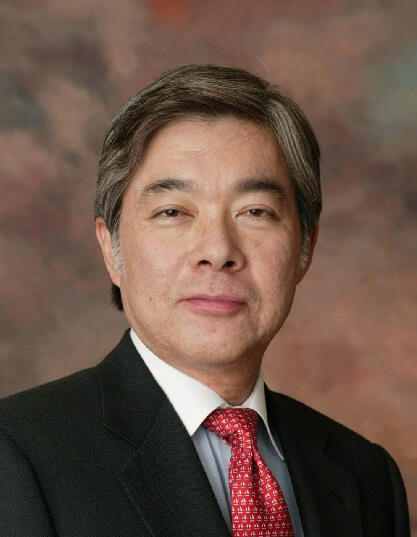
Wolfgang Ischinger was the Federal Republic of Germany's Ambassador to London from 2006-2008. Prior to this assignment, he was the German Ambassador to the United States of America from 2001 to 2006. In 2007, he also represented the European Union in the Troika negotiations on the future of Kosovo.

Wolfgang Ischinger studied law at the universities of Bonn and Geneva and obtained his law degree in 1972.  He did graduate and postgraduate work at the Fletcher School of Law and Diplomacy and at Harvard Law School, Cambridge/USA (M. A., Fletcher School, 1973).

Ambassador Ischinger has published widely on foreign policy, security, and arms control policy as well as on European and transatlantic issues. He is a member of the Trilateral Commission, of the European Council on Foreign Relations, and of the Governing Board of SIPRI, Stockholm. He is Co-Chair of the Euro-Atlantic Security Initiative (Carnegie Endowment) and a member of the Global Zero Commission. He also serves on the Boards of the Atlantic Council of the U. S., of the American Institute of Contemporary German Studies (AICGS), of the American Academy, Berlin and of SWP, Berlin. He is an adjunct professor at the University of Tübingen.

CISAC Conference Room

Ambassador Wolfgang Ischinger Career diplomat; Chairman of the Munich Security Conference; Global head of Government Relations at Allianz SE; member of the Supervisory Board of Allianz Deutschland AG, and of the European Advisory Board of Investcorp, London Speaker
Seminars
-

ABOUT THE TOPIC: In his talk, Jack Goldsmith will explain why he is skeptical about significant cybersecurity cooperation among military rivals, especially at the treaty level. He will, however, argue that the Snowden revelations make such cooperation more, not less, likely.

ABOUT THE SPEAKER: Jack Goldsmith is Henry L. Shattuck Professor of Law at Harvard University, where he specializes in national security law, international law, internet law, and presidential power. Goldsmith is the author of five books and numerous articles covering these topics. His recent books include: Power and Constraint: The Accountable Presidency After 9/11 (W.W. Norton, 2012); The Terror Presidency: Law and Judgment Inside the Bush Administration (W.W. Norton, 2007); Who Controls the Internet? Illusions of a Borderless World (Oxford Press, 2006, with Tim Wu); and The Limits of International Law (Oxford Press, 2005, with Eric Posner). Prior to his time at Harvard, Goldsmith was Assistant Attorney General in the Office of Legal Counsel from October 2003 to July 2004 and Special Counsel to the General Counsel to the Department of Defense from September 2002 through June 2003. 

CISAC Conference Room

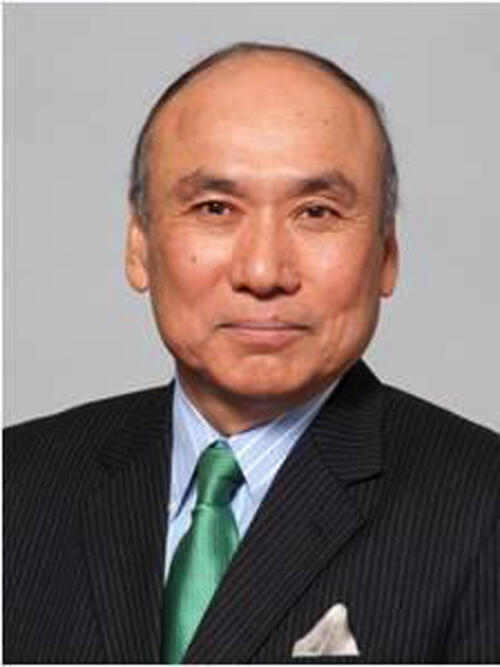
Jack Goldsmith Henry L. Shattuck Professor of Law, Harvard Law School Speaker
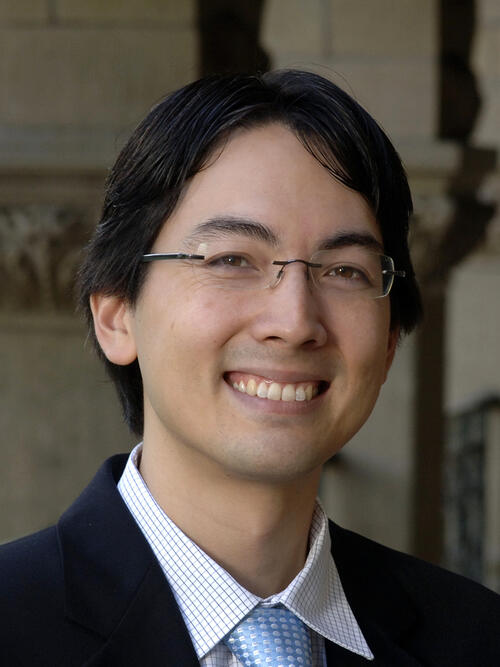
Jonathan Mayer Cybersecurity Fellow, CISAC Commentator
Seminars
-

The digital Information Technology (IT) revolution currently underway is profoundly reshaping economic activity, influencing politics, and transforming societies around the world. It is also forcing a reconceptualization of the global and local; many of the technologies, platforms, and fundamental disruptions are global in nature, but national or local contexts critically influence the uses and effects of IT.

Digital media— broadly conceived as digital platforms for information creation, transmission, and consumption—is a core driver of the IT revolution. Information is the very essence of civilization itself, and the advent of digital media fundamentally transforms our relationship to information. We have already seen: 1)  the Internet maturing as a platform for posting, disseminating, and consuming information, such as online news startups, video such as Youtube, microblogs to evade censorship, and a global marketplace for selling software, advertising and even personal information; 2) the diffusion of mobile communications, making information available across  geographic and socio-economic boundaries, and 3) the widespread adoption of social networking services that represent exploration into the next stage of relationships between people, groups, firms, and other entities.

Digital media is also at the crux of the “global meets local” dynamic, since digital media is by nature global, but differences in economic, political, and social conditions across countries lead to wide variation in its impact. For example, digital media is argued to have been a catalyst in the Arab Spring demonstrations that led to regime shifts in Tunesia, Egypt, and then Syria, but digital media in itself may not lead directly to a regime shift in China— due to government success in sophisticated censorship and physical network design.

The Asia-Pacific provides a fascinating array of countries for examination of the political, economic, and socio-cultural effects of digital media on the modern world. Economies range from developing to advanced. Governments include varied democracies as well as one party regimes. The press enjoys relative freedom in some countries, undergoes limited constraints in others, and is tightly controlled in a few. Populations range from dense to sparse, and from diverse to relatively homogenous.

The panels were divided to discuss four major themes:

Digital Media versus Traditional Media
Around the world, digital media is disrupting traditional media such as newspapers and television. Traditional business models are undermined, new entrants proliferate, and experimentation abounds with no end-game in sight. Questions for countries with well-established traditional media include: what are the patterns for the emergence of new players? To what degree do they threaten the traditional? In countries with less diffused traditional media, what are the opportunities enjoyed by digital media? 

Beyond business models, the social and political functions of digital media may differ from those of traditional media—particularly where traditional media is subject to close governmental control. Who are the new entrants, and what new functions do they provide?  Have traditional media failed as sources of information? What shifts have occurred in how people get information, and how does this differ across countries?

Digital Media and Political Change in Asia
Digital media opens up vast new information flows that can influence political change. From the perspective of grass-roots movements and civil society, digital media provides new tools to congregate, coordinate, and demonstrate. Governments that strongly control civil society, such as China and Vietnam, were alert to the role digital media played in the Arab Spring. What is the potential for digital media in civil society and democratization? In democratic countries such as Japan, South Korea, or India, how is digital media transforming civil society? For example, Japan’s peaceful anti-nuclear demonstrations, coordinated through digital media, displayed an entirely new pattern.

From the perspective of governments, digital media presents not only challenges, but new opportunities to monitor, gather information, and respond to the public. In strong state countries, control of information flows to the people, and gathering of information about people are the cornerstones of state control. How are these states adapting their attempts at controlling media in the face of pervasive digital media? In democratic systems, deciding what information to channel to which voters at what point in election cycles is a critical part of any electoral strategy. How are governments and parties using digital media to reach their constituencies, and what is their effectiveness?

Social Change and Economic Transformation
As a core part of the IT revolution, digital media has opened up new domains of innovation that transforms industries and economies. For advanced countries, it raises serious questions about how best to profit from digital platforms whose underlying technology is increasingly controlled by American multinational firms. For developing countries, the question is how to best take advantage of the world-class computing resources, global markets, and extensive reach enabled by the technological platforms underlying digital media. Instruments such as smartphones and the digital content conveyed on those devices are altering interpersonal relations and even the struggle against poverty in societies such as India.

The advent of social network services is also altering how we conceive of social connections. How do these networks affect groups such as the Korean or Filipino diasporas, and what are the implications for identity, “imagined communities,” and group identification. In what ways is the cohesiveness of groups enhanced by connections such as Facebook or Twitter, and in what ways are groups fragmented along interest cleavages, with people exposed to only ideas and groups of their choice. How does digital media impact social change and how does that impact lead to economic transformation in both developed and developing countries?

Digital Media and International Relations
The growth of digital media produces a powerful and sometimes troubling impact on international relations in the Asia-Pacific region. It can provide greater cultural understanding and regional integration but also aggravate tensions.  Cultural phenomenon such as the wildly popular Korean pop star Psy (of “Gangnam Style” fame) arise from the availability of digital media allowing a video to ‘go viral’ on a global scale in weeks. Conversely, tensions over territorial and historical issues in Northeast and Southeast Asia gain credence and momentum from discussion on digital media platforms, often pushing governments to act in ways detrimental to peace and stability. How does digital media influence international relations in the region? Is it a force for positive change or a source of instability? Finally, the rules governing critical parts of the physical infrastructure upon which digital media depend, such as governance of the Internet are increasingly contested in the international domain.

The fifth Stanford Kyoto Trans-Asian Dialogue focused on these issues surrounding the impact of digital media. The Dialogue brought together scholars, policy experts, and practitioners from the media, from Stanford University and from throughout Asia. Selected participants will start each session of the Dialogue with stimulating, brief presentations. Participants from around the region engaged in off-the-record discussion and exchange of views. The final report from the Dialogue will be published on this page as soon as it has been completed.

The Walter H. Shorenstein Asia-Pacific Research Center (Shorenstein APARC) established the Stanford Kyoto Trans-Asian Dialogue in 2009 to facilitate conversation about current Asia-Pacific issues with far-reaching global implications. Scholars from Stanford University and various Asian countries start each session of the two-day event with stimulating, brief presentations, which are followed by engaging, off-the-record discussion. Each Dialogue closes with a public symposium and reception, and a final report is published on the Shorenstein APARC website.

Previous Dialogues have brought together a diverse range of experts and opinion leaders from Japan, South Korea, China, Vietnam, Thailand, Indonesia, Singapore, India, Australia, and the United States. Participants have explored issues such as the global environmental and economic impacts of energy usage in Asia and the United States; the question of building an East Asian regional organization; and addressing the dramatic demographic shift that is taking place in Asia.

The annual Stanford Kyoto Trans-Asian Dialogue is made possible through the generosity of the City of Kyoto, the Freeman Spogli Institute for International Studies at Stanford University, and Yumi and Yasunori Kaneko.

Kyoto International Community House Event Hall
2-1 Torii-cho, Awataguchi,
Sakyo-ku Kyoto, 606-8536
JAPAN

Seminars
News Type
News
Date
Paragraphs

With the American government shut down over congressional budget battles, it seems like a particularly opportune time for scholars to talk about the challenges of governance and the rule of law.

But the political scientists and legal experts who gathered this week for a rule of law workshop organized by the Freeman Spogli Institute for International Studies and Stanford Law School probably didn’t see this crisis coming.

Photo Credit: Rod Searcey

“When we first began talking, Gerhard said the rule of law and governance are not peculiar only to developing counties,” Paul Brest, a professor and former dean of the law school, said as he recalled discussing such a workshop with Gerhard Casper, a constitutional law expert and FSI senior fellow. “I don’t think he predicted where the United States would be today.”

The half-day workshop brought together 20 scholars associated with FSI and the law school who discussed their individual research and explored possibilities for collaboration.

Their wide-ranging discussions covered the definitions and measurement of rule of law, governance in developed and developing countries, political participation, partisanship, and policy implementation.

“How do you implement what sounds like a thoughtful, abstract idea?” asked Mariano-Florentino Cuéllar, FSI’s director and law school professor, in discussing the complexity of the concept of rule of law. “There is something about the rule of law that has to go beyond whether a statute is complied with. A society also has to think smartly about how to manage discretion.”

But bending the rules without breaking the rule of law “is a difficult matter," said law school Professor Jenny Martinez – and one worthy of academic attention.

“Most well-functioning legal systems … involve a certain amount of discretion,” she said. “But that’s something we can explore.”

Discussion sessions were led by Martinez and Cuéllar, as well as Erik Jensen and Bernadette Meyler; Bruce Cain, Larry Diamond and Nathaniel Persily; Francis Fukuyama and Avner Greif.

“There’s a lot of work going on across campus focusing on governance and the rule of law,” Brest said. “Getting together to begin discussing that could create some sort of networks and a whole that is greater than the individual parts.”

Hero Image
RSD13 087 0035a
FSI Director Mariano-Florentino Cuéllar leads a discussion during a workshop focused on governance and the rule of law.
Rod Searcey
All News button
1
-

ABOUT THE SPEAKER: Elaine Korzak joined CISAC in September 2013 as a predoctoral cybersecurity fellow. She is a PhD student in the Department of War Studies at King's College London. Elaine's thesis evaluates how cyber attacks challenge current legal norms and whether the identified challenges ultimately warrant a new legal framework. The analysis focuses on two areas in particular: international law on the use of force (jus ad bellum) and international humanitarian law (jus in bello). During her time at CISAC, Elaine is conducting empirical research examining states' responses to the legal challenges created by cyber attacks. Her analysis focuses on various state positions in key international forums, including the United Nations and the International Telecommunication Union.

Elaine earned a Bachelor's degree in International Relations from the University of Dresden (Germany) before focusing her research interests at the interface of international law and security studies. She holds both an MA in International Peace and Security from King's College London and an LL.M in Public International Law from the London School of Economics. Her professional experience includes various governmental and non-governmental institutions (both national and international), where she has worked on various disarmament and international security issues. These include, most recently, NATO's Cyber Defence Section as well as the European Commission's Director-General on Information Society and Media.

ABOUT THE TOPIC: With their unique characteristics such as swiftness, its non-kinetic nature and anonymity, computer network attacks fundamentally challenge the current international legal paradigm which is based on a state-centered concept of armed force involving some degree of kinetic energy transfer through blast and fragmentation. It has been argued that a revolution in military affairs has been ushered in by technological advancements that cannot be accommodated within the existing legal framework. Both practitioners and scholars have called for a new regulatory framework to govern computer network attacks. This presentation will give an overview of Elaine's doctoral research project which evaluates these claims by examining if and how computer network attacks challenge key norms of international law on the use of force and international humanitarian law and whether the identified challenges ultimately warrant a new legal framework.   

CISAC Conference Room

Elaine Korzak Speaker Cybersecurity Predoctoral Fellow, CISAC, and PhD Candidate
Andrew K. Woods Cybersecurity Fellow Speaker CISAC
Seminars
-

Abstract: 

Do human rights institutions work? To answer this question we examine the effect of these institutions on two kinds of outcomes: physical integrity rights (freedom from torture, government-sponsored killing, political imprisonment, and the like) and civil and political rights (freedoms of speech, assembly, movement, and religion, as well as voting and workers' rights). Our analysis covers up to 143 countries, including some of the world's worst abusers, over the period 1981 to 2004. We arrive at two main conclusions. First, national human rights institutions improve physical integrity outcomes but not civil and political rights practices. This finding reflects a greater worldwide focus on extreme violations such as torture, but also points to widespread resistance among non-Western governments to "Western" civil and political rights standards. Second, we find that time matters: the establishment of a human rights institution contributed initially to greater reports of physical integrity abuses, but practices improved significantly after only four or five years. These institutions shine a bright spotlight on countries negative practices, making it more likely that abuses are detected and cataloged. Over time, however, they help to curb egregious human rights violations. Our findings suggest that human rights institutions are not just futile exercises in governmental hypocrisy; rather, they work to improve human rights practices regardless of the intent of governments.

Speaker bios: 

Image
Francisco Ramirez is Professor of Education and (by courtesy) Sociology at Stanford University where he is also the Associate Dean for Faculty Affairs in the Graduate School of Education. His current research interests focus on the rise and institutionalization of human rights and human rights education, on the worldwide rationalization of university structures and processes, on terms of inclusion issues as regards gender and education, and on the scope and intensity of the authority of science in society. His comparative studies contribute to sociology of education, political sociology, sociology of gender, and sociology of development. His work has contributed to the development of the world society perspective in the social sciences. Ramirez received his BA in social sciences from De La Salle University in the Philippines and his MA and PhD in sociology from Stanford University. 

His recent publications include “Conditional Decoupling: Assessing the Impact of National Human Rights Institutions” (with W. Cole) American Sociological Review 702-25 2013; “National Incorporation of Global Human Rights: Worldwide Expansion of National Human Rights Organizations, 1966-2004” (with Jeong-Woo Koo).  Social Forces. 87:1321-1354. 2009; “Human Rights in Social Science Textbooks: Cross-national Analyses, 1975-2008” (with J. Meyer and P. Bromley). Sociology of Education 83: 111-134.  2010; “The Worldwide Spread of Environmental Discourse in Social Science Textbooks, 1970-2010 (with P. Bromley and J. Meyer) Comparative Education Review 55, 4; 517-545. 2011; ‘The Formalization of the University: Rules, Roots, and Routes” (With T. Christensen) Higher Education 65: 695-708 2013; and “The World Society Perspective: Concepts, Assumptions, and Strategies” Comparative Education 423-39 2012.


Image
Wade Cole is Assistant Professor of Sociology at the University of Utah. His current work focuses on (1) the impact of global human rights norms, treaties, and institutions on a range of country-level practices including bodily integrity rights, civil and political rights, labor rights, women’s rights, racial discrimination, measures of wellbeing, and governmental redistributive efforts; and (2) the rise and possible demise of minority-serving and women’s colleges in the United States, with an interest in how the varied and often contradictory ways that African Americans, American Indians, Hispanics, and women were incorporated into the American polity shaped the emergence, development, and purposes of postsecondary institutions catering to these groups. Cole holds a BA in political science from Western Washington University and a PhD in sociology from Stanford University. 

Recent publications include “Conditional Decoupling: Assessing the Impact of National Human Rights Institutions, 1981 to 2004,” American Sociological Review 78(4):702–725 (with Francisco Ramirez); “Strong Walk and Cheap Talk: The Effect of the International Covenant of Economic, Social, and Cultural Rights on Policies and Practices,” Social Forces 92(1):165–194; “Government Respect for Gendered Rights: The Effect of the Convention on the Elimination of Discrimination against Women on Women’s Rights Outcomes, 1981–2004,” International Studies Quarterly 57(2):233–249; and “Human Rights as Myth and Ceremony? Reevaluating the Effectiveness of Human Rights Treaties, 1981–2007,” American Journal of Sociology 117(4):1131–1171. He is also author of Uncommon Schools: The Global Rise of Postsecondary Institutions for Indigenous Peoples (Stanford University Press, 2011).

Reuben W. Hills Conference Room

Wade Cole Assistant Professor of Sociology Speaker University of Utah
Francisco Ramirez Professor of Education and CDDRL faculty Speaker Stanford
Seminars
-

We have ample examples of efforts to "engage" adversaries, from Willy Brandt’s Ostpolitik to Kissinger’s conception of détente and Kim Dae Jung’s Sunshine policy. Yet much more attention has been given to understanding the logic of sanctions than the logic of inducements. Drawing an array of new sources of information on the North Korean economy, from the direction of its foreign trade to two firm‐level surveys of Chinese and South Korean firms doing business in the country, we consider the political and economic logic of engagement. Like sanctions, the conditions under which engagement strategies are likely to work are subject to a number of constraints. Target governments appear well aware of the risks of engagement and there is only mixed evidence for claims that such engagement has transformative effects.

Dr. Stephan Haggard is the Lawrence and Sallye Krause Distinguished Professor of Korea-Pacific Studies and Director of Korea-Pacific Program (KPP) at the University of California, San Diego Graduate School of International Relations and Pacific Studies.

Stephan Haggard works on the political economy of developing countries, with a particular interest in Asia and the Korean peninsula. He is the author of Pathways from the Periphery: The Politics of Growth in the Newly Industrializing Countries (1990), The Political Economy of Democratic Transitions (1995, with Robert Kaufman), The Political Economy of the Asian Financial Crisis (2000) and Development, Democracy and Welfare States: Latin America, East Asia, Eastern Europe (2000, with Robert Kaufman). His current research focuses on the relationship between inequality, democratization and authoritarianism in developing countries. 

Professor Haggard has written extensively on the political economy of North Korea with Marcus Noland, including Famine in North Korea: Markets, Aid, and Reform (2007) and Witness to Transformation: Refugee Insights into North Korea (2011). Haggard and Noland co-author the "North Korea: Witness to Transformation" blog at the Peterson Institute for International Economics.

Philippines Conference Room

Stephan Haggard Distinguished Professor of Korea-Pacific Studies; Director of Korea-Pacific Program Speaker University of California, San Diego
Seminars

Urbanization and obesity-related chronic diseases are cited as threats to the future health of India's older citizens. With 50% of deaths in adult Indians currently due to chronic diseases, the relationship of urbanization and migration trends to obesity patterns have important population health implications for older Indians. The researchers constructed and calibrated a set of 21 microsimulation models of weight and height of Indian adults. The models separately represented current urban and rural populations of India's major states and were further stratified by sex.

Subscribe to Governance