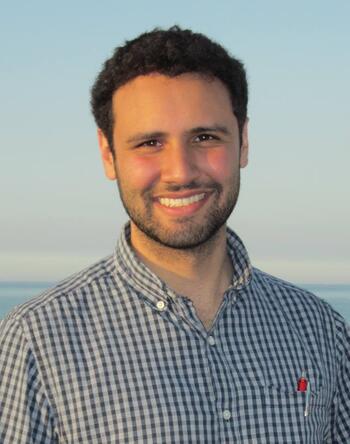
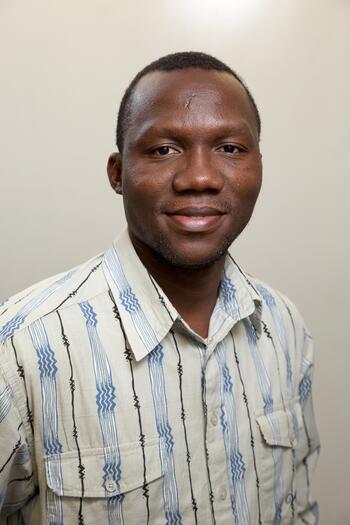
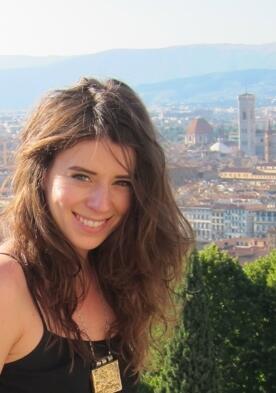
Stanford University’s Center on Democracy, Development and the Rule of Law (CDDRL) is proud to announce our four incoming 2015-2016 fellows who will be joining the CDDRL research community this fall to develop their research, engage with faculty and tap into our diverse scholarly community.
From crime and governance reform in Latin America to election integrity in Sub-Saharan Africa to corruption in higher education in India, this year’s fellows are advancing original research to improve governance and development outcomes around the world.
Selected from a competitive pool of over 100 applicants, our four incoming fellows hail from Princeton University; University of California, Los Angeles; University of Oxford; and the University of Texas at Austin.
The pre- and postdoctoral program will provide fellows the time to focus more introspectively on research and data analysis as they work to finalize and publish their dissertation research, while connecting with resident faculty and research staff at CDDRL during their nine-month residency.
CDDRL’s broad array of scholarly events and conferences will provide fellows the opportunity to connect to these forums and network with leading academics in the field. Fellows will also present their original research to the Stanford community for feedback at CDDRL’s weekly Research Seminar Series.
Previous fellows have gone on to secure professorships at renowned academic institutions, while others have pursued more policy and practice-based career pathways, working for think tanks, government and international organizations.
Read the Q&A below to learn more about our incoming fellows, their research and what attracted them to CDDRL.
CDDRL Post-Doctoral Fellow
Academic Institution:
University of Texas at Austin
Discipline and expected date of graduation:
Ph.D. Government, Summer 2015
Research Interests:
Developing nations, governance, state capacity, models of decision-making, Latin American politics, state building
Dissertation Topic/Title:
When Democracies Deliver: Governance Reform in Latin America
What attracted you to the CDDRL Pre/post-doctoral program?
CDDRL is an ideal place to develop my book manuscript on governance in developing democracies and to refine my thinking on the causes and consequences of state capacity and political autonomy. I look forward to collaborating with scholars in the programs on Poverty and Governance, Liberation Technology and the Governance Project in order to understand to what extent my research on the use of information technology to enhance accountability and reduce corruption in the provision of public goods can be extended to other policy areas. Moreover, my state capacity research overlaps with the work of many scholars at CDDRL, especially those working on the Governance Project.
What do you hope to accomplish during your nine-month residency at the CDDRL?
I plan to prepare a book manuscript on governance reform in Latin America for submission. The manuscript will be based on my doctoral project, which draws on cognitive-psychological insights about decision-making to explain the political conditions under which democratic states are able to make progress in reform and state building. I expect to spend much of my time ascertaining the extent to which arguments advanced in my dissertation on governance reforms in Brazil and Argentina are generalizable to other types of reform and to other countries in Latin America and beyond. In addition, I intend to continue and expand my work on the State Capacity Project, which analyzes the variation of bureaucratic capacity and political autonomy within national governments and evaluates the implications of this variation for effective governance and democratic performance.
Fun fact:
Over Rio de Janeiro towers the landmark statue of Christ the Redeemer, perched at 2,309 feet atop a sheer rock face. Once upon a time, I climbed that rock.
CDDRL Post-Doctoral Fellow
Hometown:
Atlanta, Georgia
Academic Institution:
Princeton University
Discipline and expected date of graduation:
Ph.D. in Politics, Summer of 2015
Research interests:
Governance, political economy of development, higher education, and corruption
Manuscript Topic:
I am interested in why some government institutions work well when others do not, especially when one compares institutions that focus on the same issues and work within the same geopolitical regions. In my book project, I examine why some public universities in India are among the best in the world while others suffer from serious afflictions that are widespread across institutions in the developing world: absenteeism, cronyism, and the like. I argue that institutions need to be able to develop meritocratic systems to maximize their effectiveness, and I proceed to explore the necessary conditions for meritocracy to take root.
What attracted you to the CDDRL post-doctoral program?
CDDRL brings together some of the world’s leading thinkers on issues of governance and development. I am excited to engage with these experts, and particularly with those who study governance and development beyond South Asia. I am also drawn to CDDRL because of its reputation as a collaborative and supportive environment.
What do you hope to accomplish during your nine-month residency at the CDDRL?
I plan to spend most of the year preparing my book manuscript for publication, wrapping up a co-edited volume on states in the developing world, and completing some journal articles.
Fun fact:
As a side project during my field research, I co-founded an artisan tea and coffee company in Delhi. It is called Jugmug Thela.
CDDRL Pre-doctoral Fellow
Hometown:
Koforidua, Ghana
Institution:
University of California, Los Angeles (UCLA)
Discipline and Expected Date of Graduation:
Ph.D. in Political Science, expected June 2017
Research Interests:
Electoral integrity, political accountability, democratic transitions, and African politics
Dissertation Title:
Election Integrity and the Responsiveness of Legislators in Sub-Saharan Africa
What attracted you to CDDRL?
I believe my fellowship at CDDRL will offer me a unique opportunity to interact with and gain insights from renowned academics and policymakers in the field of democracy and democracy promotion that will enrich my research. My research focuses on the impact of democratic elections on the accountability of politicians in developing countries. I look forward to the events held at CDDRL, and hope my time at the Center will broaden my knowledge on the functioning of democratic institutions in parts of the world that I am less familiar with.
What do you hope to accomplish during your nine-month residency at the CDDRL?
While at CDDRL, I hope to complete a draft of my dissertation and revise two of my working papers (one on election fraud in transitional elections and the other on election malpractices and fraud) for publication.
Fun fact:
I love to play the trumpet!
Katherine Saunders-Hastings CDDRL Post-Doctoral Fellow
Hometown:
Ottawa, Canada
Academic Institution:
University of Oxford
Discipline & Graduation Date:
D.Phil in Socio-Legal Studies, June 2015
Research interests:
Anthropology of crime and violence; urban insecurity in Latin America; Central American gangs; ethnographic methods in high-risk research sites
Dissertation title:
Order and Insecurity under the Mara: Violence, Coping, and Community in Guatemala City
What attracted you to the CDDRL post-doctoral program?
I have always enjoyed working in interdisciplinary settings, and CDDRL offers a rich range of geographic and substantive expertise. The Center’s Program on Poverty and Governance is producing research on crime, violence, and policing in Mexico and Brazil that connects in exciting ways with my own work on gangs and insecurity in Central America.
What do you hope to accomplish during your nine-month residency at the CDDRL?
I'll spend much of the year working on a book manuscript based on my doctoral dissertation - an ethnographic study of life in a Guatemala City gang territory. I also plan to prepare one article exploring how the structure of criminal economies shapes local experiences of violence and insecurity, and another examining the involvement of the Guatemalan military in urban security.
Fun fact:
I have moved across the Atlantic eight times in the last seven years. I am very good at packing.