Governance

FSI's research on the origins, character and consequences of government institutions spans continents and academic disciplines. The institute’s senior fellows and their colleagues across Stanford examine the principles of public administration and implementation. Their work focuses on how maternal health care is delivered in rural China, how public action can create wealth and eliminate poverty, and why U.S. immigration reform keeps stalling. 

FSI’s work includes comparative studies of how institutions help resolve policy and societal issues. Scholars aim to clearly define and make sense of the rule of law, examining how it is invoked and applied around the world. 

FSI researchers also investigate government services – trying to understand and measure how they work, whom they serve and how good they are. They assess energy services aimed at helping the poorest people around the world and explore public opinion on torture policies. The Children in Crisis project addresses how child health interventions interact with political reform. Specific research on governance, organizations and security capitalizes on FSI's longstanding interests and looks at how governance and organizational issues affect a nation’s ability to address security and international cooperation.

-

Abstract: Peter Hayes will talk about the risk of nuclear war and complexity. In a February 2015 report (Peter Hayes, "Nuclear command-and-control in the Millenials era", NAPSNet Special Reports, February 17, 2015, http://nautilus.org/napsnet/napsnet-special-reports/nuclear-command-and…), he stated that “very few leaders or even strategic scholars pay attention to the new complexity of the operating environment in which national nuclear command-and-control systems operate, or the new characteristics of the command-and-control systems and their supporting CISR systems that may contribute to the problem of loss-of-control and rapid escalation to nuclear war.”

“Today, the underlying ground is moving beneath the feet of nuclear-armed states. The enormous flow across borders of people, containers, and information, and the growth of connectivity between cities, corporations, and communities across borders, is recasting the essential nature of security itself to a networked flux of events and circumstances that no agency or state can control. The meta-system of nuclear command-and control systems has emerged in this new post-modern human condition.” The report can be accessed here.

About the speaker: Peter Hayes is Honorary Professor, Center for International Security Studies, Sydney University, Australia and Director, Nautilus Institute in Berkeley, California. He works at the nexus of security, environment and energy policy problems. Best known for innovative cooperative engagement strategies in North Korea, he has developed techniques at Nautilus Institute for seeking near-term solutions to global security and sustainability problems and applied them in East Asia, Australia, and South Asia. Dr. Hayes has worked for many international organizations including UN Development Programme, Asian Development Bank, and Global Environment Facility. He was founding director of the Environment Liaison Centre in Kenya in 1975. He has traveled, lived, and worked in Asia, North America, Europe and Africa.

Encina Hall, 2nd floor


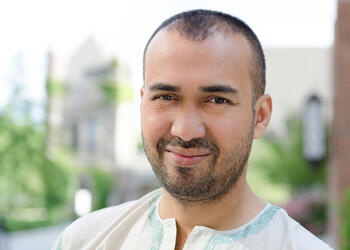
Peter Hayes Director Speaker Nautilus Institute
Seminars
News Type
Commentary
Date
Paragraphs

Doctors, nurses and other medical staff in Myanmar are wearing black ribbons to protest the appointments of military personnel in the Ministry of Health.

“The Black Ribbon Movement Myanmar 2015,” which began on Facebook in early August, quickly amassed over 42,000 followers, and on Aug. 12, led the minister for health to drop plans to appoint military personnel to over 300 management positions within the ministry.

Writing for The Diplomat, Stanford visiting scholar Phyu Phyu Thin Zaw said the movement shows the dissatisfaction shared among her fellow doctors about the incursion of the military in the healthcare sector. She said it's also representative of greater injustices seen across Myanmar. 

Four years have passed since the country transitioned from military rule toward democratization, and the Ministry of Health among other civic organizations still see the military exert influence over its operations.

Thin Zaw said she remains optimistic, though, and views the movement as a sign of the reemergence of a proactive civil society. The movement continues on this Facebook page.

The article published in The Diplomat can be found by clicking here.

Hero Image
myanmar health profession wearing black ribbon to participate in black ribbon movement myanmar 2015
All News button
1
Paragraphs

Writing for the National Bureau of Asian Research, Daniel Sneider examines Prime Minister Shinzo Abe’s recent attempts to revise Japan’s defense guidelines. He considers how these attempts may affect the Japanese domestic political landscape and the implications that Abe’s actions may have for key issues in the U.S.-Japan alliance, including the Trans-Pacific Partnership and U.S. military interests in Okinawa.

All Publications button
1
Publication Type
Policy Briefs
Publication Date
Journal Publisher
The National Bureau of Asian Research
Authors
Daniel C. Sneider
Paragraphs

Distrust between the United States and China continues to grow in Northeast Asia. Among many contributing factors, the North Korea issue is one of the most important, as illustrated by the controversy over the possible deployment of the United States’ THAAD missile defense system in South Korea. Thus, resolving or mitigating the Korea problem, a significant goal in its own right to both the United States and China, is also essential to reducing U.S.-PRC (People's Republic of China) strategic distrust. China and the United States share long-term interests vis-à-vis the Korean peninsula. The question is how its resolution might be achieved. U.S. efforts to induce North Korea to abandon its nuclear and missile programs by offering incentives and imposing sanctions have failed, and Chinese attempts to encourage Pyongyang to adopt PRC-style economic reforms have not fared much better. With Washington, Beijing, and Pyongyang unlikely to change their approaches, the hope for any new initiative must rest with Seoul. South Korea’s special relationships with the North, the United States, and the PRC, along with its status as a dynamic middle power, give it the potential to play a larger leadership role in dealing with North Korea. In doing so, South Korea should consult with the United States and China on a long-term strategy for inter-Korean reconciliation that would, for now, finesse the nuclear issue. Such a strategy would require U.S. and Chinese support of the South Korean leadership in addressing the Korea problem. The process of working together with Seoul to formulate and implement this strategy would allow both powers to ensure that their long-term interests on the peninsula are respected. Although there is no guarantee that such an effort will succeed, the worsening situation on and around the Korean peninsula and the U.S. and PRC’s lack of progress all argue for this new approach, as do the potential benefits to the U.S.-PRC relationship.

All Publications button
1
Publication Type
Journal Articles
Publication Date
Journal Publisher
China Quarterly of International Strategic Studies
Authors
Gi-Wook Shin
David Straub
News Type
Commentary
Date
Paragraphs

North Korea today threatened military action against South Korea if it did not end its propaganda broadcasts along the Demilitarized Zone (DMZ) within 48 hours. The broadcasts against the North are being systematically blared by loudspeakers over the border.   

South Korea resumed the broadcasts earlier this week after an 11-year hiatus, in retaliation for North Korea’s planting landmines just outside a South Korean DMZ guard post that crippled two South Korean soldiers on Aug. 4.

David Straub, associate director of the Korea Program at the Walter H. Shorenstein Asia-Pacific Research Center and a former Korean affairs director at the U.S. Department of State, offers insights on the situation. Straub also spoke on PRI's "The World" radioshow on Aug. 20, the audioclip and summary can be accessed by clicking here.

What’s behind the current tensions on the Korean Peninsula?

Fundamentally, the current situation is just another symptom of the underlying problem, which is the division of Korea into two competing states, with one of them—North Korea—having a Stalinist totalitarian system and a Maoist-style cult of personality. Since North Korea can’t compete with the South economically and diplomatically, it uses the threat of force or the actual use of it to try to intimidate South Korea. The North Koreans know that South Korea tends to “blink first” and step back because it is democratic and its leaders are concerned about civilian casualties.

The current situation is also related to the leadership transition in North Korea, with leader Kim Jong Un succeeding his father Kim Jong Il three years ago. Kim Jong Un still feels insecure, which is clearly evidenced by his execution of his powerful uncle Jang Seong-taek in 2013 and many other leaders there as well. To solidify support for his rule, he also manufactures a South Korean threat to rally his people behind him.

What does North Korea want?

North Korea’s immediate demand is that South Korea stop its propaganda broadcasts across the DMZ. The South Korean broadcasts criticize the North Korean system and its leaders, which is something that the North, with its cult of personality, can’t accept. But the South resumed the broadcasts only because the North Koreans recently snuck into the South Korean side of the DMZ and viciously planted landmines just outside a South Korean guard post. These were clearly intended to maim South Korean soldiers. They did just that, blowing the legs off two young men.

The North Korean regime’s long-term aim is not just to survive but also to get the upper hand on South Korea, and eventually try again to reunify the peninsula on its own terms. That explains why North Korea behaves as it does, rather than reform its system and reconcile with the South.

The North also demands an end to all U.S. and South Korean military exercises on the peninsula—even though the North has a much larger military than the South and U.S. forces there combined and is developing nuclear weapons and other weapons of mass destruction. Ultimately, the North wants to end the U.S.-South Korean alliance and see U.S. forces withdrawn from the peninsula, in the belief that it will open the way to eventual victory over the South.

Why did the South resume the broadcasts? Was it a good idea?

South Korea resumed the loudspeaker broadcasts in retaliation for the maiming of two of its soldiers on August 4th. Rather than retaliate by attacking militarily, the South resumed the loudspeaker broadcasts because the South Korean military knows that North Korean leaders hate them.

The South Korean military believes that North Korean leaders hate the broadcasts because they are effective in educating young North Korean soldiers and civilians in earshot about the nature of the regime and its leaders. The South Korean military seems to assume that the broadcasts are effective in that regard because they anger the North Korean leaders so much. But I think the reason the broadcasts anger the North Korean leaders is due to the cult of personality. The North Korean system can’t accept the idea of its leaders being criticized.

So I don’t think it was necessarily a wise step on the part of the South Korean military to resume the broadcasts. On the other hand, politically, by crippling two South Korean soldiers, the North Koreans had left South Korea with no option but to respond in some way. After the North Koreans killed fifty South Koreans in two separate sneak attacks five years ago, the South Korean government warned that it was not going to sit back the next time. The resumption of the broadcasts has further raised tensions but, frankly, given the danger of war on the peninsula, the South doesn’t have a lot of good ways to respond to North Korean provocations.

How serious is the situation?

North Korea has now threatened military action in 48 hours if South Korea doesn’t end the propaganda broadcasts. The North often makes threats. Usually, it doesn’t carry them out, but sometimes it does.

The United States and South Korea are conducting an annual military exercise together in the South until the end of August—something else that the North Koreans are demanding an end to. Most experts feel that the North is unlikely to launch a major provocation while the American presence is bolstered and the U.S. and South Korean militaries are paying full attention. The North Korean leaders know they are weaker than our side, so they usually avoid frontal assaults and instead engage in sneak attacks, at times and places and in ways of their own choosing.

There is more uncertainty in recent years because of the aggressive and threatening behavior thus far of Kim Jong Un, who is young and inexperienced. He seems anxious about his position in the North and prepared to take risks to bolster it, including rallying the people behind him by raising tensions with the South. We also don’t know if the North feels freer to engage in major provocations because it has developed at least a handful of nuclear devices since its first nuclear test in 2006.

So I myself wouldn’t be afraid to visit Seoul now but the situation bears even closer watching than usual.

Hero Image
dmz flickr stephan
North Korean soldiers stand guard at the Demilitarized Zone, 2008.
Flickr/(stephan)
All News button
1
Encina Hall616 Serra StreetStanford, CA 94305-6055
0
zaira.jpg

Zaira Razu is a research Associate and Project Manager at the Program on Poverty and Governance at CDDRL. She is currently working on the Governance of Public Health in Mexico project, focusing on the differences in mortality rates across income groups to analyze health disparities in the country. She is also collaborating in the design of impact and process evaluations of different interventions that seek to reduce youth violence in Mexico and the US, as well as to better understand the key dimensions of youth criminal careers: recruitment, incentives, training, and desistance. Zaira’s previous responsibilities at PovGov included a review on the current state of Political Economy scholarship in Mexico and the creation of a database of Oaxaca municipalities to analyze the relationship between community participation and the quality of public goods provision.

Zaira graduated from Stanford in June 2014 with an MA in International Policy Studies, concentrating in Democracy, Development, and the Rule of Law. She also holds a BA in Political Science from Instituto Tecnológico Autónomo de Mexico (ITAM). Zaira is interested in applied research on youth, health, and poverty alleviation policies. She has experience in impact evaluation (at the Inter-American Development Bank), and in policy design and implementation (at Fundación IDEA and in the Center Mario Molina, Mexico).


Publications

Díaz- Cayeros, A., & Razú, Z. (2014). ¿ Hacia dónde va la economía política en México?. El Trimestre Económico81(324), 783-806.


Project Manager and Research Assistant, Governance of Public Health in Mexico Project
Authors
News Type
News
Date
Paragraphs

Marking seventy years since the end of World War II, Japanese Prime Minister Shinzo Abe expressed “profound grief” on Friday for his country’s actions. While pointing to short comings in the statement, the Stanford scholars said the prime minister’s words represented a genuine effort to reflect on the past and provided opportunities to improve relations in the region.

The highly anticipated statement, issued on behalf of the Japanese cabinet, was closely followed by its East Asian neighbors who have raised concerns over Japan’s views of the wartime era.

Leaders of South Korea and China have said Japan has not apologized fully for crimes committed during WWII and each dispute historical narratives seen in the others’ textbooks, popular culture and other domains.

Advancing historical reconciliation in East Asia is a key research area of the Walter H. Shorenstein Asia-Pacific Research Center. The center leads a research project, Divided Memories and Reconciliation, which has produced numerous articles and books, including a ground breaking comparative study of high school history textbooks in China, Japan, South Korea, Taiwan and the United States.

In May 2014, the center convened an international conference “Pathways to Reconciliation” on historical issues, co-sponsored by the Trilateral Cooperation Secretariat, the governmental organization promoting Japan-China-South Korea trilateral cooperation.

Earlier this year, the Japan Program asked Stanford scholars to write their own version of the 70th anniversary statement as if they were the prime minister of Japan. The scholars’ statements were compiled into a report, published in May 2015.

Eight scholars contributed to the exercise in an effort “to understand the diversity of reasonable views on the issue of Japan’s responsibility for the cruel and violent war and Japan’s role in building a peaceful and prosperous world,” the introduction stated.

Themes that emerged in the report included a need for Abe to show heartfelt remorse about Japan’s actions during WWII and its desire to work toward a peaceful future.

Three noted Japan experts who contributed to that report offered their analysis of the prime minister’s statement issued yesterday in Tokyo.


Below are brief summaries of their analysis, you may click on each link to expand in full.


Image
Response by Peter Duus

Duus recognizes that Abe’s statement offers a reiteration of the statements made by Prime Ministers Murayama and Koizumi by including four key words – aggression, colonial rule, apology and remorse. Unlike past statements, however, Abe’s begins by putting war in the historical context and offers a more explicit statement of the victims of the war, not only the three million Japanese but also citizens of China, Southeast Asia and the Pacific islands. The statement can be viewed as “a small but important step toward a truce in the history wars that have raged in East Asia for the last three decades,” he says. However, Abe's attempt at reconciliation will have little effect if he does not rein in contrary actions by neo-nationalists in his own party.

Peter Duus is the William H. Bonsall Professor of Japanese History, emeritus; and a senior fellow, by courtesy, Hoover Institution, Stanford University.


Image

Response by Takeo Hoshi

Hoshi notes that Abe’s statement mentions past apologies expressed by the Japanese government, but has no explicit apology from the current administration. He says there are two surprising elements about the statement. The first is the length – it is much larger than predecessors Murayama and Koizumi at 1,664 words in English and 3,970 characters in Japanese. The second is the emphasis on history rather than on forward-looking components. He says it is commendable that Abe provided an expanded view of history. Hoshi notes that it is nearly impossible to satisfy everyone’s views in such a statement, as scholars witnessed firsthand when working on the Japan Program project.

Takeo Hoshi is the Henri H. and Tomoye Takahashi Senior Fellow in Japanese Studies in the Freeman Spogli Institute for International Studies; a professor (by courtesy) of finance at the Graduate School of Business; and director of the Japan Program at the Shorenstein Asia-Pacific Research Center, Stanford University.


Image
Response by Daniel Sneider

Sneider says Abe’s statement must be judged on following criteria: that it is a valid effort to draw lessons from Japan’s wartime past and that it contributes to the improvement of relations in Northeast Asia. He says the statement advances these goals, but there remain a few caveats. Sneider says the version of history communicated “will not satisfy many people, including many historians,” but that it does move away from the idea that revisionist Japan was in a war of self-defense not aggression. To move Japan, China and South Korea toward reconciliation, the prime minister and his cabinet must embrace the spirit of the statement in full and open the door to convening a long-delayed trilateral summit.

A version of this essay was also published by Nippon in Japanese and English.

Daniel Sneider is the associate director for research at the Shorenstein Asia-Pacific Research Center, Stanford University.

Hero Image
abe flickr csis
Shinzo Abe, Prime Minister of Japan.
Flickr/CSIS
All News button
1
News Type
News
Date
Paragraphs

On August 13th, 2015, Professor Wolak was interviewed along with Monica Padilla and Ted Ko by KALW, a public radio station in San Francisco. The particular topic of interest for the hour-long segment was CCAs (Community Choice Aggregation), which provide an alternative way for communities to receive electricity other than the commonplace utilities. Although the CCA bill came out in 2002, there are only three remaining CCAs today. 

Hero Image
kalw
All News button
1
Subscribe to Governance