Governance

FSI's research on the origins, character and consequences of government institutions spans continents and academic disciplines. The institute’s senior fellows and their colleagues across Stanford examine the principles of public administration and implementation. Their work focuses on how maternal health care is delivered in rural China, how public action can create wealth and eliminate poverty, and why U.S. immigration reform keeps stalling. 

FSI’s work includes comparative studies of how institutions help resolve policy and societal issues. Scholars aim to clearly define and make sense of the rule of law, examining how it is invoked and applied around the world. 

FSI researchers also investigate government services – trying to understand and measure how they work, whom they serve and how good they are. They assess energy services aimed at helping the poorest people around the world and explore public opinion on torture policies. The Children in Crisis project addresses how child health interventions interact with political reform. Specific research on governance, organizations and security capitalizes on FSI's longstanding interests and looks at how governance and organizational issues affect a nation’s ability to address security and international cooperation.

-

Abstract:

A growing body of research suggests that authoritarian regimes are responsive to societal actors, but we know little about the sources and limitations of authoritarian responsiveness because of the challenges of measurement and causal identification. This seminar will focus on the results of two new studies---a survey experiment among 1,377 provincial and city-level leaders in China and an online field experiment among 2,103 Chinese counties---to examine factors that influence officials’ incentives to respond to citizens in the absence of electoral competition. These studies show that the threat of collective action causes county governments to be considerably more responsive, and to be more publicly responsive. However, the manifestation of collective action and social contention decreases officials' willingness to be receptive to societal input. Together these results demonstrate that bottom-up societal pressure is a possible source of authoritarian responsiveness, but one with substantial restrictions.


Speaker Bio:

 
Image
jenpan
Jennifer Pan is an Assistant Professor in the Department of Communication and Assistant Professor, by courtesy, of Political Science at Stanford University. Her research focuses on the strategies authoritarian regimes employ to perpetuate their rule, including censorship, redistribution, and responsiveness, and how technology facilitates and hinders these strategies. Her work focuses primarily on China, and uses computational and experimental methods to measure and examine different components of these strategies.
Jennifer Pan Assistant Professor in the Department of Communication and Assistant Professor, by courtesy, of Political Science at Stanford University
Seminars

-

Abstract:

Designing peace agreements that can be signed and sustained can be difficult in civil conflict. A recent transformation in successful settlement design has produced many cases that include electoral or other political participation provisions. In this paper, we examine popular support for the transformation from bullets to ballots, testing whether individuals object to providing former rebels with the protections and legitimacy of electoral participation. Using a survey experiment in the context of Colombia’s current peace process between the Government and the FARC (Fuerzas Armadas Revolucionarias de Colombia), we find that the latter is a highly controversial actor in the country—indeed, invoking the specific group diminishes support for the peace process, particularly accords that would allow for increased representation in municipalities more affected by conflict. These findings are important to understanding how to design settlements, providing policy implications for the peace process with the FARC in Colombia but also in other civil conflicts that negotiators may seek to end through electoral participation by the former rebels, a proposal that has become common in many cases, including the Taliban in Afghanistan.


Speaker Bio:

Image
matanock headshot 2014
Aila M. Matanock is an Assistant Professor of Political Science at the University of California, Berkeley and, during 2015-2016, a W. Glenn Campbell and Rita Ricardo-Campbell National Fellow and the Arch W. Shaw National Fellow at the Hoover Institution. Her research focuses on post-conflict elections that are produced by peace processes, foreign intervention that occurs by host state invitation, and armed actor governance and social support, especially in counterinsurgency contexts. She uses case studies, survey experiments, and cross-national data in this work. She has conducted fieldwork in Colombia, Central America, the Pacific, and elsewhere. She has received funding for these projects from many sources, including the National Science Foundation (NSF), the National Center for the Study of Terrorism and the Response to Terrorism (START), and the Center for Global Development (CGD). Her dissertation won the 2012 Helen Dwight Reid Award from the American Political Science Association, and a revised version is currently under review as a book manuscript. She has worked at the RAND Corporation before graduate school, and she held a postdoctoral fellowship at the Institute on Global Conflict and Cooperation afterward. She received her Ph.D. in political science from Stanford University and her A.B. magna cum laude from Harvard University.

Aila M. Matanock Assistant Professor of Political Science at the University of California, Berkeley
Seminars
-

Abstract:

Ongoing crises of urban insecurity in Central America have spurred novel forms of state engagement in high-risk neighbourhoods. In 2012, the Guatemalan government deployed new urban security task forces in some of the capital’s most notorious ‘red zones’, the poor neighbourhoods where gangs, violence, and delinquency are seen to be concentrated. While officials trumpeted their success in pacifying these sectors, their gangs (maras) continued to operate much as they previously had under the new military occupations.

Based on sixteen months of ethnographic fieldwork in one red zone neighbourhood, this paper examines both gang violence and state power from the perspective of residents struggling to secure a measure of order in a dangerous and volatile environment. I argue that situations of chronic urban insecurity can create opportunities for the state to tighten its relationship with marginal communities, but that they do so in a way that may raise further impediments to substantively improving democratic governance.


Speaker Bio:

Image
ksh photo
Katherine Saunders-Hastings is a postdoctoral fellow at Stanford’s Center on Democracy, Development, and the Rule of Law. She employs ethnographic methods to study the impact of violence and insecurity on the social and political life of vulnerable urban neighbourhoods, focusing particularly on the changing gang cultures and criminal economies of Central America. Katherine earned her DPhil from the University of Oxford in 2015 and also holds degrees from McGill University and the University of Cambridge. Her research has been supported by fellowships from the Social Sciences and Humanities Research Council of Canada, the Clarendon Fund, and the Harry Frank Guggenheim Foundation. She has worked with the International Centre for the Prevention of Crime (Montreal, Canada) and the Asociación para el Avance de las Ciencias Sociales (Guatemala City, Guatemala).

Postdoctoral Fellow, CDDRL
Seminars
-

Abstract:

The recent rise in mass popular protests – many with regional spillover effects and some with far-reaching consequences for international peace and security –  has raised the question of how the international community should respond to these events, and to what end. For the United Nations, the question becomes acute in protest situations in which there is a tangible risk of large-scale violence and human rights violations. Yet mounting a rapid and effective response is a particular challenge in these contexts.  Drawing on case studies, practitioner interviews, and the author’s UN experience, this presentation will examine five variables that are critical to success: timing, access, leverage, the ability to propose solutions for non-violent change, and finding the right mix of principle and pragmatism. It will argue that these variables are not static, but dynamic and inter-independent. Getting them ‘right’ in an unfolding crisis is difficult, but it is possible to draw some preliminary lessons from the cases reviewed.


Speaker Bio:

Image
alexandra pichler fong
Alexandra Pichler Fong is visiting CDDRL on leave from the United Nations, where she headed the Policy Planning Unit of the Department of Political Affairs in New York.  Her work focuses on cross-cutting peace and security issues, such as conflict prevention, preventive diplomacy and peacemaking, as well as policy matters pertaining to UN peace operations in a rapidly changing international security environment. She recently completed an assignment reporting to the Special Representative of the Secretary-General for West Africa, based in Dakar, Senegal, to advance the implementation of the UN’s regional strategy for the Sahel. She joined the UN in 2002 as political affairs officer and has served as adviser in the cabinet of three successive Under-Secretaries-General for Political Affairs, focusing on the regions of Europe, Latin America and Asia-Pacific as well as thematic issues such as UN reform.  Before entering the UN, Alexandra worked at the International Crisis Group; a European network of development NGOs; and the European Commission. She holds a B.A. Hons. degree in Modern History and Literature from Oxford University and a Master’s degree in International Relations from the London School of Economics.


Visiting Scholar at CDDRL
Seminars
-

Abstract:

Do cleaner elections lead to more responsive politicians? In many developing countries, domestic and international organizations take various initiatives to make elections cleaner. These efforts are anchored in the hope that cleaner elections will strengthen the control that citizens have over their elected representatives and ensure that politicians are responsive to their constituents’ desires. Scholars are, however, yet to show empirically that election quality positively affects the behavior of politicians. I provide a novel experimental approach to test the impact of cleaner elections on the responsiveness of Members of Parliament (MPs) in Ghana, a consolidating democracy in West Africa. Preliminary results show that MPs elected in cleaner elections provide more local public goods and constituency services but do not perform any better in their parliamentary attendance.


Speaker Bio:

Image
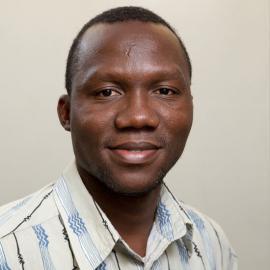
ofosu head photo
George Ofosu is a Pre-doctoral Fellow at CDDRL at Stanford. He is also a Doctoral Candidate in the Department of Political Science at UCLA. George specializes in Comparative Politics and Political Methodology. His research focuses on electoral fraud, the effects of domestic election monitoring, electoral accountability, research design, and the political economy of development in Sub-Saharan Africa. Ofosu's dissertation interrogates the impact of democratic elections on the responsiveness of politicians in developing countries, focusing on the case of Ghana's Members of Parliament. His dissertation has received funding from UCLA's International Institute.

Pre-doctoral Fellow at CDDRL, Stanford
Seminars
Subscribe to Governance