Governance

FSI's research on the origins, character and consequences of government institutions spans continents and academic disciplines. The institute’s senior fellows and their colleagues across Stanford examine the principles of public administration and implementation. Their work focuses on how maternal health care is delivered in rural China, how public action can create wealth and eliminate poverty, and why U.S. immigration reform keeps stalling. 

FSI’s work includes comparative studies of how institutions help resolve policy and societal issues. Scholars aim to clearly define and make sense of the rule of law, examining how it is invoked and applied around the world. 

FSI researchers also investigate government services – trying to understand and measure how they work, whom they serve and how good they are. They assess energy services aimed at helping the poorest people around the world and explore public opinion on torture policies. The Children in Crisis project addresses how child health interventions interact with political reform. Specific research on governance, organizations and security capitalizes on FSI's longstanding interests and looks at how governance and organizational issues affect a nation’s ability to address security and international cooperation.

-

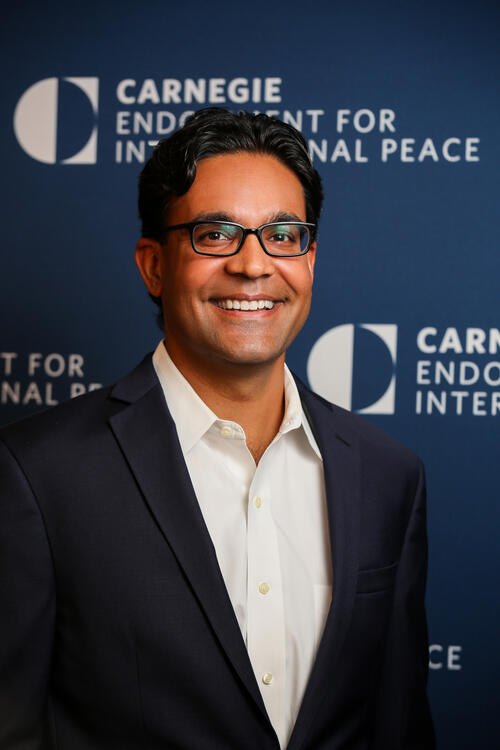
[[{"fid":"225276","view_mode":"crop_870xauto","fields":{"format":"crop_870xauto","field_file_image_description[und][0][value]":"","field_file_image_alt_text[und][0][value]":false,"field_file_image_title_text[und][0][value]":false,"field_credit[und][0][value]":"","field_caption[und][0][value]":"","thumbnails":"crop_870xauto"},"type":"media","field_deltas":{"2":{"format":"crop_870xauto","field_file_image_description[und][0][value]":"","field_file_image_alt_text[und][0][value]":false,"field_file_image_title_text[und][0][value]":false,"field_credit[und][0][value]":"","field_caption[und][0][value]":"","thumbnails":"crop_870xauto"}},"link_text":null,"attributes":{"style":"font-size: 13.008px; height: 342px; width: 250px; float: left; margin-right: 15px;","class":"media-element file-crop-870xauto","data-delta":"2"}}]]


The Ambassador's remarks will address:

  • U.S. military deployments
  • Poland’s regional and global relations with the European Union, NATO and the United States 
  •  Poland’s current domestic situation


Paul Jones was confirmed by the United States Senate as U.S. Ambassador to the Republic of Poland on August 5, 2015, and sworn in by Secretary Kerry on September 11, 2015.

Amb. Jones has a wide-ranging background in Europe. As Principal Deputy Assistant Secretary of State for European and Eurasian Affairs from 2013-15, he was responsible for all aspects of U.S. policy and operations in Europe, particularly Russia and Ukraine. He was also Deputy Chief of Mission at the U.S. Mission to the Organization for Security and Cooperation in Europe (OSCE), and at the U.S. Embassy in Skopje, Republic of Macedonia (1996-99).

Ambassador Jones’ service in Asia and South Asia has complemented his European focus. As U.S. Ambassador to Malaysia, 2010-13, he led significant growth in the U.S.-Malaysian relationship, becoming the first U.S. Ambassador to be conferred the honorary title of Dato’. Ambassador Jones is a career member of the State Department’s Senior Foreign Service. His awards include the Presidential Meritorious Service Award, the Robert C. Frasure Memorial Award for peace building, and several Superior Honor Awards.

 
Paul W. Jones US Ambassador to Poland Speaker US Embassy in Poland
Lectures
News Type
News
Date
Paragraphs

The Shorenstein Asia-Pacific Research Center (APARC), in pursuit of training the next generation of scholars on contemporary Asia, has selected two postdoctoral fellows for the 2017-18 academic year. The fellows will begin their year of academic study and research at Stanford this fall.

Shorenstein APARC has for more than a decade sponsored numerous junior scholars who come to the university to work closely with Stanford faculty, develop their dissertations for publication, participate in workshops and seminars, and present their research to the broader community.

The 2017-18 cohort includes two Shorenstein Postdoctoral Fellows; they carry a broad range of interests from labor migration policy in China to regional institutions in East Asia. Their bios and research plans are listed below:


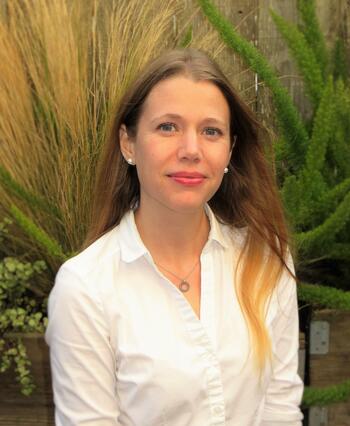
Image
hyun seung cho
H. Seung Cho is completing his doctorate at Columbia University’s Department of Political Science. He researches U.S. and Chinese foreign policy toward East Asia’s regional institutions with a broader interest in U.S.-China relations, the political economy of East Asia and qualitative research methods. His dissertation probes the popular narrative that United States and China are competing over East Asia’s regional architecture, arguing that mutual misperception and security dilemma dynamics also play out in the politics of regional institution building. To explore this phenomenon, Seung has conducted extensive fieldwork in Beijing, Jakarta, Seoul and Washington, D.C. At Shorenstein APARC, Seung will be developing his dissertation into a book manuscript while looking to further examine the relationship between the politics of East Asia’s multilateral security institutions and their perceived lack of effectiveness. Previously, Seung was a predoctoral fellow at Peking University’s School of International Studies from 2014-16. Prior to starting his doctoral studies, he also served in South Korean military intelligence as part of the two-year national service. Seung holds a Bachelor of Science in government and economics and Master of Science in international relations from the London School of Economics and Political Science (LSE).


Image
samantha vortherms
Samantha Vortherms is a doctoral candidate in the University of Wisconsin – Madison Department of Political Science. Her research focuses on comparative political economy, development, social welfare and research methodology. Her dissertation examines subnational variation in access to citizenship rights in China through the household registration system. Her research has been supported by the National Science Foundation, the U.S. Department of Education through the Fulbright-Hays Doctoral Dissertation Research Abroad and the Social Science Research Council's Dissertation Proposal Development Fellowship, among others. At Shorenstein APARC, Sam will work on converting her dissertation to a book manuscript and advance her post-dissertation project on the role of the firm in labor migration policies. Before going to Wisconsin, Sam received her Master of Arts in international relations at the University of Chicago, Artium Magister in public policy from University of Chicago's Harris School of Public Policy, and a Bachelor of Arts from the University of Richmond. From 2014-16, she was a visiting research fellow at the National School of Development's China Center for Health Economics Research at Peking University.

Hero Image
encina hall
All News button
1
Paragraphs

Scholars at Stanford's Shorenstein Asia-Pacific Research Center in the Freeman Spogli Institute for International Studies assess the strategic situation in East Asia to be unsettled, unstable, and drifting in ways unfavorable for American interests. These developments are worrisome to countries in the region, most of which want the United States to reduce uncertainty about American intentions by taking early and effective steps to clarify and solidify U.S. engagement. In the absence of such steps, they will seek to reduce uncertainty and protect their own interests in ways that reduce U.S. influence and ability to shape regional institutions. This 23-page report entitled “President Trump’s Asia Inbox” suggests specific steps to achieve American economic and security interests.

All Publications button
1
Publication Type
Policy Briefs
Publication Date
Journal Publisher
Shorenstein Asia-Pacific Research Center
Authors
Gi-Wook Shin
Takeo Hoshi
Thomas Fingar
Kathleen Stephens
Daniel C. Sneider
Donald K. Emmerson
News Type
News
Date
Paragraphs

Scholars at Stanford's Shorenstein Asia-Pacific Research Center in the Freeman Spogli Institute for International Studies assess the strategic situation in East Asia to be unsettled, unstable, and drifting in ways unfavorable for American interests. These developments are worrisome to countries in the region, most of which want the United States to reduce uncertainty about American intentions by taking early and effective steps to clarify and solidify U.S. engagement. In the absence of such steps, they will seek to reduce uncertainty and protect their own interests in ways that reduce U.S. influence and ability to shape regional institutions. The recommendations summarized below, and elaborated in a 23-page report entitled “President Trump’s Asia Inbox,” suggest specific steps to achieve American economic and security interests.


» Key Recommendations

» Full Report with Preface from Director Gi-Wook Shin and Introduction by Amb. Michael H. Armacost

» About the Contributors

» Information for Press

» Press Coverage


Key Recommendations. 


Trade and Economic Relations

The dynamic economies of East Asian countries are increasingly integrated and interdependent. The United States is an important market and source of investment and technology, but this is no longer sufficient to ensure that future arrangements and rules will protect American interests. The region is moving toward more formal, rule-based arrangements and the United States must be an active shaper of those institutions.

Most in the region want the United States to play a leading role in the establishment and enforcement of free and fair international economic transactions, and want the rules and mechanisms governing trade to be multilateral ones. If we do not play such a role, China, and possibly others, will seek arrangements that disadvantage American firms.

  • The replacement for the Trans-Pacific Partnership (TPP) should build on what was achieved in those negotiations, especially those that would assure market access for U.S. firms and protect intellectual property rights, enforce labor standards, and ensure environmental protection. A single multilateral agreement would be best, but much could be achieved through interlocking and consistent bilateral agreements.
  • The administration should adopt policy measures to increase employability and create jobs for the Americans who have been disadvantaged by globalization.

Defense and Security

China’s military buildup and North Korea’s growing arsenal of missiles and nuclear weapons have fueled concerns about U.S. will and ability to honor its security commitments in the region. No one wants a regional arms race or tit-for-tat moves that increase the danger of accidental conflict or escalation, but many believe concrete steps are needed to check perceptions that the United States is becoming less willing to maintain the peace and stability that undergirds regional prosperity.

  • While reaffirming the need for a forward presence in the region, reconfigure it along the lines of an “active denial” strategy. “Active denial” means maintaining a forward presence in East Asia that is designed to deny an opponent the benefits of military aggression, especially the prospect of a quick victory. The first component of such a strategy is a resilient force posture, which can be achieved by exploiting the size and depth of the region to distribute units in more locations. The second component is an emphasis on planning to conduct military operations against an adversary’s offensive strike or maneuver forces, not targets deep inside an adversary’s homeland territory and not by carrying out preemptive strikes.
  • Strengthen U.S. military capabilities by developing and fielding stealthier air and maritime platforms, increase submarine and anti-submarine assets, and provide forward deployed forces with better active defenses, such as rail guns and lasers. At the same time, the United States should assist those neighbors of the PRC who feel threatened by Chinese assertiveness to develop asymmetric coercive capabilities that can put at risk forward-deployed PLA forces. The United States can use elements of such assistance programs as points of negotiating leverage in our attempts to limit militarization on both sides.
  • Continue to promote U.S.-China military relations, emphasizing accident avoidance and crisis management, sustained dialogues on national strategies and doctrines, and cooperative endeavors, such as training exercises and combined operations, where and when feasible and mutually beneficial.

China

People in the region worry about China’s actions and intentions but they worry more about the prospect of confrontation and conflict between the United States and the People’s Republic. They look to the United States as a counterbalance to China but fear that Washington will overreact or underreact to actions by Beijing, or take provocative actions that jeopardize their own interests. The U.S. should:

  • Respond to Chinese actions inimical to American interests in ways that protect our interests, achieve U.S. goals shared by others in the region, and avoid both the reality and the appearance of being “anti-China.”
  • Reaffirm American commitments to allies and partners including China and Taiwan.
  • Tighten enforcement of import restrictions on products produced by firms that have stolen intellectual property from U.S. companies.

Korean Peninsula

North Korea is threatening an ICBM test in 2017, possibly in the next few weeks or months. There is a political vacuum in South Korea, and Seoul is being pressured and punished by Beijing to reverse its decision to accept the deployment of a U.S. THAAD missile defense in South Korea. Under these circumstances, these are our priority recommendations for the administration

  • It should work to dissuade North Korea from an ICBM test. Publicly, the new administration should reaffirm that the U.S. would use military means against an ICBM that appeared to threaten the U.S. or one of our allies. Regular spring ROK-U.S. joint military exercises should be held, but calibrated and conducted to avoid giving Pyongyang extra pretext for a test. The Trump administration should appoint a senior envoy empowered to go to Pyongyang to convey openness to renewed diplomacy, while at the same time being clear about the consequences of an ICBM test. China will share this goal, and the new Trump administration should establish a dialogue with China on North Korea based on this shared interest rather than linked to other issues in the U.S.-China relationship, such as bilateral trade. The Trump administration should not negotiate the THAAD issue with Beijing but rather stick to the principle that this is a Seoul-Washington issue.
  • The U.S.-ROK relationship will need early and special attention in 2017. Secretary of Defense Mattis’ early visit to the ROK was a wise move. With names already announced for Beijing and Tokyo, a new American ambassador for Seoul should be nominated soon. Despite the political leadership vacuum in Seoul, the Trump administration should strive for the closest possible diplomatic, political, and military coordination on North Korea with our South Korean allies. Trade and burden-sharing issues should not be front-burner issues during South Korea’s political transition. U.S. neutrality in the South Korean election, along with demonstrated respect for South Korea’s democracy, will be carefully monitored, and is essential, as is strengthening U.S. contacts and outreach across the political spectrum in South Korea.

Japan

The Abe administration is the most stable government Japan has had for many years. The prime minister wants to work with Washington, is prepared to deepen defense cooperation with the United States and others in the region, and is eager to lock in the commitments and arrangements negotiated in the TPP. There is a real opportunity to secure access for U.S. firms greater than achieved by any previous administration.

  • Build upon arrangements negotiated in TPP to secure a U.S.-Japan free-trade agreement (FTA) that increases access for U.S. firms and locks in economic reforms initiated by the Abe government.
  • Propose annual head of state level trilateral cooperation summits with Japan and South Korea and seek greater trilateral cooperation, particularly in the area of security cooperation. Caution Tokyo against steps backward on historical reconciliation.

Southeast Asia and the South China Sea

Southeast Asia is most vulnerable to and concerned about China’s actions and intentions. Countries in the region want the United States to counterbalance and constrain China but worry equally that the United States is unreliable and unequal to the challenge of protecting their interests while preserving American interests vis-à-vis China. Unless given a better option, they will lean toward China for economic and security reasons.

  • The United States should anchor U.S. policy on the South China Sea (SCS) to an explicit commitment that no single country—not the US, not China, nor anyone else—should seek or enjoy a monopoly of ownership and control over that body of water. To underscore that commitment, the United States should execute freedom of navigation operations (FONOPs) in waters between and around the Spratly islands. These and other operations in the SCS should be conducted in conformity with the authoritative ruling on the status of its waters and land features issued in 2016 by the arbitral court convened for that purpose under the UN Convention on the Law of the Sea.
  • The United States should also try, in concert with its allies and partners, to bring the SCS under international protection and management by a combination of claimant and user states, including the United States and China, based on international law. The Southeast Asia Maritime Security Initiative should be enlarged and upgraded to serve this purpose. If China declines to join, a chair at the table should remain empty should Beijing change its mind.

The U.S. should remain engaged with the process of regional and trans-Pacific institution building, including but not limited to the Association of Southeast Asian Nations (ASEAN) annual meetings, the East Asian Summit, and the Asia Pacific Economic Cooperation (APEC) forum, which will be hosted by Vietnam in 2017.


Full Report with Preface from Gi-Wook Shin and Introduction by Amb. Michael H. Armacost.


The policy recommendations published above are a summary included in the beginning of a 23-page report entitled “President Trump’s Asia Inbox.” You may view the full report here.


About the Contributors

Michael H. Armacost is a Shorenstein APARC Fellow and former U.S. ambassador to Japan and the Philippines.

Karl Eikenberry is the Oksenberg-Rohlen Fellow at Shorenstein APARC; director of the U.S.-Asia Security Initiative; former U.S. ambassador to Afghanistan, and Lieutenant General (Ret.), U.S. Army.

Donald K. Emmerson is a senior fellow emeritus at FSI; director of the Southeast Asia Program at Shorenstein APARC; and affiliated with FSI’s Abbasi Program in Islamic Studies.

Thomas Fingar is a Shorenstein APARC Fellow and has served as former first deputy director of national intelligence for analysis and chairman of the National Intelligence Council, among other positions.

Takeo Hoshi is the Henri H. and Tomoye Takahashi Senior Fellow in Japanese Studies and director of the Japan Program.

Gi-Wook Shin is the director of the Walter H. Shorenstein Asia-Pacific Research Center; senior fellow at the Freeman Spogli Institute for International Studies; director of the Korea Program; and the Tong Yang, Korea Foundation, and Korea Stanford Alumni Chair of Korean Studies, all at Stanford.

Daniel C. Sneider is the associate director for research at Shorenstein APARC, co-director of the Divided Memories and Reconciliation project and a former foreign correspondent.

Kathleen Stephens is the William J. Perry Fellow in the Korea Program at Shorenstein APARC and former U.S. ambassador to the Republic of Korea.


Information for Press.


The contributors are open to comment, interview and provide background information on the contents of the report, “President Trump’s Asia Inbox.” To inquire about availability, please contact Lisa Griswold, Shorenstein APARC Communications and Outreach Coordinator, at lisagris@stanford.edu or (650) 736-0656.


Related Press Coverage


Stanford report offers policy insights for the Trump administration, Caixin Media (in Chinese), Feb. 13, 2017

"Trump, do not bring up KORUS FTA and US forces cost-sharing until S. Korea's next presidential election," Yonhap News and various other outlets (in Korean), Feb. 13, 2017

China looks to US to resolve N. Korea nuclear issue, The Straits Times (in English), Feb. 15, 2017

Stanford experts offer policy proposals, insights on US-Asia relations, Stanford News Service (in English), Feb. 15, 2017

Unsettled, unstable and drifting: Today's US-East Asia relationship, Medium (in English), Feb. 16, 2017

Why Japan will also be "convenient" for the Trump administration, Tokyo Business Today (in Japanese), Feb. 18, 2017

Study: Managing China relationship most consequential to US, China Daily USA (in English), Feb. 21, 2017

How the Trump administration should address China, Tokyo Business Today (in Japanese), Feb. 23, 2017

Fears of Trump giving China free reign in Asia misplaced, Asia Times (in English), Feb. 24, 2017


Hero Image
white house night gettyimages
The White House at dusk.
Mandel Ngan/AFP/Getty Images
All News button
1
-


This event is co-sponsored by the WSD HANDA Center for Human Rights and International Justice and the Center on Democracy, Development, and the Rule of Law. 


Abstract:

Unchecked greed is the primary driver of conflict and mass atrocities in Africa. Most often, it manifests itself in the form of violent kleptocracies, in which governments are hijacked by networks of senior officials, military officers, bankers, mining and oil company representatives, and arms dealers. Conventional foreign policy approaches have failed to address the hell on earth that these networks have created. The principal vulnerability of the networks is their exposure in the international financial system, as most corrupt actors use that system to move their money and hide their wealth. The tools of financial pressure that have been honed in the aftermath of 9/11 hold great promise for countering the kleptocrats that are destroying parts of Africa through war and resource pillaging. Examining how those policies can be used and how a hopeful political constituency is being built is a major focus of this presentation.


Speaker Bio:

Image
john prendergast headshot 1
John Prendergast is a human rights activist and New York Times best-selling author who has focused on peace in Africa for over thirty years. He is the Founding Director of the Enough Project, an initiative to end genocide and crimes against humanity. With George Clooney, he also co-founded The Sentry, a new investigative initiative focused on dismantling the networks financing conflict and atrocities. John has worked for the Clinton White House, the State Department, two members of Congress, the National Intelligence Council, UNICEF, Human Rights Watch, the International Crisis Group, and the U.S. Institute of Peace.  He has been a Big Brother for three decades, as well as a youth counselor and a basketball coach.  John is the author or co-author of ten books. John also co-founded the Satellite Sentinel Project, which used satellite imagery to spotlight mass atrocities.  With NBA stars, John launched the Darfur Dream Team Sister Schools Program to fund schools in Darfuri refugee camps. He also created Enough’s Raise Hope for Congo Campaign, highlighting the issue of conflict minerals, and its student arm the Conflict-Free Campus Initiative. John also runs Not On Our Watch, the organization founded by Matt Damon, Don Cheadle, Brad Pitt and George Clooney.  John has been awarded six honorary doctorates. He has been a visiting professor at Yale Law School, Stanford University, Columbia University, Dartmouth College, Duke University, and others. John has appeared in four episodes of  60 Minutes, for which the team won an Emmy Award, and helped create African stories for two episodes of Law and Order: Special Victims Unit. John has also traveled to Africa with NBC’s Dateline, ABC’s Nightline, PBS’ NewsHour, CNN’s  Inside Africa, and Newsweek and The Daily Beast. He also appears in the motion picture “The Good Lie,” starring Reese Witherspoon and Emmanuel Jal, as well as documentaries including Merci Congo, When Elephants Fight, Blood in the Mobile, Sand and Sorrow, Darfur Now, 3 Points, and  War Child.


[[{"fid":"225275","view_mode":"crop_870xauto","fields":{"format":"crop_870xauto","field_file_image_description[und][0][value]":"","field_file_image_alt_text[und][0][value]":false,"field_file_image_title_text[und][0][value]":false,"field_credit[und][0][value]":"","field_caption[und][0][value]":"","field_related_image_aspect[und][0][value]":"","thumbnails":"crop_870xauto"},"type":"media","field_deltas":{"1":{"format":"crop_870xauto","field_file_image_description[und][0][value]":"","field_file_image_alt_text[und][0][value]":false,"field_file_image_title_text[und][0][value]":false,"field_credit[und][0][value]":"","field_caption[und][0][value]":"","field_related_image_aspect[und][0][value]":"","thumbnails":"crop_870xauto"}},"attributes":{"width":"870","class":"media-element file-crop-870xauto","data-delta":"1"},"link_text":null}]]


John Prendergast Human Rights Activist
Seminars
-

In March 2014 Russian Armed Forces managed to deploy thousands troops on Ukrainian bordere in less than 48hs. This fact was crucial in capturing Crimea. In 2015 Russia showed rapid and surprise deployment of its forces in Syria. Such success was the result of very painful military reform of  former  Defense Minister Anatoly Serdyukov. As the result of the reform President Putin received in his disposal up to 40 units of permanent readiness. Russia got total military superiority in post-Soviet space. All this puts important questions to answer. What are the results of progressive “sectoral” reform in authoritarian society? Does it weaken the regime or strengthen it? What  are the consequences for European and world security? Can Kremlin preserve the results of the reform in situation of new confrontation with the West?


Image
Alexander Golts received his M.A. in Journalism from the Moscow State Lomonosov University in 1978. From 1980 to 1996, he worked with the "Krasnaya zvezda" ("Red star") editorial board, and the  Soviet, then Russian, military daily. From 1996 to 2001, Golts served as military editor of Itogi, a premier Russian news magazine, and from 2001 to 2004 he worked for the magazine "Yezhenedelnyi journal" ("Weekly") as deputy editor-in-chief (Moscow). He spent the 2002/2003 academic year at the Center for International Security and Cooperation (CISAC) of Stanford as a Visiting Fellow. Today, Golts works as deputy editor for the website EJ.RU. and as military analyst for the New Times magazine in Moscow. He is currently a Visiting Fellow at the Kennan institute. 


THIS EVENT HAS REACHED FULL CAPACITY, PLEASE CONTACT MAGDALENA FITIPALDI (magdafb@stanford.edu) TO GET ON THE WAITLIST.

Reuben Hills Room

Encina Hall, 2nd floor East wing


Lunch will be served.

Aleksandr Golts
-

[[{"fid":"225215","view_mode":"crop_870xauto","fields":{"format":"crop_870xauto","field_file_image_description[und][0][value]":"","field_file_image_alt_text[und][0][value]":false,"field_file_image_title_text[und][0][value]":false,"field_credit[und][0][value]":"","field_caption[und][0][value]":"","field_related_image_aspect[und][0][value]":"","thumbnails":"crop_870xauto"},"type":"media","field_deltas":{"1":{"format":"crop_870xauto","field_file_image_description[und][0][value]":"","field_file_image_alt_text[und][0][value]":false,"field_file_image_title_text[und][0][value]":false,"field_credit[und][0][value]":"","field_caption[und][0][value]":"","field_related_image_aspect[und][0][value]":"","thumbnails":"crop_870xauto"}},"link_text":null,"attributes":{"width":"870","style":"font-size: 13.008px; width: 200px; height: 299px;","class":"media-element file-crop-870xauto","data-delta":"1"}}]]

Disorder erupted in Ukraine in 2014, involving the overthrow of a sitting government, the Russian annexation of the Crimean peninsula, and a violent insurrection, supported by Moscow, in the east of the country.

This Adelphi book argues that the crisis has yielded a ruinous outcome, in which all the parties are worse off and international security has deteriorated. This negative-sum scenario resulted from years of zero-sum behaviour on the part of Russia and the West in post-Soviet Eurasia, which the authors rigorously analyse. The rivalry was manageable in the early period after the Cold War, only to become entrenched and bitter a decade later. The upshot has been systematic losses for Russia, the West and the countries caught in between. All the governments involved must recognise that long-standing policies aimed at achieving one-sided advantage have reached a dead end, Charap and Colton argue, and commit to finding mutually acceptable alternatives through patient negotiation.


Samuel Charap is Senior Fellow for Russia and Eurasia at the International Institute for Strategic Studies, based in the Institute’s Washington, DC office. Prior to joining the Institute, Samuel served as Senior Advisor to the US Undersecretary of State for Arms Control and International Security and on the Secretary of State’s Policy Planning Staff.


Lectures
Authors
News Type
News
Date
Paragraphs

Stanford University has expressed its views on the recent executive order on immigration, and is offering resources for students who could be affected. News accounts indicate that as many as 17,000 students across the country fall into this category. On Jan. 27, President Trump signed an executive order restricting travel to the United States of people from seven largely Muslim countries -- Syria, Iran, Iraq, Libya, Somalia, Sudan and Yemen.

Amy Zegart, co-director of the Center for International Security and Cooperation, said CISAC's "mission is generating knowledge to build a safer world. We bring scholars, ideas from everywhere. And always will."

Looking ahead, Stanford is planning campus events and initiatives on this issue. Some information already to note: 

• Stanford launched a new website on immigration issues for students and scholars. This includes centralized campus information about international travel guidance and other information. Stanford will continue to add content to this site.

• A letter to the campus community from Stanford president Marc Tessier-Lavigne, provost John Etchemendy, and incoming provost Persis Drell affirming the university's support for international students. "As events unfold, the university intends to continue vigorously advocating before Congress, the Executive Branch, and beyond for policies consistent with its commitment to members of our community who are international, undocumented and those who are impacted by the recent executive order."

• A letter to the White House by Tessier-Lavigne and 47 other higher education leaders describing the impact the travel ban will have on students and scholars from those seven countries. "We write as presidents of leading American colleges and universities to urge you to rectify or rescind the recent executive order closing our country’s borders to immigrants and others from seven majority-Muslim countries and to refugees from throughout the world. If left in place, the order threatens both American higher education and the defining principles of our country."
 
• The Bechtel International Center remains an ongoing resource for international students and scholars at Stanford who have questions or concerns. Vaden Health Center’s Counseling and Psychological Services (CAPS) is collaborating with the Bechtel International Center and with the Markaz Resource Center. They will offer special drop-in hours for the next six Friday afternoons for students and scholars. Both student and scholar advisors will be present to offer guidance. Here is the schuedule:
Location: Bechtel International Center
Time: 2-4 p.m.
When: Feb. 10, in the Assembly Room; Feb. 17, in the Assembly Room; Feb. 24, in the Conference Room; March 3, in the Conference Room; March 10, in the Assembly Room; and March 17, in the Assembly Room.
 
• A statement by Stanford regarding its principles of immigration. "As an academic institution and as a community, Stanford welcomes and embraces students and scholars from around the world who contribute immeasurably to our mission of education and discovery."
 
• A Q&A with Stanford law professors Jayashri Srikantiah and Shirin Sinnar discussing the implications of the travel ban.
Hero Image
gettyimages 584206614 Getty Images
All News button
1
-

The North Korean nuclear crisis is going from bad to worse and South Korea has disagreements over how to deal with it. Options for addressing the crisis range from sanctions to regime change, and from preemptive attacks to nuclear deterrence and defense, including Terminal High Altitude Area Defense (THAAD). Discussion of the dialogue and negotiation option has been lacking. This talk will provide a comprehensive look into the South Korean domestic debates on the North Korean nuclear quagmire, focusing on the preemptive attack, nuclear deterrence, THAAD and engagement options. 

cimoon photo 160209 Chung-in Moon, speaker for KP, March 3, 2017
Chung-in Moon is Distinguished University Professor and former dean of Graduate School of International Studies at Yonsei University in Korea, and currently Krause Distinguished Fellow at the UCSD School of Global Policy and Strategy. Professor Moon is editor-in-chief of Global Asia, a quarterly journal in English; has authored, co-authored and edited 56 books, and published over 300 articles in academic journals such as World Politics, International Studies Quarterly, and World Development, and in edited volumes. He was a Public Policy Scholar of the Woodrow Wilson International Center, a Lixian Scholar of Beijing University, and a Pacific Leadership Fellow at the Graduate School of International Relations and Pacific Studies, UCSD. He was executive director of the Kim Dae-jung Presidential Library and Museum, and served as chairman of Presidential Committee on Northeast Asian Cooperative Initiative of the Roh Moo-hyun government, a cabinet-level post; and Ambassador for International Security, Ministry of Foreign Affairs and Trade, Korea. He was vice president of International Studies Association of North America and president of Korea Peace Research Association. He is currently co-convener of Asia-Pacific Leadership Network for Nuclear Non-proliferation and Disarmament.

Chung-in Moon <i>Krause Distinguished Fellow at UC San Diego; Distinguished University Professor at Yonsei University, Korea</i>
Seminars
Subscribe to Governance