
FSI's research on the origins, character and consequences of government institutions spans continents and academic disciplines. The institute’s senior fellows and their colleagues across Stanford examine the principles of public administration and implementation. Their work focuses on how maternal health care is delivered in rural China, how public action can create wealth and eliminate poverty, and why U.S. immigration reform keeps stalling.
FSI’s work includes comparative studies of how institutions help resolve policy and societal issues. Scholars aim to clearly define and make sense of the rule of law, examining how it is invoked and applied around the world.
FSI researchers also investigate government services – trying to understand and measure how they work, whom they serve and how good they are. They assess energy services aimed at helping the poorest people around the world and explore public opinion on torture policies. The Children in Crisis project addresses how child health interventions interact with political reform. Specific research on governance, organizations and security capitalizes on FSI's longstanding interests and looks at how governance and organizational issues affect a nation’s ability to address security and international cooperation.
15th Annual Shorenstein Journalism Award Keynote Speech by Ian Johnson: Religion After Mao
Related Multimedia


Shorenstein Journalism Award panel explores China’s religious landscape
News Type
News
Date
Paragraphs
China is encountering a religious resurgence. Its revival symbolizes tension between the past and the present, as people search for purpose in a country that’s been shaken by expansive reforms and modernization efforts over the past four decades.
That was the message shared by veteran journalist Ian Johnson, the 2016 winner of the Shorenstein Journalism Award, who gave a keynote speech followed by panel discussion titled “Religion after Mao,” part of the Award’s 15th anniversary ceremony at the Shorenstein Asia-Pacific Research Center on Monday.
Johnson, who has spent 30 years as a journalist, has written extensively about Chinese history, religion and culture, and is also a teacher and published author, most recently releasing the book The Souls of China: The Return of Religion after Mao.
“Ian is maybe one of the most remarkable awardees we’ve had in recent years,” said Daniel Sneider, Shorenstein APARC associate director for research, who introduced the event by talking about Johnson’s distinguished career, which has included writing for the New York Times, Wall Street Journal and New York Review of Books and led to a Pulitzer Prize win in 2001.
Xueguang Zhou, a Stanford professor of sociology and senior fellow at the Freeman Spogli Institute, and Orville Schell, the director of the Asia Society’s Center on U.S.-China Relations and former dean of the Graduate School of Journalism at U.C. Berkeley, joined Johnson on the panel, while Sneider moderated the discussion.
In a wide-ranging conversation, the panelists discussed the varied history of religion in Chinese society during the 20th and 21st centuries, offering stories of their experiences living and working in China.
According to Johnson, religious persecution in China is often thought to be associated with the anti-religious campaigns of Mao Zedong following the Chinese Communist Party’s assumption of power in 1949, but in reality, it existed decades before and has lingered in national memory.
Into the late 1980s and early 1990s, the Chinese government remained superstitious of religion, trying to redefine religious groups as “culture” alone, under the assumption that religion could be desensitized enough to eventually disappear, Johnson said.
But that did not happen, he said, and instead an opposite trend did. Reaching a high point in the 2000s, China’s economic reforms – both sweeping and fast-paced – brought growing angst and anxiety and prompted people across every socioeconomic background to turn to religion as an outlet.
Johnson, who has spent weeks at a time living among religious groups, noted a shift from the time he was in China in the mid-1980s to the past decade, where now “the government sees that religious groups can provide some sort of moral framework for some people.”
Image

Chinese people today are searching for meaning, the panelists said, and are driven to join religious groups amid resource competition and mass migration that has usurped traditional family structures and disquieted many people who have moved from close-knit rural towns to alienating urban centers.
“Everybody is out there…trying to reify that part of life which isn’t filled by bread alone, by commerce alone,” said Schell, who has written about China since the 1970s as an author and journalist. “It’s a pretty chaotic quest and it’s very hard to know where it will all end.”
At the moment, religious groups in China remain heterogeneous and fragmented, Zhou said, but cohesion is growing in some regions and participation of local government leaders has drawn greater attention to the practice of faith.
“In grassroots China, religion, spiritual life and the Party, really go hand-in-hand – they’re intertwined,” said Zhou, whose research focuses on Chinese bureaucracy and economic development. “Local elites are involved both in the spiritual world and the Party world, and they shift back and forth simultaneously.”
However, the future of the relationship between religion and the government remains to be seen, according to the panelists.
Religious groups could fracture, or the government could continue to favor “native” religious groups, which if exacerbated over time, could lead to quasi-state religions, Johnson said. (Today, China recognizes five religions: Buddhism, Catholicism, Daoism, Islam and Protestantism).
While religious groups increasingly provide a service to some people, the Chinese government continues to be wary of them as an alternative source of knowledge and values, Johnson said, which hold the potential to coalesce into a nascent civil society.
“Every dynasty in China knows that one way dynasties usually ended was with some millenarian movement,” Schell added of the government’s apprehension. “They are afraid of religious movements because they do bespeak of higher values, higher loyalties and different organizational structures that don’t owe fealty to the Party.”
A video of the keynote speech is posted at this link.
Hero Image

All News button
1
Book Launch: Challenges in the Process of China’s Urbanization
-
Image
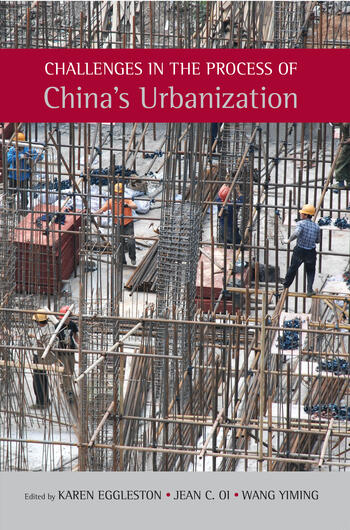
The same institutions that enabled China’s massive urbanization and spurred its economic growth now require further reform and innovation.
To address the issues facing the next phase of the nation’s transformation, the National New Urbanization Plan (2014–20) set ambitious targets for sustainable, human-centered, and environmentally friendly urbanization. This volume explores the key institutional and governance challenges China will face in reaching those goals. Its policy-focused contributions from leading social scientists in the United States and China explore aspects of urbanization ranging from migration and labor markets to agglomeration economies, land finance, affordable housing, and education policy. Subjects covered in the eleven chapters include:
* Institutional problems leading to fiscal pressures on local governments and unequal provision of social services to migrant families
* The history of land financing and threats to its sustainability
* The difficulty of sorting out property rights in rural China
* How administrative redistricting has allowed the urbanization of geographical administrative places to outpace the urbanization of populations within those areas
* How the hukou system may not be the sole, or even primary, mechanism restricting migrants from public goods, such as their childrens’ education
* Whether the nation’s food security is threatened by its ongoing urbanization
* The current state of the provision of low-income housing, and future challenges
Professor Jean Oi is Director of the China Program, William Haas Professor of Chinese Politics, Stanford University; Lee Shau Kee Director of the Stanford Center, Peking University. Her work focuses on comparative politics, with special expertise on political economy and the process of reform in transitional systems. Oi has written extensively on China's rural politics and political economy. Her State and Peasant in Contemporary China (University of California Press, 1989) examined the core of rural politics in the Mao period—the struggle over the distribution of the grain harvest—and the clientelistic politics that ensued. Her Rural China Takes Off (University of California Press, 1999) examined the property rights necessary for development and showed how "local state corporatism" facilitated rapid growth of rural industry. Recent publications include Growing Pains: Tensions and Opportunity in China's Transformation (Brookings Institution Press, 2010), co-edited with Scott Rozelle and Xueguang Zhou; and “Development Strategies and Poverty Reduction in China,” in Yusuf Bangura, ed., The Developmental Road to Poverty Reduction, (2015); and “Rural Development,” in David S. Goodman, ed., Handbook of the Politics of China (Edward Elgar Publishing, 2015).
Professor Karen Eggleston is Director of the Asia Health Policy Program; Deputy Director, Shorenstein Asia-Pacific Research Center. She joined the Walter H. Shorenstein Asia-Pacific Research Center (APARC) in the summer of 2007. She is also a fellow at Stanford's Center for Health Policy/Primary Care and Outcomes Research (CHP/PCOR), and a Faculty Research Fellow of the National Bureau of Economic Research (NBER). Her research focuses on comparative healthcare systems and health reform in Asia, especially China; government and market roles in the health sector; payment incentives; healthcare productivity; and the economics of the demographic transition. Eggleston teaches through Stanford's East Asian studies program and is also affiliated with Stanford's public policy program.
Professor Klaus Desmet is Altshuler Centennial Interdisciplinary Professor at Southern Methodist University; Research Fellow at the Centre for Economic Policy Research. He holds an MSc in Business and Engineering from the Université Catholique de Louvain and a Ph.D. in Economics from Stanford University. He previously was professor at Universidad Carlos III de Madrid and has held visiting positions at a number of institutions, including the University of Illinois, Stanford University and the Bank of Spain. His research focuses on regional economics, international trade, economic growth and diversity.
Books will be available for sale. Cash or check only.
Jean C. Oi
Department of Political Science
Stanford University
616 Serra Street
Stanford, CA 94305-26044
0
joi@stanford.edu
Senior Fellow at the Freeman Spogli Institute for International Studies
William Haas Professor in Chinese Politics
Jean C. Oi is the William Haas Professor of Chinese Politics in the department of political science and a Senior Fellow of the Freeman Spogli Institute for International Studies at Stanford University. She is the founding director of the Stanford China Program at the Walter H. Shorenstein Asia-Pacific Research Center. Professor Oi is also the founding Lee Shau Kee Director of the Stanford Center at Peking University.
A PhD in political science from the University of Michigan, Oi first taught at Lehigh University and later in the Department of Government at Harvard University before joining the Stanford faculty in 1997.
Her work focuses on comparative politics, with special expertise on political economy and the process of reform in transitional systems. Oi has written extensively on China's rural politics and political economy. Her State and Peasant in Contemporary China (University of California Press, 1989) examined the core of rural politics in the Mao period—the struggle over the distribution of the grain harvest—and the clientelistic politics that ensued. Her Rural China Takes Off (University of California Press, 1999 and Choice Outstanding Academic Title, 1999) examines the property rights necessary for growth and coined the term “local state corporatism" to describe local-state-led growth that has been the cornerstone of China’s development model.
She has edited a number of conference volumes on key issues in China’s reforms. The first was Growing Pains: Tensions and Opportunity in China's Transformation (Brookings Institution Press, 2010), co-edited with Scott Rozelle and Xueguang Zhou, which examined the earlier phases of reform. Most recently, she co-edited with Thomas Fingar, Fateful Decisions: Choices That Will Shape China’s Future (Stanford University Press, 2020). The volume examines the difficult choices and tradeoffs that China leaders face after forty years of reform, when the economy has slowed and the population is aging, and with increasing demand for and costs of education, healthcare, elder care, and other social benefits.
Oi also works on the politics of corporate restructuring, with a focus on the incentives and institutional constraints of state actors. She has published three edited volumes related to this topic: one on China, Going Private in China: The Politics of Corporate Restructuring and System Reform (Shorenstein APARC, 2011); one on Korea, co-edited with Byung-Kook Kim and Eun Mee Kim, Adapt, Fragment, Transform: Corporate Restructuring and System Reform in Korea (Shorenstein APARC, 2012); and a third on Japan, Syncretism: The Politics of Economic Restructuring and System Reform in Japan, co-edited with Kenji E. Kushida and Kay Shimizu (Brookings Institution, 2013). Other more recent articles include “Creating Corporate Groups to Strengthen China’s State-Owned Enterprises,” with Zhang Xiaowen, in Kjeld Erik Brodsgard, ed., Globalization and Public Sector Reform in China (Routledge, 2014) and "Unpacking the Patterns of Corporate Restructuring during China's SOE Reform," co-authored with Xiaojun Li, Economic and Political Studies, Vol. 6, No. 2, 2018.
Oi continues her research on rural finance and local governance in China. She has done collaborative work with scholars in China, including conducting fieldwork on the organization of rural communities, the provision of public goods, and the fiscal pressures of rapid urbanization. This research is brought together in a co-edited volume, Challenges in the Process of China’s Urbanization (Brookings Institution Shorenstein APARC Series, 2017), with Karen Eggleston and Wang Yiming. Included in this volume is her “Institutional Challenges in Providing Affordable Housing in the People’s Republic of China,” with Niny Khor.
As a member of the research team who began studying in the late 1980s one county in China, Oi with Steven Goldstein provides a window on China’s dramatic change over the decades in Zouping Revisited: Adaptive Governance in a Chinese County (Stanford University Press, 2018). This volume assesses the later phases of reform and asks how this rural county has been able to manage governance with seemingly unchanged political institutions when the economy and society have transformed beyond recognition. The findings reveal a process of adaptive governance and institutional agility in the way that institutions actually operate, even as their outward appearances remain seemingly unchanged.
China’s Belt and Road Initiative
Learn moreFiscal Politics and Central-Local Relations in China
Learn moreStructural Change in China
Learn moreDirector, China Program at the Walter H. Shorenstein Asia-Pacific Research Center
Lee Shau Kee Director of the Stanford Center at Peking University
Faculty Affiliate at the Stanford Center on China's Economy and Institutions
Hide publication sections
Off
Karen Eggleston
Shorenstein APARC
Stanford University
Encina Hall E301
Stanford, CA 94305-6055
0
karene@stanford.edu
Senior Fellow at the Freeman Spogli Institute for International Studies
Professor, by courtesy, Health Policy
Faculty Research Fellow of the National Bureau of Economic Research
Faculty Affiliate at the Stanford Center on China's Economy and Institutions
Karen Eggleston is a Senior Fellow at the Freeman Spogli Institute for International Studies (FSI) at Stanford University and Director of the Stanford Asia Health Policy Program at the Shorenstein Asia-Pacific Research Center at FSI. She is also a Fellow with the Center for Innovation in Global Health at Stanford University School of Medicine, and a Faculty Research Fellow of the National Bureau of Economic Research (NBER). Her research focuses on government and market roles in the health sector and Asia health policy, especially in China, India, Japan, and Korea; healthcare productivity; and the economics of the demographic transition.
Eggleston earned her PhD in public policy from Harvard University and has MA degrees in economics and Asian studies from the University of Hawaii and a BA in Asian studies summa cum laude (valedictorian) from Dartmouth College. Eggleston studied in China for two years and was a Fulbright scholar in Korea. She served on the Strategic Technical Advisory Committee for the Asia Pacific Observatory on Health Systems and Policies and has been a consultant to the World Bank, the Asian Development Bank, and the WHO regarding health system reforms in the PRC.
Economics of Health and Aging in Asia
View Research ClusterDirector, Asia Health Policy Program at the Walter H. Shorenstein Asia-Pacific Research Center
Stanford Health Policy Associate
CV
Document
egglestoncv_january_2025.pdf
(512.01 KB)
Hide publication sections
Off
Klaus Desmet
<i>Southern Methodist University</i>
Seminars
The Promise and Limitations of Non-Violent Civil Disobedience: Lessons from India's Struggle for Independence
-
Professor Jha will present an overview of a book project, joint with Rikhil Bhavnani, that examines the promise and limitations of non-violent civil disobedience as a means for peaceful political reform. The project draws upon both cross-country comparisons of political movements, and a detailed empirical analyses of India's struggle for independence that draws upon hitherto- untapped secret intelligence reports and archival sources. We lay out both the conditions for success of non-violent movements in general, and also the implications for the subsequent economic and political development of South Asia.
Image

About the colloquia:
In 2016, the Walter H. Shorenstein Asia-Pacific Research Center, in collaboration with the Stanford Center for South Asia, launched a series of public lectures to broaden our understanding and discussion of contemporary India — its enormous domestic potential and problems, its place in the region and the world, and the ambitious agenda of the new Modi administration. Building on the strong engagement of those issues from across the university community and beyond, we are continuing the series, with generous support from the U.S. India Business Council, in the 2017-2018 academic year. We will draw business, political, diplomatic and academic experts from the U.S. and India to explore topics including India’s innovation economy, India-China relations, India’s pivotal role in global health, and U.S.-India relations.
This colloquia is co-sponsored with the Stanford Center for South Asia
Image
Saumitra Jha
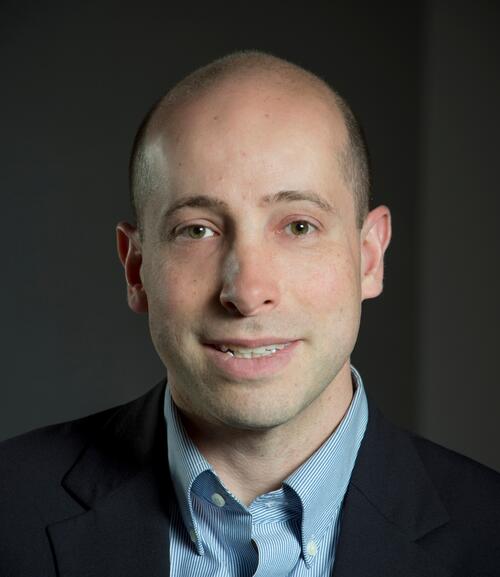
<i>Senior Fellow, Freeman Spogli Institute for International Studies; Associate Professor, Political Economy, Graduate School of Business and by courtesy, Economics and Political Science, Stanford University</i>
Seminars
CDDRL Seminar Featuring Honor Student Awardees
-
Two CDDRL honor students will present their theses at this week's CDDRL Research Seminar on Thursday, May 25, from 12-1:30.
Whitney McIntosh's thesis, "France and the Internationalization of Security: A Conceptual History of Security During the Interwar Years (1919-1933)" will receive a Firestone Medal, given to the top 10% of all honors theses.
Image

Sofia Filippa's thesis, "NGO Family Planning Programs and Indigenous Women's Motivations for Collective Action: A Case Study of Solola, Guatemala ," will receive the CDDRL Award for Outstanding Thesis.
Image

Whitney McIntosh
CDDRL Honors Student
Sofia Filippa
CDDRL Honors Student
Seminars
Taiwan's Defense Policy in the Trump Era
-
Image
This event is co-sponsored by the Taiwan Democracy Project and the U.S.-Asia Security Initiative.
Abstract
Taiwan's defense policy faces several daunting challenges. President Tsai has inherited a complex security situation from her predecessors. The DPP's defense policy blue papers, published prior to Taiwan's January 2016 election, and Taiwan's newly published Quadrennial Defense Review (QDR) outline President Tsai's plans for Taiwan's defense policy. Some of the major defense policy issues Taiwan must face under President Tsai include uncertainties about US Asia policy and Trump's approach to handling relations with China, growing Chinese military capabilities and increasing Chinese air and naval activities around Taiwan, defense budget constraints, and problems associated with Taiwan's attempt to transition to an all-volunteer military. Taiwan's proposed responses as outlined in the 2017 QDR include a defense strategy of "Resolute defense, multi-domain deterrence" and strengthening the island's domestic defense industries, a project that has both defense policy and economic implications. This presentation will assess Taiwan's approach and consider the implications for US policy in Asia.
Bio
Michael S. Chase is a senior political scientist at RAND, a professor at the Pardee RAND Graduate School, and an adjunct professor in the China Studies and Strategic Studies Departments at Johns Hopkins University's School of Advanced International Studies (SAIS) in Washington, D.C.
A specialist in China and Asia-Pacific security issues, he was previously an associate professor at the U.S. Naval War College (NWC) in Newport, Rhode Island, where he served as director of the strategic deterrence group in the Warfare Analysis and Research Department and taught in the Strategy and Policy Department. Prior to joining the faculty at NWC, he was a research analyst at Defense Group Inc. and an associate international policy analyst at RAND. He is the author of the book Taiwan's Security Policy and numerous chapters and articles on China and Asia-Pacific security issues. His work has appeared in journals such as Asia Policy, Asian Security, China Brief, Survival, and the Journal of Strategic Studies.
His current research focuses on Chinese military modernization, China's nuclear policy and strategy and nuclear force modernization, Taiwan's defense policy, and Asia-Pacific security issues. Chase holds a Ph.D. in international affairs and M.A. in China Studies from SAIS and a B.A. in politics from Brandeis University. In addition, he studied Chinese at the Hopkins-Nanjing Center in Nanjing, China.
Goldman Room, 4th Floor
Encina Hall
616 Serra St.
Michael S. Chase
Professor
Pardee RAND Graduate School
Lectures
Taiwan's White Terror from the Vantage of Fiction: A Reading and Discussion
-
Image

Green Island: A Novel
A stunning story of love, betrayal, and family set against the backdrop of a changing Taiwan over the course of the 20th century.
February 28, 1947: Trapped inside the family home amid an uprising that has rocked Taipei, Dr. Tsai delivers his youngest daughter, the unnamed narrator of Green Island, just after midnight as the city is plunged into martial law. In the following weeks, as the Chinese Nationalists act to crush the opposition, Dr. Tsai becomes one of the many thousands of people dragged away from their families and thrown into prison. His return, after more than a decade, is marked by alienation from his loved ones and paranoia among his community - conflicts that loom over the growing bond he forms with his youngest daughter. Years later, this troubled past follows her to the United States, where, as a mother and a wife, she too is forced to decide between what is right and what might save her family - the same choice she witnessed her father make many years before.
As the novel sweeps across six decades and two continents, the life of the narrator shadows the course of Taiwan's history from the end of Japanese colonial rule to the decades under martial law and, finally, to Taiwan's transformation into a democracy. But, above all, Green Island is a lush and lyrical story of a family and a nation grappling with the nuances of complicity and survival, raising the question: How far would you be willing to go for the ones you love?
About the Author
Shawna Yang Ryan teaches fiction in the Creative Writing Program at the University of Hawaii at Manoa. She is the author of Water Ghosts and Green Island, a novel set during Taiwan's White Terror. In 2015, she was the recipient of the Elliot Cades Emerging Writer Award, Hawaii's highest literary honor.
Oksenberg Room, 3rd Floor
Encina Hall
616 Serrra St.
Shawna Yang Ryan
Author
University of Hawai'i, Manoa
Lectures
Greatest cyber threat to democracies in ‘brain space'
News Type
News
Date
Paragraphs
While the United States has no peers in conventional military power, it is especially vulnerable – as a free and democratic society – to cyber misinformation campaigns, a Stanford scholar says.
Herbert Lin, a senior research scholar for cyberpolicy and security at Stanford’s Center for International Security and Cooperation (CISAC), is the co-author of a new draft working paper that spells out the perilous risks facing democratic, wired-up countries around the world.
America’s adversaries are seeking “asymmetric” methods for social disruption, rather than direct military conflict, Lin said.
“Cyber warfare is one asymmetric counter to Western (and especially U.S.) military advantages that depend on the use of cyberspace,” wrote Lin and his co-author Jackie Kerr, a research fellow at the Lawrence Livermore National Laboratory.
This new type of cyber aggression is aimed at winning – and confusing – hearts and minds, the very control centers of human existence, Lin said.
As a result, “information/influence warfare and manipulation,” or IIWAM as Lin describes it, poses profound implications for Western democracies, even though much of it may not be illegal under international law. This approach is based on the deliberate use of information by one party on an adversary to confuse, mislead, and ultimately to influence the choices and decisions that the adversary makes.
A recent example in point would be the 2016 Russian hacking of the U.S. presidential election and the surge of so-called “fake news.”
Lin points out that while misinformation campaigns are not new, the technology to spread it far and wide globally is. He noted that the patron saint of distorting reality for war-like purposes is Sun Tzu, who wrote that, “The supreme art of war is to subdue the enemy without fighting.”
While traditional cyber attacks typically hit hard targets like computer systems, cyber “influence” campaigns are conducted over longer periods of time and rely on soft power – propaganda, persuasion, culture, social forces, confusion and deception, Lin said.
Words and images
How does it work? Lin explains:
“Victory is achieved by A when A succeeds changing B’s political goals so that they are aligned with those of A. But such alignment is not the result of B’s 'capitulation' or B’s loss of the ability to resist – on the contrary, B (the losing side) is openly willing.” That is, such victory shares the focus on subverting the opponent’s will, though not on destroying his military forces.
The ammunition in these cyberspace battles are “words and images,” the kind that persuade, inform, mislead, and deceive so that the adversary cannot respond militarily. In the example of a “fake news” story, they often take place below legal thresholds of “use of force” or “armed attack,” and at least in an international legal sense, do not trigger a military response.
The target is the “adversary’s perceptions,” which reside in the “cognitive dimension of the information environment.” In other words, such cyber warfare focuses on “damaging knowledge, truth, and confidence, rather than physical or digital artifacts,” according to Lin. It is the “brain-space.”
Additionally, IIWAM injects fear, anger, anxiety, uncertainty, and doubt into the adversary’s decision making processes, he added. Success is defined as altering such perceptions so the target makes choices favoring the aggressor.
“Sowing chaos and confusion is thus essentially operational preparation of the information battlefield – shaping actions that make the information environment more favorable for actual operations should they become necessary,” the researchers wrote.
These cyber manipulations often prey upon cognitive and emotional biases present in the psychological and mental makeup of human beings, Lin said.
For example, media channels such as Fox News play to “confirmation bias” for individuals with a right-of-center orientation, and similarly for MSNBC for those with a left-of-center, orientation, he wrote. Confirmation bias is the tendency to interpret new evidence as confirmation of one's existing beliefs or theories.
Countering misinformation
“Naming and shaming” is probably ineffective against many nation states conducting cyber disinformation campaigns, Lin said. And the idea that a government like the U.S. can quickly respond to misinformation created in the private sphere is unlikely to be effective as well.
What, then, might work? Lin suggests new tactics are needed, as no existing approach seems adequate. For example, Facebook is deploying a new protocol for its users to flag questionable news sites. Google has banned fake news web sites from using its online advertising service. Twitter, YouTube, and Facebook shut down accounts that they determine are promoting terrorist content. He noted that a recent Facebook letter from CEO Mark Zuckerberg states that, “Our approach will focus less on banning misinformation and more on surfacing additional perspectives and information, including that fact checkers dispute an item's accuracy.”
But such measures are unlikely to stem the “rising tide of misinformation conveyed” through cyber warfare, Lin said, because they mostly require users to do additional mental work.
Wired world riskier
Today’s Internet-driven Western world offers countless opportunities for cyber influence mischief, Lin wrote.
“Democracy has rested on an underlying foundation of an enlightened, informed populace engaging in rational debate and argument to sort out truth from fiction and half-truth in an attempt to produce the best possible policy and political outcomes,” Lin wrote.
Cyber manipulators have exploited an arguable gap between ideals and reality in democratic systems – “rendered it much more questionable” – through the tremendous reach and speed of misinformation, he said. Many countries cannot deal with the onslaught of such focused efforts. This serves to make the democratic process look weak and unstable in the eyes of its citizens. The same dynamic does not apply equally around the world.
“Cyber weapons pose a greater threat to nations that are more advanced users of information technology than to less-developed nations,” Lin wrote.
He said that less developed or authoritarian countries do not have much Internet infrastructure or that wield control over expression – North Korea is an example.
MEDIA CONTACTS
Herbert Lin, Center for International Security and Cooperation: (650) 497-8600, herbert.s.lin@stanford.edu
Clifton B. Parker, Center for International Security and Cooperation: (650) 725-0224, cbparker@stanford.edu
Hero Image

All News button
1
Shorenstein APARC Director Gi-Wook Shin comments on North Korea to Yonhap News
News Type
Commentary
Date
Paragraphs
Shorenstein Asia-Pacific Research Center (APARC) Director Gi-Wook Shin spoke with Yonhap News about the situation on the Korean Peninsula, following a visit to U.S. Pacific Command with a delegation of scholars from the Freeman Spogli Institute for International Studies.
While there, U.S. officials conveyed that the United States has the capability to strike North Korea should the president make that call.
U.S. officials said that North Korea had already moved into the “red zone,” and that the Trump administration has the view that it cannot miss a window of opportunity to stop the nuclear and missile program before it advances further.
Shin also said he believed that the Trump administration holds a view that the policy of “strategic patience” failed under the Obama administration, and that growing tensions on the Peninsula have compelled the Trump administration to consider – with greater plausibility – the option of a preemptive military strike.
Regional tensions have risen in the midst of impending political shifts in South Korea, where a new president will assume office following a snap election this May, and in China, where the Party Congress will meet to appoint new senior leadership of the Chinese Communist Party this fall.
Whoever becomes president in South Korea should place relations with North Korea at the top of the agenda and consider sending an envoy early on to meet its leader Kim Jong-un in-person, Shin said.
The Yonhap interview can be viewed in Korean, and a shorter version, in English. A related analysis piece is also available on MK News (in Korean).
Hero Image

All News button
1