Governance

FSI's research on the origins, character and consequences of government institutions spans continents and academic disciplines. The institute’s senior fellows and their colleagues across Stanford examine the principles of public administration and implementation. Their work focuses on how maternal health care is delivered in rural China, how public action can create wealth and eliminate poverty, and why U.S. immigration reform keeps stalling. 

FSI’s work includes comparative studies of how institutions help resolve policy and societal issues. Scholars aim to clearly define and make sense of the rule of law, examining how it is invoked and applied around the world. 

FSI researchers also investigate government services – trying to understand and measure how they work, whom they serve and how good they are. They assess energy services aimed at helping the poorest people around the world and explore public opinion on torture policies. The Children in Crisis project addresses how child health interventions interact with political reform. Specific research on governance, organizations and security capitalizes on FSI's longstanding interests and looks at how governance and organizational issues affect a nation’s ability to address security and international cooperation.

-

Abstract: State interventions against drug trafficking organizations (DTOs) sometimes work to improve security, but often exacerbate violence. To understand why, this paper offers a theory about different social order dynamics among five types of criminal regimes – Insurgent, Bandit, Symbiotic, Predatory, and Anarchic. These differ according to whether criminal groups confront or collude with state actors; predate or cooperate with the community; and hold a monopoly or contest territory with rival DTOs. Police interventions in these criminal orders pose different challenges and are associated with markedly different local security outcomes. Evidence for the theory is provided by the use a multi-method research design combining quasiexperimental statistical analyses, extensive qualitative research and a large N survey in the context of Rio de Janeiro’s “Pacifying Police Units” (UPPs), which sought to reclaim control of the slums from organized criminal groups.


Bio: Beatriz Magaloni is a Professor of Political Science and Senior Fellow at the Freeman Spogli Institute at Stanford University. She is also an affiliated faculty at the Stanford Center on Global Poverty and Development.

Her research focuses on the political economy of development. Beatriz’s work falls into four themes:  the study of authoritarian regimes; distributive politics; “traditional” forms of governance and how these compare to “modern” democratic institutions; and drug-trafficking violence and citizen security. Much of my research has been on Latin America.  

Beatriz is the founding director of the Poverty, Violence + Governance Lab, a place for action–oriented research that establishes partnerships with government agencies, police departments, and civil society organizations to conduct research that aims to generate knowledge as to what works and doesn’t to control violence, improve the functioning and accountability of security institutions, restrain human rights abuses, and increase opportunities for at-risk youth. The Lab engages researchers and students — undergraduates, M.A. and Ph.D. candidates — from the fields of political science, education, economics, international policy studies, and engineering.

She is the author of Voting for Autocracy (2006, Cambridge University Press –winner of the Leon D. Epstein Outstanding Book Award for the best book written in the previous two years on parties and elections and the Best Book Award from the American Political Science Association’s Comparative Democratization Section). Beatriz is also the author of The Political Logic of Poverty Relief: Electoral Strategies and Social Policy in Mexico(2016, Cambridge University Press, co-authored with Alberto Diaz-Cayeros and Federico Estévez).

Beatriz’s articles have appeared in the American Journal of Political Science, Journal of Conflict Resolution, World Development, Comparative Political Studies, Annual Review of Political Science, Latin American Research Review, International Journal of Educational Development, Latin American Politics and Society, International Journal of Public Opinion Research, Journal of Theoretical Politics, and Política y Gobierno.

Beatriz received her Ph.D. in political science from Duke University. She also holds a Law Degree from the Instituto Tecnológico Autónomo de México (ITAM). 

Beatriz Magaloni-Kerpel Associate Professor Stanford University
Seminars
616 Serra StreetEncina Hall E301Stanford, CA 94305-6055
0
ketian_zhang.jpg Ph.D.

Ketian Vivian Zhang joined the Walter H. Shorenstein Asia-Pacific Research Center (APARC) as the 2018-2019 Shorenstein Postdoctoral Fellow in Contemporary Asia. Ketian studies coercion, economic sanctions, and maritime territorial disputes in international relations and social movements in comparative politics, with a regional focus on China and East Asia. She bridges the study of international relations and comparative politics and has a broader theoretical interest in linking international security and international political economy. Her book project examines when, why, and how China uses coercion when faced with issues of national security, such as territorial disputes in the South and East China Seas, foreign arms sales to Taiwan, and foreign leaders’ reception of the Dalai Lama. Ketian's research has been supported by organizations such as the Belfer Center for Science and International Affairs at the Harvard Kennedy School, Institute for Security and Conflict Studies at George Washington University, the Smith Richardson Foundation, and the Chiang Ching-kuo Foundation.

At Shorenstein APARC, Ketian worked on turning parts of her book project into academic journal papers while conducting fieldwork for her next major project: examining how target states of Chinese coercion respond to China's assertiveness, including the business community and ordinary citizens.

Ketian received her Ph.D. in Political Science at the Massachusetts Institute of Technology in 2018, where she is also an affiliate of the Security Studies Program. Before coming to Stanford, Ketian was a Predoctoral Research Fellow in the International Security Program at the Belfer Center for Science and International Affairs at the Harvard Kennedy School. Ketian holds a B.A. in Political Science and Sociology from the University of Wisconsin-Madison and was previously a research intern at the Institute for Policy Studies in Washington, D.C., where she was a contributor to its website Foreign Policy in Focus.

2018-2019 Shorenstein Postdoctoral Fellow in Contemporary Asia

The CISAC Research Seminar Series features speakers that present on topics related to international security and their policy implications. The purpose is to encourage interchange between the scientific and non-scientific communities at CISAC and within Stanford, to further CISAC’s goals of educating students and the public, conducting good scholarly research and influencing policy.

0
Eloise Duvillier

Eloise Duvillier is the Program Manager of the Program on Democracy and the Internet at the Cyber Policy Center. She previously was a HR Program Manager and acting HR Business Partner at Bytedance Inc, a rapidly-growing Chinese technology startup. At Bytedance, she supported the globalization of the company by driving US acquisition integrations in Los Angeles and building new R&D teams in Seattle and Silicon Valley. Prior to Bytedance, she led talent acquisition for Baidu USA LLC’s artificial intelligence division. She began her career in the nonprofit industry where she worked in foster care, HIV education and emergency response during humanitarian crises, as well as helping war-torn communities rebuild. She graduated from University of California, Berkeley with a bachelor’s degree in Development Studies, focusing on political economics in unindustrialized societies.

Program Manager, Program on Democracy and the Internet
Authors
Thomas Holme
News Type
News
Date
Paragraphs


The two-day forum, part of a project of the American Academy of Arts and Sciences, led by the Freeman Spogli Institute’s Karl Eikenberry and Stephen Krasner, gathered experts to examine trends in civil wars and solutions moving forward.   


Image
Attendees at a two-day forum, part of a project of the American Academy of Arts and Sciences

The Council on Foreign Relations presently tracks six countries in a state of civil war, including three (South Sudan, Afghanistan, and Yemen) where the situation is currently worsening. Furthermore, three states (Central African Republic, Myanmar, and Nigeria) are experiencing sectarian violence with the potential to become larger conflicts. With two months still remaining in 2018, the combined fatalities in Afghanistan, Syria, and Yemen alone is fast approaching 100,000 for the year.

It was against this backdrop that Shorenstein APARC’s U.S.-Asia Security Initiative (USASI), the American Academy of Arts and Sciences (AAAS), and the School for International Studies at Peking University recently co-hosted the security workshop “Civil Wars, Intrastate Violence, and International Responses.” Held in Beijing, on October 22-23, the workshop brought together thirty-five U.S. and international experts to gain a wider perspective on intrastate violence and consider the possibilities for, and limits of, intervention. The workshop is the latest activity of the AAAS project on Civil Wars, Violence, and International Responses, chaired by Ambassador Karl Eikenberry, director of USASI, and by Stephen Krasner, senior fellow at the Freeman Spogli Institute for International Studies (FSI) and professor of international relations.

“Some of the major discussion topics included the appropriate political and economic development models to apply to fragile states recovering from internal conflict, justifications for intervention, and the likely impact of great power competition on the future treatment of civil wars." - Karl Eikenberry

Workshop participants included academics and professionals with expertise in political science, global health, diplomacy, refugee field work, United Nations, and the military. Countries represented at the table included the United States, Ethiopia, France, and China. Throughout the two-day session, they examined three crucial questions: What is the scope of intrastate conflicts and civil wars, and to what extent is it attributable to domestic or international factors? What types of threats to global security emanate from state civil wars? What policy options are available to regional powers and the international community to deal with such threats?


Image
USASI Director Karl Eikenberry addresses one of the sessions

USASI Director Karl Eikenberry addresses one of the sessions

China’s Emerging Role in Addressing Intrastate Violence

The workshop’s timing and location was prescient. Over the past two decades, China’s global exposure–through trade, investment, and financing–has increased dramatically. Coupled with a growing number of its citizens living abroad, China’s equity in other states has reached the point where it has a direct interest in those experiencing or are at risk of political instability and internal violence. Indeed, through its ambitious Belt and Road Initiative, China has the opportunity to help stabilize fragile states by stimulating economic development.

“The workshop revealed, at least for me, that China is backing away from its absolute defense of sovereignty and non-intervention,” said Stephen Krasner. “As Chinese interests have expanded around the world, and as both its investments and the number of its citizens living abroad have increased, the Chinese have become more concerned with political conditions in weakly governed countries.”

With China’s growing policy and academic interests in addressing civil wars and intrastate violence, as well as its higher international profile in places like United Nations peacekeeping operations, the Beijing event provided an excellent opportunity for Chinese experts to exchange views with their international colleagues.

Paul H. Wise, MD, MPH; Senior Fellow at Stanford Health Policy

Paul H. Wise, MD, MPH; Senior Fellow at Stanford Health Policy

Where We are Today, Where We Go Tomorrow

The Beijing workshop was arranged into four sessions, with themes focusing on trends in intrastate violence, the threats it poses to international security, the limits of intervention, and advice to policymakers.

Each panel included presentations of prepared papers, moderator comments, and an open discussion by all participants. A fifth and final session provided an opportunity to summarize the preceding discussions. The workshop then closed out with an open conversation, where participants offered insight and policy recommendations developed over the preceding two days of dialogue.

Image
Martha Crenshaw seated at round table
“The workshop,” observed Martha Crenshaw (shown above), a Senior Fellow at FSI, “was a unique opportunity to exchange views with Chinese colleagues on the subject of civil conflict in the contemporary world. A valuable learning experience for all of us."

The "Civil Wars, Intrastate Violence, and International Responses” workshop marks the second phase of the AAAS project by the same name that launched in 2015. The first phase of the project culminated in the publication of 28 essays across two volumes of the AAAS quarterly journal Dædalus. The ongoing second phase consists of a series of roundtables and workshops in which project participants engage with academics and with government and international organization officials to build a larger conceptual understanding of the threats posed by the collapse of state authority associated with civil wars, and to contribute to current policymaking. Project activities have included meetings with the United Nations leadership and staff; academic activities in the United States; sessions with the U.S. executive and legislative branches; and a visit to Nigeria.

Throughout the workshop, Chatham House Rule of non-attribution applied to all dialogue. A workshop report will be published by the co-hosts in early 2019.

The U.S.-Asia Security Initiative is part of Stanford University’s Walter H. Shorenstein Asia-Pacific Research Center (APARC). Led by former U.S. Ambassador and Lieutenant General (Retired) Karl Eikenberry, USASI seeks to further research, education, and policy relevant dialogues at Stanford University on contemporary Asia-Pacific security issues.

March 1, 2019 update: the workshop report is now available online. Download the report >> 

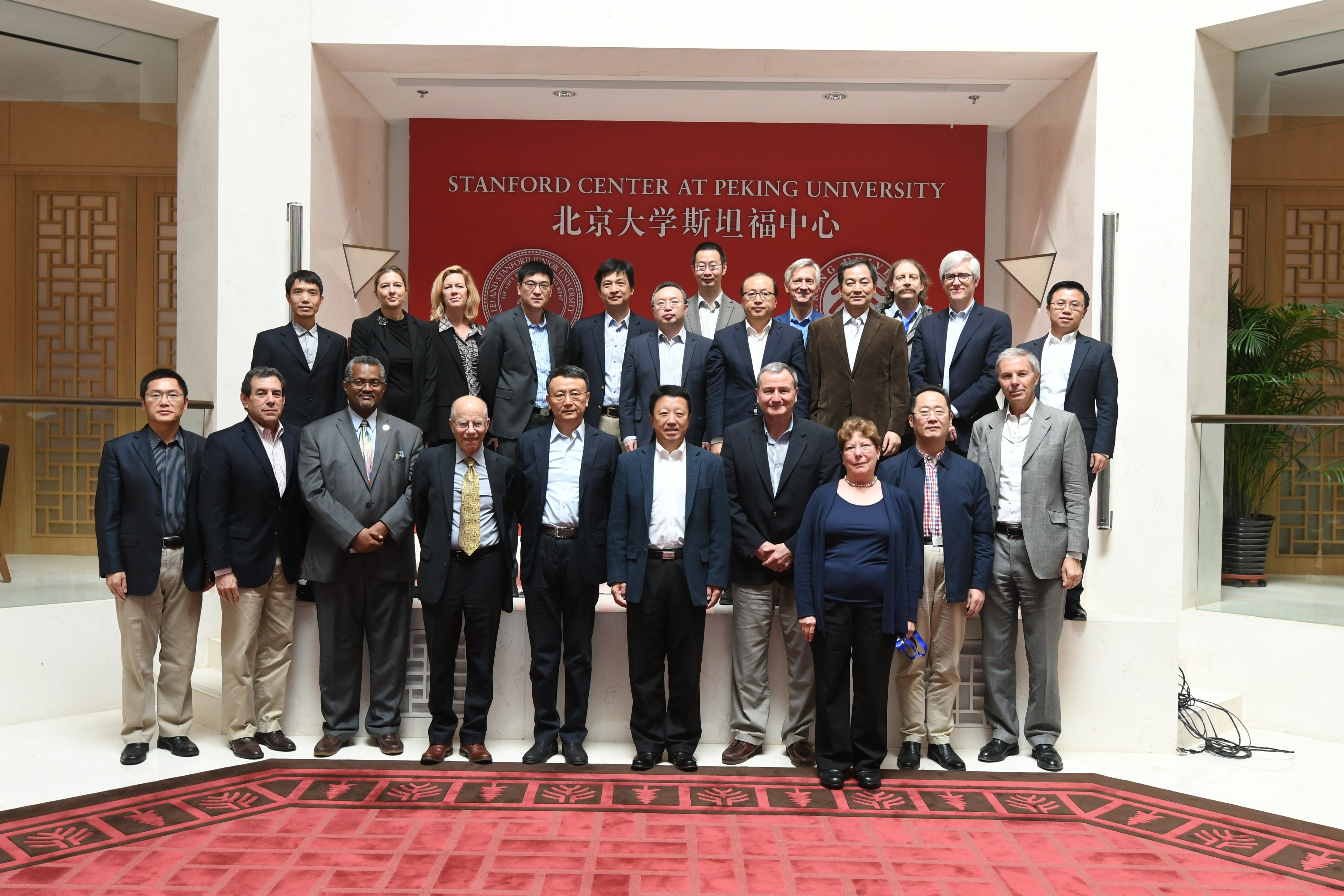
Group photo of Participants in the “Civil Wars, Intrastate Violence, and International Responses” workshop

Participants in the “Civil Wars, Intrastate Violence, and International Responses” workshop

Hero Image
Karl Eikeberry at Civil Wars, Intrastate Violence, and International Response Workshop
All News button
1
Authors
News Type
News
Date
Paragraphs

How can we make sense of the tragedy in Syria? Northwestern University political scientist Wendy Pearlman has conducted open-ended interviews with more than 300 displaced Syrians across the Middle East and Europe from 2012 to 2017. She has brought together these personal stories in the acclaimed new book, We Crossed a Bridge and It Trembled: Voices from Syria (HarperCollins 2017). In a talk dated February 7, 2018, Pearlman shared a selection of voices from the book, along with her own commentary and analysis, to explain the origins and evolution of the Syrian conflict, as well as what it has been like for the ordinary people who have lived its unfolding. Co-hosted by the Program on Arab Reform and Democracy and the Abbasi Program in Islamic Studies, the talk offered a humanistic interpretation of the current conflict in Syria and how it has transformed those who have experienced it. The video of the talk is available through the link below.


Hero Image
screen shot 2018 11 07 at 7 25 31 pm
All News button
1
-

Author Yochai Benkler sits down with Kelly Born to discuss Network Propaganda: Manipulation, Disinformation, and Radicalization in American Politics. According to the New Yorker, the Washington conventional wisdom presupposes a kind of symmetry between our polarized political parties. Liberals and conservatives, it is said, live in separate bubbles, where they watch different television networks, frequent different Web sites, and absorb different realities. The implication of this view is that both sides resemble each other in their twisted views of reality. Network Propaganda challenges that received wisdom through the most comprehensive study yet published on media coverage of American presidential politics from the start of the election cycle in April 2015 to the one year anniversary of the Trump presidency. Analyzing millions of news stories together with Twitter and Facebook shares, broadcast television and YouTube, the book provides a comprehensive overview of the architecture of contemporary American political communications. Through data analysis and detailed qualitative case studies of coverage of immigration, Clinton scandals, and the Trump Russia investigation, the book finds that “the right-wing media ecosystem differs categorically from the rest of the media environment,” and has been much more susceptible to “disinformation, lies and half-truths.”


Register for this free event online at:  pacscenter.stanford.edu/event


6:00—6:30 PM  Doors Open and Pre-Reception

6:30—7:30 PM  Program 7:30—8:00 PM

Q&A 8:00—8:30 PM  Book Signing and Post-Reception
 

PAUL BREST HALL 555 SALVATIERRA WALK STANFORD, CA 94305

Yochai Benkler Berkman Professor of Entrepreneurial Legal Studies at Harvard Law School
Kelly Born Program Officer, Madison Initiative, William and Flora Hewlett Foundation
Seminars
News Type
News
Date
Paragraphs

On August 9, 2018 the Shorenstein Asia Pacific Research Center (APARC) Japan Program hosted a conference, "Break Through: Women in Silicon Valley, Womenomics in Japan." Women thought-leaders and entrepreneurs from Stanford, Silicon Valley, and Japan came together to discuss innovative ideas for narrowing the gender gap, and cultivating interpersonal support networks and collaboration across the pacific. The program combined panel presentations with participatory exercises and startup showcases which afford participants the opportunity to 1) discuss progress and challenges in women's advancement in Silicon Valley and Japan, 2) share practices and organizational features that better enable the hiring and retaining of women, 3) showcase Silicon Valley and Japanese women entrepreneurs and 4) provide tools for branding and building support networks. 

The Break Through conference was supported by the Acceleration Program in Tokyo for Women (APT), a program that aims to shape a new narrative by providing opportunities for women entrepreneurs to build networks, receive mentoring, and become a focal point for dynamism. The program, spearheaded by Tokyo's first female governor, Yuriko Koike, is undertaken by the Tokyo Metropolitan government and supported by Tohmatsu Venture Support. 

The full conference report, now available, outlines the issues and offers an analysis of the themes that were discussed in the presentations, panels and participatory exericses throughout the day. 

Download the Full Report

Hero Image
picture 3
All News button
1
Paragraphs

On August 9, 2018, the Shorenstein Asia Pacific Research Center (APARC) hosted a conference, “Break Through: Women in Silicon Valley, Womenomics in Japan" with support from the Acceleration Program in Tokyo for Women (APT). Women thought-leaders and entrepreneurs from Stanford, Silicon Valley, and Japan came together to discuss innovative ideas for narrowing the gender gap, and cultivated interpersonal support networks and collaboration across the Pacific. The report, which is an outcome of the conference, offers an analysis and discussion of the themes and takeaways from the day. 

All Publications button
1
Publication Type
Policy Briefs
Publication Date
Journal Publisher
Japan Program at the Shorenstein Asia-Pacific Research Center
-
Has the age of party democracy passed? Parties throughout advanced democracies face challenges of voter distrust, declining associational ties, and the rise of far-right and populist movements. This conference brings together scholars of American and comparative parties and party systems to understand how and why parties have evolved, and to ask what role parties play in twenty-first century governance. 
Browse the conference webpage to learn more. 


Conferences
Subscribe to Governance