FSI's research on the origins, character and consequences of government institutions spans continents and academic disciplines. The institute’s senior fellows and their colleagues across Stanford examine the principles of public administration and implementation. Their work focuses on how maternal health care is delivered in rural China, how public action can create wealth and eliminate poverty, and why U.S. immigration reform keeps stalling.
FSI’s work includes comparative studies of how institutions help resolve policy and societal issues. Scholars aim to clearly define and make sense of the rule of law, examining how it is invoked and applied around the world.
FSI researchers also investigate government services – trying to understand and measure how they work, whom they serve and how good they are. They assess energy services aimed at helping the poorest people around the world and explore public opinion on torture policies. The Children in Crisis project addresses how child health interventions interact with political reform. Specific research on governance, organizations and security capitalizes on FSI's longstanding interests and looks at how governance and organizational issues affect a nation’s ability to address security and international cooperation.
Venezuela finds itself mired in an unprecedented economic and political crisis. The economy has contracted nearly 50% since President Maduro took office in 2013, oil production has declined to levels below those last seen in 1950, and inflation has reached an estimated annual rate of over 1.3 million percent. Millions have fled abroad in search of a better life, making Venezuela’s migration crisis the second worst in the world after Syria’s. In 2019, the ruling Maduro regime faces new challenges at home from an opposition that has declared it illegitimate, and from abroad due to diplomatic non-recognition by over 50 governments and the imposition of U.S. sanctions on the Venezuelan oil industry. This talk will examine the apparently intractable political and economic crisis facing Venezuela, the role of the military in keeping the present government in power, and the impact of the latest domestic and international pressures on the Maduro regime
Speaker Bio:
Image
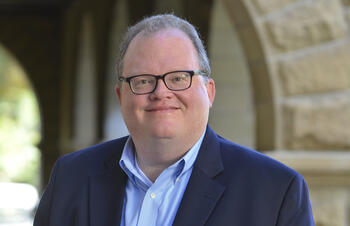
Harold Trinkunas is the Deputy Director of and a Senior Research Scholar at the Center for International Security and Cooperation at the Freeman Spogli Institute for International Studies at Stanford University. Prior to arriving at Stanford, Dr. Trinkunas served as the Charles W. Robinson Chair and senior fellow and director of the Latin America Initiative in the Foreign Policy program at the Brookings Institution. His research focuses on issues related to foreign policy, governance, and security, particularly in Latin America. Trinkunas has written on emerging powers and the international order, ungoverned spaces, terrorism financing, borders, democratic civil-military relations, drug policy and Internet governance. He received his doctorate in political science from Stanford University in 1999. He was born in Maracaibo, Venezuela.
Harold Trinkunas
Deputy Director of and a Senior Research Scholar at the Center for International Security and Cooperation at the Freeman Spogli Institute for International Studies at Stanford University
This talk develops a framework to analyze how strategic politicians make tradeoffs and prioritize among six objectives (winning and staying in office, “good policy”, institutional power, career advancement, personal gain, and historical legacy) in particular situations. It focuses on the nature of the political vehicles (notably parties) within which politicians operate and broader political opportunity structures as determinants of how objectives are prioritized and strategic choices are made. While drawing evidence from a variety of political systems, the empirical focus will be on social policy choices in advanced industrial countries.
Speaker Bio:
Image
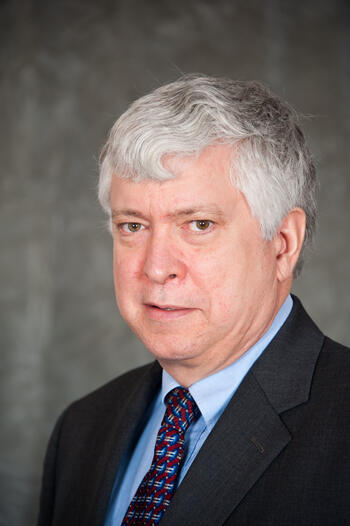
R. Kent Weaver is Professor of Public Policy and Government at Georgetown University and a Visiting Professor at Stanford University in winter and spring 2019. His research focuses on the strategic behavior of politicians, political institutions, and comparative social policy.
Professor of Public Policy and Government at Georgetown University and a Visiting Professor at Stanford University
The most violent places in the world today are not at war. Brazil has had more violent death than Syria for the last three years. More people have died in Mexico in the last decade than in Iraq and Afghanistan combined. The world's worst violence is rooted in highly unequal, highly polarized democracies that are buckling under a maelstrom of gangs, organized crime, political conflict, and state brutality. Such devastating violence can feel hopeless, yet some places--from Colombia to the Republic of Georgia--have been able to recover.
A Savage Order uncovers what makes these locales so bloody - including the U.S., which includes four of the world's fifty most violent cities. It then charts how they can get better. Based on years of research and field work around the world, A Savage Order overturns much conventional wisdom about the causes of bloodshed, and how the most violent places in the world can recover.
Speaker Bio:
Image
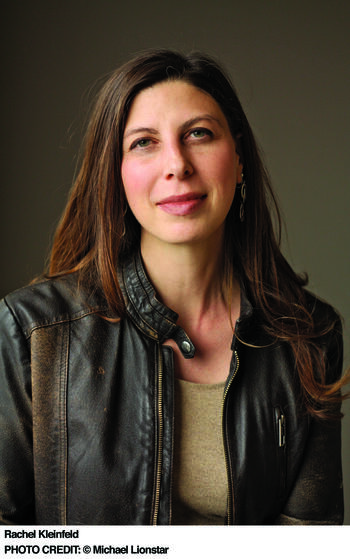
Dr. Rachel Kleinfeld advises governments, philanthropists, and activists on how democracies make major social change. As a senior fellow at the Carnegie Endowment for International Peace, she particularly focuses on countries facing violence, corruption, and other problems of poor governance.
In 2010, Time magazine named her one of the top 40 political leaders under 40 in America for her decade of work as the founding CEO of the Truman National Security Project, which assisted scores of national, state, and local political campaigns, advocated for legislation, and fostered a new generation of military veterans and national security leaders to advance policies that would enhance global security, democracy, and human dignity. In 2011, former secretary of state Hillary Clinton appointed Kleinfeld to the Foreign Affairs Policy Board, which advises the secretary of state quarterly, a role she served through 2014. In 2015, she was named a Young Global Leader of the World Economic Forum.
Kleinfeld is the author of three books, including A Savage Order: How the World’s Deadliest Countries Can Forge a Path to Security (Knopf, 2018). Her previous book, Advancing the Rule of Law Abroad: Next Generation Reform (Carnegie, 2012), was chosen by Foreign Affairs magazine as one of the best foreign policy books of 2012. She appears frequently in the media, from the Wall Street Journal and the New York Times, to the BBC, Fox & Friends, and radio and television in the U.S. and overseas.
Kleinfeld received her B.A. from Yale University and her M.Phil. and D.Phil. from Oxford University, where she was a Rhodes scholar. She lives with her husband and two daughters in New Mexico and works in Washington, D,C., but hearkens often to the log house on a dirt road where she was raised in her beloved Fairbanks, Alaska
Ground Floor Conference room (E008)
Rachel Kleinfeld
Senior fellow at the Carnegie Endowment for International Peace
Watch Francis Fukuyama's lecture he gave in Vienna in March, 2019 on Identity and the Nation State’s Future as part of The ERSTE Foundation Tipping Point Talks 2019. Full video here.
U.S. and Chinese trade negotiators remain engaged in intensive talks, although it is yet to be seen whether and when they can strike a final deal. But even if they are able to reach an agreement, in the confrontation between Washington and Beijing “the trade part is incidental: it’s a technology war, not a trade war,” said Ambassador Craig Allen, president of the U.S.-China Business Council (USCBC), speaking at Shorenstien APARC on March 11.
Allen has spent much of his career in Asia and dealing with China-related issues from various posts within government, including serving as deputy assistant secretary for China at the U.S. Department of Commerce. As head of USCBC, he now leads an organization representing over 200 American companies doing business with China. He delivered his remarks at a seminar that is part of the China Program’s colloquia series about the future of U.S.-China relations.
Allen first brought the audience up to speed on the latest developments in the U.S.-China trade talks, where there are still outstanding questions such as whether the tariffs end now or later and whether a trade agreement will include a unilateral or bilateral enforcement mechanism. He expressed optimism that an agreement would bring significant progress on multiple fronts from the U.S. perspective, including enormous expansion in Chinese purchase of U.S. goods in various sectors; progress over IP rights; progress in eliminating forced technology transfers; improved market access to China; and even renewed commitment to reducing cybertheft. Yet Allen also suggested that these changes, which the Chinese are willing to make, are the ones that they know serve to make their markets more competitive in the end.
Structural vs. Cosmetic Changes
Allen was far less confident, however, about the prospects of addressing structural issues with China, that is, areas where the Chinese economy is an outlier to the global economy, violates WTO rules, and greatly differs from OECD norms. This is because these core dimensions touch on the role of the Chinese Communist Party (CCP) in the government and in the economy.
He counted among these structural issues the enormous role of state-owned enterprises (SOEs); the scale of subsidies going to the technology sector and their lack of transparency; prohibitions on foreign investment in sensitive industries like telecommunications and media; the unequal treatment of foreign companies; discriminatory implementation of regulations and the lack of an appeals process; uneven implementation of IP rights; the outsized role of the CCP in the economy; the dominant role of industrial policy; Xi Jinping government’s aggressive techno-nationalism, which is manifested in its calls for indigenous innovation and for self-reliance; and its excessive control over the information space.
“China is willing to make cosmetic changes to these problems,” said Allen, “even muscular changes, but no changes to the skeleton, the core, the system under which the CCP has complete control.”
A trade deal might remove the immediate threat of tariffs as a source of friction between the United States and China, noted Allen, but the essence of the conflict is not about trade: rather, it has to do with technology. “The trade war will morph into a technology war,” he predicted, and 2019 will mark a change in that direction, making life much more complicated for both American—especially Silicon Valley—and Chinese companies.
A Security Dilemma
Both the United States and China are now locked in a “security dilemma,” noted Allen. “One side takes defensive measures which the other side perceives as aggressive measures,” and “we are ratcheting up on national security.” The U.S. Department of Commerce, for instance, is looking to change the ways of dealing with Chinese companies and to expand export controls, extending their scope to a whole new category of “emerging technologies,” regarding whose definition there is intensive debate in Washington. Depending on its scope, a broad definition could jeopardize hundreds of thousands of projects and disrupt investment and global supply chains.
On the Chinese side, Allen noted, there is a parallel process going on. In 2019, we should expect China to similarly impose tightened export controls, he cautioned, cybersecurity law, personal identification information law, data localization requirements, and a strengthened national security law that, among other requirements, will ratchet up audit requirements of American companies seeking market access and the type of companies allowed to have only Chinese-origin equipment.
Both countries have given in to exaggerated security concerns that threaten the global commons, argued Allen. “American and Chinese companies have worked together in the innovation space for years in a beautiful manner. It has been a remarkably productive exercise over the last four decades that brought tremendous benefit for everyone. You can't imagine a company like Apple without China, and you can't imagine China without a company like Apple. Now all this is being put into question.”
The heightened security measures on both sides are fraught with threats to research institutions, businesses, and the innovation ecosystem at large. Academic exchanges, students, and professors will be deemed exports of knowledge subject to technology licensing laws, cautioned Allen. He asked: “How many thousands of collaborative research ventures will be impacted?”
We are entering the technology war at the wrong time, said Allen, just as China is becoming a middle-income country with hundreds of millions of middle-class citizens who want to buy American-made goods and services that U.S. companies want to sell to them. Now is the time to take advantage of China’s transitioning to a consumption-led economy, he claimed, and “become a good friend of Chinese middle-class consumers.”
China is also forging ahead with its innovative economy, particularly in areas such as AI, 5G, and aspects of the life sciences. “This isn’t a one-way street,” emphasized Allen. “We need their brains as much as they need ours […] China will remain an innovative country, and we need to deal with that.”
“This is not a time to panic,” he pointed out, “but a time to reset and ask: ‘What are the rules of the road for technology cooperation and competition? What are the rules for enforcement and how do we enforce the new rules fairly?”
“If China follows its WTO obligations then we would get there,” Allen claimed. “But if President Xi is going to be single-minded about self-reliance and cutting foreign influence on the Chinese economy, then we’re up for rough sledding and 2019 will be a definitive year in determining the course forward.”
Trade deal or no deal, in the U.S.-China race for technology supremacy, he concluded, trust is a commodity in short supply.
Hero Image
U.S. Secretary of the Treasury Steven Mnuchin (2nd L) speaks as U.S. Trade Representative Robert Lighthizer (3rd L) and U.S. Secretary of Commerce Wilbur Ross (L) listen during a meeting between U.S. President Donald Trump and Chinese Vice Premier Liu He (R) in the Oval Office of the White House February 22, 2019 in Washington, DC. | Alex Wong/ Getty Images
No recording will be allowed during the program. RSVP required for admission. No walk-ins.
Experts talk about a new Cold War between China and the United States. The world’s two largest economies are in open trade conflict, engaged in technological competition and stoking geopolitical uncertainty. The Oksenberg Conference will explore the causes that underlie today’s intensified conflict between the United States and China. We ask: What has precipitated the confrontational approach that currently unites U.S. policy towards China? What is the future of our strategic competition in the technological, economic and security realms? If U.S.-China rivalry is allowed to escalate, what might its implications be for our international liberal order? If a “new” Cold War is forming, how might it follow or diverge from the “old” Soviet-era Cold War?
Image
The Oksenberg Conference, held annually honors the legacy of the late Professor Michel Oksenberg (1938–2001) who was a senior fellow at Shorenstein APARC and the Freeman Spogli Institute for International Studies. Professor Oksenberg also served as a key member of the National Security Council when the United States normalized relations with China, and consistently urged that the United States engage with Asia in a more considered manner. In tribute, the Oksenberg Lecture recognizes distinguished individuals who have helped to advance understanding between the United States and the nations of the Asia-Pacific.
Agenda
2:35-3:05 PM Conversation with Dr. Condoleezza Rice, former U.S. Secretary of State and National Security Advisor
3:05-3:30 PM Audience Q & A
3:30-3:45 PM Break
3:45-4:25 PM Panel discussion with Prof. David M. Lampton and Amb. Michael A. McFaul
4:25-5:00 PM Audience Q & A
Speakers
Image
David M. Lampton is Oksenberg-Rohlen Fellow and Research Scholar at FSI and affiliated with Walter H. Shorenstein Asia-Pacific Research Center (Shorenstein APARC). He also is the Hyman Professor of China Studies and Director of the China Studies Program at the Johns Hopkins School of Advanced International Studies (SAIS) Emeritus. Dr. Lampton's current book project is focused on the development of high-speed railways from southern China to Singapore. He is the author of a dozen books and monographs, including Following the Leader: Ruling China, from Deng Xiaoping to Xi Jinping (University of California Press, 2014, and second edition 2019) and The Three Faces of Chinese Power: Might, Money, and Minds (University of California Press, 2008). He has testified at multiple congressional and commission sessions and published numerous articles, essays, book reviews, and opinion pieces in many venues popular and academic in both the western world and in Chinese-speaking societies, including Foreign Affairs, Foreign Policy, The American Political Science Review, The China Quarterly, The New York Times, The Washington Post,and many others.
Formerly President of the National Committee on United States-China Relations, Professor Lampton consults with government, business, and social sector organizations, and has served on the boards of several non-governmental and educational organizations, including the Asia Foundation for which he served as chairman. The recipient of many academic awards, he is an Honorary Senior Fellow of the American Studies Institute of the Chinese Academy of Social Sciences, former Gilman Scholar at Johns Hopkins, and the inaugural winner of the Scalapino Prize in 2010, awarded by the National Bureau of Asian Research and the Woodrow Wilson International Center for Scholars in recognition of his exceptional contributions to America’s understanding of the vast changes underway in Asia.
Image
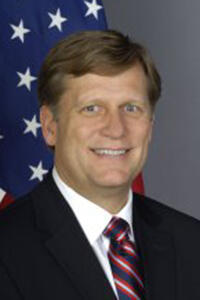
Michael McFaul is the Ken Olivier and Angela Nomellini Professor of International Studies in Political Science; Director and Senior Fellow at the Freeman Spogli Institute for International Studies (FSI); and the Peter and Helen Bing Senior Fellow at the Hoover Institution, all at Stanford University. He was also the Distinguished Mingde Faculty Fellow at the Stanford Center at Peking University from June to August of 2015. He joined the Stanford faculty in 1995. Professor McFaul is also an analyst for NBC News and a contributing columnist to The Washington Post.
Dr. McFaul served for five years in the Obama administration, first as Special Assistant to the President and Senior Director for Russian and Eurasian Affairs at the National Security Council at the White House (2009-2012), and then as U.S. Ambassador to the Russian Federation (2012-2014). He has authored several books, most recently TheNew York Timesbestseller, From Cold War to Hot Peace: An American Ambassador in Putin’s Russia. Earlier books include Advancing Democracy Abroad: Why We Should, How We Can; Transitions to Democracy: A Comparative Perspective(eds. with Kathryn Stoner); Power and Purpose: American Policy toward Russia after the Cold War (with James Goldgeier); and Russia’s Unfinished Revolution: Political Change from Gorbachev to Putin.
Image
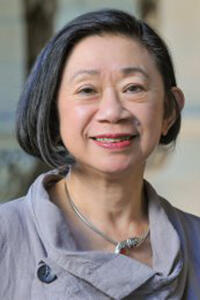
Jean C. Oi is the William Haas Professor of Chinese Politics in the Department of Political Science and a Senior Fellow of FSI at Stanford University. She is the founding director of the Stanford China Program at Shorenstein APARC and is the founding Lee Shau Kee Director of the Stanford Center at Peking University. Professor Oi has published extensively on political economy and the process of reform in China. Her books include Zouping Revisited: Adaptive Governance in a Chinese County, co-edited with Steven Goldstein (2018); and Challenges in the Process of China’s Urbanization, co-edited with Karen Eggleston and Wang Yiming (2017); Rural China Takes Off (1999); Property Rights and Economic Reform in China (1999), co-edited with Andrew Walder; and State and Peasant in Contemporary China (1989). Professor Oi also has an edited volume, China’s Path to the Future: Challenges, Constraints, and Choices, co-edited with Dr. Thomas Fingar (forthcoming, Stanford University Press). Her recent articles include “Unpacking the Patterns of Corporate Restructuring during China’s SOE Reform,” co-authored with Xiaojun Li in Economic and Political Studies (2018); and “Reflections on 40 Years of Rural Reform,” in Jacques deLisle and Avery Goldstein, eds., Reform and Opening: 40 Years and Counting, forthcoming. Her current research centers on fiscal reform and local government debt as well as continuing SOE reforms in China.
Image
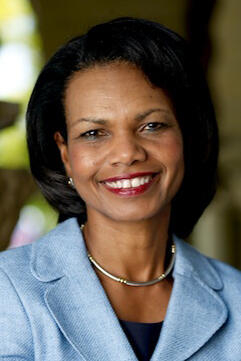
Secretary Condoleezza Rice is currently the Denning Professor in Global Business and the Economy at the Stanford Graduate School of Business; the Thomas and Barbara Stephenson Senior Fellow on Public Policy at the Hoover Institution; and a professor of Political Science at Stanford University. She is also a founding partner of RiceHadleyGates, LLC.
From January 2005 to 2009, Rice served as the 66th Secretary of State of the United States, the second woman and first African American woman to hold the post. Rice also served as President George W. Bush’s Assistant to the President for National Security Affairs (National Security Advisor) from January 2001 to 2005, the first woman to hold the position.
Rice served as Stanford University’s Provost from 1993 to 1999, during which she was the institution's chief budget and academic officer. As Provost, she was responsible for a $1.5 billion annual budget and the academic program involving 1,400 faculty members and 14,000 students. In 1997, she also served on the Federal Advisory Committee on Gender -- Integrated Training in the Military.
From 1989 through March 1991, Rice served on President George H.W. Bush’s National Security Council staff. She served as Director; Senior Director of Soviet and East European Affairs; and, Special Assistant to the President for National Security Affairs. In 1986, while an international affairs fellow of the Council on Foreign Relations, Rice also served as Special Assistant to the Director of the Joint Chiefs of Staff.
As professor of Political Science, Rice has been on the Stanford faculty since 1981 and has won two of the highest teaching honors – the 1984 Walter J. Gores Award for Excellence in Teaching and the 1993 School of Humanities and Sciences Dean's Award for Distinguished Teaching.
She has authored and coauthored numerous books, including three bestsellers, Democracy: Stories from the Long Road to Freedom (2017); No Higher Honor: A Memoir of My Years in Washington (2011); and Extraordinary, Ordinary People: A Memoir of Family (2010). She also wrote Germany Unified and Europe Transformed: A Study in Statecraft (1995) with Philip Zelikow; The Gorbachev Era (1986) with Alexander Dallin; and Uncertain Allegiance: The Soviet Union and the Czechoslovak Army (1984).
In 1991, Rice cofounded the Center for a New Generation (CNG), an innovative, after-school academic enrichment program for students in East Palo Alto and East Menlo Park, California. In 1996, CNG merged with the Boys and Girls Club of the Peninsula (an affiliate club of the Boys and Girls Clubs of America). CNG has since expanded to local BGCA chapters in Birmingham, Atlanta, and Dallas. She remains an active proponent of an extended learning day through after school programs.
Since 2009, Rice has served as a founding partner at Rice Hadley Gates, LLC, an international strategic consulting firm based in Silicon Valley and Washington, D.C. The firm works with senior executives of major companies to implement strategic plans and expand in emerging markets. Other partners include former National Security Advisor Stephen J. Hadley and former Secretary of Defense Robert M. Gates.
Rice currently serves on the boards of Dropbox, an online-storage technology company; C3, an energy software company; and Makena Capital, a private endowment firm. In addition, she is vice chair of the board of governors of the Boys and Girls Clubs of America; a member of the board of the Foundation for Excellence in Education; and a trustee of the Aspen Institute. Previously, Rice served on various additional boards, including those of: the George W. Bush Institute; the Commonwealth Club; KiOR, Inc.; the Chevron Corporation; the Charles Schwab Corporation; the Transamerica Corporation; the Hewlett-Packard Company; the University of Notre Dame; the John F. Kennedy Center for the Performing Arts; and, the San Francisco Symphony Board of Governors.
In 2013, Rice was appointed to the College Football Playoff Committee, formerly the Bowl Championship Series.
Born in Birmingham, Alabama, Rice earned her bachelor's degree in political science, cum laude and Phi Beta Kappa, from the University of Denver; her master’s from the University of Notre Dame; and her Ph.D. from the Graduate School of International Studies at the University of Denver.
Rice is a Fellow of the American Academy of Arts and Sciences and has been awarded fifteen honorary doctorates. She currently resides in Stanford, California.
Bechtel Conference Center 616 Serra Mall Encina Hall, Central, 1st Floor Stanford, CA 94305
David M. Lampton
<br><i>Oksenberg-Rohlen Fellow, FSI, Stanford University</i><br><br>
Michael A. McFaul
<br><i>Director, Freeman Spogli Institute for International Studies (FSI); Professor, Political Science, Stanford University; Senior Fellow, Hoover Institution </i><br><br>
Jean C. Oi (Moderator)
<br><i>Director, Stanford China Program; William Haas Professor of Chinese Studies, Stanford University</i><br><br>
Secretary Condoleezza Rice
<br><i>The Denning Professor in Global Business and the Economy, Stanford Graduate School of Business; The Thomas and Barbara Stephenson Senior Fellow on Public Policy, Hoover Institution; Professor of Political Science, Stanford University</i><br><br>
Most studies that look at whether democracy improves global health rely on measurements of life expectancy at birth and infant mortality rates. Yet those measures disproportionately reflect progress on infectious diseases — such as malaria, diarrheal illnesses and pneumonia — which relies heavily on foreign aid.
A new study led by Stanford Health Policy's Tara Templin and the Council on Foreign Relations suggests that a better way to measure the role of democracy in public health is to examine the causes of adult mortality, such as noncommunicable diseases, HIV, cardiovascular disease and transportation injuries. Little international assistance targets these noncommunicable diseases.
When the researchers measured improvements in those particular areas of public health, the results proved dramatic.
“The results of this study suggest that elections and the health of the people are increasingly inseparable,” the authors wrote.
“Democratic institutions and processes, and particularly free and fair elections, can be an important catalyst for improving population health, with the largest health gains possible for cardiovascular and other noncommunicable diseases,” the authors wrote.
Templin said the study brings new data to the question of how governance and health inform global health policy debates, particularly as global health funding stagnates.
“As more cases of cardiovascular diseases, diabetes and cancers occur in low- and middle-income countries, there will be a need for greater health-care infrastructure and resources to provide chronic care that weren’t as critical in providing childhood vaccines or acute care,” Templin said.
Image
Free and fair elections for better health
In 2016, the four mortality causes most ameliorated by democracy — cardiovascular disease, tuberculosis, transportation injuries and other noncommunicable diseases — were responsible for 25 percent of total death and disability in people younger than 70 in low- and middle-income countries. That same year, cardiovascular diseases accounted for 14 million deaths in those countries, 42 percent of which occurred in individuals younger than 70.
Over the past 20 years, the increase in democratic experience reduced mortality in these countries from cardiovascular disease, other noncommunicable diseases and tuberculosis between 8-10 percent, the authors wrote.
“Free and fair elections appear important for improving adult health and noncommunicable disease outcomes, most likely by increasing government accountability and responsiveness,” the study said.
What Templin and her co-authors found was democracy was associated with better noncommunicable disease outcomes. They hypothesize that democracies may give higher priority to health-care investments.
HIV-free life expectancy at age 15, for example, improved significantly — on average by 3 percent every 10 years during the study period — after countries transitioned to democracy. Democratic experience also explains significant improvements in mortality from cardiovascular disease, tuberculosis, transportation injuries, cancers, cirrhosis and other noncommunicable diseases, the study said.
Watch: Some of the authors of the study discuss the significant their findings:
What Templin and her co-authors found was democracy was associated with better noncommunicable disease outcomes. They hypothesize that democracies may give higher priority to health-care investments.
HIV-free life expectancy at age 15, for example, improved significantly — on average by 3 percent every 10 years during the study period — after countries transitioned to democracy. Democratic experience also explains significant improvements in mortality from cardiovascular disease, tuberculosis, transportation injuries, cancers, cirrhosis and other noncommunicable diseases, the study said.
Foreign aid often misdirected
And yet, this connection between fair elections and global health is little understood.
“Democratic government has not been a driving force in global health,” the researchers wrote. “Many of the countries that have had the greatest improvements in life expectancy and child mortality over the past 15 years are electoral autocracies that achieved their health successes with the heavy contribution of foreign aid.”
They note that Ethiopia, Myanmar, Rwanda and Uganda all extended their life expectancy by 10 years or more between 1996 and 2016. The governments of these countries were elected, however, in multiparty elections designed so the opposition could only lose, making them among the least democratic nations in the world.
Yet these nations were among the top two-dozen recipients of foreign assistance for health.
Only 2 percent of the total development assistance for health in 2016 was devoted to noncommunicable diseases, which was the cause of 58 percent of the death and disability in low-income and middle-income countries that same year, the researchers found.
“Although many bilateral aid agencies emphasize the importance of democratic governance in their policy statements,” the authors wrote, “most studies of development assistance have found no correlation between foreign aid and democratic governance and, in some instance, a negative correlation.”
Autocracies such as Cuba and China, known for providing good health care at low cost, have not always been as successful when their populations’ health needs shifted to treating and preventing noncommunicable diseases. A 2017 assessment, for example, found that true life expectancy in China was lower than its expected life expectancy at birth from 1980 to 2000 and has only improved over the past decade with increased government health spending. In Cuba, the degree to which its observed life expectancy has exceeded expectations has decreased, from four-to-seven years higher than expected in 1970 to three-to-five years higher than expected in 2016.
“There is good reason to believe that the role that democracy plays in child health and infectious diseases may not be generalizable to the diseases that disproportionately affect adults,” Bollyky said. Cardiovascular diseases, cancers and other noncommunicable diseases, according to Bollyky, are largely chronic, costlier to treat than most infectious diseases, and require more health care infrastructure and skilled medical personnel.
The researchers hypothesize that democracy improves population health because:
When enforced through regular, free and fair elections, democracies should have a greater incentive than autocracies to provide health-promoting resources and services to a larger proportion of the population;
Democracies are more open to feedback from a broader range of interest groups, more protective of media freedom and might be more willing to use that feedback to improve their public health programs;
Autocracies reduce political competition and access to information, which might deter constituent feedback and responsive governance.
Various studies have concluded that democratic rule is better for population health, but almost all of them have focused on infant and child mortality or life expectancy at birth.
Over the past 20 years, the average country’s increase in democracy reduced mortality from cardiovascular disease by roughly 10 percent, the authors wrote. They estimate that more than 16 million cardiovascular deaths may have been averted due to an increase in democracy globally from 1995 to 2015. They also found improvements in other health burdens in the countries where democracy has taken hold: an 8.9 percent reduction in deaths from tuberculosis, a 9.5 percent drop in deaths from transportation injuries and a 9.1 percent mortality reduction in other noncommunicable disease, such as congenital heart disease and congenital birth defects.
“This study suggests that democratic governance and its promotion, along with other government accountability measures, might further enhance efforts to improve population health,” the study said. “Pretending otherwise is akin to believing that the solution to a nation’s crumbling roads and infrastructure is just a technical schematic and cheaper materials.”
The other researchers who contributed to the study are Matthew Cohen, Diana Schoder, Joseph Dieleman and Simon Wigley, from CFR, the University of Washington-Seattle and Bilkent University in Turkey, respectively.
Funding for the research came from Bloomberg Philanthropies and the Bill & Melinda Gates Foundation. Stanford’s Department of Health Research and Policy also supported the work.
Hero Image
Election officials count the votes at a polling station on February 24, 2019 in Dakar, Senegal. | Xaume Olleros/Getty Images
Abstract: Successful use of bots and trolls as tools of its expansionist foreign policy demonstrated the Russian government's superior capability in computational propaganda. Yet the main area of application for these tools remains inside Russia: to prop up Vladimir Putin's approval ratings and deny his opponents an opportunity to reach potential voters. In this paper, we use supervised machine learning algorithms for bot detection and sentiment analysis to do a first systematic survey of bot activity in the Russian segment of Twitter. We discover a high yet fluctuating volume of bot communication and presence of both pro- and anti-government as well as neutral bots. We also identify sources of information they spread and formulate testable hypotheses about the political strategy behind bots deployment. Finally, we discuss the implications of autocrats' reliance on domestic computational propaganda for the response to their activities abroad.
Speaker's Biography: Sergey Sanovich received his Ph.D. in Politics at NYU. He studies how autocrats use the power of persuasion to come to, and stay in, office. His ongoing research is focused on online censorship and propaganda by authoritarian regimes; elections and partisanship in electoral autocracies; and personalization of politics in both autocratic and democratic countries. To conduct his research, Sergey collects big data from social media, digitalizes archival documents, and runs field and survey experiments both online and offline.
Sergey Sanovich
Cyber Fellow
CISAC, Stanford University
Abstract: My research investigates the formal institutionalization of inter-governmental cooperation among the three major Northeast Asian powers – China, Japan, and the Republic of Korea—in the face of a continued North Korean threat. How much of a shadow, if any, has North Korea’s nuclear weapons cast over the development of multilateralism in the region? Since 1999, the Northeast Asian region has seen intensifying institutionalization of cooperation among its major powers. In a region where the realist logic of state-centric nationalism, sovereignty, and balance of power still prevails, this new development of trilateral cooperation among the former and potential adversaries deserves serious scholarly investigation. What started as economic and functional cooperation, trilateral cooperation has since been substantially expanded to include political and security agendas at the highest level of government. What explains the emergence and endurance of trilateral cooperation and to what extent has containing the North Korean nuclear crisis shaped its institutional trajectory and outcomes? By examining the evolution of trilateral cooperation, I address some critical gaps in our understanding of formal institution building and the economic-security nexus in one of the most dynamic regions in the world.
Speaker's Biography: Yeajin Yoon is a 2018-2019 MacArthur Nuclear Security Pre-doctoral Fellow at CISAC and a doctoral candidate in the Blavatnik School of Government at the University of Oxford. Her dissertation examines the evolution of trilateral cooperation among the most militarily and economically dominant states in Northeast Asia, namely, China, Japan and the Republic of Korea, and considers when and how their relations become implicated in the North Korean nuclear crisis.
Prior to entering academia, Yeajin travelled extensively across Asia and worked with national governments, international organisations, and NGOs in the region. She led the development of the inaugural issue of the 'Oxford Government Review’ and helped facilitate a Track II dialogue on wartime history issues in Asia at Stanford University. Previously, she worked as a founding member of the Trilateral Cooperation Secretariat, the official intergovernmental organisation for China, Japan, and the Republic of Korea and managed a development fund focused on the ASEAN region at the Korean Foreign Ministry.
Yeajin received a Bachelor of Arts in Political Science with Honors from Stanford University and a Master of Public Policy degree from Oxford University.
Yeajin Yoon
MacArthur Nuclear Security Pre-doctoral Fellow
CISAC, Stanford University
Abstract: As Russian President Vladimir Putin pursues a more assertive policy toward the West, one of his primary grievances is that NATO enlarged despite 1990 assurances to the contrary. At the end of the Cold War, did Washington in fact promise Moscow that it would refrain from expanding NATO eastward? Russia says yes; the US says no; what does the evidence say? Professor Sarotte, a historian, has conducted archival research and interviews on this topic in the US, Russia, Germany, Britain, and France. In this lecture, she will draw on both her previous publications and on newer declassifications to re-examine this controversy and its legacy for NATO expansion – even as President Donald Trump raises the possibility of a NATO contraction through US withdrawal.
Speaker's Biography: Mary Elise Sarotte is the Marie-Josée and Henry R. Kravis Distinguished Professor of Historical Studies at the Johns Hopkins School of Advanced International Studies in Washington DC. Her five books include The Collapse: The Accidental Opening of the Berlin Wall and 1989: The Struggle to Create Post-Cold War Europe, both of which were named Financial Times Books of the Year, along with receiving other awards and commendations. Sarotte earned her AB in History and Science at Harvard University and her PhD in History at Yale University. After graduate school, she served as a White House Fellow and subsequently joined the faculty of the University of Cambridge. Sarotte received tenure at Cambridge in 2004 and returned to the United States to teach at University of Southern California as the Dean's Professor of History before moving to Hopkins. Sarotte is a former Humboldt Scholar, a former member of the Institute for Advanced Study in Princeton, a research associate of Harvard's Center for European Studies, and a member of the Council on Foreign Relations. She is currently writing a book on NATO expansion; it is based (among other sources) on formerly secret Defense Department, State Department, and White House documents which she has declassified though Freedom of Information appeals.
Mary Sarotte
Johns Hopkins School of Advanced International Studies