Governance

FSI's research on the origins, character and consequences of government institutions spans continents and academic disciplines. The institute’s senior fellows and their colleagues across Stanford examine the principles of public administration and implementation. Their work focuses on how maternal health care is delivered in rural China, how public action can create wealth and eliminate poverty, and why U.S. immigration reform keeps stalling. 

FSI’s work includes comparative studies of how institutions help resolve policy and societal issues. Scholars aim to clearly define and make sense of the rule of law, examining how it is invoked and applied around the world. 

FSI researchers also investigate government services – trying to understand and measure how they work, whom they serve and how good they are. They assess energy services aimed at helping the poorest people around the world and explore public opinion on torture policies. The Children in Crisis project addresses how child health interventions interact with political reform. Specific research on governance, organizations and security capitalizes on FSI's longstanding interests and looks at how governance and organizational issues affect a nation’s ability to address security and international cooperation.

-
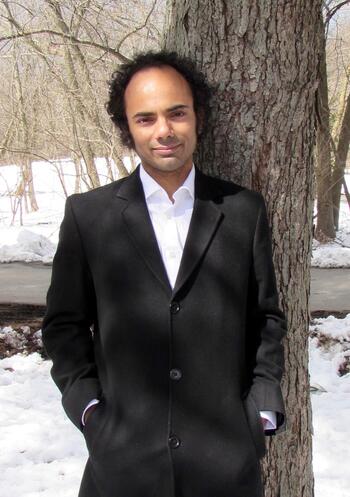
Professor Justin Gest will present an unique study of immigration governance across 30 countries in Europe, North America, Latin America, East Asia, Oceania, and the Middle East. Relying on a database of immigration demographics in the world’s most important immigrant destinations, he will present a taxonomy and an analysis of what drives different approaches to immigration policy over space and time. In an era defined by inequality, populism, and fears of international terrorism, he will show how governments are converging toward a “Market Model” that seeks immigrants for short-term labor with fewer outlets to citizenship— an approach that resembles the increasingly contingent nature of labor markets worldwide.
 
Image
Justin Gest

Justin
Gest
is an Assistant Professor of Public Policy at George Mason University’s Schar School of Policy and Government. He studies immigration and the politics of demographic change. He is the author of four books: Apart: Alienated and Engaged Muslims in the West (Oxford University Press/Hurst 2010); The New Minority: White Working Class Politics in an Age of Immigration and Inequality (Oxford University Press 2016); The White Working Class: What Everyone Needs to Know (Oxford University Press 2018); and Crossroads: Comparative Immigration Regimes in a World of Demographic Change (Cambridge University Press 2018). He has authored peer-reviewed articles in journals including Comparative Political Studies, Ethnic and Racial Studies, and the International Migration Review. He has also provided reporting or commentary for BBC, CNN, The Guardian, Los Angeles Times, NPR, The New York Times, Politico, Reuters, Vox, and The Washington Post. Professor Gest received the 2014 Joseph R. Levenson Memorial Teaching Prize, Harvard’s highest award for faculty teaching. In 2013, he received the 2013 Star Family Prize for Student Advising, Harvard’s highest award for student advising. In 2007, he co-founded the Migration Studies Unit at the London School of Economics (LSE).
 
Co-sponsored by the Global Populisms Project
 
Justin Gest Speaker George Mason University
Seminars
News Type
News
Date
Paragraphs

Scholars Corner is an ongoing SPICE initiative to share FSI’s cutting-edge social science research with high school and college classrooms nationwide and international schools abroad.


This week we released “The Rise and Implications of Identity Politics,” the latest installment in our ongoing Scholars Corner series. Each Scholars Corner episode features a short video discussion with a scholar at the Freeman Spogli Institute for International Studies (FSI) at Stanford University sharing his or her latest research.

This Scholars Corner video features New York Times bestselling author Francis Fukuyama discussing the recent rise of identity politics, both in the United States and around the world. “In the 20th century we had a politics that was organized around an economic axis, primarily. You had a left that worried about inequality…and you had a right that was in favor of the greatest amount of freedom,” summarizes Fukuyama. “[N]ow we are seeing a shift in many countries away from this focus on economic issues to a polarization based on identity.”

According to Fukuyama, this shift in politics is reflected in such domestic social movements as Black Lives Matter and #MeToo, as well as in international movements like the Catalan independence movement, white nationalism, and even the Islamic State.

The rise of identity politics may have troubling implications for modern democracies. “In the United States, for example, the Republican party increasingly has become a party of white people, and the Democratic party has become increasingly a party of minorities and women. In general, I think the problem for a democracy is that you’ve got these specific identities…[but] you need something more than that. You need an integrative sense of national identity [that’s] open to the existing diversity of the society that allows people to believe that they’re part of the same political community,” says Fukuyama.

“That, I think, is the challenge for modern democracy at the present moment.”

To hear more of Dr. Fukuyama’s analysis, view the video here: “The Rise and Implications of Identity Politics.” For other Scholars Corner episodes, visit our Scholars Corner webpage. Past videos have covered topics such as cybersecurity, immigration and integration, and climate change.

"Identity" hardcover book by Francis Fukuyama "Identity" hardcover book by Francis Fukuyama

Francis Fukuyama is a Senior Fellow at FSI and the Mosbacher Director of the Center on Democracy, Development, and the Rule of Law. This video is based on his recent book Identity: The Demand for Dignity and the Politics of Resentment, which was recognized as The Times (UK) Best Books of 2018, Politics, and Financial Times Best Books of 2018.

Stay informed of SPICE news by joining our email list or following us on Facebook and Twitter.


Related article:


Hero Image
Scholars Corner video featuring Francis Fukuyama discussing identity politics
Francis Fukuyama discusses identity politics in SPICE's latest Scholars Corner video.
All News button
1
-

Abstract:

Democracies are in danger. Around the world, a rising wave of populist leaders threatens to erode the core structures of democratic self rule. In the United States, the election of Donald Trump marked a decisive turning point for many. What kind of president calls the news media the “enemy of the American people,” or sees a moral equivalence between violent neo-Nazi protesters in paramilitary formation and residents of a college town defending the racial and ethnic diversity of their homes? Yet, whatever our concerns about the current president, we can be assured that the Constitution offers safeguards to protect against lasting damage—or can we?  How to Save a Constitutional Democracy mounts an urgent argument that we can no longer afford to be complacent. Constitutional rules can either hinder or hasten the decline of democratic institutions. The checks and balances of the federal government, a robust civil society and media, and individual rights—such as those enshrined in the First Amendment—do not necessarily succeed as bulwarks against democratic decline. Rather, the sobering reality for the United States is that, to a much greater extent than is commonly realized, the Constitution’s design makes democratic erosion more, not less, likely. But we—and the rest of the world—can do better. The authors conclude by laying out practical steps for how laws and constitutional design can play a more positive role in managing the risk of democratic decline.

Speaker Bio:

Image
ginsburg tom

Tom Ginsburg is Leo Spitz Professor of Law, University of Chicago, and a professor of political science.  He is also director of the Comparative Constitutions Project   He focuses on comparative and international law from an interdisciplinary perspective. He holds BA, JD, and PhD degrees from the University of California at Berkeley. His books include Judicial Review in New Democracies (2003), which won the C. Herman Pritchett Award from the American Political Science Association; The Endurance of National Constitutions (2009), which also won a best book prize from APSA; Constitutions in Authoritarian Regimes (2014); and Law and Development in Middle-Income Countries (2014)..


Image
aziz huq 200x300
Aziz Huq is is the Frank and Bernice J. Greenberg Professor of Law at the University of Chicago. His scholarship focuses on how institutional design influences individual rights and liberties. He clerked for Judge Robert D. Sack of the U.S. Court of Appeals for the Second Circuit and then for Justice Ruth Bader Ginsburg of the Supreme Court of the United States. Before teaching, he led the Brennan Center’s project on Liberty and National Security and was a senior consultant analyst for the International Crisis Group.

Encina Hall, 4th floor East Wing

Goldman conference room (E409)

Tom Ginsburg Leo Spitz Professor of International Law, Ludwig and Hilde Wolf Research Scholar, Professor of Political Science
Aziz Huq Frank and Bernice J. Greenberg Professor of Law, Mark Claster Mamolen Teaching Scholar
Seminars
Authors
News Type
News
Date
Paragraphs

The House Permanent Select Committee on Intelligence held a public hearing on Thursday, March 28, 2019, as part of its investigation into Russian influence during and after the 2016 election campaign.

The hearing, "Putin’s Playbook: The Kremlin’s Use of Oligarchs, Money and Intelligence in 2016 and Beyond” included testimony by Michael McFaul, former U.S. Ambassador to Russia and Director of the Freeman Spogli Institute at Stanford University.


Download Complete Testimony (PDF 263 KB)

EXCERPT

To contain and thwart the malicious effects of “Putinism,” the United States government and the American people must first understand the nature of the threat. This testimony focuses onthe nexus of political and economic power within Russia under Putin’s leadership, and how these domestic practices can be used abroad to advance Putin’s foreign policy agenda. Moreover, it is important to underscore that crony capitalism, property rights provided by the state, bribery, and corruption constitute only a few of many different mechanisms used by Putin in his domestic authority and foreign policy abroad.

This testimony proceeds in three parts. Section I describes the evolution of Putin’s system of government at home, focusing in particular on the relationship between the state and big business. Section II illustrates how Putin seeks to export his ideas and practices abroad. Section III focuses on Putin’s specific foreign policy objective of lifting sanctions on Russian individuals and companies.

Watch the C-SPAN recording of the testimony


Media Contact: Ari Chasnoff, Assistant Director for Communications, 650-725-2371, chasnoff@stanford.edu

Hero Image
Michael McFaul
All News button
1
-

Abstract: In efforts to halt the Syrian government’s use of chemical weapons (CW) in that country’s civil war the United States and other outside powers applied coercive strategies, in both a deterrent and compellent mode. Outcomes varied: compellence achieved a partial success in getting Syria to give up much of its chemical stockpile, but there were multiple deterrence failures. This paper examines this record to draw lessons about factors associated with the effectiveness of coercion. Its analysis points to the interplay of three factors: credibility, motivation, and assurance. Regarding credibility, the case demonstrates that threats fulfilling many of the traditional criteria for establishing credibility can still fail. In Syria, this is partly because there were ambiguities in the scope of what was covered by deterrent warnings and partly because other factors also affect coercive outcomes. In the Syria case two additional factors were especially important. First, the domestic political motivations of the target affect whether external threats provide coercive leverage. In this case Syrian President Assad’s concern with regime survival led him to perceive the value of CW use as outweighing the likely costs even if outside powers followed through on retaliatory threats. Second, where regime survival is a concern, it is vital to pair coercive threats with appropriate assurances. Here, the case suggests that it is possible not only to provide too little assurance, but also too much. Whereas the Obama administration found it hard to offer credible assurances to Assad, the Trump administration initially conveyed assurances that were too robust, creating a sense that Syria could use CW with impunity. This analysis suggests there may have been a potentially viable path to effective coercion of the Assad regime, but the path would have involved intense tradeoffs that largely prevented decision makers from embracing it. Decision makers and outside commentators alike turned instead to a familiar schema that implies credibility is established by demonstrating a willingness to impose costs using airpower – a script that can be labeled the “resolve plus bombs” formula. Despite the frequent tendency to equate coercion with the threat or limited use of air strikes, this approach was not sufficient to change Syria’s calculations regarding chemical arms.


Speaker's Biography: Jeff Knopf is a professor at the Middlebury Institute of International Studies (MIIS) in Monterey, California, where he serves as chair of the M.A. program in Nonproliferation and Terrorism Studies and a senior research associate with the Center for Nonproliferation Studies (CNS). He is on sabbatical for the 2018-19 academic year and is spending the year as a visiting scholar at CISAC. This is his second stint at CISAC. Dr. Knopf received his Ph.D. in Political Science from Stanford and was previously a pre-doctoral fellow at CISAC in the days when it was still located in the old Galvez House. His most recently completed project is a forthcoming book volume he co-edited on Behavioral Economics and Nuclear Weapons. While at CISAC, Dr. Knopf will primarily be working on a project titled “Coercing Syria on Chemical Weapons.” This project examines efforts by the United States and other countries to apply deterrent and compellent strategies in attempts to stop the Syrian government from using chemical weapons and to dismantle its chemical arsenal. Dr. Knopf will also be working on a paper that explores cognitive aspects of the nuclear taboo.

Jeffrey Knopf Professor Middlebury Institute of International Studies (MIIS)
Seminars
-

Abstract: To drastically reduce emissions of greenhouse gases and expand energy access, nuclear energy may play a significant role in decarbonizing electrical grids. To the extent that this expansion involves developing new and advanced nuclear fuel cycle technologies, concerns about nonproliferation concurrently grow. To address at least one nonproliferation concern, a safeguards assessment was conducted on a conceptual nuclear waste processing technology, called pyroprocessing, using a traditional safeguards technique, called the neutron balance method. The safeguards assessment revealed that the fundamental requirements needed for the neutron balance method to work were not always observed. The diversion scenario modeled resulted in the undetected diversion of several kilograms of plutonium. The assessment found that traditional safeguards assumptions and techniques might not be adequate to meet nuclear material accountancy requirements. New approaches developed from fundamental research are needed to ensure new facilities are only being used for peaceful purposes.


Speaker's Biography: Chantell Murphy is a Nuclear Security Postdoctoral Fellow at CISAC. Chantell Murphy earned her PhD in nuclear engineering from the University of New Mexico in 2018 and holds a MS in health physics from Georgetown University and a BS in physics from Florida State University.

Chantell Murphy worked as a graduate research assistant at Los Alamos National Laboratory supporting the nuclear engineering and nonproliferation division (NEN-5) and worked in the national security office (NSO). During her time at LANL Ms. Murphy investigated safeguards approaches for pyroprocessing facilities and helped develop an acquisition path analysis software tool called APAT for the International Atomic Energy Agency (IAEA). Ms. Murphy worked on safeguards approaches for advanced reactor designs like thorium fueled reactors, worked on knowledge retention issues for future warhead verification campaigns, and participated in and gave talks at several international safeguards and nuclear policy related workshops around the US and in Europe. Ms. Murphy also worked as a visiting scientist at the Forschungszentrum Jülich in Germany for three months developing the IAEA’s state level approach and acquisition path analysis with the Nuclear Waste Management and Reactor Safety group in the Institute of Energy and Climate Research.

Chantell Murphy’s previous experience also includes an internship at the Managing the Atom project at the Belfer Center for Science and International Affairs and work for the Congressional Commission on the Strategic Posture of the United States.

Chantell Murphy Nuclear Security Postdoctoal Fellow CISAC, Stanford University
Seminars
-
 
Abstract: 
Why were Western expectations about how Russia would develop after the Soviet collapse so misplaced? How has Putin's Russia, with a GDP less than that of Italy, managed to reassert itself so effectively on the world stage? And how should the West respond to Russia going forward? Angela Stent will discuss her new book, focusing on how Russia's relations with Europe have evolved and how Europe-- caught between Putin's Russia and Trump's America--is reassessing its options.
 
Speaker's Biography:

Angela Stent is Professor of Government and Foreign Service at Georgetown University and directs its Center for Eurasian, Russian and East European Studies. She has also served in the State Department’s Office of Policy Planning and as National Intelligence Officer for Russia and Eurasia at the National Intelligence Council. She is the author of Russia and Germany Reborn: Unification, the Soviet Collapse and the New Europe; The Limits of Partnership: U.S-Russian Relations in the Twenty-First Century and Putin’s World: Russia Against the West and with the Rest.


Angela Stent Professor of Government and Foreign Service Georgetown University
Seminars
-

Despite adverse implications for its image, when it comes to territorial disputes, China has been willing to employ coercion. But Beijing is selective regarding the timing, targets, and tools of coercion. Military coercion is rare and the forms and uses of coercion vary. In the face of what China sees as similar threats by different countries, for example, Beijing tends to tailor its responses, country by country, case by case. Dr. Zhang will focus on Chinese coercive behavior in the South China Sea. She will offer a new theory as to when, why, and how China coerces other states.  Leveraging a wealth of newly available primary documents and hundreds of hours of interviews with Chinese officials, she will trace the decision-making processes that result in coercion’s use or non-use.

Where others may view China as repetitively aggressive, Dr. Zhang sees a cautious bully that does not coerce frequently and has tended, as it has gained strength, to use non-kinetic kinds of coercion. She finds that protecting a reputation for resolve and calculating economic costs are critical elements in China’s decision-making regarding the (dis)advantages of coercing its neighbors. Nor is the intended target country necessarily clear. China often coerces one to deter another – “killing the chicken to scare the monkey.” Implications will also drawn from her research that can help in projecting China’s likely future foreign-policy behavior beyond Southeast Asia and in understanding the roles played by coercion in the strategies of states more generally.

To learn more about, watch a recent interview APARC filmed with Dr. Zhang.

Image
ketian zhang 4x
Ketian Vivian Zhang will be an Assistant Professor of International Security in the Schar School of Policy and Government at George Mason University starting in September 2019. Her book project at Stanford and a forthcoming article in International Security are on the subject of her talk. Beyond its topic, another part of her research agenda explores how the globalized economy and its chains of manufacture and supply affect the foreign-policy behaviors of states. Her 2018 PhD in political science is from the Massachusetts Institute of Technology. She is a proud Badger, having earned her BA in political science and sociology at the University of Wisconsin-Madison.

Ketian Zhang 2018-2019 Shorenstein Postdoctoral Fellow on Contemporary Asia
Seminars

Catalonia’s bid for independence seems to have involved a major political puzzle for considerable parts of the European public, including academia. In response to the puzzle, there has been a recurrent inclination to perceive Catalan sovereigntism as an additional symptom of the larger malaise which has in recent years entailed the rise of nationalism, populism, and welfare chauvinism all over the Continent. The paper will argue that such views are a blatant misinterpretation of the Catalan process. At the same time, it will hold that the significance of recent political developments in Catalonia goes way beyond the opening of a new round of the conflictual relationship between the Spanish state and an ever contentious periphery.

What is at stake today in Catalonia is not just finding an adequate response to the old question of how to accommodate particular national identities in liberal-democratic states by relying on some version of the minority-rights-cum-territorial- autonomy formula. The issue rather is how to find democratic ways to change the foundations of pre-democratic forms of statehood. Seen against this background, the Catalan process calls for a thorough re-assessment of the meaning of sovereignty in complex polities and thereby bears a great potential for democratic innovation. We are confronting a phenomenon that has little to do with an anachronistic resurgence of nationalism or with a particular version of South European populism. On the contrary, the driving force of Catalan sovereigntism has been and is a popular republicanism with a substantial transformative impact. That this impact is hardly appreciated at the level of the European Union is one of the tragic ironies of what is currently happening between Brussels, Madrid, and Barcelona. To the extent that it stands by the side of the Spanish government in the conflict, thereby prioritizing the Europe of the states vis-à-vis the Europe of the citizens, the Union is ultimately undermining the very normative promises that once sustained its constitution.

Image
Peter Kraus

Peter A. Kraus is a full professor of political science (comparative politics) and the director of the Institute for Canadian Studies at the University of Augsburg (Germany). He has been the chair of ethnic relations at the University of Helsinki, an associate professor of political science at Humboldt University in Berlin, a John F. Kennedy Memorial Fellow at the Center for European Studies at Harvard University, and a visiting professor at the New School for Social Research and at the Universitat Pompeu Fabra in Barcelona. He has published widely and in several languages on cultural diversity and identity politics, ethnicity, nationalism, and migration, the dilemmas of European integration, as well as problems of democratization and democratic theory. He is the author of A Union of Diversity: Language, Identity, and Polity-Building in Europe (Cambridge University Press, 2008). His most recent publications include The Catalan Process: Sovereignty, Democracy and Self-Determination in the 21st Century (edited w. J. Vergés, Barcelona: Institut d’Estudis de l’Autogovern, 2017) and The Politics of Multilingualism: Europeanisation, globalization and linguistic governance (edited with F. Grin, Amsterdam: John Benjamins, 2018). Kraus has been the Chair of the Research Networking Programme “Responding to Complex Diversity in Europe and Canada” (RECODE, www.recode.info), funded by the European Science Foundation, and a member of the steering committee of the European Commission’s Seventh Framework project “Mobility and Inclusion in Multilingual Europe” (MIME, www.mime-project.org).

Goldman Conference Room (E409)
Encina Hall, East Wing, 4th floor
616 Serra Street
Stanford, CA

Peter A. Kraus Speaker University of Augsburg
Subscribe to Governance