Governance

FSI's research on the origins, character and consequences of government institutions spans continents and academic disciplines. The institute’s senior fellows and their colleagues across Stanford examine the principles of public administration and implementation. Their work focuses on how maternal health care is delivered in rural China, how public action can create wealth and eliminate poverty, and why U.S. immigration reform keeps stalling. 

FSI’s work includes comparative studies of how institutions help resolve policy and societal issues. Scholars aim to clearly define and make sense of the rule of law, examining how it is invoked and applied around the world. 

FSI researchers also investigate government services – trying to understand and measure how they work, whom they serve and how good they are. They assess energy services aimed at helping the poorest people around the world and explore public opinion on torture policies. The Children in Crisis project addresses how child health interventions interact with political reform. Specific research on governance, organizations and security capitalizes on FSI's longstanding interests and looks at how governance and organizational issues affect a nation’s ability to address security and international cooperation.

Room 212, Crown Quadrangle
559 Nathan Abbott Way
Stanford, CA 94305-8610

650.736.8771
0
Lecturer in Residence, Stanford Law School
jamie-oconnell-3-400x400.jpg

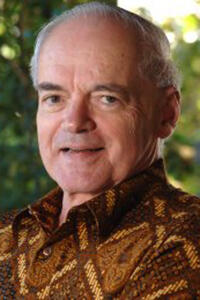
Jamie O’Connell is a Lecturer in Residence at Stanford Law School. He teaches and writes on political and legal development and has particular expertise in law and development, transitional justice, democratization, post-conflict reconstruction, and business and human rights. Until 2018, he was a Senior Fellow of the Honorable G. William and Ariadna Miller Institute for Global Challenges and the Law at the University of California, Berkeley, School of Law, as well as a Lecturer in Residence, teaching both law and undergraduate students.

O’Connell has worked on human rights and development in over a dozen countries in Africa, the Americas, Asia, and Europe, under the auspices of the United Nations, local and international non-governmental organizations, and academic institutions. He co-founded International Professional Partnerships for Sierra Leone, a non-governmental organization that worked with the government of Sierra Leone to enhance the performance of its agencies and civil servants. Earlier in his career, O’Connell studied international business as a researcher at Harvard Business School, publishing numerous case studies. He has directed the Human Rights Clinic at the University of Sierra Leone and taught as a visitor at Harvard Law School and Columbia Law School. O’Connell clerked for the Honorable James R. Browning on the U.S. Court of Appeals for the Ninth Circuit and is admitted to practice in California (inactive status) and New York. In 2016-17, he was a visiting professor and Fulbright Senior Scholar at the University of Valencia (Spain) Faculty of Law.

O’Connell’s scholarship includes “Representation, Paternalism, and Exclusion: The Divergent Impacts of the AKP’s Populism on Human Rights In Turkey” in Human Rights in a Time of Populism: Challenges and Responses (2020); “When Prosecution Is Not Enough: How the International Criminal Court Can Prevent Atrocity and Advance Accountability by Emulating Regional Human Rights Institutions” (with James L. Cavallaro, Yale Journal of International Law, 2020); “Common Interests, Closer Allies: How Democracy in Arab States Can Benefit the West” (Stanford Journal of International Law, 2012); “Empowering the Disadvantaged after Dictatorship and Conflict: Legal Empowerment, Transitions and Transitional Justice,” in Legal Empowerment: Practitioners’ Perspectives (2010); “East Timor 1999,” in The Responsibility to Protect: Moving the Campaign Forward (2007); “Gambling with the Psyche: Does Prosecuting Human Rights Violators Console Their Victims?” (Harvard International Law Journal, 2005); “Here Interest Meets Humanity: How to End the War and Support Reconstruction in Liberia, and the Case for Modest American Leadership” (Harvard Human Rights Journal, 2004); and Sierra Leone’s Truth and Reconciliation Commission and Special Court: A Citizen’s Handbook (with Paul James-Allen and Sheku B.S. Lahai, 2003).

CDDRL Affiliated Scholar
Date Label
-


EMERGING ISSUES IN CONTEMPORARY ASIA

A Special Seminar Series


RSVP required by Friday, May 10, 2019

RSVP Now


ABSTRACT: Many commentators and scholars declare that Tokyo is shedding its postwar pacifism, and the Japanese nationalism is on the rise. To assess these claims, we analyze Japan’s military assertiveness and nationalism. Using public opinion and other data, we measure and compare these to two baselines both over time and across space (relative to seven other countries).  We find that (1) Japan’s military assertiveness remains very low in some ways, but has grown in others. The cross-national comparison shows that Japan remains the least assertive of the comparison countries. As for Japan’s national identity, (2) we distinguish theoretically between “nationalism” and a more benign “patriotism.” Patriotism is strong and stable over time. Public opinion shows some evidence of nationalistic sentiment. Other data reflect growing self-criticism and empathy. Evidence thus contradicts the claim of Japanese resurgence. These findings have important theoretical implications for the nationalism literature and for scholarly debates about Japan, and they shed light on policy questions related to the nascent U.S. balancing effort in East Asia. To the extent that the Japanese could be convinced to be a more active regional partner, it would be a responsible one.
 
Image
Jennifer Lind
PROFILE: 
Jennifer Lind is Associate Professor in the Department of Government at Dartmouth, a Faculty Associate at the Reischauer Institute for Japanese Studies at Harvard University, and a Research Associate at Chatham House, London. Professor Lind is an expert on East Asian international relations and US foreign policy toward the region. She is the author of Sorry States: Apologies in International Politics, which examines the effect of war memory on international reconciliation (Cornell University Press, 2008). She has also written numerous scholarly articles in journals such as International Security and International Studies Quarterly, and often writes for wider audiences in Foreign Affairs and National Interest. Her commentary is regularly quoted in The New York Times, Washington Post, The Wall Street Journal, and National Public Radio.
 
Philippines Conference RoomEncina Hall, 3rd Floor, Central616 Serra MallStanford, CA 94305
Jennifer Lind Associate Professor of Government, Dartmouth University
Authors
Donald K. Emmerson
News Type
Commentary
Date
Paragraphs

Indonesia’s latest and current experiment with democracy is twenty years old. The fifth national election to be held during that period is set to occur on 17 April 2019. More than 190 million Indonesians are eligible to vote. Those who do will elect the country’s president and vice-president and legislators at four different levels—national, provincial, district, and municipal. Since the collapse of General Suharto’s authoritarian regime in 1998, there have been no coups, and the process of campaigning and balloting every five years has proven to be peaceful with remarkably few and small exceptions.  So far so good. 

Regarding the top slot, this fifth election is a re-run of the fourth.  In 2014, Joko Widodo (“Jokowi”) ran for president against Prabowo Subianto and won.  The two men face each other again.  For the 2019 race, Jokowi picked Mar’uf Amin to be his vice-president; Prabowo picked Sandiaga Uno to be his.  All four men are Muslims.

Compared with Prabowo, Jokowi is a man of the people.  Jokowi is the first-ever Indonesian president with a non-elite background.  His first career was not in politics, and not in Indonesia’s megalopolis and capital, Jakarta, but in small business in Central Java.  He made and sold wood furniture in Surakarta, a city a fraction of Jakarta’s size.  He benefited from having begun his political career as Surakarta’s first directly elected mayor.  That post afforded him face-to-face contact with his constituents and gained him popularity based on his success in reforming governance, reducing corruption, and improving public services. 

Jokowi burnished that reputation as the elected governor of Jakarta.  Among his accomplishments on that larger scale were socioeconomic betterment and attention to public transportation.  Construction of Indonesia’s very first subway system began in Jakarta on Jokowi’s watch.  To his political advantage, the project’s first phase—ten miles of underground and elevated track—was completed and opened to the public in March 2019 mere weeks before the national election in April.

Prabowo’s father was a leading figure in Indonesia’s economy, diplomacy, and politics.  Prabowo was schooled in Europe before returning to Indonesia to embark upon a 24-year career in the army.  He rose to the rank of a lieutenant general, but his record was marred by association with violence and insubordination.  Especially brutal were his roles in crushing movements for independence from coercive Indonesian rule in East Timor and Papua and in the abusive repression of democracy activists during riots in Jakarta in 1998. When Indonesia transitioned to democratic rule later that year, he was, in effect, dishonorably discharged.  In 2000 he was denied an American visa, apparently on human rights grounds.  Upon leaving the military, Prabowo began a lucrative career in business. He lost the 2014 presidential election to Jokowi, 47-to-53 percent.

ndonesian Presidential candidate Prabowo Subianto addresses to his supporters at the Kridosono stadium during election campaign rally on April 8, 2019 in Yogyakarta, Indonesia. Photo by Ulet Ifansasti/Getty Images Indonesian Presidential candidate Prabowo Subianto addresses to his supporters at the Kridosono stadium during election campaign rally on April 8, 2019 in Yogyakarta, Indonesia. Photo by Ulet Ifansasti/Getty Images

Muslims account for an estimated 87 percent of the 269 million people who live in Indonesia, the world’s fourth largest country and the third largest democracy after India and America.  It is mathematically understandable that majoritarian Muslim faith and sentiment might drive the country’s politics.  But Indonesia is not an Islamic state.  Its leaders have, more or less effectively, curated an ethno-religiously plural national identity that legitimates not only Islam but, in theory, Buddhist, Catholic, Confucian, Hindu, and Protestant beliefs as well. 

When Jokowi ran for governor of Jakarta in 2012, his running mate was Basuki Tjahaja Purnama, an ethnic-Chinese Christian Indonesian better known by his nickname “Ahok.”  When the ticket won, Ahok became vice-governor.  A man of probity and candor with a background in business and science, Ahok quickly earned kudos for his efforts to curb poverty, corruption, and traffic congestion, among other ills of the metropolis.  In 2014, when Jokowi took a leave of absence to run for president, Ahok replaced him as the acting governor of Jakarta. When Jokowi defeated Pabowo to become president later that year, Ahok became governor in his own right—the first-ever ethnic Chinese and the first non-Muslim in half a century to fill that position. Sinophobia has a long history in Indonesia. In the context of the economic and political crises that obliged Suharto to resign in 1998, for example, anti-Chinese mobs ran riot in Jakarta.  Prabowo, Suharto’s son-in-law at the time, may have been at least indirectly involved in that outbreak of racial violence.

In a speech in September 2016, Ahok made an unscripted reference to the possibility that, were he to run again, some Muslims might not vote for him.  But all he said was that voters should not believe those who intentionally lie about—misinterpret—verse 51 in Al-Ma’idah, a chapter in the Qur’an that seems to advise Muslims against becoming allies of Jews and Christians.  Some Islamists had indeed glossed that verse as an obligation for Muslims not to vote for a non-Muslim to occupy public office.  An edited version of the video made it sound as though Ahok were not accusing some people of lying about what the verse meant, but was instead blaming the falsehood on the Qur’an itself—Allah’s own words.

The altered video went viral. Extreme Islamist organizations pressed for Ahok’s arrest and imprisonment for having violated Indonesia’s law on the Misuse and Insult of Religion.  He was tried, sentenced, and incarcerated in May 2017.

A man is draped with a flag showing the images of Indonesian President Joao Widodo and his Vice Presidential running mate Ma'ruf Amin at a concert and political rally for President Joko Widodo.
A man is draped with a flag showing the images of Indonesian President Joao Widodo and his Vice Presidential running mate Ma'ruf Amin at a concert and political rally for President Joko Widodo. Photo by Ed Wray/Getty Images

Ahok regained his freedom in January 2019. When he was released, Jokowi’s and Prabowo’s presidential campaigns had already begun. Six months before, Jokowi’s partisan allies, knowing how closely associated with Ahok their candidate had been, had persuaded him to strengthen his Islamic appeal by choosing Mar’uf Amin to fill the vice-presidential slot on his ticket.  At the time, Amin chaired Indonesia’s if not the world’s largest independent Islamic organization, Nahdlatul Ulama. Amin also headed a state-supported Indonesian Ulama Council that issues rulings ( fatwa ) on Islamic matters.  Under Amin’s leadership in November 2016, the Council had gone so far as to insist, in a statement he signed on the Council’s behalf, that verse 51 in Al-Ma’idah really does forbid Jews and Christians from becoming leaders and does obligate Muslims to choose to be led only by Muslims—and that to deny this is to insult the Qur’an, the ulama, and the Muslim community.  Yet there is nothing in Indonesia’s constitution or its laws that endorses, let alone requires, prejudicial voting—ballot-box communalism—of this kind.

Beyond boosting Jokowi’s image in the eyes of illiberal Muslims, Amin was an attractive choice for two other reasons as well:  NU’s demographic strength, notably in the heavily populated provinces of East and Central Java; and the hoped-for gravitas of Amin’s age and wisdom that some voters might read into his being 76 years old on election day—seventeen more than Jokowi’s 58.

In choosing Sandiago (“Sandi”) Uno for the vice-presidential slot on his ticket, Prabowo may also have taken age into account, but in the reverse direction.  Sixty-seven years old on election day, Prabowo may have chosen his running mate hoping to benefit from the image of relatively youthful energy and savvy modernity that Sandi, eighteen years younger, might evoke in voters’ minds.  Not to mention Sandi’s money.  Forbes Magazine ranked him 27 th among the 40 richest Indonesians in 2010, although he has since fallen off that list.  Sandi’s proven ability to attract support, having been elected vice-governor of Jakarta in 2017, likely also favored his selection. 

Sandi has an MBA from George Washington University. Whatever he learned about good business practices while there, however, did not prevent his name from surfacing in the “Paradise Papers” and in research by the International Consortium of Investigative Journalists, sources that linked him to shell companies registered in Panama, the British Virgin Islands, and other tax-haven locations.

Sandiaga Uno, Vice-Presidential candidate and running mate of Indonesian Presidential candidate Prabowo Subianto Waves to supporters
Sandiaga Uno, Vice-Presidential candidate and running mate of Indonesian Presidential candidate Prabowo Subianto Waves to supporters after giving a speech at the National Stadium on April 7, 2019 in Jakarta, Indonesia. Photo by Ed Wray/Getty Images.

Prabowo did not excel in his televised debates with Jokowi.  The many polls conducted again and again during the campaign showed Jokowi ahead of Prabowo in the public’s opinion by as much as twenty percent.  As election day neared, the gap between the two men may have narrowed.  But that evidence may have been tainted by unreliable polls that Prabowo’s camp may have incentivized to exaggerate his support. [1]

Prabowo has in the past cultivated relations with Islamist figures and groups. A question to be settled on 17 April is whether Jokowi’s supporters among softer-line, mainstream Muslims and their associations will outvote the harder-line Islamist and more Sinophobic voters to whom Prabowo has appealed.  Relevant, too, is the credulity of voters regarding fake news on social media, including hoaxes designed to stoke fears of Chinese immigration.  One viral claim blamed Jokowi for welcoming investments from China to the point of making Indonesians compete for jobs with an influx of as many as ten million China-born workers. If official Indonesian data are accurate, of 95,335 foreign workers in the country in 2018, only 32,000 were from China. [2]

In the past, Indonesia has been lauded for exemplifying the compatibility of Islam and democracy and for cultivating ethnic tolerance as well.  For democracy to survive and succeed, however, as Americans are learning, it must be continually safeguarded and reconfirmed.  One of the concepts that will crucially affect the further institutionalization of democracy in Indonesia is the extent to which its large and ethnically Malay Muslim majority will be accountable to the country as a whole and not be demagogued into violating minority rights and freedoms.  A populist who inflames his partisan base should not enjoy immunity from oversight. Crucial, too, is the notion of a loyal opposition whose leader is willing and able to reaffirm allegiance to a system in which it has just lost an election fairly.  Additionally essential to the implementation of these core ideas, as polarized Americans are being reminded, is the empathy necessary to bridge identity-based cleavages by imagining oneself in the shoes or sandals of “the other.” 

In any event, one can hope for the best: that the fifth electoral testing of Indonesia’s two-decades-long experiment with democratic rule in 2019, and the 59th American presidential election in 2020, including their respective aftermaths, will reinvigorate the purpose and power of democratic principles as inoculations against the risks, in both countries, of authoritarian division from within.

Donald K. Emmerson last visited Indonesia in December 2018 to speak at the 11th  Bali Democracy Forum.  Without implicating them in the above, he is grateful to Bill Liddle, Wayne Forrest, and Lisa Lee for helpful comments on its first draft.


[1] Compare Seth Soderberg, “Indonesia: How the Polls are Performing,” 15 April 2019, New Mandala , https://www.newmandala.org/indonesia-how-the-polls-are-performing/ , with Malvyandie Haryadi, “Hasil Survei Pilpres Terbaru: 7 Lembaga Survei Menangkan Jokowi, 4 Lembaga Unggulkan Prabowo,” (Latest Presidential Election Surveys: 7 Surveyers Show Jokowi Winning, 4 Surveyers Put Prabowo on Top), Tribunnews.com , 10 April 2019, http://www.tribunnews.com/pilpres-2019/2019/04/10/hasil-survei-pilpres-terbaru-7-lembaga-survei-menangkan-jokowi-4-lembaga-unggulkan-prabowo .

[2] Amy Chew, “‘Let’s Copy Malaysia’: Fake News Stokes Fears for Chinese Indonesians,” South China Morning Post , 7 April 2019, https://www.scmp.com/week-asia/politics/article/3004909/indonesia-election-anti-beijing-sentiments-spread-will-chinese .


Hero Image
Joko Widodo Campaigns Ahead Of Indonesia's Presidential Election
SOLO, INDONESIA - APRIL 09: Indonesian incumbent Presidential candidate Joko Widodo, addresses his supporters at the Sriwedari stadium during election campaign rally on April 9, 2019 in Solo, Central Java, Indonesia. Indonesia's general elections will be held on April 17 pitting incumbent President Joko Widodo against Prabowo who he defeated in the last election in 2014.
Ulet Ifansasti/Getty Images
All News button
1
-

EMERGING ISSUES IN CONTEMPORARY ASIA

A Special Seminar Series


RSVP required by Wednesday, April 17, 2019

RSVP Now

ABSTRACT: Why does success in combat sometimes fail to produce a stable and durable peace settlement? In the 1965 war, India successfully repelled a Pakistani invasion of the disputed territory of Kashmir, captured new territory, and launched a massive counter-offensive – but it did not improve the long-term security of Kashmir or deter future Pakistani aggression. This presentation offers an explanation that shows how war can help to establish deterrence between enduring rivals. I argue combat success is important, but must be paired with costly signals of resolve. In 1965, India achieved combat success but failed to deliver such signals of resolve: it did not permanently retain the Kashmiri territory it captured, and it deliberately limited the strategic threat posed by its counter-offensive. As a result, India defended against invasion without establishing post-war deterrence. India’s current military strategy continues to favor ineffective and potentially destabilizing concepts of deterrence. This carries implications not only for regional security, but also U.S. strategy, which increasingly depends on India to maintain a favorable and stable regional balance of power.
 
Image
Arzan Tarapore
PROFILE:
Arzan Tarapore is a nonresident fellow at the National Bureau of Asian Research, an adjunct defense analyst at the RAND Corporation, and from Fall 2019, an adjunct assistant professor at Georgetown University. His research lies at the intersection of South Asian politics and military strategy. His current book project explains the concept of strategic effectiveness, drawing on in-depth historical case studies of India’s war-fighting experience since 1965. Prior to his scholarly career, Arzan served for 13 years in the Australian Defence Department, which included operational deployments and a diplomatic posting to Washington, DC. He holds a PhD in war studies from King’s College London.


Philippines Conference RoomEncina Hall, 3rd Floor, Central616 Serra Street, Stanford, CA 94305
Arzan Tarapore Nonresident fellow at the National Bureau of Asian Research
Authors
Beth Duff-Brown
News Type
News
Date
Paragraphs

Marcella Alsan and Marianne Wanamaker are recipients of this year’s prestigious Arrow Award from the International Health Economics Association for research that shows the health of African-American men was adversely impacted by the Tuskegee syphilis study of the early 20th century.

The annual award recognizes excellence in the field of health economics and is named after the late Kenneth J. Arrow, a Nobel Prize-winning economist and mathematician. He was a Stanford Health Policy fellow and senior fellow by courtesy at the Freeman Spogli Institute for International Studies (FSI). He was also a senior fellow, emeritus, at the Stanford Institute for Economic Policy Research (SIEPR).

The IHEA awarded the 27th annual Arrow Award to Alsan, a core faculty member at Stanford Health Policy, a senior fellow at FSI and SIEPR, and co-author Wanamaker of the University of Tennessee for their paper, “Tuskegee and the Health of Black Men” published in the Quarterly Journal of Economics.

The infamous Tuskegee study began in 1932 when the U.S. Public Health Service began following approximately 600 African-American men, some of whom had syphilis, for the stated purpose of understanding the natural history of the disease. The government willingly withheld treatment even after penicillin became an established magic bullet for treating the illness. 

The medical doctors and staff of the CDC followed the men for four decades, until ultimately the study was halted in 1972 when it was brought to the attention of the media by law student Peter Buxtun.

As noted in this story about the research, Alsan and Wanamaker found that the public disclosure of the study in 1972 was associated with an increase in medical mistrust and mortality among African-American men in the immediate aftermath of the revelation.

“The award is an immense honor for both Marianne and me. First, it sheds light on the importance of history for understanding health disparities. Second, it reaffirms the “expected behavior of the physician” that Professor Arrow eloquently described in his seminal 1963 paper on the distinctive features of the market for medical care and the externalities associated with deviating from those expectations.”

African-American men today have the worst health outcomes of all major ethnic, racial and demographic groups in the United States. Life expectancy for black men at age 45 is three years less than their white male peers, and five years less than for black women.

When their working paper was first published by the National Bureau of Economic Research, it became part of the national discussion about the lasting impact of the Tuskegee study.

“The story that Alsan and Wanamaker uncovered is even deeper than the direct effects of the Tuskegee Study,” wrote Vann R. Newkirk II in The Atlantic. “Their research helps validate the anecdotal experiences of physicians, historians, and public health workers in black communities and gives new power to them.”


Hero Image
tuskegee edited  photo cdc The CDC
All News button
1
-

Abstract:

In dominant-party states, why do individuals vote in elections with foregone conclusions when they are neither bought nor coerced? I propose that a social norm of voting motivates turnout in these least-likely contexts. Motivated by the belief that regimes reward high turnout with public goods, citizens view elections as an opportunity for community-wide benefit and use social sanctions to enforce the norm. Using lab-in-the-field voting experiments together with survey data, I document the strong influence of a social norm of voting in two semi-authoritarian states in east Africa, Tanzania and Uganda. I find that norm compliance is driven by those most dependent on their local community. This project helps to explain high turnout in elections, individual-level variation in voting behavior, and authoritarian endurance. The results suggest that rather than government accountability, elections may instead be about local accountability to one's community.


Speaker Bio:

Image
leah1 small
Leah is a postdoctoral research fellow at the Institute for Advanced Study in Toulouse, France and a research affiliate at MIT GOV/LAB. She received her PhD in political science from MIT in 2018. Leah studies political behavior in sub-Saharan Africa and examines questions of citizen engagement, compliance, and government accountability. Her current book project investigates how social norms of voting help to explain high turnout in dominant-party states in East Africa. She is also working on a project on urban informality in Lagos, Nigeria. Before starting graduate school, Leah worked as the program manager at Columbia University’s Earth Institute in Nigeria.


0
CDDRL Postdoctoral Scholar, 2020-21
thumbnail_leah1_small.jpg

My research centers on topics in comparative politics and the political economy of development. I focus on the micro-foundations of political behavior to gain leverage on macro-political questions. How do autocrats survive? How can citizen-state relations be improved and government accountability strengthened? Can shared identities mitigate out-group animosity? Adopting a multi-method approach, I use lab-in-the-field and online experiments, surveys, and in-depth field research to examine these questions in sub-Saharan Africa and the US. My current book project reexamines the role of elections in authoritarian endurance and explains why citizens vote in elections with foregone conclusions in Tanzania and Uganda. Moving beyond conventional paradigms, my theory describes how a social norm of voting and accompanying social sanctions from peers contribute to high turnout in semi-authoritarian elections. In other ongoing projects, I study how national and pan-African identification stimulated through national sports games influence attitudes toward refugees, the relationship between identity, emotions, and belief in fake news, and how researchers can use Facebook as a tool for social science research.

postdoctoral research fellow at the Institute for Advanced Study in Toulouse, France
Seminars
-

Abstract:

Using survey data from a variety of sources, I examine how multiple conceptions of American nationhood shaped respondents’ voting preferences in the 2016 U.S. presidential election and how the election outcome built on long-term changes in the distribution of nationalist beliefs in the U.S. population. The results suggest that nationalist beliefs constituted important cultural cleavages that were effectively mobilized by candidates from both parties. In particular, exclusionary varieties of nationalism were associated with Trump support in the Republican primary and the general election, while disengagement from the nation was predictive of Sanders support in the Democratic primary. Furthermore, over the past twenty years, nationalism has become sorted by party: Republicans have become predominantly ethno-nationalist, while Democrats have increasingly embraced a creedal conception of nationhood. The resulting mutual reinforcement of nationalist cleavages with other sources of distinction is likely to shape future elections and threaten the stability of U.S. democracy.


Speaker Bio:

Image
bonikowski   head shot   full size
Bart Bonikowski is Associate Professor of Sociology at Harvard University, Resident Faculty at the Minda de Gunzburg Center for European Studies, a Faculty Affiliate of the Weatherhead Center for International Affairs (where he co-directs the Research Cluster on Global Populism / Challenges to Democracy), and a 2018-19 Lenore Annenberg and Wallis Annenberg Fellow in Communication at Stanford University's Center for Advanced Study in the Behavioral Sciences. Relying on survey methods, computational text analysis, and experimental research, his work applies insights from cultural sociology to the study of politics in the United States and Europe, with a particular focus on nationalism, populism, and the rise of the radical right. His research has appeared in the American Sociological Review, Annual Review of Sociology, Social Forces, British Journal of Sociology, European Journal of Political Research, International Journal of Comparative Sociology, Brown Journal of World Affairs, and a number of other peer-reviewed journals and edited volumes.
 
Bart Bonikowski Associate Professor of Sociology at Harvard University
Seminars
-

The 3rd Asia-Pacific Geo-Economic Strategy Forum
 

May 2, 2019

Hauck Auditorium, Hoover Institution, Stanford University

Sponsored and organized by Nikkei Inc., The Hoover Institution, and the Freeman Spogli Institue of International Studies (FSI)


RSVP REQUIRED: https://www.global-nikkei.com/19apgeo/
(RSVP starts from April 10)


Agenda

1:00pm - 1:05pm
Welcome Remark:
Adm. Gary Roughead, Hoover Institution, Stanford University


1:005pm - 1:25pm
Keynote Speech:
Itsunori Onodera, Former Minister of Defense, Japan
 

1:30pm - 2:20pm
Panel I: Indo-Pacific Strategy vs Belt & Road Initiative

Chair: Akihiko Tanaka, President, National Graduate Institute for Policy Studies

Panelists:
Masahisa Sato, State Minister for Foreign Affairs of Japan
Akio Takahara,  Tokyo University
Donald Emmerson, Freeman Spogli Institue for International Studies, Stanford University
 

2:20pm - 2:30pm
Coffee Break


2:30pm - 2:50pm
Special Speech
:
Gen. H.R. McMaster,
Hoover Institution


2:55pm - 3:50pm
Panel Discussion II: US-Japan Strategic Collaboration: Technology, Trade and Economics

Chair: Satoru Mori, Hosei University

Panelists:
Kenji Wakamiya, Former State Minister of Defense, Japan
Hideaki Watanabe, Former Commissioner of Acquisition, Technology & Logistics Agency (ATLA)
Janis Pamiljans, President, Northrop Grumman Aerospace Systems
Nelson Pedeiro, Vice President, Advanced Technology Center, Lockheed Martin
 

3:50pm - 4:00pm
Coffee Break


4:05pm - 4:55pm
Panel Discussion III: Japan`s Defense/Security Strategy

Chair: Satoshi Morimoto, Former Minister of Defense of Japan

Panelists:
Gen Nakatani, Former Minister of Defense, Japan
Itsunori Onodera, Former Minister of Defense, Japan
James Fearon, Freeman Spogli Institute for International Studies, Stanford University
 

4:55pm - 5:00pm
Closing Remark:

Adm. Gary Roughead, Hoover Institution, Stanford University


Everett and Jane Hauck Auditorium
David and Joan Traitel Building of Hoover Institution
435 Lasuen Mall, Stanford, CA 94305
Stanford University


Symposiums
-
Image
Stanford University landscape with Memorial Church and the Main Quad at the center.

The JIIA-Stanford Symposium

"The Past, Present, and Future International Order in East Asia"

May 10, 2019

Bechtel Conference Center, Encina Hall, Stanford University

Sponsored and organized by the Japan Institute for International Affairs (JIIA) and Japan Program and the US-Asia Security Initiative of the Walter H. Shorenstein Asia-Pacific Research Center (APARC) of the Freeman Spogli Institue of International Studies (FSI) at Stanford University 
 

Interstate relations in East Asia are at a critical juncture.  The post-World War II regional order, shaped by the San Francisco Treaty of 1951, underpinned by a common commitment to a liberal trade system, and led by the United States, is under stress.  The end of the Cold War, rise of China, and recent changes in America’s foreign policy orientation have transformed the environment that sustained “the San Francisco System.”  It is unclear if this system will be maintained, and if not, what will replace it.  The lineage of the San Francisco System itself reaches back to the post-World War I Versailles-Washington System.  An examination of the success and shortcomings of each of these systems can offer insights on the rise and fall of international systems, especially in an Asian context.  In this symposium, we explore the circumstances that shaped the establishment and evolution of the East Asian political, economic, and security architectures from post-WWI to present; discuss the forces that built and undermined the past and existing architecture; and debate possible regional futures.  We will emphasize the perspectives and roles of the U.S., Japan, and China, and focus on major influencing factors including historical legacies, the changing distribution of global power, alliance structures, and political ideologies.


Agenda

9:00am - 9:30am 
Registration and Breakfast 
 

9:30am - 9:45am 
Welcome Remarks: 
Gi-Wook Shin, Director, APARC, Stanford University 
Kenichiro Sasae, President, JIIA 
Takeo Hoshi, Director, Japan Program, APARC, Stanford Univeristy 
 

9:45am - 11:30am 
Panel I: Comparing “the Versailles-Washington System” and “San Francisco System”: Lessons from the Rise and Fall of International Orders in East Asia

Chair: Daniel Sneider, FSI, Stanford University

Panelists: 
Shin Kawashima, University of Tokyo 
Masaya Inoue,  Seikei University 
Lin Hsiao-ting, Hoover Institution, Stanford University 
David Kennedy, Center for International Security and Cooperation (CISAC), FSI, Stanford University 
 

11:30am - 1:15pm 
Lunch 

Keynote Speaker: Ambassador Michael Armacost


1:15pm - 3:00pm 
Panel Discussion II: Japanese, U.S. and Chinese Interests and Security

Chair: Kenichiro Sasae, JIIA 

Panelists: 
Ken Jimbo, Keio University 
Tetsuo Kotani, JIIA 
Mike Lampton, APARC, Stanford University 
Jim Schoff, Carnegie Endowment for International Peace (CEIP) 
 

3:00pm - 3:30pm 
Coffee Break 
 

3:30pm - 5:15pm 
Panel Discussion III: Alternative Future East Asia Systems

Chair: Phillip Lipscy, FSI, Stanford University 

Panelists: 
Jim Fearon, FSI, Stanford University 
Ryo Sahashi, University of Tokyo 
Kenichiro Sasae, President, JIIA 
Tom Christensen, Columbia University 
 

5:15pm - 5:35pm 
Rapporteurs' review of symposium discusisons 
 

5:35pm - 5:45pm 
Closing Remarks: 
Karl Eikenberry, Director, US-Asia Security Initiative, APARC, Stanford University 
Kenichiro Sasae, President, JIIA 
 

5:45pm - 6:30pm 
Reception (Encina Lobby)

Bechtel Conference Center
616 Serra Mall
Encina Hall, Central, 1st Floor
Stanford, CA 94305

Symposiums
-

Abstract: President Trump may talk about the Middle East differently than Obama did. But the two seem to share the view that the United States is too involved in the region and should devote fewer resources and less time to it. The reduced appetite for U.S. engagement in the region reflects, not an ideological predilection or an idiosyncrasy of these two presidents, but a deeper change in both regional dynamics and broader U.S. interests. Despite this, the United States exists in a kind of Middle Eastern purgatory—too distracted by regional crises to pivot to other global priorities but not invested enough to move the region in a better direction. This worst-of-both-worlds approach exacts a heavy price. It sows uncertainty among Washington’s Middle Eastern partners, which encourages them to act in risky and aggressive ways. It deepens the American public’s frustration with the region’s endless turmoil, as well as with U.S. efforts to address it. It diverts resources that could otherwise be devoted to confronting a rising China and a revanchist Russia. And all the while, by remaining unclear about the limits of its commitments, the United States risks getting dragged into yet another Middle Eastern conflict. 

 
It is time for Washington to put an end to wishful thinking about its ability to establish order on its own terms or to transform self-interested and shortsighted regional partners into reliable allies—at least without incurring enormous costs and long-term commitments. That means making some ugly choices to craft a strategy that will protect the most important U.S. interests in the region, without sending the United States back into purgatory. Karlin and Wittes will outline the choices before the next U.S. president and their view of a realistic, sustainable strategy for the United States in the Middle East. 
 
Tamara Wittes' Biography: Tamara Cofman Wittes is a senior fellow in the Center for Middle East Policy at Brookings. Wittes served as deputy assistant secretary of state for Near Eastern affairs from November of 2009 to January 2012, coordinating U.S. policy on democracy and human rights in the Middle East during the Arab uprisings. Wittes also oversaw the Middle East Partnership Initiative and served as deputy special coordinator for Middle East transitions.


Wittes is a co-host of Rational Security, a weekly podcast on foreign policy and national security issues. She writes on U.S. Middle East policy, regional conflict and conflict resolution, the challenges of global democracy, and the future of Arab governance. Her current research is for a forthcoming book, Our SOBs, on the tangled history of America’s ties to autocratic allies.


Wittes joined Brookings in December of 2003. Previously, she served as a Middle East specialist at the U.S. Institute of Peace and director of programs at the Middle East Institute in Washington. She has also taught courses in international relations and security studies at Georgetown University. Wittes was one of the first recipients of the Rabin-Peres Peace Award, established by President Bill Clinton in 1997.


Wittes is the author of "Freedom’s Unsteady March: America’s Role in Building Arab Democracy" (Brookings Institution Press, 2008) and the editor of "How Israelis and Palestinians Negotiate: A Cross-Cultural Analysis of the Oslo Peace Process" (USIP, 2005). She holds a bachelor's in Judaic and Near Eastern studies from Oberlin College, and a master's and doctorate in government from Georgetown University. She serves on the board of the National Democratic Institute, as well as the advisory board of the Israel Institute, and is a member of the Council on Foreign Relations and Women in International Security.


Mara Karlin's Biography: Mara Karlin, PhD, is Director of Strategic Studies at Johns Hopkins University’s School of Advanced International Studies (SAIS). She is also an Associate Professor at SAIS and a nonresident senior fellow at The Brookings Institution. Karlin has served in national security roles for five U.S. secretaries of defense, advising on policies spanning strategic planning, defense budgeting, future wars and the evolving security environment, and regional affairs involving the Middle East, Europe, and Asia. Most recently, she served as the deputy assistant secretary of defense for strategy and force development.  Karlin has been awarded Department of Defense Medals for Meritorious and Outstanding Public Service, among others. She is the author of Building Militaries in Fragile States: Challenges for the United States (University of Pennsylvania Press; 2018).

Tamara Wittes Senior fellow, Center for Middle East Policy Brookings
Mara Karlin Senior fellow,Center for 21st Century Security and Intelligence SAIS and Brookings
Seminars
Subscribe to Governance