Business
News Type
News
Date
Paragraphs

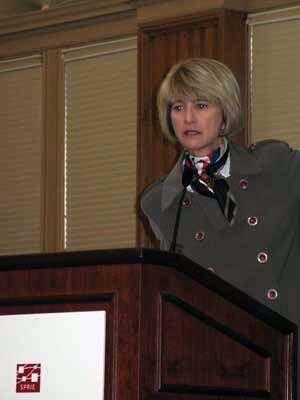
Over thirty-five scholars from sixteen different universities in the United States, Japan, and Europe gathered in Bechtel Hall for a two-day academic conference entitled Entrepreneurship and Japan's Transformation.

At the conference, twelve new papers exploring aspects of Japan's entrepreneurial environment were presented from academic fields such as political science, economics, strategy, and organization theory. The papers and discussion examined new developments in Japan, including potential opportunities opening up after the Great Eastern Japan Earthquake. Topics ranged from new firm profitability, the politics of firm creation, management of innovation, and large firm entrepreneurial processes in Japan. The goal was to lead toward a better understanding of the nature of entrepreneurship, and how analyses of Japan might inform more theoretical discussions.

The conference also opened and closed with panel discussions featuring prominent experts on Japan's economics, social systems, business, and government, who discussed the effects of the great earthquake on Japan today as well as the possible impact on future research about Japan. The papers and discussions presented at this conference will be presented for publication in various journals and also compiled into an edited volume.

Hero Image
IMG 0692

Tomi Brooks
Tomi Brooks
All News button
1
News Type
News
Date
Paragraphs

Eight-four percent of Fortune Global 100 companies worldwide now utilize at least one social media platform (SMP), indicates a recent study by the public relations firm Burson-Marsteller.

Numerous statistical studies such as this exist, but how do we understand the numbers in terms of the actual impact of SMPs on business?

Despite the growing adoption of SMPs as a business tool, this is still a relatively new and under-studied area of technology—even in Silicon Valley where many SMP innovations originate, says Rafiq Dossani, a senior research scholar at Stanford University’s Walter H. Shorenstein Asia-Pacific Research Center (Shorenstein APARC). Dossani defines SMPs as “information and communications technology platforms designed for interaction among participants.” He and other academic and industry experts convened at Stanford on May 25 for a discussion of SMP business trends, especially in the areas of recruitment and business development in Silicon Valley.

Their goal? To begin developing a theoretical framework for the study of SMPs as a tool in today’s global business environment. Findings presented during the conference suggest that SMPs serve as another tool for doing business, but do not supplant existing systems and practices. In addition, a great deal of future research is needed on the subject.

Organized by Shorenstein APARC’s Stanford Program on Regions of Innovation and Entrepreneurship (SPRIE), the conference was the sixth in an annual series dedicated to examining the globalization of business services. Previous conferences have addressed topics including outsourcing, system integrators, international recruitment, and clean technologies.

Opening the first session about social media trends among Silicon Valley employers, Philip Jordan and Stephen Jordan of Green LMI Consulting presented findings from a recent survey they conducted of over three hundred firms, especially of larger and technology-related companies. Their study found that over half of Silicon Valley firms surveyed are utilizing social media for external communication and/or for the recruitment and evaluation of new employees, pointing to the utility for job seekers to maintain a professional-looking online presence. Nonetheless, they emphasized that “real” skills and expertise still matter the most to employers.

Manuel Serapio, faculty director and associate professor of international business at the University of Colorado Denver (UC Denver) moderated the panel discussion that followed. Panelists Rahim Fazal, CEO and co-founder of Involver, and Tuomo Nikulainen, a researcher at ETLA, the Research Institute of the Finnish Economy, provided commentary during the session.

Dossani led the second session about social media in the workplace with a presentation summarizing a study he conducted on the value of SMPs to business organizations. Surveying employees at twenty Silicon Valley companies, Dossani tested the hypothesis that a SMP has value “only if it improves the reliability of existing information or enables the generation of new information.” SMPs do not automatically generate such information, he stated. Some SMPs are better at generating reliable information (eg., a CEO’s blog) and others enable the generation of new information (eg., a discussion forum). Dossani categorized SMPs in the study by the extent of collaboration they permitted among participants in the creation of new information, as well as the control that was possible over the flow of information. Depending on how the usage of an SMP is organized—who participates and its governance structure—information of potential value to corporates is generated. Dossani noted the difference between individual SMPs, such as Twitter, and websites, such as YouTube, that integrate a number of different social media functions, including video and discussion forums.

In the study, Dossani proposed a theoretical framework for research on SMP business trends, informed by work about strong and weak “ties” conducted by Stanford sociologist Mark Granovetter. The survey results indicated that SMPs are found useful for project management (low control/high collaboration SMPs) and building employee and consumer awareness (high control/low collaboration SMPs). While this provided support for the hypothesis, said Dossani, other evidence did not support it, such as the limited use of SMPs for human resource functions and strategic planning. This might be due to the nascency of technologies, lack of diversity of platforms, or limited familiarity with the potential of SMPs—clearly, exciting subjects for future research, he concluded.

Henry S. Rowen, co-director of SPRIE, moderated the panel discussion that accompanied Dossani’s presentation. Panelists included Matt Ceniceros, director of global media relations at Applied Materials; Ankit Jain, a software engineer at Google; Don McCullough, vice president of marketing for IP and broadband at Ericsson; and Saurabh Mittal, head of customer experience practice at Wipro.

Emerging from the conference is the understanding that companies are increasingly embracing SMPs as a tool to enhance their current business practices, but not uniformly. To understand the role of SMPs in business—both in Silicon Valley and worldwide—a theoretical framework, such as Dossani suggested, and further studies are needed.

Papers and slides from the two main presentations are now available online, with full audio from the event to be added soon.

In addition to longtime Globalization of Business Services conference co-sponsors Wipro, UC Denver, and ETLA, Adobe and Ericsson also provided co-sponsorship for this year’s event.

Hero Image
GlobalBusinessHEADLINER
Social media tools are increasingly used in today's global business environment.
Flickr: CLUC
All News button
1
Authors
Larry Diamond
News Type
Commentary
Date
Paragraphs
In a new piece published on the Foreign Affairs website, CDDRL Director Larry Diamond argues that the Arab Spring is witnessing a thawing and freezing across the region as anti-democratic forces threaten nascent democratic transformations.

The decades-long political winter in the Arab world seemed to be thawing early this year as mass protests toppled Tunisian President Zine el-Abidine Ben Ali in January and Egyptian President Hosni Mubarak in February. It appeared as though one rotten Arab dictatorship after another might fall during the so-called Arab Spring. Analogies were quickly conjured to 1989, when another frozen political space, Eastern Europe, saw one dictatorship after another collapse. A similar wave of democratic transitions in the Arab world was finally possible to imagine, particularly given the extent to which previous transformations had been regional in scope: Portugal, Spain, and Greece all democratized in the mid-1970s; much of Latin America did shortly thereafter; Korea and Taiwan quickly followed the Philippines’ political opening in 1986; and then a wave of change in sub-Saharan Africa began in 1990. All of those were part of the transformative “third wave” of global democratization. In March, many scholars and activists reasonably imagined that a “fourth wave” had begun. 

Two months later, however, a late spring freeze has seemingly hit some areas of the region. And it could be a protracted one. Certainly, each previous regional wave of democratic change had to contend with authoritarian hard-liners, opposition divisions, and divergent national trends. But most of the Arab political openings are closing faster and more harshly than happened in other regions -- save for the former Soviet Union, where most new democratic regimes quickly drifted back toward autocracy.

If Tunisia still provides grounds for cautious optimism, the Egyptian situation is already deeply worrying. Its senior officer corps, which currently controls the government, does not want to facilitate a genuine democratic transition. It will try to prevent it by generating conditions on the ground that discredit democracy and make Egyptians (and U.S. policymakers) beg for a strong hand again. The ruling officers have turned a blind eye to mounting religious and sectarian strife (and an alarming explosion in crime). The military has spent enormous effort arresting thousands of peaceful protesters in Tahrir Square and trying them in military tribunals over the last two months. (In April, one such detainee, a blogger named Maikel Nabil, was sentenced to three years in prison for “insulting the military establishment.”) Yet it claims that it cannot rein in rising insecurity. Many Egyptians see this as part of the military’s grand design to undermine democracy before it takes hold.

The parliamentary elections slated for September are unlikely to help: New political forces have no chance of being able to build competitive party and campaign structures in time. The Muslim Brotherhood, which initially said it would only contest a third of the parliamentary seats, has now announced its intention to contest half of all seats, forming a new political party (Freedom and Justice) for the purpose. If the electoral system retains its highly majoritarian nature, it might well win a thumping majority of the seats it contests (perhaps 40 percent in all), with most of the rest going to local power brokers and former stalwarts of the Mubarak-era ruling party, the National Democratic Party.

Both theory and political experience teach that regimes with spent legitimacy do not last, and the legitimacy of the Libyan, Syrian, and Yemeni dictators is utterly depleted.

Elsewhere in the region, Bahrain’s minority Sunni monarchy opted to crush peaceful protests and arrest and torture many of those with whom it might have negotiated some future power-sharing deal. With active Iranian support and a bizarre degree of American and Israeli acceptance, Syrian President Bashar al-Assad unleashed a slow-motion massacre that could go on for weeks or even months. In Yemen, the government is paralyzed, food prices are rising, and the country is drifting. Having seen the fate of Mubarak, Yemeni President Ali Abdullah Saleh is playing for time, but his legitimacy is irretrievably drained, and he lacks the ability to mobilize repressive force on the scale of Assad’s.

Of course, not every country in the region has been affected by the apparent freeze and some could still avoid it. Jordan and Morocco are not yet in crisis but could be soon. Both countries face the same conditions that brought down seemingly secure autocracies in Tunisia and Egypt -- mounting frustration with corruption, joblessness, social injustice, and closed political systems. Not yet facing mass protests, Jordan’s King Abdullah is in a position to lead a measured process of democratic reform from above to revise electoral laws, rein in corruption, and grant considerably more freedom. Yet there is little sign that he has the vision or political self-confidence to modernize his country in this way.

Morocco’s King Mohammed VI is still domestically revered and internationally cited as a reformer, but he is even weaker and more feckless than Abdullah. He has been unwilling to rein in the deeply venal interests that surround the monarchy, or ease the country’s extraordinary concentration of wealth and business ownership. Instead, his security forces, narrow circle of royal friends, and oligopolistic business cronies fend off demands for accountability and reform, further isolate the king, and aggravate the political storm that is gathering beneath a comparatively calm surface.

For now, both monarchies are treading familiar water: launching committees to study political reform but never moving toward real political change. This game cannot last forever. As a former Jordanian official recently commented to me privately: “Everyone is expecting serious changes to the way the king rules the country, and if these changes don’t happen, the system will be in trouble. The king can’t keep talking about reform without implementing it.”

Scholars of the Arab world had been arguing for years that the region’s various repressive regimes (not least Saudi Arabia’s Al Saud dynasty, which keeps several thousand princes on the take) would either pursue democratic reform, or rot internally until they were overthrown. Ultimately, the options remain the same for the regimes that have avoided revolution this year. Those who have reasserted authoritarianism will find only temporary reprieve. Both theory and political experience teach that regimes with spent legitimacy do not last, and the legitimacy of the Libyan, Syrian, and Yemeni dictators is utterly depleted. They will surely be overthrown if not now, then in coming years. The Jordanian and Moroccan monarchies, however, could still survive if they spend what remains of their political legitimacy on democratic reform. In other words, even if the Arab spring comes in fits and starts, it will eventually bring fundamental political change. But whether democracy is the end result depends in part on how events unfold and how regimes and international actors engage the opposition forces.

Short of the wars that have periodically broken out in the region, the United States has never faced a more urgent set of opportunities and challenges there: real prospects for democratic development exist alongside the very real risks of Islamist ascension, political chaos, and humanitarian disaster. Countries across the Arab world differ widely in their political structures and social conditions, and the United States cannot pursue a one-size-fits-all strategy. But there are a few basic principles that it should apply everywhere. As it has generally and in a number of specific cases, the Obama administration must explicitly and consistently denounce all violent repression of peaceful protest. And it should enhance the credibility of those words by tying them to consequences. For example, in Libya, the United States identified and froze the overseas assets of top officials who were responsible for brutality. Additionally, it imposed travel bans on them and their family members, and asked Europe to do the same. In the past few days, the Obama administration has also moved to freeze the personal assets of Assad and other top Syrian officials. In extreme cases -- Libya is one, and Syria has now become another -- the United States can press the United Nations Security Council to refer individuals to the International Criminal Court for crimes against humanity.

When Arab governments turn arms against peaceful protesters, the United States and Europe should stop supplying them with weapons. Western countries have been selling (or giving) regimes, such as Saleh’s in Yemen, the tools of repression, including tear gas, ammunition, sniper rifles, close-assault weapons, and rockets and tanks. Although Saleh may have been a valuable asset in the fight against terrorism at one time, he has become a liability. By ending such trade, the United States would firmly send the message to the leaders of Bahrain (another recipient) and Yemen that if they are going to violently assault and arbitrarily arrest peaceful demonstrators for democracy, they are at least not going to continue doing so with U.S. guns.

For now, there is an urgent need for mediation to break the impasse between rulers and their oppositions and to find ways to ease the region’s remaining dictators out of power. Recognizing the need for an active UN role during the Arab uprising, UN Secretary-General Ban Ki-moon has begun to dispatch experienced and talented UN staff to engage in dialogue with different groups in Yemen and elsewhere. These diplomats can help develop possible political accommodations with the protesters. The United States should encourage the UN to try to mediate these conflicts, reconcile deeply divided forces within political oppositions, and help governments pave the way for credible elections. Because it is more neutral, the UN is the international actor best suited to mediate as well as convene experts on institutional design and help supply technical support for drafting constitutions.

American diplomats will have their own role to play: They can channel financial and programmatic support and provide another venue for different actors to meet and discuss differences. They should also speak out for human rights, civil society, and the democratic process. Such expressions of moral and practical support have made a significant difference in transitional situations in other countries, such as Chile, the Philippines, Poland, and South Africa. The Arab world has its own distinct sensitivities, but the ongoing uprisings present an unusual opportunity for U.S. ambassadors to join with representatives of other democracies to lean on Arab autocrats and aid Arab democrats.

The United States should help Arab democrats get the training and financial assistance they need to survive while urging them to cooperate with one another. This does not just mean more grants to civil society organizations. There is, of course, a need for such funding, but too much U.S. money thrown at these groups will discredit them as “American pawns” or promote corruption. Aid should be pooled among multiple donors, provide core (rather than project-related) funding for organizations with a proven track record of advancing democratic change, and must be carefully monitored to ensure that it is being used effectively.Western countries have been selling (or giving) regimes, such as Saleh’s in Yemen, the tools of repression, including tear gas, ammunition, sniper rifles, close-assault weapons, and rockets and tanks.

Finally, given its enormous demographic weight and political influence in the Arab world, as Egypt goes, so will go the region. Engaging Egypt will prove vital to any larger strategy of fostering democratic change in the Arab world. Beyond aid and vigilant monitoring of the political process, the United States must deliver a clear message to the Egyptian military that it will not support a deliberate sabotage of the democratic process, and that a reversion to authoritarianism would have serious consequences for the U.S.-Egyptian bilateral relationship, including for future flows of U.S. military aid. The United States cannot allow the Egyptian military to play the cynical double game that the Pakistani military has, or Egypt may become another Pakistan in two senses: an overbearing military may hide behind the façade of democracy to run the country, and the military may consort with our friends one day and our enemies -- radical Islamists within Egypt and Hamas outside it -- the next, to show it cannot be taken for granted.

This period of change in the Arab world will not be short or neatly circumscribed. Not a continuous thaw or freeze, the coming years will see cycles -- ups and downs in a protracted struggle to define the future political shape of the Arab world. The stakes for the United States are enormous. And the need for steady principles, clear understanding, and long-term strategic thinking has never been more pressing.

All News button
1
Subscribe to Business