Business
0
Visiting Scholar at APARC, 2022-23
Global Affiliate Visiting Scholar, 2024
Yamauchi-No. 10 Family Office
banjo_yamauchi.jpg

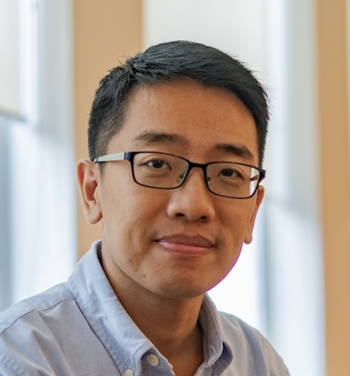
Banjo Yamauchi joined the Walter H. Shorenstein Asia-Pacific Research Center (Shorenstein APARC) as Visiting Scholar for the 2023 calendar year and a Global Affiliate Visiting Scholar for the 2024 calendar year. He serves as the CEO and family representative for the Yamauchi-No.10 Family Office as well as Executive Director of the Yamauchi Foundation in Japan. While at APARC, he will be conducting research with Professor Kiyoteru Tsutsui on investment, incubation, and philanthropy in Silicon Valley and Japan.

Date Label
-
Image
Big Data China logo

The event will be webcast live from this page.


In this event on December 9 at 7 a.m. PT / 10 a.m. ET, the Stanford Center on China’s Economy and Institutions (SCCEI) and the CSIS Trustee Chair in Chinese Business and Economics present their latest Big Data China publication. The feature “Have U.S.-China Tensions Hurt American Innovation?” highlights the work of professors Ruixue Jia and Molly Roberts (University of California San Diego) and investigates the effects of U.S. policies toward China on academic collaboration between the two countries.

Trustee Chair Senior Fellow Ilaria Mazzocco will host the event, which will include an introduction by Professor Scott Rozelle of Stanford University. Professors Molly Roberts and Ruixue Jia of UC San Diego will discuss their research on the topic, followed by a discussion on the implications for U.S.-China relations and U.S. policy with distinguished panelists James Mulvenon of Peraton Labs, Deborah Seligsohn of Villanova University, and Abigail Coplin of Vassar College.  

FEATURING

Scott Rozelle 
Co-director at Stanford Center on China's Economy and Institutions
Molly Roberts 
Associate Professor of Political Science, UC San Diego
Ruixue Jia 
Associate Professor of Economics, 
UC San Diego
Abigail Coplin 
Assistant Professor of Sociology and Science, Technology and Society, 
Vassar College
James Mulvenon 
Scientific Research and Analysis, Peraton Labs
Ilaria Mazzocco 
Senior Fellow, Trustee Chair in Chinese Business and Economics
Deborah Seligsohn 
Senior Associate (Non-resident), Trustee Chair in Chinese Business and Economics


EVENT PARTNERS
 

Image
SCCEI and CSIS logos

Virtual Livestream 

Abigail Coplin
Ruixue Jia
Ilaria Mazzocco
James Mulvenon
Molly Roberts
Scott Rozelle
Deborah Seligsohn
Panel Discussions
-

Image
Big Data China logo
The event will be webcast live from this page.


In this event on October 14 at 8 a.m. PT / 11 a.m. ET, the Stanford Center on China’s Economy and Institutions (SCCEI) and the CSIS Trustee Chair in Chinese Business and Economics present their latest Big Data China publication. The feature provides an overview of what the latest data-driven research says about the impact of trade with China on employment trends in the United States. It also provides a comparative analysis with other countries. The analysis shows that there are various interpretations on the topic with important policy implications.

Trustee Chair Director Scott Kennedy will host the event, which will include an introduction by Professor Scott Rozelle of Stanford University. Professors André Kurmann of Drexel University and Zhi Wang of George Mason University will discuss their research on the topic, followed by a discussion on the implications for U.S.-China relations and U.S. policy with distinguished panelists Anna Ashton of the Eurasia Group and Jeremie Waterman of the U.S. Chamber of Commerce. 
 

WATCH THE RECORDING

FEATURING

Scott Rozelle 
Co-director at Stanford Center on China's Economy and Institutions
Jeremie Waterman 
President, China Center, U.S. Chamber of Commerce
André Kurmann  
Professor of Economics, LeBow College of Business, Drexel University
Anna Ashton 
Director, China Corporate Affairs and U.S.-China, Eurasia Group
Zhi Wang 
Senior Policy Fellow, Schar School of Policy and Government, George Mason University
Scott Kennedy 
Senior Adviser and Trustee Chair in Chinese Business and Economics
  

EVENT PARTNERS
 

Image
SCCEI and CSIS logos

Virtual Livestream 

Anna Ashton
Scott Kennedy
André Kurmann
Scott Rozelle
Jeremie Waterman
Zhi Wang
Panel Discussions
-
Adam Liu Poster

The Henan bank protest, the Evergrande crisis, and the ongoing local government debt issue in China all point to one thing: there’s something wrong with the country’s banking system. Beijing needs to better regulate the numerous small banks that are now intimately intertwined with much of China's economic challenges. 

They’re working on it, but there’s no easy solution.

Adam Y. Liu will tell us the origins of the dilemma, the increasing role of small banks in China and local development, and what tradeoffs China will likely have to make to prevent a run-away banking crisis.

Speaker

Image
Adam Liu Headshot
Adam Y. Liu is assistant professor at the Lee Kuan Yew School of Public Policy, National University of Singapore. His main research interests include Chinese politics and political economy. He is currently working on a book project that explores how central-local politics drove the formation, expansion, and operation of what he calls a "state-owned market" in China's banking sector. The project is based on his dissertation, which won the 2020 BRICS Economic Research Award. He received his Ph.D. in political science from Stanford University and was a postdoctoral associate with the Leitner Program in International and Comparative Political Economy at Yale University. 

Jean C. Oi

Virtual event via Zoom

Adam Y. Liu
Seminars

Shorenstein APARC
Stanford University
Encina Hall, E301
Stanford,  CA  94305-6055

0
Visiting Scholar at APARC, 2022-23
Nirvikar_Singh.jpg Ph.D.

Professor Nirvikar Singh joined the Walter H. Shorenstein Asia-Pacific Research Center (Shorenstein APARC) as a Visiting Scholar for the 2022-2023 academic year. Singh serves as a Distinguished Professor in Economics at the University of California, Santa Cruz. While at APARC, he researched the political economic dynamics of India and the role of innovation in driving economic growth, especially in Asia.

-

This event will offer simultaneous translation between Japanese and English. 
当イベントは日本語と英語の同時通訳がついています。

This is a virtual event. Please click here to register and generate a link to the talk. 
The link will be unique to you; please save it and do not share with others.
当イベントはZoomウェビナーで行われます。ウェビナーに参加するためには、こちらのリンクをクリックし、事前登録をして下さい。

March 1, 5-6:30 p.m. California time/ March 2, 10-11:30 a.m. Japan time

This event is part of the 2022 Japan Program Winter webinar series, The Future of Social Tech: U.S.-Japan Partnership in Advancing Technology and Innovation with Social Impact


The challenges of climate change require solutions on multiple fronts, one of which is technological innovation. Attempts for innovation for new energy sources have been ongoing in many parts of the world, and Japan has produced a number of new technologies. This session will focus on two of the most promising innovations coming out of Japan, biofuel and hydrogen energy, and assess their promises and challenges, highlighting technological, regulatory, and business aspects of developing new technologies. Where do these technologies fit in the energy portfolio that would address the issues of climate change and what can Japan and the United States do to collaboratively solve the key problems in advancing these technologies further? Three leading experts in the field will discuss these questions that would shape the future of climate change. 


Panelists

Image
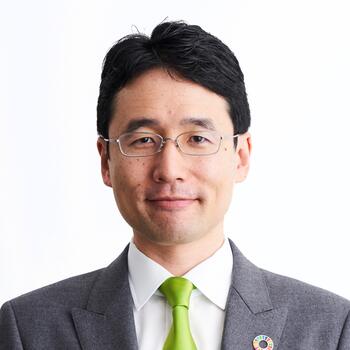
Headshot photo of Mitsuru Izumo
Mitsuru Izumo is a graduate of the University of Tokyo, having specialised in agricultural structural
management. In 2005, he established Euglena Co., Ltd. to harness the properties of microalgae
Euglena. Euglena Co., Ltd. became the world’s first biotechnology company that succeeded in the
outdoor mass cultivation of Euglena. Currently, Euglena Co., Ltd upholds “Sustainability First” as
their philosophy and has developed the manufacture and sale of foods and cosmetics as the
healthcare domain, the biofuel business, the bioinformatics business, and the social business in
Bangladesh by leveraging Euglena and other advanced technologies.


Image
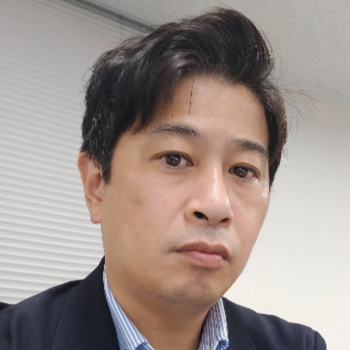
Headshot photo of Eiji Ohira
Eiji Ohira is the Director General of the New Energy and Industrial Technology Development Organization (NEDO)’s Fuel Cell and Hydrogen Technology Office In this capacity, he is responsible for the overall strategy, execution and coordination of NEDO’s research, development and demonstration project on fuel cell and hydrogen.

He has also coordinated fuel cell and hydrogen activities with international stakeholders, through International Energy Agency’s Technology Collaboration Program (IEA TCP: Advanced Fuel Cell & Hydrogen), and International Partnership for Hydrogen and Fuel Cells in the Economy (IPHE). 

He joined the NEDO in 1992, just after graduation from the Tokyo University of Science. He served as a visiting scholar at the Massachusetts Institute of Technology in 1997-1998.


Moderator

Image
Headshot photo of Kate Hardin
Kate Hardin, Deloitte Executive Director for Energy and Industrials Research, has worked in the energy industry for 25 years.  She currently leads Deloitte research on the impact of the energy transition on the energy and industrial manufacturing sectors. Before that, Kate led integrated coverage of transportation decarbonization and the implications for the oil, gas, and power sectors.  Kate has also developed global energy research for institutional investors and has led analysis of Russian and European energy developments.  Kate recently served as an expert in residence at Yale’s Center for Business and Environment, and she is also a member of the Council on Foreign Relations.  


Image
Shorenstein APARC Winter 2022 Speaker Series Icon with text "New Frontiers: Technology, Politics, and Society in the Asia-Pacific"
This event is part of the 2022 Winter webinar series, New Frontiers: Technology, Politics, and Society in the Asia-Pacific, sponsored by the Walter H. Shorenstein Asia-Pacific Research Center.


Via Zoom Webinar
Register:  https://bit.ly/3LuNa94


Mitsuru Izumo <br>Founder and President, Euglena Co Ltd.<br><br>
Eiji Ohira <br>Director General of Fuel Cell and Hydrogen Technology Office, Japan New Energy and Industrial Technology Development Organization (NEDO) <br><br>
Kate Hardin <br>Executive Director, Deloitte Research Center for Energy & Industrials
Panel Discussions
-

This is a virtual event. Please click here to register and generate a link to the talk. 
The link will be unique to you; please save it and do not share with others.


Once considered incapable of innovation, China’s contribution to technological advancement has become impossible to ignore as it continues its historic rise. Now home to such tech giants as Alibaba, Tencent, and Huawei, China is competing in the global market. But what does this technological success mean in the context of China's internal and international politics, particularly its tense relationship with the United States? Will efforts to decouple help or hinder progress in tech? Can China’s educational system produce the next generation of innovators and propel them to the forefront of technology? What effects, if any, is the recent tightening on tech giants having on the sector at large? In this program, experts Denis Simon, Senior Adviser to the President for China Affairs at Duke, and Dan Wang, technology analyst for Gavekal Dragonomics, will be discussing the status and consequences of decoupling for the US and China and their technological sectors.  


Image
Portrait of Denis Simon
Denis Fred Simon is Senior Adviser to the President for China Affairs at Duke and Professor of China Business and Technology at Duke's Fuqua School of Business.  He also serves as Executive Director of the Center for Innovation Policy at Duke.  Fluent in Mandarin Chinese, Simon has more than four decades of experience studying business, competition, innovation and technology strategy in China. In 2006, he was awarded the China National Friendship Award by Premier Wen Jiabao in Beijing.  Prior to returning to Duke, Dr. Simon served as Executive Vice Chancellor at Duke Kunshan University in China (2015-2020).  Simon’s career included spells as senior adviser on China and global affairs in the Office of the President at Arizona State University; vice-provost for international affairs at the University of Oregon; and professor of international affairs at Penn State University’s School of International Affairs. He also has had extensive leadership experience in management consulting having served as General Manager of Andersen Consulting in Beijing (now Accenture) and the Founding President of Monitor Group China.

Simon is the author of several books including Corporate Strategies Towards the Pacific Rim; Techno-Security in an Age of Globalization; and China’s Emerging Technological Edge: Assessing the Role of High-End Talent.


Image
Portrait of Dan Wang
Dan Wang is the Shanghai-based technology analyst for Gavekal Dragonomics, the China economics research firm. He tracks the prospects for China's industrial policy, US regulatory measures and the activities of multinationals in China. He has given keynotes for a variety of organizations and his work is widely cited in the press. Dan previously worked in Silicon Valley and studied philosophy at the University of Rochester. Dan's essays have been published in Foreign Affairs, The Atlantic, New York Magazine, and he is a contributor to Bloomberg Opinion

.


Image
New Frontiers event series promo image

This event is part of the 2022 Winter webinar series, New Frontiers: Technology, Politics, and Society in the Asia-Pacific, sponsored by the Shorenstein Asia-Pacific Research Center.


Image
Chinese 100 yuan bills

This event is part of the 2022 Winter webinar series, The Future of China's Economy, sponsored by the APARC China Program.


Via Zoom Webinar. Register at: https://bit.ly/3IA7MdJ

Denis F. Simon Senior Adviser to the President for China Affairs, Duke University; Professor of China Business and Technology, Duke Fuqua School of Business
Dan Wang Technology Analyst, Gavekal Dragonomics
Seminars
-

This is a virtual event. Please click here to register and generate a link to the talk. 
The link will be unique to you; please save it and do not share with others.


China’s rapidly growing local government debt problem has long been recognized by foreign observers as a risk, but inside China, only recently was this problem called out as alarming.  Why has local government debt been allowed to grow with little direct intervention from central authorities?  Based on a forthcoming paper, Oi will show how a “grand bargain” the central authorities entered into with the localities allowed Beijing to take the lion’s share of tax revenues after 1994, but also allowed localities to gain new resources and power as a quid pro quo.  While the bargain provided an expedient and seemingly successful strategy that worked for more than a decade to fuel rapid local state-led growth, it had significant costs that are now becoming increasingly visible.  Because land finance was the core means by which localities raised revenue, Oi also will help explain why the problems with property developers like Evergrande are so important to China’s future economy.   


Image
Dr. Jean C. Oi
Jean C. Oi is the William Haas Professor of Chinese Politics in the Department of Political Science and a senior fellow in the Freeman Spogli Institute for International Studies at Stanford University. She directs the China Program at the Walter H. Shorenstein Asia-Pacific Research Center and is the Lee Shau Kee Director of the Stanford Center at Peking University. Professor Oi has published extensively on China’s reforms. Recent books include Fateful Decisions: Choices That Will Shape China’s Future, co-edited with Thomas Fingar (Stanford University Press, 2020); Zouping Revisited: Adaptive Governance in a Chinese County, co-edited with Steven Goldstein (Stanford University Press, 2018); and Challenges in the Process of China’s Urbanization, co-edited with Karen Eggleston and Yiming Wang (2017). Current research is on fiscal reform and local government debt, continuing SOE reforms, and the Belt and Road Initiative.


Image
Chinese 100 yuan bills

This event is part of the 2022 Winter webinar series, The Future of China's Economy, sponsored by the APARC China Program.


Via Zoom Webinar. Register at: https://bit.ly/34mnOcc

Jean C. Oi Director of Shorenstein APARC China Program; William Haas Professor of Chinese Politics, Stanford University
Seminars
News Type
News
Date
Hero Image
Factory with lines of robots performing tasks. GettyImages
All News button
1
Subtitle

"By 2016, China had the world’s largest stock of operational robots. This was a massive increase from 2010, when it trailed Japan, the United States, Germany, and South Korea. To learn why and how China is automating so rapidly, [Erin Slawson] spoke with Dr. Hongbin Li, Co-Director of the Stanford Center on China’s Economy and Institutions (SCCEI)."

-

This is a virtual event. Please click here to register and generate a link to the talk. 
The link will be unique to you; please save it and do not share with others.


What is the relationship between internal development and integration into the global economy in developing countries? How and why do state–market relations differ? And do these differences matter in the post-Cold War era of global conflict and cooperation? Drawing on research in China, India, and Russia and examining sectors from textiles to telecommunications, Micro-Institutional Foundations of Capitalism introduces a new theory of sectoral pathways to globalization and development. Adopting a historical and comparative approach, Hsueh's Strategic Value Framework shows how state elites perceive the strategic value of sectors in response to internal and external pressures. Sectoral structures and organization of institutions further determine the role of the state in market coordination and property rights arrangements. The resultant dominant patterns of market governance vary by country and sector within country. These national configurations of sectoral models are the micro-institutional foundations of capitalism, which mediate globalization and development.


Image
Portrait of Roselyn Hsueh
Roselyn Hsueh is an associate professor of political science at Temple University, where she co-directs the Certificate in Political Economy. She is the author of Micro-Institutional Foundations of Capitalism: Sectoral Pathways to Globalization in China, India, and Russia (Cambridge University Press, forthcoming, 2022), China’s Regulatory State: A New Strategy for Globalization (Cornell University Press, 2011), and scholarly articles on states and markets, comparative regulation and governance, and political economy of development. She is a frequent commentator on politics, finance and trade, and economic development in China and beyond. BBC World News, The Economist, Foreign Affairs, National Public Radio, and The Washington Post, among other media outlets, have featured her research. Prestigious fellowships, such as the Fulbright Global Scholar Award, have funded international fieldwork and she has served as a Visiting Scholar at the Institute of World Economics and Politics, Chinese Academy of Social Sciences. She holds a B.A. and Ph.D. in Political Science from the University of California, Berkeley.


Via Zoom Webinar. Register at: https://bit.ly/3zoAafx

Roselyn Hsueh Associate Professor of Political Science, Temple University
Seminars
Subscribe to Business