Science and Technology
News Type
News
Date
Paragraphs

Special Event:  Pascal Lamy Lecture

“World Trade and Global Governance”

 
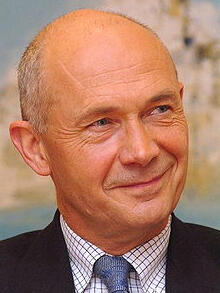
The Europe Center invites you to a special lecture by Pascal Lamy, the former Director-General of the World Trade Organization.
 
Image
Image of Pascal Lamy
Date: February 10, 2014 
Time: 4:00 - 5:30 p.m.
Venue: Bechtel Conference Center, Encina Hall
RSVP by February 5, 2014                       
  
Mr. Lamy will speak on the necessary mix of economic, social, and political policies that will determine the efficacy of free trade as an engine of global economic growth. In particular, he will outline a statement of his own thinking about the future of global governance and international trade, and describe what remains to be done in addressing the challenges of globalization. Additionally, Mr. Lamy will reflect on the features of modern politics that create governance gridlock and thwart global oversight, and will identify how progress can be made in overcoming impediments to policy action at the international level. 
 
My Lamy served as the Director-General of the World Trade Organization from 2005-2013. He is currently the Honorary President of the Paris-based think tank, Notre Europe.


Meet our Visiting Scholars:  Bjørn Høyland 

 
In each newsletter, The Europe Center would like to introduce you to a visiting scholar or collaborator at the Center. We welcome you to visit the Center and get to know our guests.
 
Bjør
Image
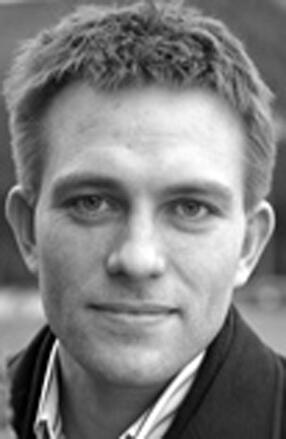
Image of Bjorn Hoyland
n Høyland (PhD, London School of Economics, 2005) is Professor of Political Science at the University of Oslo, Norway. He is currently visiting Professor and Anna Lindh Fellow at The Europe Center, Freeman Spogli Institute for International Studies and Stanford Global. The focus of his research is European Union politics and comparative legislative politics. Professor Høyland’s list of journal publications includes the American Political Science Review, Annual Review of Political Science, British Journal of Political Science, and European Union Politics. His textbook (with Simon Hix) The Political System of the European Union (3rd ed) is the standard text for advanced courses on the European Union.

Workshop Schedules  

 
The Europe Center invites you to attend the talks of speakers in the following workshop series: 
 

Europe and the Global Economy

 
January 23, 2014
David Dreyer Lassen, Professor of Economics, University of Copenhagen
RSVP by Jan 20, 2014 
 
February 20, 2014
Alan Deardorff, John W. Sweetland Professor of International Economics & Prof. of Economics and Public Policy, University of Michigan
RSVP by Feb 17, 2014
 
Mar 6, 2014
Sophie Meunier, Research Scholar, Woodrow Wilson School and Co-Director, EU Program at Princeton, Princeton University
RSVP by Mar 3, 2014
 
Mar 13, 2014
Randy Stone, Professor of Political Science, University of Rochester
RSVP by Mar 10, 2014
 
Apr 3, 2014
Kåre Vernby, Associate Professor, Department of Government, Uppsala University
RSVP by Mar 31, 2014
 
Apr 17, 2014
Mark Hallerberg, Professor of Public Management and Political Economy, Hertie School of Governance 
RSVP by Apr 4, 2014
 
May 15, 2014
Christina Davis, Prof. of Politics and International Affairs, Princeton University
RSVP by May 12, 2014

European Governance

 
February 6, 2014
Matthew Gabel, Professor of Political Science, Washington University at St. Louis
RSVP by Feb 3, 2014
 
May 22, 2014
Wolfgang Ischinger, Former German Ambassador to the U.S.; Chairman, Munich Security Conference
RSVP by May 19, 2014
 
May 29, 2014
Simon Hug, Professor of Political Science, University of Geneva
RSVP by May 26, 2014

Other Events

 
The Europe Center also invites you to attend the following events of interest:
 
January 27, 2014
Vassil Terziev, Co-founder & CEO, Telerik (BG); and Japec Jakopin, Co-founder & CEO, Seaway (SI)
“Worldclass Enterprise Software and Design Firms in SouthEast and Balkans Europe” 
Sponsor: European Entrepreneurship & Innovation Thought Leaders Seminar
 
January 30, 2014
Ken Schultz, Professor of Political Science, Stanford University
“Making and Breaking Territorial Agreements: Explaining European Exceptionalism”
Sponsor: CISAC Social Science Seminar; co-sponsored by The Europe Center
 
 
All News button
1

A central focus of the research efforts at Shorenstein APARC is to analyze the bridges linking Asia and the United States. As the Asian diaspora continues to grow in America and across the world, new possibilities have emerged for migrants who become integrated into their host societies while remaining engaged with their home societies. Such trans-migration creates new innovation and trade opportunities for both Asia and the United States, as a positive-sum game where both sides benefit.

News Type
News
Date
Paragraphs

In collaboration with Stanford's Graduate School of Business, SCPKU has unveiled two new immersive classrooms at the center which enrich the overall student experience and increase Stanford's online and distance education program's impact. SCPKU's Executive Director, Andy Andreasen, shares the background behind the development of SCPKU's new Highly Immersive Classroom (HIC) and Enhanced Classroom (EC) with Amy Lee of Stanford's Office of International Affairs. Read more.

Hero Image
dsc 0489 hic resized 9 8 x 6 5 SCPKU
All News button
1
News Type
News
Date
Paragraphs

Charles Eesley, Stanford Assistant Professor of Management Science and Engineering and SCPKU Faculty Fellow, shared his views on linkages between Chinese science parks and innovation during a public talk in October 2013.

The Chinese government developed over 100 high-tech industrial development zones and over 80 university science parks since the mid-1980s, aimed to support fundraising and growth for innovation. How do they contribute to innovation in China? Are places like Zhongguangcun helping Chinese firms like the Silicon Valley? On October 30, 2013 during an SCPKU public talk, Charles Eesley, Stanford Assistant Professor of Management Science and Engineering and SCPKU Faculty Fellow, shared his research on science parks as innovation policy in China and the channels through which ventures acquire financial and political support in China.

The establishment of science parks began when researchers located in Zhongguancun began to come out of their labs and start entities for commercializing research achievements in the 1970s. Since the late 1980s, the Chinese government has put in place a set of national and provisional regulations to establish science parks as key public infrastructure to receive public resources promoting high-tech entrepreneurship.

By 2004, with nearly 7000 industrial parks in China, the government stepped up its efforts to tighten regulations and clean up unqualified industrial parks. By the end of 2006, the number of industrial parks had dwindled from over 6800 to less than 1600.

Established in 2004, Tsinghua University Science Park, or "Tuspark," is both one of the most renowned science parks in China as well as a company which builds other business parks. Tuspark is comprised of400 companies and 25,000 employees with 30 branches around China.

Using data gathered from Tuspark, Professor Eesley has spent the past 8 years trying to identify links between science parks, entrepreneurship, and innovation. His research has shown that science parks have mixed or relatively small effects on innovation. "Science parks may provide services, connections, and an institutional setting for legitimation and brokering that is not common outside these parks. Such effects of science parks are stronger in emerging economies or nascent markets," says Eesley.

While there may be no direct effects of science parks on innovation or venture growth, there are indirect effects that help attract public funding, particularly for businesses lacking personal government ties. Entrepreneurs can also expect to benefit from connections ("guanxi") and legitimacy.

Eesley is the recipient of the National Natural Science Foundation of China (NSFC) 2012 Research Fund for International Young Sciences, and the 2010 Best Dissertation Award in the Business Policy and Strategy Division of the Academy of Management. He has a doctorate from the MIT Sloan School of Management and is a former entrepreneur in medical equipment innovation. His research focuses on how formal and informal institutions, and industry environment influence entrepreneurship.

Hero Image
eesley resized 550 SCPKU
All News button
1
News Type
News
Date
Paragraphs

WSJDigitalNetwork: While visiting SCPKU, U.S. First Lady Michelle Obama used the Highly Immersive Classroom to connect students there with students at Stanford University. Garth Saloner, Dean of Stanford's Graduate School of Business, talks about how Stanford uses technology to spread education. Read more.

Hero Image
photo1 Courtesy of Stanford University
All News button
1
Authors
News Type
News
Date
Paragraphs

Michelle Obama promoted study abroad programs during a speech at the Stanford Center at Peking University in Beijing on Saturday, then encouraged Stanford and local high school students sitting in Palo Alto to be "citizen diplomats" during a high-tech videoconference.

In her remarks before the conversation with students, the first lady said that study abroad is a "vital part of our foreign policy."

"Study abroad is about shaping the future of your countries and the world we all share," she said.

Studying in a different country gives students the chance to immerse themselves in another culture, she said.

"That's how you realize that we all have a stake in each other's success – that cures discovered here in Beijing could save lives in America," she said. "That clean energy technologies from Silicon Valley in California could improve the environment here in China; that the architecture of an ancient temple in Xi'an could inspire the design of new buildings in Dallas or Detroit."

Obama spoke before an audience of 170 students, scholars, and alumni at the Stanford Center at Peking University (SCPKU) in Beijing – her only scheduled public appearance during a trip to China with her daughters.

"Two great universities, two great countries. The symbolism behind this event is truly remarkable," said Xinkai Mao, MBA '14. "My wife went to PKU and I go to Stanford. What a connection!"

Mao attended the event with Stanford Graduate School of Business classmate Paul Chen, MBA '14. Both lead a China study trip for fellow students starting Sunday.

Max Baucus, Washington's ambassador to Beijing, and a graduate of Stanford and the university's law school, reinforced Obama's message of personal learning and diplomacy, recounting his own exchange studies in France.

"I am standing here because of my experience at a study abroad program," he said.

Thirty-five years after the normalization of relations with China, the U.S. is supporting more American students in China than in any other country in the world.

"We're sending high school, college and graduate students here to study Chinese," Obama said. "We're inviting teachers from China to teach Mandarin in American schools. We're providing free online advising for students in China who want to study in the U.S. and the U.S. China Fulbright program is still going strong with more than 3,000 alumni."

The largest group of foreign students enrolled at Stanford today are Chinese – 860 students, up from about 600 two years ago.

"You can't learn what the First Lady is talking about only through books," said Chien Lee, BSMS '75, MBA '79, a former Stanford trustee and SCPKU's lead donor. "You have to have an in-person experience. That's what helps you appreciate the subtleties and differences. The center provides a place for people to have that exchange."

Milestone for SCPKU

The first lady's visit came the day after the second anniversary of SCPKU's opening. The center made Stanford the first American university to construct a building for its own use on a major Chinese university campus. 

Obama's conversation with students sitting at Stanford's campus showcased the "highly immersive classrooms" at SCPKU and the Graduate School of Business. The rooms are identical, and use high-definition video technology to give participants in both locations the feeling that they are in the same room. The rooms will be used to conduct seminars between scholars at Stanford and PKU, and will also be used by the business school to expand the reach of its faculty.

Michelle Obama with Stanford students at the Stanford Center at Peking University in Beijing.

Michelle Obama with Stanford students at the Stanford Center at Peking University in Beijing.
Photo Credit: Stanford University

The classroom features a curved wall of video screens and allows seamless conversation and real-time data sharing with participants on different continents.

"Through the wonders of modern technology, our world is more connected than ever before," Obama said. "Ideas can cross oceans with the click of a button. You don't need to get on a plane to be a citizen diplomat. If you have an Internet connection in your home, school or library, within seconds you can be transported anywhere in the world and meet people on every continent."

Sitting in the immersive classroom at SCPKU, Obama encouraged students to use all the resources at their disposal to become well-informed global citizens and decision makers, and to enrich the relationship between the U.S. and China.  

"The creation of a global citizen is a critical mission of the great universities in modern times," said alumnus David Chao, MBA '93, who manages a global venture capital firm and attended Obama's speech.  "When you have a global citizen with empathy, someone pushing the nuclear button is highly unlikely. It's especially relevant, when you see what's going on in Ukraine right now with people refusing to talk."

From neurology to energy and art

Stanford and Peking University have a long and growing collaboration that began with scholarly exchanges in the 1970s and student exchanges thereafter. 

In remarks welcoming the first lady, Mariano-Florentino Cuéllar, the Stanley Morrison Professor of Law at Stanford Law School and Director of Stanford's Freeman Spogli Institute for International Studies, spoke of SCPKU's mission and its relationship to China's elite Peking University, also known as Beida.

"Stanford scholars – like their counterparts at Beida – are constantly seeking a deeper appreciation of different societies and their histories," Cuéllar said. "That leads to stronger relationships –geographically, politically and culturally. We are striving for a world that is ever more capable of transcending its differences. Stanford's special relationship with Beida is a shining example of these ideals."

Nine Stanford teaching and research programs, including the School of Medicine's Asian Liver Center, the Bing Overseas Studies Program, and the Graduate School of Business, have located operations at SCPKU. Seventeen faculty fellows from departments as diverse as neurology, art, bioengineering and music, have conducted research at the center. SCPKU has also hosted 32 workshops or seminars on topics as varied as "Leveraging PCs to Advance Learning in China's Rural Schools," "Energy in China," and "New Urban Formations: Comparative Urbanization."

The first cohort of 20 Stanford undergraduates to study at the center will arrive for their 10-week program March 31. The center already has been home to a meeting of U.S.-China officials discussing North Korea's nuclear program and a conference of electrical engineers reviewing Technology Standardization. China 2.0, a forum on venture capital and entrepreneurship organized by the Graduate School of Business, will be held at the center April 11.

The future

Looking ahead, SCPKU aspires to tackle intellectual questions that address not just the political economy and culture of China, but also the challenges that arise as China engages other parts of the world in trade. China's geopolitical interests and actions in Latin America, Africa, South Asia and Southeast Asia are all important questions that Stanford faculty want to address. "The center can and should be a research destination for Stanford faculty whose work touches on China but is not necessarily solely focused on the country or region," said Jean Oi, professor of political science, director of SCPKU, and a driving force behind the center's creation.

As SCPKU activity and scholarship continues to evolve, technology also will allow its intellectual content to reach a wider audience beyond the Beijing campus.

Barbara Buell is the communications director for Stanford's Graduate School of Business.


Hero Image
michelle obama small
All News button
1
-

About the topic: Products developed using recombinant DNA methods account for over $300 billion in annual U.S. domestic revenues, underlying a so-called “bioeconomy” that has grown 10-15% annually since the invention of genetic engineering ~40 years ago. Yet most of biotechnology has not been imagined let alone made true.  I will review the last decade of work to make biology easier to engineer, from basic science to applied tools.  Particular attention will be given to two underlying trends that are having policy impacts beyond research labs: (i) interconversion of physical genetic material and digital sequence information via advancing DNA sequence and synthesis tools, (ii) coordination of labor across time and place via technical standards supporting composition, measurement, and data exchange.

About the speaker: Drew works on “synthetic biology.”  His group invented genome refactoring to both study and extend the utility of bacteriophage.  His team also realized non-volatile chromosomal digital data storage, amplifying genetic logic gates, and cell-cell communication via engineered DNA messaging.  He led the BIOFAB team that engineered a professional collection of reliably reusable standard biological parts and started the BioBricks Foundation (BBF) as a charity supporting development of a free-to-use language for programming life to benefit all people and the planet.  In 2013 Drew was recognized by the White House for the BBF’s contributions to “open science” and received the Seymour Benzer lectureship from the US NAS. 

CISAC Conference Room

Drew Endy Assistant Professor of Bioengineering; CISAC Affiliated Faculty Member Speaker
Seminars
Subscribe to Science and Technology