International Development

FSI researchers consider international development from a variety of angles. They analyze ideas such as how public action and good governance are cornerstones of economic prosperity in Mexico and how investments in high school education will improve China’s economy.
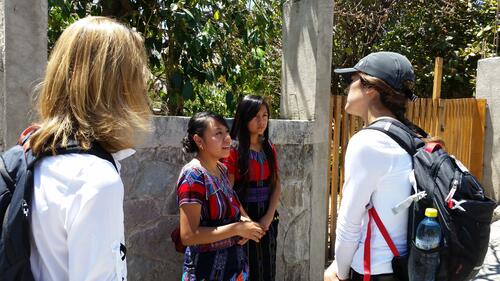
They are looking at novel technological interventions to improve rural livelihoods, like the development implications of solar power-generated crop growing in Northern Benin.

FSI academics also assess which political processes yield better access to public services, particularly in developing countries. With a focus on health care, researchers have studied the political incentives to embrace UNICEF’s child survival efforts and how a well-run anti-alcohol policy in Russia affected mortality rates.

FSI’s work on international development also includes training the next generation of leaders through pre- and post-doctoral fellowships as well as the Draper Hills Summer Fellows Program.

Authors
News Type
News
Date
Paragraphs

It's rare to get a brain download from a former CIA chief, both in the classroom and at the lectern.

But that will occur at CISAC during Feb. 6-11, when Michael Morell will spend time with students, faculty and scholars discussing the changing global landscape for U.S. national security.

Morell, who worked at the CIA for 33 years, served as its deputy director and acting director twice, first in 2011 and then from 2012 to 2013. He was at President George W. Bush’s side when the U.S. was attacked on Sept. 11, 2001. And he was serving as the CIA’s deputy director when President Obama gave the order to kill Osama bin Laden in 2011.

Among Morell’s scheduled activities are a CISAC seminar, participation in a two-day simulation for a political science class, and a lecture. 

In his seminar talk, Morell described terrorism as the top threat facing the U.S. He also discussed the potential of conflict with a rising China, an aggressive Russia, and a nuclear North Korea. He defined the role of the CIA as putting "facts and factual analysis" on the table of the president so the best decisions can be made. Effective intelligence, he noted, strives to understand what is happening now, and what will happen in the future.

Class simulation

Amy Zegart, CISAC co-director who co-teaches POLISC 114S, said Morell will be doing a "CISAC world tour -- giving a public FSI Wesson lecture about all issues intelligence-related, meeting with faculty and fellows, guest lecturing in CISAC's signature course, 'International Security in a Changing World,' and leading a country team during our class's South China Sea crisis simulation with 125 undergraduate and graduate students."

For the class simulation, Morell will be joined by Under Secretary of State Nick Burn; they will play world leaders, and about 20 other faculty and postdoc fellows will work with student "country" teams. Zegart said some version of the simulation has been taught at Stanford for 20 years. One year students went "rogue" and hacked into emails in a covert attempt to derail a hypothetical deal between Russia and China.

This year's exercise for POLISC 114S involves a special emergency session of the United Nations Security Council following the collision of a U.S. Navy warship with a Chinese Navy ship. The scenario takes place in the context of esclating real-world tensions in the South China Sea in recent years. China has built artificial islands hosting military bases, and the region is home to the world's busiest commerical shipping corridors. The simulation and its pre-planned scenario changes are designed to be plausible and timely.

Learning from someone with Morell's experience is invalauble for the students, she said. "Having him involved in the class is a priceless opportunity for our students to gain real-world insight into how intelligence works in crises, and to work with one of the nation's most distinguished intelligence leaders."

Terrorism, cybersecurity

In an email, Morell said he plans to talk about the key national security issues facing the new Trump administration, the importance of intelligence in dealing successfully with those issues, and the importance of a close relationship between a president and an intelligence community.

As for the most pressing risks now facing the U.S., Morell said it is “still the threat posed by international terrorists groups, but the threat posed by a variety of cyber actors is number two and growing.”

Morell described CISAC's research and teaching in national security and intelligence as “one of the best in the nation. It is an honor to spend some time there.”

After leaving the CIA in 2013, Morell authored a memoir entitled The Great War of Our Time while working in the private sector. In the book, he offers a candid assessment of CIA's counterterrorism successes and failures of the past 20 years and, noting that the threat of terrorism did not die with the death of Osama bin Laden. He has criticized the Senate Intelligence Committee's 2014 report on the CIA's use of enhanced interrogation techniques, and has spoken in favor of the CIA’s use of drones to kill terrorists.

Morell endorsed Hillary Clinton in the 2016 election, explaining his view in a New York Times op-ed. “My training as an intelligence officer taught me to call it as I see it,” he wrote in that piece.

On the issue of Russian hacking during the 2016 election, Morell noted in a Times' essay on Jan. 6 that President-elect Trump’s public rejection of the C.I.A. is a danger to the nation. "The key national security issues of the day — terrorism; proliferation; cyberespionage, crime and war; and the challenges to the global order posed by Russia, Iran and China — all require first-rate intelligence for a commander in chief to understand them, settle on a policy and carry it out."

Morell has a bachelor of arts from the University of Akron and a master of arts from Georgetown University, both in economics.

Zegart’s co-instructor in POLISC 114S is Stanford political scientist Stephen Krasner. The class surveys the most pressing global security problems facing the world today. Past guest lecturers include former Secretary of Defense William Perry, former U.S. Ambassador to Afghanistan Gen. Karl Eikenberry, and former Secretary of State Condoleezza Rice. Study topics include changing types of warfare, ethics and conduct of war, nuclear proliferation, insurgency and terrorism, Russia, and ISIS.

Follow CISAC at @StanfordCISAC and www.facebook.com/StanfordCISAC.


Hero Image
gettyimages 481996457
Former Deputy CIA Director Michael Morell testifies before Congress in 2014 in Washington, DC. From Feb. 6-11, Morrell will be at CISAC and Stanford talking about national security and the importance of a strong relationship between the U.S. president and the intelligence community.
Win McNamee/Getty Images
All News button
1
Authors
News Type
News
Date
Paragraphs

(Click here for the story from the New York Times)

Sidney D. Drell, a physicist who served for nearly half a century as a top adviser to the United States government on military technology and arms control, died on Wednesday at his home in Palo Alto, Calif. He was 90.

His death was confirmed by his daughter Persis Drell.

Dr. Drell combined groundbreaking work in particle physics — he was deputy director of the Stanford Linear Accelerator Center, now the SLAC National Accelerator Laboratory, for nearly 30 years — with a career in Washington as a technical adviser and defense intellectual.

In 2000, he was given the Enrico Fermi Award for his life’s work, and in 2013, President Obama presented him with the National Medal of Science for his contributions to physics and his service to the government.

Beginning in 1960, as the Cold War heated up, Dr. Drell served on a succession of advisory groups that helped advance the technology of nuclear detection and shape the policy of nuclear deterrence.

As a founding member of the Jason defense advisory group, a panel of defense scientists, he helped develop the McNamara Line, a barrier that was intended to halt the infiltration of soldiers and weapons into South Vietnam from the north through a system that combined electronic surveillance with mines and troop concentrations at strategic points.

Dr. Drell was a strong proponent of nuclear deterrence during the Cold War. “I believed that given the Soviet empire, its stated goals and existence, we had to deter them,” he said in an interview for “The Partnership: Five Cold Warriors and Their Quest to Ban the Bomb” (2012), a book by Philip Taubman, a former reporter and editor for The New York Times.

“We had to be clear,” he added. “These are not weapons we want to use, but they have to know that should they monkey around with us, they had to expect we’re going to use them against them, and at a degree that’s unacceptable to them.”

At the same time, he was a leading advocate of arms control and a critic of major projects such as the MX missile and the Strategic Defense Initiative, the Reagan administration program also known as Star Wars.

Dr. Drell was recruited as a consultant for the Arms Control and Disarmament Agency soon after its creation in 1961 and served as a director of the Center for International Security and Arms Control (now the Center for International Security and Cooperation) at Stanford University in the 1980s. In 2006, he and George P. Shultz, the secretary of state under Ronald Reagan, founded a program at the Hoover Institution to propose practical steps to rid the world of nuclear weapons.

“In dealing with terrorists or rogue governments, nuclear deterrence doesn’t mean anything — the value has gone,” he told the website In Menlo in 2012. “Yet the danger of the material getting into evil hands has gone up. So what are existing nuclear arms deterring now? In this era, I argue that nuclear weapons are irrelevant as a deterrence.”

Sidney David Drell was born on Sept. 13, 1926, in Atlantic City, to Jewish immigrants from the Russian empire. His father, Tully, was a pharmacist. His mother, the former Rose White, was a teacher.

He was admitted to Princeton at 16 and earned a degree in physics in 1946. At the University of Illinois, he obtained a master’s degree in physics in 1947 and a doctorate in 1949.

After teaching at Stanford for two years, he joined the physics department at the Massachusetts Institute of Technology. He left in 1956 to work under Wolfgang K. H. Panofsky at the Stanford Linear Accelerator Center.

As an academic, Dr. Drell specialized in quantum electrodynamics, which describes the interactions between light and matter, and quantum chromodynamics, which explores subatomic particles like quarks and gluons.

He and Tung-Mow Yan, a research associate at the accelerator center, formulated a key concept in particle physics when they explained what happens when a quark in one particle collides with an antiquark in a second particle, an annihilating confrontation that yields an electron and a positron. The sequence of events became known as the Drell-Yan process.

Dr. Drell was the author of “Electromagnetic Structure of Nucleons” (1961) and, with the theoretical physicist James D. Bjorken, wrote the textbooks “Relativistic Quantum Mechanics” (1964) and “Relativistic Quantum Fields” (1965).

As the head of the theory group at the accelerator center, which gathered leading scientists to discuss nuclear science, he found himself in demand as a technical adviser on defense and security.

In 1960, Dr. Drell was invited to join an advisory group led by Charles H. Townes, the father of the laser. His task was to see whether orbiting infrared sensors could detect a Soviet intercontinental missile launch by picking up a heat reading from the missile’s exhaust plume. Additionally, he had to determine whether the Soviet Union could nullify the sensors by exploding a nuclear device in the atmosphere before the main launch.

After he and his team judged such an explosion impractical, the Defense Department went ahead with plans to develop the Missile Defense Alarm System.

He later served on the Land Panel, which developed a new system for taking high-resolution, wide-range photographs from spy satellites.

During the Vietnam War, Dr. Drell’s service on the President’s Science Advisory Committee under Lyndon B. Johnson and Richard M. Nixon, and his role as a shadow adviser to Henry A. Kissinger, damaged his academic reputation as opinion turned against American policy. Increasingly, he found himself fending off attacks in public forums.

“Call it entrapment, commitment or whatever, but I have remained actively involved in technical national security work for the United States,” he told Mr. Taubman.

After the war, he emerged as a leading thinker on arms control and disarmament, which he addressed in numerous books and papers, including “Facing the Threat of Nuclear Weapons” (1983), “The Reagan Strategic Defense Initiative: A Technical, Political and Arms Control Assessment” (1985), “In the Shadow of the Bomb: Physics and Arms Control” (1993) and “The Gravest Danger: Nuclear Weapons” (2003).

In addition to his daughter Persis, who directed Stanford’s accelerator laboratory for five years, he is survived by his wife of 64 years, the former Harriet Stainback; another daughter, Joanna Drell; a son, Daniel, and three grandchildren.


Hero Image
23drell obit master768 Getty Images
All News button
1
-

What is the logic of China’s foreign policy decision-making? Thomas Fingar explores how security and economic development have driven China’s foreign policy stance over the last 35 years. Even as the scope and scale of China’s engagement with the world has undergone a sea change, China’s calculus has remained consistent: How will a particular foreign policy choice cost or contribute to China’s economic growth and national security?


Multimedia for this event.


Image
Thomas Fingar is the Shorenstein APARC Fellow in the Freeman Spogli Institute for International Studies at Stanford University. From 2005 to 2008, he served concurrently as the first deputy director of national intelligence for analysis and as chairman of the National Intelligence Council. He served previously as assistant secretary of the State Department’s Bureau of Intelligence and Research (2004–2005), principal deputy assistant secretary (2001–2003), deputy assistant secretary for analysis (1994–2000), director of the Office of Analysis for East Asia and the Pacific (1989–1994), and chief of the China Division (1986–1989). Fingar’s most recent books are The New Great Game: China and South and Central Asia in the Era of Reform (Stanford University Press, 2016); and Uneasy Partnership: China and Japan, the Koreas, and Russia in the Age of Reform (Stanford University Press, 2017, forthcoming).


This event is part of the winter colloquia series entitled "China: Going Global" sponsored by Shorenstein APARC's China Program.

[[{"fid":"224946","view_mode":"crop_870xauto","fields":{"format":"crop_870xauto","field_file_image_description[und][0][value]":"","field_file_image_alt_text[und][0][value]":false,"field_file_image_title_text[und][0][value]":false,"field_credit[und][0][value]":"Economist.com","field_caption[und][0][value]":"","field_related_image_aspect[und][0][value]":"","thumbnails":"crop_870xauto"},"type":"media","field_deltas":{"1":{"format":"crop_870xauto","field_file_image_description[und][0][value]":"","field_file_image_alt_text[und][0][value]":false,"field_file_image_title_text[und][0][value]":false,"field_credit[und][0][value]":"Economist.com","field_caption[und][0][value]":"","field_related_image_aspect[und][0][value]":"","thumbnails":"crop_870xauto"}},"link_text":null,"attributes":{"width":"870","style":"margin-left: 0px; margin-right: 15px; padding: 5px; float: left; width: 350px; height: 194px;","class":"media-element file-crop-870xauto","data-delta":"1"}}]]China: Going Global

Beijing’s new Silk Road initiative links old trade corridors from Asia to Africa and Europe. Many perceive that President Xi Jinping’s “One Belt, One Road” initiative as well as China’s many other trade, investment and finance projects transcend their economic calculus and reflect Beijing’s geopolitical ambitions to reposition China’s standing on the global stage. The China Program brings leading experts to explore the drivers and motivators of China’s international initiatives, their reach and scope as well as the implications of China’s increasing activism on the world stage.

http://aparc.fsi.stanford.edu/research/china-going-global

Freeman Spogli Institute for International Studies
Stanford University
Encina Hall, C-327
Stanford, CA 94305-6055

(650) 723-9149 (650) 723-6530
0
Shorenstein APARC Fellow
Affiliated Scholar at the Stanford Center on China's Economy and Institutions
tom_fingar_vert.jpg PhD

Thomas Fingar is a Shorenstein APARC Fellow in the Freeman Spogli Institute for International Studies at Stanford University. He was the inaugural Oksenberg-Rohlen Distinguished Fellow from 2010 through 2015 and the Payne Distinguished Lecturer at Stanford in 2009.

From 2005 through 2008, he served as the first deputy director of national intelligence for analysis and, concurrently, as chairman of the National Intelligence Council. Fingar served previously as assistant secretary of the State Department’s Bureau of Intelligence and Research (2000-01 and 2004-05), principal deputy assistant secretary (2001-03), deputy assistant secretary for analysis (1994-2000), director of the Office of Analysis for East Asia and the Pacific (1989-94), and chief of the China Division (1986-89). Between 1975 and 1986 he held a number of positions at Stanford University, including senior research associate in the Center for International Security and Arms Control.

Fingar is a graduate of Cornell University (A.B. in Government and History, 1968), and Stanford University (M.A., 1969 and Ph.D., 1977 both in political science). His most recent books are From Mandate to Blueprint: Lessons from Intelligence Reform (Stanford University Press, 2021), Reducing Uncertainty: Intelligence Analysis and National Security (Stanford University Press, 2011), The New Great Game: China and South and Central Asia in the Era of Reform, editor (Stanford University Press, 2016), Uneasy Partnerships: China and Japan, the Koreas, and Russia in the Era of Reform (Stanford, 2017), and Fateful Decisions: Choices that will Shape China’s Future, co-edited with Jean Oi (Stanford, 2020). His most recent article is, "The Role of Intelligence in Countering Illicit Nuclear-Related Procurement,” in Matthew Bunn, Martin B. Malin, William C. Potter, and Leonard S Spector, eds., Preventing Black Market Trade in Nuclear Technology (Cambridge, 2018)."

Selected Multimedia

CV
Date Label
<i>Shorenstein APARC Fellow</i>, FSI, Stanford University
Seminars
News Type
News
Date
Paragraphs

The health gap between rich and poor children in developing countires is staggeringly high, but Assistant Professor of Medicine Eran Bendavid found that it is shrinking. In his pilot project, "Empirical Evidence on Wealth Inequality and Health in Developing Countries," Bendavid discovered that since the mid-2000s, life expectancies for children under five are starting to converge. How can we continue to close the gap? Watch to find out.

Hero Image
eran wide
All News button
1
-

JSPS Fellowships for Research in Japan: Information Session for Stanford University Scholars

The Japan Society for the Promotion of Science offers fully funded fellowships to scholars with excellent records of research achievement for the purpose of conducting collaborative research, discussions, and opinion exchanges with counterparts in Japan. The fellowships are intended to help advance the research activities of the fellows while promoting science and internationalization in Japan. This information session is offered to Stanford Scholars interested in conducting collaborative research in Japan, in order to provide fellowship information and guidance. All fields of research are welcome.
 
Agenda
12:00pm Fellowship Programs
12:15pm Alumni Experience and Q&A
12:35pm Networking
 
Applicant Eligibility
Please note that not all eligibility requirements or exceptions are noted. Eligibility by program may vary. For specific questions regarding eligibility prior to the information session, please contact the JSPS San Francisco Office at fellowships@jspsusa-sf.org.
  • Holds citizenship of a country that has diplomatic relations with Japan

    •  Exception:  JSPS Postdoctoral Short-term Program (hold citizenship or permanent residency of US, Canada, EU, Switzerland, Norway or Russia)

    • Exception:  JSPS Summer Program (hold citizenship or permanent residency of US, UK, France, Germany, Canada or Sweden)

AND
 
  • Holds PhD by start of fellowship AND be within six years of receiving your PhD

    • Exception:  JSPS Postdoctoral Short-term Program (hold the status above OR be enrolled in a doctoral course AND be scheduled to receive a Ph.D. within 2 years)

    • Exception:  JSPS Summer Program (hold the status above OR be enrolled in a university graduate program)

    • Exception:  Depending on the host researcher, exceptions may be made for special case

OR
  • Holds a full-time position at a research institution equivalent to professor, associate professor, or assistant professor Exception:  Short-term S Program (be a Nobel laureate or equivalent)

    • Exception:  Non-faculty researchers who are conducting research at a university or non-profit institution (case-by-case)

    • Exception:  Depending on the host researcher, exceptions may be made for special cases

For more information about JSPS or applicant eligibility prior to the information session, please contact the JSPS San Francisco Office at fellowships@jspsusa-sf.org.
Authors
News Type
News
Date
Paragraphs

While Russia poses one of the biggest foreign policy challenges facing the U.S., an opportunity for rapprochement may exist with the incoming administration, several Stanford scholars said Wednesday.

The panel event, “Russia Looking Back and Looking Ahead,” featured Russia experts William J. Perry, Michael McFaul, Siegfried Hecker, and David Holloway from Stanford’s Center for International Security and Cooperation and the Freeman Spogli Institute. The discussion came at a time when American-Russian relations are arguably at their lowest point since the end of the Cold War. On top of this, the Central Intelligence Agency recently concluded that Russia interfered in the U.S. presidential election. Against this backdrop, the Stanford scholars examined both the past and the future of the U.S.-Russia relationship. (Click here to watch a video of the event.)

Amy Zegart, CISAC co-director, said in opening remarks that there is “no more timely moment to be looking at the state of U.S.-Russia affairs than today.”

Perry, a former U.S. Secretary of Defense and director of the Preventive Defense Project at CISAC, said that he hopes Russia does not fall prey to its worst tendencies, the way the Weimar Republic of Germany succumbed to Nazism. Perry pointed out, however, that some bright spots in Russian cooperation have occurred.

“You could never have predicted that was going to work,” he said, referring to the post-Cold War cooperation between the U.S. and Russia in reducing and safeguarding the latter’s nuclear stockpile. There was also collaboration on solving the Bosnian conflict in the 1990s.

“The greatest disappointment is that we let all this slip away,” said Perry, citing the NATO expansion as one trigger effect. “Our greatest challenge is trying to avoid a war with Russia. We’ve gotten to a point where that is a real possibility.”

The Russians, Perry noted, realize they’re outgunned by the U.S. in conventional weapons, so they have made it known they may use tactical nuclear weapons in the event of a war with America.

Perry urges re-engaging with Russia on nuclear issues. The best approach, he said, may be to separate out some problems that may be too difficult so the focus is on nuclear cooperation. Still, he acknowledges he is "profoundly pessimistic,” but what is at stake is the survival of human civilization, so these two countries must find a way to work together. 

Protests and people

McFaul, the director of the Freeman Spogli Institute, recently penned a column urging a bipartisan examination of Russian involvement in the 2016 election.

McFaul explained the Obama Administration’s efforts to engage with Putin’s Russia. He served in the administration during that period that some refer to as an attempted “reset” of Washington’s relationship with Moscow. Some cooperation definitely occurred – the successful raid on Osama Bin Laden would not have happened without Russia’s collaboration, among other examples, he added. “It was an amazing achievement."

Why did the reset end? “It ended because protesting people got in the way of our policy,” he said, noting mass protests in Russia and in Middle Eastern countries that were allies of Putin’s regime.

“We were not imposing our values on the government when I was in office,” said McFaul about his tenure as U.S. ambassador to Russian from 2012 to 2014.

On Trump, McFaul expressed cautious optimism, but described him as exhibiting “mixed-up ends and means,” and Trump seems to suggest everyone “should just get along.” Putin, on the other hand, has very clear strategic priorities, McFaul said. 

“There’s a history of interference,” he said about Russia’s forays into elections here and abroad.

In addition, many issues have connections – such as the Iran nuclear deal and the Russian relationship – that are so complex that the new administration needs to truly understand the broader context, he said.

Prior nuclear agreements - such as Nunn-Lugar – were viewed in Moscow as American intelligence efforts, McFaul said. This reflects Russia’s wariness to talk about nuke issues.

‘A country coming apart’

Hecker, a senior fellow at CISAC and FSI, recently wrote an article about how the recent U.S. election may have opened a window of opportunity on U.S. Russia nuclear cooperation. The idea for the panel originated from the publication of Hecker’s recent book, Doomed to Cooperate.

Hecker recalled his career as the director of the Los Alamos National Laboratory, where they were faced with helping strengthen the U.S. against Soviet nuclear capabilities, to the years of transition after the Cold War when he led U.S. efforts over a 20-year period to work with Russian scientists on safeguarding loose nukes.

“'They were Russia’s inheritance from Hell,'” he said, quoting a passage in a book by moderator David E. Hoffman, a contributing editor to The Washington Post and Russian expert as well.

The scientists in Russia, however, were heroically motivated to collaborate with American scientists like Hecker in protecting their country from a nuclear catastrophe. “It was like looking in a mirror,” Hecker said about their talents and conscientiousness.

Such scientific collaboration and support from both countries’ governments is a template for future relationships, he said. Unfortunately, that type of cooperation is “being held hostage” by political differences in both countries, said Hecker, who has visited Russia 52 times in 25 years.

“There is no reason we should be enemies,” he said.

Hecker suggests not “demonizing” the Russian people and avoiding imposing American values on those people. Staying out of internal affairs in Russia is critical, too, he said.

‘Not the Soviet Union’

Holloway, a senior fellow at CISAC and FSI, has analyzed the steps taken to shrink the world's nuclear stockpile.

“Russia’s not what people hoped it would become 25 years ago, but still something remains. This is still not the Soviet Union,” said Holloway, pointing out some limited freedoms exist in contemporary Russian society compared to the country’s Stalinist past.

“The failure to integrate Russia into the international system” has created a serious problem, he said. “We’ve had a real downward spiral” since the Obama administration’s attempted reset. “There is a debate about who is to blame,” but that is a complicated debate.

“What is to be done?” asked Holloway. This is the question to ask and answer in order to ascertain ways to improve the relationship. The liberal world order, created by the U.S. in the wake of WWII, may be coming to an end, he said. China and Russia feel they have not been accommodated by such a U.S.-led world order, such as in trade deals and military alliances.

Like Putin, who uses unpredictable tactics in world affairs, Trump, too, seems made from the same template.

“This is not good to have two unpredictable leaders facing each other” with many nuclear weapons at their commands, said Holloway, who recently visited Russia and observed many reactions there about the 2016 election outcome.

Follow CISAC at @StanfordCISAC and www.facebook.com/StanfordCISAC.

MEDIA CONTACT:

Clifton B. Parker, Center for International Security and Cooperation: (650) 725-6488, cbparker@stanford.edu


Hero Image
dsc 2693a
The Dec. 14 event, “Russia Looking Back and Looking Head,” featured CISAC and FSI Russia experts William J. Perry, far left; Michael McFaul, second from the left; David Holloway, center; Siegfried Hecker, second from the right. Journalist David E. Hoffman, on the far right, moderated the discussion.
Rod Searcey
All News button
1
-

Image
It is now commonplace to think of India's rise as a great power as inevitable. The Indian economy has demonstrated impressive growth during the last twenty-five odd years; India remains one of the few large economies that continues to grow at high single-digit rates despite the global economic slowdown; Indian military capabilities are significant, impressive and expanding; and not surprisingly then, New Delhi seeks a place at the high tables of global governance. The United States has in recent decades placed a strategic bet on India, supporting its rise in the expectation that this will advance American interests in Asia and globally. But will India meet these expectations? In fact, can India become the great power that it seeks to be or is it always destined to remain a great power in waiting, forever promised but never arriving?

Tellis will address this question and its consequences for peace, prosperity and security throughout the Indo-Pacific region.   


Image
Ashley J. Tellis is a senior fellow at the Carnegie Endowment for International Peace specializing in international security, defense, and Asian strategic issues. While on assignment to the U.S. Department of State as senior adviser to the under secretary of state for political affairs, he was intimately involved in negotiating the civil nuclear agreement with India.

Previously, he was commissioned into the Foreign Service and served as senior adviser to the ambassador at the U.S. embassy in New Delhi. He also served on the National Security Council staff as special assistant to the president and senior director for strategic planning and Southwest Asia.

Prior to his government service, Tellis was senior policy analyst at the RAND Corporation and professor of policy analysis at the RAND Graduate School.

He is the author of India’s Emerging Nuclear Posture (RAND, 2001) and co-author of Interpreting China’s Grand Strategy: Past, Present, and Future (RAND, 2000). He is the research director of the Strategic Asia Program at the National Bureau of Asian Research and co-editor of the program’s thirteen most recent annual volumes, including this year’s Strategic Asia 2016–17: Understanding Strategic Cultures in the Asia-Pacific. In addition to numerous Carnegie and RAND reports, his academic publications have appeared in many edited volumes and journals, and he is frequently called to testify before Congress.

Tellis is a member of several professional organizations related to defense and international studies including the Council on Foreign Relations, the International Institute of Strategic Studies, the United States Naval Institute, and the Navy League of the United States. He has earned a PhD and MA from the University of Chicago and an MA and BA from the University of Bombay. 

About the colloquia:

In 2014, Indian voters gave Narendra Modi and the BJP a mandate to accelerate India’s economic reforms and revitalize its foreign relations, in particular with the United States and with partners in East Asia. But the pace and depth of reforms and economic transformation have not met the high expectations, despite strong GDP performance. Economic growth remains uneven, job creation sluggish, and massive infrastructural and administrative problems continue to trouble many sectors of the economy. After twenty-five years of economic reforms, India’s potential as a new global industrial hub has still not been realized and its vast resources of labor and talent remain underdeveloped.

During the 2017 winter and spring quarters Shorenstein APARC and the Center for South Asia will host a series of lectures and discussions that explore what makes India democratic and dynamic, and the obstacles that prevent the country from realizing its enormous potential.

Also, in 2017, the next Global Entrepreneur Summit will be in India, sequel to the 2016 Stanford-hosted Summit. This colloquium will help prepare for that event by reaching out to scholars, students, interested stakeholders, business leaders and others in the Bay Area.

This colloquia is co-sponsored with the Stanford Center for South Asia 

Image
csa logorust cropped

Seminars
Paragraphs

In this paper, we explore a new framework for higher education official development assistance (ODA) with a focus on the transnational bridging benefits of social capital. We first explain why and how a transnational social capital approach can improve the current focus on human resources and local bridges in higher education development. We then illustrate its merits by examining, 1) the transnational bridging potential of social capital formed by foreign students currently studying in Korea; and 2) the actual transnational social capital contributions of foreign professionals who returned home after completing a Korean higher education ODA program. In doing so, we direct particular attention to the value of transnational social capital in promoting development cooperation and public diplomacy. We conclude by discussing how our approach has conceptual importance and practical implications for development cooperation in higher education.

All Publications button
1
Publication Type
Journal Articles
Publication Date
Journal Publisher
Pacific Affairs
Authors
Gi-Wook Shin
-

Start the year off by planning for summer 2017! Each summer FSI offers exciting and intensive internship opportunities to Stanford students. Our fully-funded program options include:

  • Global Policy Internships: provides placement, mentorship and a stipend to students engaging in off-campus internships at international policy and international affairs organizations. 
  • Summer Field Research Internships: provides a unique opportunity for groups of 2-8 students to work directly on applied field research projects with Stanford faculty around the world. 

To attend our info session to learn more about each program, RSVP here by Jan. 17th!

Applications are due by February 7th, 2017.

Food will be provided.


Reuben Hills Room
Encina Hall, 2nd Floor
616 Serra St
Stanford, CA 94305

 
Subscribe to International Development
