International Development

FSI researchers consider international development from a variety of angles. They analyze ideas such as how public action and good governance are cornerstones of economic prosperity in Mexico and how investments in high school education will improve China’s economy.

They are looking at novel technological interventions to improve rural livelihoods, like the development implications of solar power-generated crop growing in Northern Benin.

FSI academics also assess which political processes yield better access to public services, particularly in developing countries. With a focus on health care, researchers have studied the political incentives to embrace UNICEF’s child survival efforts and how a well-run anti-alcohol policy in Russia affected mortality rates.

FSI’s work on international development also includes training the next generation of leaders through pre- and post-doctoral fellowships as well as the Draper Hills Summer Fellows Program.

Authors
Noa Ronkin
News Type
News
Date
Paragraphs

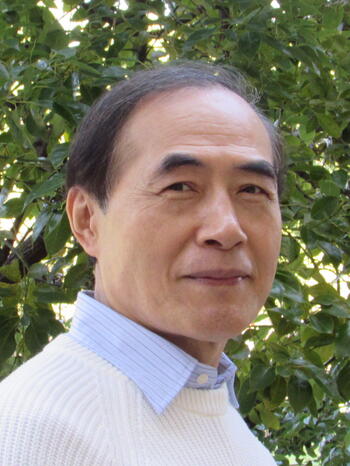
We are happy to share that FSI’s SK Center Fellow and APARC's Korea Program Deputy Director Yong Suk Lee is the recipient of the 2018 Urban Land Institute United Kingdom Academic Prize for his paper “Entrepreneurship, small business and economic growth in cities.”

The winner of the Urban Land Institute Prize is selected by The Journal of Economic Geography (JoEG) Editors, Oxford University Press, and the Urban Land Institute. The prize is awarded annually to the author(s) of the best JoEG paper published online in the previous calendar year. Papers are evaluated on the basis of their creativity, quality of scholarship, and contribution to advancing understanding of the geographic nature of economic systems and global economic change.

Lee’s paper investigates whether entrepreneurship causes local employment and wage growth, and if so, how large the impact is. Empirical analysis of this question is difficult due to the joint determination of entrepreneurship and economic growth. Lee’s article uses two different sets of variables—the homestead exemption levels in state bankruptcy laws from 1975 and the share of metropolitan statistical area (MSA) overlaying aquifers—to instrument for entrepreneurship and examine urban employment and wage growth between 1993 and 2002. Lee’s research shows that the creation of small businesses indeed causes substantial employment and payroll growth in cities.

Download Lee’s paper >>

Hero Image
Portrait of Yong Suk Lee
All News button
1
-

Despite adverse implications for its image, when it comes to territorial disputes, China has been willing to employ coercion. But Beijing is selective regarding the timing, targets, and tools of coercion. Military coercion is rare and the forms and uses of coercion vary. In the face of what China sees as similar threats by different countries, for example, Beijing tends to tailor its responses, country by country, case by case. Dr. Zhang will focus on Chinese coercive behavior in the South China Sea. She will offer a new theory as to when, why, and how China coerces other states.  Leveraging a wealth of newly available primary documents and hundreds of hours of interviews with Chinese officials, she will trace the decision-making processes that result in coercion’s use or non-use.

Where others may view China as repetitively aggressive, Dr. Zhang sees a cautious bully that does not coerce frequently and has tended, as it has gained strength, to use non-kinetic kinds of coercion. She finds that protecting a reputation for resolve and calculating economic costs are critical elements in China’s decision-making regarding the (dis)advantages of coercing its neighbors. Nor is the intended target country necessarily clear. China often coerces one to deter another – “killing the chicken to scare the monkey.” Implications will also drawn from her research that can help in projecting China’s likely future foreign-policy behavior beyond Southeast Asia and in understanding the roles played by coercion in the strategies of states more generally.

To learn more about, watch a recent interview APARC filmed with Dr. Zhang.

Image
ketian zhang 4x
Ketian Vivian Zhang will be an Assistant Professor of International Security in the Schar School of Policy and Government at George Mason University starting in September 2019. Her book project at Stanford and a forthcoming article in International Security are on the subject of her talk. Beyond its topic, another part of her research agenda explores how the globalized economy and its chains of manufacture and supply affect the foreign-policy behaviors of states. Her 2018 PhD in political science is from the Massachusetts Institute of Technology. She is a proud Badger, having earned her BA in political science and sociology at the University of Wisconsin-Madison.

Ketian Zhang 2018-2019 Shorenstein Postdoctoral Fellow on Contemporary Asia
Seminars
Paragraphs

Despite massive investments in teacher professional development (PD) programs in developing countries, there is little evidence on their effectiveness. We present results of a large-scale, randomized evaluation of a national PD program in China in which teachers were randomized to receive PD; PD plus follow-up; PD plus evaluation of the command of PD content; or no PD. Precise estimates indicate PD and associated interventions failed to improve teacher and student outcomes after one year. A detailed analysis of the causal chain shows teachers find PD content to be overly theoretical, and PD delivery too rote and passive, to be useful.

All Publications button
1
Publication Type
Journal Articles
Publication Date
Journal Publisher
American Economic Journal: Applied Economics
Authors
Prashant Loyalka
Paragraphs

We assess and compare computer science skills among final-year computer science undergraduates (seniors) in four major economic and political powers that produce approximately half of the science, technology, engineering, and mathematics graduates in the world. We find that seniors in the United States substantially outperform seniors in China, India, and Russia by 0.76–0.88 SDs and score comparably with seniors in elite institutions in these countries. Seniors in elite institutions in the United States further outperform seniors in elite institutions in China, India, and Russia by ∼0.85 SDs. The skills advantage of the United States is not because it has a large proportion of high-scoring international students. Finally, males score consistently but only moderately higher (0.16–0.41 SDs) than females within all four countries.

All Publications button
1
Publication Type
Journal Articles
Publication Date
Journal Publisher
Proceedings of the National Academy of Sciences of the United States of America
Authors
Prashant Loyalka
-

Abstract: My research investigates the formal institutionalization of inter-governmental cooperation among the three major Northeast Asian powers – China, Japan, and the Republic of Korea—in the face of a continued North Korean threat. How much of a shadow, if any, has North Korea’s nuclear weapons cast over the development of multilateralism in the region? Since 1999, the Northeast Asian region has seen intensifying institutionalization of cooperation among its major powers. In a region where the realist logic of state-centric nationalism, sovereignty, and balance of power still prevails, this new development of trilateral cooperation among the former and potential adversaries deserves serious scholarly investigation. What started as economic and functional cooperation, trilateral cooperation has since been substantially expanded to include political and security agendas at the highest level of government. What explains the emergence and endurance of trilateral cooperation and to what extent has containing the North Korean nuclear crisis shaped its institutional trajectory and outcomes? By examining the evolution of trilateral cooperation, I address some critical gaps in our understanding of formal institution building and the economic-security nexus in one of the most dynamic regions in the world.


Speaker's Biography: Yeajin Yoon is a 2018-2019 MacArthur Nuclear Security Pre-doctoral Fellow at CISAC and a doctoral candidate in the Blavatnik School of Government at the University of Oxford. Her dissertation examines the evolution of trilateral cooperation among the most militarily and economically dominant states in Northeast Asia, namely, China, Japan and the Republic of Korea, and considers when and how their relations become implicated in the North Korean nuclear crisis.


Prior to entering academia, Yeajin travelled extensively across Asia and worked with national governments, international organisations, and NGOs in the region. She led the development of the inaugural issue of the 'Oxford Government Review’ and helped facilitate a Track II dialogue on wartime history issues in Asia at Stanford University. Previously, she worked as a founding member of the Trilateral Cooperation Secretariat, the official intergovernmental organisation for China, Japan, and the Republic of Korea and managed a development fund focused on the ASEAN region at the Korean Foreign Ministry.


Yeajin received a Bachelor of Arts in Political Science with Honors from Stanford University and a Master of Public Policy degree from Oxford University.

Yeajin Yoon MacArthur Nuclear Security Pre-doctoral Fellow CISAC, Stanford University
Seminars
News Type
Q&As
Date
Paragraphs

Isabelle Foster was an undergraduate student at Stanford who applied for the Ford Dosey Master's in International Policy (MIP) co-terminal program in her junior year. The co-term allowed her to take classes towards her master's degree in her senior year. Isabelle, who is now technincally a second-year master's student, will graduate from MIP in June.

Curious as to what our current students have to say about the MIP program? Check out the first #MIPFeatureFriday featuring our graduate student, Isabelle Foster! Stay tuned every Friday for features on our MIP students and alumni. Read more about Isabelle's time with the MIP program

Hero Image
1 msw3kloyzrkimtjyyve8gw
All News button
1
Paragraphs

The practice of planting winter cover crops has seen renewed interest as a solution to environmental issues with the modern maize- and soybean-dominated row crop production system of the US Midwest. We examine whether cover cropping patterns can be assessed at scale using publicly available satellite data, creating a classifier with 91.5% accuracy (.68 kappa). We then use this classifier to examine spatial and temporal trends in cover crop occurrence on maize and soybean fields in the Midwest since 2008, finding that despite increased talk about and funding for cover crops as well as a 94% increase in cover crop acres planted from 2008–2016, increases in winter vegetation have been more modest. Finally, we combine cover cropping with satellite-predicted yields, finding that cover crops are associated with low relative maize and soybean production and poor soil quality, consistent with farmers adopting the practice on fields most in need of purported cover crop benefits. When controlling for invariant soil quality using a panel regression model, we find modest benefits of cover cropping, with average yield increases of 0.65% for maize and 0.35% for soybean. Given these slight impacts on yields, greater incentives or reduced costs of implementation are needed to increase adoption of this practice for the majority of maize and soybean acres in the US.

All Publications button
1
Publication Type
Journal Articles
Publication Date
Journal Publisher
Environmental Research Letters
Authors
George Azzari
David Lobell
News Type
Q&As
Date
Paragraphs

We sat down with our 2018-19 Koret Fellow in Korean Studies Andray Abrahamian to discuss North Korea denuclearization and the approaching Trump-Kim second summit in Hanoi; Abrahamian's work with the nonprofit organization Choson Exchange that took him to North Korea nearly thirty times; his book that compares North Korea and Myanmar; and his fellowship experience. Watch: 


Hero Image
Andray Abrahamian sitting down for an interview at Stanford.
All News button
1
News Type
Blogs
Date
Paragraphs

About the author: Isabelle Foster is currently a second-year graduate student at Stanford University in the Ford Dorsey Master's in International Policy (MIP) concentrating in Governance and Democracy. She has spent the fall quarter (2018) studying in Vienna as part of the Stanford-Vienna exchange program coordinated by the MIP program. 

Fog. Music. And... Saunas? Learn more about our student's adventure in Helsinki by reading the full article on Medium

Hero Image
0 b5oprpu5n9zy7 nm
Isabelle Foster is a currently a second-year masters student in the Ford Dorsey’s Masters in International Policy (MIP) concentrating in Governance and Democracy.
All News button
1
Subscribe to International Development