DAY 1: Friday October 11
8:30 – 9:00am Breakfast
9:00 – 9:15am Introductory Remarks
9:15 – 11:15am Panel 1: The Boundaries of Authoritarianism post-Arab Uprisings
Amr Hamzawy, Stanford University
“The Discourse of Authoritarianism in Egypt”
Sean Yom, Temple University
“Mobilization without Movement: The Curse of the Arab Spring in Jordan”
Samia Errazzouki, University of California, Davis
“Political and Economic Stagnation in Morocco: Twenty Years into King Mohamed VI’s Reign”
Chair: Lisa Blaydes, Stanford University
11:15-11:30am Coffee Break
11:30-1:30pm Panel 2: Popular Uprisings and Uncertain Transitions
Thomas Serres, University of California, Santa Cruz
“Beyond the ‘Isaba: A Political Economy of the Algerian Hirak”
Lindsay Benstead, Portland State University
“Religious Ideology or Clientelism? Explaining Voter Preferences in Tunisia’s Transitional Elections”
Khalid Medani, McGill University
"The Prospects and Challenges of Democratic Consolidation in Sudan: Understanding the Roots, Dynamics and Potential of an “Impossible” Revolution""
Chair: Hicham Alaoui, Harvard University
1:30-2:30pm Lunch
2:30-4:30pm Panel 3: Politics, Succession and Sectarianism in the GCC States
Toby Matthiesen, Oxford University
“Saudi Arabia and the Arab Counter-Revolution”
Michael Herb, Georgia State University
“Monarchical Institutions and the Decay of Family Rule in the Gulf”
Farah Al-Nakib, California Polytechnic State University
“Kuwait's New Urbanism: Palace Projects and the Erosion of the Public”
Chair: Hesham Sallam, Stanford University
DAY 2: Saturday October 12
8:30 – 9:00am Breakfast
9:00 – 11:00am Panel 4: Social Strife and Proxy Conflict in the Middle East
Lina Khatib, Chatham House
“Syria’s Conflict: The Intersections of the International and the Domestic”
Stacey Philbrick Yadav, Hobart and William Smith Colleges,
“Can Allies in War Become Partners in Peace?
Foreign Agendas, Foreign Investment, and Peacebuilding in Yemen”
David Patel, Brandeis University
“Institutions and Competition in Post-Occupation Iraq”
Chair: Amr Hamzawy, Stanford University
11:00-11:15am Coffee Break
11:15-1:15pm Panel 5: International Forces in the Arab Political Arena
Lisa Blaydes, Stanford University
“Will China's 'Belt and Road' Initiative Steady or Destabilize Arab Authoritarians?”
Abbas Milani, Stanford University,
“Iran and its Role in the Prospects of Democracy in the Arab World”
Colin Kahl, FSI, Stanford University
“US Policy Toward a Changing Middle East”
Ayca Alemdaroglu, FSI, Stanford University
“The Rise and Fall of ‘neo-Ottomanism’”
Chair: Larry Diamond, Stanford University
SPEAKER BIOS
Hicham Alaoui is an established voice calling for political reform in the Arab world. He is currently a research fellow based at the Weatherhead Center for International Affairs at Harvard University, and is pursuing a D.Phil. at the University of Oxford. Previously at Stanford, he was a Consulting Professor at the Center for Democracy, Development, and Rule of Law, and advisory board member at the Freeman Spogli Institute. He has published on democratic reforms in the Middle East for journals such as Politique Internationale, Le Debat, Pouvoirs, Le Monde Diplomatique, and Journal of Democracy. He has contributed to The New York Times, Le Monde, La Nouvelle Observateur, El Pais, and Al-Quds. He also served on the MENA Advisory Committee for Human Rights Watch. He holds degrees from Princeton and Stanford. [Back to top]
Ayça Alemdaroğlu (Ph. D. Cambridge, 2011) (Ph. D. Cambridge, 2011) is the associate director of the Keyman Modern Turkish Studies Program and research assistant professor of sociology at Northwestern University. Her research has engaged with a broad range of theoretical and ethnographic issues, including youth culture and politics, gender and sexuality, experiences of modernity, nationalism, eugenics and higher education. Between 2011-2015, Alemdaroğlu taught in the Anthropology Department and Introductory Studies at Stanford University. Her most publications include "Spatial Segregation and Class Subjectivity in Turkey” published in Social and Cultural Geography; and “Dialectics of Reform and Repression: Unpacking Turkey’s Authoritarian Turn” (with Sinan Erensu) in ROMES. [Back to top]
Lindsay J. Benstead is Associate Professor of Political Science in the Mark O. Hatfield School of Government and Director of the Middle East Studies Center (MESC) at Portland State University. Previously, she served as Fellow in the Middle East Program and the Women’s Global Leadership Initiative at the Woodrow Wilson International Center for Scholars in Washington, DC (2018-2019) and Kuwait Visiting Professor at SciencesPo in Paris (fall 2016). She is an Affiliated Scholar in the Program on Governance and Local Development (GLD) at the University of Gothenburg and Yale University. Benstead has conducted surveys in Morocco, Algeria, Tunisia, Libya, and Jordan and contributes to the Transitional Governance Project. Her research on women and politics, public opinion, and survey methodology has appeared in Perspectives on Politics, International Journal of Public Opinion Research, Governance, and Foreign Affairs. She holds a Ph.D. in Public Policy and Political Science from the University of Michigan in Ann Arbor and served as a doctoral fellow at Yale University and a post-doctoral fellow at Princeton University. [Back to top]
Lisa Blaydes is a Professor of Political Science at Stanford University and a Senior Fellow at the Freeman Spogli Institute for International Studies. She is the author of Elections and Distributive Politics in Mubarak’s Egypt (Cambridge University Press, 2011). Her articles have appeared in the American Political Science Review, International Studies Quarterly, International Organization, Journal of Theoretical Politics, Middle East Journal, and World Politics. She holds degrees in Political Science (PhD) from the University of California, Los Angeles and International Relations (BA, MA) from Johns Hopkins University. [Back to top]
Larry Diamond is a senior fellow at the Hoover Institution and at the Freeman Spogli Institute for International Studies. For more than six years, he directed FSI’s Center on Democracy, Development, and the Rule of Law, where he now leads its Program on Arab Reform and Democracy and its Global Digital Policy Incubator. He is the founding co-editor of the Journal of Democracy and also serves as Senior Consultant at the International Forum for Democratic Studies of the National Endowment for Democracy. His research focuses on democratic trends and conditions around in the world, and on policies and reforms to defend and advance democracy. His 2016 book, In Search of Democracy, explores the challenges confronting democracy and democracy promotion, gathering together three decades of his writing and research, particularly on Africa and Asia. He is author of Ill Winds: Saving Democracy from Russian Rage, Chinese Ambition, and American Complacency, published in 2019 by Penguin Press. He is now writing a textbook on democratic development. [Back to top]
Samia Errazzouki is a PhD student focusing on early modern Northwest African history. Prior to UC Davis, she worked as a journalist based in Morocco reporting for the Associated Press, and later, with Reuters. Samia also worked as a research associate in Morocco with the University of Cambridge, researching the dynamics of surveillance and citizen media in light of the "Arab Spring." She is currently a co-editor with Jadaliyya. Her work and commentary has appeared in various platforms including The Washington Post, BBC, Foreign Policy, The Guardian, Al Jazeera, the Carnegie Endowment's Sada Journal, the Journal of North African Studies, and the Middle East Institute, among others. Samia holds an MA in Arab Studies from Georgetown University and a BA in Global Affairs from George Mason University. [Back to top]
Amr Hamzawy is a Senior Research Scholar at CDDRL. He studied political science and developmental studies in Cairo, The Hague, and Berlin. He was previously an associate professor of political science at Cairo University and a professor of public policy at the American University in Cairo. Between 2016 and 2017, he served as a senior fellow in the Middle East program and the Democracy and Rule of Law program at the Carnegie Endowment for International Peace, Washington, DC. His research and teaching interests as well as his academic publications focus on democratization processes in Egypt, tensions between freedom and repression in the Egyptian public space, political movements and civil society in Egypt, contemporary debates in Arab political thought, and human rights and governance in the Arab world. He is currently writing a new book on contemporary Egyptian politics, titled Egypt’s New Authoritarianism. Hamzawy is a former member of the People’s Assembly after being elected in the first Parliamentary elections in Egypt after the January 25, 2011 revolution. He is also a former member of the Egyptian National Council for Human Rights. Hamzawy contributes a weekly op-ed to the Egyptian independent newspaper al-Shorouk and a weekly op-ed to the London based newspaper al-Quds al-Arabi. [Back to top]
Michael Herb is professor and chair of political science at Georgia State University. His work focuses on Gulf politics, monarchism and the resource curse. He is the author of The Wages of Oil: Parliaments and Economic Development in Kuwait and the UAE (Cornell University Press, 2014) and All in the Family: Absolutism, Revolution, and Democracy in the Middle Eastern Monarchies (SUNY 1999), in addition to numerous articles. He maintains the Kuwait Politics Database, a comprehensive and authoritative source of information on Kuwaiti elections. He has twice won Fulbright awards to study in Kuwait. [Back to top]
Colin H. Kahl is co-director of the Center for International Security and Cooperation, the inaugural Steven C. Házy Senior Fellow at the Freeman Spogli Institute for International Studies, and a Professor, by courtesy, in the Department of Political Science at Stanford University. He is also a Strategic Consultant to the Penn Biden Center for Diplomacy and Global Engagement. From October 2014 to January 2017, he was Deputy Assistant to the President and National Security Advisor to the Vice President. In that position, he served as a senior advisor to President Obama and Vice President Biden on all matters related to U.S. foreign policy and national security affairs, and represented the Office of the Vice President as a standing member of the National Security Council Deputies’ Committee. From February 2009 to December 2011, Dr. Kahl was the Deputy Assistant Secretary of Defense for the Middle East at the Pentagon. In this capacity, he served as the senior policy advisor to the Secretary of Defense for Egypt, Iran, Iraq, Israel and the Palestinian territories, Saudi Arabia, Syria, Yemen, and six other countries in the Levant and Persian Gulf region. In June 2011, he was awarded the Secretary of Defense Medal for Outstanding Public Service by Secretary Robert Gates. From 2007 to 2017 (when not serving in the U.S. government), Dr. Kahl was an assistant and associate professor in the Security Studies Program at Georgetown University's Edmund A. Walsh School of Foreign Service. From 2007 to 2009 and 2012 to 2014, he was also a Senior Fellow at the Center for a New American Security (CNAS), a nonpartisan Washington, DC-based think tank. From 2000 to 2007, he was an assistant professor of political science at the University of Minnesota. In 2005-2006, Dr. Kahl took leave from the University of Minnesota to serve as a Council on Foreign Relations International Affairs Fellow in the Office of the Secretary of Defense, where he worked on issues related to counterinsurgency, counterterrorism, and responses to failed states. In 1997-1998, he was a National Security Fellow at the John M. Olin Institute for Strategic Studies at Harvard University. Current research projects include a book analyzing American grand strategy in the Middle East in the post-9/11 era. A second research project focuses on the implications of emerging technologies on strategic stability. He has published numerous articles on international security and U.S. foreign and defense policy in Foreign Affairs, Foreign Policy, International Security, the Los Angeles Times, Middle East Policy, the National Interest, the New Republic, the New York Times, Politico, the Washington Post, and the Washington Quarterly, as well as several reports for CNAS. His previous research analyzed the causes and consequences of violent civil and ethnic conflict in developing countries, focusing particular attention on the demographic and natural resource dimensions of these conflicts. His book on the subject, States, Scarcity, and Civil Strife in the Developing World, was published by Princeton University Press in 2006, and related articles and chapters have appeared in International Security, the Journal of International Affairs, and various edited volumes. Dr. Kahl received his B.A. in political science from the University of Michigan (1993) and his Ph.D. in political science from Columbia University (2000). [Back to top]
Lina Khatib is Head of the Middle East and North Africa Program at Chatham House. She was formerly director of the Carnegie Middle East Center in Beirut and co-founding Head of the Program on Arab Reform and Democracy at Stanford University’s Center on Democracy, Development, and the Rule of Law. Her research focuses on the international relations of the Middle East, Islamist groups and security, political transitions and foreign policy, with special attention to the Syrian conflict. She is a research associate at SOAS, was a senior research associate at the Arab Reform Initiative and lectured at Royal Holloway, University of London. She has published seven books and also written widely on public diplomacy, political communication and political participation in the Middle East. She is a frequent commentator on politics and security in the Middle East and North Africa at events around the world and in the media. [Back to top]
Toby Matthiesen is a Senior Research Fellow in the International Relations of the Middle East at the Middle East Centre, St. Antony’s College, University of Oxford. He was previously a Research Fellow at Pembroke College, Cambridge, and at the London School of Economics and Political Science and gained his doctorate from the School of Oriental and African Studies (SOAS). He is the author of Sectarian Gulf: Bahrain, Saudi Arabia, and the Arab Spring That Wasn't (Stanford University Press, 2013), and The Other Saudis: Shiism, Dissent and Sectarianism (Cambridge University Press, 2015). His current research focuses on Sunni-Shii relations and the legacies of the Cold War in the Middle East. [Back to top]
Khalid Medani is currently associate professor of political science and Islamic studies at McGill University, and has also taught at Oberlin College and Stanford University. Dr. Medani received an A.B. in development studies from Brown University (1987), an MA in development studies from the Center for Contemporary Arab Studies at Georgetown University (1994), and a PhD in political science from the University of California, Berkeley (2003). His research focuses on the political economy of Islamic and ethnic politics in Egypt, Sudan and Somalia. He has published widely on the roots of civil conflict and the funding of the Islamic movement in Sudan, the question of informal finance and terrorism in Somalia, the obstacles to state building in Iraq, and the role of informal networks in the rise of Islamic militancy. Dr. Medani has worked as a researcher at the Brookings Institution and at Stanford University’s Center for International Security and Cooperation (CISAC). He also served as a Homeland Security Fellow at Stanford University from 2006-2007, and has worked with a variety of international organizations including the United Nations Development Program (UNDP), and the UN Office of the Coordinator of Humanitarian Affairs. Dr. Medani has also served as a senior consultant for a variety of governments on issues such as the roots of Islamic militancy, the Darfur crisis, youth politics in Sudan, and electoral reforms in Morocco including the governments of the United States, the Netherlands, the United Kingdom, and Norway. He is a previous recipient of a Carnegie Scholar on Islam award from the Carnegie Corporation of New York. [Back to top]
Abbas Milani is the Hamid & Christina Moghadam Director of Iranian Studies and Adjunct Professor at the Center on Democracy, Development and Rule of Law at the Freeman Spogli Institute at Stanford University. He has been one of the founding co-directors of the Iran Democracy Project and a research fellow at the Hoover Institution. His expertise is U.S.-Iran relations as well as Iranian cultural, political, and security issues. Until 1986, he taught at Tehran University’s Faculty of Law and Political Science, where he was also a member of the Board of Directors of the university’s Center for International Relations. After moving to the United States, he was for fourteen years the Chair of the Political Science Department at the Notre Dame de Namur University. For eight years, he was a visiting Research Fellow in University of California, Berkeley’s Middle East Center. [Back to top]
Farah Al-Nakib is Assistant Professor of History at California Polytechnic State University in San Luis Obispo. She received her PhD (2011) and MA (2006) in History from the School of Oriental and African Studies in London. Her book Kuwait Transformed: A History of Oil and Urban Life (Stanford University Press, 2016) analyzes the relationship between the urban landscape, the patterns and practices of everyday life, and social behaviors and relations in Kuwait, and traces the historical transformation of these three interrelated realms in the shift from the pre-oil to oil eras. Her current research focuses on collective memory and forgetting in Kuwait, and on the Iraqi invasion and occupation of Kuwait in 1990-91. Her articles have been published in numerous peer reviewed journals and various edited volumes. Until 2018 Al-Nakib was Associate Professor of History and Director of the Center for Gulf Studies at the American University of Kuwait. [Back to top]
David Siddhartha Patel is the Associate Director for Research at the Crown Center for Middle East Studies at Brandeis University. His research focuses on religious authority, social order, and identity in the contemporary Arab world. He conducted independent field research in Iraq on the role of mosques and clerical networks in generating order after state collapse, and his book, Order Out of Chaos: Islam, Information, and Social Order in Iraq, is being prepared for publication by Cornell University Press. Patel has also recently written about the Jordanian Muslim Brotherhood; ISIS in Iraq; and dead states in the Middle East. He teaches courses on Middle Eastern politics, research design, and GIS and spatial aspects of politics. Before joining the Crown Center, Patel was an assistant professor of government at Cornell University. Patel received his B.A. from Duke University in Economics and Political Science and his Ph.D. from Stanford University in Political Science, where he also was a fellow at CDDRL and CISAC. He studied Arabic in Lebanon, Yemen, Morocco, and Jordan. [Back to top]
Hesham Sallam is a Research Associate at CDDRL and serves as the Associate-Director of the Program on Arab Reform and Democracy. He is also a co-editor of Jadaliyya ezine and a former program specialist at the U.S. Institute of Peace. His research focuses on Islamist movements and the politics of economic reform in the Arab World. Sallam’s research has previously received the support of the Social Science Research Council and the U.S. Institute of Peace. Past institutional affiliations include Middle East Institute, Asharq Al-Awsat, and the World Security Institute. He is editor of Egypt's Parliamentary Elections 2011-2012: A Critical Guide to a Changing Political Arena (Tadween Publishing, 2013). Sallam received a Ph.D. in Government (2015) and an M.A. in Arab Studies (2006) from Georgetown University, and a B.A. in Political Science from the University of Pittsburgh (2003). [Back to top]
Thomas Serres is a lecturer in the Politics Department at UC Santa Cruz and a specialist of North African and Mediterranean politics and his scholarship focuses on questions of crisis, economic restructuring and authoritarian upgrading. His first book was published in French by Karthala in 2019. It studies the politics of catastrophization in post-civil war Algeria and is entitled Algeria and the Suspended Disaster: Managing the Crisis and Blaming the People under Bouteflika. He has also recently co-edited the volume North Africa and the Making of Europe: Governance, Institutions, Culture, which was published by Bloomsbury Academic Press in 2018. [Back to top]
Stacey Philbrick Yadav is Associate Professor and chair of the Department of Political Science at Hobart and William Smith Colleges. She has written extensively about Islamist-Leftist and intra-Islamist dynamics in Yemen, including Islamists and the State: Legitimacy and Institutions in Yemen and Lebanon, and was a contributor to the “Rethinking Political Islam” project at the Brookings Institution. Focusing increasingly on Yemen’s evolving war dynamics, she co-edited Politics, Governance, and Reconstruction in Yemen’s War for the Project on Middle East Political Science and the spring 2019 issue of Middle East Report devoted to the conflict. Philbrick Yadav serves on the executive committee of the American Institute for Yemeni Studies, and is currently a non-resident fellow at the Crown Center for Middle East Studies at Brandeis University. [Back to top]
Sean Yom is Associate Professor of Political Science at Temple University and Senior Fellow in the Middle East Program at the Foreign Policy Research Institute. His research explores authoritarian politics, institutional stability, and historical identity in these countries, as well as their implications for US foreign policy. His publications include From Resilience to Revolution: How Foreign Interventions Destabilize the Middle East (Columbia University Press, 2016); the Routledge textbooks Societies of the Middle East and North Africa (2019) and Government and Politics of the Middle East and North Africa (2019); and numerous articles in academic journals and popular media. He is currently writing a new book, under contract, on the history and politics of Jordan. [Back to top]

 FSI researchers consider international development from a variety of angles. They analyze ideas such as how public action and good governance are cornerstones of economic prosperity in Mexico and how investments in high school education will improve China’s economy.

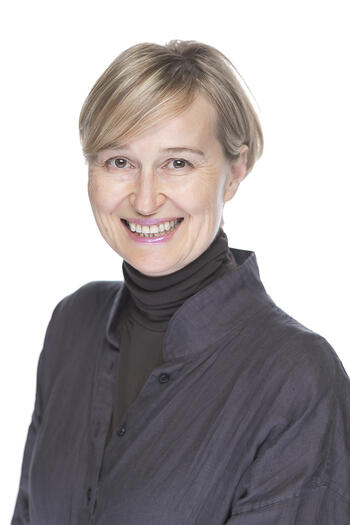 Gulnaz Sharafutdinova