International Development

FSI researchers consider international development from a variety of angles. They analyze ideas such as how public action and good governance are cornerstones of economic prosperity in Mexico and how investments in high school education will improve China’s economy.

They are looking at novel technological interventions to improve rural livelihoods, like the development implications of solar power-generated crop growing in Northern Benin.

FSI academics also assess which political processes yield better access to public services, particularly in developing countries. With a focus on health care, researchers have studied the political incentives to embrace UNICEF’s child survival efforts and how a well-run anti-alcohol policy in Russia affected mortality rates.

FSI’s work on international development also includes training the next generation of leaders through pre- and post-doctoral fellowships as well as the Draper Hills Summer Fellows Program.

Paragraphs

Research shows that microfinance clients use credit and savings as commitment devices to accumulate lump sums. Evidence from Pakistan suggests high demand for fixed-repayment contracts, but low demand for commitment add-ons in both credit and savings.

All Publications button
1
Publication Type
Journal Articles
Publication Date
Journal Publisher
VoxDev
Authors
Marcel Fafchamps
Authors
Soraya Johnson
News Type
Q&As
Date
Paragraphs

The "Meet Our Researchers" series showcases the incredible scholars at Stanford’s Center on Democracy, Development and the Rule of Law (CDDRL). Through engaging interviews conducted by our undergraduate research assistants, we explore the journeys, passions, and insights of CDDRL’s faculty and researchers.

Michael Bennon is a Research Scholar and program manager of CDDRL’s Global Infrastructure Policy Research Initiative. Having served as a Captain in the US Army and US Army Corps of Engineers, he now teaches Global Project Finance at Stanford University. His research focuses on infrastructure development, specifically on the importance of restructuring incentives, public-private partnerships, legal regulation, and the shifting landscape of foreign investment in infrastructure.

What inspired you to pursue research in your current field, and how did your journey lead you to CDDRL?


I used to work for the federal government as an engineer. We were constantly running into hurdles, unnecessary red tape, and misaligned incentives — I felt there had to be a better way to do infrastructure development. So, I went to graduate school at Stanford, studying under Dr. Raymond Levitt, who focused on the cross-disciplinary intersection of engineering, international relations, finance, and law. We worked to address gaps in the research world regarding infrastructure development from a project finance perspective.

After graduate school, I continued working with Dr. Levitt and began teaching about the financing of large infrastructure projects. I began collaborating with CDDRL when researching China’s Belt and Road Initiative (BRI) and international infrastructure development more broadly. The throughline of my journey, from focusing on engineering to organization management to law, has been to follow the biggest challenges in infrastructure.

How do you visualize the creation of more effective incentive structures to motivate private companies to further global development? How can the public-private partnership work more effectively?


There's a myriad of flaws in the infrastructure development sector with incentives. The basic disconnect is that in a democracy, elected officials rely on bureaucracy and various agencies to develop complex infrastructure projects, which can lead to a convoluted system. When a government infrastructure project goes over budget, the many groups involved often don’t bear the costs — taxpayers do.

However, effective public-private partnerships can help solve these broken incentives. For example, if a project is structured so that the companies building the infrastructure are also responsible for maintaining it, then they are incentivized to create projects that last.

Internationally, in the old pre-BRI paradigm of development, there were two ways for a developing country to fund its infrastructure: either by borrowing money or financing projects through foreign direct investment. For the latter, there’s a form of private-public partnership, as international investors invest directly into the project instead of through the government.


Effective public-private partnerships can help solve broken incentives. For example, if a project is structured so that the companies building the infrastructure are also responsible for maintaining it, then they are incentivized to create projects that last.
Michael Bennon


How has infrastructure development been used to gain influence in diplomacy? How has our understanding of that tool changed since BRI, and how successful has it been for China?


Infrastructure development has always been a problematic tool for amassing geopolitical influence; it builds friendships when loans are going out, then creates enemies once they’re issued. A recent example is the 1997 Asian financial crisis when Western countries had invested in power plants throughout the continent, only for many countries to default and expropriate. This has happened repeatedly throughout history.

While China’s done quite well at protecting its economic interests in infrastructure projects, it's a mixed bag due to the prevalence of moral hazard, public backlash, and the tarnishing of diplomatic ties. With the state being so heavily involved in BRI, China intervenes when countries want to default or expropriate, protecting its interests and those of state-owned enterprises effectively. However, this can lead to a moral hazard problem because these enterprises feel too protected by China and act without the appropriate caution while building risky projects.

Today, many countries that have received BRI lending have serious relational problems with China, if not at the government level, then among the public. People tend to push back and feel taken advantage of when a foreign country comes in and builds projects, especially with rumor mills churning out narratives about China’s 'debt-trap diplomacy.' These diplomatic challenges were true long before the BRI and persist today.

Why do countries, through BRI or other means, decide to take on infrastructure projects they obviously can’t afford?


Countries often don’t behave rationally — politics, corrupt officials, and conflicting interests all affect policymaking. Also, everyone builds infrastructure projects that may bankrupt them, partly due to an ingrained optimism bias in the infrastructure sector.

We’re in the worst developing country debt crisis in modern history, and countries are having a difficult time navigating a changing infrastructure lending landscape. China is now the largest bilateral lender, and its absence from international organizations like the Paris Club prevents the unified action needed to allow countries to emerge from debt crises. Even the International Monetary Fund (IMF) is struggling to help them, as it is cautious about issuing aid to countries with murky BRI loans to pay back.

Funding for infrastructure development can be used as an incentive for democratization through conditionality on loans. However, many countries are turning away from traditional Western lending institutions in favor of alternative lenders with fewer conditions. How can we balance the importance of conditionality and incentivizing democratization while preventing the decreased reliance on Western institutions?

Conditionality can be positive in promoting democratization, but there have to be limits to it, especially because it becomes less effective when alternative lenders like China exist. Conditionality began as limited to policies that promote democratization, development, and liberalization but has metastasized to the point where lenders are pushing a wide range of policies on borrower countries. Many of these conditions, such as environmental or social protections, are good policies but can be viewed as a manifestation of Western imperialism within these countries. These programs also become futile when countries become simply incentivized to seek Chinese loans instead, which have virtually no conditionality.

Is the turn away from Western lending institutions an inevitable shift, or can policy changes encourage its prodominance again, if that’s something that we want?


Western institutions are better for infrastructure development, as organizations like the World Bank are the best at protecting human rights and preventing environmental disasters. There are also strategic and security reasons for promoting Western institutions — for example, we don’t want Chinese technology companies building telecommunications grids in other countries.

The bigger question is, what would a return to a Western-dominated model of investment look like? Pre-BRI, there was an open, liberal system of direct investment from private companies. BRI represented a pivot to more state-driven investment. Should the US shift to a similar model, or return to private direct investment fueling infrastructure development? The Biden administration’s alternative to BRI for state-driven investment was the Partnership for Global Infrastructure and Investment (PGII). Despite mutual investment in telecommunications and renewable energy, PGII focuses on developing very different sectors than BRI, building social impact projects like healthcare infrastructure.

What is the most exciting or impactful finding from your research, and why do you think it matters for democracy, development, or the rule of law?


I’m focusing on how liberal democracies can get building again, so I researched flaws in domestic infrastructure projects within the US. It revealed how the judicial system was an engine fueling how infrastructure projects are conducted; I realized the extent to which permitting regulation and environmental litigation had been driving my own incentives when I was a bureaucrat. Decisions are often made in response to case law and to ‘litigation-proof’ projects, which can incentivize inefficient and expensive project management. I believe democracies are perfectly capable of building infrastructure projects well, but problems in current building initiatives, from the California High-Speed Rail to our housing crisis, are rooted in the outsized effects of the threat of lawsuits.


I believe democracies are perfectly capable of building infrastructure projects well, but problems in current building initiatives, from the California High-Speed Rail to our housing crisis, are rooted in the outsized effects of the threat of lawsuits.
Michael Bennon


How do you see your research influencing policy or contributing to real-world change?


I do research on practical public-private partnership policy in the United States, working with the Build America Center and the Department of Transportation to directly supply the government with research when needed.

There are policy changes that must occur to promote effective infrastructure development. The US will have to reform institutions that predated BRI to adapt to today’s post-BRI world. The three key institutions are the World Bank, the IMF, and the World Trade Organization (WTO). I hope that my ideas can influence their restructuring. For domestic development, I’m continuing my work with the Build America Center on how governments can more efficiently procure infrastructure projects and help public officials adopt best practices.

Lastly, what book would you recommend for students interested in a research career in your field?


The first book, which is extraordinarily boring but crucial to infrastructure development, is The Strategic Management of Large Engineering Projects: Shaping Institutions, Risks, and Governance. Written by Miller, Lessard, Michaud, and Floricel, it includes the perspectives of MIT engineers on infrastructure project case studies to understand why so many have failed. For some great history, the economist Raymond Vernon’s book Sovereignty at Bay develops the idea that relationships sour over international investment and that it’s not an effective diplomatic tool.

Read More

Launching viaduct bridge in progress for Pune metro rail project in Pune city, Maharashtra, India.
News

CDDRL’s Leadership Academy for Development Announces New Public-Private Partnerships Program with the International Finance Corporation

The Center on Democracy, Development and the Rule of Law’s (CDDRL) Leadership Academy for Development (LAD) is embarking on a new partnership with the International Finance Corporation to educate senior leaders on infrastructure policy, governance, and public-private partnerships.
CDDRL’s Leadership Academy for Development Announces New Public-Private Partnerships Program with the International Finance Corporation
Construction on a building in Sri Lanka
Q&As

Stanford Researchers Explore the Challenges Created By and Reforms Needed to Improve China’s Belt and Road Initiative

Francis Fukuyama and Michael Bennon share their insights on the potential implications of the Belt and Road Initiative (BRI) on global development finance, as well as suggestions for reforms that could bolster international stakeholders’ ability to manage any potential debt crises arising from BRI projects.
Stanford Researchers Explore the Challenges Created By and Reforms Needed to Improve China’s Belt and Road Initiative
Hero Image
Meet Our Researchers: Michael Bennon
All News button
1
Subtitle

Investigating how infrastructure project financing has changed amidst global geopolitical competition and how democracies can more effectively build in the future with CDDRL research scholar Michael Bennon.

Date Label
-

The Stanford Center on China's Economy and Institutions and the Hoover History Lab are pleased to present a talk by Hoover Research Fellow Dian Zhong on her new publication, The Silent Withdrawal: China’s Declining Female Workforce Poses a National Challenge. Scott Rozelle, SCCEI Co-Director, will moderate the conversation. 

The Silent Withdrawal: China's Declining Female Workforce Poses a National Challenge by Dian Zhong, published by the Hoover History Lab and Hoover Institution (Book Cover).

In The Silent Withdrawal, Dian Zhong reveals a striking reversal in China’s once-celebrated gender equality, as women increasingly withdraw from the workforce despite higher education levels. Highlighting the policy missteps and the unintended consequences of pro-natalist measures, alongside the transformation of feminism from state collaboration to a force of resistance, Zhong calls for bold reforms to reconcile women’s economic empowerment with demographic challenges, steering China toward a more inclusive future.

Download the Publication


About the Author
 

Dian Zhong headshot

Dian Zhong is a research fellow at the Hoover Institution and a member of the Hoover History Lab, focusing on the comparative histories of developing countries during the twentieth century. In addition to her Hoover appointment, Zhong also teaches the course 'Comparative Development of Latin America and East Asia' at Stanford University. Previously, Zhong was a lecturer in Portuguese at Beijing Foreign Studies University and a teaching and research assistant at the School of Government, Peking University.

Zhong is an experienced translator and interpreter proficient in Mandarin, Portuguese, and English, providing services for major international organizations such as the G20 and BRICS (the economic group of Brazil, Russia, India, China, and South Africa). She has published extensively on topics such as the political economy of development, comparative political institutions, regime change, geopolitics, and China’s foreign policies toward Latin America. Her current research explores how rising feminism in China impacts existing challenges such as demographic shrinkage, risks of brain drain, labor market imbalances, and the transition from a low-skill, labor-intensive economy to a knowledge-based economy.

Zhong received her PhD in political science from Peking University.


Parking and Directions


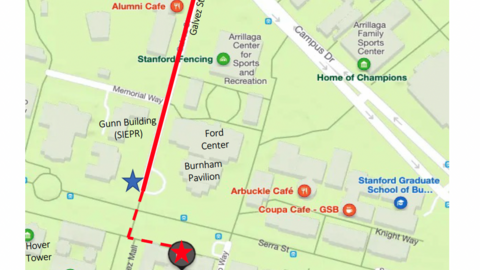
Please join us in-person in the Goldman Conference Room located within Encina Hall (616 Jane Stanford Way) on the 4th floor of the East wing. For more detailed information on venue location and parking instructions, please visit this webpage


Event Partners
 

Hoover History Lab and Stanford Center on China's Economy and Instituitions' logos


Scott Rozelle, Co-Director, SCCEI

Goldman Room E409, Encina Hall

Dian Zhong, Research Fellow, Hoover Institution
Seminars
Date Label
-
Roberta Gatti ARD event

The Middle East and North Africa (MENA) economies are not catching up with the rest of the world. The region’s average per capita income has increased by just 62 percent over the last 50 years. In comparison, over the same period, the increase was fourfold in emerging market and developing economies (EMDEs) and twofold in advanced ones. Only a few developing MENA economies have avoided diverging further from the richest countries’ living standards (what economists call the frontier), and those where conflicts erupted have accelerated in the wrong direction. In this presentation, Roberta Gatti will discuss the factors that shape MENA’s long-term growth potential, with special attention to the role of the state in the economy, the persistent effects of conflict, and the boost that closing the gender gap in the labor force can deliver in terms of growth.

This event is co-sponsored by the Program on Arab Reform and Development and the Program on Capitalism and Democracy, as well as the Middle Eastern Studies Forum.

ABOUT THE SPEAKER

Roberta Gatti is the Chief Economist for the Middle East and North Africa (MENA) region at the World Bank, where she oversees the analytical agenda of the region and the publication of the semi-annual MENA Economic Updates. She is the founder of the MENA Central Banks Regional Research Network. In her prior capacity as Chief Economist for the Human Development Practice Group, Roberta co-led the conceptualization and launch of the World Bank Human Capital Index and the scale up of the Service Delivery Indicators data initiative.

Roberta joined the World Bank as a Young Professional in the Macro unit of the Development Research Group, and she has since led and overseen both operational and analytical work in her roles of Manager and of Global Lead for Labor Policies.

Roberta’s research, spanning a broad set of topics such as growth, firm productivity, the economics of corruption, gender equity, and labor markets, has been published in lead field journals such as the Journal of Public Economics, the Journal of Economic Growth, and the Journal of Development Economics. She is also the lead author of a number of flagship reports, including Jobs for Shared Prosperity: Time for Action in the Middle East and North Africa; Striving for Better Jobs: The Challenge of Informality in Middle East and North Africa; The Human Capital Index 2020 Update: Human Capital in the Time of COVID-19; and Service Delivery in Education and Health across Africa.

Roberta has taught courses at the undergraduate, masters, and Ph.D. Level at Georgetown and Johns Hopkins Universities. She is a frequent lecturer on development economics, most recently at Dartmouth College, Princeton University, and Cornell University. Roberta holds a B.A. from Università Bocconi and a Ph.D. in Economics from Harvard University.

In-person: Encina Hall E008, Garden-level East (616 Jane Stanford Way Stanford)

Online: Via Zoom

Roberta Gatti
Seminars
Date Label
-
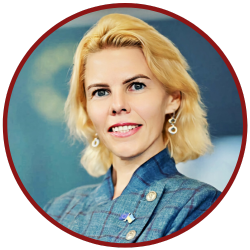
Natalia Forrat seminar 2025

Why are some authoritarian regimes highly competitive and others highly unified? Do they function differently? And what does it mean for our understanding of democracy and democratization? The Social Roots of Authoritarianism unpacks the grassroots mechanisms maintaining unity-based and division-based authoritarianisms. They develop in societies with opposite visions: the state as team leader or the state as outsider. Depending on which vision of the state is dominant in society, autocrats must use different tools to consolidate their regimes or risk pushback. The book demonstrates the grassroots mechanisms of authoritarian power comparing four Russian regions with opposite patterns of electoral performance—the Rostov region, the Kemerovo region, the Republic of Tatarstan, and the Republic of Altai. The theory of unity- and division-based authoritarianisms developed in the book implies that these types of authoritarian regimes miss the opposite elements of democracy, and that democratization depends on cultivating these missing institutions over time.

ABOUT THE SPEAKER

Natalia Forrat is a social scientist studying democracy, authoritarianism, state power, and civil society. She obtained her PhD from Northwestern University and held academic appointments at Stanford University, the University of Notre Dame, and the University of Michigan. Currently, she is a lecturer at the Center for Russian, East European, and Eurasian Studies at the University of Michigan.  

Virtual to Public. Only those with an active Stanford ID with access to Room E008 in Encina Hall may attend in person.

Hesham Sallam
Hesham Sallam

Virtual to Public. If prompted for a password, use: 123456
Only those with an active Stanford ID with access to Room E008 in Encina Hall may attend in person.

Natalia Forrat
Seminars
Date Label
-
Danila Serra

We examine the impact of ethics and integrity training on police officers in Ghana through a randomized field experiment. The program, informed by theoretical work on the role of identity and motivation in organizations, aimed to re-activate intrinsic motivations to serve the public, and to create a new shared identity of "Agent of Change." Data generated by an endline survey conducted 20 months post training, show that the program positively affected officers' values and beliefs regarding on-the-job unethical behavior and improved their attitudes toward citizens. The training also lowered officers' propensity to behave unethically, as measured by an incentivized cheating game conducted at endline. District-level administrative data for a subsample of districts are consistent with a significant impact of the program on officers' field behavior in the short-run.

ABOUT THE SPEAKER

Danila Serra is Associate Professor of Economics at Texas A&M University. She received her PhD in Economics from the University of Oxford. She is an applied behavioral economist employing experimental methods to address policy-relevant questions in political economy, development, education, and gender economics. Her work has been funded by the Alfred P. Sloan Foundation, the Russell Sage Foundation, the Spencer Foundation, the World Bank, the IZA G²LM|LIC program, the Social Science Research Council (SSRC), the Abdul Latif Jameel Poverty Action Lab (JPAL) and the Arnold Foundation. In 2017, she was the inaugural recipient of the Vernon Smith Ascending Scholar Prize, given by the International Foundation for Research in Experimental Economics (IFREE) to an exceptional scholar using experiments in economics research.

Virtual to Public. Only those with an active Stanford ID with access to the William J. Perry Conference Room in Encina Hall may attend in person.

Hesham Sallam
Hesham Sallam

Virtual to Public. If prompted for a password, use: 123456
Only those with an active Stanford ID with access to the William J. Perry Conference Room in Encina Hall may attend in person.

Danila Serra
Seminars
Date Label
-
Soledad Artiz Prillaman seminar — Does Affirmative Action Worsen Quality? Theory and Evidence to the Contrary from Elections

Affirmative action improves the representation of women and minorities, but critics worry that it is at odds with meritocracy. We argue that quotas can improve quality under conditions of discrimination, as quota recipients are held to a higher standard despite facing structural inequalities that make meeting these standards difficult. The net effect of quotas on observable proxies for quality -- qualifications -- therefore depends on the degrees of selection and structural discrimination. We test our argument by examining the effects of electoral quotas on politicians' education and quality in India. Using two censuses covering more than 40 million residents and 13 states, we show that randomly and quasi-randomly assigned quota politicians have lower average education than non-quota politicians but the same or higher quality. We further provide evidence of both voter and structural discrimination. Our results show that quotas can both enhance the representativeness and quality of politicians.

ABOUT THE SPEAKER

Soledad Artiz Prillaman is an assistant professor of political science at Stanford University. Her research lies at the intersections of comparative political economy, development, and gender, with a focus in South Asia. She investigates the political consequences of development; the political behavior and representation of minorities, specifically women; inequalities in political engagement; and the translation of voter demands. She is the faculty director of the Inclusive Democracy and Development Lab and recently published a book with Cambridge University Press titled "The Patriarchal Political Order: The Making and Unraveling of the Gendered Participation Gap in India."

Virtual to Public. Only those with an active Stanford ID with access to the William J. Perry Conference Room in Encina Hall may attend in person.

Hesham Sallam
Hesham Sallam

Virtual to Public. If prompted for a password, use: 123456
Only those with an active Stanford ID with access to the William J. Perry Conference Room in Encina Hall may attend in person.

Soledad Artiz Prillaman Assistant Professor, Stanford University
Seminars
Date Label
-
Turkey in Syria: The Intersection of Domestic Politics and Changing International Dynamics

The recent regime change in Syria and Turkey’s role in this process underscores a complex interplay of geopolitical shifts in the Middle East, the regional ambitions of the Erdoğan government, and its domestic political calculations. This panel will analyze the political trajectory of Syria under its new leadership and its evolving relationship with Turkey while also examining Turkey’s policy toward Kurdish demands on both sides of the border and the recently revived talks with the imprisoned PKK leader.

This event is co-sponsored by The Program on Turkey at the Center on Democracy, Development and the Rule of Law and the Middle Eastern Studies Forum.

panelists

Evren Balta

Evren Balta

Visiting Scholar, Weatherhead Scholars Program and Professor, Department of International Relations, Özyeğin University
bio
Nora Barakat

Nora Barakat

Assistant Professor of History, Stanford Department of History
bio
 Halil İbrahim Yenigün

Halil İbrahim Yenigün

Associate Director, Abbasi Program in Islamic Studies
bio
Ayça Alemdaroğlu
Ayça Alemdaroğlu

William J. Perry Conference Room (Encina Hall, 2nd floor, 616 Jane Stanford Way, Stanford)

Evren Balta
Nora Barakat
Halil İbrahim Yenigün
Panel Discussions
Date Label
Paragraphs

Supply chains can be surprisingly complex. In many low- and middle-income settings, large companies often rely on networks of small, independent distributors who travel by foot to sell consumer goods to otherwise hard-to-reach customers (Kruijff et al. 2024). These ‘micro-distributors’ operate at the far edge of the supply chain, with no formal employment contracts, thin profit margins, and high levels of economic risk.

In a field experiment in Kenya, we partnered with one of the world’s largest food manufacturers (pseudonymously “FoodCo”) to evaluate whether investment-appropriate financing contracts could help their independent distributors improve their business performance. We found that tailoring repayment terms to better share risk and rewards—compared to a standard, rigid debt contract—significantly boosted distributors’ profits. Crucially, these more flexible contracts took advantage of detailed administrative data on monthly performance. These findings underscore the promise of improved observability enabled by digitisation: with richer data, financial contracts can be designed to incorporate greater risk-sharing (Fischer 2013, Meki 2024), potentially opening new opportunities for mutually beneficial investments.

All Publications button
1
Publication Type
Journal Articles
Publication Date
Subtitle

Flexible financing for ‘last-mile’ distributors boosted profits across a food supply chain in Kenya.

Journal Publisher
VoxDev
Authors
Marcel Fafchamps
-
SCCEI China Conference 2025 on China and The Changing Global Economy on May 14, 2025.


The Stanford Center on China's Economy and Institution's (SCCEI) annual China Conference brings together leading voices from policy, business, and academia to examine key economic trends in China and their implications for the world.

This year's conference will examine China's role in a changing global economy. Panels of experts from Stanford and around the world will take a deep dive into China’s evolving economic ambitions and self-perception on the global stage, assess the roles of state and private enterprises in advancing China’s goals, and analyze the impacts on global trade, finance, and institutions.


We are finalizing an outstanding lineup of speakers from academia, industry, and policy communities. Updates will be posted here as confirmed. 

*Schedule is subject to change  

Location: 

Bechtel Conference Center
Encina Hall
616 Jane Stanford Way, Stanford University


9:00 AM - 9:30 AM  Registration & Light Breakfast

9:30 AM - 9:45 AM  Welcome & Opening Remarks


Scott Rozelle 
Faculty Co-director of the Stanford Center on China's Economy and Institutions
Helen F. Farnsworth Endowed Professorship; Senior Fellow at the Freeman Spogli Institute for International Studies and at the Stanford Institute for Economic Policy Research
Stanford University


9:45 AM - 10:30 AM  Morning Fireside Chat


Elizabeth Economy
Hargrove Senior Fellow, Hoover Institution
Stanford University  

Moderator:
Hongbin Li 
Faculty Co-director of the Stanford Center on China's Economy and Institutions 
The James Liang Endowed Chair; Senior Fellow at the Freeman Spogli Institute for International Studies and at the Stanford Institute for Economic Policy Research
Stanford University
 

10:30 AM - 11:00 AM  Break
 
11:00 AM - 12:00 PM  Session 1 | The View from Beijing: China's Economic Ambitions in a Changing World


Session Panelists:
Gangsheng Bao 
Professor of Political Science, Fudan University
Skyline Scholar, Stanford Center on China’s Economy and Institutions

Jonathan Czin
Michael H. Armacost Chair in Foreign Policy Studies, John L. Thornton China Center
Brookings Institute

Stephen Kotkin
Senior Fellow, Freeman Spogli Institute for International Studies; 
Kleinheinz Senior Fellow, Hoover Institution
Stanford University

Moderator:
Ruixue Jia
Professor of Economics, School of Global Policy and Strategy
University of California San Diego
 

12:00 PM - 1:00 PM  Lunch
 
1:00 PM - 2:00 PM  Session 2 | China Inc.: The Role of State and Private Enterprises in Fulfilling China's Ambitions


Session Panelists:
Nan Jia
Professor of Management and Organization
University of Southern California

Arthur Kroeber
Founding Partner
Gavekal Dragonomics

Dan Wang
Research Fellow, Hoover Institution
Stanford University

Moderator:
Zhiguo He
James Irvin Miller Professor of Finance, Stanford Graduate School of Business; Faculty Affiliate, Stanford Center on China’s Economy and Institutions, 
Stanford University
 

2:00 PM - 2:30 PM  Break

2:30 PM - 3:15 PM  Afternoon Keynote


Sean Stein
President, U.S.-China Business Council

Moderator: 
Scott Rozelle 
Faculty Co-director of the Stanford Center on China's Economy and Institutions
Stanford University
 

3:15 PM - 3:45 PM  Break

3:45 PM – 4:45 PM  Session 3 | China in the Global Economy: Disruptor, Competitor, Partner?


Session Panelists:
Deborah Brautigam
Director of the China Africa Research Initiative; Bernard L. Schwartz Professor of Political Economy Emerita
Johns Hopkins University

Kyle Chan
Postdoctoral Research Associate and Lecturer in Sociology
Princeton University

Ramin Toloui
Distinguished Policy Fellow, Stanford Institute for Economic Policy Research
Stanford University

Moderator:
Shaoda Wang
Skyline Scholar, Stanford Center on China's Economy and Institutions, Stanford University; Assistant Professor, Harris School of Public Policy, University of Chicago


4:45 PM - 5:00 PM  Closing Remarks


Hongbin Li 
Faculty Co-director of the Stanford Center on China's Economy and Institutions 
Stanford University


5:00 PM - 6:00 PM  Reception in the Courtyard


Questions? Contact scceichinaconference@stanford.edu 


Bechtel Conference Center
Encina Hall
616 Jane Stanford Way, Stanford University

This event is by invitation only.

Conferences
News Feed Image
Banner 2 to 1 dimensions_2025-v2.png
Date Label
Subscribe to International Development