
 FSI researchers consider international development from a variety of angles. They analyze ideas such as how public action and good governance are cornerstones of economic prosperity in Mexico and how investments in high school education will improve China’s economy.
They are looking at novel technological interventions to improve rural livelihoods, like the development implications of solar power-generated crop growing in Northern Benin.
FSI academics also assess which political processes yield better access to public services, particularly in developing countries. With a focus on health care, researchers have studied the political incentives to embrace UNICEF’s child survival efforts and how a well-run anti-alcohol policy in Russia affected mortality rates.
FSI’s work on international development also includes training the next generation of leaders through pre- and post-doctoral fellowships as well as the Draper Hills Summer Fellows Program.


Russia's Challenge to the West: The Perspective from Berlin
-
Seminar Recording: https://youtu.be/7uGcI3qswDw
About the Event: As relations between the West and Russia have sharply deteriorated in recent years, Germany has taken a leading role in shaping Europe's policy response, particularly that of the European Union. That has included a tougher approach toward Kremlin misbehavior, such as various economic and other sanctions. At the same time, Berlin has sought to keep an open line of communication with Moscow.
Amb. Thomas Bagger will discuss how Berlin views the challenge posed by Russia and how the West should respond.
About the Speaker: Thomas Bagger holds the rank of ambassador and is Diplomatic and Foreign Policy Advisor to the President of the Federal Republic of Germany. He joined the German diplomatic service in 1992 and has served abroad in Prague, Ankara and Washington. Before taking up his current position, he headed the Foreign Ministry's Policy Planning Office.
Thomas Bagger
Ambassador
Federal Republic of Germany
Seminars
New Ideas in Antitrust and the Tech Platforms
-
In October, the Justice Department sued Google for violating antitrust laws.These antitrust concerns are motivated by the potential economic harms caused by the tech giants’ monopoly positions, but there might be greater reason to worry about the political harms that the platforms pose to American democracy because of their control over the modern information ecosystem. If the antitrust laws are designed to address economic harms, how should policymakers confront the political harms from dominant digital platforms?
Join us on November 18th at 10 a.m. PST to discuss recommendations from the new White Paper of the Stanford Working Group on Platform Scale, where we will assess how today’s digital platforms pose threats to American democracy and a proposal for how creative technological interventions might mitigate the platform’s growing power. Panelists include Francis Fukuyama, Mosbacher Director of Stanford University’s Center for Democracy, Development and the Rule of Law and a leader at the Cyber Policy Center’s Program on Democracy and the Internet, Ashish Goel, Professor of Management Science and Engineering and (by courtesy) Computer Science at Stanford University, Barak D. Richman, Professor of Law and Business Administration at Duke University, Luigi Zingales, Professor of Economics at the Chicago Booth School of Business and Co-host of the podcast Capitalisn't, and Dick Costolo, former CEO of Twitter, founder and CEO of multiple startups, and now a Managing Partner at 01 Advisors, in conversation with Kelly Born, Executive Director of the Cyber Policy Center as they discuss new ideas in antitrust.
Dick Costolo
Francis Fukuyama
Encina Hall, C148
616 Jane Stanford Way
Stanford, CA 94305
0
f.fukuyama@stanford.edu
Olivier Nomellini Senior Fellow at the Freeman Spogli Institute for International Studies
Director of the Ford Dorsey Master's in International Policy
Research Affiliate at The Europe Center
Professor by Courtesy, Department of Political Science
Francis Fukuyama is the Olivier Nomellini Senior Fellow at Stanford University's Freeman Spogli Institute for International Studies (FSI), and a faculty member of FSI's Center on Democracy, Development and the Rule of Law (CDDRL). He is also Director of Stanford's Ford Dorsey Master's in International Policy, and a professor (by courtesy) of Political Science.
Dr. Fukuyama has written widely on issues in development and international politics. His 1992 book, The End of History and the Last Man, has appeared in over twenty foreign editions. His book In the Realm of the Last Man: A Memoir will be published in fall 2026.
Francis Fukuyama received his B.A. from Cornell University in classics, and his Ph.D. from Harvard in Political Science. He was a member of the Political Science Department of the RAND Corporation, and of the Policy Planning Staff of the US Department of State. From 1996-2000 he was Omer L. and Nancy Hirst Professor of Public Policy at the School of Public Policy at George Mason University, and from 2001-2010 he was Bernard L. Schwartz Professor of International Political Economy at the Paul H. Nitze School of Advanced International Studies, Johns Hopkins University. He served as a member of the President’s Council on Bioethics from 2001-2004. He is editor-in-chief of American Purpose, an online journal.
Dr. Fukuyama holds honorary doctorates from Connecticut College, Doane College, Doshisha University (Japan), Kansai University (Japan), Aarhus University (Denmark), the Pardee Rand Graduate School, and Adam Mickiewicz University (Poland). He is a non-resident fellow at the Carnegie Endowment for International Peace. He is a member of the Board of Trustees of the Rand Corporation, the Board of Trustees of Freedom House, and the Board of the Volcker Alliance. He is a fellow of the National Academy for Public Administration, a member of the American Political Science Association, and of the Council on Foreign Relations. He is married to Laura Holmgren and has three children.
(October 2025)
Global Populisms
A new project examining the global surge in populist movements and what it means for established democratic rules and institutions.
Read More
CV
Document
francis_fukuyama_cv_april_2024.pdf
(223.42 KB)
Hide publication sections
Off
Ashish Goel
Luigi Zingales
Barak Richman
Rebuilding International Institutions Will be Tough but Necessary, Say Stanford Experts Thomas Fingar and Stephen Stedman
News Type
News
Date
Paragraphs
On September 29, the APARC China Program hosted Thomas Fingar and Stephen Stedman for the program “Rebuilding International Institutions.” The program, which was moderated by China Program Director Jean Oi, examined the future of international institutions such as the United Nations (UN), World Trade Organization (WTO), and World Health Organization (WHO) in our evolving global political landscape. While Fingar and Stedman acknowledged that such institutions facilitated attainment of unprecedented peace and prosperity after WWII, they also asked difficult questions: Are these institutions still adequate? And if not, how will we change them?
Shorenstein APARC Fellow Thomas Fingar kicked off the session by asking whether or not US-China tensions would impede cooperation on major global challenges, or if those challenges were so serious as to render such rivalries immaterial. Perhaps the most obvious example of such a crisis is the current COVID-19 pandemic. The efforts to curb the virus’ spread not only by individual countries, but also by international organizations like the WHO, have proven largely inadequate. According to Fingar, our existing institutions need to be reformed or supplemented to deal with these types of threats. However, such an overhaul of our international systems will be difficult, he says.
How, then, will we go about such a massive project? Stephen Stedman, Deputy Director at Stanford’s Center on Democracy, Development, and the Rule of Law (CDDRL), responded by explaining that the current failure of international cooperation makes such undertakings tough. Globalization has been a double-edged sword: On one hand, more contact, perhaps inherently, leads to increased tension. The resurgence of traditional notions of sovereignty in 2010, kickstarted by the opposition of countries like Russia and China to what was seen as UN overreaching, has led to a reduction of international cooperation overall. On the other hand, Fingar posits that our interconnectedness may force us toward cooperation despite rivalries as we face more and more transnational threats. International institutions create rules to organize and manage our many interconnected relationships so that we can deal with our problems effectively and reduce friction.
Stedman also pointed to the upcoming US elections and the major impact their outcome will have on how these problems are addressed—or not. In the last four year, the United States has pulled back significantly from international institutions and agreements, leaving a gap that China has started to fill. Furthermore, despite the US’s retreat from international responsibility, the country still remains a critical actor in global initiatives. China’s embrace of a global leadership role is not inherently negative, but its future relationship with the US will need to be “managed in a way that you get greater cooperation and not just paralysis.” Stedman says that it is likely that progress will need to be made on a bilateral front in order to have productive conversations about international issues with China.
Concluding on an optimistic note, Fingar voiced his hope that the current tensions and negative perceptions between rivals might ultimately “be mitigated by success in dealing with a common problem,” because “experience does shape perceptions.”
A video recording of this program is available upon request. Please contact Callista Wells, China Program Coordinator at cvwells@stanford.edu with any inquiries.
Read More


Hero Image

All News button
1
Subtitle
Fingar and Stedman spoke as part of the APARC program “Rebuilding International Institutions,” which examined the future of international institutions such as the United Nations (UN), World Trade Organization (WTO), and World Health Organization (WHO) in our evolving global political landscape.
LAD Workshop: Asian Development Bank Institute 2020
-
This workshop is designed to develop skills that participants can use to write public policy case studies and to develop a case library that can be used in teaching programs. We will discuss several existing cases, combined with a “post-mortem” of what worked and what did not. We will address issues such as how to refine a case topic and learning objectives, how to prepare for case study research, how to collect qualitative data through interviews, what material should be included and what should be left out of case studies, and how to build participant engagement into the way a case is written. A key element of the workshop is that participants will work to develop their own case study. The workshop faculty will provide coaching and feedback that will progress throughout the workshop. During the five-week period between the two three-day blocks, participants will be expected to meet in their case-writing groups and develop outlines of their case studies. At the end of the workshop, participants will have an opportunity to present preliminary versions of their cases and get feedback from the entire group.
Workshop Agenda
Download pdf
Online Via Zoom
Is India Losing?: A conversation with Ashley Tellis
-
This is a virtual event. Please click here to register and generate a link to the talk.
The link will be unique to you; please save it and do not share with others.
The link will be unique to you; please save it and do not share with others.
APARC South Asia research Initiative presents: Fall 2020 Colloquium Series on
India-China Strategic Competition
Washington DC time: 7:00pm-8:30pm, 9-Nov. 2020
Sydney, Australia time: 11:00am-12:30pm, 10-Nov. 2020
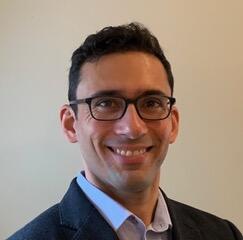
Expectations of India’s rise have been dented in 2020. Amid lackluster economic performance and creeping socio-political illiberalism, India also suffered a major strategic setback. Chinese forces that crossed the Line of Actual Control in Ladakh remain encamped at several tactically-valuable points, and although talks continue, India has few visible options to force a return to the status quo ante. India now sees China is more clearly adversarial terms – but does it have what it takes to compete effectively? This conversation will conclude the APARC South Asia’s fall 2020 colloquium series on the India-China strategic competition with a wider and deeper look at India’s political and military power. We will discuss India’s ability to deter and balance China, its strategies to build national power and align with new partners, and the prospects for the competition in 2021 and beyond.
 Ashley Tellis29Kb
Image
via ZOOM Webinar
Register: https://bit.ly/2IPGZjS
Ashley J. Tellis
<br><i>Tata Chair for Strategic Affairs and Senior Fellow, Carnegie Endowment for International Peace</i><br><br>
Arzan Tarapore
<br><i>South Asia Research Scholar, Shorenstein Asia-Pacific Research Center, Stanford University</i><br><br>
Seminars
Challenges to the United States: Japan in the 1980s and China today
-
This event is held virtually via Zoom. Please register for the webinar via the below link.
Registration Link: https://bit.ly/2SS6DpY
This event is co-sponsored by the Shorenstein APARC Japan Program and China Program.
Japan's economic challenge to the United States in the 1980s aroused more concern in the United States than people now realize. Japan took some very effective steps to stop it. China's challenge plays out across the economic, military, technological, and global influence spheres. China has not yet taken steps to stop it and the tensions are increasingly serious and show no signs of diminishing. Japan has also found better ways to reduce tensions with China than has the United States. While the circumstances are different between the 1980s and today, Japan’s dealings with the United States in the 1980s might offer some lessons for China today. Dr. Ezra Vogel, Professor Emeritus at Harvard University, will discuss these topics and more during this webinar. The event will conclude with an audience Q&A moderated by Japan Program Director Kiyoteru Tsutsui and China Program Director Jean Oi.
SPEAKER
Image
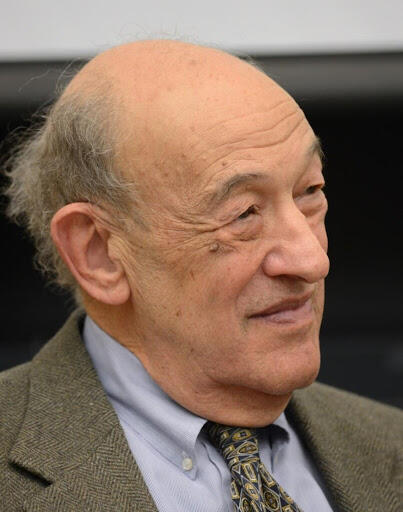
Professor Ezra F. Vogel is Professor Emeritus at Harvard University. Vogel received his PhD at Harvard in 1958 in Sociology in the Department of Social Relations and was a professor at Harvard from 1967-2000. In 1973, he succeeded John Fairbank to become the second Director of Harvard's East Asian Research Center. At Harvard, he served as director of the US-Japan Program, director of the Fairbank Center, and as the founding director of the Asia Center. From fall 1993 to fall 1995, Vogel was the National Intelligence Officer for East Asia at the National Intelligence Council in Washington. His book Japan As Number One (1979), in Japanese translation, became a best seller in Japan, and his book Deng Xiaoping and the Transformation of China (2011), in Chinese translation, became a best seller in China. He lectures frequently in Asia, in both Chinese and Japanese. He has received numerous honors, including eleven honorary degrees.
Via Zoom Webinar.
Registration Link: https://bit.ly/2SS6DpY
Ezra Vogel, Professor Emeritus
<br>Harvard University</br>
Seminars
Information Session - Fisher Family CDDRL Honors Program
-
This event is open to Stanford undergraduate students only.
Image

The Center on Democracy, Development, and the Rule of Law (CDDRL) will be accepting applications from eligible juniors on who are interested in writing their senior thesis on a subject touching upon democracy, economic development, and rule of law (DDRL) from any university department. The application period opens on January 11, 2021 and runs through February 12, 2021. CDDRL faculty and current honors students will be present to discuss the program and answer any questions.
For more information on the Fisher Family CDDRL Honors Program, please click here.
**Please note all CDDRL events are scheduled using the Pacific Time Zone
Online, via Zoom: REGISTER
Stephen J. Stedman
CDDRL
Encina Hall, C152
616 Jane Stanford Way
Stanford, CA 94305-6055
0
sstedman@stanford.edu
Senior Fellow at the Freeman Spogli Institute for International Studies
Professor, by courtesy, of Political Science
Stephen Stedman is a Senior Fellow at the Freeman Spogli Institute for International Studies (FSI) and the Center on Democracy, Development and the Rule of Law (CDDRL), an affiliated faculty member at CISAC, and professor of political science (by courtesy) at Stanford University. He is director of CDDRL's Fisher Family Honors Program in Democracy, Development and Rule of Law, and will be faculty director of the Program on International Relations in the School of Humanities and Sciences effective Fall 2025.
In 2011-12 Professor Stedman served as the Director for the Global Commission on Elections, Democracy, and Security, a body of eminent persons tasked with developing recommendations on promoting and protecting the integrity of elections and international electoral assistance. The Commission is a joint project of the Kofi Annan Foundation and International IDEA, an intergovernmental organization that works on international democracy and electoral assistance.
In 2003-04 Professor Stedman was Research Director of the United Nations High-level Panel on Threats, Challenges and Change and was a principal drafter of the Panel’s report, A More Secure World: Our Shared Responsibility.
In 2005 he served as Assistant Secretary-General and Special Advisor to the Secretary- General of the United Nations, with responsibility for working with governments to adopt the Panel’s recommendations for strengthening collective security and for implementing changes within the United Nations Secretariat, including the creation of a Peacebuilding Support Office, a Counter Terrorism Task Force, and a Policy Committee to act as a cabinet to the Secretary-General.
His most recent book, with Bruce Jones and Carlos Pascual, is Power and Responsibility: Creating International Order in an Era of Transnational Threats (Washington DC: Brookings Institution, 2009).
Director, Fisher Family Honors Program in Democracy, Development and Rule of Law
Director, Program in International Relations
Affiliated faculty at the Center for International Security and Cooperation
Hide publication sections
Off
Didi Kuo
Encina Hall, C150
616 Jane Stanford Way
Stanford, CA 94305
0
jdkuo@stanford.edu
Center Fellow, Freeman Spogli Institute for International Studies
Didi Kuo is a Center Fellow at the Freeman Spogli Institute for International Studies (FSI) at Stanford University. She is a scholar of comparative politics with a focus on democratization, corruption and clientelism, political parties and institutions, and political reform. She is the author of The Great Retreat: How Political Parties Should Behave and Why They Don’t (Oxford University Press) and Clientelism, Capitalism, and Democracy: the rise of programmatic politics in the United States and Britain (Cambridge University Press, 2018).
She has been at Stanford since 2013 as the manager of the Program on American Democracy in Comparative Perspective and is co-director of the Fisher Family Honors Program at CDDRL. She was an Eric and Wendy Schmidt Fellow at New America and is a non-resident fellow with the Carnegie Endowment for International Peace. She received a PhD in political science from Harvard University, an MSc in Economic and Social History from Oxford University, where she studied as a Marshall Scholar, and a BA from Emory University.
Hide publication sections
Off
Social Media and the Pursuit of Power in a Hybrid Regime: Evidence from Pakistan’s 2018 Election
-
* Please note all CISAC events are scheduled using the Pacific Time Zone.
Seminar Recording: https://youtu.be/eGGzDeiGtIc
About the Event: Research on social media and politics has largely focused on two very different political contexts: authoritarian regimes and “normal” democratic polities. However, many countries’ political systems exist between these extremes: there is both “normal” online mobilization and efforts at manipulation that emanate in whole or in part from state-linked actors. In this article, we focus on a country with such a system: Pakistan. We investigate the politics of social media in the run-up to Pakistan’s 2018 general election. The campaign involved both intense, large-scale electoral mobilization and recurrent, credible allegations of influence by the country’s politically powerful army. We analyze millions of Twitter posts in English and Urdu by major political actors and their followers in Pakistan before and just after the 2018 election to identify patterns of 1) normal mobilization and 2) coordinated manipulation. Several findings emerge. First, the main political parties were highly active on social media, with the eventually-victorious Pakistan Tehreek-e-Insaf (PTI) of Imran Khan showing a noticeable edge in online enthusiasm that matches the substantial victory of the PTI in the election. Second, there was a noticeable “dissident sphere” on Twitter, seeking to get around a campaign of censorship and media influence by the military. However, dissidents’ messages were largely swamped by the broader party competition and narratives favorable to the PTI and the military. Third, we find evidence of coordinated activities. This appears to have largely favored the PTI and pro-military messages, which saw a substantially higher rate of amplification. Finally, we see evidence of narrative alignment between the PTI and the military – the clusters of their followers seemed to advance pro-PTI and anti-PML-N messages; pro-PTI and anti-PML-N narratives were pervasive in the PML-N and dissident clusters.
About the Speakers:
Asfandyar Mir is a Postdoctoral fellow at the Center for International Security and Cooperation at Stanford University. His research interests are in international security with current work focusing on counterterrorism, counterinsurgency, drone warfare, US counterterrorism policy, South Asia security issues, misinformation dynamics, and Al-Qaida. Some of his research has appeared in peer-reviewed journals, such as International Security, International Studies Quarterly, and Security Studies. My commentary has appeared in Foreign Affairs, Foreign Policy, H-Diplo, Lawfare, and Washington Post Monkey Cage.
Tamar Mitts is Assistant Professor at the School of International and Public Affairs and a Faculty Member at the Data Science Institute and the Saltzman Institute of War and Peace Studies at Columbia University. Her research applies machine learning and text analysis methods to study political behavior in the digital age, and has been published in the American Political Science Review, International Organization, the Journal of Economic Perspectives, and Political Science Research and Methods, among other outlets.
Paul Staniland is Associate Professor of Political Science at the University of Chicago and a nonresident scholar in the South Asia Program at the Carnegie Endowment for International Peace. His research focuses on political violence and international security in South Asia. Staniland’s first book, Networks of Rebellion: Explaining Insurgent Cohesion and Collapse, was published by Cornell University Press in 2014, and his second book, Armed Politics: Violence, Order, and the State in South Asia, will be published by Cornell in 2022.
Virtual Seminar
Asfanydar Mir, Tamar Mitts & Paul Staniland
Stopping State Repression: An Inquiry Into Spells
-
* Please note all CISAC events are scheduled using the Pacific Time Zone.
Seminar Recording: https://youtu.be/Q6-ErAxGmQ0
About the Event: While research into why repression varies has thrived, essentially no effort has been made to examine stopping large-scale applications once underway. We put forward a new theoretical framework that conceptualizes repressive behavior as a rare/slow-changing process that is unlikely to terminate unless it is perturbed by a significant cost. As such, we maintain that repression is more likely ended by democratization than from diverse factors commonly espoused in the literature and policy community (e.g., military intervention, naming/shaming, international law and economic sanctions). Investigating a new database regarding 239 high-level repression spells for the period 1976-2007, we find that democratization is associated with spell-termination, while there is little systematic pacifying influence for other factors. Additionally, we find that non-violent movements for change largely drive democratization but that these movements have little direct impact on state repression themselves.
About the Speaker: Christian Davenport is a Professor of Political Science and Faculty Associate at the Institute for Social Research at the University of Michigan, Research Professor at the Peace Research Institute Oslo and Elected Fellow at the American Association for the Arts and Sciences. Primary research interests include political conflict, measurement, racism and popular culture. He is the author of seven books and author of numerous articles appearing in the American Political Science Review, the American Journal of Political Science and the Annual Review of Political Science (among others). He is the recipient of numerous grants (e.g., 12 from the National Science Foundation) and awards.
Virtual Seminar
Christian Davenport
Professor
University of Michigan
Seminars