International Development

FSI researchers consider international development from a variety of angles. They analyze ideas such as how public action and good governance are cornerstones of economic prosperity in Mexico and how investments in high school education will improve China’s economy.

They are looking at novel technological interventions to improve rural livelihoods, like the development implications of solar power-generated crop growing in Northern Benin.

FSI academics also assess which political processes yield better access to public services, particularly in developing countries. With a focus on health care, researchers have studied the political incentives to embrace UNICEF’s child survival efforts and how a well-run anti-alcohol policy in Russia affected mortality rates.

FSI’s work on international development also includes training the next generation of leaders through pre- and post-doctoral fellowships as well as the Draper Hills Summer Fellows Program.

-

* Please note all CISAC events are scheduled using the Pacific Time Zone.


Seminar Recording:  https://youtu.be/zrDq0xRWnhk


About the Event: Determination and verification of the nuclear activities of the Democratic People’s Republic of Korea (DPRK) are critical to ongoing disarmament and nonproliferation efforts. This study assesses the complete nuclear fuel cycle of the DPRK, from its capacity to produce fissile material precursors at mining and milling facilities in Pyongsan, to activity at the main Nuclear Scientific Research Center in Yongbyon. An interdisciplinary approach is used to analyze the different stages of the DRPK’s nuclear fuel cycle. In investigating the uranium ore grade and ore production capacity at the mining and milling facilities, we combine analysis of archival geological maps, geological field survey reports, and first-hand collection and geochemical analysis of comparable rock samples from the Korean Peninsula. In analyzing the ongoing activities at fissile material production facilities, we integrate satellite imagery analysis with machine learning algorithms, allowing for automated analysis of large image sets.


About the Speaker: Sulgiye Park is a Stanton Nuclear Security Fellow at CISAC, Stanford University, where she focuses primarily on investigating the front-end of uranium pathway in North Korea. She looks at the uranium mining and milling processes for disarmament and nonproliferation efforts. Prior to joining CISAC, Sulgiye was a postdoctoral scholar at Stanford Geological Sciences and Stanford Institute for Materials and Energy Sciences, where Sulgiye studied materials' behaviors at extreme environments.

Virtual Seminar

Sulgiye Park Stanton Postdoctoral Fellow Stanford University
Seminars
-

* Please note all CISAC events are scheduled using the Pacific Time Zone.


Seminar Recording:  https://youtu.be/ISsBNJEKP70


About the Event: This chapter builds on my earlier writing during the West African Ebola outbreak, in which I argue that health security paradigms and militarized health interventions engender “defensiveness” in landscapes of care, while they also intensify already securitized landscapes and relationships of development and humanitarian aid. In this chapter, I include insights about the US-authored Global Health Security Agenda (GHSA), to suggest that the Government of Sierra Leone’s 2014 adoption of the agenda has helped to strengthen containment and control paradigms at the expense of care, and to prioritize the collection and management of disease event data over other pressing concerns related to health care delivery (cf. Benton 2015). Specifically, I analyze global health security policy discourse and practice outlined in the GHSA and militarized health interventions as they travel and settle in four disparate sites: a rural clinic in eastern Sierra Leone (see Kardas-Nelson and Frankfurter 2018); abandoned and repurposed treatment centers; the Imperial War Museum’s temporary exhibit “Fighting Extremes: From Ebola to Isis;” and US and Sierra Leonean political rhetoric explicitly linking Ebola virus disease and terrorism (whether by metaphor, analogy, or literal means). Reading across these sites, I show how projects of counter-terrorism and humanitarianism subtend global health policy, and become institutionalized in and through the everyday management of public health provision.


About the Speaker: Adia Benton is an associate professor of Anthropology and African Studies at Northwestern University, where she is affiliated with the Science in Human Culture Program. She is the author of the award-winning book, HIV Exceptionalism: Development through Disease in Sierra Leone, and is currently writing a book about the West African Ebola outbreak.

Virtual Seminar

Adia Benton Associate Professor of Anthropology Northwestern University
Seminars
-

* Please note all CISAC events are scheduled using the Pacific Time Zone.


Seminar Recording: https://youtu.be/GZwdR1cNPAg


About the Event: In recent years, the world has increasingly witnessed international conflict along ideological fault lines. Western policymakers warn that authoritarian countries like Russia and China are seeking to exploit divisions within democratic societies to promote autocratic tendencies, while for decades, authoritarian countries have accused the West of doing the same—of manufacturing domestic uprisings as a way to force liberalism upon them. While history is filled with examples of conflicts along these types of ideological lines, there is little consensus among scholars or policymakers about whether states’ governing ideologies matter for their foreign policy behavior and if they do, why.

This presentation will focus in on British and U.S. reactions to the Haitian Revolution to advance our understanding of the relationship between ideology and international conflict. I show that Britain and the United States both initially isolated Haiti due to fears that the Haitians would promote or otherwise inspire the spread of slave rebellions throughout the Caribbean and U.S. South. However, after outlawing slavery in its colonies, Britain’s foreign policy towards Haiti quickly diverged from that of the United States. Britain formally ended its regime dispute with Haiti, deepened its economic links with the country, and even began cooperation with Haitian leaders to police the Atlantic slave trade. Taken together, the case strongly suggests that British and U.S ideological stance on slavery was a primary source of their disputes with the Haitian regime.


About the Speaker: Lindsay Hundley holds a Ph.D. from the Department of Political Science at Stanford University. Her primary research examines why states fight over the leadership and institutions of other countries, and her book project explores the role of political ideology in shaping both how leaders perceive threats from other states and their willingness to resort to subversion. In other research, Lindsay leverages advances in political methodology to shed new light on enduring questions in international politics, with a particular emphasis on experimental tests of formal models and the use of machine learning techniques to process and analyze political texts. Her work has been published at the Journal of Politics and International Studies Perspectives.

Before joining CISAC, Lindsay was a pre-doctoral research fellow with the International Security Program at Harvard Kennedy School's Belfer Center for Science and International Affairs. At Stanford, she was a Gerald J. Lieberman Fellow -- one of the University's highest distinctions awarded to doctoral students for outstanding accomplishments in research, teaching, and academic leadership.

Virtual Seminar

Lindsay Hundley Postdoctoral Fellow Stanford University
Seminars
-

* Please note all CISAC events are scheduled using the Pacific Time Zone.


Seminar Recording:  https://youtu.be/RZZT4lXaG1w


About the Event: What lies at the origins of major wars?

I argue that major wars are caused by the attempts of great powers to escape their two-front war problem: encirclement. To explain the causal mechanism that links encirclement to major war, I identify an intervening variable: the increase in the invasion ability of the immediate rival. This outcome unfolds in a three-step process: double security dilemma, war initiation, and war contagion.

Encirclement is a geographic variable that occurs in presence of one or two great powers (surrounding great powers) on two different borders of the encircled great power. The two front-war problem triggers a double security dilemma (step 1) for the encircled great power, which has to disperse its army to secure its borders. The surrounding great powers do not always have the operational capability to initiate a two-front war (latent encirclement) but, when they increase their invasion ability (actualized encirclement), the encircled great power attacks (war initiation, step 2). The other great powers intervene due to the rival-based network of alliances for preventing their respective immediate rival from increasing its invasion ability (war contagion, step 3).

I assess my theory in the outbreak of WWI. This article provides ample support to the claim that major wars are caused by a great power that has the limited goal of eliminating its two-front war problem. These findings have important implications for the prospects of major wars, since I anticipate that in the long term China will face the encirclement of India and Russia.

View Draft Paper


About the Speaker: Andrea Bartoletti holds a Ph.D. in Political Science from the University of Chicago. His research interests span on international security and IR theory with a focus on the origins of major wars, polarity and war, U.S. grand strategy in the Indo-Pacific region, and great powers' intervention in civil wars.

Virtual Seminar

Andrea Bartoletti Postdoctoral Fellow Stanford University
Seminars
-

* Please note all CISAC events are scheduled using the Pacific Time Zone.


Seminar Recording: https://www.youtube.com/watch?v=olaPuZ0L4fg


About the Event: The creation of the International Criminal Court (ICC) in 1998, hailed in a triumphant language, was to finally usher in an era of accountability for atrocity crimes and an end to impunity of such crimes of concern to the international community. Two decades later, that optimism is waning and even the supporters of the ICC have publicly aired their frustration. Amidst a string of high-profile acquittals of defendants, flawed investigations, dismissed charges, lengthy proceedings, and controversial rulings, it has become clear that the Court has not lived up to its promise. Why is it that the ICC seems able to deliver justice only on behalf of states rather than for victims and communities affected by atrocity crimes? International courts operate in a world made primarily of states, which try to leverage the legal institutions and processes, in pursuit of their political and security interests. Even states that do not wield global power are able to use international courts in pursuit of those interests, while the international justice project reframes its mission as delivering “justice for victims”. Moreover, as calls to “fix” the Court gain ground, the broader question of the imperial and the liberal world order that sustain the international justice project remain at the margin of the deliberations.

Book Purchase: https://www.amazon.com/gp/product/1108488773?pf_rd_r=KSYYMSPN9JJKSS2GTW0Y&pf_rd_p=a712d25e-094e-4a8b-b495-0be41c4dbcc9


About the Speaker: Oumar Ba is an assistant professor of political science at Morehouse College. His primary research agenda focuses on international criminal justice norms and regimes, and the global governance of atrocity crimes. He also studies worldmaking and visions for and alternatives to the current international order, from Global South perspectives. He is the author of States of Justice: The Politics of the International Criminal Court (Cambridge University Press, 2020). His publications have appeared in scholarly journals such as Human Rights Quarterly, Cambridge Review of International Affairs, African Studies Review, Journal of Narrative Politics, Africa Today, and African Journal of International Criminal Justice.

Virtual Seminar

Oumar Ba Assistant Professor of International Relations Morehouse College
Seminars
-

Co-sponsored by the Japan Program and the Southeast Asia Program

When Yoshihide Suga recently took over as prime minister of Japan, he tellingly focused his first trip abroad on Southeast Asia. The region has long been crucial to Japan’s foreign policy, and Japan has long been a key external partner to ASEAN and its constitutive states and societies. Japan’s engagement in Southeast Asia has become even more important in the era of the “Free and Open Indo-Pacific,” as the region confronts new economic, political and security challenges against the backdrop of waxing Sino-American rivalry and now a global pandemic. This webinar will examine Japan’s role in Southeast Asia in the recent past and the going forward. Drawing on the findings of a collaborative research project involving scholars from Southeast Asia, Japan, and North America – to be published as an edited volume from the University of Michigan Press – the panel will discuss Japan’s engagement in key areas such as infrastructure investment, maritime security assistance, and multilateral diplomacy, as well as Southeast Asian responses to its initiatives. They will also discuss the important roles played by non-state actors in mediating Japanese ties to Southeast Asia, and review key elements of continuity and change likely to extend into the Suga administration and beyond.   

Panelists
Image
John D Ciociari 120820 crop 4X4
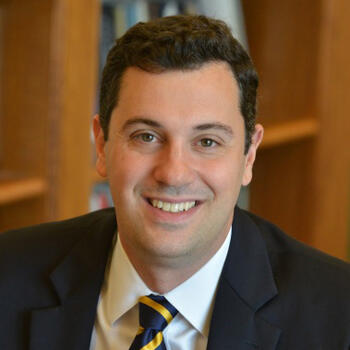
John Ciorciari is Associate Professor and Director of the Weiser Diplomacy Center and International Policy Center at the Gerald R. Ford School of Public Policy, University of Michigan. He is the author of Sovereignty Sharing in Fragile States (Stanford University Press, forthcoming 2021), The Limits of Alignment: Southeast Asia and the Great Powers since 1975 (Georgetown University Press, 2010), co-author of Hybrid Justice: The Extraordinary Chambers in the Courts of Cambodia (University of Michigan Press, 2014), and co-editor of The Courteous Power: Japan and Southeast Asia in the Indo-Pacific Era (University of Michigan Press, forthcoming 2021).


Image
chanlett-avery-emma-120820_crop_4x4
Emma Chanlett-Avery is a Specialist in Asian Affairs at the Congressional Research Service. She focuses on U.S. relations with Japan, the Korean Peninsula, Thailand, and Singapore. Ms. Chanlett-Avery joined CRS in 2003 through the Presidential Management Fellowship, with rotations in the State Department on the Korea Desk and at the Joint U.S. Military Advisory Group in Bangkok, Thailand. She also worked in the Office of Policy Planning as a Harold Rosenthal Fellow. She is a member of the Mansfield Foundation U.S. – Japan Network for the Future, Vice-Chair of the Board of Trustees of the Japan America Society of Washington, and the 2016 recipient of the Kato Prize. Ms. Chanlett-Avery received an MA in international security policy from the School of International and Public Affairs at Columbia University and her BA in Russian studies from Amherst College.

Image
don emmerson 2
Donald K. Emmerson heads the Southeast Asia Program at Stanford University where he is also a faculty affiliate of the Center on Democracy, Development, and the Rule of Law and the Abbasi Program in Islamic Studies.  His new book is The Deer and the Dragon: Southeast Asia and China in the 21st Century (ed., August 2020).  Other recent publications include “Biden in Asia: America Together?,” East Asia Forum, 8 November 2020; “Donald Emmerson on Southeast Asia’s Approach to China” (interview, The Diplomat, Aug. 2020); “‘No Sole Control’ in the South China Sea,” Asia Policy (2019); ASEAN @ 50, Southeast Asia @ Risk: What Should Be Done? (ed., 2018); and “ASEAN Between China and America: Is It Time to Try Horsing the Cow?,” Trans-Regional and -National Studies of Southeast Asia (2017).  He has traveled and lectured widely in Southeast Asia, most recently in Singapore, Thailand, and Vietnam (Dec. 2019). Indonesia figured prominently in earlier fieldwork and writing. Before moving to Stanford in 1999, he taught political science at the University of Wisconsin-Madison.  He has held visiting positions at the Institute for Advanced Studies and the Australian National University, among other institutions.  His doctorate in political science is from Yale. 

Moderator

Image
Kiyoteru Tsutsui 120820 crop 4X4
Kiyoteru Tsutsui is Henri H. and Tomoye Takahashi Professor and Senior Fellow in Japanese Studies at the Walter H. Shorenstein Asia-Pacific Research Center at Stanford University, where he is also Director of the Japan Program, a Senior Fellow of the Freeman Spogli Institute for International Studies, and a Professor of Sociology. He is the author of Rights Make Might: Global Human Rights and Minority Social Movements in Japan (Oxford University Press, 2018), co-editor of Corporate Responsibility in a Globalizing World (Oxford University Press, 2016) and co-editor of The Courteous Power: Japan and Southeast Asia in the Indo-Pacific Era (University of Michigan Press, forthcoming 2021). 

Via Zoom Webinar.
Register: https://bit.ly/2HnCz3u

John Ciorciari Associate Professor and Director of the Weiser Diplomacy Center and International Policy Center, the Gerald R. Ford School of Public Policy, University of Michigan
Emma Chanlett-Avery Specialist in Asian Affairs, the Congressional Research Service
0
Senior Fellow Emeritus at the Freeman Spogli Institute for International Studies
Affiliated Faculty, CDDRL
Affiliated Scholar, Abbasi Program in Islamic Studies
aparc_dke.jpg PhD

At Stanford, in addition to his work for the Southeast Asia Program and his affiliations with CDDRL and the Abbasi Program in Islamic Studies, Donald Emmerson has taught courses on Southeast Asia in East Asian Studies, International Policy Studies, and Political Science. He is active as an analyst of current policy issues involving Asia. In 2010 the National Bureau of Asian Research and the Woodrow Wilson International Center for Scholars awarded him a two-year Research Associateship given to “top scholars from across the United States” who “have successfully bridged the gap between the academy and policy.”

Emmerson’s research interests include Southeast Asia-China-US relations, the South China Sea, and the future of ASEAN. His publications, authored or edited, span more than a dozen books and monographs and some 200 articles, chapters, and shorter pieces.  Recent writings include The Deer and the Dragon: Southeast Asia and China in the 21st Century (ed., 2020); “‘No Sole Control’ in the South China Sea,” in Asia Policy  (2019); ASEAN @ 50, Southeast Asia @ Risk: What Should Be Done? (ed., 2018); “Singapore and Goliath?,” in Journal of Democracy (2018); “Mapping ASEAN’s Futures,” in Contemporary Southeast Asia (2017); and “ASEAN Between China and America: Is It Time to Try Horsing the Cow?,” in Trans-Regional and –National Studies of Southeast Asia (2017).

Earlier work includes “Sunnylands or Rancho Mirage? ASEAN and the South China Sea,” in YaleGlobal (2016); “The Spectrum of Comparisons: A Discussion,” in Pacific Affairs (2014); “Facts, Minds, and Formats: Scholarship and Political Change in Indonesia” in Indonesian Studies: The State of the Field (2013); “Is Indonesia Rising? It Depends” in Indonesia Rising (2012); “Southeast Asia: Minding the Gap between Democracy and Governance,” in Journal of Democracy (April 2012); “The Problem and Promise of Focality in World Affairs,” in Strategic Review (August 2011); An American Place at an Asian Table? Regionalism and Its Reasons (2011); Asian Regionalism and US Policy: The Case for Creative Adaptation (2010); “The Useful Diversity of ‘Islamism’” and “Islamism: Pros, Cons, and Contexts” in Islamism: Conflicting Perspectives on Political Islam (2009); “Crisis and Consensus: America and ASEAN in a New Global Context” in Refreshing U.S.-Thai Relations (2009); and Hard Choices: Security, Democracy, and Regionalism in Southeast Asia (edited, 2008).

Prior to moving to Stanford in 1999, Emmerson was a professor of political science at the University of Wisconsin-Madison, where he won a campus-wide teaching award. That same year he helped monitor voting in Indonesia and East Timor for the National Democratic Institute and the Carter Center. In the course of his career, he has taken part in numerous policy-related working groups focused on topics related to Southeast Asia; has testified before House and Senate committees on Asian affairs; and been a regular at gatherings such as the Asia Pacific Roundtable (Kuala Lumpur), the Bali Democracy Forum (Nusa Dua), and the Shangri-La Dialogue (Singapore). Places where he has held various visiting fellowships, including the Institute for Advanced Study and the Woodrow Wilson International Center for Scholars. 


Emmerson has a Ph.D. in political science from Yale and a BA in international affairs from Princeton. He is fluent in Indonesian, was fluent in French, and has lectured and written in both languages. He has lesser competence in Dutch, Javanese, and Russian. A former slam poet in English, he enjoys the spoken word and reads occasionally under a nom de plume with the Not Yet Dead Poets Society in Redwood City, CA. He and his wife Carolyn met in high school in Lebanon. They have two children. He was born in Tokyo, the son of U.S. Foreign Service Officer John K. Emmerson, who wrote the Japanese Thread among other books.

Selected Multimedia

Date Label
Director, the Southeast Asia Program, Stanford University

Shorenstein APARC
Encina Hall
616 Jane Stanford way
Stanford, CA 94305-6055

(650) 723-2408
0
Senior Fellow at the Freeman Spogli Institute for International Studies
Professor of Sociology
Henri H. and Tomoye Takahashi Professor and Senior Fellow in Japanese Studies at the Shorenstein Asia-Pacific Research Center
Kiyo Tsutsui1_0.jpg PhD

Kiyoteru Tsutsui is the Henri H. and Tomoye Takahashi Professor and Senior Fellow in Japanese Studies at the Walter H. Shorenstein Asia-Pacific Research Center (APARC), the director of APARC and of the Japan Program at APARC, co-director of the Southeast Asia Program at APARC, executive director of the Inter-University Center for Japanese Language Studies, co-director of the Center for Human Rights and International Justice, senior fellow at the Freeman Spogli Institute for International Studies, and professor of sociology, all at Stanford University.

Prior to his appointment at Stanford in July 2020, Tsutsui was professor of sociology, director of the Center for Japanese Studies, and director of the Donia Human Rights Center at the University of Michigan, Ann Arbor.

Tsutsui’s research interests lie in political/comparative sociology, social movements, globalization, human rights, and Japanese society. More specifically, he has conducted (1) cross-national quantitative analyses on how human rights ideas and instruments have expanded globally and impacted local politics and (2) qualitative case studies of the impact of global human rights on Japanese politics. His current projects examine (a) changing conceptions of nationhood and minority rights in national constitutions and in practice, (b) populism and the future of democracy, (c) experimental surveys on public understanding about human rights, (d) campus policies and practices around human rights, (e) global expansion of corporate social responsibility and its impact on corporate behavior, and (f) Japan’s public diplomacy and perceptions about Japan in the world.

His research on the globalization of human rights and its impact on local politics has appeared in American Sociological Review, American Journal of Sociology, Social Forces, Social Problems, Journal of Peace Research, Journal of Conflict Resolution, and other social science journals. His book publications include Rights Make Might: Global Human Rights and Minority Social Movements in Japan (Oxford University Press 2018), and two co-edited volumes Corporate Social Responsibility in a Globalizing World (with Alwyn Lim, Cambridge University Press 2015) and The Courteous Power: Japan and Southeast Asia in the Indo-Pacific Era (with John Ciorciari, University of Michigan Press forthcoming). He has been a recipient of National Endowment for the Humanities Fellowship, National Science Foundation grants, the SSRC/CGP Abe Fellowship, Stanford Japan Studies Postdoctoral Fellowship, and other grants as well as awards from American Sociological Association sections on Global and Transnational Sociology (2010, 2013, 2019), Human Rights (2017, 2019), Asia and Asian America (2018, 2019), Collective Behavior and Social Movements (2018), and Political Sociology (2019). 

Tsutsui received his bachelor’s and master’s degrees from Kyoto University and earned an additional master’s degree and Ph.D. from Stanford’s sociology department in 2002.

Director, Shorenstein Asia-Pacific Research Center (APARC)
Director, Japan Program at Shorenstein APARC
Co-Director, Southeast Asia Program at Shorenstein APARC
Executive Director, Inter-University Center for Japanese Language Studies
Co-Director, Center for Human Rights and International Justice
CV
Date Label
Director, the Japan Program, Stanford University
Seminars
Authors
Callista Wells
News Type
News
Date
Paragraphs

The China Program at Shorenstein APARC had the pleasure of hosting Professor Min Ye of Boston University’s Pardee School of Global Studies on October 14, 2020. Her program, moderated by China Program Director Jean Oi, focused on the much-discussed but poorly-understood Belt and Road Initiative (BRI), announced in 2013 by President Xi Jinping. While it is not widely known exactly what the BRI is or what Beijing hopes it will accomplish, it has been described as something of a modern silk road, connecting China to dozens of other countries through trade and extensive infrastructure projects. Based on research conducted for her recently published book, The Belt Road and Beyond: State-Mobilized Globalization in China: 1998-2018, Professor Ye enlightened the audience on a surprisingly critical element of this global program: the domestic component.

While Ye began her research with the assumption that many hold about the BRI—that it is primarily a global, internationally-focused initiative—as she continued her research, she found that many, if not most, BRI projects are either entirely domestic or have strong ties to domestic programs. To this end, she posed three questions during her program: Why did Chinese leadership launch the BRI in 2013? How did the Chinese state and businesses implement the BRI? and, What are the internal and external outcomes of the BRI?

To answer these questions, Ye explained the theoretical frameworks she used to understand both the BRI and China's "state-mobilized globalization." Firstly, Ye's "Chinese-State Framework" breaks the Chinese governmental system into three parts: Party Leadership, State Bureaucracy, and Subnational Actors. Each of these elements affect the others, as well as policy surrounding the BRI. However, this division also creates fragmentation in authority and ideology. Secondly, her “State-Mobilized Globalization” framework explains the process surrounding Chinese national strategy. Ye posits that national strategies are generally prompted by crises faced at lower levels of government, particularly when a lack of efficiency or communication is causing “state paralysis.” Once the strategy is announced in order to coordinate efforts and solve the crisis, it enters a feedback loop in which plans are adjusted and changed according to ground-level conditions. These frameworks informed the empirical studies used to answer Ye’s research questions.

The drivers of the BRI, argues Ye, were threefold: strategic, diplomatic, and economic. It was believed by interested parties within China that such an international initiative could ease tensions related to the United States and maritime Asia, as well as generally improve diplomatic relations for the country. China’s industries were also facing problems related to overcapacity, and economic and financial groups wished to use their excess capital to invest abroad. Actors from several different levels in China, including national agencies, local governments, and private entrepreneurs, were involved in executing BRI projects intended to alleviate these tensions. Different cities saw different sides of this implementation: Chongqing, one of China’s largest cities, is heavily dominated by state capital, with its main BRI actors being State-Owned Enterprises (SOEs). Wenzhou, a port city in Zhejiang province, is by contrast dominated by private entrepreneurs.

With diverse implementation comes diverse outcomes. Ye argues that some BRI projects have been helpful in reforming cities’ structural economy, while others have helped upgrade industry. The BRI has managed to alleviate some of the tensions listed above, but at the same time, it has created its own problems. While there has been a massive internal mobilization effort for BRI projects, there exists a disconnect between the domestic situation and demands for transparency from outside actors.

Ye concluded her talk by tying her research to current developments related to COVID-19. While one might imagine that a global pandemic would be a significant inhibitor to an international trade and infrastructure project, Ye finds just the opposite. Because the BRI is, in fact, quite domestically focused, many BRI projects are continuing at a rapid pace, albeit with digital adjustments. Some projects, such as the New Infrastructure Plan, were actually fast-tracked in the wake of the pandemic outbreak. Ye predicts that as COVID-19 restrictions ease and the world returns to “normal,” these domestic and digital elements will be combined with the BRI’s original projects.

An audio recording of this program is available at the link below, and a video recording is available upon request. Please contact Callista Wells, China Program Coordinator at cvwells@stanford.edu with any inquiries.

Read More

Photograph of the UN building in Geneva, Switzerland
News

Rebuilding International Institutions Will be Tough but Necessary, Say Stanford Experts Thomas Fingar and Stephen Stedman

Fingar and Stedman spoke as part of the APARC program “Rebuilding International Institutions,” which examined the future of international institutions such as the United Nations (UN), World Trade Organization (WTO), and World Health Organization (WHO) in our evolving global political landscape.
Rebuilding International Institutions Will be Tough but Necessary, Say Stanford Experts Thomas Fingar and Stephen Stedman
Cover of the book Fateful Decisions: Choices That Will Shape China's Future
News

Thomas Fingar and Jean Oi Analyze the Choices and Challenges Facing China’s Leaders

Fingar and Oi joined the National Committee on U.S.-China Relations to discuss their edited volume, ‘Fateful Decisions: Choices that Will Shape China’s Future.’
Thomas Fingar and Jean Oi Analyze the Choices and Challenges Facing China’s Leaders
Hero Image
Min Ye speaking
All News button
1
-

* Please note all CISAC events are scheduled using the Pacific Time Zone.


Seminar Recording: https://youtu.be/0Vs_njo0TcA


About the Event: The U.S. Department of Defense has been ahead of the curve on climate change.  They worry that the military’s likely use in responding to natural disasters is a potential distraction and strain on their resources and primary missions, and they are concerned that sea level rise and flooding put many of its installations at risk. Further, they see climate change increasing the competition for natural resources such as fresh water and arable land, in already volatile regions, and as “threat multiplier,” potentially leading to increased armed conflict.  What they haven’t addressed, even as they green the services, is the enormous scale of their own greenhouse gas emissions — larger than the annual emissions of most of the world’s countries.

Click to view draft paper


About the Speaker: Neta C. Crawford is Professor and Chair of Political Science at Boston University.  She is the author of more than two dozen peer reviewed articles on issues of war and peace and the author of three books, Soviet Military Aircraft (1987); Argument and Change in World Politics (2002), named Best Book in International History and Politics by the American Political Science Association, and Accountability for Killing: Moral Responsibility for America’s Post-9/11 Wars (2013).  Crawford has served on the governing boards of American Political Science Association and of the Academic Council of the United Nations System, and is a co-director of the Costs of War Project based at Brown and Boston Universities.  In 2018, the International Ethics Section of the International Studies Association gave her a Distinguished Scholar Award.

Virtual Seminar

Neta C. Crawford Professor and Chair of the Department Political Science Boston University
Seminars
-

* Please note all CISAC events are scheduled using the Pacific Time Zone.


Seminar Recording:  https://youtu.be/cU07s81-X8E


About the Event: President-Elect Biden was the person who announced the Obama administration’s Reset policy at the Munich Security Conference in 2009. U.S-Russian relations have deteriorated considerably since 2014, and in 2021 there will be no Reset.  Nevertheless, the incoming administration realizes the need to refocus the relationship on issues that represent core interests for the United States. My talk will review the legacy of the Trump administration’s policy toward Russia, its successes and failures and the unfinished business it has bequeathed to the incoming Biden-Harris team. It will focus on priorities going forward and areas where the U.S. and Russia may find common ground—and areas where they will not.


About the Speaker: Angela Stent is director of the Center for Eurasian, Russian and East European Studies and a professor of government and foreign service at Georgetown University. She is also a nonresident senior fellow at the Brookings Institution and co-chairs its Hewett Forum on post-Soviet affairs. During the 2015 to 2016 academic year, she was a fellow at the Transatlantic Academy of the German Marshall Fund. From 2004 to 2006, she served as national intelligence officer for Russia and Eurasia at the National Intelligence Council.  From 1999 to 2001, she served in the Office of Policy Planning at the U.S. Department of State.

Virtual Seminar

Angela Stent Professor of Government and Foreign Service Georgetown University
Seminars
-

* Please note all CISAC events are scheduled using the Pacific Time Zone.


Seminar Recording:  https://youtu.be/F60rYpY5agw


About the Event: Russia is a country in economic and demographic decline, but it is still able to cause considerable disruption on the international stage. It compensates for its relative weakness with a willingness to act decisively, often breaking international norms, while its competitors are still debating what to do. The UK has got some things right in its response to hostile Russian actions, but it has failed to address some important vulnerabilities.


About the Speaker: Ian Bond joined the Centre for European Reform in 2013 after 28 years as a British diplomat.

He served in the British Embassy, Washington (2007-12), focusing on US foreign policy. He was Ambassador to Latvia from 2005-07. As deputy head of the UK delegation to the Organisation for Security and Co-operation in Europe (OSCE) in Vienna (2000-04), he worked on the Balkans and the former Soviet Union. He was also posted in Moscow (1993-96) and at NATO HQ (1987-90), and worked in London on the former Soviet Union, on the EU’s Common Foreign and Security Policy and on NATO issues.

Virtual Seminar

Ian Bond Director of Foreign Policy The Centre for European Reform
Seminars
Subscribe to International Development