International Development

FSI researchers consider international development from a variety of angles. They analyze ideas such as how public action and good governance are cornerstones of economic prosperity in Mexico and how investments in high school education will improve China’s economy.

They are looking at novel technological interventions to improve rural livelihoods, like the development implications of solar power-generated crop growing in Northern Benin.

FSI academics also assess which political processes yield better access to public services, particularly in developing countries. With a focus on health care, researchers have studied the political incentives to embrace UNICEF’s child survival efforts and how a well-run anti-alcohol policy in Russia affected mortality rates.

FSI’s work on international development also includes training the next generation of leaders through pre- and post-doctoral fellowships as well as the Draper Hills Summer Fellows Program.

-

*For fall quarter 2021, CISAC will be hosting hybrid events. Many events will offer limited-capacity in-person attendance for Stanford faculty, staff, fellows, visiting scholars, and students in accordance with Stanford’s health and safety guidelines, and be open to the public online via Zoom. All CISAC events are scheduled using the Pacific Time Zone.


REGISTRATION


Seminar Recording

About the Event: The Afghan government’s collapse in August demonstrated that two decades of donor-driven state-building efforts failed to build a foundation for a stable, democratic, and prosperous Afghanistan. Why did the United States and its allies fail, and what should donors learn for similar state-building efforts in the future, both large and small?

Spanning the U.S. government’s problematic strategies, inappropriate timelines, and poor understanding of the Afghan context, lessons learned reports by the Special Inspector General for Afghanistan Reconstruction (SIGAR) have warned for years that the Afghan government was exceptionally fragile and that many of the gains alleged by the U.S. officials were hollow and unsustainable. This CISAC seminar will detail how and why the U.S. government should reform its own institutions to more effectively stabilize conflict-affected environments around the world. 

Download SIGAR’s 20th anniversary report, What We Need to Learn (2021)

Download SIGAR’s report, Stabilization: Lessons from the U.S. Experience in Afghanistan (2018)


About the Speaker: David H. Young is a supervisory research analyst at the Special Inspector General for Afghanistan Reconstruction and a conflict and governance advisor with experience in six conflict/post-conflict environments: Afghanistan, the Sahel, Israel/Palestine, the Balkans, the Caucasus, and Northern Ireland. At SIGAR, he was the lead author of three comprehensive lessons learned reports: 1) A study of U.S. efforts to stabilize contested Afghan communities, 2) A review of U.S. efforts to build credible and transparent Afghan electoral institutions, and 3) the agency’s 20th anniversary report, What We Need to Learn. He was a civilian advisor to ISAF in Nuristan and Laghman provinces during the Afghanistan surge and subsequently served as a governance advisor to the World Bank, the U.S. Institute of Peace, and Afghanistan's Independent Directorate of Local Governance. His writing and commentary has appeared in the New York Times, the Atlantic, the Christian Science Monitor, Foreign Policy, and the Daily Beast, among others.

Virtual Only. This event will not be held in person.

David Young Special Inspector General for Afghanistan Reconstruction
Seminars
Authors
News Type
Blogs
Date
Paragraphs

Education is widely considered one of the greatest investments a government can make into its citizens and economic prosperity. At the United States Agency for International Development (USAID), government officials are working with partner countries to improve the quality and reach of their education systems. The agency recently stood up the Center for Education, charged with achieving sustained, measurable improvements in students’ learning outcomes and skills development. In addition, education teams are embedded within regional bureaus and are responsible for assisting with country-level education programming. 

Over the summer, I had the opportunity to intern with USAID’s Africa Bureau, where I learned how the U.S. Government (USG) foreign assistance is programmed to support children and youth’s educational development. During my internship, I participated in numerous working groups that deepened my understanding of what education has the power to do for children and youth, particularly the most vulnerable and marginalized.

I learned that schooling is important for a myriad of reasons beyond learning outcomes and job placement.

One of my most meaningful assignments was helping to lead the USG’s Working Group on Education in Crisis and Conflict Settings. Through this experience, I learned that schooling is important for a myriad of reasons beyond learning outcomes and job placement. In conflict and crises zones, for instance, schools can provide children with physical and emotional protection as well as a greater sense of normalcy. 

For this group, I was responsible for encouraging participant engagement and organizing monthly meetings. I secured additional members, solicited member feedback, and crafted agendas based on participant input and events on the ground. Through this group, I was able to see first-hand how the USG is ensuring the continuity of education programming in some of the most difficult humanitarian crises zones—from Haiti to Afghanistan.

I was also able to take part in several joint research projects that USAID funded in collaboration with external partners. These research projects included: 1) a review of social and emotional learning outcomes for students in Africa, 2) an analysis of how education contributes to resiliency in Africa (and vice-versa), and 3) an examination of how violence against children is perpetrated within school systems and recommendations for prevention. I coordinated workflow between USAID and external partners for these research projects, compiled feedback, participated in working sessions on key findings, and observed field interviews. 

Most significantly, I distilled each of the final research papers into three two-page summary sheets for ease of reference for our team and future collaborators. Of the three research topics, I found the insight into social and emotional learning outcomes to be the most interesting. While I had conceptualized learning outcomes solely in terms of curriculum content, schooling is also paramount for developing students’ social and emotional competencies – from peer-to-peer dynamics to emotional self-regulation. These competencies, which schools, directly and indirectly, teach their students, are critical for helping individuals to manage shocks and stressors into adulthood.

Lastly, I helped to roll out two new initiatives within my team for USAID writ large. First, I helped launch a new USAID working group on promoting resiliency within the education system in Africa.  I worked with the lead organizer to finalize the participant list, develop the kickoff meeting agenda, and review the group’s statement of work and overall mission. Second, I assisted with developing an online training module designed to assist officers with safeguarding and protecting children’s rights within education programs. I coordinated with external partners to organize a two-week pilot testing of the training module – securing expert USAID officers to help pilot, creating and reviewing feedback forms, and taking the training myself.

From this training, I learned that schools are not always safe spaces that positively impact the lives of children.  At times, schools are the site of violence and abuse, particularly in crisis and conflict-affected areas and among the most marginalized. The training taught me how to identify signs of abuse and respond to and report situations of abuse. 

At the conclusion of my internship, I not only gained greater insight into education programming but also into my future career trajectory.

At the conclusion of my internship, I not only gained greater insight into education programming but also into my future career trajectory. I applied to the Ford Dorsey Master’s in International Program (MIP) at the the Freeman Spogli Institute with the intention to focus on international security from a humanitarian, development, and human rights perspective. I envision my next job within USAID, the U.S. Department of State, or the United States Institute of Peace. Now that I have interned with USAID, I am certain that this is still the path I see for myself. Following my internship, I plan to apply to the Presidential Management Fellows Program, as well as directly to USG hiring agencies. I am confident that my time spent at USAID has prepared me well for this new chapter.

Emily Bauer, Master's in International Policy ('22)

Emily Bauer

Master’s in International Policy (MIP) Class of '22
See Full Profile
Hero Image
Emily Bauer, Master's in International Policy ('22)
All News button
1
Subtitle

Emily Bauer (Master’s in International Policy '22) gained first-hand experience with the importance of education for children in unstable environments as an intern with the United States Agency for International Development's Africa Bureau.

Authors
Soomin Jun
News Type
Blogs
Date
Paragraphs

The Asia-Pacific Economic Cooperation (APEC) is a regional economic forum with 21 member economies, including the US, China, and Russia, headquartered in Singapore. As a summer graduate intern at APEC, I worked closely with APEC’s policy unit that oversees and conducts policy research and analysis for publications and reports, which are used as key discussion agendas in ministerial level discussions and conferences. The Policy Support Unit (PSU)’s core areas of work are 1) trade and investment liberalization and facilitation, 2) structural reform, 3) connectivity including supply chain connectivity and global supply chains, 4) economic and financial analysis, and 5) sustainable economic development. During my summer internship, I was able to gain direct experience with almost all of these core areas through conducting quantitative and qualitative research.

As a graduate intern at APEC, I worked closely with APEC’s policy unit that oversees and conducts policy research for publications and reports used in ministerial meetings.
Image
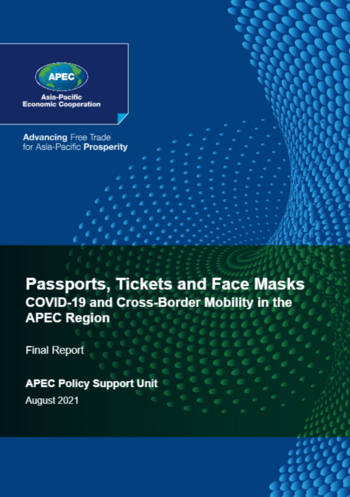
Figure 1: PSU’s publication on cross-border mobility

The PSU has been working on a publication that analyzed the impacts of travel restrictions during the pandemic. The report provided evidence and policy recommendations for APEC economies to resume cross-border travel in a safe and equitable way. I was tasked to draft two sections of the report, including a literature review of various multilateral organizations’ initiatives on safe re-opening, and an analysis of the disproportionate impacts of travel restrictions on vulnerable population, especially women. Women were not only experiencing economic impacts from border closures, such as loss of jobs and business closures, but women seeking abortion procedures in countries with restrictive regulations faced significant challenges when cross-border travel was limited to “essential workers.” Such challenges were even more pronounced for lower-income women or women with disabilities who may not be able to access services through other means domestically. 

I also worked on drafting APEC’s flagship publication, APEC in Charts 2021, which resides within APEC’s fourth core area of work, economic and financial analysis. APEC in Charts is an annual publication that provides a visual overview of the region’s economic, trade and investment performance. Using data from international organizations like the World Bank, International Monetary Fund, and the United Nations, I calculated aggregate statistics for the APEC region on the following indicators: trend in trade, tariff liberalization indicators such as free trade agreements, trend in FDI inflows and outflows, COVID-19 vaccination status, and various sustainability indicators such as household food waste and greenhouse gas emissions trends.

Since APEC includes Taiwan and Hong Kong, both of which did not have disaggregated data, the most challenging part of this task was to locate and calculate the information using limited data. While data disaggregation was challenging, I was thankful for all those nights that I stayed up in the first quarter to complete data aggregation for economic analysis assignments for the Global Economy course, INTLPOL 302, which built a foundation for key skills required at APEC.

Figure 2: APEC in Charts 2021 publication
APEC in Charts 2021 publication

I also immersed myself in the topic of climate change over the summer. Policy actions on climate change became one of the center of APEC’s agendas to build economic resilience post-COVID. I drafted a section on climate change in APEC’s Regional Trends Analysis (ARTA) report by conducting quantitative and qualitative research on green indicators. Calculating carbon emissions was one challenge, but comparing how much each economy had pledged to reduce emissions and what it would actually take to keep global warming below 2°C was another challenge. 

Climate change was not a topic I was very familiar with from a research standpoint, but I took the opportunity to self-educate through reading various literature, including the most recent publication from the Intergovernmental Panel on Climate Change (IPCC). It was striking that more than 60% of global greenhouse gases were generated by APEC economies. Unless APEC as a region curbs cumulative emissions, the expected repercussions are disastrous. Again, the most vulnerable – including women and girls, migrants, those in poverty, mountain communities and people in urban slums – will experience more severe consequences, and the repercussions are even more pronounced for those in developing nations.

This 11-week internship experience at APEC over the summer was a rewarding one that helped me understand the way multilateral organizations work. I was motivated by working with an organization responsible for shaping economic policies through cooperation to build resilience in the post-COVID world. Plus, I was able to tone up key techniques learned from MIP’s core courses such as STATA and advanced excel skills. Although it was a remote internship, I benefited from learning from my fellow interns and co-researchers on their broad range of expertise and experience. I strongly recommend future MIP students work with APEC over the summer as policy interns!

Soomin Jun, Master's in International Policy ('22)

Soomin Jun

Ford Dorsey Master’s in International Policy Class of ’22
See Full Profile
Hero Image
Soomin Jun, Master's in International Policy ('22)
All News button
1
Subtitle

Working with the Asia-Pacific Economic Cooperation, Soomin Jun (Master’s in International Policy '22) found new connections between her interests in supporting the economic development of marginalized groups with policies like climate change.

-

This is a virtual event. Please click here to register and generate a link to the talk. 
The link will be unique to you; please save it and do not share with others.

How well is India postured to become a world leader in high technology, especially information and communications technology? India – like the United States – is engaged in an increasingly intense strategic competition with China, and recognizes that mastery of key technologies is a key dimension of that competition. As it seeks to selectively decouple from and reduce its reliance on China, does it have the wherewithal to develop its own high-technology ecosystem, and emerge as a key technology partner to the U.S.? This webinar will examine the key factors that would posture the country for technology competition, including national policy settings, education and research infrastructure, and international partnerships.

Speakers:

Image
edlyn_levine_copy.png
Edlyn V. Levine is the Chief Technologist for the MITRE Accelerator. She is responsible for accelerating technologies in partnership with the private sector and for promoting technologies for the public good. Dr. Levine is a research associate in the Physics Department at Harvard, faculty for executive education at the Harvard Kennedy School of Government, a visiting research scientist at the University of Maryland. Dr. Levine's scientific accomplishments have been recognized by the AFCEA 40 under 40 Award, the NDSEG Fellowship, and the NSF Graduate Research Fellowship. Dr. Levine received her M.S. and Ph.D. in Applied Physics from Harvard University.

Image
a_paulraj_2x2.jpg
Arogyaswami Paulraj is an Emeritus Professor at Stanford University. He is the inventor of MIMO (Multiple Input Multiple Output), which is the core technology in all modern wireless systems including 5G, 4G and WiFi. His recognitions include the USPTO - National Inventors Hall of Fame, Marconi Prize, IEEE Alexander G Bell Medal, and National Awards from the Govt. of India and PR China.  He is a member of several national academies including the US National Academy of Engineering and American Academy of Arts and Sciences. Paulraj founded three wireless tech companies that were later acquired by Intel, Broadcom, and Hewlett Packard Enterprises.

Image
Trisha Ray
Trisha Ray is an Associate Fellow at the Center for Security, Strategy and Technology at the Observer Research Foundation in India. Her research focuses on geopolitical and security trends in relation to emerging technologies, including AI, 5G and critical minerals. Trisha is a member of UNESCO’s Information Accessibility Working Group, as well as a Pacific Forum Young Leader. Trisha completed her MA in Security Studies from the Walsh School of Foreign Service at Georgetown University.


Moderator:

Image
arzan_tarapore_86kb
Arzan Tarapore is the South Asia research scholar at the Shorenstein Asia-Pacific Research Center at Stanford University, where he leads the newly-restarted South Asia research initiative. He is also a senior nonresident fellow at the National Bureau of Asian Research. His research focuses on Indian military strategy and contemporary Indo-Pacific security issues. Prior to his scholarly career, he served as an analyst in the Australian Defence Department. Arzan holds a PhD in war studies from King’s College London. 


This event is co-sponsored by Center for South Asia

via Zoom 
Register at:  https://bit.ly/3mZyfth

Edlyn V. Levine Chief Technologist, MITRE Accelerator
Arogyaswami Paulraj Emeritus Professor, Stanford University
Trisha Ray Associate Fellow, Center for Security, Strategy and Technology at the Observer Research Foundation in India
-

For winter quarter 2022, CISAC will be hosting hybrid events. Many events will offer limited-capacity in-person attendance for Stanford faculty, staff, fellows, visiting scholars, and students in accordance with Stanford’s health and safety guidelines, and be open to the public online via Zoom. All CISAC events are scheduled using the Pacific Time Zone. 

SESSION RECORDING


About the Event: Rather than assuming convergence in countries' military capabilities, this seminar examines why and how countries decide to develop different weapon capabilities within similar domains of warfare. To answer these questions, this seminar will explore the role of ideas and institutional bargaining in shaping decisions about military technology. This talk will subsequently apply the theory to the development of missile defense from the 1980s until today.


About the Speaker: Sanne Verschuren is a Stanton Nuclear Security Postdoctoral Fellow at the Center for International Security and Cooperation, Stanford University. Her research interests include the development of military technology, shifts in military strategy and tactics, and the role of ideas and norms therein. Her book project examines why and how countries decide to procure different weapon capabilities within similar military domains, particularly the development of missile defense (1980s-today), air power (1920s-1930s), and aircraft carriers (1950s-1960s). At CISAC, Sanne conducts research on the intersection between nuclear and conventional weapons. Sanne received her Ph.D. in Political Science from Brown University in August 2021.

Virtual to Public. Only those with an active Stanford ID with access to William J Perry Conference Room in Encina Hall may attend in person. 

Seminars
Governance
-


REGISTRATION

This event is virtual only. This event will not be held in person.

Seminars
-

For fall quarter 2021, CISAC will be hosting hybrid events. Many events will offer limited-capacity in-person attendance for Stanford faculty, staff, fellows, visiting scholars, and students in accordance with Stanford’s health and safety guidelines, and be open to the public online via Zoom. All CISAC events are scheduled using the Pacific Time Zone. 

REGISTRATION

(Stanford faculty, visiting scholars, staff, fellows, and students only)


Seminar Recording

About the Event: The technology controlling United States nuclear weapons predates the Internet. Updating the technology for the digital era is necessary, but it comes with the risk that anything digital can be hacked. Moreover, using new systems for both nuclear and non-nuclear operations will lead to levels of nuclear risk hardly imagined before. This book is the first to confront these risks comprehensively.

With Cyber Threats and Nuclear Weapons, Herbert Lin provides a clear-eyed breakdown of the cyber risks to the U.S. nuclear enterprise. Featuring a series of scenarios that clarify the intersection of cyber and nuclear risk, this book guides readers through a little-understood element of the risk profile that government decision-makers should be anticipating. What might have happened if the Cuban Missile Crisis took place in the age of Twitter, with unvetted information swirling around? What if an adversary announced that malware had compromised nuclear systems, clouding the confidence of nuclear decision-makers?

Cyber Threats and Nuclear Weapons, the first book to consider cyber risks across the entire nuclear enterprise, concludes with crucial advice on how government can manage the tensions between new nuclear capabilities and increasing cyber risk. This is an invaluable handbook for those ready to confront the unique challenges of cyber nuclear risk.

Purchase Book


About the Speaker: Since 2014, Herb Lin has been senior research scholar for cyber policy and security at the Center for International Security and Cooperation and Hank J. Holland Fellow in Cyber Policy and Security at the Hoover Institution, both at Stanford University.  He also served as a professional staff member and staff scientist for the House Armed Services Committee (1986-1990), where his portfolio included defense policy and arms control issues. He received his doctorate in physics from MIT.

Virtual to Public. Only those with an active Stanford ID with access to William J Perry Conference Room in Encina Hall may attend in person. 

CISAC
Stanford University
Encina Hall, C236
Stanford, CA 94305-6165

650-497-8600
0
Senior Research Scholar at the Center for International Security and Cooperation
Hank J. Holland Fellow in Cyber Policy and Security, Hoover Institution
HerbertLin.jpg

Dr. Herb Lin is senior research scholar at the Center for International Security and Cooperation and Research Fellow at the Hoover Institution, both at Stanford University.  His research interests relate broadly to the impact of emerging technologies on national security, especially in the digital domain (cyber, artificial intelligence, information warfare and operations), and has written extensively on the role of offensive operations in cyberspace as instruments of national policy.  In addition to his positions at Stanford University, he is Chief Scientist, Emeritus for the Computer Science and Telecommunications Board, National Research Council (NRC) of the National Academies, where he served from 1990 through 2014 as study director of major projects on public policy and information technology.  From 2016 to 2025, he was a member of the Science and Security Board of the Bulletin of Atomic Scientists. In 2016, he served on President Obama’s Commission on Enhancing National Cybersecurity and in  2021 on the Aspen Commission on Information Disorder.  Prior to his NRC service, he was a professional staff member and staff scientist for the House Armed Services Committee (1986-1990), where his portfolio included defense policy and arms control issues. He received his doctorate in physics from MIT.

Avocationally, he is a longtime folk and swing dancer and a lousy magician. Apart from his work on cyberspace and cybersecurity, he is published in cognitive science, science education, biophysics, and arms control and defense policy. He also consults on K-12 math and science education.

Date Label
Seminars
-

*For fall quarter 2021, CISAC will be hosting hybrid events. Many events will offer limited-capacity in-person attendance for Stanford faculty, staff, fellows, visiting scholars, and students in accordance with Stanford’s health and safety guidelines, and be open to the public online via Zoom. All CISAC events are scheduled using the Pacific Time Zone.


REGISTRATION


Seminar Recording

About the Event: Natural gas prices in Europe have spiked in recent weeks. In the meantime, Russia is pressing for early certification of the newly-completed Nord Stream 2 gas pipeline, which would increase capacity for moving gas from Russia to Europe. How serious is the gas situation in Europe, and how might Nord Stream 2 affect it? What motivates Moscow's push to get the new pipeline in operation? What policy should the U.S. government pursue on these questions? Ambassador Daniel Fried of the Atlantic Council and Edward Chow of Center for Strategic and International Studies will address these issues on November 17.


About the Speakers: In the course of his forty-year Foreign Service career, Ambassador Fried played a key role in designing and implementing American policy in Europe after the fall of the Soviet Union. As special assistant and NSC senior director for Presidents Clinton and Bush, ambassador to Poland, and assistant secretary of state for Europe (2005-09), Ambassador Fried crafted the policy of NATO enlargement to Central European nations and, in parallel, NATO-Russia relations, thus advancing the goal of Europe whole, free, and at peace. During those years, the West’s community of democracy and security grew in Europe. Ambassador Fried helped lead the West’s response to Moscow’s aggression against Ukraine starting in 2014: as State Department coordinator for sanctions policy, he crafted US sanctions against Russia, the largest US sanctions program to date, and negotiated the imposition of similar sanctions by Europe, Canada, Japan, and Australia.   


Edward C. Chow is an international energy expert with 45 years of industry experience working in Asia, Middle East, Africa, South America, Europe, Russia, Black Sea and Caspian regions. He negotiated successfully multibillion-dollar oil and gas agreements and specializes in investments in emerging economies. He developed government policy and business strategy while advising governments, international financial institutions, major oil companies, and leading multinational corporations. He worked for more than 20 years at Chevron Corporation in headquarter and overseas assignments. He taught at Georgetown and George Washington universities and served as visiting professor at Ohio University and Fudan University in Shanghai. He is a senior associate in the Center for Strategic and International Studies and affiliate faculty at George Mason University.

Virtual Only. This event will not be held in person.

Daniel Fried ormer US Ambassador to Poland; Weiser Family Distinguished Fellow Atlantic Council
Edward C. Chow Center for Strategic and International Studies (CSIS)
Seminars
Authors
Michael Breger
News Type
News
Date
Paragraphs

North Korea remains one of the worst human rights catastrophes in the modern era. Yet in recent years, the momentum to bring human dignity to the citizens of North Korea has ground to a halt. The predominant focus has been on nuclear security issues to the exclusion of the human rights crisis in the country. But human rights ought to play a key role in any comprehensive policy toward the DPRK. This is the premise of APARC’s new volume, The North Korea Conundrum: Balancing Human Rights and International Security.

Edited by APARC Director Gi-Wook Shin and Ambassador Robert R. King, a senior adviser at the Center for Strategic and International Studies (CSIS) Korea Chair and former special envoy for North Korean human rights issues at the U.S. Department of State, the book draws on the work of scholars and practitioners presented and discussed at a conference on North Korean human rights held by APARC’s Korea Program. On October 28, 2021, APARC and CSIS gathered contributors to the volume for a book launch discussion of the intertwining relationship between the North Korean denuclearization and human rights agendas.

[Explore more APARC events on our YouTube channel and subscribe to receive our video updates.


Studies of human rights in North Korea are even more important now, in light of North Korea’s response to COVID-19, said Shin at the opening of the discussion. The DPRK has kept its borders closed for nearly two years, resulting in reduced trade and worsening the economic and social situation of its population.

Ambassador King, who was also a 2019-20 Koret Fellow and Visiting Scholar at APARC, identified the guiding questions of the volume, indicating that “This conundrum that we talk about in the title is an interaction between security and human rights. Is there a tradeoff? If we focus on human rights, does that make it more difficult for us to deal with security issues? If we focus on security issues do we have to ignore human rights?” 

The first principle we must accept is that integrating human rights into our strategy is not a choice, but a necessity. Moreover, mainstreaming human rights in the U.S.–North Korea agenda strengthens U.S. leverage in negotiations and is politically smart.
Victor Cha
Senior Vice President and Korea Chair, CSIS

An Error of Zero-Sum Thinking

While North Korea’s nuclear weapons and the security threat it poses have occupied the center stage and eclipsed other issues in recent years, the book’s contributors posit that human rights promotion remains an integral part of U.S. policy on the Korean peninsula. In his chapter, Victor Cha, Senior Vice President and Korea Chair at CSIS and former Koret Fellow and Visiting Scholar at APARC, analyzes the error in the zero-sum logic of North Korean human rights. "The United States sees a zero-sum relationship between pressing for human rights and denuclearization negotiations, while South Korea sees a zero-sum relationship between pressing for human rights and inter-Korean engagement," explains Cha. But the denuclearization and human rights agendas are inextricably intertwined.

The lost ground on addressing the North Korean human rights crisis is still recoverable, the contributors to The North Korean Conundrum believe. How could North Korea engage on human rights? The chapters in the volume lay out a number of ways. One opportunity to address human rights issues is through health and humanitarian assistance. Another way is to promote the economic and consumer rights of North Korean citizens to improve their quality of life and help foster a nascent civil society. And yet another way is to support information flow to the North. 

Interwoven Challenges

Nat Kretchun, Vice President for Programs at the Open Technology Fund, examines in his chapter the changing information environment in North Korea, observing how the information control system North Korean authorities are constructing is broadly characterized by an effort to move communications and media consumption onto state-controlled networks via state-sanctioned devices. The central aim is to create a “clean” information environment in which North Korean citizens use approved networked devices that technologically prevent the consumption and spread of unsanctioned content. At the same time, North Korean authorities have come to terms with a more marketized economic future. "Mobile phones have the ability to facilitate market-based economic transactions, the primary driver of much of what (limited) internal economic growth the country is seeing," notes Kretchun.

The contributors all agree that the challenge of human rights in North Korea is a complex one. It is intertwined with a host of issues, including life in the North Korean police state, inter-Korean relations, denuclearization, access to information, and international cooperation—all topics the volume addresses. We frequently separate these issues for analytical purposes or because they are dealt with in different ways or by different entities. But in fact, they are inseparable. Recognizing this interrelationship is the first step toward moving forward in a way that addresses the very serious North Korean security concerns while at the same time bringing human rights and humanitarian concerns into the equation.

Read More

"Patterns of Impunity" by Robert King on a backgorund showing the flags of North Korea, South Korea, and the United States.
News

Why North Korean Human Rights Matter: Book Talk with Robert R. King

In his new book, "Patterns of Impunity," Ambassador King, the U.S. special envoy for North Korean human rights from 2009 to 2017, shines a spotlight on the North Korean human rights crisis and argues that improving human rights in the country is an integral part of U.S. policy on the Korean peninsula.
Why North Korean Human Rights Matter: Book Talk with Robert R. King
[Top left] Gi-Wook Shin; [top right] Roberta Cohen; [bottom left] Tomás Ojea Quintana; [bottom right] Joon Oh
News

Using the UN to Create Accountability for Human Rights Crimes in North Korea

Experts on human rights agree that the UN needs to work through multiple channels to support ongoing investigations and build evidence for future litigations in order to create accountability and pressure the DPRK to desist in committing human rights crimes.
Using the UN to Create Accountability for Human Rights Crimes in North Korea
Flags of Asian states and text "Symposium: The Stakes in Asia"
Commentary

Talking Democracy: A Symposium on Asia

On a panel discussion hosted by the political quarterly 'Democracy,' Donald K. Emmerson joins experts to assess how the Biden administration is navigating the U.S. relationships in Asia.
Talking Democracy: A Symposium on Asia
Hero Image
North Korea Conundrum Book cover
All News button
1
Subtitle

APARC's new edited volume, 'The North Korean Conundrum,' shines a spotlight on the North Korean human rights crisis and its connection to nuclear security. In the book launch discussion, contributors to the volume explain why improving human rights in the country ought to play an integral part of any comprehensive U.S. engagement strategy with the DPRK.

Subscribe to International Development