International Development

FSI researchers consider international development from a variety of angles. They analyze ideas such as how public action and good governance are cornerstones of economic prosperity in Mexico and how investments in high school education will improve China’s economy.

They are looking at novel technological interventions to improve rural livelihoods, like the development implications of solar power-generated crop growing in Northern Benin.

FSI academics also assess which political processes yield better access to public services, particularly in developing countries. With a focus on health care, researchers have studied the political incentives to embrace UNICEF’s child survival efforts and how a well-run anti-alcohol policy in Russia affected mortality rates.

FSI’s work on international development also includes training the next generation of leaders through pre- and post-doctoral fellowships as well as the Draper Hills Summer Fellows Program.

-

60 years have passed since Japan started its development cooperation in 1954.  Japan has undergone the process of a defeated country of World War II becoming an economic superpower in the 1970s-1980s to be stagnant in the succeeding two decades.  During these periods, Japan's financial contribution to development cooperation once reached the highest among the OECD countries in the 1990s. But recently Japan's financial contribution stays at 4th or 5th. How has the Japanese development cooperation evolved over the past six decades? What have been its characteristics? What are the current debates of future direction of Japan's development cooperation? What role does it play in overall Japan's diplomacy and international relations?


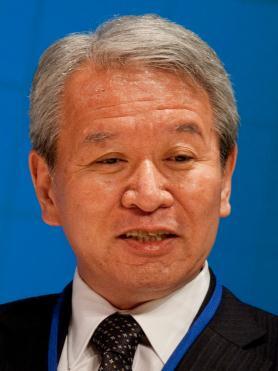
Mr. Ak

Image
ihiko Tanaka is President of the Japan International Cooperation Agency (JICA). Before assuming the present post, he was Professor of International Politics at the Interfaculty Initiative in Information Studies and at the Institute for Advanced Studies on Asia, the University of Tokyo. Most recently he was Vice President of the University of Tokyo (2011-2012), Executive Vice President of the University of Tokyo (2009-2011), and Director of the Division of International Affairs of the University of Tokyo (2008-2010).

He obtained his B.A. in International Relations at the University of Tokyo in 1977 and his Ph.D. in Political Science at Massachusetts Institute of Technology in 1981.

Mr. Tanaka’s specialties include theories of international politics, contemporary international relations in East Asia, and Japan’s foreign policy. He has numerous books and articles in Japanese and English including the New Middle Ages: The World System in the 21st Century (Tokyo: The International House of Japan, 2002).

He received the Medal with Purple Ribbon for his academic achievements in 2012.


Akihiko Tanaka President Speaker President, Japan International Cooperation Agency
Seminars

This keynote address for the international conference on "War, Revolution and Freedom: the Baltic Countries in the 20th Century" will be given by Vaira Viķe-Freiberga, President of the Club of Madrid, and Former President of Latvia.  The introduction will be made by Eric T. Wakin, Robert H. Malott Director of Library & Archives, Hoover Institution, and Norman Naimark, Robert and Florence McDonnell Professor in East European Studies.

A reception will immediately follow the keynote address.


Sponsored by:  Hoover Institution Library and Archives, Office of the Provost, Stanford School of Humanities and Sciences, Stanford Global Studies Division, The Europe Center, Stanford University Libraries, Division of Literatures, Cultures, & Languages, Department of Slavic Languages and Literatures, Department of History, Center for Russian, East European and Eurasian Studies, and the Stanford Humanities Center.

Stauffer Auditorium
The Hoover Institution

Vaira Viķe-Freiberga President of the Club of Madrid, Former President of Latvia Speaker Former President of Latvia
Eric T. Wakin Robert H. Malott Director of Library & Archives Introductions The Hoover Institution

CISAC
Stanford University
Encina Hall, C235
Stanford, CA 94305-6165

(650) 723-6927 (650) 725-0597
0
Senior Fellow, by courtesy, at the Freeman Spogli Institute for International Studies
Robert & Florence McDonnell Professor of East European Studies
Professor of History
Professor, by courtesy, of German Studies
Senior Fellow at the Hoover Institution
Naimark,_Norman.jpg MS, PhD

Norman M. Naimark is the Robert and Florence McDonnell Professor of East European Studies, a Professor of History and (by courtesy) of German Studies, and Senior Fellow of the Hoover Institution and (by courtesy) of the Freeman-Spogli Institute for International Studies. Norman formerly served as the Sakurako and William Fisher Family Director of the Stanford Global Studies Division, the Burke Family Director of the Bing Overseas Studies Program, the Convener of the European Forum (predecessor to The Europe Center), Chair of the History Department, and the Director of Stanford’s Center for Russian, East European, and Eurasian Studies.

Norman earned his Ph.D. in History from Stanford University in 1972 and before returning to join the faculty in 1988, he was a professor of history at Boston University and a fellow of the Russian Research Center at Harvard. He also held the visiting Catherine Wasserman Davis Chair of Slavic Studies at Wellesley College. He has been awarded the Officer's Cross of the Order of Merit of the Federal Republic of Germany (1996), the Richard W. Lyman Award for outstanding faculty volunteer service (1995), and the Dean's Teaching Award from Stanford University for 1991-92 and 2002-3.

Norman is interested in modern Eastern European and Russian history and his research focuses on Soviet policies and actions in Europe after World War II and on genocide and ethnic cleansing in the twentieth century. His published monographs on these topics include The History of the "Proletariat": The Emergence of Marxism in the Kingdom of Poland, 1870–1887 (1979, Columbia University Press), Terrorists and Social Democrats: The Russian Revolutionary Movement under Alexander III (1983, Harvard University Press), The Russians in Germany: The History of The Soviet Zone of Occupation, 1945–1949 (1995, Harvard University Press), The Establishment of Communist Regimes in Eastern Europe (1998, Westview Press), Fires of Hatred: Ethnic Cleansing In 20th Century Europe (2001, Harvard University Press), Stalin's Genocides (2010, Princeton University Press), and Genocide: A World History (2016, Oxford University Press). Naimark’s latest book, Stalin and the Fate of Europe: The Postwar Struggle for Sovereignty (Harvard 2019), explores seven case studies that illuminate Soviet policy in Europe and European attempts to build new, independent countries after World War II.


Affiliated faculty at The Europe Center
Affiliated faculty at the Center on Democracy, Development and the Rule of Law
Robert and Florence McDonnell Professor in East European Studies Introductions Stanford University
Conferences
-

*Please note the date has changed from September 23 to September 22*

A talk by Arnold Suppan, author of Hitler - Beneš - Tito: Conflict, War and Genocide in East Central and South East Europe. The monograph explores the development of the political, legal, economic, social, cultural and military “communities of conflict” within Austria-Hungary (especially in the Bohemian and South Slav lands); the convulsion of World War I and the Czech, Slovak and South Slav break with the Habsburg Monarchy; the difficult formation of successor states and the strong discussions at Paris 1919/20; the domestic and foreign policies of Czechoslovakia and Yugoslavia and the question of national minorities (Sudeten Germans, Magyars in Slovakia and the Vojvodina, Danube Swabians, Germans in Slovenia); Hitler’s destruction of the Versailles order; the Nazi policies of conquest and occupation in Bohemia, Moravia, Serbia, Bosnia-Herzegovina, and Slovenia; the genocide committed against the Jews in the Protectorate, Slovakia, the Ustaša-state and Serbia; the collaboration of the Tiso­- and Pavelić-regime with Nazi Germany; the retaliation against and expulsion of the Germans from Czechoslovakia and Yugoslavia; and finally the issue of history and memory east and west of the Iron Curtain as well as in the post-communist states at the end of the 20th century.

Sponsored by The Center for Russian, East European and Eurasian Studies and co-sponsored by The Europe Center and the Department of History.

Free and open to the public.


Pigott Hall (Building 260)
Room113

Arnold Suppan Professor of History University of Vienna
Lectures
(650) 723-3729
0
Senior Fellow, by courtesy, at the Freeman Spogli Institute for International Studies
Ward C. Krebs Family Professor
Senior Fellow at the Hoover Institution
Professor, by courtesy, of Economics
brw.0118_lg_cropped3.jpg PhD

Barry R. Weingast is the Ward C. Krebs Family Professor, Department of Political Science, and a Senior Fellow, Hoover Institution. He served as Chair, Department of Political Science, from 1996 through 2001. He is a member of the National Academy of Sciences and the American Academy of Arts and Sciences.  Weingast’s research focuses on the political foundation of markets, economic reform, and regulation. He has written extensively on problems of political economy of development, federalism and decentralization, legal institutions and the rule of law, and democracy. Weingast is co-author of Violence and Social Orders: A Conceptual Framework for Interpreting Recorded Human History (with Douglass C. North and John Joseph Wallis, 2009, Cambridge: Cambridge University Press) and Analytic Narratives (1998, Princeton). He edited (with Donald Wittman) The Oxford Handbook of Political Economy (Oxford University Press, 2006). Weingast has won numerous awards, including the William H. Riker Prize, the Heinz Eulau Prize (with Ken Shepsle), the Franklin L. Burdette Pi Sigma Alpha Award (with Kenneth Schultz), and the James L. Barr Memorial Prize in Public Economics.

CV
-

About the Conference

CoCo 2014 was the inaugural edition of the Coalition against Corruption (CoCo) conference co-hosted by The Center on Democracy, Development and the Rule of Law, Stanford University, Janaagraha Centre for Citizenship and Democracy, Bangalore and Sunlight Foundation, Washington DC. 

CoCo brought together participants from over fifteen countries and across a wide spectrum comprising researchers and academics, elected representatives, government officials, practitioners, civil society organisations, technologists and citizens. 

Over three days, we engaged in conversations on a wide range of issues on the following corruption types: 

  • Corruption in public resource allocation
  • Political financing and lobbying
  • Corruption in public procurement
  • Retail corruption in public services for citizens

CoCo 2014 explored these corruption-types in an innovative format across the themes of rule of law, tools of transparency and accountability and the impact of grassroots pressure groups and digital platforms. 

Besides the four plenaries, CoCo allowed plenty of time for short presentations, for showcasing practitioner successes and for open group discussions. Part of the agenda was also an “Unconference” session for surfacing and discussing critical challenges that went beyond the four corruption-types in focus at CoCo. 


Conference Partners


Janaagraha Centre for Citizenship and Democracy (Janaagraha) is a Bangalore based not for profit organisation committed to transforming quality of life in India’s cities and towns. 

Janaagraha defines quality of life not just as quality of infrastructure and services, but also as quality of citizenship in a democracy. Along with its sister organisation Jana Urban Space Foundation, it runs multiple programs on transforming cities and citizenship. These programmes are based on a Theory of Change built around a City-Systems framework that Janaagraha has developed over many years of grassroots work with citizens, and reforms advocacy with government for scalable and sustainable change. 


The Sunlight Foundation is a nonpartisan non-profit founded in 2006 that uses the power of the Internet to catalyse greater government openness and transparency. It does so by creating tools, open data, policy recommendations, journalism and grant opportunities to dramatically expand access to vital government information. Its vision is to use technology to enable more complete, equitable and effective democratic participation.
 

Sunlight Foundation is a leading innovator in the transparency and accountability space, bringing greater government transparency by engaging individual citizens and communities - technologists, policy analysts, open government advocates and ordinary citizens to demand policies that ensure government accountability. 


Conference Video Playlist

Bangalore, India

Conferences
News Type
News
Date
Paragraphs

An article in The Economist published on August 23, 2014, on school dropouts in rural China cites REAP research on the matter.

"In the past three decades China has made impressive gains in sending rural children to school. This has helped fuel its rise as a low-end manufacturing power. But the easy gains have been achieved. If the country is to create the 'knowledge economy' it says it wants, the government will have to change the way rural teenagers are educated and schools in the countryside are funded...

"Yi Hongmei of the Chinese Academy of Sciences and colleagues at Stanford’s Rural Education Action Programme found that the most impoverished students dropped out of middle-school at twice the rate as the others they surveyed. Students with at least one sibling were also more likely to drop out because of the strain on family resources. If parents fell ill, they found, needy students would often leave school to earn money to pay for treatment. The scholars concluded that giving money to students would help. In one trial, financial aid reduced the drop-out rate by 60%. In another, giving it to impoverished students in the final year of junior middle-school increased their chances of staying at least another year at school by 10%."

Read more here

Hero Image
20140823 cnp003 0
All News button
1
Shorenstein APARCStanford UniversityEncina Hall, Room E301Stanford,  CA  94305-6055
0
Visiting Scholar
risa_toha_logo.jpg PhD

Risa J. Toha is a Visiting Scholar at the Walter H. Shorenstein Asia-Pacific Research Center (Shorenstein APARC). She is a Fellow at the Ash Center for Democratic Governance and Innovation at the Harvard Kennedy School, and starting from Fall 2014, she will be a Visiting Professor at Wheaton College, IL. 

Her research encompasses questions about democracy, development, ethnicity, and violence, with an area focus on Southeast Asia. At Shorenstein APARC, she will complete a few manuscripts on democratic transition, political inclusion, and riots in Indonesia, as well as participate actively in various interdisciplinary forums at the Center. 

Toha holds a Ph.D. and an MA in Political Science from the University of California, Los Angeles, and an AB in the Woodrow Wilson School of Public and International Affairs from Princeton University.

News Type
News
Date
Paragraphs

In the late 19th and early 20th centuries, an "open borders" United States absorbed millions of European immigrants in one of the largest mass migrations ever. New research by Stanford economist Ran Abramitzky challenges the perception that immigrants lagged behind native-born Americans in job pay and career growth.
 

BY CLIFTON B. PARKER

European immigrants to America during the country's largest migration wave in the late 19th and early 20th centuries had earnings comparable to native-born Americans, contrary to the popular perception, according to new Stanford research.

"Our paper challenges conventional wisdom and prior research about immigrant assimilation during this period," said Ran Abramitzky, an associate professor of economics at Stanford, faculty affiliate of The Europe Center and author of the research paper in the Journal of Political Economy.

New research challenges conventional wisdom about immigrant assimilation during the bygone era of open borders and mass migration.
Photo Credit: Lewis Hine/Library of Congress

New research challenges conventional wisdom about immigrant assimilation during the bygone era of open borders and mass migration.

Abramitzky and his colleagues found the average immigrant in that period did not face a substantial "earnings penalty" – lower pay than native-born workers – upon their arrival.

"The initial earnings penalty is overstated," said Abramitzky.

He said the conventional view is that the average European immigrants held substantially lower-paying jobs than native-born Americans upon first arrival and caught up with natives' earnings after spending some time in the United States. But that perception does not hold up to the facts, he said.

Abramitzky's co-authors include Leah Platt Boustan from the University of California, Los Angeles, and Katherine Eriksson from California Polytechnic State University.

The researchers examined records on 21,000 natives and immigrants from 16 European countries in U.S. Census Bureau data from 1900 to 1910 to 1920.

"Even when U.S. borders were open, the average immigrant who ended up settling in the United States over the long term held occupations that commanded pay similar to that of U.S. natives upon first arrival," Abramitzky said.

In that bygone era of "open borders," Abramitzky said, native-born Americans were concerned that immigrants were not assimilating properly into society – yet, on the whole, this concern appears to be unfounded. "Such concerns are echoed in today's debate over immigration policy," he added.

At the same time, Abramitzky said that immigrants from poorer countries started out with lower paid occupations relative to natives and did not manage to close this gap over time.

"This pattern casts doubt on the conventional view that, in the past, immigrants who arrived with few skills were able to invest in themselves and succeed in the U.S. economy within a single generation," Abramitzky and his colleagues wrote.

Age of migration

America took in more than 30 million immigrants during the Age of Mass Migration (1850-1913), a period when the country had open borders. By 1910, 22 percent of the U.S. labor force – and 38 percent of workers in non-southern cities – was foreign-born (compared with 17 percent today).

As the research showed, immigrants then were more likely than natives to settle in states with a high-paying mix of occupations. Location choice was an important strategy they used to achieve occupational parity with native-born Americans.

"This Age of Mass Migration not only is of interest in itself, as one of the largest migration waves in modern history, but also is informative about the process of immigrant assimilation in a world without migration restrictions," Abramitzky said.

Over time, many of the immigrants came from the poorer regions of southern and eastern Europe.

Abramitzky pointed out that native-born Americans in the late 19th and early 20th centuries were concerned about poverty in immigrant neighborhoods and low levels of education among children, many of whom left school early to work in industry.

Consequently, American political progressives championed a series of reforms, including U.S. child labor laws and compulsory schooling requirements.

Still, some natives believed that new arrivals would never fit into American society. And so, in 1924, Congress set a strict quota of 150,000 immigrant arrivals per year, with more slots allocated to immigrants from northern and western European countries than those from southern and eastern Europe.

But those early-20th-century fears of unassimilated immigrants were baseless, according to Abramitzky.

"Our results indicate that these concerns were unfounded: The average long-term immigrants in this era arrived with skills similar to those of natives and experienced identical rates of occupational upgrading over their life cycle," he wrote.

How does this lesson apply to today's immigration policy discussion? Should the numbers of immigrants and their countries of origin be limited and those with higher skills be given more entry slots?

Abramitzky said stereotyping immigrants has affected the political nature of the contemporary debate.

"These successful outcomes suggest that migration restrictions are not always necessary to ensure strong migrants' performance in the labor market," he said.

Hero Image
Image of "First sight of New York Bay -- arrival of a European steamer" by James Wells Champney
First sight of New York Bay--arrival of a European steamer.
James Wells Champney/New York Public Library
All News button
1
Date Label

PROGRAM
Friday May 9, 2014

9:00am Introduction

9:10am Does Naturalization Foster the Political Integration of Immigrants? Evidence from a Regression Discontinuity Design in Switzerland
Jens Hainmueller & Dominik Hangartner
Discussant: Rafaela Dancygier

9:50am Lingua Franca: How Language Shapes the Direction of Public Opinion
Efrén Pérez
Discussant: Rahsaan Maxwell

10:30am BREAK

10:50am Transnational Ties and Support for International Redistribution
Lauren Prather
Discussant: Ali Valenzuela

11:30am Gender-Based Stereotyping and Negotiation Performance: an Experimental Study
Jorge Bravo
Discussant: Rob Ford

12:10pm BREAK

1:00pm The Rhetoric of Closed Borders: Quotas, Lax Enforcement and Illegal Migration
Giovanni Facchini & Cecilia Testa
Discussant: Karen Jusko

1:40pm Varieties of Diaspora Management
Harris Mylonas
Discussant: Yotam Margalit

2:20pm BREAK

2:40pm The Situational Context of Attitudes Towards Immigrant-Origin Minorities
Rahsaan Maxwell
Discussant: Jorge Bravo

3:20pm The Politics of Churchgoing and its Consequences among Whites, Blacks and Latinos in the U.S.
Ali Valenzuela
Discussant: Cara Wong


Saturday May 10, 2014

9:50am How State Support of Religion Shapes Religious Attitudes Toward Muslims
Mark Helbling
Discussant: Sara Goodman

10:30am BREAK

10:50am Opposition to Race Targeted Policies – Ideology or Racism? Particular or Universal? Experimental Evidence from Britain
Rob Ford
Discussant: Jens Hainmueller

11:30am Conflict and Consensus on American Public Opinion on Illegal Immigration
Matthew Wright
Discussant: Efrén Pérez

12:10pm BREAK

1:00pm The Electoral Geography of American Immigration, 1880-1900
Karen Jusko
Discussant: Dan Hopkins

1:40pm Do We Really Know That Employers Want Illegal Immigration?
Maggie Peters
Discussant: Giovanni Facchini

2:20pm BREAK

2:40pm Nurture over Nature: Explaining Muslim Integration Discrepancies in Britain, France and the United States
Justin Gest
Discussant: Claire Adida

3:20pm Immigration and Electoral Appeals over the Past Half Century: A Sketch of the Evidence
Rafaela M. Dancygier & Yotam Margalit
Discussant: Cecilia Testa

4:00pm Looking Ahead

CISAC Conference Room
Encina Hall Central, 2nd floor
616 Serra St.
Stanford University
Stanford, CA 94305
 

Karen Jusko Assistant Professor of Political Science Participant and Workshop Organizer Stanford University
Claire Adida Participant UC San Diego
Jorge Bravo Participant Rutgers University
Rafaela Dancygier Participant Princeton University
Giovanni Facchini Participant University of Nottingham
Robert Ford Participant University of Manchester
Justin Gest Participant Harvard University
Sara Wallace Goodman Participant UC Irvine
Participant Stanford University
Dominik Hangartner Participant London School of Economics and Political Science
Marc Helbling Participant WZB Berlin Social Science Center
Dan Hopkins Participant Georgetown University
Yotam Margalit Participant Columbia University
Rahsaan Maxwell Participant UNC at Chapel Hill
Harris Mylonas Participant George Washington University
Efrén O. Pérez Participant Vanderbilt University
Maggie Peters Participant Yale University
Lauren Prather Participant Stanford University
Judith Spirig Participant University of Zurich
Cecilia Testa Participant Royal Holloway University of London
Ali A. Valenzuela Participant Princeton University
Cara Wong Participant University of Illinois, Urbana-Champaign
Matthew Wright Participant American University (Washington, D.C.)
Workshops
Subscribe to International Development