FSI researchers consider international development from a variety of angles. They analyze ideas such as how public action and good governance are cornerstones of economic prosperity in Mexico and how investments in high school education will improve China’s economy.
They are looking at novel technological interventions to improve rural livelihoods, like the development implications of solar power-generated crop growing in Northern Benin.
FSI academics also assess which political processes yield better access to public services, particularly in developing countries. With a focus on health care, researchers have studied the political incentives to embrace UNICEF’s child survival efforts and how a well-run anti-alcohol policy in Russia affected mortality rates.
FSI’s work on international development also includes training the next generation of leaders through pre- and post-doctoral fellowships as well as the Draper Hills Summer Fellows Program.
The Politics of Polarization: Taiwan in Comparative Perspective
[[{"fid":"209960","view_mode":"crop_870xauto","fields":{"format":"crop_870xauto","field_file_image_description[und][0][value]":"","field_file_image_alt_text[und][0][value]":false,"field_file_image_title_text[und][0][value]":false,"field_credit[und][0][value]":"Arlene Hsu","field_caption[und][0][value]":"Taipei at night with Taipei 101. 28 February 2009.","field_related_image_aspect[und][0][value]":"0","thumbnails":"crop_870xauto"},"type":"media","field_deltas":{"1":{"format":"crop_870xauto","field_file_image_description[und][0][value]":"","field_file_image_alt_text[und][0][value]":false,"field_file_image_title_text[und][0][value]":false,"field_credit[und][0][value]":"Arlene Hsu","field_caption[und][0][value]":"Taipei at night with Taipei 101. 28 February 2009.","field_related_image_aspect[und][0][value]":"0","thumbnails":"crop_870xauto"}},"link_text":null,"attributes":{"width":"870","class":"media-element file-crop-870xauto","data-delta":"1"}}]]
Over the past year and more, Taiwan’s political elite has been deadlocked over the question of deepening economic relations with the People’s Republic of China. This controversial issue has led to a standoff between the executive and legislative branches, sparked a frenzy of social activism and a student occupation of the legislature, and contributed to President Ma Ying-jeou’s deep unpopularity.
On October 17-18, the Taiwan Democracy Project at CDDRL, with the generous support of the Taipei Economic and Culture Office, will host its annual conference at Stanford University to examine the politics of polarization in Taiwan.
This conference will bring together specialists from Taiwan, the U.S., and elsewhere in Asia to examine the sources and implications of this political polarization in comparative perspective. It will include a special case study of the Trade in Services Agreement with China that triggered this past year’s protests, as well as a more general overview of the politics of trade liberalization in Taiwan, prospects for Taiwan’s integration into the Trans-Pacific Partnership and other regional trade agreements, and a consideration of the implications for Taiwan’s long-term democratic future.
Conference speakers will include: Chung-shu Wu, the president of the Chung-hwa Institute of Economic Research (CIER) in Taipei; Steve Chan of the University of Colorado; Roselyn Hsueh of Temple University; Yun-han Chu, the president of the Chiang Ching-kuo Foundation; and Thitinan Pongsudhirak of Chulalongkorn University in Bangkok.
Panels will examine the following questions:
1. What are the sources and implications of political polarization in Taiwan, and how have these changed in recent years?
2. How does Taiwan’s recent experience compare to political polarization in other countries in Asia (e.g. South Korea, Thailand) and elsewhere (the US)?
3. To what extent does the latest political deadlock in Taiwan reflect concern over the specific issue of trade with the People’s Republic of China, versus a deeper, systemic set of problems with Taiwan’s democracy?
4. How are globalization and trade liberalization reshaping Taiwan’s domestic political economy, and what are the prospects for forging a stronger pro-trade coalition in Taiwan that transcends the current partisan divide?
The conference will take place October 17-18 in the Bechtel Conference Room in Encina Hall at Stanford University. It is free and open to the public.
Conference Resources
Conference Papers
How Cross-Strait Trade and Investment Is Affecting Income and Wealth Inequality in Taiwan by Chien-Fu Lin, National Taiwan University
Generational Differences in Attitudes towards Cross-Straits Trade by Ping-Yin Kuan, Department of Sociology & International Program in Asia-Pacific Studies, National Chengchi University
Change and the Unchanged of Polarized Politics in Taiwan by Min-Hua Huang, National Taiwan University; Center for East Asia Policy Studies, The Brookings Institution
Social Media, Social Movements and the Challenge of Democratic Governability by Boyu Chen, National Sun Yat-sen University, Institute of Political Science
Coping with the Challenge of Democratic Governance under Ma Ying-jeou by Yun-han Chu, National Taiwan University
Taiwan’s Bid for TPP Membership and the Potential Impact on Taiwan-U.S. Relations by Kwei-Bo Huang, National Chengchi University, Department of Diplomacy
In the Wake of the Sunflower Movement: Exploring the Political Consequences of Cross-Strait Integration by Pei-shan Lee, National Chung Cheng University, Political Science Department
The Roots of Thailand’s Political Polarization in Comparative Perspective by Thitinan Pongsudhirak, Chulalongkorn University; The Institute of Security and International Studies
The Role of the United States in Cross-Strait Economic Integration by Chen-Dong Tso, National Taiwan University
The China Factor and the Generational Shift over National Identity by Mark Weatherall, Taiwan Foundation for Democracy
Taiwan’s Strategy for Regional Economic Integration by Chung-Shu Wu, Chung-Hua Institution for Economic Research
Polarized Electorates in South Korea and Taiwan: The Role of Political Trust under Conservative Governments by Hyunji Lee, Institute of Asian Research, University of British Columbia
Polarization in Taiwan Politics by Steve Chan, University of Colorado, Boulder
CDDRL welcomes incoming fellows
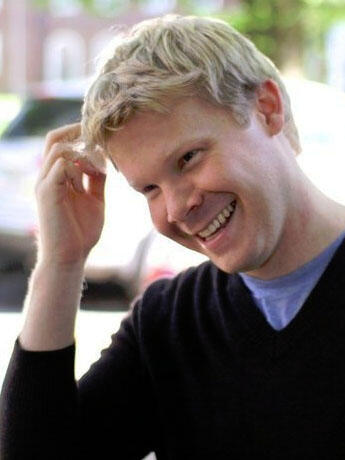
Hometown: Virginia Beach, Virginia
Academic Institution: Harvard University
Discipline and date of graduation: Ph.D. in Government, Summer 2014
Research Interests: Politics and economics in non-democracies, political economy of development, political violence, food security
Manuscript working title: Political Survival and the Modern Prince
What attracted you to the CDDRL Pre/post-doctoral program? The opportunity to be surrounded by other scholars with similar substantive interests but diverse geographic expertise is extremely exciting to me. I think it's precisely what I need at the moment.
What do you hope to accomplish during your year-long residency at the Center? I will spend most of the year preparing the book manuscript for submission. The dissertation asked how modern African autocrats survive nominally democratic institutions. To focus on the elites who comprise the regime -- as well as their political parties and the elections in which they compete -- the dissertation focused exclusively on the Republic of Congo, ruled by President Denis Sassou Nguesso for all but five years since 1979. I expect to spend much of the year ascertaining to what extent the arguments are generalizable to other parts of autocratic Africa and beyond.
Please state a fun fact about yourself! I really enjoy cooking. A lot. I've cooked through most of The French Laundry Cookbook and am now cooking through the Eleven Madison Park Cookbook. Honestly, I spend way too much time cooking. It's sort of absurd.
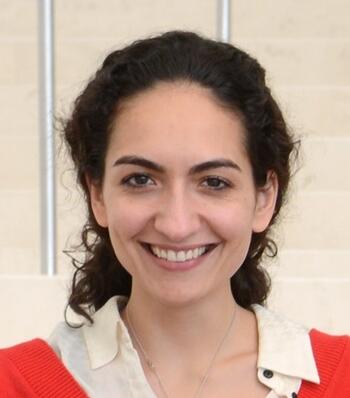
Hometown: Beirut, Lebanon
Academic Institution: Yale University
Discipline and expected date of graduation: Ph.D. in Political Science, expected May 2015
Research Interests: Authoritarianism; Elite Networks; Coalitional Politics; Social Exclusion; Middle East Politics
Dissertation Topic/Title: The Ties that Bind: Making and Breaking Authoritarian Ruling Coalitions
What attracted you to the CDDRL Pre/post-doctoral program? My research fits well with CDDRL’s substantive focus on democratization. Opening the black box of authoritarian coalitional formation and evolution is essential for understanding how ruling coalitions may come apart. I am also eager to collaborate with scholars in The Program on Arab Reform and Democracy, especially at a time when the Arab uprisings and coalitional breakdowns have unfortunately moved towards reconfigured authoritarian arrangements.
What do you hope to accomplish during your year-long residency at the Center? As a fellow at CDDRL, I plan to complete my dissertation and begin revising it for publication. I also plan to produce an article on the methodological and ethical challenges of conducting archival research and elite interviews in authoritarian settings.
Please state a fun fact about yourself! I’m a catless cat lady.
Hometown: Thousand Oaks, CA
Academic Institution: Stanford University
Discipline and expected date of graduation: Ph.D. in Political Science, expected June 2015
Research Interests: statebuilding, state weakness, international security, conflict, political development
Dissertation Topic/Title: The International Sources of Sovereignty and State Weakness
What attracted you to the CDDRL Pre/post-doctoral program? My research is broadly focused on the understanding the causes of incomplete governance and political underdevelopment. These are among the core themes in CDDRL's research programs, and CDDRL brings together both rigorous scholarship and a sensitive to policy-relevant research in these thematic areas. For that reason, I am excited about joining CDDRL's community of researchers, particularly those engaged in scholarship in the Governance Project and in the Program on Poverty and Governance. I look forward to productive conversations around the Center, and to helpful guidance and advice.
What do you hope to accomplish during your year-long residency at the Center? During my residency at CDDRL, I plan to complete my dissertation writing. I am also eager to begin a new project with another CDDRL pre-doctoral fellow in which we examine the relationship between statebuilding and democracy in developing countries.
Please state a fun fact about yourself! I make an excellent cheesecake!
Hometown: Nairobi, Kenya
Academic Institution: Stanford University
Discipline and expected date of graduation: PhD in Political Science, expected June 2015
Research Interests: Institutions, Legislative Studies, Political Economy of Development, Elections and Governance, Natural Resource Management and Regional Cooperation
Dissertation Topic/Title: Institutions and Political Change: The Case of African Legislatures
What attracted you to the CDDRL Pre/post-doctoral program? I was attracted to CDDRL because of the centers strong emphasis on the need to link academic research with policy. I am interested in the ways in which institutional change impact development outcomes through the evolution of better, accountable governance and public policies. My research on legislatures includes analyses of how levels legislative institutionalization impact public finance management in African states.
What do you hope to accomplish during your year-long residency at the Center? I hope to finish writing my dissertation, to publish at least two chapters of the dissertation as stand alone papers, and to continue contributing to the policy world through my writing and consultancies.
Please state a fun fact about yourself! I run half marathons. Because I am Kenyan.
Hometown: Guadalajara, Mexico
Academic Institution: Stanford University
Discipline and expected date of graduation: PhD in Political Science, expected 2015
Research Interests: Economics of Crime and Violence, Legislative Studies, Political Economy of Development.
Dissertation Topic/Title: Three Essays on the Political Economy Drug-Related Violence in Mexico
What attracted you to the CDDRL Pre/post-doctoral program? CDDRL is a great place for students doing comparative work since it has a unique and vibrant community of faculty, visiting scholars, and policy makers from all over the world, including an important number of specialists in Latin American politics.
Moreover, the Center’s research agenda substantially aligns with my work on the relationship between democracy, partisanship, and governments’ efforts to contain and reduce crime and violence.
Finally, the work of the Program on Poverty and Governance at CDDRL on criminal violence and citizen security throughout Latin America has significantly shaped my PhD dissertation and research agenda.
What do you hope to accomplish during your year-long residency at the Center? I would like to complete the part of my dissertation that explores the relationship between Mexico’s democratization, criminal violence, and the government’s enforcement of the rule of law. In addition, the pre-doctoral fellowship will facilitate the completion of different ongoing research projects I am involved with at the Center.
Please state a fun fact about yourself! I’m a good salsa dancer, jigsaw puzzle enthusiast, and amateur beach volleyball player.
Hometown: Bremen, GA
Academic Institution: University of California, Berkeley
Discipline and expected date of graduation: Ph.D. in Political Science, expected May 2015
Research Interests: Comparative Politics, Policing, Governance, Rule of Law, and Chinese Politics
Dissertation Topic/Title: Policing China: Struggles of Law, Order, and Organization for Ground-Level Officers
What attracted you to the CDDRL Pre/post-doctoral program? CDDRL's mission to understand how the rule of law and government institutions operate speaks directly to my work on the police bureaucracy. The Center's multidisciplinary approach brings together.scholars and intellectuals, making it an excellent forum for grappling with issues of institutional reform and local state security. As one of the newest additions to CDDRL, I look forward to engaging this community as I continue to investigate the weaknesses and strengths of the institutional apparatus China employs to carry out state priorities of reform and control.
What do you hope to accomplish during your year-long residency at the Center? While at CDDRL I will finish my dissertation and prepare two chapters for publication. I also plan to lay the groundwork for my next project on the rapidly evolving relationship between police and media.
Please state a fun fact about yourself! I'm a terrible gardener.

A tight race for the Scottish independence vote
Scottish voters go to the polls this Thursday to determine whether to remain part of the United Kingdom, or to become an independent Scotland. The latest polls show a neck and neck race, a development that would not have been believable just months ago when the "No" campaign held a dominant lead.
Christophe Crombez, Belgian-American economist and consulting professor at Stanford's Europe Center in the Freeman Spogli Institute for International Studies and Stanford Global Studies Division, discussed the pros and cons of Scottish independence on KQED Radio's "Forum with Michael Krasney" (Mon, Sep 15, 2014). Joining him were Adam Ramsay, a senior campaigner for "Yes Scotland", co-editor of Open Democracy and author of 42 Reasons to Support Scottish Independence, and Geoff Dyer, Financial Times' US diplomatic correspondent.
Visit KQED Radio's Forum web article "Will Scotland Vote for Independence?" to download a recording of this interview.
Stanford Silicon Valley-New Japan Project
This project is completed, October 2014-October 2019.
Motivation
There has been by a heightened interest in Silicon Valley as an innovation system. The interest is not only in Silicon Valley's entrepreneurism, but how entrepreneurship fits into the broader economic structure. Over the past few years, Silicon Valley has witnessed a new wave of Japanese startups (entrepreneurs, successful startups from Japan). This trend has occurred within the context of increased importance of innovation and entrepreneurship in Japan.
Everything that Can Go Wrong in a Field Experiment
Join Global Development and Poverty Initiative (GDP) for a stimulating discussion on the opportunities, obstacles, and unforeseen events encountered while conducting field research in the developing world.
The panelists will share stories of challenges and successes from their own experiences and will offer insights on conducting effective research in the field.
Jenna Davis
473 Via Ortega, Y2E2, Room 255
Stanford, CA 94305-4020
Jennifer (“Jenna”) Davis is a Professor in the Department of Civil and Environmental Engineering and the Higgins-Magid Senior Fellow at the Woods Institute for the Environment, both of Stanford University. She also heads the Stanford Program on Water, Health & Development. Professor Davis’ research and teaching is focused at the interface of engineered water supply and sanitation systems and their users, particularly in developing countries. She has conducted field research in more than 20 countries, including most recently Zambia, Bangladesh, and Uganda.
Stephen P. Luby
Y2E2
473 Via Ortega
Stanford, CA 94305
Prof. Stephen Luby studied philosophy and earned a Bachelor of Arts summa cum laude from Creighton University. He then earned his medical degree from the University of Texas Southwestern Medical School at Dallas and completed his residency in internal medicine at the University of Rochester-Strong Memorial Hospital. He studied epidemiology and preventive medicine at the Centers for Disease Control and Prevention.
Prof. Luby's former positions include leading the Epidemiology Unit of the Community Health Sciences Department at the Aga Khan University in Karachi, Pakistan, for five years and working as a Medical Epidemiologist in the Foodborne and Diarrheal Diseases Branch of the U.S. Centers for Disease Control and Prevention (CDC) exploring causes and prevention of diarrheal disease in settings where diarrhea is a leading cause of childhood death. Immediately prior to joining the Stanford faculty, Prof. Luby served for eight years at the International Centre for Diarrhoeal Diseases Research, Bangladesh (icddr,b), where he directed the Centre for Communicable Diseases. He was also the Country Director for CDC in Bangladesh.
During his over 25 years of public health work in low-income countries, Prof. Luby frequently encountered political and governance difficulties undermining efforts to improve public health. His work within the Center on Democracy, Development, and the Rule of Law (CDDRL) connects him with a community of scholars who provide ideas and approaches to understand and address these critical barriers.
Market Growth, Environmental Conservation and Poverty Reduction: Connecting the Dots
Forward-thinking companies, government organizations, and NGOs are beginning to link their efforts to build markets, promote environmental conservation, and reduce poverty in developing economies.
Join GDP for a discussion that explores potential synergies and challenges associated with linking these efforts. The panelists will share their own experiences and other promising models currently employed by companies, NGOs and government organizations around the world.
Rosamond L. Naylor
The Jerry Yang and Akiko Yamazaki
Environment and Energy Building
Stanford University
473 Via Ortega, Office 363
Stanford, CA 94305
Rosamond Naylor is the William Wrigley Professor in Earth System Science, a Senior Fellow at Stanford Woods Institute and the Freeman Spogli Institute for International Studies, the founding Director at the Center on Food Security and the Environment, and Professor of Economics (by courtesy) at Stanford University. She received her B.A. in Economics and Environmental Studies from the University of Colorado, her M.Sc. in Economics from the London School of Economics, and her Ph.D. in applied economics from Stanford University. Her research focuses on policies and practices to improve global food security and protect the environment on land and at sea. She works with her students in many locations around the world. She has been involved in many field-level research projects around the world and has published widely on issues related to intensive crop production, aquaculture and livestock systems, biofuels, climate change, food price volatility, and food policy analysis. In addition to her many peer-reviewed papers, Naylor has published two books on her work: The Evolving Sphere of Food Security (Naylor, ed., 2014), and The Tropical Oil Crops Revolution: Food, Farmers, Fuels, and Forests (Byerlee, Falcon, and Naylor, 2017).
She is a Fellow of the Ecological Society of America, a Pew Marine Fellow, a Leopold Leadership Fellow, a Fellow of the Beijer Institute for Ecological Economics, a member of Sigma Xi, and the co-Chair of the Blue Food Assessment. Naylor serves as the President of the Board of Directors for Aspen Global Change Institute, is a member of the Scientific Advisory Committee for Oceana and is a member of the Forest Advisory Panel for Cargill. At Stanford, Naylor teaches courses on the World Food Economy, Human-Environment Interactions, and Food and Security.
Mark C. Thurber
Program on Energy and Sustainable Development
616 Jane Stanford Way
Encina Hall East, Rm E412
Stanford, CA 94305
Mark C. Thurber is Associate Director of the Program on Energy and Sustainable Development (PESD) at Stanford University, where he studies and teaches about energy and environmental markets and policy. Dr. Thurber has written and edited books and articles on topics including global fossil fuel markets, climate policy, integration of renewable energy into electricity markets, and provision of energy services to low-income populations.
Dr. Thurber co-edited and contributed to Oil and Governance: State-owned Enterprises and the World Energy Supply (Cambridge University Press, 2012) and The Global Coal Market: Supplying the Major Fuel for Emerging Economies (Cambridge University Press, 2015). He is the author of Coal (Polity Press, 2019) about why coal has thus far remained the preeminent fuel for electricity generation around the world despite its negative impacts on local air quality and the global climate.
Dr. Thurber teaches a course on energy markets and policy at Stanford, in which he runs a game-based simulation of electricity, carbon, and renewable energy markets. With Dr. Frank Wolak, he also conducts game-based workshops for policymakers and regulators. These workshops explore timely policy topics including how to ensure resource adequacy in a world with very high shares of renewable energy generation.
Dr. Thurber has previous experience working in high-tech industry. From 2003-2005, he was an engineering manager at a plant in Guadalajara, México that manufactured hard disk drive heads. He holds a Ph.D. from Stanford University and a B.S.E. from Princeton University.
Anti-Semitism surge in Europe reflects loss of values, historical awareness, says Stanford scholar
Appeared in Stanford Report, August 29, 2014
A worrying spike in anti-Semitism in Europe is a stark reminder that prejudice against Jewish people is still a reality there today, say Stanford scholars. Anti-capitalism has been a particular source of anti-Semitism, according to Professor Russell Berman.
European leaders need to speak out more strongly against the escalation of anti-Semitism, a Stanford professor says.
"They should be willing to enforce the law," said Russell Berman, a Stanford professor of German studies and of comparative literature who is affiliated with the Europe Center on campus.
In recent weeks, slogans invoking anti-Semitism have been heard during European protests against the Palestinian deaths in the Palestinian-Israeli conflict. In France and Germany, synagogues and Jewish community centers have been firebombed. In Britain, a rabbi was attacked near a Jewish boarding school.
"Protesters who storm synagogues should be arrested and prosecuted. Too often police have shown a blind eye when political protests have transformed into anti-Semitic mob actions," said Berman, the Walter A. Haas Professor in the Humanities and a senior fellow at the Hoover Institution and the Freeman Spogli Institute for International Studies.
He said that European societies in the long run have to find a way to grapple with their failed immigration policies and achieve more effective integration, he said. This includes more efficiently integrating immigrants into the cultural expectations of their new societies.
"Post–World War II Europe had as a core value a rejection of the anti-Semitism that led to the Holocaust. Europeans have to develop a pedagogy that can pass that value on to the new members of their communities," said Berman.
Roots of hatred
The recent eruption of anti-Semitism in Europe has multiple causes, according to Berman. The continent's lagging economy, the influx of immigrants from Muslim countries and the ongoing Israeli and Palestinian conflict are large factors.
And as last year's European parliament elections revealed, right-wing extremism has grown across Europe, he said.
"The far right is historically a home of anti-Semitism wrapped in nationalism and xenophobia. Some of this development can be attributed to the ongoing economic crisis, but some is certainly also a reaction against what is sometimes called the 'democracy deficit' in the European Union," Berman said.
Some Europeans believe their national political life has been subordinated to a "transnational bureaucracy" in the form of the European Union, Berman said. He added that this breeds resentment, and one expression of that is anti-Semitism, which is coinciding with traditional European nationalism.
Berman added, "Clearly this does not apply to all Muslims in Europe, but it has become an unmistakable feature in those population cohorts susceptible to radicalization as a response to a sense of social marginalization."
In Europe, immigrant populations are often clustered in de facto segregated neighborhoods, forming a parallel society, Berman said.
"While policies of multiculturalism have in the United States often contributed to productive integration, in Europe they have worked differently and undermined social cohesion. In that context, anti-Semitism has festered," he said.
Ongoing conflicts in the Middle East have also fanned the flames of European anti-Semitism, Berman said. Meanwhile, protests did not arise in Europe when Muslims and Christians were massacred in recent months in Syria and Iraq.
"A year ago, one could still make an at least conceptual distinction between anti-Zionism [criticism of Israel] and anti-Semitism [hatred of Jews]," he said.
The events in the past months in the streets of Europe have erased that distinction, Berman said.
"The politics of criticizing Israel have been fully taken over by anti-Semites, whether from the traditional European far right, the extremist left or parts of the immigrant communities," he said.
Anti-capitalism, economic downturns
When the European economy soured, leaving many young people unemployed at a time of surging globalism – all against a "residual" communist backdrop that still exists in parts of Europe – anti-Semitism was the result, according to Berman.
"That inherent anxiety and free-floating animosity in Europe turns into hostility to minorities," he said. "It can generate both anti-Jewish and anti-Muslim prejudices, but anti-capitalism is today, as it has been historically, a particular source of anti-Semitism."
Berman calls this left-wing anti-Semitism – the targeting Jews as the symbols of capitalism – which he says has a long history. "A socialist leader of the 19th century once called anti-Semitism 'the anti-capitalism of fools,' and that's part of what we still see today," Berman said.
Opportunity, education, the future
Amir Eshel, a professor of German studies and of comparative literature and affiliated faculty member of The Europe Center, said Europe needs to do a better job of integrating Muslim immigrants into their new societies. In particular, he said, more economic opportunities must be given to people from disenfranchised communities.
"Nothing is as important as giving people opportunities to make their lives better," said Eshel, the Edward Clark Crossett Professor in Humanistic Studies. He is also an affiliated faculty member at the Europe Center in the Freeman Spogli Institute for International Studies.
Eshel points to important roles for the media and educational systems to play in clamping down on anti-Semitism. There are programs in place – International Holocaust Remembrance Day, for example – to remind people about the evil inflicted on Jews in Europe more than 60 years ago.
"What has changed is that young people are less biographically connected to these crimes of the past," said Eshel.
"When this happens, as the Holocaust drifts further in time, a certain sensibility arises that one should not be bound by the lessons of the past," he said.
Anti-Semitism in Europe, he said, is the worst he's seen or known about since the end of World War II. He's especially worried about the large numbers of Muslims from Britain and France who have joined the jihadist movements in places like Syria and Iraq.
"It's not going to be easy to track them if they return," Eshel noted, "and it'll be a challenge for many years in Europe."
Fear among Jews
History Professor Norman Naimark said that some French Jews are leaving the country because of ongoing anti-Semitic violence.
"Germany has also experienced an ongoing problem on both the extreme left and right, but there the authorities and the Jewish community seem to have the situation under control," added Naimark, the Robert and Florence McDonnell Professor in Eastern European Studies.
Naimark, the director of the Stanford Global Studies Division and a senior fellow at the Hoover Institution and the Freeman Spogli Institute for International Studies, described European anti-Semitism as following an oscillating curve up and down, especially in times of Middle East crises.
"England seems particularly susceptible to these kinds of oscillations," he said.
Inclusion of women in Japan's labor market is vital, Hoshi says
On Sept. 3, Japanese Prime Minister Shinzo Abe reshuffled his cabinet, bringing more than double the number of female ministers on board, in line with his pledge to revive the economy based in part on increased participation of women in business and politics.
Traditionally, Japan has provided tax and pension incentives for women to stay at home or work part-time; however, Mr. Abe seeks to change this and has laid out a plan in the “third arrow” of his administration’s economic policy.
Takeo Hoshi, an economist and director of the Japan Program at the Shorenstein Asia-Pacific Research Center, spoke with Deutsche Welle about the administration’s leadership shift and policy goals.
“Relying on women to work more is an excellent idea because the Japanese economy has underutilized women’s talents in the past,” he says.
The full article is available on Deutsche Welle online.
Good Governance in South Korea: Mobilizing Citizens through Engaged Communication
The Honorable Park Won Soon is the 35th mayor of Seoul, South Korea. He was initially elected in Oct. 2011, and recently reelected for another four-year term in June 2014. Park was elected as an indepedent candidate, with the support of the Democratic Party and Democractic Labor Party.
In his keynote speech, Mayor Park will share his philosophy on civic participation and local governance, reflecting on his career in- and outside government. He will explore communication strategies that local government can employ to better engage citizens and motivate collective action, using best practices from Seoul to illustrate his point.
Before assuming office, Park was a human rights lawyer and passionate activist who founded several NGOs. In his early university years at Seoul National University, Park was arrested and expelled for participating in a student rally against the military dictatorship of President Park Chung Hee, and was subsequently imprisoned for four months.
Park passed the state bar exam in 1980, and worked as a public prosecutor in the Daegu District Court in Gyeongsang Province (1982–3), afterward launching a private law practice in Seoul. In 2006, Park founded the Hope Institute, a think tank that aims to apply policy alternatives based on ideas generated by Korea’s citizens.
He also founded the People’s Solidarity for Participatory Democracy in 1994, a nonprofit organization dedicated to promoting justice and human rights in Korean society through civic participation.
In 2000, Park founded the Beautiful Foundation, a nonprofit organization that aims to promote a culture of philanthropy and a just society in Korea, and in 2002, the Beautiful Store, a secondhand store that raises funds for the Foundation’s initiatives.
Park holds a diploma in international law from the London School of Economics and Political Science and a bachelor’s degree in history from Dankook University. In 1993, he was a visiting research fellow in the Human Rights Program at the School of Law at Harvard University and from 2005-6 he was a distinguished practitioner at the Shorenstein Asia-Pacific Research Center, Stanford University.
This event is part of the Asia-Pacific Leaders Forum.
The video of this presentation is located on the Shorenstein APARC YouTube channel.
McCaw Hall
Stanford Alumni Association
Frances C. Arrillaga Alumni Center
326 Galvez Street
Stanford, CA 94305-6105
Parking, Map & Directions.