International Development

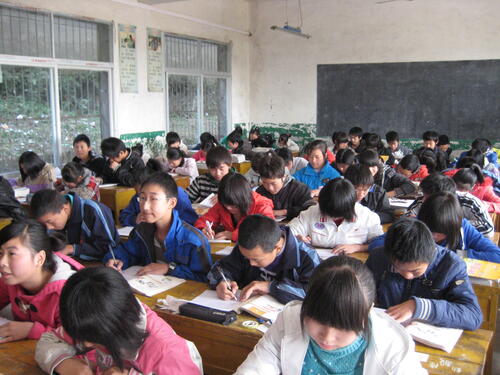
FSI researchers consider international development from a variety of angles. They analyze ideas such as how public action and good governance are cornerstones of economic prosperity in Mexico and how investments in high school education will improve China’s economy.

They are looking at novel technological interventions to improve rural livelihoods, like the development implications of solar power-generated crop growing in Northern Benin.

FSI academics also assess which political processes yield better access to public services, particularly in developing countries. With a focus on health care, researchers have studied the political incentives to embrace UNICEF’s child survival efforts and how a well-run anti-alcohol policy in Russia affected mortality rates.

FSI’s work on international development also includes training the next generation of leaders through pre- and post-doctoral fellowships as well as the Draper Hills Summer Fellows Program.

-

Join the Center for African Studies and the Center on Democracy, Development and the Rule of Law's (CDDRL) Program on Social Entrepreneurship (in partnership with the Haas Center for Public Service) for a special lunchtime seminar.

Three leaders from the Global Women’s Water Initiative (GWWI) will share their work in East Africa transforming women from being water bearers to water providers and social entrepreneurs. GWWI is training and building a cadre of women water, sanitation and hygiene (WASH) specialists steeped in a holistic set of technical and entrepreneurial skills to lift themselves from poverty and create self-reliance. Women have developed the capacity to construct technologies, provide health education and generate revenue by professionalizing their services. Come to Africa Table for an engaging hour listening to the stories of these three incredible leaders.

Gemma Bulos is a multi award-winning social entrepreneur, water champion and musician. As Director of the Global Women's Water Initiative, she trains women to be technicians and entrepreneurs who are able to build clean water and sanitation solutions in their communities. Her work has provided over 200,000 people with clean water in Asia and Africa.

Rose Wamalwa manages GWWI in-country logistics as Kenya/Tanzania Regional Coordinator. She was named one of the '8 African Water Women to Watch' by WASH Advocates alongside President Ellen Johnson Sirleaf of Liberia and President Joyce Banda of Malawi. She is currently an IREX Community Solutions Fellow sponsored by the US State Department.

Godliver Businge, Head Technology Trainer is a trained mason, welder, bricklayer, and a candidate for a Civil Engineering degree in Uganda. She is admired for her ability to train women with no background in construction. Godliver received a scholarship from the Uganda Rural Devlop-ment Trust, and was recently featured in Reuters trust.org as a Female Water Role Model. 

Lunch will be served.

[[{"fid":"216629","view_mode":"crop_870xauto","fields":{"format":"crop_870xauto","field_file_image_description[und][0][value]":"","field_file_image_alt_text[und][0][value]":"","field_file_image_title_text[und][0][value]":"","field_credit[und][0][value]":"","field_caption[und][0][value]":"","field_related_image_aspect[und][0][value]":"","thumbnails":"crop_870xauto","pp_lightbox":true,"pp_description":true},"type":"media","attributes":{"height":1145,"width":870,"class":"media-element file-crop-870xauto"}}]]

Room 202, Encina Hall West

616 Serra Street, Stanford, CA

Gemma Bulos Director Global Women's Water Initiative
Rose Wamalwa Kenya/Tanzania Regional Coordinator Global Women's Water Initiative
Godliver Businge Head Technology Trainer Global Women's Water Initiative
Seminars
News Type
News
Date
Paragraphs

China Education Daily, a national newspaper published by the Department of Education with daily readership in the millions, published a feature article highlighting REAP research on teacher performance pay structures in rural China.  The article rapidly caught the attention of policymakers and educators across China and was widely circulated on a number of China's largest news media websites. 

What is teacher performance pay, and why does it matter?  Students in rural schools in China are falling behind.  Much of the burden for why students from China’s rural schools perform poorly may fall on teachers, as studies from both developed and developing countries, including China, consistently show that teachers are one of the (if not the) most important factors affecting student achievement.  Despite their importance, teachers in rural schools in China often lack strong incentives to help students--especially lower-achieving students--learn.  Surprisingly, almost nothing is known about how to incentivize teachers in rural China to help their students.  "Performance pay" is designed to address this problem by providing contracts to teachers that tie their pay to students test scores, with the goal of raising teacher quality and ultimately student achievement.

The Chinese government is also highly interested in addressing this problem, and in 2009 launched the Teacher Performance Pay Policy asking schools to implement teacher performance pay.  However, in 2012 REAP researchers found that 46% of rural schools still had not implemented teacher incentive programs, and in most cases teacher incentive programs that were in place did not lead to improved student achievement. 

Therefore, REAP researchers designed an intervention to test three different teacher incentive designs, with the goal of identifying which scheme boosted student achievement the most.  The "Pay-for-Percentile" design, which rewarded teachers for focusing on low-achieving students in addition to high-achievers--and thereby differs sharply from most incentive schemes that have been implemented in China--generated remarkable improvements in overall student test scores (learn more about the project here).  These results have significant implications for how to raise the quality of schooling across China.

Read the full article (in Chinese) here, or see the English translation below.


Hero Image
9768042085 b91a665db3 o
All News button
1

Encina Hall
616 Serra Street
Stanford, CA  94305

0
Post-doctoral Fellow at The Europe Center, 2014-2015
lawrence_bio_photo.jpg PhD
Duncan Lawrence holds a PhD in Political Science from the University of Colorado Boulder. His research focuses on immigration, comparative political behavior, political economy and Latin America. His early interest in immigration and immigrant integration developed out of his work as a medical interpreter for a non-profit serving Spanish speaking immigrants in Wyoming. He is a two-time Fulbright recipient, first serving as a Fulbright English Teaching Assistant in Argentina in 2005 and then more recently as a Fulbright Scholar in Chile investigating how connections to emigrants impact perceptions of immigration. Duncan is the co-founder of the Telluride Research Group, LLC, an innovative data analysis and research firm that assists businesses and organizations in using social science research methods to understand problems and policy, and make better decisions. His research has appeared in journals such as Electoral Studies, The Latin Americanist and Latin American Research Review.
-

This past May, India, a country of over 1.2 billion people, elected Narendra Modi, the leader of the Bharatiya Janata Party (BJP) as the new prime minister, shifting leadership away from an incumbent party that held power for the past few decades. This new government, set in the context of shifting political and security dynamics, brings new challenges for dialogue in a region that sees unresolved border disputes and historical tensions, particularly between China and India.

What impact will India’s new leadership have in Northeast Asia? How do historical relationships continue to shape the present? What is the outlook for policy priorities between India and countries in Northeast Asia? 

Scholars from the Walter H. Shorenstein Asia-Pacific Research Center at Stanford University and the Brookings Institution’s India Center will offer perspectives in a panel discussion. This event is Shorenstein APARC’s inaugural event in New Delhi.

Participant Bios

Image
gi wook shin   2014
Gi-Wook Shin is the director of the Walter H. Shorenstein Asia-Pacific Research Center; the Tong Yang, Korea Foundation, and Korea Stanford Alumni Chair of Korean Studies; the founding director of the Korea Program; a senior fellow of the Freeman Spogli Institute for International Studies; and a professor of sociology, all at Stanford University. As a historical-comparative and political sociologist, his research has concentrated on social movements, nationalism, development, and international relations. Shin is the author/editor of sixteen books and numerous articles, the most recent including Criminality, Collaboration, and Reconciliation: Europe and Asia Confronts the Memory of World War II (2014) and New Challenges for Maturing Democracies in Korea and Taiwan (2014). Before coming to Stanford, Shin taught at the University of Iowa and the University of California, Los Angeles. After receiving his bachelor's degree from Yonsei University in Korea, he was awarded his master's degree and doctorate from the University of Washington.

Image
vikram s mehta
Vikram S. Mehta currently serves as the executive chairman of Brookings India in New Delhi and a senior fellow at the Brookings Institution. Mehta started his career with the Indian Administrative Service in 1978. He resigned in 1980 to join Phillips Petroleum in London as their senior economist. In 1984, he returned to India to join the government company Oil India Ltd. as an advisor for strategic planning. He joined Shell International in London in 1988. He was appointed managing director of Shell Markets and Shell Chemical Companies in Egypt in 1991, and chairman of the Shell Group of Companies in India in 1994.

Image
Portrait of Michael Armacost
Michael Armacost is the Shorenstein Distinguished Fellow at the Shorenstein Asia-Pacific Research Center at Stanford University. He graduated with a bachelor’s degree from Carleton College as well as a master’s and doctorate in public law and government from Columbia University. He began his professional life as an instructor of government at Pomona College in 1962. Armacost entered the State Department in 1969 as a White House Fellow, and remained in public service for twenty-four years. During that time he held sensitive international security positions in the State Department, Defense Department, and the National Security Council. These included Ambassador to the Philippines from 1982-84, Undersecretary of State for Political Affairs from 1984-89, and Ambassador to Japan from 1989-1993. Armacost subsequently served as president of the Brookings Institution from 1995-2002. 

Image
Karl Eikenberry
Karl Eikenberry is the William J. Perry Fellow in International Security at the Center for International Security and Cooperation and is a Distinguished Fellow with the Shorenstein Asia-Pacific Research Center at Stanford University. He served as the U.S. Ambassador to Afghanistan from May 2009 until July 2011 and had a 35-year career in the United States Army, retiring with the rank of lieutenant general. His military assignments included postings with mechanized, light, airborne, and ranger infantry units in the continental United States, Hawaii, Korea, Italy, and Afghanistan as the Commander of the American-led Coalition forces from 2005–07. He is a graduate of the U.S. Military Academy, has earned master’s degrees from Harvard University in East Asian studies and Stanford University in political science, was awarded an Interpreter’s Certificate in Mandarin Chinese from the British Foreign Commonwealth Office, and earned an advanced degree in Chinese History from Nanjing University. 

Image
wps sidhu
W.P.S. Sidhu is a senior fellow with Brookings India in New Delhi and Foreign Policy at Brookings. He is also a nonresident senior fellow at New York University’s Center on International Cooperation. His research focuses on India’s evolving grand strategy; the role of India and other emerging powers in the global order; addressing nuclear weapon challenges and security; and development challenges in fragile states. He is co-editor of the book Shaping the Emerging World: India and the Multilateral Order, published in August 2013 by Brookings Institution Press.

Agenda and Participant Bios
Download pdf

Taj Palace
Sardar Patel Marg
Diplomatic Enclave
New Delhi - 110 021, India


Vikram S. Mehta <i>Moderator</i>; Chairman, Brookings India Center
W.P.S Sidhu Senior Fellow Brookings India Center
Shorenstein APARC
Encina Hall E301
616 Jane Stanford Way
Stanford, CA 94305-6055
(650) 724-8480 (650) 723-6530
0
Senior Fellow at the Freeman Spogli Institute for International Studies
Professor of Sociology
William J. Perry Professor of Contemporary Korea
Professor, by Courtesy, of East Asian Languages & Cultures
Gi-Wook Shin_0.jpg PhD

Gi-Wook Shin is the William J. Perry Professor of Contemporary Korea in the Department of Sociology, senior fellow at the Freeman Spogli Institute for International Studies, and the founding director of the Korea Program at the Walter H. Shorenstein Asia-Pacific Research Center (APARC) since 2001, all at Stanford University. In May 2024, Shin also launched the Taiwan Program at APARC. He served as director of APARC for two decades (2005-2025). As a historical-comparative and political sociologist, his research has concentrated on social movements, nationalism, development, democracy, migration, and international relations.

In Summer 2023, Shin launched the Stanford Next Asia Policy Lab (SNAPL), which is a new research initiative committed to addressing emergent social, cultural, economic, and political challenges in Asia. Across four research themes– “Talent Flows and Development,” “Nationalism and Racism,” “U.S.-Asia Relations,” and “Democratic Crisis and Reform”–the lab brings scholars and students to produce interdisciplinary, problem-oriented, policy-relevant, and comparative studies and publications. Shin’s latest book, The Four Talent Giants, a comparative study of talent strategies of Japan, Australia, China, and India to be published by Stanford University Press in the summer of 2025, is an outcome of SNAPL.

Shin is also the author/editor of twenty-seven books and numerous articles. His books include The Four Talent Giants: National Strategies for Human Resource Development Across Japan, Australia, China, and India (2025)Korean Democracy in Crisis: The Threat of Illiberalism, Populism, and Polarization (2022); The North Korean Conundrum: Balancing Human Rights and Nuclear Security (2021); Superficial Korea (2017); Divergent Memories: Opinion Leaders and the Asia-Pacific War (2016); Global Talent: Skilled Labor as Social Capital in Korea (2015); Criminality, Collaboration, and Reconciliation: Europe and Asia Confronts the Memory of World War II (2014); New Challenges for Maturing Democracies in Korea and Taiwan (2014); History Textbooks and the Wars in Asia: Divided Memories (2011); South Korean Social Movements: From Democracy to Civil Society (2011); One Alliance, Two Lenses: U.S.-Korea Relations in a New Era (2010); Cross Currents: Regionalism and Nationalism in Northeast Asia (2007);  and Ethnic Nationalism in Korea: Genealogy, Politics, and Legacy (2006). Due to the wide popularity of his publications, many have been translated and distributed to Korean audiences. His articles have appeared in academic and policy journals, including American Journal of SociologyWorld DevelopmentComparative Studies in Society and HistoryPolitical Science QuarterlyJournal of Asian StudiesComparative EducationInternational SociologyNations and NationalismPacific AffairsAsian SurveyJournal of Democracy, and Foreign Affairs.

Shin is not only the recipient of numerous grants and fellowships, but also continues to actively raise funds for Korean/Asian studies at Stanford. He gives frequent lectures and seminars on topics ranging from Korean nationalism and politics to Korea's foreign relations, historical reconciliation in Northeast Asia, and talent strategies. He serves on councils and advisory boards in the United States and South Korea and promotes policy dialogue between the two allies. He regularly writes op-eds and gives interviews to the media in both Korean and English.

Before joining Stanford in 2001, Shin taught at the University of Iowa (1991-94) and the University of California, Los Angeles (1994-2001). After receiving his BA from Yonsei University in Korea, he was awarded his MA and PhD from the University of Washington in 1991.

Selected Multimedia

Director of the Korea Program and the Taiwan Program, Shorenstein Asia-Pacific Research Center
Director of Stanford Next Asia Policy Lab, APARC
Date Label
Panel Discussions

This lecture is the first in a new series co-sponsored by The Europe Center and the Stanford Archaeology Center on how modern Europe has been shaped by the concepts, materials and ideology of its past inhabitants.

This first speaker highlights both the ecological and socio-political ramifications of conquest.  Based on work undertaken in Poland, Latvia, Estonia and Lithuania, Dr. Aleksander Pluskowski discusses the way that relationships created during one of the most dynamic epochs of European history, the period of crusading, have left a profound legacy for modern Europe.  The process of crusading resulted in massively modified landscapes and catalyzed population reconfiguration at the frontiers of Europe, during the period of Christian expansion.  The archaeo-historical backdrop to these events is presented, along with a discussion of how Europe and the relationship Europe has with non-Christian societies, was permanently altered.

Aleksander Pluskowski's research focuses on frontier societies, colonization and ecological diversity in medieval Europe.  He is primarily concerned with the nuanced relationships between ecology and culture, moving towards a complete integration of environmental and social archaeology, history and art history.  His ultimate aim is to further a holistic understanding of this formative period of European society, contributing to the management of cultural and ecological heritage today.  His other interests include cult praxis in the past and the construction of religious identities.

"How Conquest Transformed Northern Europe"
Download pdf

Building 500
488 Escondido Mall
Terman Labs

Aleksander Pluskowski Lecturer in Archaeology Speaker University of Reading, United Kingdom
Lectures
Authors
News Type
News
Date
Paragraphs

The North Korean regime has adjusted to international sanctions by shifting that economic pain away from cities to the countryside, new Stanford research using satellite night lights data shows.

U.S. policy toward North Korea has been based on the expectation that economic sanctions could deter North Korea from developing nuclear weapons or change the behavior of the regime, according to Yong Suk Lee, a Stanford economist at the Freeman Spogli Institute for International Studies.

Since 1950, both the United States and the global community have adopted a series of economic sanctions against North Korea. The latest came in 2013 when the United Nations approved restrictions on banking, travel and trade in response to North Korea's underground nuclear test and threat to launch nuclear strikes against the United States and South Korea.

In a working paper, Lee examined how North Korea's Communist rulers have adapted to the increasingly tougher sanctions through the years.

"North Korea is one of many autocratic regimes that refuse to yield to sanctions, and its isolation and hereditary dictatorship make it a particularly good example to study the impact of economic sanctions in autocratic regimes," said Lee, the SK Center Fellow and a faculty member of the Korea Program at Stanford's Walter H. Shorenstein Asia-Pacific Research Center.

North Korea is one of the poorest countries in the world, Lee noted. Its leaders follow an economic model based on a centrally planned economy and self-imposed isolation from the rest of the world.

Satellite data

Lee's research was based on nighttime views of lights from data collected by the U.S. Defense Meteorological Satellite Program. The researcher created "average luminosity" measures of lights across North Korea based on a 1-mile-by-1-mile grid for the years 1992 through 2010. Light usage was examined for brightness on one-minute intervals.

To predict the impact of sanctions on economic activity in North Korea, Lee used a formula that transformed the luminosity measures into GDP measures. For example, a 10 percent change in the satellite lights is associated with about a 3 percent change in GDP.

According to Lee, satellite data is of greatest utility in assessing the economies of cities and regions in the developing world. In a country like North Korea, a large part of economic activity happens during the evening and night and involves light. For example, lights at night are generated by peoples' consumption of goods and services as well as transportation. And some production activities happen during the evening hours.

"Economists have found that how bright night lights are can predict national and sub-national GDP quite well, especially in countries where GDP data is not reliable," he said.

Lee found that economic sanctions decreased luminosity in the hinterlands, but increased luminosity in urban areas, especially toward the centers. As for whether additional sanctions affected luminosity, he found they increased the urban-rural luminosity gap by about 1 percent. When he examined the more central urban areas, the gap increased by about 2.6 percent.

"The results suggest that the dictatorship countered the effects of sanctions by reallocating resources to the urban areas," Lee said. One could surmise that the economic sanctions do not affect the country's leadership much, he said.

The hinterlands responded to declining economic fortunes by relying more on trade with China near those border areas, Lee added. In fact, the sanctions generated more North Korean migration to China and reliance on Chinese merchants and goods. North Korea's border with China is relatively porous as opposed to its heavily militarized border with South Korea.

'Increasing inequality'

The upshot, Lee said, is that sanctions that fail to change the behavior of an autocratic regime may eventually increase urban-rural inequality.

"Sanctions will likely be inefficient as long as North Korea can maintain powerful centralized control and oppress any discontent that arises due to increasing inequality," he said.

Lee added that sanctions will most likely not deter North Korea's nuclear weapons activities. They have not done so yet, and at this point, North Korea's leaders view sanctions as inconveniences, but not regime-threatening. Plus, even the harshest sanctions would be unlikely to stem the flow of all goods, energy and money into North Korea. Not all countries would go along with draconian trade restrictions that hurt the poorest people the hardest, he said.

"Even if sanctions were imposed to full capacity, the marginalized population would suffer the most," said Lee, adding that he was actually surprised about his project's findings.

"One can always hypothesize a story but to actually find such effect in the data was quite exciting. Frankly, I pursued this project expecting that I wouldn't find any impact of sanctions on lights," he said.

Clifton Parker is a writer for the Stanford News Service.

Hero Image
12753489823 51e06b2593 o
The Korean Peninsula is pictured at night from the International Space Station in Jan. 2014. The dark area is North Korea in between well-lit China and South Korea. North Korea's capital city of Pyongyang appears like a small island, showing some light emission, otherwise surrounded by darkness.
Flickr/NASA's Marshall Space Flight Center
All News button
1
Paragraphs

This study identifies the factors associated with smallholder farm households that have risen out of poverty or descended into poverty between 1997 and 2007 in Kenya. The study uses data from a nationwide balanced panel of 1,275 households and data from detailed retrospective ‘life history’ survey of 84 households that had experienced either an appreciable improvement or decline in their asset wealth over the 10-year panel period. The results indicate that household welfare dynamics are associated with a disparate set of idiosyncratic and unexpected shocks, such as death and chronic illness, demographic factors, proximity to infrastructural facilities, as well as intergenerational wealth transfers.

All Publications button
1
Publication Type
Journal Articles
Publication Date
Journal Publisher
The Journal of Development Studies
Authors
Number
10
News Type
News
Date
Paragraphs


Three former Human Rights fellows have been listed as Business Insider’s “15 Incredibly Impressive Students.” Garima Sharma, Nicholle Richards, and Lara Mitra were highlighted for their passionate and innovative work as undergraduate Stanford leaders.

All three were awarded the Human Rights Fellowship by the Stanford Program on Human Rights and the McCoy Family Center for Ethics in Society. This fellowship is awarded each year to a small group of highly competitive applicants.

Sharma worked with Apne Aap: Women Worldwide, an anti-trafficking NGO based in Forbesganj, India. She spent two quarters designing an interactive human rights education curriculum focused on sex trafficking, which she used in Forbesganj to engage with at-risk girls who are the daughters of sex workers in the red light district, as well as 12-14 year-old girls belonging to the Nutt (lower-caste) community. Simultaneously, she worked with older men, women and community leaders, with the goal of making preliminary headway into a community-wide anti-trafficking strategy.

Richards traveled to Guatemala to work with Kids Alive, a nonprofit that works to rescue orphans and at-risk children. In Guatemala, she helped at a care home for girls who have been abandoned or abused – often in the form of forced labor and/or physical and sexual abuse. She evaluated a program that works to continue supporting the girls who have returned home, and established a micro-loan project to help encourage business development and women’s empowerment in the region.

Mitra worked with Self-Employed Women's Association (SEWA), a union of 1.4 million informal economy workers, which provide community-driven socioeconomic services, including healthcare, local banking, social security, and housing to marginalized groups in Ahmedabad, India to. She focused on SEWA’s initiatives responding to people's inherent right to a healthy life, and worked with the health team to analyze and document the changing role of front-line health workers who deliver care to expecting mothers.

Hero Image
phr 14 fellows
All News button
1
News Type
News
Date
Paragraphs

Image
5445603683 9faa5b42d0 o


An article published in Caixin Online (in Chinese) on March 28, 2014, features REAP research on how to improve high school enrollment rates in rural China. 

Yi Hongmei, an assistant professor at the Chinese Academy of Sciences and researcher with REAP, found that in China's poor rural areas, 63 percent of high school students are not receiving a complete high school education.  Yi Hongmei identifies four major causes leading to the high dropout rate: high tuition costs in Chinese high schools; rising opportunity costs of attending high school associated with rapidly increasing wages in the labor market; a lack of academic planning and guidance for high school students; and students with lower scores giving up on their education due to the competitive nature of the Chinese education system.  

Yi Hongmei found that both subsidizing high school tuition for poor students and offering conditional cash transfers to students who stayed in school effectively lowered the high school drop out rate, whereas training students in academic and career planning was not an effective means to do so.  Furthermore, solving the problem of secondary education in rural China will also require improving vocational schools, which, despite their growing popularity in China, have very low quality in many rural areas.

Read more here

Hero Image
5445603683 9faa5b42d0 o
All News button
1
News Type
News
Date
Paragraphs


CDDRL congratulates two of its 2014-2015 senior honors students, Stefan Norgaard (Public Policy and Urban Studies '15) and Garima Sharma (Economics '15), after they were featured in a recent article in Business Insider  highlighting some of Stanford University's most 'incredibly impressive students.' Both Norgaard and Sharma conducted field research this past summer in foreign countries to collect data for their theses, which they are currently writing under the direction of the CDDRL Senior Honors Program.

Norgaard is currently researching South Africa's active political youth, the "born free" generation, and helped create an innovative community-building tool in Johannesburg's gentrifying neighborhoods. Sharma is examining the culture behind child marriages in India and has interviewed over 80 mothers on their decisions to put their daughters through the practice.

The CDDRL Senior Honors Program aims to provide an opportunity for eligible seniors focusing on democracy, economic development, and rule of law subjects in any university department to earn honors in democracy, development and rule of law (DDRL). To learn more, please visit the program page here.

Hero Image
15334226301 fa7336e858 b
Stefan Norgaard (third from the left) and Garima Sharma (fourth from the right) stand with their cohort of 2014-2015 CDDRL honors students with Faculty Advisor Francis Fukuyama in front of the White House.
Didi Kuo
All News button
1
Subscribe to International Development