International Development

FSI researchers consider international development from a variety of angles. They analyze ideas such as how public action and good governance are cornerstones of economic prosperity in Mexico and how investments in high school education will improve China’s economy.

They are looking at novel technological interventions to improve rural livelihoods, like the development implications of solar power-generated crop growing in Northern Benin.

FSI academics also assess which political processes yield better access to public services, particularly in developing countries. With a focus on health care, researchers have studied the political incentives to embrace UNICEF’s child survival efforts and how a well-run anti-alcohol policy in Russia affected mortality rates.

FSI’s work on international development also includes training the next generation of leaders through pre- and post-doctoral fellowships as well as the Draper Hills Summer Fellows Program.

-

This event is open to Stanford undergraduate students only. 

The Center on Democracy, Development, and the Rule of Law (CDDRL) is currently accepting applications from eligible juniors due February 27, 2015 who are interested in writing their senior thesis on a subject touching upon democracy, economic development, and rule of law (DDRL) from any university department. CDDRL faculty and current honors students will be present to discuss the program and answer any questions.

For more information on the CDDRL Senior Honors Program, please click here.


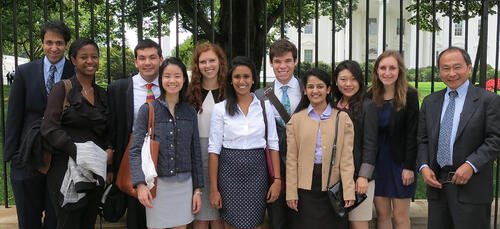
CDDRL Class of 2015 Class of 2015 in front of the White House with Francis Fukuyama.


[[{"fid":"217337","view_mode":"crop_870xauto","fields":{"format":"crop_870xauto","field_file_image_description[und][0][value]":"SHP15 Info Session Flyer","field_file_image_alt_text[und][0][value]":"","field_file_image_title_text[und][0][value]":"","field_credit[und][0][value]":"","field_caption[und][0][value]":"SHP15 Info Session Flyer","field_related_image_aspect[und][0][value]":"","thumbnails":"crop_870xauto","pp_lightbox":false,"pp_description":false},"type":"media","attributes":{"height":1056,"width":870,"class":"media-element file-crop-870xauto"}}]]

Encina Hall, C148
616 Jane Stanford Way
Stanford, CA 94305

0
Olivier Nomellini Senior Fellow at the Freeman Spogli Institute for International Studies
Director of the Ford Dorsey Master's in International Policy
Research Affiliate at The Europe Center
Professor by Courtesy, Department of Political Science
yff-2021-14290_6500x4500_square.jpg

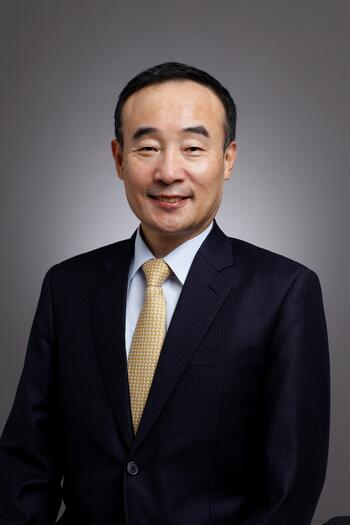
Francis Fukuyama is the Olivier Nomellini Senior Fellow at Stanford University's Freeman Spogli Institute for International Studies (FSI), and a faculty member of FSI's Center on Democracy, Development and the Rule of Law (CDDRL). He is also Director of Stanford's Ford Dorsey Master's in International Policy, and a professor (by courtesy) of Political Science.

Dr. Fukuyama has written widely on issues in development and international politics. His 1992 book, The End of History and the Last Man, has appeared in over twenty foreign editions. His book In the Realm of the Last Man: A Memoir will be published in fall 2026.

Francis Fukuyama received his B.A. from Cornell University in classics, and his Ph.D. from Harvard in Political Science. He was a member of the Political Science Department of the RAND Corporation, and of the Policy Planning Staff of the US Department of State. From 1996-2000 he was Omer L. and Nancy Hirst Professor of Public Policy at the School of Public Policy at George Mason University, and from 2001-2010 he was Bernard L. Schwartz Professor of International Political Economy at the Paul H. Nitze School of Advanced International Studies, Johns Hopkins University. He served as a member of the President’s Council on Bioethics from 2001-2004. He is editor-in-chief of American Purpose, an online journal.

Dr. Fukuyama holds honorary doctorates from Connecticut College, Doane College, Doshisha University (Japan), Kansai University (Japan), Aarhus University (Denmark), the Pardee Rand Graduate School, and Adam Mickiewicz University (Poland). He is a non-resident fellow at the Carnegie Endowment for International Peace. He is a member of the Board of Trustees of the Rand Corporation, the Board of Trustees of Freedom House, and the Board of the Volcker Alliance. He is a fellow of the National Academy for Public Administration, a member of the American Political Science Association, and of the Council on Foreign Relations. He is married to Laura Holmgren and has three children.

(October 2025)

CV
Date Label
Honors Program Director

Encina Hall, C150
616 Jane Stanford Way
Stanford, CA 94305

0
Center Fellow, Freeman Spogli Institute for International Studies
didi_kuo_2023.jpg

Didi Kuo is a Center Fellow at the Freeman Spogli Institute for International Studies (FSI) at Stanford University. She is a scholar of comparative politics with a focus on democratization, corruption and clientelism, political parties and institutions, and political reform. She is the author of The Great Retreat: How Political Parties Should Behave and Why They Don’t (Oxford University Press) and Clientelism, Capitalism, and Democracy: the rise of programmatic politics in the United States and Britain (Cambridge University Press, 2018).

She has been at Stanford since 2013 as the manager of the Program on American Democracy in Comparative Perspective and is co-director of the Fisher Family Honors Program at CDDRL. She was an Eric and Wendy Schmidt Fellow at New America and is a non-resident fellow with the Carnegie Endowment for International Peace. She received a PhD in political science from Harvard University, an MSc in Economic and Social History from Oxford University, where she studied as a Marshall Scholar, and a BA from Emory University.

Date Label
Mentor

A climate of uncertainty marks the Xi administration’s second year in power. The unfurling of a nationwide anti-corruption campaign, including high-profile domestic and international targets, may have unintended effects on economic growth. But will these effects be short- or long-lived? Can this campaign build confidence, domestically and internationally, in the party’s governing capacity? Questions also swirl around the motivations for reviving Mao-era language in the political realm while maintaining a relentless urbanization drive in the social and economic realms.

News Type
News
Date
Paragraphs

Rosamond (Roz) Naylor has been named the first holder of the new William Wrigley Professorship in the School of Earth Sciences. Since 2006 Naylor has directed the Center on Food Security and the Environment, within the Freeman Spogli Institute for International Studies and the Stanford Woods Institute for the Environment. She is also associate professor, by courtesy, of Economics at Stanford.

"Professorships are the best way to recognize faculty for their superior leadership and commitment to research, teaching, service to the university and service to humanity," said Pamela Matson, dean of the School of Earth Sciences at Stanford. "Roz epitomizes these qualities - she is incredibly fitting as the inaugural holder of the William Wrigley Professorship."

Walter Falcon, professor (emeritus) of economics at Stanford and a longtime research collaborator of Naylor's, added: “All of Roz’s colleagues are delighted at her selection. She has long been a thought leader on food security issues, she has limitless energy, and she has an extraordinary capacity for bringing scholars together at Stanford and beyond.”

The new William Wrigley Professorship is supported by Mrs. Julie Ann Wrigley, AB '71 (Anthropology) and Ms. Alison Wrigley Rusack, AB '80 (Communication).

Naylor's research focuses on economic and biophysical dimensions of food security, and the environmental impacts of crop and animal production.  She has been involved in many field-level research projects around the world and has published widely on issues related to intensive crop productionaquaculture and livestock systemsbiofuelsclimate changefood price volatility, and food policy analysis. At Stanford, Naylor teaches courses on the World Food Economy, Human-Environment Interactions, and Sustainable Agriculture. 

Naylor currently serves on the Scientific Advisory Board for the Beijer Institute in Stockholm, is a Science Advisor for United Nation’s Secretary General Ban Ki-Moon’s initiative on Sustainable Development (Sustainable Agriculture section), and trustee of The Nature Conservancy California Chapter. Additionally, she serves on the editorial board of the journals Global Food Security and Journal on Food Security. Naylor received her B.A. in Economics and Environmental Studies from the University of Colorado, her M.Sc. in Economics from the London School of Economics, and her Ph.D. in applied economics from Stanford University. 

Hero Image
roz headshotcrop
All News button
1
-

Koret Distinguished Lecture Series: Lecture V

Image
photo kyung wook hur
During the past five decades, the South Korean economy has achieved stellar success. The country has been transformed from an impoverished, war-stricken, agrarian society into an industrial powerhouse. Today Korea has the world’s 14th-largest economy and per capita GDP of $28,000. Yet the economy is now at a crossroads. Korea is losing its dynamism and facing serious challenges, including a rapidly aging society, declining working age population, reduced potential growth rate, increasing demand for welfare expenditures, worsening inequality, and fewer decent jobs. Moreover, the prospect of unification poses not only opportunities but also challenges. Kyung Wook Hur will discuss Korea’s urgent need to find new engines of growth and take other steps to meet these challenges to the future of the Korean economy.

From May 2010 to May 2013, Kyung Wook Hur was Ambassador of the Permanent Delegation of Korea to the Organization for Economic Co-operation and Development (OECD), where he also served as chair of the OECD Pension Budget and Reserve Fund Management Board, co-chair of the Working Group on OECD Development Strategy, and chair of the Informal Reflection Group on China. He was Korea’s Vice Minister of Strategy and Finance from January 2009 to May 2010 and Secretary to the President for National Agenda from March 2008 to January 2009. During a career in the Korean government that began in 1979, he focused on macroeconomic policies, international financial policy, economic policy coordination, and budget planning. Outside of the Korean government, he also worked for various international financial organizations, including the World Bank (as a Young Professional), the International Finance Corporation, and the International Monetary Fund.

Currently Ambassador Hur is a visiting professor at both the Korea Development Institute’s School of Public Policy and Management and Seoul National University’s Graduate School of International Studies, and an advisor to the ASEAN +3 Macroeconomic Research Office (AMRO). He is also a Chartered Financial Analyst. He received a BA in business administration from Seoul National University and an MBA from Stanford University. 


The Koret Distinguished Lecture Series is made possible through the generous support of the Koret Foundation.


Philippines Conference RoomEncina Hall, 3rd floor616 Serra StreetStanford University
Kyung Wook Hur, <i>former ROK Ambassador to OECD </i> Former ROK Ambassador to OECD
Seminars
News Type
Q&As
Date
Paragraphs

A unified Korea is likely but it won’t come easily, said Stanford professor Gi-Wook Shin, in a recent interview with NK News. The most plausible scenario is reunification following a breakdown of the North Korean regime and eventual South Korean absorption of the North.

“Of course, I cannot predict the timing of such an occurrence, but it is likely that it will happen in the not-too-distant future,” said Shin, director of the Walter H. Shorenstein Asia-Pacific Research Center, in a Q&A among a panel of experts on inter-Korean relations.

In the event of unification, Shin says he is convinced it will be on South Korean terms. He said he doubts that the North Korean government, led by leader Kim Jong-Un and the ruling Worker’s Party of Korea, would find a role in South Korea’s democratic system.

Shin heads a multiyear research project focused on understanding the domestic and global implications of North Korea’s future. Earlier this year, he coauthored a policy brief assessing the situation and policy context on the Korean Peninsula. The report recommends steps that the South Korean government can take to engage North Korea toward the ultimate goal of Korean unification and a sustainable security environment in Northeast Asia.

The full Q&A can be accessed on NK News online.

Hero Image
arch of reunification flickr davidstanley
The Arch of Reunification, located outside Pyongyang, the capital of North Korea.
Flickr/David Stanley
All News button
1
Subscribe to International Development