International Development

FSI researchers consider international development from a variety of angles. They analyze ideas such as how public action and good governance are cornerstones of economic prosperity in Mexico and how investments in high school education will improve China’s economy.

They are looking at novel technological interventions to improve rural livelihoods, like the development implications of solar power-generated crop growing in Northern Benin.

FSI academics also assess which political processes yield better access to public services, particularly in developing countries. With a focus on health care, researchers have studied the political incentives to embrace UNICEF’s child survival efforts and how a well-run anti-alcohol policy in Russia affected mortality rates.

FSI’s work on international development also includes training the next generation of leaders through pre- and post-doctoral fellowships as well as the Draper Hills Summer Fellows Program.

Authors
News Type
News
Date
Paragraphs

The United Nations has thus far fulfilled its charter to prevent a third world war, but with 60 million refugees, continued bloodshed with unresolved civil conflicts and terrorism spreading like cancer, the world's leading peacekeeping organization must spearhead global action, U.N. Secretary-General Ban Ki-moon said Friday at Stanford on the 70th anniversary of the international organization.

Ban, the U.N.'s eighth secretary-general, did not rest on any laurels during his speech at a public event sponsored by the Walter H. Shorenstein Asia-Pacific Research Center (APARC). "I humbly accept criticism that the U.N. is not doing enough," he said. 

However, the situation could have been worse if not for the United Nations, he continued. "Without peacekeepers, or without the U.N.'s continued humanitarian assistance and advocacy of human rights, I'm afraid to tell you that this world would have been poorer, more dangerous and even bloodier without the United Nations."

Ban's visit to Stanford – his second to the university in less than three years – was part of a trip to the Bay Area to commemorate the signing of the U.N. charter. In 1945, representatives from 50 nations gathered in San Francisco to create the United Nations – an international organization aimed at saving future generations from the "scourge of war."

Today, the United Nations has grown to 193 member nations. Its challenges – from climate change and poverty to civil wars and terrorism – have never been greater, Ban said.

"This is a critical year; 2015 is a year of global action," he said. "The U.N. cannot do it alone. We need strong solidarity among government, business communities and civil societies, from each and every citizen."

The fact that so many young people around the globe are drawn to violent narratives is worrisome, Ban said. "Violent terrorism is spreading like cancer around the world."

The rise in terrorist activities stems from "a failure of leadership," he said. That's why the United Nations needs to develop a comprehensive plan of action to address extremism, he maintained.

The U.N.'s 70th anniversary coincidentally fell on a momentous day of tragedy and celebration around the world. Dozens were killed when terrorists launched horrific attacks across three continents – in France, Tunisia and Kuwait – fueling anger, sadness and fear of more violence.

But in the United States, celebrations rang out in response to a landmark U.S. Supreme Court ruling that legalizes same-sex marriages nationwide.

Ban, who has long advocated for equality and last year pushed the United Nations to recognize same-sex marriages of its staff, drew a round of applause when he heralded the court ruling as "a great step forward for human rights."

The June 26 event was co-sponsored by Shorenstein APARC and the Freeman Spogli Institute for International Studies at Stanford University, with promotional co-sponsors Asia Society, Asia Foundation and the World Affairs Council of Northern California

May Wong is a freelance writer for the Stanford News Service.

Coverage and related multimedia links:

Remarks at Stanford University by Ban Ki-moon (U.N. News Centre, 6/26/15)

Photos of Ban Ki-moon at Stanford University (U.N. Photo, 6/26/15)

At Stanford University, Ban says U.N. ready to build a better future for all (U.N. News Centre, 6/27/2015)

U.N. Secretary-General Ban Ki-moon welcomes growing engagement of India, China (NDTV, 6/27/2015)

U.N. Secretary-General Ban Ki-moon speaks at Stanford, celebrates U.N.'s 70th anniversary (Stanford Daily, 6/29/15)

Hoover archival photographs featured at lecture delivered by U.N. Secretary-General Ban Ki-moon (Hoover Institution, 6/29/2015)

Hero Image
636086
Ban Ki-moon, the eighth secretary-general of the United Nations, urged the audience to see 2015 as a year of global action.
UN/Mark Garten
All News button
1
-

Abstract

The Trans-Pacific Partnership (TPP) is widely regarded as the economic component of the US strategy of “rebalance” to Asia. As a major trading partner of many of the founding members, Taiwan has obvious economic and security interests at stake and is therefore seeking to join the TPP in the next round. But an overlooked aspect of the TPP for Taiwan is its potential impact on sovereignty. Trade agreements provide a revealing window into the evolving conceptions of modern sovereignty. The way Taiwan’s unique form of statehood and international status is defined in trade agreements could strengthen its position under international law and contribute to its national security. This talk will consider how Taiwan was defined as a sui generis legal entity in its application to join the World Trade Organization (WTO) and as a party to the Cross-Straits Economic Cooperation Framework Agreement (ECFA), with lessons for future negotiations to join the TPP.   


Speaker Bio

Image
Joseph Yen-ching Chao
Joseph Yen-ching Chao is an Executive Officer in the Department of International Cooperation and Economic Affairs. A member of Taiwan’s Ministry of Foreign Affairs (MOFA) diplomatic corps since 2005, he has previously served as a German-language interpreter for the Presidential Office, an officer in the Department of Treaty and Legal Affairs, and as a deputy secretary of Taiwan’s permanent mission to the World Trade Organization in Geneva, Switzerland.  He holds an LL.M. from Ruprecht-Karls University in Heidelberg and a Doctor juris from Albert-Ludwige University, Frieberg, Germany. Dr. Chao is in residence at Stanford from May-July 2015, where his research examines Taiwan’s prospects for entry into the Trans-Pacific Partnership (TPP).


This event is hosted by the Taiwan Democracy Project.

TPP and Taiwan
Download pdf
Joseph Yen-ching Chao Visiting Fellow Ministry of Foreign Affairs, Republic of China (Taiwan)
Seminars
Authors
Scott Rozelle
News Type
Commentary
Date
Paragraphs


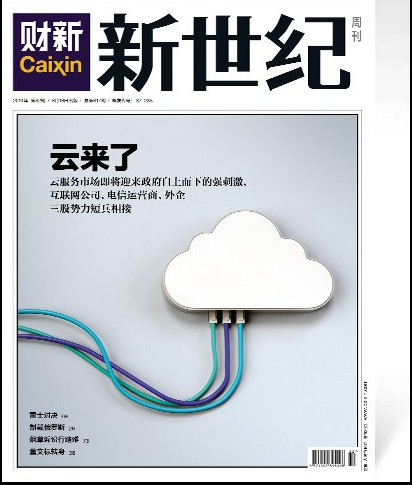
This article is part of a 12-part Caixin Magazine column series by REAP co-directors Linxiu Zhang and Scott Rozelle. Read the full series here.


Screen Shot 2015-06-22 at 3.00.00 PM

The quality of China’s vocational education continuously fails to meet the lowest standards, leaving us with two choices for the future.

The lack of farsightedness in China’s vocational education system means that, despite the large investment poured into it, this system will fail to meet the future demands of its graduates. The wrong goals have been set in China's vocational education, which will inevitably bring serious consequences. These consequences will be felt in the future, however, they are not immediately clear. The problem is that China's vocational education and training system is plagued by fundamental issues, namely that the majority of China's vocational schools are poor (compared to those in Germany), and there is simply no way that China can reach parity.


China’s vocational education and training system is deeply flawed, especially given the large number of vocational schools and the fact that most students enrolling in these schools in the next ten years will be from western and central provinces. Educational experiences are poor, and these problems could soon impact the development process of China.  

Randomized controlled trials conducted by researchers at Stanford University, Peking University, the Hebei Institute of Education Science, Hong Kong University of Science and Technology, Shaanxi Normal University’s School of Education, Hebei University, and the Chinese Academy of Sciences, have gathered representative data on vocational schools in China’s northwestern, central, northern, and eastern regions. 
  
First, vocational students across the country are not learning specialized skills. In this regard, China's vocational schools continually fail to meet even the lowest standards. We randomly selected 10,000 specialized “computer usage” vocational students and 5,000 academic high school students. From this pool, we selected especially poor performing academic high school students within each county, in order to create a more fair comparison with vocational students. For the baseline survey, we had 10,500 students complete a “computer usage” survey. One year later, during the survey assessment phase, we had students complete an  IRT-scaled survey (this survey is meant to assess the absolute knowledge of our “computer usage” students). We found that even vocational students majoring in computer usage still had not mastered new information related to computer usage. In contrast, after one year, academic high school students had mastered computer usage at a much higher level than that demonstrated by vocational students, even though these academic high school students had not studied curriculum related to computer usage.

Furthermore, vocational students had not mastered any type of comprehensive knowledge. In the same study, we had students complete a math, Chinese, and English assessment during the baseline and assessment period. Our results found that not only had students not demonstrated mastery of this content, but that they had actually declined. In other words, after one year, vocational students’ understanding of math, Chinese, and English was actually poorer than it had been a year ago when they entered vocational schools.

Why is the education quality in vocational schools so bad? The answer is simple. China’s vocational education and training system has no standardized or effective management. There is no standardized curriculum, no unified standards for student recruitment, and few of the teachers have experience in the curriculum they are teaching. Teachers at vocational schools are generally those who were relatively ineffective teaching in academic high schools. Although China’s Ministry of Education conducts annual assessments of every stage of the academic education system (elementary school, middle school, and high school), vocational schools are not subject to any checkups or assessments.   

When a school is not teaching its students any kind of specialized knowledge and is instead actually tolerating the student’s decline, students will drop out. Today’s vocational student dropout rate is high. Our study found that dropout rates in China’s central and western vocational schools were as high as 30% to 60%.

If 60% of students are dropping out, what kind of student chooses to stay in vocational school? In 2014, we interviewed several third year vocational students. When asked why they chose to stay in school, most answered “my parents made me stay in school.” In essence, the main purpose of China’s vocational schools is nothing more than to serve as daycare centers for youth.

In conclusion, the current path China has laid out for vocational education and training has failed. In order to improve over the next ten years, China needs to cultivate students, workers, and experts with a strong educational foundation. Teaching students how to weld will not push China into the developed country club. Enclosing students within a daycare center where they study nothing more than dressing smartly and welding has absolutely no use for this country’s development.  

Therefore, China has two choices: either reduce the scale of vocational education and training and thereby encourage academic high schools to recruit students, or reform vocational education by requiring vocational schools to seriously expand the scope of math, Chinese, English and other curriculum instruction. We need to develop human talent in China for 2030 and beyond.  

No matter the solution, China has to establish a structure to ensure that vocational schools meet the country’s standards. Vocational schools will not improve quality through such poor education; vocational schools need supervision; vocational schools need to be subject to evaluations; vocational schools need to cultivate a pool of high-quality dependable talent in order to provide for China’s future economic development.


About this series:

REAP co-directors Scott Rozelle and Linxiu Zhang wrote a ten-part series for Caixin Magazine titled, "Inequality 2030: Glimmering Hope in China in a Future Facing Extreme Despair." See below for more columns in this series:

> Column 1: Why We Need to Worry About Inequality

> Column 2: China's Inequality Starts During the First 1,000 Days

> Column 3: Behind Before They Start - The Preschool Years (Part 1)

> Column 4: Behind Before They Start - The Preschool Years (Part 2) 

> Column 5: How to Cure China's Largest Epidemic

Column 6: A Tale of Two Travesties

>Columns 7 & 8: China's Widest Divide

> Column 9: China's Most Vulnerable Children

> Column 10: Why Drop Out?

> Column 11: The Problem with Vocational Education

> Column 12: Reforming China's Vocational Schools (in Chinese)

Hero Image
screen shot 2015 06 22 at 3 00 00 pm
All News button
1
Subscribe to International Development