Foreign Policy
-

The Taiwan Relations Act, along with the three U.S.-China joint communiques, remains the foundation for U.S. policy toward, and engagement with, Taiwan.  Through this framework, the United States and Taiwan have built a comprehensive, durable, and mutually beneficial partnership, grounded in shared interests and values.  Ambassador Moriarty, Chairman of the American Institute in Taiwan, will review the current state of this unique, “unofficial” relationship in the security, economic, and people-to-people realms.  He will discuss the U.S. government’s support for Taiwan’s efforts to participate in and contribute to the international community.  At this time of increased tensions between the PRC and Taiwan, Ambassador Moriarty will underscore the United States’ longstanding interest in peace and stability across the Taiwan Strait, opposition to unilateral attempts to change the status quo, and insistence on the peaceful resolution of differences.


Image
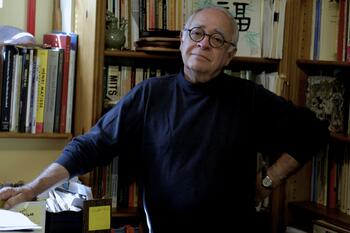
Moriarty
Ambassador (ret) James F. Moriarty assumed his position as Chairman of the Board of Trustees of the American Institute in Taiwan (AIT) in October 2016. AIT is a non-profit, private corporation established pursuant to the Taiwan Relations Act to manage the U.S. unofficial relationship with Taiwan. The AIT Chairman participates in policy-level discussions on Taiwan. He represents the Administration in periodic visits to Taiwan and in meetings with Taiwan representatives in the United States.

Ambassador Moriarty served as Special Assistant to the President of the United States and Senior Director for Asia at the National Security Council (2002-2004). In that role, he advised the President and coordinated U.S. policy on East Asia, Southeast Asia, the Pacific, and South Asia. Moriarty served previously as Director for China Affairs at the National Security Council (2001-2002). He led the political sections at the U.S. Embassy in Beijing (1998-2001) and the American Institute in Taiwan (1995-1998). In Beijing, he helped negotiate agreements that put to rest tensions resulting from the U.S. bombing of the Chinese Embassy in Belgrade and the collision of a Chinese fighter jet with a U.S. EP3. In Taipei, he helped create the template for the United States to work with a democratically-elected Taiwan administration. Moriarty was U.S. ambassador to Bangladesh (2008-2011) and Nepal (2004-2007).

Since retiring from the Foreign Service in 2011, Ambassador Moriarty has worked in the private sector and as an independent consultant. He has spoken on U.S.-Asia relations, including at universities, in public fora, and before U.S. Congressional committees. Living in Jakarta in 2013-2014, Ambassador Moriarty set up PROGRESS, a U.S. Government project to build capacity in ASEAN’s political/security and social/cultural communities. Since 2016, Ambassador Moriarty has been the Country Director for the Alliance for Bangladesh Worker Safety, a coalition of North American importers of ready-made garments. As Country Director, Moriarty provides oversight and strategic guidance to a $50-million initiative that is building a sustainable culture of worker safety in Bangladesh.


James F. Moriarty <i>Chairman, American Institute in Taiwan</i>
Seminars
News Type
News
Date
Paragraphs

"Moon's proposal of a trilateral summit between the two Koreas and the United States, undermining China's influence, turned out to be nothing more than a pipe dream," said researchers at the Shorenstein Asia-Pacific Research Center in a recently published article. "The series of summits that began with Kim's visit to Beijing should lead to Four Party Talks involving the two Koreas, the United States, and China."

The full article in The Diplomat is available here.

Hero Image
kim yong nam
President Moon of South Korea meeting at Cheong Wa Dae with Mr. Kim Yong-nam of the Presidium of the Supreme People's Assembly of North Korea
Cheong Wa Dae
All News button
1
-

For directions to the Jen-Hsun Huang Engineering Center, please click here.


The Asian Infrastructure Investment Bank (AIIB) commenced operations on January 16, 2016. The Bank has approved 24 projects totaling US$4.26 billion to date, and its approved membership totals 84 with 64 members having completed all membership requirements and 20 prospective members in the process of finalizing their membership.
 
President Jin Liqun will give his assessment of the bank’s first two years – its accomplishments and challenges – and the future direction of the Asian Infrastructure Investment Bank. What is the potential impact of AIIB’s financing for regional infrastructure, trade connectivity and economic relations? How can multilateral institutions and various stakeholders best address the US$26 trillion infrastructure gap (from 2016 to 2030) in Asia? How is the AIIB distinguishing itself from other multilateral development banks like the World Bank and the Asian Development Bank? What is the AIIB’s commitment and contributions toward global economic governance and best international practices?


Image
Jin Liqun
Jin Liqun is the inaugural President and Chair of the Board of Directors of the Asian Infrastructure Investment Bank (AIIB). Before being elected as the Bank’s first president, he served as Secretary-General of the Multilateral Interim Secretariat (MIS) tasked with establishing AIIB. Immediately prior to assuming the role of Secretary-General of the MIS, he was Chair of China International Capital Corporation Limited, China’s first joint-venture investment bank. From 2008 to 2013, he served as Chair of the Supervisory Board, China Investment Corporation. From 2009 to 2012, he served as Deputy Chair then subsequently as Chair of the International Forum of Sovereign Wealth Funds. From 2003 to 2008, Jin was Vice President, and then Ranking Vice President, of the Asian Development Bank (ADB), in charge of programs for South, Central and West Asia and private sector operations. He joined the Ministry of Finance in 1980, where he served as Director General and Assistant Minister before becoming Vice Minister in 1998. He was also a Member of the State Monetary Policy Committee. Earlier in his career, he served as Alternate Executive Director for China at the World Bank and at the Global Environment Facility as well as Alternate Governor for China at ADB. Jin holds a master’s degree in English Literature from Beijing Institute of Foreign Languages (now Beijing Foreign Studies University). He was also a Hubert Humphrey Fellow in the Economics Graduate Program at Boston University from 1987 to 1988. Jin is a national of the People’s Republic of China.


Mackenzie Room

Jen-Hsun Huang Engineering Building, 3rd Floor

475 Via Ortega, Stanford, CA 94305

Jin Liqun <i>President and Chair, Asian Infrastructure Investment Bank</i>
-

The Belt and Road Initiative (BRI) is a project of breathtaking scale that aims to reshape economic geography and enhance China’s centrality in the world.  Estimates for the costs of infrastructure to create a sea and land network linking more than 60 countries from Asia to Europe run upwards of US $6 trillion.  To date, China has committed several hundred billion yuan and created financial institutions to carry out the Belt and Road vision, including the Asian Infrastructure Investment Bank and the Silk Road Fund, alongside the China Development Bank, Export-Import Bank, and state-owned commercial banks. 

Does China have the financial wherewithal to implement this grand scheme?

This talk examines China’s recent development and places the BRI in the long arc of fiscal expansion since the turn of the century.  Under Hu Jintao and Wen Jiabao, the government spent lavishly on boosting public services, especially in the rural areas, using buoyant revenues that grew from ¥1.34 trillion to ¥8.3 trillion during the decade of 2000-2010.  The BRI is a signature program in Xi Jinping’s assertive foreign policy, likewise conceived in an era of high growth and high foreign reserve accumulation.  What happens when China’s growth slows?  Will China’s fiscal institutions be robust enough to manage the transition and avoid overextending its finances under the BRI?


Image
wong
Christine Wong is Professor of Chinese Studies in the Asia Institute and Director of the Centre for Contemporary Chinese Studies at the University of Melbourne. Prior to joining the University of Melbourne, she was Professor of Public Finance and Director of Chinese Studies at the University of Oxford, where she was a Fellow at Lady Margaret Hall. She has also held the Henry M. Jackson Professorship in International Studies at the University of Washington, and taught economics at the University of California, Santa Cruz; University of California, Berkeley; and Mount Holyoke College. Christine has more than twenty years of experience in working with the Ministry of Finance and State Tax Administration in China. She has held senior staff positions in the World Bank and the Asian Development Bank, and worked extensively with other international development agencies including the IMF, OECD, UNDP, UNICEF, and the UK Department for International Development. She is a member of the OECD Advisory Panel on Budgeting and Public Expenditures.

Christine Wong <i>Professor of Chinese Studies and Director of the Centre for Contemporary Chinese Studies, University of Melbourne</i>
-

Abstract: Over the past decade, fears about the decline of the United States relative to other countries (especially China) have become a prominent feature of American political discourse. While anxiety about losing power on the world stage has been a recurrent phenomenon in the United States since the 1950s, the present bout of pessimism – combining reactions to the disastrous Iraq War, the 2008 financial crisis, and most recently the rise of Donald Trump – makes this the deepest and most serious crisis of confidence in postwar American history. This project explores the domestic political and strategic consequences of anxiety about lost or eroding national status by combining insights from social theory and social psychology. I use evidence from historical cases of decline (including Spain after 1898, France after 1945 and the United Kingdom after 1945) as well as survey experiments to investigate hypotheses about the heterogenous ways in which different individuals and groups react to relative national decline, and how these responses combine to influence the declining state’s politics and foreign policy. 

Speaker bio: Steven Ward is a Junior Faculty Fellow at CISAC for the year 2017-2018 and an Assistant Professor in the Government Department at Cornell University. He holds an MA in Security Studies and a PhD in Government from Georgetown University. He is the author of Status and the Challenge of Rising Powers (Cambridge University Press, 2017). His work has appeared in Security Studies and International Studies Quarterly.

Seminars
Paragraphs
Book cover of "Peace on a Knife's Edge" showing South Korean president Roh Moo-hyun alongside George W. Bush and Kim Jong-il

Lee Jong-Seok served as vice-secretary of South Korea’s National Security Council and as its unification minister under the Roh Moo-Hyun administration (2003–08). After Roh’s tragic death in 2009, Lee resolved to present a record of the so-called participatory government’s achievements and failures in the realm of unification, foreign affairs, and national security.

Peace on a Knife’s Edge is the translation of Lee’s 2014 account of Roh’s efforts to bring peace to the Korean Peninsula in the face of opposition at home from conservative forces and abroad from the Bush administration’s hard stances of “tailored containment” and its declaration of the North as part of the “axis of evil.” Lee’s narrative will give American readers rare insights into critical moments of Roh’s incumbency, including the tumultuous Six-Party Talks; the delicate process of negotiating the relocation and reduction of United States Forces Korea; Roh’s pursuit of South Korea’s “autonomous defense”; conflicts with Japan over history issues; and the North’s first nuclear weapons test.

Desk, examination, or review copies can be requested through Stanford University Press.

All Publications button
1
Publication Type
Books
Publication Date
Subtitle

The Inside Story of Roh Moo-hyun's North Korea Policy

Book Publisher
Shorenstein APARC
-

Making Money: How Taiwanese Industrialists Embraced the Global Economy is a record of a thirty-year research project that Gary G. Hamilton and Kao Cheng-shu began in 1987.  A distinguished sociologist and university administrator in Taiwan, Kao and his research team (which included Prof. Hamilton during his frequent visits to Taiwan) interviewed over 800 owners and managers of Taiwanese firms in Taiwan, China, and Vietnam.  Some were re-interviewed over ten times during this period.  The length of this project allows them a vantage point to challenge the conventional interpretations of Asian industrialization and to present a new interpretation of the global economy that features an enduring alliance between, on the one hand, American and European retailers and merchandisers and, on the other hand, Asian contract manufacturers, with Taiwanese industrialists becoming the most prominent contract manufacturers in the past forty years.


Image
Gary Hamilton
Gary G. Hamilton is a Professor Emeritus of International Studies and Sociology at the University of Washington.  He specializes in historical/comparative sociology, economic sociology, with a special emphasis on Asian societies. He is an author of numerous articles and books, including most recently Emergent Economies, Divergent Paths, Economic Organization and International Trade in South Korea and Taiwan (with Robert Feenstra) (Cambridge University Press, 2006), Commerce and Capitalism in Chinese Societies (London: Routledge, 2006), The Market Makers: How Retailers Are Changing the Global Economy (co-editor and contributor, Oxford University Press, 2011; paperback 2012), and Making Money: How Taiwanese Industrialists Embraced the Global Economy (with Kao Cheng-shu, Stanford University Press, 2018).


This event is organized by the Taiwan Democracy and Security Project, part of the U.S.-Asia Security Initiative at Shorenstein APARC. Formerly the Taiwan Democracy Project at CDDRL.

Gary G. Hamilton <i>Professor Emeritus of International Studies and Sociology, University of Washington</i>
Lectures
News Type
News
Date
Paragraphs

Former U.S. ambassador to South Korea Kathleen Stephens spoke on the "PBS News Hour" about the first high-level talks between North Korea and South Korea in more than two years. The two nations agreed to hold future military talks aimed at easing border tensions and the North pledged to send a delegation to the Olympic Games next month.

Stephens called it a good first step and an “all-too-rare positive development” on the peninsula. The decrease in potential for disruptions to next month’s games could—according to Stephens-be seen as the first deliverable by South Korea’s new president, Moon Jae-In, on a promise to reengage with the North.

Ambassador Stephens said it was not surprising that denuclearization did not come up during Tuesday’s talks, noting North Korea’s position that the issue is one to be dealt with the United States. Ambassador Stephens speculated that once the Olympics closed, the peninsula might experience a period of reduced tensions along with confidence building. However, she believes that come the spring there would still remain important questions about military exercises as well as nuclear weapons.

Asked about news reports of discussions within the Trump administration on the possibility of targeted strikes against North Korean military sites, Ambassador Stephens described it as a very risky strategy, adding that the discussions alone could prove unnerving in South Korea as well as North Korea.

The full interview is available on PBS.

Hero Image
Former Ambassador Stephens discusses talks between North and South Korea on PBS News Hour
All News button
1
Authors
Gary Mukai
News Type
News
Date
Paragraphs

The U.S.-Japan Council’s TOMODACHI Emerging Leaders Program (ELP) identifies, cultivates, and empowers a new generation of Japanese American leaders. A new cohort of Emerging Leaders is selected annually to attend USJC’s Annual Conference, participate in leadership education, and join program alumni in bridging the future of the U.S.–Japan relationship.


SPICE’s Rylan Sekiguchi, Manager of Curriculum and Instructional Design, recently returned from Washington, DC, where he participated in the U.S.-Japan Council’s annual conference as a member of the 2017 TOMODACHI Emerging Leaders Program (ELP). USJC was conceptualized by the late Senator Daniel K. Inouye of Hawaii and Irene Hirano Inouye, President of USJC.

Sekiguchi was born and raised in Honolulu, and from as far back as he can remember, Senator Inouye was a role model and iconic figure in Hawaii, serving as the state’s U.S. Senator from 1963 to 2012 and as President pro tempore of the Senate from 2010 until his death in 2012. Sekiguchi graduated from Roosevelt High School and chose Stanford University over Harvard and Yale—to avoid the snowy winters—for his undergraduate studies. He joined SPICE in 2005 shortly after graduation.

“I feel honored to participate in USJC and the ELP specifically,” reflects Sekiguchi. “The ELP is such an incredible program, and knowing that USJC was conceptualized by my home state’s late Senator Inouye makes the experience even more meaningful to me. The 2017 ELP cohort has five members who are originally from Hawaii, and I hope that we and the others in my cohort will help realize Senator Inouye’s vision of empowering a new generation of leaders in the U.S.–Japan relationship.”

Sekiguchi is one of 12 delegates of the eighth ELP cohort. “Acceptance into the ELP is highly competitive,” notes Kaz Maniwa, Senior Vice President of  USJC, who has directed the ELP since its inception. Maniwa closed his law practice in San Francisco after 36 years to dedicate himself to the Council and the empowerment of youth specifically through the ELP. “It’s exciting to be able to work with the next generation of leaders of our community and in U.S.–Japan relations. The ELP delegates are smart, compassionate, ambitious in a good way, forward-thinking and supportive of each other. They come from across the United States and Japan and have developed into a broad network of future leaders.”

Rylan Sekiguchi at the 2017 U.S.-Japan Council conference Rylan Sekiguchi at the 2017 U.S.-Japan Council conference in Washington, DC

Besides receiving leadership training and networking with program alumni, the 2017 ELP delegates attended the U.S.-Japan Council’s annual conference and met with leaders in the business, nonprofit, and government sectors. This year’s conference theme was “Unity in Diversity: Shaping the Future Together,” and its panelists and keynote speakers spanned a wide range of backgrounds, expertise, and politics, and included two current members of the U.S. Cabinet. Delegates considered changes that have arisen under the new White House administration and how Japan and the United States can continue to work together toward mutually beneficial goals.

Sekiguchi and his fellow ELP delegates have already seeded ideas to help strengthen U.S.–Japan relations. Some of the ideas lie in the area of education. For example, Sekiguchi shared his current SPICE work with the Mineta Legacy Project, which focuses on the life of former Secretary Norman Y. Mineta, Vice Chair of USJC’s Board of Councilors. Secretary Mineta served as President Bill Clinton’s Secretary of Commerce and President George W. Bush’s Secretary of Transportation. The Mineta Legacy Project will include a documentary being developed by USJC Council Leaders Dianne Fukami and Debra Nakatomi and an educational curriculum that is being developed by Sekiguchi.

The U.S.-Japan Council’s 2018 conference will take place in Tokyo in November, and plans are already underway for the eighth ELP cohort’s first reunion.


Find more information on the TOMODACHI Emerging Leaders Program online
http://www.usjapancouncil.org/tomodachi_emerging_leaders_program

Find more information on the U.S.-Japan Council online
http://www.usjapancouncil.org

Follow SPICE on Facebook and Twitter

Hero Image
Rylan Sekiguchi at the 2017 U.S.-Japan Council conference
Rylan Sekiguchi at the 2017 U.S.-Japan Council conference in Washington, DC
U.S.-Japan Council
All News button
1
0
Senior Fellow at the Freeman Spogli Institute for International Studies
Professor of Communication
Professor, by courtesy, of Political Science and of Sociology
Stanford Affiliate at the Stanford Center on China's Economy and Institutions
Stanford Affiliate at the Tech Impact and Policy Center
jenniferpan-20220922-055.jpg PhD

Jennifer Pan is a Professor of Communication and a Senior Fellow at the Freeman Spogli Institute at Stanford University. Her research focuses on political communication and authoritarian politics. Pan uses experimental and computational methods with large-scale datasets on political activity in China and other authoritarian regimes to answer questions about how autocrats perpetuate their rule. How political censorship, propaganda, and information manipulation work in the digital age. How preferences and behaviors are shaped as a result.

Her book, Welfare for Autocrats: How Social Assistance in China Cares for its Rulers (Oxford, 2020) shows how China's pursuit of political order transformed the country’s main social assistance program, Dibao, for repressive purposes. Her work has appeared in peer reviewed publications such as the American Political Science Review, American Journal of Political Science, Comparative Political Studies, Journal of Politics, and Science.

She graduated from Princeton University, summa cum laude, and received her Ph.D. from Harvard University’s Department of Government.

Date Label
Subscribe to Foreign Policy