Foreign Policy
0
andrew_kim.jpg

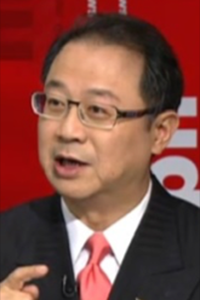
Sung Hyun "Andrew" Kim was a visiting scholar at the Walter H. Shorenstein Asia-Pacific Research Center (APARC) through December 2019. Previously he was William J. Perry visiting scholar at APARC. Kim, who retired from the Central Intelligence Agency in 2018 as a senior intelligence officer after 28 years of service, was assistant director of the CIA's Korea Mission Center, where he helped secure the foundation for the Trump-Kim summit of June 2018.  At Stanford, he will contribute to studies of current North Korea diplomacy in comparison to previous negotiations with the DPRK, a research scope that he refers to as "U.S.-DPRK summit of the century and the tide of history."  Kim will also participate in policy engagement regarding North Korea issues through Shorenstein APARC and its Korea Program.

Kim established the CIA's Korea Mission Center in April 2017 in response to a presidential initiative to address North Korea's longstanding threat to global security. As part of his role as head of the Mission Center, he managed and guided CIA Korean analysts in providing strategic and tactical analytic products for a range of policymakers. He accompanied CIA Director and then Secretary of State Mike Pompeo to Pyongyang in meeting with the North Korean leader Kim Jong Un several times. Formerly he served as the Agency's associate deputy director for operations and technology, leading all efforts to update operational technology and incorporate a state-of-the-art doctrine into CIA training curricula.

Earlier in his career, Kim served as the CIA's chief of station in three major East Asian cities, while also managing the intelligence relationship with politically and militarily complicated foreign countries and advancing U.S. interests. In recognition of his many contributions, Kim was honored by the Agency with the Director's Award (2018), Presidential Rank Award (2012), and the Donovan Award (1990). He speaks fluent Korean, Japanese, and Mandarin Chinese.

Visiting Scholar at APARC
Authors
Andray Abrahamian
News Type
Commentary
Date
Paragraphs

This post was originally published by PacNet Commentary, a publication of Pacific Forum.

North Korea’s state-owned news agency ran a wire story with tremendous significance just before Christmas, making clear that unilateral denuclearization is not going to happen. As part of a detailed explanation of Pyongyang’s position, it said: “When we refer to the denuclearization of the Korean peninsula, it, therefore, means removing all elements of nuclear threats from the areas of both the north and the south of Korea and also from surrounding areas from where the Korean peninsula is targeted. This should be clearly understood.” The text also states that “the denuclearization of the Korean peninsula means ‘completely removing the nuclear threats of the U.S. to the DPRK.’”
 
Pyongyang has long held that their nuclear weapons are a necessary deterrent and has made similar statements in the past, but not so clearly, nor with such a detailed explanation, nor at such a crucial time. Why did they choose to do so at the very end of 2018? There is a degree of unsatisfactory speculation that must take place to try to answer such a question, but we can see a few key elements of the negotiating procedure.
 
The North Koreans have made it clear they want to deal with President Trump himself, probably correctly assessing that he is more likely to make concessions or take significant risks than are his subordinates. Moreover, working-level negotiations have moved slowly over the past several months.
 
The DPRK statement, released in a semi-public way on the newswire, might have been an attempt to get the issue clearly and squarely on the president’s desk. Perhaps the North Koreans don’t believe Secretary of State Mike Pompeo is relaying messages to Trump. Or perhaps the recent retirement of the CIA’s Andrew Kim, who has liaised with the North Koreans alongside and for Pompeo, worried Pyongyang. Stephen Biegun, the new US special representative for North Korea, is an unknown quantity to them. Pyongyang probably didn’t want to resume and rehash this year’s logjam with Biegun in the new year.
 
This shift in communication strategy fits the North Korean political calendar. The New Year Joint Editorial frames the Korean Worker’s Party’s positions for the year and all adult North Koreans study the adjustments in the party line for several weeks in January. This includes North Koreans who interface with the outside world: in 2019 they will present to their foreign interlocutors a specific set of demands based on this clearer definition of “denuclearization.”
 
This leaves President Trump in a bit of a bind. He has to decide if he wants to proceed with the peace and denuclearization process as North Korea has defined it. He could choose a couple different paths.
 
First, Trump appears to have very few deeply held beliefs about the international order, other than that the US has generally been taken advantage of on trade and multilateral defense. He certainly doesn’t care much for alliances. One could imagine him saying, “that’s fine, we could remove our nuclear umbrella from South Korea” once we move toward denuclearization of the north. This would face tremendous pushback from the policy and military communities in the US as well as from allies in Asia, however. It would be the sort of pronouncement that would leave him isolated from much of his administration, Congress, and the pundit community that comments on TV; it would be hard to sustain this position.
 
More likely, he could say, “fine, let’s talk about a freeze on your program and worry about denuclearization later.” This seems more plausible for several reasons.
 
First, his core constituency doesn’t really care about denuclearization. His base wants to see Trump keep winning and if he tells them this is a win, they will likely accept it and move on. He has shown he is rhetorically able to slip out of nooses that other presidents would have choked on. He could conceivably pivot toward a freeze and cap of the North Korean nuclear program as an attainable goal and let the experts – who again largely don’t matter to his base – fight about whether this is good enough.
 
In that regard, Trump may well have been aided by a shift in the professional North Korea-watching community. Since roughly the fall of 2017, when war rhetoric and tensions were escalating, an increasing number of commentaries, events, and lectures with titles along the lines of “living with a nuclear North Korea” began to appear. There are now clearly more voices in the analyst community willing to say that the United States can tolerate and deter a nuclear North Korea. Such an opinion was incredibly scarce in 2016.
 
This is a situation that Trump helped foster. His administration helped raise the prospect of conflict that really did highlight the absurdity of war on the Korean Peninsula. The administration was essentially saying “we are willing to risk a nuclear war to prevent a country from being able to wage nuclear war.” This focused a lot of minds and helped clarify the fact that deterrence remains viable. Whether that means seeking to cooperate or continuing to pressure and isolate North Korea remains up for debate.
 
In defining that debate, if Trump decides he wants to try to change the US-DPRK relationship, he can point to the text of the Singapore Declaration that he and Kim Jong Un signed at their June 12 summit. While the declaration was much pilloried by observers as a “nothingburger,” it did promise to “establish new US–DPRK relations in accordance with the desire of the peoples of the two countries” and “to build a lasting and stable peace regime on the Korean Peninsula.” Those clauses come before a promise by both sides “to work toward complete denuclearization of the Korean Peninsula.”
 
President Trump could conceivably articulate a position in which a freeze of the North Korean program is a realistic goal that takes place alongside improved relations between the two countries, putting the issues of the DPRK’s stockpile and the US nuclear umbrella in Asia off for a later date.
 
This formula would be unsatisfactory to many people, but Trump has shown a willingness to upset traditional stakeholders. Besides, this is North Korea policy. Past attempts at pressure and engagement have been unsatisfactory to one group or another. The status quo is basically unsatisfactory to many, particularly in South Korea. Satisfying everyone will be impossible. Who Trump decides to upset will define how the next round of negotiations with the DPRK goes.
 
Andray Abrahamian is the 2018-19 Koret Fellow at APARC, Stanford University. He is an adjunct fellow at Pacific Forum and Griffith Asia Institute, an honorary fellow at Macquarie University, and a member of the US National Committee on North Korea. His book, North Korea and Myanmar: Divergent Paths, was published by McFarland in 2018.
 
Hero Image
3D illustration for the concept of U.S.-North Korea diplomacy: U.S. and DPRK flags carried from strings by birds on a sky background wildpixel/ Getty Images
All News button
1
-

The 11th Annual Koret Workshop

A dramatic opening created by the unique strategic outlooks and personalities of Moon Jae-in, Kim Jong Un and Donald Trump instigated a series of highly symbolic summits in the early months of 2018. The process kicked off by those summits has bogged down, however, as the necessary compromises for an agreement between the United States and North Korea have proved elusive. This year's Koret Workshop will therefore invite experts from a variety of areas in order to reflect on what the stumbling blocks have been as well as prospects for overcoming them. Conference participants will work towards better understanding and supporting potential emerging solutions to the persistent conflict on the Korean Peninsula.

The workshop will consist of three sessions:

Session I: Assessments of Summit Diplomacy

Session II: Challenges and Opportunities in Media Coverage

Session III: Prospects and Pitfalls in the Near-Term

NOTE: During the conference, a keynote address is open to the general public. Please click here to register for the public event on March 15.
 
The annual Koret Workshop is made possible through the generous support of the Koret Foundation.

Bechtel Conference Center
Encina Hall, 616 Serra Street
Stanford University

Conferences
-

Labor market duality refers to the coexistence of temporary workers with low dismissal costs and permanent workers with high dismissal costs within the same firms. The prevalence of temporary employment is a common feature in several countries, such as Continental European countries. Further, since the 1980s, the Japanese labor market has been experiencing a substantial increase in temporary jobs. The quality of temporary jobs tends to be lower than that of permanent jobs (e.g., the former includes lesser job security, lower wages, and fewer training opportunities compared to the latter). For this reason, the causes and consequences of widespread temporary employment have both policy and academic implications. To date, most of the research on this topic has focused on the supply side of labor markets (demographic changes in workforce), macroeconomic impacts (business cycles), and labor-market institutions. However, since the majority of temporary workers tends to be involuntary, the demand-side analysis is important, as well. It has rarely been examined how market competition would affect firms’ demand for temporary and permanent labor, particularly within the context of economic globalization.

Our study attempts to fill this gap. By proposing a heterogeneous-firm trade model with a dual labor market, we examine the relations between the demand for temporary and permanent workers and economic globalization. Our model highlights intensified product market competition as a driving force behind the shift in demand from permanent to temporary workers. In addition, our model demonstrates that international outsourcing effectively reduces labor adjustment costs, which decreases the demand for permanent workers. Using industry-level data from the Japanese manufacturing sector, we empirically test the relations between the demand for temporary and permanent workers and economic globalization and find that they support most of our theoretical predictions.


Image
headshot sato
Hitoshi Sato joins the Walter H. Shorenstein Asia-Pacific Research Center (Shorenstein APARC) during the 2018–2019 academic year from the Institute of Developing Economies (IDE-JETRO), a national research institute in Japan, where he currently serves as a senior chief research fellow. Sato’s field of study is international trade, and his current research interests include the relationships between internationalization of firms and labor markets. His research efforts have been published in journals, books, and policy reports, including the Journal of Japanese and International Economies. Further, Sato has been appointed as a consulting fellow by the Research Institute of Economy, Trade and Industry since 2013. He received his PhD in economics from the University of Wisconsin–Madison in 2006.

Philippines Conference Room Encina Hall, 3rd Floor 616 Serra Mall, Stanford, CA 94305
616 Serra StreetEncina Hall E301Stanford, CA94305-6055
0
hitoshi_sato.jpg Ph.D.
Dr. Hitoshi Sato joins the Walter H. Shorenstein Asia-Pacific Research Center (APARC) for the 2018 year from the Institute of Developing Economies (IDE-JETRO) in Japan, where he serves as Senior Chief Research Fellow.  He will be working on the internationalization of firms, management practices, and development.  Dr. Sato received his Ph.D. from the University of Wisconsin, Madison. 
Visiting Scholar at APARC
Seminars
News Type
News
Date
Paragraphs
Stanford Korean studies expert Gi-Wook Shin has been named the William J. Perry Professor of Contemporary Korea, an endowed professorship established jointly by the Freeman Spogli Institute for International Studies (FSI) and the School of Humanities and Sciences (H&S). Shin is a professor in the Department of Sociology, senior fellow at FSI, director of the Walter H. Shorenstein Asia-Pacific Research Center (APARC) at FSI, and the founding director of the Korea Program within APARC.
 
“Gi-Wook is richly deserving of this appointment,” said FSI Director Michael McFaul. “He is a remarkable colleague and scholar who established a unique Korean studies program at Stanford and, within a relatively short period of time, built it into a leading research hub on contemporary Korea and U.S.-Korea relations. Grounded in the social sciences, the program’s approach to exploring issues of vital importance to policymaking in the United States and Korea from cross-regional and comparative perspectives is at the forefront of FSI’s efforts to foster global engagement through research and teaching.”
 
The William J. Perry professorship of contemporary Korea was established thanks to a generous gift from Jeong H. Kim, a technology entrepreneur passionate about education and public service, in honor of Professor William Perry, his mentor and friend, who played a significant role in encouraging Kim’s entrepreneurship. Perry is the Michael and Barbara Berberian Professor (emeritus) at Stanford and senior fellow at FSI. An expert in U.S. foreign policy, national security, and arms control, Perry was the 19th U.S. Secretary of Defense, serving during the 1994 crisis on the Korean peninsula. He has long worked inside and outside of government toward a peaceful resolution to the conflict on the Korean peninsula, an effort that he continues today as director of the Preventive Defense Project at FSI. Having witnessed the growth of the Korea Program under Gi-Wook Shin’s leadership, Kim decided to endow a professorship on contemporary Korea, which was named after Perry upon his retirement.
 
A prolific scholar, Shin is the author and editor of more than twenty books and numerous articles. Some of his recent books include Strategic, Policy and Social Innovation for a Post-Industrial Korea: Beyond the Miracle (2018); Superficial Korea (2017); Divergent Memories: Opinion Leaders and the Asia-Pacific War (2016); Global Talent: Skilled Labor as Social Capital in Korea (2015); and Troubled Transition: North Korea’s Politics, Economy, and External Relations (2013). Due to the wide popularity of his publications, many of them have been translated and distributed to Korean audiences. He frequently contributes expert commentary and analysis on the two Koreas and U.S.-Korea relations in both American and Korean news outlets. 
 
Shin is currently leading a multi-year research cluster that advocates for a “New Asia” of social, cultural, and economic maturity. It includes several projects that analyze a host of issues, such as flows of talent across national boundaries and talent management practices and policies harnessed by leading Asia-Pacific countries to compete in the new global knowledge economy; migration and diversity programs and policies of Asia-Pacific universities, corporations, and governments, and their impact on innovation and creativity; and the interests and policy environments of the two Koreas and their neighbors in relation to the North Korean nuclear problem, the U.S.-DPRK dialogue, the U.S.-ROK alliance, the rise of China, and Korean reunification.
 
“I am honored to become the William J. Perry Professor of Contemporary Korea,” said Shin. “As a Korean American scholar, my mission has been to strengthen the bonds between the two countries to which I am most attached. It has been a blessing to work together with collogues, friends, and partners at Stanford and in the United States and Korea to deliver on that mission through the Korea Program research, education, and outreach. I am proud of our accomplishments to date and look forward to addressing the challenges ahead and building on our record of achievement.”
 
Previously Shin held the Tong Yang, Korea Foundation, and Korea Stanford Alumni Chair of Korean Studies. His appointment as the William J. Perry Professor of Contemporary Korea concludes a long search for a candidate to fill the position. “We are thankful to Gi-Wook for his patience throughout the search process,” said McFaul. “This professorship is especially important at a time when changing regional relations and geopolitical developments around the Korean peninsula are front and center to U.S. and international interests.”
 

Media contact:
Noa Ronkin, Associate Director for Communications and External Relations
Walter H. Shorenstein Asia-Pacific Research center


Hero Image
Portrait of Gi-Wook Shin Rod Searcey
All News button
1
616 Serra StreetEncina Hall E301Stanford, CA 94305-6055
0
ketian_zhang.jpg Ph.D.

Ketian Vivian Zhang joined the Walter H. Shorenstein Asia-Pacific Research Center (APARC) as the 2018-2019 Shorenstein Postdoctoral Fellow in Contemporary Asia. Ketian studies coercion, economic sanctions, and maritime territorial disputes in international relations and social movements in comparative politics, with a regional focus on China and East Asia. She bridges the study of international relations and comparative politics and has a broader theoretical interest in linking international security and international political economy. Her book project examines when, why, and how China uses coercion when faced with issues of national security, such as territorial disputes in the South and East China Seas, foreign arms sales to Taiwan, and foreign leaders’ reception of the Dalai Lama. Ketian's research has been supported by organizations such as the Belfer Center for Science and International Affairs at the Harvard Kennedy School, Institute for Security and Conflict Studies at George Washington University, the Smith Richardson Foundation, and the Chiang Ching-kuo Foundation.

At Shorenstein APARC, Ketian worked on turning parts of her book project into academic journal papers while conducting fieldwork for her next major project: examining how target states of Chinese coercion respond to China's assertiveness, including the business community and ordinary citizens.

Ketian received her Ph.D. in Political Science at the Massachusetts Institute of Technology in 2018, where she is also an affiliate of the Security Studies Program. Before coming to Stanford, Ketian was a Predoctoral Research Fellow in the International Security Program at the Belfer Center for Science and International Affairs at the Harvard Kennedy School. Ketian holds a B.A. in Political Science and Sociology from the University of Wisconsin-Madison and was previously a research intern at the Institute for Policy Studies in Washington, D.C., where she was a contributor to its website Foreign Policy in Focus.

2018-2019 Shorenstein Postdoctoral Fellow in Contemporary Asia
Paragraphs

NATO leaders have a lot to worry about. The U.K. government is a Brexit hot mess. Germany’s Angela Merkel, who has been holding a unified Europe together on her shoulders like Atlas, may not be able to last much longer. Turkey’s Recep Tayyip Erdoğan has been channeling his inner authoritarian, and he’s not the only one. And then there’s President Donald Trump. Never one for subtlety, Europe’s most important ally called nato obsolete, threatened to ignore America’s treaty defense commitments to nato members that don’t pay up, slapped tariffs on European aluminum and steel, and treated nato as an irritating layover on the way to his real destination: Helsinki, where he’ll be meeting with Russian President Vladimir Putin. And that was before Trump actually touched down in Brussels and started berating European leaders face-to-face.

Many experts believe the chief challenge of managing President Trump’s foreign policy is keeping Trump on message. They’re wrong. Trump isn’t misspeaking when he ignores his talking points, insults allies, or congratulates Putin on winning a sham election. He’s not veering off script when he declares that North Korea is no longer a nuclear threat just because Kim Jong Un posed for a photo in Singapore. Trump is actually on message nearly every day and in every tweet. It’s just not a message that most serious national-security experts want to hear. Deep in the recesses of our brains, we experts just cannot believe that an American president would pursue so many profoundly shortsighted policies—or that he would actually believe he’s doing a good job.

Trump has a foreign-policy doctrine, all right. He’s been advancing it with remarkable speed, skill, and consistency. Its effect can be summed up in one neat slogan: Make America Weak Again.

America’s preeminence on the world stage rests on five essential sources of power: neighbors, allies, markets, values, and military might. The Trump Doctrine is weakening all of them except the military.

To be fair, America’s military might is a biggie in global politics, and Trump deserves high marks for rebuilding America’s fighting forces after years of decline in the face of growing threats. The February 2018 budget deal allowed for a $61 billion increase in military spending in 2018 with another $18 billion increase in 2019, making it the largest defense budget in U.S. history and reversing crippling defense sequestration caps from 2013—a deal designed to be so bad, Congress thought it would bring everyone to their senses but didn’t. Trump isn’t just spending more; he’s modernizing and innovating more, too. The Trump administration is committed to modernizing America’s aging nuclear weapons and delivery systems, and has called for additional research spending for cyber, electronic warfare, artificial intelligence, and space—all key areas where the U.S. is increasingly vulnerable and the country’s innovation edge is narrowing. Trump’s defense-spending policies have received overwhelming bipartisan support, a rare feat in Washington. In a complicated global landscape with Russia seeking to stretch its territorial reach and China undergoing a massive 20-year military buildup, a recommitment to investing in military strength is both welcome and necessary.

But it won’t be enough. In today’s threat environment, military power can’t go it alone. The other four sources of American power are more important now than ever. And under Trump, they are growing weaker by the day.

Friendly neighbors are underrated as a source of global power. The United States was born with good geography and successive presidents have made the most of it. For centuries, the empires and nation-states of Europe and the Middle East have lived in tough neighborhoods, with hostile powers nursing historical grievances and vying for advantages through brutal territorial conquest. By contrast, the United States has prospered in no small measure because it has been flanked by two vast oceans and two friendly neighbors that have provided a level of security other states would envy. The last time American and Canadian soldiers fought one another was in 1815. The Mexican–American War ended in 1848, and the last U.S. president to order troops into Mexican territory was Woodrow Wilson, who did so a century ago. Europe’s latest territorial aggression occurred in 2014 (when Russia invaded Ukraine and annexed Crimea). Wars are so prevalent in the Middle East, it’s hard to remember a time when there wasn’t one.

The Trump Doctrine, however, sees dangerous threats massing along America’s borders and calls for a sharp departure from the past. The Trump administration’s policies and pronouncements have sent Canadian–U.S. and Mexican–U.S. relations into tailspins, threatening longstanding ties and close cooperation on everything from defense to drug interdiction to trade. Relations in the ’hood haven’t been this bad in a century. From imposing tariffs on Canadian goods because they’re “national-security threats,” to all those comments about Mexican “rapists” and “bad hombres” flooding into U.S. cities, to the border wall, to vows to jettison the North American Free Trade Agreement that has been pivotal to economic growth across the continent, it’s little wonder the neighbors aren’t feeling so neighborly anymore. Mexican voters just elected an anti-Trump, radical leftist president in a landslide election. Canadian officials have imposed retaliatory tariffs and are now talking about how to protect their nation from the United States. It takes a special kind of stupid to make enemies out of Canadians.

Alliances are another vital source of American strength on the global stage. In Asia, the U.S. has better bilateral relations with China’s neighbors than China does, including defense treaties with Japan and South Korea. These relationships advance U.S. interests, project American power, protect global commerce, and promote peace and stability. In Europe, one of Russia’s chief aims is to split the nato alliance because Russia has so few friends of its own. Putin knows that alliances are not about spreading some woolly-eyed vision of global peace over lattes and arguing over who pays the bill. They are about the hard-nosed projection of national power in a dog-eat-dog world. The more friends you have, the more economic, diplomatic, and military might you can marshal and the more you can coerce adversaries to do what you want them to do.  

But the Trump Doctrine sees alliances as raw deals in which the U.S. pays too much and gets too little. Yes, it’s true that most nato allies have not lived up to their defense spending commitments and it’s high time they did. But the Trump Doctrine often seems to suggest that alliances should be run more like a market bazaar, where buyers and sellers haggle over everything and often get nothing—even when a lopsided deal is in everyone’s best interest. Joint-readiness drills, foreign sales of American military equipment, and relationship management cannot be boiled down to Buy the scarf with that shirt or you’ll get nothing. For alliances to work, allies have to know they have each other’s backs. And enemies have to know it, too. Just ask Putin if he’d rather have nato—with all of its “raw deals” uniting 29 nations that include economic powerhouses such as Germany and Spain and global leaders such as France and the United Kingdom—or his own allies, which consist of exactly one besieged Syrian tyrant, the six-member Collective Security Treaty Organization (whose other members are the superpowers called Armenia, Belarus, Kazakhstan, Kyrgyzstan, Tajikistan), and, on good days, some Iranians.

The third source of American power is the country’s economy, which has become the envy of the world because it trades with the world. Thanks to falling trade barriers and rising globalization since World War II, global economic growth has hit unprecedented levels. More than a billion people have been lifted out of extreme poverty. And the U.S. has prospered. Sure, free trade creates global winners and losers, and many playing fields are not level. China has been stealing American intellectual property and doing everything it can to keep American companies down and out. Beijing isn’t even secret about it. China’s “Made in China 2025” plan declares the country’s intention to corner the market in key growth industries such as robotics and electric vehicles.

The Trump Doctrine views free trade with suspicion, the liberal international order as a rip-off to American workers, and economics as a zero-sum game in which if you win, we lose. Trump is a protectionist and proud of it. It seems he’s never met a tariff he didn’t like. First came the steel and aluminum tariffs on U.S. allies, sparking retaliatory tariffs on everything from American motorcycles to bourbon. Now Trump and China are locked in an escalating trade war that has started at $50 billion worth of goods on each side. It’s anyone’s guess when or how it will end, but this much is clear: It won’t be good.

Why would the president undermine American economic vitality? Because the Trump Doctrine is meeting 21st-century trade challenges with 20th-century tactics: tariffing the heck out of foreign products under the misguided assumption that tariffs will only affect the countries they target. Trump seems stuck in the 1970s, when most cars were made in Detroit and most TVs were made in Japan. In today’s world of global supply chains, products just aren’t made in one place anymore. The Dutch company Fairphone has just 27 employees but sources its parts from Africa, the Middle East, Europe, North America, and China. Made in America doesn’t mean what it used to. In a global-supply-chain world, tariffs don’t just hurt foreign companies and workers. They hurt American ones, too.

The fourth and most unique source of global power is American values. The United States has always been much more than a country. It’s an audacious experiment in democracy and an enduring hope for others. This “shining city upon a hill” has not always lived up to its own aspirations or expectations. But for many oppressed peoples in the far reaches of the globe, the United States has always stood for the triumph of laws over the naked abuse of authority, and for the capacity of democracy to bring freedom, peace, and prosperity to everyone, not just Americans.

The Trump Doctrine rejects these bedrock American values at home and refuses to advance them abroad. Democratic states are considered weak, authoritarian leaders are admired, moral authority counts for nearly nothing, soft power is too soft, and hard power is what gets results. In this presidency, journalists are labeled enemies and dissent is considered unpatriotic. Nobody should count on hearing stirring speeches about the march of freedom or the power of justice during the president’s trips abroad. Or seeing throngs of well-wishers in distant capitals lining up to see the president because of the noble values he represents or the sacrifices he honors in America’s military heroes, who paid the ultimate price to secure the blessings of freedom for others. The effect of the Trump Doctrine is Making America Weak Again by diminishing the role of American values, and with them our standing in the world.

International-relations scholars have long found that great powers typically fall for two reasons: imperial overstretch or rivalry with other great powers. Never in world history has a country declined because of so many self-inflicted attacks on the sources of its own power.

Click here to view article


All Publications button
1
Publication Type
Commentary
Publication Date
Journal Publisher
The Atlantic
Authors
Amy Zegart
Authors
News Type
News
Date
Paragraphs

Stanford-led group of young American and Russian scholars meet in Moscow on nuclear policy

Persistent nuclear threats and the recent erosion of relations between the United States and Russia paint a gloomy picture for the future of cooperation between nuclear powers. Despite these enormous challenges, Stanford is leading an effort to bring young nuclear scholars from the United States and Russia together to tackle urgent problems together and share ideas.

At the end of October, a group of six scholars from Stanford’s Center for International Security and Cooperation—Senior Fellow Siegfried Hecker, Visiting Scholar Chaim Braun, Postdoctoral Fellows Chantell Murphy and Kristen Ven Bruusgaard, Research Assistant Elliot Serbin and Senior Research Associate Alla Kassianova—and other American graduate students and postdoctoral fellows from Washington State University, University of Tennessee, Harvard, University of Michigan and Los Alamos National Laboratory traveled to Moscow for the Fourth Young Professionals Nuclear Forum.  The Americans joined a group of undergraduate, graduate, and postdoctoral students at the Moscow Engineering Physics University (MEPhI), Russia’s principal school training nuclear professionals.

The Forum, first launched between CISAC and MEPhI in 2016, provides a venue for young generation of American and Russian nuclear professionals to learn about current issues of nuclear safety, nuclear proliferation, and the role of nuclear power in the world’s evolving energy balance from a perspective of more than one country and more than one discipline.

In the weeks leading up to this Forum, participants on both sides of the ocean attended a series of online presentations by U.S. and Russian experts covering the complexity of the Iran nuclear program and the challenges facing further development of nuclear power.

When they met in person, the young scholars heard lectures from and participated in discussions with experts from Los Alamos National Laboratory, the Russian Center for Energy and Security, and others.

The participants then broke into small groups to work on tabletop problem solving activities. The first exercise, a crisis simulation concerning Iran’s nuclear program, brought together separate Russian and American teams to represent their government’s positions on Iran’s nuclear program and the Joint Comprehensive Plan of Action (JCPOA). Presented with a hypothetical problem—a scenario in which Iran decides to enhance its nuclear capabilities in violation of the JCPOA and President Trump threatens retaliation via Twitter—the participants gathered in small groups to see what type of cooperative Russian-American policies could be brokered in response.

The second exercise brought the group together to imagine the future of nuclear power and how to manage it. Working in small teams of 2-4 people, the participants formulated responses to eight pressing questions regarding the global future of nuclear power, including whether nuclear power is necessary to mitigate the consequences of climate change and whether nuclear proliferation challenges will limit the expansion of nuclear power. The teams presented their answers in Moscow and will continue to develop their assessments, to be published in a report next month.

Both Americans and Russians commonly remarked that the most valuable lesson they took from the exercises was the fact that both sides held remarkably different, but valuable, perspectives on issues of common concern. On the topic of nuclear energy, for example, Russians appreciated American perspectives on the value of startups in the nuclear power industry and new modes of thinking that encapsulated non-monetary aspects of nuclear power in broader economic analyses. Americans came to understand the deep Russian fascination with nuclear energy and optimistic views about the future role of nuclear energy in society, and how deeply that passion is engraved in the university system in a way wholly different from the United States.

Forum participants also had an opportunity to meet with the leadership of two committees of the Russian State Duma, the lower Chamber of the Russian legislature, the Committee on International Affairs and the Committee on Education and Science. The meeting was hosted by Ms. Inga Yumasheva,  an MP from the United Russia party. The Forum also included a visit to research labs and MEPhI facilities, which was hosted by their scientists.

View photos from the forum

About CISAC
The Center for International Security and Cooperation tackles the most critical security issues in the world today. Founded in 1983, CISAC has built on its research strengths to better understand an increasingly complex international environment. It is part of Stanford's Freeman Spogli Institute for International Studies (FSI). Though scholarly research, fellowships, and teaching, CISAC is educating the next generation of leaders in international security and creating policy impact on a wide variety of issues to help build a safer world.

 

Hero Image
CISAC young nuclear professionals visit Red Square, Moscow.
Elliot Serbin
All News button
1
Subscribe to Foreign Policy