Foreign Policy
-

This event is held virtually via Zoom. Please register for the webinar via the below link.

Registration Link: https://bit.ly/2SS6DpY


This event is co-sponsored by the Shorenstein APARC Japan Program and China Program.

Japan's economic challenge to the United States in the 1980s aroused more concern in the United States than people now realize. Japan took some very effective steps to stop it. China's challenge plays out across the economic, military, technological, and global influence spheres. China has not yet taken steps to stop it and the tensions are increasingly serious and show no signs of diminishing. Japan has also found better ways to reduce tensions with China than has the United States. While the circumstances are different between the 1980s and today, Japan’s dealings with the United States in the 1980s might offer some lessons for China today. Dr. Ezra Vogel, Professor Emeritus at Harvard University, will discuss these topics and more during this webinar. The event will conclude with an audience Q&A moderated by Japan Program Director Kiyoteru Tsutsui and China Program Director Jean Oi.

SPEAKER

Image
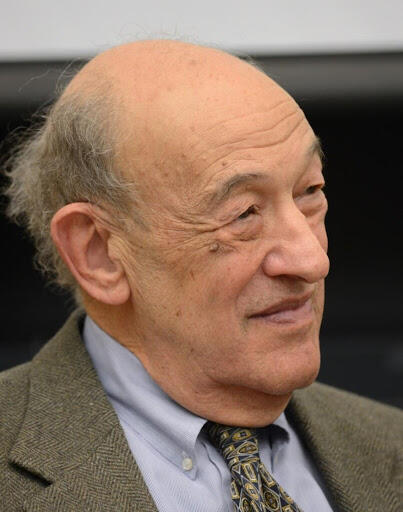
Portrait of Dr. Ezra Vogel, Professor Emeritus at Harvard University

Professor Ezra F. Vogel is Professor Emeritus at Harvard University. Vogel received his PhD at Harvard in 1958 in Sociology in the Department of Social Relations and was a professor at Harvard from 1967-2000. In 1973, he succeeded John Fairbank to become the second Director of Harvard's East Asian Research Center. At Harvard, he served as director of the US-Japan Program, director of the Fairbank Center, and as the founding director of the Asia Center. From fall 1993 to fall 1995, Vogel was the National Intelligence Officer for East Asia at the National Intelligence Council in Washington. His book Japan As Number One (1979), in Japanese translation, became a best seller in Japan, and his book Deng Xiaoping and the Transformation of China (2011), in Chinese translation, became a best seller in China. He lectures frequently in Asia, in both Chinese and Japanese. He has received numerous honors, including eleven honorary degrees.

Via Zoom Webinar.

Registration Link: https://bit.ly/2SS6DpY

Ezra Vogel, Professor Emeritus <br>Harvard University</br>
Seminars
Paragraphs

Last Friday, the U.S. government announced a two-step peace deal with the insurgent Afghan Taliban. In the first step, the United States and the Afghan Taliban will substantially “reduce violence” against each other across Afghanistan for seven days. If satisfied with the reduction, the two sides will sign a broader agreement on withdrawing U.S. troops from Afghanistan; measures for verifying that Afghan territory isn’t being used for international terrorism; and starting intra-Afghan talks for political power-sharing between the Kabul government and the Taliban.

Read the rest at The Washington Post

All Publications button
1
Publication Type
Commentary
Publication Date
Journal Publisher
The Washington Post
Authors
Asfandyar Mir
Paragraphs

Abstract

For years, the U.S. government has been waging counterterrorism campaigns against al-Qaida and other armed groups in safe havens and weak states. What explains the effectiveness of such campaigns? The variation in effectiveness may result from differences in select tactical, organizational, and technological capabilities of the counterterrorism state and its local partner, captured by the concept of the Legibility and Speed-of-Exploitation System (L&S). Empirical studies, including novel fieldwork data, on the U.S. drone war in Pakistan's Waziristan region from 2004 to 2014 reveal the influence of the L&S on targeted groups. From 2004 to 2007, a lack of U.S. counterterrorism capabilities aligning with the L&S allowed both al-Qaida and the Pakistan Taliban to build their operational infrastructure, expand their bases, engage in extensive recruitment drives, and broker important local alliances. In contrast, as the United States made substantial improvements in the L&S from 2008 to 2014, the campaigns against both groups became increasingly effective. Both al-Qaida and the Pakistan Taliban experienced sustained reductions in operational capabilities, losses of bases, and high desertion rates; they also faced growing political challenges, including from within their own organizations. These findings contrast with the view that counterterrorism offers short-term gains at best and is counterproductive at worst.

Read the rest at International Security

All Publications button
1
Publication Type
Journal Articles
Publication Date
Journal Publisher
International Security
Authors
Asfandyar Mir
Paragraphs

President Trump is in the middle of another controversy involving Russia. A New York Times article on June 26 revealed Trump was informed in March that Russia offered bounties to the Taliban to kill U.S. personnel in Afghanistan, and reportedly the president ignored the matter. Trump insists he was never briefed on it, and Director of National Intelligence John Ratcliffe on Saturday said that intelligence officials had not briefed the president.

Read the rest at The Washington Post

All Publications button
1
Publication Type
Commentary
Publication Date
Journal Publisher
Washington Post
Authors
Asfandyar Mir
Paragraphs

Nineteen years after 9/11, al Qaeda chief Ayman al-Zawahiri has yet to achieve the household notoriety evoked by his immediate predecessor, Osama bin Laden. In part that’s because the United States hasn’t cared enough to focus attention on him. Aside from massive financial overtures for intelligence on his whereabouts—there’s currently a $25 million bounty offered for his head, higher than the reward for any other terrorist in the world—the U.S. government has been relatively blasé about al Qaeda since Zawahiri took over in 2011. Some terrorism analysts even claim a living Zawahiri has done more harm to al Qaeda than a dead one ever could.

Read the rest at Foreign Policy

All Publications button
1
Publication Type
Commentary
Publication Date
Journal Publisher
Foreign Policy
Authors
Asfandyar Mir
Paragraphs

Nineteen years after the terrorist attacks of September 11, 2001, does al Qaeda still pose a significant threat to U.S. national security? Among researchers, military and intelligence officials, and policymakers who study the group, there is little consensus. But very few experts on Salafi-jihadi movements would dismiss the group outright. So when U.S. Secretary of State Mike Pompeo confidently declared in a March interview on Fox & Friends that “al Qaeda is a shadow of its former self,” we were startled and concerned.

Read the rest at Foreign Affairs

All Publications button
1
Publication Type
Journal Articles
Publication Date
Journal Publisher
Foreign Affairs
Authors
Asfandyar Mir
-

This event is being held virtually via Zoom. Please register for the webinar via the below link.

Registration Link: https://bit.ly/3n4NMpJ


This event is part of the Shorenstein Asia-Pacific Research Center's Shifting Geopolitics and U.S.-Asia Relations webinar series.
 
For Japan’s new Prime Minister Yoshihide Suga, foreign policy might pose a most significant challenge as he faces a shifting geopolitical landscape with a more assertive China, an emboldened North Korea, an ever more ambivalent South Korea, and a seemingly less committed US in the region. In this international environment, what foreign policy options does Japan have and what can we expect from the Suga administration? To answer these questions, panelists Shinichi Kitaoka, President of the Japan International Cooperation Agency, and Susan Thornton, former US assistant secretary for East Asian and Pacific Affairs, will discuss key diplomatic challenges for Japan including its management of the US-China-Japan trilateral relations, its handling of important neighboring countries such as North and South Korea and Russia, its larger strategies in the Indo-Pacific region, and its engagement with global institutions. This event will be moderated by Japan Program Director Kiyoteru Tsutsui.
 

SPEAKERS

Image
Headshot of Shinichi Kitaoka
Dr. Shinichi Kitaoka is President of the Japan International Cooperation Agency. Before assuming the present post, he was President of the International University of Japan. Dr. Kitaoka’s career includes Professor of National Graduate Institute for Policy Studies (GRIPS) (2012-), Professor ofGraduateSchools for Law and Politics, the University of Tokyo(1997-2004, 2006-2012), Ambassador Extraordinary and Plenipotentiary, Deputy Permanent Representativeof Japan to the United Nations (2004-2006), Professor of College of Law and Politics, Rikkyo University (1985-1997). Dr. Kitaoka’s specialty is modern Japanese politics and diplomacy. He obtained his B.A. (1971) and his Ph.D. (1976) both from the University of Tokyo. He is Emeritus Professor of the University of Tokyo. He has numerous books and articles in Japanese and English including A Political History of Modern Japan: Foreign Relations and Domestic Politics (Tokyo: Yuhikaku,2011), Political Dynamics of the United Nations: Where Does Japan Stand? (Tokyo: Chuokoron-Shinsha, 2007) and Japan as a Global Player (Tokyo: NTT Publishing, 2010). He received many honors and awards including the Medal with Purple Ribbon for his academic achievements in 2011.


Image
Headshot of Susan Thornton
Susan A. Thornton is a retired senior U.S. diplomat with almost 30 years of experience with the U.S. State Department in Eurasia and East Asia. She is currently a Senior Fellow and Research Scholar at the Yale University Law School Paul Tsai China Center, Director of the Forum on Asia-Pacific Security at the National Committee on American Foreign Policy, and a Non-Resident Fellow at the Brookings Institution. Until July 2018, Thornton was Acting Assistant Secretary for East Asian and Pacific Affairs at the Department of State and led East Asia policy making amid crises with North Korea, escalating trade tensions with China, and a fast-changing international environment. In previous State Department roles, she worked on U.S. policy toward China, Korea and the former Soviet Union and served in leadership positions at U.S. embassies in Central Asia, Russia, the Caucasus and China. Thornton received her MA in International Relations from Johns Hopkins SAIS and her BA from Bowdoin College in Economics and Russian. She serves on several non-profit boards and speaks Mandarin and Russian.

Via Zoom Webinar.

Registration Link: https://bit.ly/3n4NMpJ

Dr. Shinichi Kitaoka, President Japan International Cooperation Agency
Susan A. Thornton Former US Assistant Secretary for East Asian and Pacific Affairs
Panel Discussions
-

This event is part of Shorenstein APARC's fall webinar series "Shifting Geopolitics and U.S.-Asia Relations."

This panel will review and assess various aspects of the relationship between the United States and South Korea under the leadership of President Donald Trump and President Moon Jae-in. The two leaders appeared able to work together quickly and make some bold moves on issues like North Korea, but the differences between the two have been stark on issues such as military burden sharing and policies toward China. The discussion will also compare the current dynamics of U.S.-ROK relations with that of during the George W. Bush and Roh Moo-hyun period (2003-2008), which is often referred to as the most turbulent yet the most transformative era in the history of the security relationship between the two countries.

Panelists:

Image
Laura Bicker
Laura Bicker, BBC Seoul Correspondent
Ms. Bicker has been a BBC Correspondent for 20 years. She is currently based in Seoul where she reports on both North and South Korea. She is known for her interviews with President Moon Jae-in and her coverage of the inter-Korean and US-North Korean summits. This year she has produced a number of reports on South Korea’s battle with Covid19 including the documentary "How to Fight Coronavirus." In her previous role as North America Correspondent she followed Donald Trump’s election to the White House and his first years in office, as well as a host of deployments covering a number of issues and breaking news across the United States.

Image
Mark Lippert
Mark Lippert, former US Ambassador to South Korea
A graduate of Stanford (BA, MA), Ambassador Lippert served as the United States ambassador extraordinary and plenipotentiary to the Republic of Korea from 2014-2017. He previously held positions in the Department of Defense, including as chief of staff to Secretary of Defense Chuck Hagel (2013-2014) and as assistant secretary of defense for Asian and Pacific Security Affairs (2012-2013). Lippert also worked in the White House as chief of staff to the National Security Council in 2009. Lippert served in the uniformed military as an intelligence officer in the United States Navy, he mobilized to active duty from 2009 to 2011 for service with Naval Special Warfare (SEALs) Development Group that included deployments to Afghanistan and other regions. From 2007 to 2008, he deployed as an intelligence officer with Seal Team One to Anbar Province, Iraq in support of Operation Iraqi Freedom.

Image
Myung Hwa Yu
Myung Hwan Yu, former Minister of Foreign Affairs, South Korea
Minister Yu has 37 years of distinguished service with the Ministry of Foreign Affairs and Trade, including Minister of Foreign Affairs and Trade from 2008 to 2010.  Minister Yu started his foreign service in Japan in 1976 as a young diplomat and returned as Ambassador to Japan in 2007. He advised on various political and economic issues concerning both the private and public sector with a view to revamp bilateral relation until his departure from Japan to join President Lee Myung Bak’s administration as a cabinet minister in 2008. He also served as Ambassador to the State of Israel; Ambassador for Anti-Terrorism and Afghanistan Issues; and also Minister of the Permanent Mission to the United Nations in New York. His experience extends across a broad range of issues in the international relations including trade and security issues, and negotiations with North Korea in particular.

Moderator:

Image
Gi-Wook Shin
Gi-Wook Shin, Director of Shorenstein APARC, Stanford University
Gi-Wook Shin is the William J. Perry Professor of Contemporary Korea; the founding director of the Korea Program; a senior fellow of the Freeman Spogli Institute for International Studies; and a professor of sociology, all at Stanford University. As a historical-comparative and political sociologist, his research has concentrated on social movements, nationalism, development, and international relations.

Webinar: Register at https://bit.ly/3j7fIHa

Panel Discussions
-

This is a virtual event. Please click here to register and generate a link to the talk. 
The link will be unique to you; please save it and do not share with others.

Most people attribute the Belt and Road Initiative (BRI) to Beijing’s imperialist ambitions. In her talk, Professor Min Ye will go beyond top-level rhetoric, however, and investigate BRI’s origins, its implementation, and its on-the-ground effects inside China. She will unpack different local governments' approaches to the BRI by discussing how subnational entities have leveraged Beijing’s grand strategy and how the implementation of projects and programs related to the BRI facilitate local economic agendas. China’s local developmentalism, which has undergirded not only the BRI but also other national-level strategies (like the Western Development Program and China Goes Global policy), has propelled the Chinese economy from a middle power in 1998 to a superpower in 2018. The talk will conclude with a discussion of COVID-19’s impact on China’s BRI as well as preliminary findings from Professor Ye’s current research into other state-mobilized development initiatives in China.
 

Image
Portrait of Professor Min Ye
Min Ye is an Associate Professor at the Pardee School of Global Studies, Boston University. Her research lies in the nexus between domestic and global politics and economics and security, focusing on China, India, and regional relations. Her publications include The Belt, Road, and Beyond: State-Mobilized Globalization in China 1998 -- 2018 (Cambridge University Press, 2020), Diasporas and Foreign Direct Investment in China and India (Cambridge University Press, 2014), and The Making of Northeast Asia (with Kent Calder, Stanford University Press, 2010). She has received a Smith Richardson Foundation grant (2016-2018), the East Asia Peace, Prosperity, and Governance Fellowship (2013), Princeton-Harvard China and the World Program post-doctoral fellowship (2009-2010), and Millennium Education Scholarship in Japan (2006). In 2014-2016, Min Ye was an NCUSCR Public Intellectual Program fellow. Ye is currently the 2020 Rosenberg Scholar of East Asian Studies at Suffolk University.

Via Zoom Webinar. Register at: https://bit.ly/3kJlhM9

Min Ye Associate Professor, Pardee School of Global Studies, Boston University
Seminars
Subscribe to Foreign Policy