Institutions and Organizations
Paragraphs

At the initial epicenter of the COVID-19 pandemic, the Chinese governments, both central and local, responded to the outbreak in Wuhan, with the drastic measure of the lockdown of the entire city of 11 million residents. The moment of organizational response to crisis crystallized the fundamentals of Chinese bureaucracy, its bureaucratic processes, dispositions, and mentalities, as it had to haphazardly patch together segments of formal and informal practice for mobilization. In this commentary, I reflect on what we have learned about Chinese bureaucracy in this dramatic episode.

As China and many other countries are now facing the aftermath of the pandemic and adapting to a significantly changed global environment, organizational resilience moves to the center of attention. Making sense of the characteristics of the Chinese government helps us better understand the potential for organizational resilience in the post-pandemic era. We look into the past in order to better understand what lies ahead.

All Publications button
1
Publication Type
Journal Articles
Publication Date
Journal Publisher
Management and Organization Review
Authors
Xueguang Zhou
Paragraphs

Chinese bureaucracy, with its long history and distinctive characteristics, has provided the organizational basis of governance and played a pivotal role in the economic takeoff in recent decades. Chinese bureaucracy also shows intriguing dualism between entrepreneurial activism and bureaucratic inertia, between formal rules and informal institutions, and between high responsiveness and noticeable loose coupling.

This study explores these distinctive features of Chinese bureaucracy through three lenses: Weber's comparative-historical approach helps locate Chinese bureaucracy in a distinct mode of domination; the Confucian lens identifies the prevalence of informal institutions that underlie bureaucratic behaviors; and the Marchian lens sheds light on the organized anarchy and set of mechanisms that shape the key characteristics of Chinese bureaucracy.

All Publications button
1
Publication Type
Journal Articles
Publication Date
Journal Publisher
Management and Organization Review
Authors
Xueguang Zhou
Authors
Callista Wells
News Type
News
Date
Paragraphs

On October 6, 2021, the APARC China Program hosted the panel program, "Engaging China: Fifty Years of Sino-American Relations." In honor of her recently released book of the same title, Director of the Grassroots China Initiative Anne Thurston was joined by contributors Mary Bullock, President Emerita of Agnes Scott College; Thomas Fingar, Shorenstein APARC Fellow; and David M. Lampton, Professor Emeritus at Johns Hopkins School of Advanced International Studies (SAIS). Thomas Fingar also moderated the panel.

Recent years have seen the U.S.-China relationship rapidly deteriorate. Engaging China brings together leading China specialists—ranging from academics to NGO leaders to former government officials—to analyze the past, present, and future of U.S.-China relations.

During their panel, Bullock, Fingar, Lampton, and Thurston reflected upon the complex and multifaceted nature of American engagement with China since the waning days of Mao’s rule. What initially motivated U.S.’ rapprochement with China? Until recent years, what logic and processes have underpinned the U.S. foreign policy posture towards China? What were the gains and the missteps made during five decades of America’s engagement policy toward China? What is the significance of our rapidly deteriorating bilateral relations today? Watch now: 

For more information about Engaging China or to purchase a copy, please click here.

Read More

Xi and Biden
Q&As

Biden, Xi Will Want To Diminish Exaggerated Characterizations of Bilateral Friction, Stanford Scholar Says

In this Q&A, Stanford scholar Thomas Fingar discusses what to expect when President Biden meets with Chinese President Xi Jinping.
Biden, Xi Will Want To Diminish Exaggerated Characterizations of Bilateral Friction, Stanford Scholar Says
Taiwan
Commentary

America's Future in Taiwan

Intensifying threats of a military conflict over Taiwan have brought uncertainty to the stability of regional security for Southeast Asia, according to Center Fellow Oriana Skylar Mastro on radio show On Point.
America's Future in Taiwan
USS Key West during during joint Australian-United States military exercises Talisman Sabre 2019 in the Coral Sea.
Commentary

In Defense of AUKUS

This is not only about nuclear-powered submarines; it is about a strengthened US commitment to Australia.
In Defense of AUKUS
Hero Image
"Engaging China: Fifty Years of Sino-American Relations" book cover
All News button
1
Subtitle

Was the strategy of engagement with China worthwhile? Experts Mary Bullock, Thomas Fingar, David M. Lampton, and Anne Thurston discuss their recent release, "Engaging China: Fifty Years of Sino-American Relations."

Authors
News Type
Commentary
Date
Paragraphs

Look up! The ghosts of space weapons past have once again darkened our cosmic doorway. Recently Britain’s Financial Times reported that China flight-tested a new breed of space weapon when it launched a massive “Long March” rocket tipped with a nuclear-capable, hypersonic glider. The missile briefly entered orbit before descending on its target, which it missed by roughly two dozen miles. The report suggested that the test was evidence that China has “made astounding progress on hypersonic weapons and [is] far more advanced than US officials realised.”

Read the rest at The Washington Post

Hero Image
Chinese flag flying above orbital carrier rocket
7th China International Aviation and Aerospace Exhibition To Kick Off (November 2008)
Stringer/Getty Images
All News button
1
Subtitle

China flight-tested a new breed of space weapon when it launched a massive “Long March” rocket tipped with a nuclear-capable, hypersonic glider. But history tells us why the test isn’t a cause for panic.

Paragraphs
Cover of the book 'A Decade of Upheaval: The Cultural Revolution in Rural China;

A Decade of Upheaval chronicles the surprising and dramatic political conflicts of a rural Chinese county over the course of the Cultural Revolution. Drawing on an unprecedented range of sources — including work diaries, interviews, internal party documents, and military directives — Dong Guoqiang and Andrew Walder uncover a previously unimagined level of strife in the countryside that began with the Red Guard Movement in 1966 and continued unabated until the death of Mao Zedong in 1976.

Showing how the upheavals of the Cultural Revolution were not limited to urban areas, but reached far into isolated rural regions, Dong and Walder reveal that the intervention of military forces in 1967 encouraged factional divisions in Feng County because different branches of China’s armed forces took various sides in local disputes. The authors also lay bare how the fortunes of local political groups were closely tethered to unpredictable shifts in the decisions of government authorities in Beijing. Eventually, a backlash against suppression and victimization grew in the early 1970s and resulted in active protests, which presaged the settling of scores against radical Maoism.

A meticulous look at how one overlooked region experienced the Cultural Revolution, A Decade of Upheaval illuminates the all-encompassing nature of one of the most unstable periods in modern Chinese history.

All Publications button
1
Publication Type
Books
Publication Date
Subtitle
The Cultural Revolution in Rural China
Authors
Andrew G. Walder
Book Publisher
Princeton University Press

Shorenstein APARC

Encina Hall

Stanford University

0
APARC Predoctoral Fellow, 2021-2022
Stanford Internet Observatory Postdoctoral Fellow, 2022-2023
tongtong_zhang.jpg

Tongtong Zhang joins the Walter H. Shorenstein Asia-Pacific Research Center (APARC) as APARC Predoctoral Fellow for the 2021-2022 academic year. She is a Ph.D candidate at the department of Political Science at Stanford University. Her research focuses on authoritarian deliberation and responsiveness in China.

Date Label
-

For Fall Quarter 2021, FSI will be hosting hybrid events. Many events will be open to the public online via Zoom, and limited-capacity in-person attendance for Stanford affiliates may be available in accordance with Stanford’s health and safety guidelines.

Register for Zoom
(Open to the public)
Register for In-person
(Stanford affiliates only)

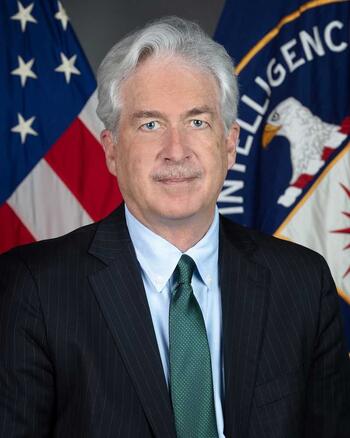
The Freeman Spogli Institute for International Studies (FSI) is honored to host the Director of the Central Intelligence Agency, William J. Burns, for a discussion on the national security challenges and opportunities facing the United States, and his experiences and lessons learned during his career in the Foreign Service. FSI Director Michael McFaul will moderate the discussion and questions from the audience.

Image
William Burns, Director of the CIA

Director Burns was officially sworn in as C.I.A. Director on March 19, 2021, making him the first career diplomat to serve as Director. Director Burns holds the highest rank in the Foreign Service—Career Ambassador—and is only the second serving career diplomat in history to become Deputy Secretary of State.

Director Burns retired from the State Department U.S. Foreign Service in 2014 before becoming president of the Carnegie Endowment for International Peace.

Director Burns is a crisis-tested public servant who spent his 33-year diplomatic career working to keep Americans safe and secure. Prior to his tenure as Deputy Secretary of State, he served as Under Secretary of State for Political Affairs from 2008 to 2011; U.S. Ambassador to Russia from 2005 to 2008; Assistant Secretary of State for Near Eastern Affairs from 2001 to 2005; and U.S. Ambassador to Jordan from 1998 to 2001. He was also Executive Secretary of the State Department and Special Assistant to former Secretaries of State Warren Christopher and Madeleine Albright; Minister-Counselor for Political Affairs at the U.S. Embassy in Moscow; Acting Director and Principal Deputy Director of the State Department’s Policy Planning Staff; and Special Assistant to the President and Senior Director for Near East and South Asian Affairs at the National Security Council.

Director Burns received three Presidential Distinguished Service Awards and the highest civilian honors from the Pentagon and the U.S. Intelligence Community. He is the author of the best-selling book, The Back Channel: A Memoir of American Diplomacy and the Case for Its Renewal (2019). He earned a bachelor’s degree in history from LaSalle University and master’s and doctoral degrees in international relations from Oxford University, where he studied as a Marshall Scholar.

William Burns | Director of the CIA
Lectures
Paragraphs
Cover of North Korean Conundrum, showing a knotted ball of string.

Read our news story about the book >> 

North Korea is consistently identified as one of the world’s worst human rights abusers. However, the issue of human rights in North Korea is a complex one, intertwined with issues like life in the North Korean police state, inter-Korean relations, denuclearization, access to information in the North, and international cooperation, to name a few. There are likewise multiple actors involved, including the two Korean governments, the United States, the United Nations, South Korea NGOs, and global human rights organizations. While North Korea’s nuclear weapons and the security threat it poses have occupied the center stage and eclipsed other issues in recent years, human rights remain important to U.S. policy. 

The contributors to The North Korean Conundrum explore how dealing with the issue of human rights is shaped and affected by the political issues with which it is so entwined. Sections discuss the role of the United Nations; how North Koreans’ limited access to information is part of the problem, and how this is changing; the relationship between human rights and denuclearization; and North Korean human rights in comparative perspective.

Contents

  1. North Korea: Human Rights and Nuclear Security Robert R. King and Gi-Wook Shin
  2. The COI Report on Human Rights in North Korea: Origins, Necessities, Obstacles, and Prospects Michael Kirby
  3. Encouraging Progress on Human Rights in North Korea: The Role of the United Nations and South Korea Joon Oh 
  4. DPRK Human Rights on the UN Stage: U.S. Leadership Is Essential Peter Yeo and Ryan Kaminski
  5. Efforts to Reach North Koreans by South Korean NGOs: Then, Now, and Challenges Minjung Kim
  6. The Changing Information Environment in North Korea Nat Kretchun
  7. North Korea’s Response to Foreign Information Martyn Williams
  8. Human Rights Advocacy in the Time of Nuclear Stalemate: The Interrelationship Between Pressuring North Korea on Human Rights and Denuclearization  Tae-Ung Baik
  9. The Error of Zero-Sum Thinking about Human Rights and U.S. Denuclearization Policy Victor Cha
  10. Germany’s Lessons for Korea Sean King
  11. Human Rights and Foreign Policy: Puzzles, Priorities, and Political Power Thomas Fingar

Desk, examination, or review copies can be requested through Stanford University Press.

June 2022 Update

The Korean version of The North Korean Conundrum is now available, published by the Database Center for North Korean Human Rights (NKDB). Purchase the Korean version via NKDB's website >>

To mark the release of the Korean version of the book, APARC hosted a book talk in Seoul jointly with the Database Center for North Korean Human Rights, on June 9, 2022.
Watch NTD Korea's report of the event:

View news coverage of the event by Korean Media:

All Publications button
1
Publication Type
Books
Publication Date
Subtitle

Balancing Human Rights and Nuclear Security

Authors
Robert R. King
Gi-Wook Shin
Book Publisher
Shorenstein APARC
Authors
News Type
News
Date
Paragraphs

The new AUKUS security partnership led to an immediate diplomatic fallout between France and the United States. But beyond the concerns about NATO and the Western alliance, or questions about great-power competition in the Pacific, some analysts see another worry: Will sharing nuclear submarine propulsion technology with Australia set back the nuclear nonproliferation regime?

What does this deal mean for nonproliferation? Have such transfers of nuclear submarine technology occurred in the past? Here are four things to know.

Read the rest at The Washington Post

Hero Image
group of people on a submarine
SYDNEY, AUSTRALIA - MAY 2: Australian Prime Minister Malcolm Turnbull (fourth left), President of France Emmanuel Macron (second left), Australian Minister for Defence Industry Christopher Pyne (centre left), Australian Minister for Defence Marise Payne (centre) and Australian Minister for Foreign Affairs Julie Bishop (right) are seen on the submarine HMAS Waller at Garden Island on May 2, 2018 In Sydney, Australia. Macron arrived in Australia on May 1 on a rare visit by a French president with the two sides expected to agree on greater cooperation in the Pacific to counter a rising China.
Brendan Esposito - Pool/Getty Images
All News button
1
Subtitle

The new AUKUS security partnership led to an immediate diplomatic fallout between France and the United States. But beyond the concerns about NATO and the Western alliance, or questions about great-power competition in the Pacific, some analysts see another worry: Will sharing nuclear submarine propulsion technology with Australia set back the nuclear nonproliferation regime?

Authors
Oriana Skylar Mastro
News Type
Commentary
Date
Paragraphs

There are many reasons to fear an impending Chinese attack on Taiwan: Intensified Chinese aerial activity. High-profile Pentagon warnings. Rapid Chinese military modernization. President Xi Jinping’s escalating rhetoric. But despite what recent feverish discussion in foreign policy and military circles is suggesting, the U.S. withdrawal from Afghanistan isn’t one of them.

Some critics of President Biden’s decision to withdraw from Afghanistan argue the move will embolden Beijing because it telegraphs weakness — an unwillingness to stick it out and win wars that China will factor in when deciding whether to attack Taiwan, which it considers to be part of its territory.

The reality is, though, that the U.S. departure from Afghanistan will more likely give pause to Chinese war planners — not push them to use force against Taiwan.

The Chinese Communist Party’s stated goal is “national rejuvenation”: Regaining China’s standing as a great power. Chinese leaders and thinkers have studied the rise and fall of great powers past. They have long understood that containment by the United States could keep China from becoming a great power itself.

Luckily for Beijing, the Afghan war — along with Iraq and other American misadventures in the Middle East — distracted Washington for two decades. While China was building roads and ports from Beijing to Trieste, Italy, fueling its economy and expanding its geopolitical influence, the United States was pouring money into its war on terrorism. While Beijing was building thousands of acres of military bases in the South China Sea and enhancing its precision-strike capabilities, the U.S. military was fighting an insurgency and dismantling improvised explosive devices.

While Beijing was building thousands of acres of military bases in the South China Sea and enhancing its precision-strike capabilities, the U.S. military was fighting an insurgency and dismantling improvised explosive devices.
Oriana Skylar Mastro

In many ways, it was just dumb luck that Mr. Xi and his predecessors, thanks in part to the war in Afghanistan, could build national power, undermine international normsco-opt international organizations and extend their territorial control all without the United States thwarting their plans in any meaningful way.

But the end of the war in Afghanistan could bring these good times — which the Communist Party calls the “period of important strategic opportunities” — to an abrupt end. Sure, over the past 10 years American presidents tried to get back into the Asia game even as the war continued. Barack Obama asserted we would pivot to Asia back in 2011. Donald Trump’s national security team made great power competition with China its top priority.

But neither went much beyond paying lip service. The withdrawal shows Mr. Biden is truly refocusing his national security priorities — he even listed the need to “focus on shoring up America’s core strengths to meet the strategic competition with China” as one of the reasons for the drawdown.

Such a refocusing comes not a moment too soon. Chinese expansion and militarization in the South China Sea, deadly skirmishes with India, its crackdown in Hong Kong and repression in Xinjiang all point to an increasingly confident and aggressive China. In particular, Chinese military activity around Taiwan has spiked — 2020 witnessed a record number of incursions into Taiwan’s airspace. The sophistication and scale of military exercises has increased as well. These escalations come alongside recent warnings from Mr. Xi that any foreign forces daring to bully China “will have their heads bashed bloody” and efforts toward “Taiwan independence” will be met with “resolute action.”

The U.S. policy toward Taiwan is “strategic ambiguity” — there is no explicit promise to defend it from Chinese attack. In this tense environment, U.S. policymakers and experts are feverishly considering ways to make U.S. commitment to Taiwan more credible and enhance overall military deterrence against China. A recent $750 million arms sale proposal to Taiwan is part of these efforts, as is talk of inviting Taiwan to a democracy summit, which undoubtedly would provoke Beijing’s ire.

Some have argued that America’s withdrawal from Afghanistan undermines efforts to signal U.S. support for Taiwan. On the surface, it may seem as if the U.S. withdrawal would be a good thing for China’s prospects at what it calls “armed reunification.” Indeed, this is the message the nationalist Chinese newspaper The Global Times is peddling: The United States will cast Taiwan aside just as it has done with Vietnam, and now Afghanistan.

However, the American departure from Afghanistan creates security concerns in China’s own backyard that could distract it from its competition with the United States. Beijing’s strategy to protect its global interests is a combination of relying on host nation security forces and private security contractors and free-riding off other countries’ military presence. Analysts have concluded that China is less likely than the United States to rely on its military to protect its interests abroad. Beijing appears committed to avoiding making the same mistakes as Washington — namely, an overreliance on military intervention overseas to advance foreign policy objectives.

Now there will be no reliable security presence in Afghanistan and undoubtedly broader instability in a region with significant economic and commercial interests for China. Chinese leaders are also worried that conflict in Afghanistan could spill across the border into neighboring Xinjiang, where Beijing’s repressive tactics have already been the cause of much international opprobrium.

The reality is, the United States stayed much longer in Afghanistan than most expected. This upsets China’s calculus about what the United States would do in a Taiwan crisis, since conventional wisdom in Beijing had been that the painful legacy of Somalia would deter Washington from ever coming to Taipei’s aid.

But U.S. interventions in Afghanistan and Iraq have called these assumptions into question. Taiwan, with its proportionately large economy and semiconductor industry, is strategically important to the United States. U.S. power and influence in East Asia are reliant on its allies and military bases in the region and America’s broader role as the security partner of choice. If Taiwan were to fall to Chinese aggression, many countries, U.S. allies included, would see it as a sign of the arrival of a Chinese world order. By comparison, Afghanistan is less strategically important, and yet the United States stayed there for 20 years.

If Taiwan were to fall to Chinese aggression, many countries, U.S. allies included, would see it as a sign of the arrival of a Chinese world order. By comparison, Afghanistan is less strategically important, and yet the United States stayed there for 20 years.
Oriana Skylar Mastro

This does not bode well for any designs Beijing might have for Taiwan.

It’s true that China would benefit from a home-field advantage given Taiwan’s proximity, and that Beijing’s arsenal is far greater than Taiwan’s. China, too, would likely enjoy more domestic public support for any conflict than the U.S. would for yet another intervention.

But if China has any hope of winning a war across the Strait, its military would have to move fast, before the United States has time to respondChinese planners know that the longer the war, the greater the U.S. advantage. Unlike Chinese production and manufacturing centers, which can all be targeted by the United States, the American homeland is relatively safe from Chinese conventional attack. China is far more reliant on outside sources for oil and natural gas, and thus vulnerable to U.S. attempts to cut off its supply.

And the Chinese economy would suffer more: Since the war would be happening in Asia, trade would be bound to be disrupted there. The United States would need to stick it out for only a short time — not 20 years — for these factors to come into play.

A call on Thursday between Mr. Biden and Mr. Xi hinted at the stakes — the two “discussed the responsibility of both countries to ensure competition does not veer into conflict,” according to the White House.

Chinese leaders already expected a tense relationship with the Biden administration. Now they are faced with the fact that the United States might have the will and resources to push back against Chinese aggression, even if it means war.

So, while there may be other reasons to oppose the end of the war in Afghanistan, the impact on China’s Taiwan calculus is not — and should not be — one of them.

Read More

Figures of Kuomintang soldiers are seen in the foreground, with the Chinese city of Xiamen in the background, on February 04, 2021 in Lieyu, an outlying island of Kinmen that is the closest point between Taiwan and China.
Commentary

Strait of Emergency?

Debating Beijing’s Threat to Taiwan
Strait of Emergency?
An Island that lies inside Taiwan's territory is seen with the Chinese city of Xiamen in the background.
Commentary

The Taiwan Temptation

Why Beijing Might Resort to Force
The Taiwan Temptation
A case holding lunar rock and debris collected from the Moon by China's space program that is part of a display at the National Museum of China is seen on March 2, 2021 in Beijing,
Commentary

Chinese Space Ambition

On the American Foreign Policy Council Space Strategy podcast, Center Fellow Oriana Skylar Mastro discusses how China views space and why the United States must not surrender global leadership in pursuing aspirational and inspirational space goals.
Chinese Space Ambition
Hero Image
Taiwan island seen from mid-air.
Yongyuan Dai/Getty Images
All News button
1
Subtitle

In a New York Times opinion piece, Center Fellow Oriana Skylar Mastro argues that the U.S. withdrawal from Afghanistan does not represent a potential catalyst for an impending Chinese attack on Taiwan.

Subscribe to Institutions and Organizations