Security

FSI scholars produce research aimed at creating a safer world and examing the consequences of security policies on institutions and society. They look at longstanding issues including nuclear nonproliferation and the conflicts between countries like North and South Korea. But their research also examines new and emerging areas that transcend traditional borders – the drug war in Mexico and expanding terrorism networks. FSI researchers look at the changing methods of warfare with a focus on biosecurity and nuclear risk. They tackle cybersecurity with an eye toward privacy concerns and explore the implications of new actors like hackers.

Along with the changing face of conflict, terrorism and crime, FSI researchers study food security. They tackle the global problems of hunger, poverty and environmental degradation by generating knowledge and policy-relevant solutions. 

-
Karen Nershi headshot on a blue background with Fall Seminar Series in white font

Join the Cyber Policy Center and moderator  Daniel Bateyko in conversation with Karen Nershi for How Strong Are International Standards in Practice?:  Evidence from Cryptocurrency Transactions. 

The rise of cryptocurrency (decentralized digital currency) presents challenges for state regulators given its connection to illegal activity and pseudonymous nature, which has allowed both individuals and businesses to circumvent national laws through regulatory arbitrage. Karen Nershi assess the degree to which states have managed to regulate cryptocurrency exchanges, providing a detailed study of international efforts to impose common regulatory standards for a new technology. To do so, she introduces a dataset of cryptocurrency transactions collected during a two-month period in 2020 from exchanges in countries around the world and employ bunching estimation to compare levels of unusual activity below a threshold at which exchanges must screen customers for money laundering risk. She finds that exchanges in some, but not all, countries show substantial unusual activity below the threshold; these findings suggest that while countries have made progress toward regulating cryptocurrency exchanges, gaps in enforcement across countries allow for regulatory arbitrage. 

This session is part of the Fall Seminar Series, a months-long series designed to bring researchers, policy makers, scholars and industry professionals together to share research, findings and trends in the cyber policy space. Both in-person (Stanford-affiliation required) and virtual attendance (open to the public) is available; registration is required.

Karen Nershi is a Postdoctoral Fellow at Stanford University's Stanford Internet Observatory and the Center for International Security and Cooperation (CISAC). In the summer of 2021, she completed her Ph.D. in political science at the University of Pennsylvania specializing in the fields of international relations and comparative politics. Through an empirical lens, her research examines questions of international cooperation and regulation within international political economy, including challenges emerging from the adoption of decentralized digital currency and other new technologies. 

Specific topics Dr. Nershi explores in her research include ransomware, cross-national regulation of the cryptocurrency sector, and international cooperation around anti-money laundering enforcement. Her research has been supported by the University of Pennsylvania GAPSA Provost Fellowship for Innovation and the Christopher H. Browne Center for International Politics. 

Before beginning her doctorate, Karen Nershi earned a B.A. in International Studies with honors at the University of Alabama. She lived and studied Arabic in Amman, Jordan and Meknes, Morocco as a Foreign Language and Area Studies Fellow and a Critical Language Scholarship recipient. She also lived and studied in Mannheim, Germany, in addition to interning at the U.S. Consulate General Frankfurt (Frankfurt, Germany).

Dan Bateyko is the Special Projects Manager at the Stanford Internet Observatory.

Dan worked previously as a Research Coordinator for The Center on Privacy & Technology at Georgetown Law, where he investigated Immigration and Customs Enforcement surveillance practices, co-authoring American Dragnet: Data-Drive Deportation in the 21st Century. He has worked at the Berkman Klein Center for Internet & Society, the Dangerous Speech Project, and as a research assistant for Amanda Levendowski, whom he assisted with legal scholarship on facial surveillance.

In 2016, he received a Thomas J. Watson Fellowship. He spent his fellowship year talking with people about digital surveillance and Internet infrastructure in South Korea, China, Malaysia, Germany, Ghana, Russia, and Iceland. His writing has appeared in Georgetown Tech Law Review, Columbia Journalism Review, Dazed Magazine, The Internet Health Report, Council on Foreign Relations' Net Politics, and Global Voices. He is a 2022 Internet Law & Policy Foundry Fellow.

Dan received his Masters of Law & Technology from Georgetown University Law Center (where he received the IAPP Westin Scholar Book Award for excellence in Privacy Law), and his B.A. from Middlebury College.

Karen Nershi
Seminars
-
robert robertson headshot fall seminar series text on blue background

Join the Program on Democracy and the Internet (PDI) and moderator Alex Stamos in conversation with Ronald E. Robertson for Engagement Outweighs Exposure to Partisan and Unreliable News within Google Search 

This session is part of the Fall Seminar Series, a months-long series designed to bring researchers, policy makers, scholars and industry professionals together to share research, findings and trends in the cyber policy space. Both in-person (Stanford-affiliation required) and virtual attendance (open to the public) is available; registration is required.

If popular online platforms systematically expose their users to partisan and unreliable news, they could potentially contribute to societal issues like rising political polarization. This concern is central to the echo chamber and filter bubble debates, which critique the roles that user choice and algorithmic curation play in guiding users to different online information sources. These roles can be measured in terms of exposure, the URLs seen while using an online platform, and engagement, the URLs selected while on that platform or browsing the web more generally. However, due to the challenges of obtaining ecologically valid exposure data--what real users saw during their regular platform use--studies in this vein often only examine engagement data, or estimate exposure via simulated behavior or inference. Despite their centrality to the contemporary information ecosystem, few such studies have focused on web search, and even fewer have examined both exposure and engagement on any platform. To address these gaps, we conducted a two-wave study pairing surveys with ecologically valid measures of exposure and engagement on Google Search during the 2018 and 2020 US elections. We found that participants' partisan identification had a small and inconsistent relationship with the amount of partisan and unreliable news they were exposed to on Google Search, a more consistent relationship with the search results they chose to follow, and the most consistent relationship with their overall engagement. That is, compared to the news sources our participants were exposed to on Google Search, we found more identity-congruent and unreliable news sources in their engagement choices, both within Google Search and overall. These results suggest that exposure and engagement with partisan or unreliable news on Google Search are not primarily driven by algorithmic curation, but by users' own choices.

Dr. Ronald E Robertson received his Ph.D. in Network Science from Northeastern University in 2021. He was advised by Christo Wilson, a computer scientist, and David Lazer, a political scientist. For his research, Dr. Robertson uses computational tools, behavioral experiments, and qualitative user studies to measure user activity, algorithmic personalization, and choice architecture in online platforms. By rooting his questions in findings and frameworks from the social, behavioral, and network sciences, his goal is to foster a deeper and more widespread understanding of how humans and algorithms interact in digital spaces. Prior to Northeastern, Dr. Robertson obtained a BA in Psychology from the University of California San Diego and worked with research psychologist Robert Epstein at the American Institute for Behavioral Research and Technology.

Alex Stamos
0
ronald-e-robertson-2024.jpg PhD

Dr. Ronald E Robertson received his Ph.D. in Network Science from Northeastern University in 2021. He was advised by Christo Wilson, a computer scientist, and David Lazer, a political scientist. For his research, Dr. Robertson uses computational tools, behavioral experiments, and qualitative user studies to measure user activity, algorithmic personalization, and choice architecture in online platforms. By rooting his questions in findings and frameworks from the social, behavioral, and network sciences, his goal is to foster a deeper and more widespread understanding of how humans and algorithms interact in digital spaces.

Prior to Northeastern, Dr. Robertson obtained a BA in Psychology from the University of California San Diego and worked with research psychologist Robert Epstein at the American Institute for Behavioral Research and Technology.

Research Scientist
Date Label
Seminars
-
l jean camp headshot on blue background

Join the Program on Democracy and the Internet (PDI) and moderator Andrew Grotto, in conversation with L. Jean Camp for Create a Market for Safe, Secure Software

This session is part of the Fall Seminar Series, a months-long series designed to bring researchers, policy makers, scholars and industry professionals together to share research, findings and trends in the cyber policy space. Both in-person (Stanford-affiliation required) and virtual attendance (open to the public) is available; registration is required.

Today the security market, particularly in embedded software and Internet of Things (IoT) devices, is a lemons market.  Buyers simply cannot distinguish between secure and insecure products. To enable the market for secure high quality products to thrive,  buyers need to have some knowledge of the contents of these digital products. Once purchased, ensuring a product or software package remains safe requires knowing if these include publicly disclosed vulnerabilities. Again this requires knowledge of the contents.  When consumers do not know the contents of their digital products, they can not know if they are at risk and need to take action.

The Software Bill of Materials  is a proposal that was identified as a critical instrument for meeting these challenges and securing software supply chains in the Executive Order on Improving the Nation’s Cybersecurity} by the Biden Administration (EO 14028. In this presentation Camp will introduce SBOMs, provide examples, and explain the components that are needed in the marketplace for this initiative to meet its potential.

Jean Camp is a Professor at Indiana University with appointments in Informatics and Computer Science.  She is a Fellow of the AAAS (2017), the IEEE (2018), and the ACM (2021).  She joined Indiana after eight years at Harvard’s Kennedy School. A year after earning her doctorate from Carnegie Mellon she served as a Senior Member of the Technical Staff at Sandia National Laboratories. She began her career as an engineer at Catawba Nuclear Station after a double major in electrical engineering and mathematics, followed by a MSEE in optoelectronics at University of North Carolina at Charlotte.

Andrew Grotto
L. Jean Camp Professor at Indiana University
Seminars
-

Co-sponsored with Stanford University Libraries

About the Event: Join us for an engaging conversation with the Ambassador of Estonia to the U.S. Kristjan Prikk, Rose Gottemoeller, and Steven Pifer, who will discuss Russia's war in Ukraine - what's at stake and what we should do about it.
Russia's unprovoked war against Ukraine has brought about the most serious reassessment of the European security realities since the end of the Cold War. The epic clash of political wills, the magnitude of military operations, and the scale of atrocities against the Ukrainian people are beyond anything Europe has seen since World War II. The past nine months have forced many to reassess what is possible and impossible in international security A.D. 2022. What is this war about, after all? What's at stake in this – to paraphrase former British PM Chamberlain – "quarrel in a faraway country, between people of whom most Americans know nothing?" What should be the lessons for U.S. strategists and policymakers? What are the wider implications for U.S. national security interests, particularly those related to the Indo-Pacific? How has the Alliance supported Ukraine since the war started? What should the end of this war look like and how to get there?

All these questions are relevant and should be carefully weighed with current information from the war as well as historic perspective and regional knowledge in mind.

About the Speakers: 

Estonia's Ambassador to the U.S. Mr. Kristjan Prikk started his mission in Washington, D.C. in May 2021. He is a graduate of the USA Army War College and has served as the National Security Coordinator to the Prime Minister. Prior to arriving in D.C., he was the Permanent Secretary of the Estonian Ministry of Defense. Among his previous assignments are two other tours in Washington as an Estonian diplomat and work on NATO-Russia and NATO-Ukraine topics at a time when these relationships were considerably less charged than today.

Rose Gottemoeller is the Steven C. Házy Lecturer at Stanford University's Freeman Spogli Institute for International Studies and its Center for International Security and Cooperation. Before joining Stanford, Gottemoeller was the Deputy Secretary General of NATO from 2016 to 2019, where she helped to drive forward NATO's adaptation to new security challenges in Europe and in the fight against terrorism.  Prior to NATO, she served for nearly five years as the Under Secretary for Arms Control and International Security at the U.S. Department of State, advising the Secretary of State on arms control, nonproliferation and political-military affairs. 

Steven Pifer is an affiliate of the Center for International Security and Cooperation as well as a non-resident senior fellow with the Brookings Institution. He was a William J. Perry Fellow at the center from 2018-2022 and a fellow at the Robert Bosch Academy in Berlin from January-May 2021. Pifer's research focuses on nuclear arms control, Ukraine, Russia, and European security. A retired Foreign Service officer, Pifer's more than 25 years with the State Department focused on U.S. relations with the former Soviet Union and Europe, as well as arms control and security issues, and included service as the third US ambassador to Ukraine.

 All CISAC events are scheduled using the Pacific Time Zone.

Green Library, East Wing 

Kristjan Prikk
Rose Gottemoeller
Steven Pifer
Seminars
News Feed Image
640px-flag_of_ukraine_clear.png
Paragraphs

US defense strategy has long been predicated on the view that military activities, maneuvers, and deployments are credible conveyers of information to both adversaries and partners about US willingness to fight in specific circumstances. Brian Blankenship and Erik Lin-Greenberg’s article, “Trivial Tripwires? Military Capabilities and Alliance Reassurance,” makes an important contribution by demonstrating that not all military activities are created equal when it comes to reassuring allies and partners. Blankenship and Lin-Greenberg rightfully capture reassurance as a product of resolve and capability—thus a “reassuring” state can provide differing acts of reassurance depending on the degree of resolve it wishes to demonstrate and the capabilities it possesses. The authors evaluate four types of reassurance, which vary according to their strength of signaling resolve and capability: (1) tripwires; (2) fighting forces; (3) transient demonstrations; and (4) offshore presences. Relying largely on surveys of defense experts in the Baltics and Central Europe, they argue that a commitment of fighting forces—such as a permanent overseas base or a large in-country ground deployment—makes countries feel safest.

The big question that comes to mind is whether these findings are valid in other theaters, such as the Indo-Pacific. The rise of China presents the greatest challenge to the security and interests of the United States and its allies since the Cold War. As China’s military capabilities have grown, so too has its aggressiveness in pushing territorial issues in the South China Sea, East China Sea, along the Sino-Indian border, and regarding Taiwan. In response, the United States has undertaken numerous military efforts designed to enhance deterrence and reassure allies, including freedom-of-navigation operations (FONOPS), a continuous presence of strategic bombers at Andersen Air Force Base in Guam, and an expanded Marine Air Ground Task Force deployed to Darwin, Australia. America’s behavior reflects an ingrained conventional wisdom: increased military presence and activities will signal US resolve, thereby will enhancing deterrence against an adversary and reassuring allies.

Whether these policy decisions in Asia will indeed contribute to a peaceful and stable Asia directly concern the central claims made in Blankenship and Lin-Greenberg’s study. In this response, Mastro argues that although their research is a step in the right direction, their conclusions do not tell us much about how the United States can reassure Asian allies and partners. Indeed, the article is one more example of the broader problematic tendency to overly rely on Europe to build understanding in the security-studies field.

Mastro makes three main points in this response. First, whether a force deployment serves as a tripwire depends on the risk to forces, not the number of forces deployed (as Blankenship and Lin-Greenberg argue). Second, how capable a country’s deployment is cannot be evaluated in isolation; the enemy’s military capabilities greatly determine the relative capabilities of different posture decisions. Third, Blankenship and Lin-Greenberg’s assumption that transient military operations are low risk (and thus signal lower resolve) is not valid in the Asian theater.

All Publications button
1
Publication Type
Journal Articles
Publication Date
Journal Publisher
Security Studies
Authors
Oriana Skylar Mastro
-
Aleksandra Kuczerawy headshot on a blue background with text European Developments in Internet Regulation

Join the Program on Democracy and the Internet (PDI) and moderator Daphne Keller, in conversation with Aleksandra Kuczerawy for European Developments in Internet Regulation.

This session is part of the Fall Seminar Series, a months-long series designed to bring researchers, policy makers, scholars and industry professionals together to share research, findings and trends in the cyber policy space. Both in-person (Stanford-affiliation required) and virtual attendance (open to the public) is available; registration is required.

The Digital Services Act is a new landmark European Union legislation addressing illegal and harmful content online. Its main goals are to create a safer digital space but also to enhance protection of fundamental rights online. In this talk, Aleksandra Kuczerawy will discuss the core elements of the DSA, such as the layered system of due diligence obligations, content moderation rules and the enforcement framework, while providing underlying policy context for the US audience.

Aleksandra Kuczerawy is a postdoctoral scholar at the Program on Platform Regulation and has been a postdoctoral researcher at KU Leuven’s Centre for IT & IP Law and is assistant editor of the International Encyclopedia of Law (IEL) – Cyber Law. She has worked on the topics of privacy and data protection, media law, and the liability of Internet intermediaries since 2010 (projects PrimeLife, Experimedia, REVEAL). In 2017 she participated in the works of the Committee of experts on Internet Intermediaries (MSI-NET) at the Council of Europe, responsible for drafting a recommendation by the Committee of Ministers on the roles and responsibilties of internet intermediaries and a study on Algorithms and Human Rights.

Daphne Keller
Aleksandra Kuczerawy Postdoctoral Scholar at the Program on Platform Regulation (PPR)
Seminars
Authors
Melissa Morgan
News Type
Commentary
Date
Paragraphs

In October 2022, the Chinese Communist Party elected Xi Jinping for a third term as general secretary, setting Xi on a path to be the longest-serving leader since Mao Zedong’s rule ended in 1976.

The extension of Xi’s rule carries significant implications not only for China, but for the broader Indo-Pacific region and global geopolitical order. No country is more aware of this than Taiwan, which has carefully walked the line between its own autonomy and Beijing’s desire for reunification since the 1940s.

After a summer of rising tensions, many experts believe that Beijing’s timeline for an attempt at reunification is much shorter than conventional thinking has assumed. On the World Class podcast, Michael McFaul, director of the Freeman Spogli Institute for International Studies, discusses the prognosis for Taiwan with Oriana Skylar Mastro, an expert on the Chinese military and security, and Larry Diamond, a scholar of China’s sharp power and the role of Taiwan in the Indo-Pacific region.

Listen to the full episode and read highlights from their conversation below.

Click the link for a full transcript of “What We Need To Talk About When We Talk About Taiwan.“

The Likelihood of Invasion


In stark terms, Oriana Skylar Mastro, a center fellow at the Freeman Spogli Institute for International Studies, believes there’s a 100% chance China will use some sort of force against Taiwan in the next five years. For the last twenty years, China has been making concerted efforts to modernize its military and increase its capabilities not only to assert force against Taiwan, but to deter intervention from the United States.

In the majority of scenarios, the United States wins in a conflict with China over Taiwan. But the United States also carries a distinct geographic disadvantage. The distance across the Taiwan Strait between the island and mainland China is approximately 100 miles, which is roughly the distance between Richmond, Virginia and Washington D.C. If China moves quickly, PRC forces could take Taiwan before U.S. forces have time to move into position.

When considering possible outcomes in Taiwan, it is equally important to consider the motivations driving Beijing’s ambitions. The leadership on the mainland has been planning and thinking about how to retake Taiwan since 1949. With the modernized capabilities coming online, the balance of power has shifted in China’s military favor, and the cost-benefit calculus favors Beijing’s ambitions. The long-term planning stage is now reaching its end, and the prospects of direct action are increasing.

The clock is ticking. The problem is we don’t know how fast it’s ticking. But we need to move faster than we're moving.
Larry Diamond
Mosbacher Senior Fellow in Global Democracy at FSI

The View from Taipei


Political leaders in Taiwan recognize the growing danger they face across the Strait. In Larry Diamond’s assessment, the end of Hong Kong's autonomy and the suppression of the “one country, two systems” model, the rising military incursions into Taiwan's air defense identification zone and coastal waters, and the whole rising pace of Chinese military intimidation has sobered Taiwan and visibly impacted Taiwanese public opinion.

Concerningly though, while the political elite recognize the real and present danger of the situation, polling of the general Taiwan public suggests that the vast majority of citizens still feel like an attack or an invasion by China is unlikely. Similar majorities suggest that they would be willing to fight in Taiwan’s defense, but volunteering for military service remains at a minimum.

To maximize safety, Taiwan needs to find ways to strengthen itself in its ability to defend, resist, and deter China, while still avoiding any appearance of moving toward permanent independence or any other action that could be deemed by Beijing as a provocation, says Diamond.

There are things that can completely change Beijing's calculus, but it takes a lot of work, and I just don't see us doing the work yet.
Oriana Skylar Mastro
FSI Center Fellow

What the United States Can Do


When it comes to the defense of Taiwan, the strategic crutch hobbling the United States is geography. Most of the U.S. Pacific forces are not in Asia. The majority are in Hawaii and California, as well as a few bases and airfields in Japan. To be able to effectively deter China, the U.S. needs far greater forward deployed military capability in order to be able to either stop or stall the movement of Chinese troops into Taiwan, says Mastro.

Taiwan needs greater onshore military deterrence capabilities as well. One such strategy is the “porcupine approach,” which increases the number of smaller mobile lethal weapons. By Larry Diamond’s assessment, increased citizen participation in military training is also crucial, with an emphasis on weapons training and urban defense tactics. The U.S. could support these aims by overhauling the current system for weapons procurement to speed up the production and delivery of weapons systems not just for Taiwan, but to the benefit of U.S. defense and other contingencies as well. Working with leadership to create strategic stockpiles of food, and energy should also be a priority, says Diamond.

The U.S. also needs to put much more effort into its diplomatic efforts on behalf of Taiwan. Many U.S. allies and partners are reluctant to ostracize China because of economic ties and concerns over sparking their own conflict with China in the future. A key ally in all of this is Japan. If Japan fights with the United States on behalf of Taiwan, it is a guaranteed win and enough to effectively deter China. But much more needs to be done much more quickly in order to secure those guarantees and present them in a convincing way to Beijing.

“The clock is ticking,” Larry Diamond says. “And the problem is we don’t know how fast it’s ticking. “Taiwan is moving in the right direction. But we need to move faster than we're moving.”

Read More

Vladimir Putin at a Victory Day rally in Moscow.
Commentary

Assessing Putin's Invasion of Ukraine

To launch a new season of the World Class podcast, Michael McFaul discusses recent developments of the war in Ukraine and how those will impact Ukraine's future, Russia's standing in the world, and the responses of the global community.
Assessing Putin's Invasion of Ukraine
A Taiwanese F-5 fighter jet is seen after taking off from Chihhang Air Base on August 06, 2022 in Taitung, Taiwan.
Commentary

China’s Huge Exercises Around Taiwan Were a Rehearsal, Not a Signal, Says Oriana Skylar Mastro

Nancy Pelosi’s visit was more pretext than provocation.
China’s Huge Exercises Around Taiwan Were a Rehearsal, Not a Signal, Says Oriana Skylar Mastro
Larry Diamond speaking in the Bechtel Conference Center in Encina Hall
Commentary

"We Have Entered a New Historical Era": Larry Diamond on the Future of Democracy

Speaking at the April 2022 meeting of the FSI Council, Larry Diamond offered his assessment of the present dangers to global democracy and the need to take decisive action in support of liberal values.
"We Have Entered a New Historical Era": Larry Diamond on the Future of Democracy
Hero Image
The flag of Taiwan flies over a military monunment in Kinmen, Taiwan.
Getty
All News button
1
Subtitle

Larry Diamond and Oriana Skylar Mastro join Michael McFaul on the World Class podcast to discuss China’s ambitions against Taiwan, and how the U.S. and its allies can deter Beijing.

-
Stanislav Aseyev

In The Torture Camp on Paradise Street, Ukrainian journalist and writer Stanislav Aseyev details his experience as a prisoner from 2015 to 2017 in a modern-day concentration camp overseen by the Federal Security Bureau of the Russian Federation (FSB) in the Russian-controlled city of Donetsk. This memoir recounts an endless ordeal of psychological and physical abuse, including torture and rape, inflicted upon the author and his fellow inmates over the course of nearly three years of illegal incarceration spent largely in the prison called Izoliatsiia (Isolation).

Since February 2022, numerous cases of illegal detainment and extreme mistreatment have been reported in the Ukrainian towns and villages occupied by Russian forces during the full-scale invasion. These and other war crimes committed by Russian troops speak to the genocidal nature of Russia’s war on Ukraine and reveal the horrors wreaked upon Ukrainians forced to live in Russian-occupied zones. Aseyev’s account offers critical insight into the operations of Russian forces in the occupied territories of Ukraine. Aseyev also reflects on how a human can survive such atrocities and reenter the world to share his story. The emphasis of the talk will be on the inhuman conditions that Russian and Russian-controlled forces subject people to on the territories controlled by them and on Aseyev’s own experience, particularly as described in the book.

ABOUT THE AUTHOR

Stanislav Aseyev is a Donetsk-born Ukrainian writer and journalist. He is the author of a collection of poetry, a play, and a novel. Under the penname Stanislav Vasin, he published short reports in the Ukrainian press about the situation on the ground following the outbreak of Russian-sponsored military hostilities in Donbas. Arrested and unlawfully imprisoned by separatist militia forces for “extremism” and “spying,” Aseyev was held captive and subjected to mistreatment and intermittent torture for over two and a half years.

This event is co-sponsored by CREEES Center for Russian, East European & Eurasian Studies, the Center on Democracy, Development and the Rule of Law, and the Department of Slavic Languages and Literatures.

Stanislav Aseyev
Lectures
Date Label
Authors
Noa Ronkin
News Type
News
Date
Paragraphs

Taiwan is currently the single biggest point of contention in U.S.-China relations, and U.S. allies have a crucial role to play in efforts to prevent a great-power war over the island. South Korea, however, has remained relatively ambiguous about its willingness to support U.S. efforts to push back against China’s growing influence in the region, including in the Taiwan Strait. As the Yoon administration is now creating an opening for a more proactive approach, what can South Korea do in a Taiwan contingency?

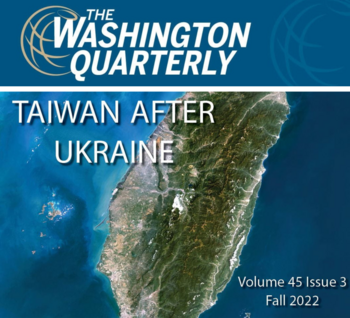
A new article in The Washington Quarterly provides a framework for analyzing South Korea’s potential role in this era of strategic competition through the lens of war over Taiwan. The authors — Oriana Skylar Mastro, a Center Fellow at APARC, and Sungmin Cho, a professor at the Daniel K. Inouye Asia-Pacific Center for Security Studies — build upon traditional concepts of balancing to create a nuanced, operationally relevant strategy for South Korea to contribute to the defense of Taiwan.

They explain South Korea’s approach to the Taiwan issue to date; evaluate South Korea’s strategic importance and what it can do to support U.S.-led efforts to compete with China; explore how China and North Korea may respond to increased South Korean cooperation with the United States, along with the potential obstacles this cooperation could create; and recommend ways to leverage the US-ROK alliance to enhance deterrence against China with respect to Taiwan.


Subscribe to APARC newsletters to receive our scholars’ updates.

There are politically feasible options for South Korea to greatly contribute to US-integrated deterrence in the Taiwan Strait.
Oriana Skylar Mastro and Sungmin Cho

Mastro and Cho recognize that it is operationally and politically infeasible for South Korea to fight side-by-side with U.S. forces against China in a Taiwan scenario or to build its military sufficiently to deter Chinese aggression against Taipei. South Korean strategists must also consider the costs of China’s and North Korea’s potential responses to greater South Korean involvement in defending Taiwan. Still, Seoul can play a significant role in deterring Chinese aggression.

According to Mastro and Cho, South Korea’s optimal strategy to navigate the U.S.-China rivalry should meet two conditions. First, it should contribute to the vision of a free and open Indo-Pacific, including deterring Chinese aggression against Taiwan. Second, it should be able to make China hesitate to take punitive actions against South Korea. Thus, South Korea can provide rear-area support to the United States, such as intelligence gathering, ammunition supplies, or noncombatant evacuation. It can also support the strategic flexibility of US Forces Korea (USFK) and be more proactive in deterring North Korean aggression and provocation to free up U.S. resources to focus on China in a contingency scenario.

Moreover, South Korea could contribute toward forms of “collective resilience” against China’s economic statecraft, such as collective economic sanctions, and leverage its position as one of the world’s leading producers of advanced semiconductors to complicate China’s calculus. Finally, Seoul’s diplomatic support of U.S.-led efforts to defend Taiwan can influence Beijing to take seriously the international community’s potential united response against any attempt to invade Taiwan.

“Given the heightened urgency over tensions in the Taiwan Strait, Washington and Seoul should pursue these options immediately to maintain peace and stability in the region before it is too late,” the authors conclude.

Get The Washington Quarterly article

Read More

Chinese President Xi Jinping is applauded by senior members of the government and delegates.
Commentary

In China, Xi Jinping Is Getting an Unprecedented Third Term. What Should the World Expect?

Xi's plans are long term and unlikely to shift, but he can now be more aggressive than before in their pursuit.
In China, Xi Jinping Is Getting an Unprecedented Third Term. What Should the World Expect?
Hero Image
South Korean soldiers participate in a river crossing exercise with U.S. soldiers.
South Korean soldiers participate in a river crossing exercise with U.S. soldiers in Yeoju, South Korea, October 19, 2022. | Chung Sung-Jun/ Getty Images
All News button
1
Subtitle

Despite obstacles and risks, there are good reasons why South Korea should want to increase deterrence against China. In a new article, Center Fellow Oriana Skylar Mastro and co-author Sungmin Cho chart an optimal strategy for Seoul to navigate the U.S.-China rivalry and support efforts to defend Taiwan.

Paragraphs

Image
Aerial view of Taiwan and text "The Washington Quarterly, Vol 45 Issue 3, Fall 2022"
Compared to alliances like Japan and Australia, which seek to counter potential Chinese aggression, the role of South Korea is often secondary. Particularly with President Yoon’s new government in place, what can South Korea do to support U.S.-led efforts to compete with China, and what are the major hurdles in attaining deeper bilateral cooperation to enhance deterrence over Taiwan? 

To answer this question, the authors build upon traditional concepts of balancing to create a more granular, operationally relevant set of strategies for South Korea. They argue that, while it is politically infeasible for South Korea to fight side-by-side with US forces against China in a Taiwan scenario or to attempt to build its military sufficiently to deter the People’s Republic of China (PRC) from aggression against Taipei, these classic external and internal balancing strategies are not South Korea’s only options.

In this article, they provide background on South Korea’s approach to the Taiwan issue to date; evaluate South Korea’s strategic importance and what it can theoretically bring to the table; and explore how China and North Korea may respond to increased South Korean cooperation with the US, along with the potential obstacles this cooperation could create. Lastly, they recommend ways to leverage the US–South Korean alliance to enhance deterrence against China with respect to Taiwan.

All Publications button
1
Publication Type
Journal Articles
Publication Date
Journal Publisher
The Washington Quarterly
Authors
Oriana Skylar Mastro
Number
3
Subscribe to Security