FSI scholars produce research aimed at creating a safer world and examing the consequences of security policies on institutions and society. They look at longstanding issues including nuclear nonproliferation and the conflicts between countries like North and South Korea. But their research also examines new and emerging areas that transcend traditional borders – the drug war in Mexico and expanding terrorism networks. FSI researchers look at the changing methods of warfare with a focus on biosecurity and nuclear risk. They tackle cybersecurity with an eye toward privacy concerns and explore the implications of new actors like hackers.
Along with the changing face of conflict, terrorism and crime, FSI researchers study food security. They tackle the global problems of hunger, poverty and environmental degradation by generating knowledge and policy-relevant solutions.
REGISTRATION FULL. No walk-ins, no substitutions. Door opens at 3:45pm for registered guests.
Ursula von der Leyen studied economics at the University of Göttingen, the University of Münster and the London School of Economics and Political Science. From 1980 to 1987 she attended Hanover Medical School (MHH). After obtaining her license to practise medicine, she worked at the Clinic for Obstetrics and Gynaecology. She obtained her Dissertation in Medicine in 1991 and was awarded the degree of Dr. med.. In 1992, Ursula von der Leyen and her family moved to the United States. She returned to Germany in 1996. From 1998 to 2002 she worked as a research assistant at the Department of Epidemiology, Social Medicine and Health System Research at Hanover Medical School and completed her Master’s degree in Public Health in 2001.
Ursula von der Leyen started her political activities in 1990 when she became a member of the Christian Democratic Union (CDU). From 2001 to 2003 she held various political offices at municipal level in the Hanover region. In 2003 she became a member of the Lower Saxony state parliament and was appointed State Minister of Social Affairs, Women, Family Affairs and Health. In 2005 Ursula von der Leyen started her career in federal politics as Federal Minister of Family Affairs, Senior Citizens, Women and Youth. In 2009 she became a Member of Parliament (Deutscher Bundestag) and was appointed as Federal Minister of Labour and Social Affairs. After her election as member of the CDU Executive Committee she was elected as party vice chairwoman in 2010. In 2013 she was appointed as Minister of Defense of the Republic of Germany.
Ursula von der Leyen was born in Brussels in 1958. She lives near Hanover. She is married with Professor Heiko von der Leyen and the couple has seven children.
Fisher Conference Center in the Arrillaga Alumni Center
As part of the Program on Arab Reform and Democracy's speaker series, George Mason University scholar Bassam Haddad explained the roots and dynamics of the tragic Syrian uprising, with particular attention to its background and to the recent Russian intervention, in a talk dated January 22, 2016. After nearly five years since the start of the uprising, Syria finds itself divided and embattled, with no end in sight. More significantly, more than half of the Syrian population is displaced and the death toll surpassed 300,000 by all counts. The Syrian tragedy persists and, more than any other case of mass uprising in the region, continues to be shrouded in political power-plays and contradictions at the local, regional, and international levels, Haddad explained.
Pictured: Kenneth Scheve, Jenny Martinez, Emily Arnold-Fernàndez, and James Cavallaro.
Amidst the reimposition of border controls in some Schengen states, daily reports of new arrivals to Europe, and the marked rise in anti-immigrant rhetoric, the European refugee crisis poses significant challenges to Europe. In her January visit to Stanford, Founder and Executive Director of Asylum Access, Emily Arnold-Fernàndez discussed the crisis in the context of the global plight of refugees. She noted that with an estimated 20 million refugees worldwide, and an additional estimated 40 million internally displaced persons, we are witnessing the largest population displacement since World War II. Arnold-Fernàndez explained that the rights of refugees and state obligations to refugees are enshrined in international law. In addition to the protections against being returned to an unsafe country of origin ("non-refoulement"), she noted that the Refugee Convention provides refugees with many rights on par with "the most favorable treatment accorded to nationals of a foreign country" and, in some cases, on par with those granted to nationals of the receiving state. These rights include the right of association, access to courts, access to wage-earning and self employment, and the freedom of movement. She explained, however, that states frequently fail to provide many of these rights to refugees, something Arnold-Fernàndez attributes in part to insufficient enforcement. As a result, where refugees are routinely prohibited from participating in the first country of arrival, they are likely to move on to alternative destinations. This, in part, is driving the current influx of refugees to Europe. This reality, according to Arnold-Fernàndez, elucidates at least one method of both assisting refugees and alleviating the flows of refugees to Europe: promoting policy change to ensure that refugee rights are protected and upheld in countries of first arrival. This approach, she explained, is in marked contrast to the predominant approaches to refugee assistance, which include humanitarian aid and development solutions (such as on the job training). While the first is not a long-term solution, the second is only likely to be effective if refugees are first permitted to participate in society.
Following the talk, The Europe Center Director, Kenneth Scheve, led a discussion featuring commentary by Stanford Law professors James Cavallaro and Jenny Martinez. Cavallaro spoke of the need to think more broadly about human migration and the potential deleterious effects of state immigration controls on both human rights and security. Martinez noted the tension between the clarity of the non-refoulement principle and the ambiguity of safe third country principles, and questioned the ability of legal norms to compel states to change policy or reallocate resources. To watch this event in full, please visit our website.
Featured Faculty Research: Cécile Alduy
We would like to introduce you to some of The Europe Center's faculty affiliates. Our featured faculty member this month is Cécile Alduy, who is an Associate Professor of French literature and culture and the Director of the French and Italian Department at Stanford University.
Cécile earned her Ph.D. in French Literature from the University of Reims in France in 2003 and joined the faculty at Stanford University that same year. Her research interests include the history and mythology of national and ethnic identities since the Renaissance, far right ideology and rhetoric, the relations between cultural, literary, and medical discourses on gender and the body in early modern Europe, poetry and poetics, narrative forms and their discontent, French cinema, and contemporary French literature. Cécile's most recent book, Marine Le Pen prise aux mots. Décryptage du nouveau discours frontiste [Marine Le Pen taken to her words. Decoding the new national front discourse], co-authored with Stephanie Wahnich, examines the rhetoric used by the National Front leader, Marine Le Pen, and compares it to that of her father and former National Front leader, Jean-Marie Le Pen. Casual observation of far right politics in France suggests that there has been a significant change in the National Front program following the 2011 leadership change to Marine Le Pen from Jean-Marie Le Pen and his 2015 ouster from the party. Marine Le Pen has taken great efforts to distance herself from her father, who infamously and repeatedly characterized gas chambers as "a detail in the history of World War II." The party has also enjoyed increasing electoral support in recent years. Against this backdrop, the book examines two fundamental questions: what is Marine Le Pen actually saying, and why does her speech resonate with French society today? To answer these questions, Alduy and Wahnich have analyzed over 500 speeches given by Marine and Jean-Marie Le Pen. This analysis reveals that there is significant continuity between the political agenda and ideological content of the Le Pens. In contrast with her father's blatantly radical speech, however, the younger Le Pen employs careful phraseology, replete with allusions, ambiguities, and double entendres, in order to "de-demonize" the party and make its platform appear more palatable to a modern French audience. In spite of programmatic continuity, this rhetorical rebranding appears to have facilitated greater electoral support for the National Front. Marine Le Pen prise aux mots has received significant media coverage, including a feature in Le Monde [article in French] and on NPR. In her ongoing research, supported in part by The Europe Center, Cécile is building upon the methodologies devised for Marine Le Pen prise aux mots and examining the development of political discourse of French political parties across the ideological spectrum in the period leading up to the 2017 presidential election. The initial results of this study will be published by Seuil in 2017 in a book preliminarily entitled Les Mots des présidentiables. Sémantique d'une triangulaire annoncée [The words of presidential candidates. Semantics of a three-candidate race]. We invite you to visit our website for additional information about this research.
Publication Details: Alduy, Cécile, and Stephanie Wahnich. 2015. Marine Le Pen prise aux mots. Décryptage de nouveau discours frontiste. Paris: Seuil.
Featured Graduate Student Research: Camilla Mazzucato
We would like to introduce you to some of the graduate students that we support and the projects on which they are working. Our featured graduate student this month is Camilla Mazzucato (Anthropology). Camilla is a Ph.D. student in the Department of Anthropology at Stanford University. Before beginning her Ph.D. studies at Stanford, Camilla earned a BA and an MA in Archaeology from the University of Bologna and an MSc in GIS and Spatial Analysis in Archaeology from the University College London.
Camilla is an anthropologist who is interested in using network analysis to examine the social arrangements "mega-sites" - large settlements that originated with small, settled hunter-gatherer communities - during the Pre-Pottery Neolithic B (PPNB) and Pottery Neolithic periods. In her current research, Camilla is evaluating these social arrangements with new evidence from Çatalhöyük, a dense agglomeration of mudbrick houses occupied for 1,400 years and located in modern-day Turkey. Approximately the size of a town, Çatalhöyük lacks many of the characteristics of a modern town, including specialized areas, communal buildings, and centralized functions. Moreover, the spatial arrangement differs significantly from other PPNB settlements. In summer 2015, Camilla conducted field research, partially funded by The Europe Center, at the site of Çatalhöyük. During her four weeks at the site, she explored ways of modeling the site's networks by collecting data focused on patterns of similarity of material culture features. This data will be used to examine the site's internal organization as well as the arrangements of social relationships therein. In addition, she spent time studying some of the recently-excavated buildings, using architectural features to study ties among entities.
Reminder: The Europe Center will be accepting applications for the Graduate Student Grand Competition March 28, 2016 - April 15, 2016. For more information please visit our website.
The Europe Center Programs: Minor in European Studies
As previously announced, The Europe Center and Stanford Global Studies are offering a minor in Global Studies with a concentration in European Studies. The minor is designed for undergraduate students who have an interdisciplinary interest in the history, culture, politics, societies, and institutions of Europe, past and present. The requirements of the minor include coursework, advanced proficiency in a modern European language, and a capstone experience such as a research paper with a focus on European Studies, completion of an overseas study program in Europe, or completion of an overseas internship in Europe.
This quarter, Christophe Crombez, Consulting Professor at The Europe Center, is offering the minor's core seminar class: Introduction to European Studies. In this survey course, students are introduced to important themes in the study of European politics, economics, and culture. The course begins with a discussion of European identity and culture, focusing on what makes Europe unique and how recent history has shaped this identity. In the second section, students analyze European politics by learning about Europe's predominant political institutions - parliamentary government and proportional representation electoral systems - and examining the effect of these institutions on public policy. The course then turns to the economy and understanding the challenges and opportunities that European economies face today. The fourth section focuses on the European Union, including its history, functioning, and policies. In the final section, the class discusses transatlantic relations.
We invite you to visit our website for more information about the Minor in European Studies.
Visiting Student Researcher: Lina Eriksson
The Europe Center is pleased to introduce to you Lina Eriksson, a Fulbright Scholar who is visiting Stanford University from the Department of Government at Uppsala University and the Center for Natural Disaster Science (CNDS), Sweden. Lina holds an MA in Ethnic Conflicts and Conflict Resolutions, Asylum Immigration and Integration from University of Waterloo, Canada and an MSc in Political Sciences, Economics and International Development from Jönköping International Business School (JIBS), Sweden. She is broadly interested in the politics of natural disasters. In her dissertation, entitled Natural Disasters and National Politics, Lina examines the electoral effects of the 2004 Boxing Day Tsunami and the 2005 Storm Gudrun on Swedish parliamentary elections. Part of this research, forthcoming in Electoral Studies, finds that the Swedish Social Democratic Party's poor crisis response to Storm Gudrun resulted in a significant decrease in support for the Social Democratic Party in the affected regions, leading to the largest change in partisan support in Swedish history. We invite you to visit our website for additional information about this research.
Publication Details: Eriksson, Lina M. 2016. "Winds of Change: Voter Blame and Storm Gudrun in the 2006 Swedish Parliamentary Election." Electoral Studies 41(1): 129-142.
The Europe Center Sponsored Events
February 18-19, 2016
8:00AM - 5:00PM
Workshop: Heritage Bureaucracies: Theoretical and Practical Perspectives
Stanford Archaeology Center
This conference is co-sponsored by The Europe Center, Stanford Archaeology Center, Cantor Arts Center, Department of Anthropology, Center for Russian, East European & Eurasian Studies, Stanford Humanities Center, The Europe Center, France-Stanford Center for Interdisciplinary Studies, and The Mediterranean Studies Forum.
Please visit our website for more information.
March 28, 2016
12:00PM - 1:30PM
Adam Tooze, Columbia University
NATO Expansion and the Swap Lines: the Unspoken Geopolitics of the Financial Crisis in Europe, 2007-2013
Reuben Hills Conference Room, Encina Hall East RSVP by 5:00PM March 24, 2016.
April 25, 2016
11:30AM - 1:00PM
Torben Iversen, Harvard University
Workshop Title TBD
Room 400 (Graham Stuart Lounge), Encina Hall West
No RSVP required.
This seminar is part of the Comparative Politics Workshop in the Department of Political Science and is co-sponsored by The Europe Center.
Save the Date: April 28-29, 2016
9:00AM - 5:00PM
Conference: Networks of European Enlightenment
Levinthal Hall, Stanford Humanities Center
This conference is co-sponsored by The Europe Center, the French Cultural Workshop, the Stanford Humanities Center, and the Division of Literatures, Cultures, and Languages.
May 9, 2016
11:30AM - 1:00PM
Monica Martinez-Bravo, Centro de Estudios Monetarios y Financieros (CEMFI), Madrid
Workshop Title TBD
Room 400 (Graham Stuart Lounge), Encina Hall West
No RSVP required.
This seminar is part of the Comparative Politics Workshop in the Department of Political Science and is co-sponsored by The Europe Center.
May 16, 2016
11:30AM - 1:00PM
Daniel Stegmueller, University of Mannheim
Workshop Title TBD
Room 400 (Graham Stuart Lounge), Encina Hall West
No RSVP required.
This seminar is part of the Comparative Politics Workshop in the Department of Political Science and is co-sponsored by The Europe Center.
European Security Initiative Events
March 3, 2016
12:00PM - 1:30PM
Vygaudas Ušackas, European Union Ambassador to Russia
Russia and the West: Handling the Clash of World Views
CISAC Central Conference Room, Encina Hall RSVP by 5:00PM March 1, 2016.
March 10, 2016
12:00PM - 1:30PM
Kathryn Stoner, Senior Fellow, Freeman Spogli Institute for International Studies, Stanford University
Resurrected? The Domestic Determinants of Russia's Conduct Abroad
Room E008 (Ground Floor Conference Room), Encina Hall East RSVP by 5:00PM March 9, 2016.
The recent US-ASEAN summit at Sunnylands in California is just the latest high-profile instance of Washington's efforts to strengthen its relations with Asia. Through a MacArthur Foundation-supported project he is leading, Bates Gill has explored a range of old and new security ties between the US and its partners in the Asia-Pacific region, including Indonesia, Myanmar, Vietnam, and Australia. Each of these governments seeks to strike the right balance between Washington and Beijing, but the domestic and foreign policies they employ for that purpose differ greatly. Basing his findings and analysis on extensive field research in these countries, Prof. Gill will offer recommendations for Washington and its regional partners as they look to engage with and hedge against a rising China.
Image
Bates Gill has a 30-year international career as a China watcher, having held teaching, research, and executive leadership positions in the United States, China, Europe, and Australia. He is currently a board director of China Matters, a not-for-profit advisory based in Sydney, Australia. In 2012-15 he was CEO of the United States Studies Centre at the University of Sydney. He directed the Stockholm International Peace Research Institute from 2007 to 2012 and previously held the Freeman Chair in China Studies at the Center for Strategic and International Studies and served as the inaugural director of the Center for Northeast Asian Policy Studies at the Brookings Institution.
Prof. Gill has authored or edited seven books including Rising Star: China's New Security Diplomacy and Asia's New Multilateralism: Cooperation, Conflict and the Search for Community (co-edited with Michael Green). His professional affiliations include service on the editorial boards of China Quarterly and the Journal of Contemporary China, the international advisory board of the Shanghai Institutes of International Studies, and the board of governors of the Rajaratnam School of International Studies (Singapore). His PhD is from the Woodrow Wilson Department of Government and Foreign Affairs at the University of Virginia.
The US, China and the Balance of Influence in and around Southeast Asia
Globalization has lifted more than one billion people out of extreme poverty, but as inequality and barriers to trade remain worldwide, improved trade standards are needed and the Trans-Pacific Partnership promises to be a primary conduit of those standards, America’s top trade official told a Stanford audience on Tuesday.
The TPP seeks to liberalize trade and investment between 12 Pacific Rim countries. Signed earlier this month, the document now faces the path to ratification through its members.
“In today’s rapidly globalizing world, the alternative to the TPP is not the status quo,” Froman told nearly one hundred affiliates and guests at the Bechtel Conference Center.
Froman cited efforts by various countries to build up alternative frameworks that promote free trade, but said they miss some components of stability and longevity that the TPP offers. For example, China’s 'one belt, one road' initiative and the Regional Comprehensive Economic Partnership, a negotiation between 16 Asian countries.
The TPP would serve as an important benchmark for countries seeking to expand economic gains from trade and to level up on common “rules of the road.” He said increase in exports to the United States alone is estimated at $350 billion a year.
“Smart trade agreements like the TPP are how we shape globalization the right way,” Froman said with a call for continued U.S. leadership on the matter.
President Obama has been a strong advocate of the agreement, in line with the administration’s ‘rebalance to Asia’ strategy. The rebalance is a regional strategy that aims to recognize the growing importance of the Asia-Pacific region to U.S. national interests.
Successful passage of the TPP will reassure allies in the region of American staying power, he said.
Countries outside of the TPP have begun to express interest in becoming a party to the agreement. South Korea, Taiwan, the Philippines and Indonesia are among them. Application to join the TPP is now closed, but we can “expect over time” that its membership would grow, he said.
At a 2013 conference, FSI scholars examined the potential impact on Taiwan should it seek membership. Outcomes from the conference are published in this report.
Froman said the TPP supports “commerce without borders” among key sectors in the United States, in particular, those found in and around Silicon Valley.
“No state stands to benefit more from the TPP than California,” he said.
Froman announced the release of a report that details TPP provisions focused exclusively on technology and intellectual property.
Stanford researchers working with the U.S. Navy’s Marine Mammal Program in San Diego have discovered a startling variety of newly-recognized bacteria living inside the highly trained dolphins that the Navy uses to protect its ships and submarines, find submerged sea mines and detect underwater intruders. They found similar types of bacteria in wild dolphins as well.
“About three quarters of the bacterial species we found in the dolphins’ mouths are completely new to us,” said David Relman, Stanford professor of microbiology and medicine, and co-author of a paper published in the journal Nature Communications on Wednesday.
A U.S. Navy dolphin opens its mouth for a swab to collect bacterial samples.
These previously unknown bacteria represent “whole new realms of life,” according to Relman.
“Bacteria are among the most well-studied microbes, so it was surprising to discover the degree to which the kinds of bacteria we found were types that have never been described,” he said. “What novelty means is not just new names of species, families, classes or phyla…there’s reason to believe that along with this taxonomic novelty, there’s functional novelty.”
The U.S. Navy has been training dolphins and sea lions to carry out defensive military missions from their bases in San Diego and elsewhere since the early 1960s.
Over the years, it has also funded scientific research and become the single largest contributor to the scientific literature on marine mammals, producing more than 800 publications, according to the Navy.
Relman started working with the Navy more than 15 years ago to identify bacteria suspected of causing stomach ulcers in their dolphins.
His latest project to catalog the bacterial communities (or microbiota) living inside the dolphins began when the Navy asked him to help develop a probiotic bacterial strain that could keep their dolphins healthy, or help sick dolphins get better.
Navy trainers took regular swabs from the dolphins’ mouths and rectal areas, using what looked like a Q-tip, and shipped the samples to Stanford on dry ice for analysis.
Stanford researchers analyzed oral, rectal and gastric samples from the U.S. Navy's dolphins and sea lions, as well as samples from the dolphins' blowholes and the surrounding water.
They also collected samples of the air the dolphins exhaled from their blowholes (known as “chuff”) onto sterile filter paper, as well as samples of their gastric juices using a tube that the dolphins would swallow on command, and for comparison, bacteria from the surrounding water.
The study found a similar amount of diversity and novelty in bacterial samples taken from wild dolphins living in Sarasota Bay off the west coast of Florida, although there were slight differences in the bacteria from the dolphins’ mouths.
Relman said he hoped to develop a profile of the normal microbial communities in healthy dolphins and other marine mammals, so that scientists could detect any early change that might signify an imminent disease, or health problems caused by climate change and ocean warming.
“There’s a lot of concern about the changing conditions of the oceans and what the impact could be on the health of wild marine mammals,” Relman said. “We would love to be able to develop a diagnostic test that would tell us when marine mammals are beginning to suffer from the ill effects of a change in their environment.”
The research could help solve other mysteries, such as how dolphins digest their food, even though they swallow fish whole without chewing them.
The key could be a unique bacterial group that’s also been identified in an endangered species of freshwater dolphins living in China’s Yangtze River, said Elisabeth Bik, a research associate at the Stanford Department of Medicine and lead author on the paper.
“It’s a very intriguing bacterial group that nobody has seen before in any other terrestrial animal group,” said Bik. “I would really love to know more about those bacteria and sequence their genomes to understand more about their functional capacity.”
Zak, a 375-pound California sea lion, shows his teeth during a training swim. Zak has been trained to locate swimmers near piers, ships, and other objects in the water considered suspicious and a possible threat to military forces in the area.
The study also examined oral, gastric and rectal samples from the Navy’s trained sea lions.
“The sea lions and dolphins are kept at the same facility, they’re fed exactly the same fish, and they’re swimming in the same water…but they’re very, very different in terms of microbiota,” Bik said.
Unlike dolphins, sea lions share many common types of bacteria with their terrestrial cousins.
“Sea lions weren’t that different from other carnivores like dogs and cats,” Bik said. “They’re evolutionarily related to them, and their microbiota looks very similar to those animals. But dolphins don’t really have a terrestrial mammal that’s closely related, and their microbiota looks very different from anything else that people have seen.”
Relman said his team was planning on expanding their study to include other marine mammals such as sea otters, killer whales, baleen whales, grey whales, harbor seals, elephant seals and manatees. Their purpose, in part, is to understand how life in the sea, over the millions of years since the return of mammals, may have shaped the structure of their microbial communities and the roles they play in marine mammal health.
They’re already working to analyze more than 80 samples of killer whale stool that the U.S. National Oceanic and Atmospheric Administration has gathered with the help of specially trained sniffer dogs, which stand on the bow of their boats and point to fresh killer whale feces before it sinks.
The California Department of Fish and Wildlife is contributing samples from the sea otters and seals it studies as part of its conservation, ecological, and monitoring programs.
And the Marine Mammal Center in Sausalito, which is the West Coast’s largest rescue and rehabilitation facility for marine mammals, is sending samples from the seals in its care.
Relman said the research could help scientists begin to answer fundamental questions about life in the ocean.
“Marine mammals remain one of the more poorly understood habitats for studying microbial life, and there would be lots of reasons for thinking that these are important environments to study, in part because of the relevance for the health of these marine mammals, but also because they represent a view into what it means to live in the sea and the nature of our relationship with this vast aspect of our environment,” Relman said.
Collaborators and co-authors on this study included Stephanie Venn-Watson and Kevin Carlin from the National Marine Mammal Foundation, and Eric Jensen from the Space and Naval Warfare Systems Center Pacific, in San Diego.
Hero Image
A U.S. Navy dolphin opens its mouth for a swab to collect bacterial samples.
The Center for International Security and Cooperation (CISAC) is honored to offer the 2016 Drell Lecture with Dr. William J. Perry, 19th U.S. Secretary of Defense, who will take attendees on "A National Security Walk Around the World."
Drell Lecture Recording: NA
Drell Lecture Transcript: NA
Speaker's Biography: William Perry is the Michael and Barbara Berberian Professor (emeritus) at Stanford University. He is a senior fellow at the Freeman Spogli Institute and the Hoover Institution, and serves as director of the Preventive Defense Project. He is an expert in U.S. foreign policy, national security and arms control. He was the co-director of CISAC from 1988 to 1993, during which time he was also a part-time professor at Stanford. He was a part-time lecturer in the Department of Mathematics at Santa Clara University from 1971 to 1977.
Image
Perry was the 19th secretary of defense for the United States, serving from February 1994 to January 1997. He previously served as deputy secretary of defense (1993-1994) and as under secretary of defense for research and engineering (1977-1981). Dr. Perry currently serves on the Defense Policy Board (DPB), the International Security Advisory Board (ISAB) and the Secretary of Energy Advisory Board (SEAB). He is on the board of directors of Covant, Fabrinet, LGS Bell Labs Innovations and several emerging high-tech companies. His previous business experience includes serving as a laboratory director for General Telephone and Electronics (1954-1964); founder and president of ESL Inc. (1964-1977); executive vice-president of Hambrecht & Quist Inc. (1981-1985); and founder and chairman of Technology Strategies & Alliances (1985-1993). He is a member of the National Academy of Engineering and a fellow of the American Academy of Arts and Sciences.
From 1946 to 1947, Perry was an enlisted man in the Army Corps of Engineers, and served in the Army of Occupation in Japan. He joined the Reserve Officer Training Corps in 1948 and was a second lieutenant in the Army Reserves from 1950 to 1955. He was awarded the Presidential Medal of Freedom in 1997 and the Knight Commander of the British Empire in 1998. Perry has received a number of other awards including the Department of Defense Distinguished Service Medal (1980 and 1981), and Outstanding Civilian Service Medals from the Army (1962 and 1997), the Air Force (1997), the Navy (1997), the Defense Intelligence Agency (1977 and 1997), NASA (1981) and the Coast Guard (1997). He received the American Electronic Association's Medal of Achievement (1980), the Eisenhower Award (1996), the Marshall Award (1997), the Forrestal Medal (1994), and the Henry Stimson Medal (1994). The National Academy of Engineering selected him for the Arthur Bueche Medal in 1996. He has received awards from the enlisted personnel of the Army, Navy, and the Air Force. He has received decorations from the governments of Albania, Bahrain, France, Germany, Hungary, Japan, Korea, Poland, Slovenia, and Ukraine. He received a BS and MS from Stanford University and a PhD from Pennsylvania State University, all in mathematics.
The talk will be followed by a Q&A session moderated by CISAC Co-director Dr. David Relman.
The Drell Lecture is an annual public event sponsored by CISAC. By tradition, the Drell speaker addresses a current and critical national or international security issue that has important scientific or technical dimensions. The lecture is named for Sidney Drell, CISAC's founding science co-director. Albert and Cicely Wheelon generously endowed the lectureship.
Ambassador Ušackas will dwell on security challenges faced by Europe. He will share his views on why and how interdependent economic partners: the EU and Russia got into a geopolitical confrontation and what is the way forward? What are the consequences of the war in Ukraine, effects of Syria crisis and what is the future role of NATO in Europe.
Ambassador Ušackas has been serving as the European Union Ambassador to the Russian Federation as of 1 September 2013. Previously, he was the European Union Special Representative and Head of the European Union Delegation in Afghanistan from April 2010. After obtaining his Law Degree from Vilnius University and completing his post-graduate education in Political Sciences in Denmark and Norway in 1991, he joined the Lithuanian Ministry of Foreign Affairs. In his distinguished career in the Foreign Service, he served as Counselor to the Lithuanian Mission to both the EU and NATO from 1992 to 1996; Political Director of the Lithuanian Ministry of Foreign Affairs from 1996 to 1999; Deputy Minister of Foreign Affairs of Lithuania and Chief Negotiator for Lithuania’s Accession to the European Union from 1999 to 2001; Lithuanian Ambassador to the United States of America and United Mexican States from 2001 to 2006; Ambassador of Lithuania to the Court of St. James from 2006 – 2008; and was Lithuanian Foreign Minister from 2008 to 2010. During the course of his career, he has received numerous awards such as Order for Merits to Lithuania, Cross of Commander, State awards of Estonia, France, Georgia, Greece, Norway, Poland, Spain and Ukraine; award for merits to the city of Utena and Member of honour of Lithuanian Students’ Union. He was awarded the Honorary citizenship of his home town Skuodas in 2010 and Ukmerge in 2013. In 2014, Vygaudas Ušackas was bestowed a Honorary Doctor's Degree in Political Science of Vytautas Magnus University of Kaunas. He is also fluent in English and Russian and has a working knowledge of French. Mr Ušackas is married and has two children.
Vygaudas Ušackas
European Union Ambassador to Russia
Incompetent and dishonest politicians are common in developing countries. Scholars who write about corruption and poor governance tend to take the existence of bad politicians as a given and focus on the damage that they do. Few study the ways in which politicians are recruited in order to improve that process. Some scholars acknowledge the need to encourage the creation of a political class that is competent and honest. But none have gone further by conducting real-world experiments to evaluate the efficacy of screening and incentivizing competent and virtuous citizens to stand for public office, that is, how to nudge good people to become politicians in the first place.
Dr. Ravanilla will describe a policy intervention designed to attract able and ethical candidates to public service. Can a leadership-training workshop and non-monetary status rewards be used to screen and motivate good people to serve the public good? His answer is yes. The results of a randomized field experiment among youth running for an elective post in the Philippines show that such an intervention is indeed feasible and can be effective in motivating able and moral individuals to seek public office while at the same time discouraging candidates who do not meet these criteria.
Image
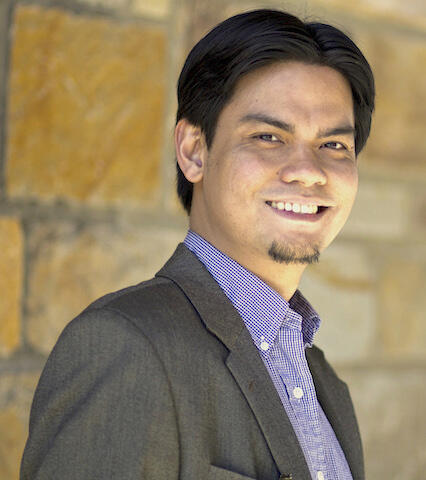
Nico Ravanilla will begin an assistant professorship in the School of Global Policy and Strategy at the University of California, San Diego, in September 2016. The Southeast Asia Research Group named him a Young Southeast Asia Fellow for 2015-16. He earned his PhD in political science and public policy at the University of Michigan in 2015.



 Cécile earned her Ph.D. in French Literature from the University of Reims in France in 2003 and joined the faculty at Stanford University that same year. Her research interests include the history and mythology of national and ethnic identities since the Renaissance, far right ideology and rhetoric, the relations between cultural, literary, and medical discourses on gender and the body in early modern Europe, poetry and poetics, narrative forms and their discontent, French cinema, and contemporary French literature. Cécile's most recent book, Marine Le Pen prise aux mots. Décryptage du nouveau discours frontiste [Marine Le Pen taken to her words. Decoding the new national front discourse], co-authored with Stephanie Wahnich, examines the rhetoric used by the National Front leader, Marine Le Pen, and compares it to that of her father and former National Front leader, Jean-Marie Le Pen. Casual observation of far right politics in France suggests that there has been a significant change in the National Front program following the 2011 leadership change to Marine Le Pen from Jean-Marie Le Pen and his 2015 ouster from the party. Marine Le Pen has taken great efforts to distance herself from her father, who infamously and repeatedly characterized gas chambers as "a detail in the history of World War II." The party has also enjoyed increasing electoral support in recent years. Against this backdrop, the book examines two fundamental questions: what is Marine Le Pen actually saying, and why does her speech resonate with French society today? To answer these questions, Alduy and Wahnich have analyzed over 500 speeches given by Marine and Jean-Marie Le Pen. This analysis reveals that there is significant continuity between the political agenda and ideological content of the Le Pens. In contrast with her father's blatantly radical speech, however, the younger Le Pen employs careful phraseology, replete with allusions, ambiguities, and double entendres, in order to "de-demonize" the party and make its platform appear more palatable to a modern French audience. In spite of programmatic continuity, this rhetorical rebranding appears to have facilitated greater electoral support for the National Front. Marine Le Pen prise aux mots has received significant media coverage, including a feature in
  Camilla is an anthropologist who is interested in using network analysis to examine the social arrangements "mega-sites" - large settlements that originated with small, settled hunter-gatherer communities - during the Pre-Pottery Neolithic B (PPNB) and Pottery Neolithic periods. In her current research, Camilla is evaluating these social arrangements with new evidence from Çatalhöyük, a dense agglomeration of mudbrick houses occupied for 1,400 years and located in modern-day Turkey. Approximately the size of a town, Çatalhöyük lacks many of the characteristics of a modern town, including specialized areas, communal buildings, and centralized functions. Moreover, the spatial arrangement differs significantly from other PPNB settlements. In summer 2015, Camilla conducted field research, partially funded by The Europe Center, at the site of Çatalhöyük. During her four weeks at the site, she explored ways of modeling the site's networks by collecting data focused on patterns of similarity of material culture features. This data will be used to examine the site's internal organization as well as the arrangements of social relationships therein. In addition, she spent time studying some of the recently-excavated buildings, using architectural features to study ties among entities.
 The Europe Center is pleased to introduce to you Lina Eriksson, a Fulbright Scholar who is visiting Stanford University from the Department of Government at Uppsala University and the Center for Natural Disaster Science (CNDS), Sweden. Lina holds an MA in Ethnic Conflicts and Conflict Resolutions, Asylum Immigration and Integration from University of Waterloo, Canada and an MSc in Political Sciences, Economics and International Development from Jönköping International Business School (JIBS), Sweden. She is broadly interested in the politics of natural disasters. In her dissertation, entitled Natural Disasters and National Politics, Lina examines the electoral effects of the 2004 Boxing Day Tsunami and the 2005 Storm Gudrun on Swedish parliamentary elections. Part of this research, forthcoming in Electoral Studies, finds that the Swedish Social Democratic Party's poor crisis response to Storm Gudrun resulted in a significant decrease in support for the Social Democratic Party in the affected regions, leading to the largest change in partisan support in Swedish history. We invite you to visit our


 A U.S. Navy dolphin opens its mouth for a swab to collect bacterial samples.
 Stanford researchers analyzed oral, rectal and gastric samples from the U.S. Navy's dolphins and sea lions, as well as samples from the dolphins' blowholes and the surrounding water.
 Zak, a 375-pound California sea lion, shows his teeth during a training swim. Zak has been trained to locate swimmers near piers, ships, and other objects in the water considered suspicious and a possible threat to military forces in the area.