Energy

This image is having trouble loading!FSI researchers examine the role of energy sources from regulatory, economic and societal angles. The Program on Energy and Sustainable Development (PESD) investigates how the production and consumption of energy affect human welfare and environmental quality. Professors assess natural gas and coal markets, as well as the smart energy grid and how to create effective climate policy in an imperfect world. This includes how state-owned enterprises – like oil companies – affect energy markets around the world. Regulatory barriers are examined for understanding obstacles to lowering carbon in energy services. Realistic cap and trade policies in California are studied, as is the creation of a giant coal market in China.

-

For spring quarter 2022, CISAC will be hosting hybrid events. Many events will offer limited-capacity in-person attendance for Stanford faculty, staff, fellows, visiting scholars, and students in accordance with Stanford’s health and safety guidelines, and be open to the public online via Zoom. All CISAC events are scheduled using the Pacific Time Zone. 

SEMINAR RECORDING

Virtual to Public. Only those with an active Stanford ID with access to William J Perry Conference Room in Encina Hall may attend in person. 

Gorakh Pawar
Seminars
Authors
News Type
News
Date
Paragraphs

Depend on your smart phone? Enjoy a flat screen tv? How about an electric vehicle, do you drive one? These technologies—and other clean energy, information, and defense applications— all rely on rare-earth elements that could be mined in most parts of the world but are primarily processed and refined only in a limited number of countries, like China.

“Right now, the U.S. doesn’t have enough supply to fulfill the objective of the steady clean energy transition, ensure national security, and achieve long-term economic goals” said Gorakh Pawar, a staff scientist at the Idaho National Laboratory who is a visiting scholar at the Center for International Security and Cooperation.  The importance of rare earths mining is highlighted in the series of reports recently issued by the U.S.  Department of Energy in response to President Biden’s Executive Order "America's Supply Chains" signed in 2021.

“This means that the U.S. depends on other countries and therefore, the U.S. needs a strategic approach to resolve the major rare earth elements supply chain issues urgently,” Pawar added. 

Mountain Pass Rare Earth Mine and Processing Facility Mountain Pass Rare Earth Mine and Processing Facility, Mountain Pass, San Bernardino Co., California (Image credit: MP materials.com)

Rare-earth elements “are moderately abundant in the earth’s crust, but they need to be concentrated to be economically viable,” said Sulgiye Park, a Fellow at CISAC. “What we want is concentrated rare-earth reserves because we are going to spend a lot of money mining and processing it.”

Important deposits of rare earths exist in the U.S. and previously the U.S. was self-reliant in domestically produced rare-earth elements, but mining operations have declined over the last several decades, allowing China to command roughly 90 percent of the global market. Now, however, there are signs that domestic production is making a comeback, and CISAC scholars are both studying and providing support to accelerate this resurgence.

Pawar, Park and CISAC co-director Rod Ewing toured the Mountain Pass Rare Earth Mine and Processing Facility in southern California to learn more about its operation and to determine how their research could help support this important industry.

“We were provided with critical insights into MP Materials' strategy for securing the domestic rare earth supply chain that would significantly reduce U.S. economic dependence on foreign REE,” Ewing said.

“The substantial challenges include developing domestic supply chains for mill equipment and capacity to process rare earths, such as neodymium-praseodymium magnets,” Ewing added.

Pawar, Park and Ewing toured the mine for three hours to see the facilities, ask and answer questions. They wanted to understand the facts on the ground, supply chain issues and industry challenges in a more complete way to enhance their own research.

Open pit mine Open pit mine (Sulphide Queen deposit) at Mountain Pass. The open pit is ~600 m wide. A massive carbonatite forms the core of Mountain Pass that hosts REE mineral resources, including bastnäsite. (Image credit: Gorakh Pawar)

Before the trip, Pawar and Park relied on academic literature, open source information, news stories and press releases about rare-earth elements, like this recent White House release titled “Securing a Made in America Supply Chain for Critical Minerals,” which announced a Department of Defense grant to MP Materials, who operate the Mountain Pass mine.

“Open source is great,” Park said. “But if you have a chance to visit the site, you can learn from the people on the ground who provide a whole new perspective. “

The tour also fortified connections so that the Pawar, Park and Ewing could share their own knowledge and policy-relevant research, as well as their network of colleagues who have different areas of expertise.

CISAC was created in 1983 with the goal of bringing together experts in science and technology with experts in policy. The mission statement has always been “to generate new knowledge for a better world.” And this trip to Southern California was another opportunity to fulfill this mission.

About Idaho National Laboratory
Battelle Energy Alliance manages INL for the U.S. Department of Energy’s Office of Nuclear Energy. INL is the nation’s center for nuclear energy research and development, and also performs research in each of DOE’s strategic goal areas: energy, national security, science and the environment.

Hero Image
Three people in hard hats
From the left: Gorakh Pawar (CISAC researcher), Sulgiye Park (CISAC postdoctoral fellow), and Michael Rosenthal (MP Materials Chief Operating Officer). Image Credit: Rodney Ewing
All News button
1
Subtitle

A three-person team from CISAC toured the only domestic mine producing rare earths, which are critical for the modern economy.

-

This event will offer simultaneous translation between Japanese and English. 
当イベントは日本語と英語の同時通訳がついています。

This is a virtual event. Please click here to register and generate a link to the talk. 
The link will be unique to you; please save it and do not share with others.
当イベントはZoomウェビナーで行われます。ウェビナーに参加するためには、こちらのリンクをクリックし、事前登録をして下さい。

March 1, 5-6:30 p.m. California time/ March 2, 10-11:30 a.m. Japan time

This event is part of the 2022 Japan Program Winter webinar series, The Future of Social Tech: U.S.-Japan Partnership in Advancing Technology and Innovation with Social Impact


The challenges of climate change require solutions on multiple fronts, one of which is technological innovation. Attempts for innovation for new energy sources have been ongoing in many parts of the world, and Japan has produced a number of new technologies. This session will focus on two of the most promising innovations coming out of Japan, biofuel and hydrogen energy, and assess their promises and challenges, highlighting technological, regulatory, and business aspects of developing new technologies. Where do these technologies fit in the energy portfolio that would address the issues of climate change and what can Japan and the United States do to collaboratively solve the key problems in advancing these technologies further? Three leading experts in the field will discuss these questions that would shape the future of climate change. 


Panelists

Image
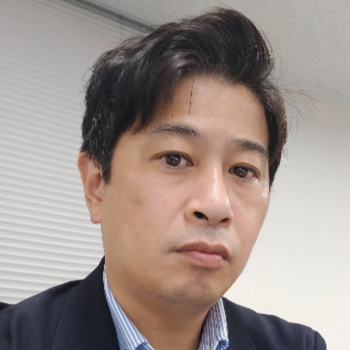
Headshot photo of Mitsuru Izumo
Mitsuru Izumo is a graduate of the University of Tokyo, having specialised in agricultural structural
management. In 2005, he established Euglena Co., Ltd. to harness the properties of microalgae
Euglena. Euglena Co., Ltd. became the world’s first biotechnology company that succeeded in the
outdoor mass cultivation of Euglena. Currently, Euglena Co., Ltd upholds “Sustainability First” as
their philosophy and has developed the manufacture and sale of foods and cosmetics as the
healthcare domain, the biofuel business, the bioinformatics business, and the social business in
Bangladesh by leveraging Euglena and other advanced technologies.


Image
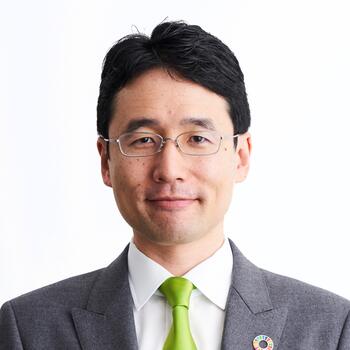
Headshot photo of Eiji Ohira
Eiji Ohira is the Director General of the New Energy and Industrial Technology Development Organization (NEDO)’s Fuel Cell and Hydrogen Technology Office In this capacity, he is responsible for the overall strategy, execution and coordination of NEDO’s research, development and demonstration project on fuel cell and hydrogen.

He has also coordinated fuel cell and hydrogen activities with international stakeholders, through International Energy Agency’s Technology Collaboration Program (IEA TCP: Advanced Fuel Cell & Hydrogen), and International Partnership for Hydrogen and Fuel Cells in the Economy (IPHE). 

He joined the NEDO in 1992, just after graduation from the Tokyo University of Science. He served as a visiting scholar at the Massachusetts Institute of Technology in 1997-1998.


Moderator

Image
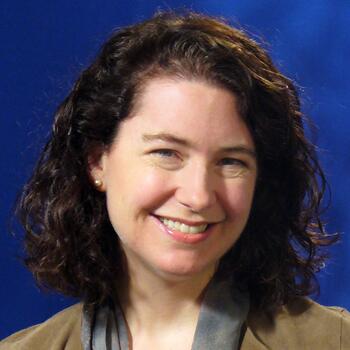
Headshot photo of Kate Hardin
Kate Hardin, Deloitte Executive Director for Energy and Industrials Research, has worked in the energy industry for 25 years.  She currently leads Deloitte research on the impact of the energy transition on the energy and industrial manufacturing sectors. Before that, Kate led integrated coverage of transportation decarbonization and the implications for the oil, gas, and power sectors.  Kate has also developed global energy research for institutional investors and has led analysis of Russian and European energy developments.  Kate recently served as an expert in residence at Yale’s Center for Business and Environment, and she is also a member of the Council on Foreign Relations.  


Image
Shorenstein APARC Winter 2022 Speaker Series Icon with text "New Frontiers: Technology, Politics, and Society in the Asia-Pacific"
This event is part of the 2022 Winter webinar series, New Frontiers: Technology, Politics, and Society in the Asia-Pacific, sponsored by the Walter H. Shorenstein Asia-Pacific Research Center.

Via Zoom Webinar
Register:  https://bit.ly/3LuNa94


Mitsuru Izumo <br>Founder and President, Euglena Co Ltd.<br><br>
Eiji Ohira <br>Director General of Fuel Cell and Hydrogen Technology Office, Japan New Energy and Industrial Technology Development Organization (NEDO) <br><br>
Kate Hardin <br>Executive Director, Deloitte Research Center for Energy & Industrials
Panel Discussions
News Type
News
Date
Paragraphs

In October 2021, Stanford Precourt Institute for Energy, SCPKU, and the China Program with Peking University’s Institute of Energy organized closed-door roundtables to promote China and the United States' decarbonization and carbon neutrality. The topics covered climate change, global sustainable finance, corporate climate pledges, opportunities and challenges, the power, transportation, and industry sectors. The full report can be found in the link.

Hero Image
China Climate change
All News button
1
Date Label
0
rsd21_040_1307a_-_shiro_keziah_wachira.jpg

Shiro comes to Stanford after 5 years working in social impact and international development in the United States as well as across East Africa. Most recently, she worked with GiveDirectly, supporting systems’ improvements and operations across their programs as Chief of Staff for International Programs. Prior to that, she was a manager on the internal consulting team at One Acre Fund where she led multiple global talent and change management projects. Shiro is passionate about sustainable, community-led development and is interested in pursuing a career at the intersection of climate resilience and development. She is particularly interested in agriculture, food systems, and urban adaptations to climate change. Shiro graduated Phi Beta Kappa from the University of Chicago (AB ‘16) with a degree in philosophy. Immediately after graduating, she served as a public service fellow with a New York based charity through University of Chicago’s competitive Shriver Public Service Fellowship program.

Master's in International Policy Class of 2023
0
rsd21_040_1561a_-_taimur_ahmad.jpg

Taimur is joining MIP after spending the past 3 years as a management consultant at McKinsey, focusing on operational transformations, strategy development, and design thinking across various industries. Prior to that, he was working on an agricultural development project in Pakistan as a quantitiave research assistant, focusing on improving yields and incomes in some of the poorest villages of the country. His interests are at the intersection of economic development, energy systems, social theory, and new technologies. At MIP, he is particularly focusing on how a better understanding of the monetary system, energy inequality, and blockchain technology can help solve the climate crisis. He has a background in International Economics from Georgetown University (Qatar campus), where he was awarded the Abu Hamid Al Ghazzali Best Graduating Student Award. In his free time, he enjoys hiking, and avidly watching/playing football (soccer), tennis, and cricket.

Master's in International Policy Class of 2023
0
joyce_lin_headshot_-_joyce_lin.jpg

Joyce is a Master’s in International Policy candidate at Stanford, where she specializes in energy, natural resources and the environment. She is also one of the editors-in-chief of Stanford International Policy Review. Joyce’s research interests lie at the intersection of economic diplomacy and environmental governance. Previously, Joyce worked at AidData, an international development research lab, where she studied Chinese public diplomacy efforts in two major world regions and led the assembling of a novel dataset that tracked $843 billion in Chinese development financing around the world. She has also worked for UN Women’s China office and the US-ASEAN Business Council in the past. Joyce received a B.A. in International Affairs and Economics from the George Washington University. Born and raised in Singapore, Joyce is bilingual in English and Mandarin Chinese. In her spare time, Joyce enjoys reading, baking, painting, and playing board games.

Master's in International Policy Class of 2023
0
headshot_-_calli_obern_-_calli_c._obern.jpeg

Calli Obern is pursuing her Master’s in International Policy at Stanford University, specializing in energy, natural resources, and the environment. Calli is also a research fellow with Ecospherics, an advisory firm on environmental and national security issues and has researched Chinese investments in Asia at Stanford. Previously, Calli managed US-China dialogues on climate and energy at the Aspen Institute. Calli received a B.A. from Occidental College in 2016, where she studied Diplomacy and World Affairs and Mandarin Chinese. In her free time, Calli enjoys running, singing karaoke, practicing foreign languages, and playing Euchre, the best Midwestern card game.

Master's in International Policy Class of 2022
Authors
News Type
News
Date
Paragraphs

Abstract

Unregulated lithium (Li) growth is the major cause of low Coulombic efficiency, short cycle life and safety hazards for rechargeable Li metal batteries. Strategies that aim to achieve large granular Li deposits have been extensively explored, and yet it remains a challenge to achieve the ideal Li deposits, which consist of large Li particles that are seamlessly packed on the electrode and can be reversibly deposited and stripped. Here we report a dense Li deposition (99.49% electrode density) with an ideal columnar structure that is achieved by controlling the uniaxial stack pressure during battery operation. Using multiscale characterization and simulation, we elucidate the critical role of stack pressure on Li nucleation, growth and dissolution processes and propose a Li-reservoir-testing protocol to maintain the ideal Li morphology during extended cycling. The precise manipulation of Li deposition and dissolution is a critical step to enable fast charging and a low-temperature operation for Li metal batteries.

Read the rest at  Nature Energy

Hero Image
a–c, TEM images of Li deposited at 70 kPa. d–f, TEM images of Li deposited at 350 kPa. Insets: fast Fourier transform patterns of the corresponding images.
Pressure-tailored lithium deposition and dissolution in lithium metal batteries
All News button
1
Subtitle

Unregulated lithium (Li) growth is the major cause of low Coulombic efficiency, short cycle life and safety hazards for rechargeable Li metal batteries. Strategies that aim to achieve large granular Li deposits have been extensively explored, and yet it remains a challenge to achieve the ideal Li deposits.

0
rsd21_040_1327a_-_dani_ignacio_gajardo_orellana.jpg

Daniel Gajardo, from Santiago, Chile, graduated from Pontificia Universidad Católica de Chile with a bachelor’s degree in civil engineering and a diploma in hydraulic engineering. Daniel aspires to address environmental problems with an interdisciplinary approach, combining social and environmental sciences. He has worked as head of consulting in TriCiclos, a Latin American circular economy company, and he co-founded Engineers Without Borders Chile, a nonprofit seeking to improve the quality of life of underserved communities through the application of humanitarian engineering methodologies. He has been recognized with multiple awards, including Best Graduating Student by Pontificia’s School of Engineering, Best Graduate by Pontificia Universidad Católica de Chile's alumni foundation, and for his leadership skills and social commitment by the Chilean Institute of Engineers.

Master's in International Policy Class of 2022
Subscribe to Energy