International Relations

FSI researchers strive to understand how countries relate to one another, and what policies are needed to achieve global stability and prosperity. International relations experts focus on the challenging U.S.-Russian relationship, the alliance between the U.S. and Japan and the limitations of America’s counterinsurgency strategy in Afghanistan.

Foreign aid is also examined by scholars trying to understand whether money earmarked for health improvements reaches those who need it most. And FSI’s Walter H. Shorenstein Asia-Pacific Research Center has published on the need for strong South Korean leadership in dealing with its northern neighbor.

FSI researchers also look at the citizens who drive international relations, studying the effects of migration and how borders shape people’s lives. Meanwhile FSI students are very much involved in this area, working with the United Nations in Ethiopia to rethink refugee communities.

Trade is also a key component of international relations, with FSI approaching the topic from a slew of angles and states. The economy of trade is rife for study, with an APARC event on the implications of more open trade policies in Japan, and FSI researchers making sense of who would benefit from a free trade zone between the European Union and the United States.

0
Soojong Kim

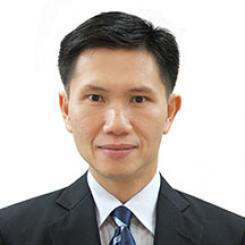
Soojong Kim is a postdoctoral fellow, jointly affiliated with the Program on Democracy and the Internet (PDI) and the Digital Civil Society Lab (DCSL). He received his PhD at the Annenberg School for Communication, University of Pennsylvania. His research centers around social media, misinformation, and computational social science. As a former computer scientist and engineer, he is also interested in applying and developing innovative research methods, including web-based experiments, computational modeling, network analysis, and natural language processing.

He is recently focusing on three research projects. (1) Real-time Misinformation Monitoring: Evaluating the impacts of real-world misinformation messages in real-time and reducing their adverse socio-psychological consequences. (2) Virtual Social Media: Discovering and examining factors that influence behavior and perception of social media users based on interactive multi-agent network experiments. (3) Map of Misinformation: Investigating the structure of disinformation messages and the landscape of the fake news ecosystem and designing effective misinformation suppression/prevention strategies.

Dr. Kim worked at Samsung Electronics as a computer scientist for several years after earning his B.S. and M.S. degrees in Electrical Engineering and Computer Science from Seoul National University, South Korea. He also holds his Master's degree in sociology. He is a recipient of the ICA Best Paper Award, Wharton Russell Ackoff Fellowship, Waterhouse Family Institute Research Grant Award, Annenberg Doctoral Research Fellowship, and MisinfoCon Research Grant.

Find more information on Dr. Kim’s research and news at his personal site http://www.soojong.kim/

Postdoctoral Fellow
Program on Democracy and the Internet (PDI) and the Digital Civil Society Lab (DCSL)
-

This event will take place on Zoom. Registration is required: http://bit.ly/Invisible_China

Image
Book cover for "Invisible China: How the Urban-Rural Divide Threatens China's Rise" and a quote from Scott Rozelle, "The entire population of 800 million people has become almost fully invisible over the past decades..."

As the glittering skyline in Shanghai seemingly attests, China has quickly transformed itself from a place of stark poverty into a modern, urban, technologically savvy economic powerhouse. But as FSI Senior Fellow Scott Rozelle and Natalie Hell show in their new book Invisible China, the truth is much more complicated and might be a serious cause for concern.

Drawing on extensive surveys on the ground in China, Rozelle and Hell reveal that while China may be the second-largest economy in the world, its labor force has one of the lowest levels of education of any comparable country. The low levels of basic education of such a large share of workers may leave many unable to find work in the formal workplace as China’s economy changes and manufacturing jobs move elsewhere.

In this book talk event, Rozelle, who is also the director of FSI’s Rural Education Action Program, will be joined by Hongbin Li, a senior fellow at the Stanford Institute for Economic Policy Research and director of the China Program at the Stanford King Center on Global Development, who will moderate a discussion about the major themes of the book. A question and answer session with the audience will follow the discussion.


Image
scott rozelle new headshot

Scott Rozelle holds the Helen Farnsworth Endowed Professorship at Stanford University and is Senior Fellow in the Food Security and Environment Program and the Shorenstein Asia-Pacific Research Center, Freeman Spogli Institute (FSI) for International Studies. For the past 30 years, he has worked on the economics of poverty reduction. Currently, his work on poverty has its full focus on human capital, including issues of rural health, nutrition and education. For the past 20 year, Rozelle has been the chair of the International Advisory Board of the Center for Chinese Agricultural Policy, Chinese Academy of Sciences (CAS). In recent years Rozelle spends most of his time co-directing the Rural Education Action Project (REAP). In recognition of this work, Dr. Rozelle has received numerous honors and awards. Among them, he became a Yangtse Scholar (Changjiang Xuezhe) in Renmin University of China in 2008. In 2008 he also was awarded the Friendship Award by Premiere Wen Jiabao, the highest honor that can be bestowed on a foreigner. 

Image
hongbin li headshot


Hongbin Li is the James Liang Director of the China Program at the Stanford King Center on Global Development, and a Senior Fellow of Stanford Institute for Economic Policy Research (SIEPR). Hongbin’s research has been focused on the transition and development of the Chinese economy, and the evidence-based research results have been both widely covered by media outlets and well read by policy makers around the world. He is currently the co-editor of the Journal of Comparative Economics.


Seminars
Shorenstein APARC Encina Hall E301 Stanford University
0
Shorenstein Postdoctoral Fellow in Contemporary Asia, 2020-2021
nhu_truong_resize.png Ph.D.

Nhu Truong joined the Walter H. Shorenstein Asia-Pacific Research Center (APARC) as Shorenstein Postdoctoral Fellow for the 2020-2021 academic year. Her research focuses on authoritarian politics and the nature of communist and post-communist regimes, particularly pertaining to regime repressive-responsiveness, dynamics of social resistance, repertoires of social contention, and political legitimation. As a Shorenstein Fellow, Nhu Truong worked to develop her dissertation into a book manuscript. More specifically, she worked on buttressing the theory by contrasting Cambodia with China and Vietnam, as well as exploring the variable outcomes and knock-on effects of authoritarian responsiveness as groundwork for her next comparative project.

Nhu Truong’s dissertation explains how and why the two most similar communist, authoritarian regimes of China and Vietnam differ in their responsiveness to mounting unrest caused by government land seizures. Authoritarian regimes manage social unrest not merely by relying on raw coercive power, but also by demonstrating responsiveness to social demands. Yet, not all authoritarian regimes are equally responsive to social pressures. Despite their many similarities, Vietnam has exhibited greater institutionalized responsiveness, whereas China has been relatively more reactive. Theory and empirical findings based on 16 months of fieldwork and in-depth comparative historical analysis of China and Vietnam illuminate the divergent institutional pathways and the nature of responsiveness to social pressures under communist and authoritarian rule.

Nhu Truong obtained her Ph.D. in comparative politics in the Department of Political Science at McGill University, with an area focus on China, Vietnam, and Southeast Asia. She received an MPA in International Policy and Management from New York University, Wagner Graduate School of Public Service, an MA in Asian Studies from the University of Texas at Austin, and a BA in International Studies from Kenyon College. Prior to embarking on her doctoral study, she had work experience in international development in Vietnam, Cambodia, and policy research on China.

Authors
Arzan Tarapore
News Type
Commentary
Date
Paragraphs

This op-ed by Arzan Tarapore originally appeared in The Hindu.


Over four months ago, the Chinese army entered territory that India has long considered its own, and never left. In effect, the multiple incursions have changed the Line of Actual Control (LAC) and India has lost territory, at least for the time being. How could this happen?

In part, it was a failure of the warning-intelligence system. Either Indian intelligence services did not collect sufficient data of Chinese intentions and early moves, or they did not interpret it correctly, or their policy and military customers failed to take the warning seriously. Wherever the fault lay, the system apparently failed.

In part, however, the problem also lay in the Army’s concepts for defending the country’s borders. It is, as the current crisis shows, simply not postured or prepared for the type of security threat China presents. (Continue reading the full article in The Hindu.)

[Subscribe to our newsletters to get the latest commentary from APARC scholars.]

Read More

An Indian Army soldier looking through a military monocular over hills in the background
News

U.S. Policymakers Cannot Assume the Fixity of Indian Strategic Preferences, Argues South Asia Research Scholar Arzan Tarapore

In a special report published by the National Bureau of Asian Research, Tarapore analyzes possible scenarios for India’s strategic future that expose risks and tensions in current U.S. policy.
U.S. Policymakers Cannot Assume the Fixity of Indian Strategic Preferences, Argues South Asia Research Scholar Arzan Tarapore
Portrait of Arzan Tarapore and text: "Q&A with Arzan Tarapore"
Q&As

Internal Balancing Will Determine India’s Relationships with the US and China, Argues APARC’s Newest Research Scholar

Indo-Pacific security expert Arzan Tarapore, whose appointment as a research scholar at APARC begins on September 1, discusses India’s military strategy, its balancing act between China and the United States, and his vision for revitalizing the Center’s research effort on South Asia.
Internal Balancing Will Determine India’s Relationships with the US and China, Argues APARC’s Newest Research Scholar
Hero Image
A regiment of the Indian Army practices in dress uniform for Republic Day
A regiment of the Indian Army practices in dress uniform for Republic Day.
Mitul Gajera, Unsplash
All News button
1
Subtitle

The security threats India faces along its borders require new strategies, and in order to manage and prevent future risks, the military needs to overhaul its traditional playbook of deterring and defending against conventional attacks says Arzan Tarapore.

Authors
Noa Ronkin
News Type
News
Date
Paragraphs

U.S. policymakers are counting on India as a natural strategic partner. They focus on India’s increasing national power and its enticing potential as a counterbalance to China. But what happens if India’s strategic preferences shift? Will it fulfill its potential so that the U.S. strategic bet pays off?

In a special report, Exploring India's Strategic Futures, published by the National Bureau of Asian Research (NBR), APARC South Asia Research Scholar and NBR Nonresident Fellow Arzan Tarapore identifies a set of challenges for American strategists, illustrating alternative futures of India as a strategic actor and focusing on futures that may pose challenges to U.S. security interests.

Tarapore uses a novel method of major/minor trends to demonstrate that India’s strategic preferences are not fixed but could vary discontinuously under different environmental conditions. Based on detailed historical analysis, this method offers a powerful tool to sensitize decision makers to a range of possible futures. He analyzes three plausible scenarios:

First, a revisionist India driven by Hindu-nationalist ideology to settle the score with Pakistan, which will require it to keep the China front quiet and accommodate China’s Belt and Road Initiative in Eurasia. This scenario may severely complicate U.S. strategy in the Indo-Pacific and its efforts to counterbalance China.

Second, a risk-acceptant Indian military that engages in brinkmanship, which may endanger strategic stability with both Pakistan and China. In this scenario, rather than keeping the Chinese military in check, India may paradoxically have the opposite effect.

Third, an India that expands its competition with China into continental Eurasia, making common cause with U.S. rivals such as Russia and Iran. This scenario illustrates the tensions in a U.S. global strategy that lacks prioritization and prompts Washington to more carefully consider its preferences in Central Asia.

Tarapore by no means suggests that such futures are likely — they are decidedly unlikely — but rather that U.S. strategists should consider them plausible. Indeed, the three scenarios are all grounded in political processes that have long existed in India, from communalism to military adaptation, to the balancing of external threats. Therefore, argues Tarapore, U.S. policymakers should not assume Indian strategic preferences are stable. They must consider scenarios in which India might challenge U.S. security interests.

Read More

Portrait of Arzan Tarapore and text: "Q&A with Arzan Tarapore"
Q&As

Internal Balancing Will Determine India’s Relationships with the US and China, Argues APARC’s Newest Research Scholar

Indo-Pacific security expert Arzan Tarapore, whose appointment as a research scholar at APARC begins on September 1, discusses India’s military strategy, its balancing act between China and the United States, and his vision for revitalizing the Center’s research effort on South Asia.
Internal Balancing Will Determine India’s Relationships with the US and China, Argues APARC’s Newest Research Scholar
Japanese Prime Minister Shinzo Abe speaks at a podium with audience seen at the front
Commentary

Three Hits and Three Misses: What is Prime Minister Abe’s Legacy?

Despite this long period as prime minister, it is not entirely clear that Abe accomplished major policy goals.
Three Hits and Three Misses: What is Prime Minister Abe’s Legacy?
Leaders from the ASEAN league gather onstage at the 33rd ASEAN Summit in 2018 in Singapore.
Commentary

Southeast Asia's Approach to China and the Future of the Region

In an interview with The Diplomat, Donald Emmerson discusses how factors like the South China Sea, U.S.-China competition, and how COVID-19 are affecting relations between Southeast Asia, China, and the United States.
Southeast Asia's Approach to China and the Future of the Region
Hero Image
An Indian Army soldier looking through a military monocular over hills in the background
An Indian Army soldier guards the line dividing Kashmir between India and Pakistan.
Farooq Khan-Pool/ Getty Images
All News button
1
Subtitle

In a special report published by the National Bureau of Asian Research, Tarapore analyzes possible scenarios for India’s strategic future that expose risks and tensions in current U.S. policy.

Authors
News Type
News
Date
Paragraphs

Since regaining its independence in the aftermath of the Soviet Union’s collapse nearly 30 years ago, Ukraine has sought to build links with the West. This includes ties with institutions such as NATO, with which Ukraine has established a distinctive partnership. Kyiv has been keen on deepening those ties. Its interest in becoming a NATO member has continued to grow since 2014, as it views NATO as a means to protect Ukrainian sovereignty and territorial integrity from its aggressive neighbor, Russia.

Although NATO-Ukraine cooperation has intensified, and the Alliance maintains its “open door” policy, NATO members appear reluctant to put Ukraine on a membership track. Despite the fact that Russia continues a low-intensity conflict against Ukraine—and occupies Ukrainian territory—Kyiv can expand its practical cooperation with NATO. However, in the near term, Kyiv will have to keep its expectations about membership modest.

Read the rest at Turkish Policy Quarterly

Hero Image
photo of man smiling
All News button
1
Subtitle

Since regaining its independence in the aftermath of the Soviet Union’s collapse nearly 30 years ago, Ukraine has sought to build links with the West. This includes ties with institutions such as NATO, with which Ukraine has established a distinctive partnership.

Encina Hall
616 Jane Stanford Way
Stanford, CA 94305-6055

0
Research Scholar
mike_bennon_2022.jpg

Michael Bennon is a Research Scholar at CDDRL for the Global Infrastructure Policy Research Initiative. Michael's research interests include infrastructure policy, project finance, public-private partnerships and institutional design in the infrastructure sector. Michael also teaches Global Project Finance to graduate students at Stanford. Prior to Stanford, Michael served as a Captain in the US Army and US Army Corps of Engineers for five years, leading Engineer units, managing projects, and planning for infrastructure development in the United States, Iraq, Afghanistan and Thailand. 

Program Manager, Global Infrastructure Policy Research Initiative
Authors
News Type
Blogs
Date
Paragraphs

As schools across the U.S. began to close due to COVID-19 in mid-March, I was in the unique position of transitioning into online classes while already having had some experience taking fully online classes. The year before, I had completed SPICE’s Reischauer Scholars Program (RSP), an intensive online course focusing on Japanese culture, history, and U.S.–Japan relations; participating in the Sejong Korea Scholars Program (SKSP), an equivalent program, I thought, would be a similar experience.

Yet, being part of the SKSP in the midst of a pandemic framed the way I participated in and learned from the class. As the course went on, we began each Virtual Classroom with a brief discussion on COVID-19, talking amongst ourselves how we were personally doing, and how Korea was handling it as compared to the U.S. We were encouraged to read local news in Korea to learn about COVID-19, and we brought our learnings to each discussion with renewed vigor. There’s a strange and harrowing feeling you get when analyzing the course of a virus in your home country and across the Pacific—an implicit understanding that this isn’t just a research text to pore over, but an unprecedented moment in history we’re living through. 

But back to the beginning. After participating in the RSP, I realized how essential it is to analyze stories from all facets.

In my school, I’d only learned from Western perspectives; RSP and SKSP were golden opportunities to more comprehensively learn the nuances of global culture and history.
Sandi Khine

RSP first introduced me to the concept that “history is told from the winner’s perspective,” and SKSP gave me the opportunity to delve deeply into that. I became intrigued with how history is taught and wanted to understand the “other” sides of stories I learned about in my textbooks. Weeks later, when we learned about the Japanese exploitation of Korean comfort women during World War II, I knew that learning about these issues from one side would simply not be enough to fully comprehend parts of history such as these. The way I learn history directly impacts how I view society and the relationships between groups of people.

Hence, each of the modules helped me craft a multifaceted perspective of Korea and U.S.–Korea relations. The lessons and lectures allowed me to understand and re-interpret modern and historical issues in a global context. From Shamanism’s evolving role in Korean society, to Japanese colonial rule in Korea, to the social impacts of the Miracle on the Han River, to class and socioeconomic strata in Korean education systems, I dove into a plethora of topics through readings, lectures, and class discussions. As a high school student, I never believed I would have the honor of learning from distinguished scholars and experts, but SKSP introduced me to a variety of academics with clear passions for Korean history and culture. My learning extended beyond lectures: in discussion boards, I learned from my classmates, who shared their diverse perspectives and experiences and fostered an inclusive and challenging learning environment. We were given the chance to analyze material on our own through readings and assignments, but it was in these virtual interactions with my peers that I discovered the most. The open and constructive group that Dr. Jang and Mr. Edman facilitated was one where we could respectfully engage with one another on any topic while acknowledging at the end of the day the friendships and bonds we’d made. Thus, I paired my self-led education from SPICE with that of my public schooling and constructed a greater comprehensive understanding of the world.  

However, it was the Korean War and North Korea units that I believe played the greatest role in not only my intellectual development, but also my personal and political growth. These two units coalesced in my final research paper project, in which I wrote about the critical role of student activism in South Korean democratization. During my research and readings, I analyzed how the March First Movement set the stage for South Korean protest culture and democratization. I recognized that of the two factions of activists post March First, I might have been in the more radical faction, the one that ended up becoming North Korea. This realization, combined with the readings and lectures from the North Korea unit, completely changed my view of geopolitics in Korea. I learned about the U.S.’s role in the Korean War, and subsequently the Western portrayal of North Korea as a rogue, renegade state. I wondered, how much are we to speak about propaganda when students like me are taught lessons that shield Western imperialism with saviorism and American exceptionalism?

SKSP is not simply a fleeting online course with a broad overview of Korea, but an unparalleled opportunity to uncover Korea on an academic level few other high school students have. I hadn’t expected to undergo a personal and political reckoning within myself, but it is because of this growth that I am beyond grateful for SKSP, Dr. Jang and Mr. Edman’s instruction and advising, and all of my peers’ questions and discussions. Since then, I haven’t ceased to continue kindling my interest in Korean history and politics, questioning previously held beliefs, and broadening my worldview. And it is especially during a time like this—a global movement of Black Lives Matter, a local movement to change my high school’s Indigenous emblem, and everything in between, all within the context of a pandemic—that it is so crucial for me to critically analyze what I’ve been taught, and to keep learning as much as I can. In SKSP, I’ve developed the skills necessary to do so. It’s the “other sides” of stories, namely non-Western and non-white, that I am committed to studying, since understanding the nuances of the past can help guide us into a more equitable future.

Next fall, I begin at Stanford, hopefully on campus—it feels like coming full circle, having the privilege to attend college in an institution that first allowed me to foster a genuine love for learning. Now, while many of my friends begin their college careers, I have chosen to take a gap year with the U.S. Department of State’s National Security Language Initiative for Youth (NSLI-Y), a rigorous and competitive academic scholarship to study a critical language abroad. As of August, the in-country program has been pushed back to 2021 due to COVID-19, but I hope to find myself in Seoul in a few months. With everything ahead of me, I know SKSP is only the beginning, as I hope to continue bridging my education to the world.

Read More

Alumni of the Reischauer Scholars Program and Sejong Korean Scholars Program gather with SPICE staff
Blogs

Shinnenkai: A New Year Gathering

Shinnenkai: A New Year Gathering
Students in Stanford’s SKSP online course learn about Korea from many angles, including both traditional and contemporary Korean culture.
News

The Largest Cohort of High School Students Successfully Completes the SKSP Online Course on Korea at Stanford

The Largest Cohort of High School Students Successfully Completes the SKSP Online Course on Korea at Stanford
Hero Image
Student in a red dress presenting at a podium with Stanford signage
Sandi Khine speaking as an honoree of the Reischauer Scholars Program, August 9, 2019; photo courtesy Rylan Sekiguchi
All News button
1
Subtitle

The following reflection is a guest post written by Sandi Khine, an alumna of the Reischauer Scholars Program and the Sejong Korea Scholars Program, which are currently accepting applications for the 2021 courses.

Authors
News Type
Commentary
Date
Paragraphs

[This article originally appeared in Orient XII.]

Political observers have voiced contrasting opinions about the peace treaty between Israel and the Arab Emirates. Some have seen it as a monumental betrayal, others as an historic breakthrough. Actually, the treaty changes nothing in the Middle East political equation, nor does it attenuate in any way the tragic disregard for the rights of the Palestinians which we have witnessed for so many years now. It is simply a strategic arrangement which has short-term advantages for the United Arab Emirates, Israel and the United States but addresses none of the basic issues.

First of all, this peace treaty cannot be regarded as an historic betrayal of Arab positions. The UAE have been working for years to normalize their relations with Israel. The two countries have established high-level contacts in capitals all over the world and have made it known to the international community by organizing their own leaks: they have also sent signals to Western and Arab public opinion. In recent months, the UAE conveyed humanitarian aid to Palestine via the Ben Gurion airport, in co-ordination with Israeli authorities rather than with their Palestinian counterparts. The peace treaty is a normal, organic stage of this process. True, from a legal point of view, it is a decision which goes counter to the Arab peace initiative of 2002. But this latter had already been abandoned just as the Arab League’s sponsorship which went along with it had already been discredited.

At the same, brutal as it may seem, this agreement does not constitute a betrayal of the Palestinians. Their rights have already been sacrificed in the face of Israel’s determination to destroy any prospect of a Palestinian State by laying siege to the Gaza Strip and by gradually annexing the West Bank. The Palestinians have understood that in the Gulf, only Kuwait and Qatar are determined to reject any US sponsored “deal of the century” unless those Israeli policies are abandoned. Though the peace treaty does contain a clause theoretically putting an end to that territorial colonization. It only stops the annexation legally and formally while backing de facto the pursuance of the illegal colonization process.

Nor is the peace treaty an historic breakthrough. The Palestinian struggle has lost much of its political importance in the eyes of the Arab masses during the last three decades. And though it is still capable of sparking an emotional response and remains apolitical issue for Arab public opinion, it generates much less solidarity that it used to do.

DECLINE OF THE PALESTINIAN CAUSE

This decline has taken place in several stages. The first phase began with the Oslo peace process, which obliged the Palestinians to renounce many of their rights in exchange for the vague promise of a future state, meant to be the fruition of a peace process negotiated under the auspices of the international community. The second phase began with the US invasion of Iraq in 2003. By destroying a traditional Arab power, the United States opened the way for Iranian expansion, the new disruptive element in the geopolitics of the region. In the years that followed, Iran considerably extended its strategic power in the Middle East.

Iranian military expansion climaxed in 2013 with the battle of Al-Qusayr in Syria. Before the Syrian civil war began, the UAE and Saudi Arabia, both members of the Sunni axis in the region, faced off against Iran in low intensity clashes in the Gulf area. Al-Qusayr inaugurated a new era in which Iranian military forces could operate openly in Arab countries and provide support for regimes that are their allies. Not only Syria and Iraq, but also Lebanon and Yemen have become arenas of confrontation, fueled as much by sectarian hyperbole as by the principles of realpolitik.

The Sunni Arab states, which form the so-called “moderate” axis in the Middle East, regard such non-governmental actors as Hezbollah, the Houthi movement in Yemen and the militias of the Popular Mobilization Forces in Iraq as auxiliaries in the Iranian war effort. In this context, the containment of Iran comes before the defense of the Palestinians.

The third event which has relegated the Palestinians to the sidelines of regional geopolitics was the Arab Spring. This foregrounded the issues of democratic emancipation and the overthrow of authoritarianism in many countries. The uprisings showed the extent to which the major ideologies of the past, pan-Arabism or its successor, Islamism, had lost much of their emotional appeal with Arab public opinion. Thus, the Palestinian cause became less visible, except in countries hosting large numbers of Palestinian refugees, like Lebanon and Jordan.

Yet while the Palestinians no longer figure high on the foreign policy agenda of most Arab states, the Arab world is certainly not about to plunge headlong into a collective normalization of relations with Israel. The big Arab countries would be likely to meet with strong public resistance. On the other hand, Bahrain, Oman and Mauritania are prepared to follow in the footsteps of the Emirates, and a modest “bandwagon” effect is not out of the question: other Arab countries could become involved in asymmetric exchanges with Israel in order not to be left out of any future settlement and to stay in the good graces of the USA. Short of complete diplomatic recognition, these steps might include the opening of liaison offices and the authorization of bilateral tourism.

For all these reasons, the peace treaty represents neither a tragic betrayal nor an historic breakthrough. From a strategic point of view, it is a calculated move meant only to offer short-term advantages to the three parties concerned.

THE UAE AND THE PRESERVATION OF A COUNTER-REVOLUTIONARY FRONT

From the UAE viewpoint, the treaty allows them to stand firm at a time when the Arab counter-revolution is in difficulty and imperils their reputation. Since the Arab Spring, the Emirates, along with Saudi Arabia, are at the forefront of the region’s countries which regard the propagation of democratic uprisings in the Middle East as an existential threat. The UAE are the leader of this counter-revolutionary front which advocates a Middle East of stable authoritarian regimes in which their petroleum resources guarantee them a decisive influence. According to this world view, electoral Islamism and political liberalism are two sides of the same coin; both represent radical changes which endanger the internal legitimacy of these regimes. It was the UAE that launched the counter-revolutionary battle and they cannot afford to lose it.

Recently, however, they have begun to lose ground. The Yemeni conflict has turned into a humanitarian disaster.

The over-confidence placed in certain factions to carry on their proxy war, as with General Khalifa Haftar in Libya, has not been repaid on the battlefield. As with the unwise embargo against Qatar, their diplomatic adventurism did not achieve its goals. Their investments in Egypt, aimed at making the Abdel Fattah Al-Sisi regime a model of the new Arab stability, have also failed to extricate the country from its political and economic stagnancy. In short, there is too much chaos and considering the initial investment, a rate of return much too low.

Considering all this, the peace treaty with Israel represents a calculated strategic consolidation. The leadership of the UAE hope to use Israel as a more powerful vector to help them achieve their geopolitical objectives, just as they used Saudi Arabia in the first phase of their counter-revolutionary thrust. The UAE are also protecting themselves against another threat: the shock wave that could result from an internal conflict in Saudi Arabia which would neutralise Mohamed Ben Salman. If this were to occur, the UAE leadership would find itself completely isolated.

Thus, the alliance with Israel offers the UAE some degree of protection in view of their common interests. Both countries share a deep hostility towards Iran and reject the nuclear agreement signed by former US President Obama. Both are equally disappointed by President Trump’s refusal to launch a large-scale military campaign against the Iranian forces. The lack of Trump’s military response in July 2019 after the attack on the Saudi Aramco oil facilities was seen as highly significant. And besides, Israel harbors a silent aversion to the democratization of Arab countries.

ISRAEL SAVES FACE

For Israel, the real advantage of this treaty is not economic. The Emirati leadership will make flashy investments in Israel, if only to show the Palestinians what they missed by turning down the “deal of the century”. But at the end of the day, the financial advantages for Israel will be slender. Trade with the UAE will be overshadowed by the existing exchanges with the USA and the West in general, while conversely the oil-rich UAE have no particular need of Israeli investments.

But Israel benefits from the agreement in other ways. First of all, it adds a little more legitimacy to its role in the regional order of the Middle East, even though it does run the risk of being sucked into the impulsive counter-revolutionary actions of its new peace partner.

Above all, however, Israel can go on pulling the strings in the Palestinians situation. Despite the passing mention in the treaty of a halt to the West Bank annexation process, the Netanyahu government considers this to be merely a temporary pause. The “deal of the century,” drawn up by Donald Trump’s entourage having bogged down this year, in view of the international condemnation of the annexation of the Jordan Valley, this new peace treaty provides an ideal opportunity to save face. Actually, no Israeli colony has been dismantled and no land has been returned to the Palestinians. Yet since the annexation plans have been officially suspended, the Palestinian Authority must remain operative as a political player, which preserves the fiction of a peace process in a bilateral framework.

A PUBLICITY OPERATION FOR TRUMP

A treaty like this is grist to the American mill because it is an excellent PR operation at a time when the presidential campaign is in full swing. The agreement can be passed off as a victory for the Trump administration, and the President can score some points as a successful negotiator. The fulfilment of the White House dream of hosting a peace treaty between Israel and an Arab country provides Trump with an excellent diversion to make voters forget his many governance failings in such areas as the coronavirus pandemic, race relations and other domestic issues.

The peace treaty also serves to hide the fiasco of the “deal of the century.” By claiming to have blocked the controversial annexation plans, the US will try to revive this moribund framework. At the same time, it helps Trump prop up his reputation with certain portions of his electorate. It enables the administration to recover a degree of credibility among liberal Jews who aspire to a collective peace in the Middle East while at the same time reassuring rabid Zionists that Israel’s claims to the West Bank are still on the table.

TOWARDS A “PALESTINIAN SPRING”?

In the last analysis, the real losers here are, as usual, the Palestinians. They will keep up their struggle to obtain the constituent elements of a viable state which include the right of return, a capital in East Jerusalem, and the end of Israel’s illegal occupation of their land. While the UAE, Israel and the USA may derive some short-term advantages from this treaty, the long-term future of the Palestinians is still up in the air.

Left at the periphery of the regional power play, the Palestinian struggle needs a fresh uprising. It is to be hoped that it will not take the form of yet another Intifada but rather that of a Palestinian version of the Arab Spring. This would require a rejuvenation of the Palestinian political establishment, the rise to power of a more responsible and better representative leadership, backed by united resistance on the part of Palestinian society as a whole.

This would also require that the Palestinians appeal to the whole rest of the world, not just the Middle East, because international support for a Palestinian State is still extremely high. Today the recovery of their rights by the people of Palestine is probably not linked to the two-state solution which is indeed no longer a viable option but must be sought henceforth in the framework of a single state.

Hero Image
hicham alaoui ls
All News button
1
-

This event is part of Shorenstein APARC’s fall webinar series "Shifting Geopolitics and U.S.-Asia Relations"

REGISTRATION LINK: https://bit.ly/3gPVXlt

Chair/discussant:  Donald K. Emmerson, director, Southeast Asia Program, Shorenstein Asia-Pacific Research Center, Stanford University

Topic:  Analysts of Southeast Asia, struggling to find commonalities that its eleven diverse countries share, have long distinguished the region’s mainland from its maritime portions. Aspects of the contrast include the mainland’s greater proximity to China. A controversial hypothesis follows: that subcontinental Myanmar, Laos, Cambodia, and possibly Thailand (but arguably not Vietnam) are more likely to become peninsular parts of a sphere of influence overseen by China than are the region’s more insular or archipelagic countries—Malaysia, Singapore, Brunei, Indonesia, the Philippines, and Timor-Leste. In support of the mainland versus maritime distinction, historical, cultural, and socioeconomic differences can also be cited. But how much do they really matter? Does the mainland-maritime contrast, for example, enhance or impede the ability of Southeast Asian countries to retain national independence and fashion a common front in defense of the autonomy of their region?  Or is location irrelevant?  And if other factors matter more, which ones, how, and why? The webinar will offer and explore answers to these and related questions.

Image
richard_heydararian_090220
Richard Heydarian is an Asia-based academic and columnist, who most recently was a Visiting Fellow at National Chengchi University, and formerly an Assistant Professor in political science at De La Salle University. As a columnist, he has written for the world’s leading publications, including The New York Times, The Guardian, Foreign Affairs, and is a regular contributor to Aljazeera English, Nikkei Asian Review, South China Morning Post, and the Straits Times. He is the author of, among other books, The Rise of Duterte: A Populist Revolt against Elite Democracy (Palgrave Macmillan, 2017) and The Indo-Pacific: Trump, China, and the New Struggle for Global Mastery (Palgrave Macmillan, 2019). As a policy adviser, he has advised Philippine presidential candidates, presidential cabinet members, senators, and the Armed Forces of the Philippines, and is also a television host in GMA Network in the Philippines.

Image
Ann Marie Murphy 090120
Ann Marie Murphy is Professor at the School of Diplomacy and International Relations, Seton Hall University, Senior Research Scholar at the Weatherhead East Asian Institute, Columbia University, and 2019-2010 ASEAN Research Program Fulbright Scholar.

Dr. Murphy's research interests include international relations and comparative politics in Southeast Asia, U.S. foreign policy toward Asia, and governance of non-traditional security issues.  She is co-author (with Amy Freedman) of Non-Traditional Security Issues in Southeast Asia: the Transnational Dimension, (2018) and co-editor (with Bridget Welsh) of Legacies of Engagement in Southeast Asia (2008). Dr. Murphy’s articles have appeared in journals such as Asian Security, Contemporary Southeast Asia, Orbis, Asia Policy, World Politics Review and PS: Political Science & Politics.  Dr. Murphy is a founding partner of the New York Southeast Asia Network and is currently completing a book on the impact of democracy on Indonesian foreign policy with the generous support of the Smith Richardson Foundation.

Image
Thitinan Pongsudhirak 090120
Thitinan Pongsudhirak is the Director of the Institute of Security and International Studies and Professor at Bangkok’s Chulalongkorn University. He has authored articles, books, book chapters and over 1,000 op-eds in media outlets. His sought-after views have appeared on CNN, BBC, Bloomberg, among others. Thitinan has provided briefings to diplomatic missions, investors, and business conferences on Thai domestic politics and regional geopolitics. In 2015, he was awarded an op-ed prize from the Society of Publishers in Asia. Subsequently, he was appointed ASEAN@50 Fellow by New Zealand’s Minister of Foreign Affairs & Trade; and Australia-ASEAN Fellow by Sydney’s Lowy Institute.  He completed his M.A. at Johns Hopkins School of Advanced International Studies and Ph.D. at the London School of Economics, having lectured internationally and held visiting positions at renowned universities, including Stanford University, while serving on several editorial boards of academic journals. 

Via Zoom Webinar

Register at https://bit.ly/3gPVXlt


Richard Javad Heydarian Independent Scholar, Author, and Columnist for the Philippine Daily Inquirer, Manila
Ann Marie Murphy Professor and Director, Center for Emerging Powers and Transnational Trends, Seton Hall University, New Jersey
Thitinan Pongsudhirak Professor and Director, Institute of Security and International Studies, Chulalongkorn University, Bangkok
Seminars
Subscribe to International Relations