International Relations

FSI researchers strive to understand how countries relate to one another, and what policies are needed to achieve global stability and prosperity. International relations experts focus on the challenging U.S.-Russian relationship, the alliance between the U.S. and Japan and the limitations of America’s counterinsurgency strategy in Afghanistan.

Foreign aid is also examined by scholars trying to understand whether money earmarked for health improvements reaches those who need it most. And FSI’s Walter H. Shorenstein Asia-Pacific Research Center has published on the need for strong South Korean leadership in dealing with its northern neighbor.

FSI researchers also look at the citizens who drive international relations, studying the effects of migration and how borders shape people’s lives. Meanwhile FSI students are very much involved in this area, working with the United Nations in Ethiopia to rethink refugee communities.

Trade is also a key component of international relations, with FSI approaching the topic from a slew of angles and states. The economy of trade is rife for study, with an APARC event on the implications of more open trade policies in Japan, and FSI researchers making sense of who would benefit from a free trade zone between the European Union and the United States.

Room N341, Neukom Building
Stanford Law School

(650) 724-8754
0
Senior Fellow, by courtesy, at the Freeman Spogli Institute for International Studies
William F. Baxter-Visa International Professor of Law
Faculty Affiliate at the Walter H. Shorenstein Asia-Pacific Research Center
Faculty Affiliate at the Stanford Center on China's Economy and Institutions
2022_headshot.jpg

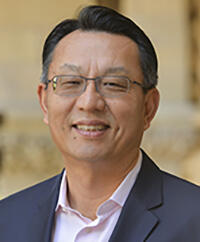
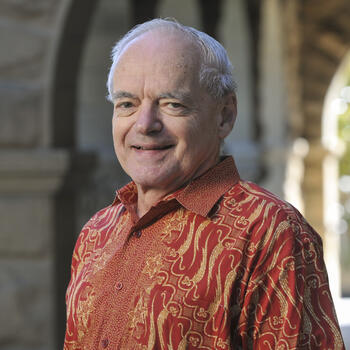
Curtis J. Milhaupt’s research and teaching interests include comparative corporate governance, the legal systems of East Asia (particularly Japan), and state capitalism. In addition to numerous scholarly articles, he has co-authored or edited seven books, including Regulating the Visible Hand? The Institutional Implications of Chinese State Capitalism (Oxford, 2016), Law and Capitalism: What Corporate Crises Reveal about Legal Systems and Economic Development Around the World (Chicago, 2008) and Transforming Corporate Governance in East Asia (Routledge, 2008). His research has been profiled in The Economist, the Financial Times, and the Wall Street Journal and has been widely translated. He is a Research Associate of the European Corporate Governance Institute and a member of the American Law Institute.

Prior to his Stanford appointment in 2018, Prof. Milhaupt held chaired professorships in comparative corporate law and Japanese law at Columbia Law School, where he served on the faculty for nearly two decades. He has held numerous visiting appointments at US and foreign universities and is the recipient of two teaching awards. He has been affiliated with think tanks such as the Bank of Japan’s Institute for Monetary and Economic Studies and has been a member of several international project teams focused on major policy issues in Asia, including one charged with designing an “institutional blueprint” for a unified Korean peninsula.

Prior to entering academia, Professor Milhaupt practiced corporate law in New York and Tokyo with a major law firm. He holds a J.D. from Columbia Law School and a B.A. from the University of Notre Dame.  He also conducted graduate studies in law and international relations at the University of Tokyo.

Date Label
-

* Please note all CISAC events are scheduled using the Pacific Time Zone.


Seminar Recording: https://youtu.be/tcWqulaKXy0


About the Event: Since the end of World War II, the United States has set out to oust governments in the Middle East on an average of once per decade—in places such as Iran, Afghanistan (twice), Iraq, Egypt, Libya, and Syria. Though pursued for a wide range of reasons, these operations all failed to achieve their ultimate goals, produced a range of unintended and even catastrophic consequences, carried heavy financial and human costs, and often left the countries in question worse off than they were before. Losing the Long Game: The False Promise of Regime Change in the Middle East gives readers a look at the U.S. experience with regime change over the past seventy years, and an insider’s view on U.S. policymaking in the region at the highest levels.

Book Purchase:  https://www.amazon.com/Losing-Long-Game-Promise-Regime/dp/1250217032


About the Speaker: Dr. Philip Gordon is the Mary and David Boies Senior Fellow in U.S. Foreign Policy at the Council on Foreign Relations.  From 2013-15, he served as Special Assistant to the President and White House Coordinator for the Middle East, North Africa, and the Gulf Region.  As the most senior White House official focused on the greater Middle East, he worked closely with the President, Secretary of State, and National Security Adviser on the full range of geopolitical, economic, and security issues facing the region.  From 2009-13, Dr. Gordon served as Assistant Secretary of State for European and Eurasian Affairs under Secretary of State Hillary Clinton.  In that position he was responsible for 50 countries in Europe and Eurasia as well as for NATO and the European Union (EU).  He is the author of Losing the Long Game: The False Promise of Regime Change in the Middle East, published October 6, 2020.    

Virtual Seminar

Philip Gordon Mary and David Boies Senior Fellow in U.S. Foreign Policy Council on Foreign Relations
Seminars
-

* Please note all CISAC events are scheduled using the Pacific Time Zone.


Seminar Recording: https://youtu.be/yyZ54SgGuz4


About the Event: We are beginning to understand that globalization has strategic consequences. Countries are using their position in globalized networks to "weaponize interdependence," through their dominance of information and financial networks. In this talk, Henry Farrell will discuss the research and policy agenda of weaponized interdependence, addressing such questions as: What areas of the global economy are most vulnerable to unilateral control of information and financial networks? How sustainable is the use of weaponized interdependence? What are the possible responses from targeted actors? And how sustainable is the open global economy if weaponized interdependence becomes a default tool for managing international relations?

Book Purchase:   https://amzn.to/3d29F4a


About the Speaker: Henry Farrell is SNF Agora Institute Professor at Johns Hopkins School of Advanced International Studies, 2019 winner of the Friedrich Schiedel Prize for Politics and Technology, and Editor in Chief of the Monkey Cage blog at the Washington Post. His book (with Abraham Newman) Of Privacy and Power: The Transatlantic Fight over Freedom and Security, was published in 2019 by Princeton University Press, and has been awarded the 2019 Chicago-Kent College of Law / Roy C. Palmer Civil Liberties Prize and the ISA-ICOMM Best Book Award. In addition he has authored or co-authored 34 academic articles, as well as several book chapters and numerous non-academic publications. He is a member of the Council on Foreign Relations.

Virtual Seminar

Henry Farrell SNF Agora Professor Johns Hopkins SAIS
Seminars
-

This is a virtual event. Please click here to register and generate a link to the talk. 
The link will be unique to you; please save it and do not share with others.


Note: This event is off-the-record and will not be recorded for future viewing.
By registering for this webinar, attendees agree to refrain from recording, citing, attributing, or otherwise sharing content from this event.

This event is Co-Sponsored by the Center for South Asia (CSA)

How are India and the United States responding to the growing political and military power of China in the Indian Ocean region? India has traditionally sought to maintain strategic preeminence in the region and sees its influence as being increasingly contested. The United States sees the region as an integral part of the wider “Indo-Pacific,” defined by intensifying strategic competition with China. Military planners at U.S. Indo-Pacific Command are refining their strategy in the region, including their approach to mitigating security risks and deepening the U.S. Major Defense Partnership with India, alongside other allies and partners. In this off-the-record webinar, the Command’s senior policy advisor and two leading experts on the Indian Ocean will share their assessments of the key strategic challenges facing India and the United States in the region.

Speakers:

Image
David Brewster
David Brewster is a Senior Research Fellow at the National Security College at the Australian National University, where he focuses on security in India and the Indian Ocean region, and Indo-Pacific maritime affairs. His books include India as an Asia Pacific Power, about India’s strategic role in the Asia Pacific, India’s Ocean: the Story of India’s Bid for Regional Leadership, which examines India’s strategic ambitions in the Indian Ocean, and the edited volume, India and China at Sea: Competition for Naval Dominance in the Indian Ocean. He is the author of several reports, including The Second Sea, which examines Australia’s role in the Indian Ocean proposes a new roadmap for Australia’s strategic engagement in that region. Brewster holds a PhD from the Australian National University.
 

Image
Shezi Khan
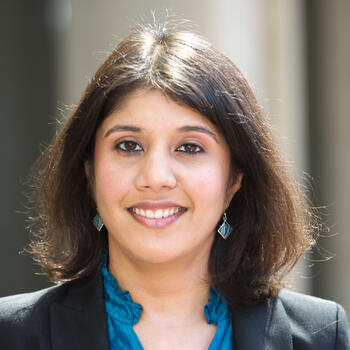
Shehzi Khan is the Senior Policy Advisor in the Strategic Planning and Policy Directorate at Indo-Pacific Command, supporting senior leadership on key regional policy initiatives.  Ms. Khan served on the Secretary of State’s Policy Planning Staff, as Executive Officer to the Principal Deputy Director of National Intelligence, and as senior South Asia analyst at the State Department.  Ms. Khan briefed the President of the United States in 2013.  She has been posted in Pakistan, China, and New Zealand and also lived and worked in India, Egypt, and France. Ms. Khan speaks five foreign languages and holds an MBA in International Finance and an MA in International Relations.  She is a recipient of the National Intelligence Superior Service Medal and was named State Department’s Analyst of the Year in 2014.

Image
Nilanthi Samaranayake
Nilanthi Samaranayake directs the Strategy and Policy Analysis Program at CNA. She has led several studies on Indian Ocean and South Asia security. Recently Samaranayake has worked on U.S.-India naval cooperation, water resource competition in the Brahmaputra River basin, and Sri Lankan foreign policy. She also has conducted research on the navies of Bangladesh and Pakistan, the Maldives Coast Guard, security threats in the Bay of Bengal, and relations between smaller South Asian countries and China, India and the United States. Prior to joining CNA, Samaranayake held positions at the National Bureau of Asian Research and the Pew Research Center. Samaranayake holds an M.Sc. in International Relations from the London School of Economics and Political Science and a B.A. in International Studies from American University.


Image
Arzan Tarapore
Arzan Tarapore (Moderator) is the South Asia research scholar at the Shorenstein Asia-Pacific Research Center at Stanford University, where he leads the newly-restarted South Asia research initiative. He is also a senior nonresident fellow at the National Bureau of Asian Research. Tarapore’s research focuses on Indian military strategy and contemporary Indo-Pacific security issues. This includes a forthcoming paper on “Building Strategic Leverage in the Indian Ocean Region.” He previously held research positions at the RAND Corporation, the Observer Research Foundation, and the East-West Center in Washington. Prior to his scholarly career, he served as an analyst in the Australian Defence Department. Tarapore holds a PhD in war studies from King’s College London.


Via Zoom Webinar
Register at:  https://bit.ly/34xYmgu

David Brewster <br><i>Senior Research Fellow at National Security College, Australian National University</i><br><br>
Shehzi Khan <br><i>Senior Policy Advisor in the Strategic Planning and Policy Directorate, Indo-Pacific Command</i><br><br>
Nilanthi Samaranayake <br><i>Director of Strategy and Policy Analysis Program, CNA</i><br><br>
Arzan Tarapore - Moderator <br><i>South Asia Research Scholar, Stanford University</i><br><br>
Seminars
Paragraphs

THE 2020 ELECTION IN THE UNITED STATES will take place on November 3 in the midst of a global pandemic, economic downturn, social unrest, political polarization, and a sudden shift in the balance of power in the U.S Supreme Court. On top of these issues, the technological layer impacting the public debate, as well as the electoral process itself, may well determine the election outcome. The eight-week Stanford University course, “Technology and the 2020 Election: How Silicon Valley Technologies Affect Elections and Shape Democracy,” examines the influence of technology on America’s democratic process, revealing how digital technologies are shaping the public debate and the election.

The eight-week Stanford University course, “Technology and the 2020 Election: How Silicon Valley Technologies Affect Elections and Shape Democracy,” examines the influence of technology on America’s democratic process, revealing how digital technologies are shaping the public debate and the election...


All Publications button
1
Publication Type
Policy Briefs
Publication Date
Authors
Marietje Schaake
Rob Reich
Paragraphs

Abstract

We investigate the impact of the US drone program in Pakistan on insurgent violence. Using details about US-Pakistan counterterrorism cooperation and geocoded violence data, we show that the program was associated with monthly reductions of around nine to thirteen insurgent attacks and fifty-one to eighty-six casualties in the area affected by the program. This change was sizable, as in the year before the program, the affected area experienced around twenty-one attacks and one hundred casualties per month. Additional quantitative and qualitative evidence suggests that this drop is attributable to the drone program. However, the damage caused in strikes during the program cannot fully account for the reduction. Instead, anticipatory effects induced by the program played a prominent role in subduing violence. These effects stemmed from the insurgents’ perception of the risk of being targeted in drone strikes; their efforts to avoid targeting severely compromised their movement and communication abilities, in addition to eroding within-group trust. These findings contrast with prominent perspectives on air-power, counterinsurgency, and US counterterrorism, suggesting select drone deployments can be an effective tool of counterinsurgency and counterterrorism.

Read the rest at International Studies Quarterly

All Publications button
1
Publication Date
Journal Publisher
International Studies Quarterly
Authors
Asfandyar Mir
-

* Please note all CISAC events are scheduled using the Pacific Time Zone.


Seminar Recording:  https://youtu.be/lxMWuFvq2NU


About the Event: It has become increasingly clear that the Kremlin poses a security challenge to the West, with relations between the United States and Europe, on the one hand, and Russia, on the other, having fallen to their lowest point since the end of the 1980s.  In particular, Moscow seeks to overturn the post-Cold War European security order, which it believes disadvantages Russian interests.  The Russian challenge includes both foreign and domestic policy aspects, as the Kremlin augments traditional political and military tools with more sophisticated efforts to exploit and widen divides within Western societies.

Fiona Hill, a senior fellow at the Brookings Institution, will discuss the challenge posed by Russia and the motives behind it.


About the Speaker: 

Fiona Hill is a senior fellow in the Center on the United States and Europe in the Foreign Policy program at Brookings. She recently served as deputy assistant to the president and senior director for European and Russian affairs on the National Security Council from 2017 to 2019. From 2006 to 2009, she served as national intelligence officer for Russia and Eurasia at The National Intelligence Council. She is co-author of “Mr. Putin: Operative in the Kremlin” (Brookings Institution Press, 2015).

Prior to joining Brookings, Hill was director of strategic planning at The Eurasia Foundation in Washington, D.C. From 1991 to 1999, she held a number of positions directing technical assistance and research projects at Harvard University’s John F. Kennedy School of Government, including associate director of the Strengthening Democratic Institutions Project, director of the Project on Ethnic Conflict in the Former Soviet Union, and coordinator of the Trilateral Study on Japanese-Russian-U.S. Relations.

Hill has researched and published extensively on issues related to Russia, the Caucasus, Central Asia, regional conflicts, energy, and strategic issues. Her book with Brookings Senior Fellow Clifford Gaddy,“The Siberian Curse: How Communist Planners Left Russia Out in the Cold,” was published by Brookings Institution Press in December 2003, and her monograph, “Energy Empire: Oil, Gas and Russia’s Revival,” was published by the London Foreign Policy Centre in 2004. The first edition of “Mr. Putin: Operative in the Kremlin” was published by Brookings Institution Press in December 2013, also with Clifford Gaddy.

Hill holds a master’s in Soviet studies and a doctorate in history from Harvard University where she was a Frank Knox Fellow. She also holds a master’s in Russian and modern history from St. Andrews University in Scotland, and has pursued studies at Moscow’s Maurice Thorez Institute of Foreign Languages. Hill is a member of the Council on Foreign Relations.

Virtual Seminar

Fiona Hill Senior Fellow in the Center on the United States and Europe in the Foreign Policy program The Brookings Institution
Seminars
-

This is a virtual event. Please click here to register and generate a link to the talk. 
The link will be unique to you; please save it and do not share with others.

Reports of Chinese espionage, IP theft and military-civil fusion strategy have all fueled concerns regarding U.S. universities’ open research ecosystem, especially in STEM.  Many of the concerns focus not only on research integrity but also on potential adverse consequences to U.S. military and economic security.  This panel intends to deepen discussion on open access to U.S. universities, security risks involved, as well as the potential adverse consequences of limiting international access in science and technology (S&T) research.  Questions that panel members will be asked to address include:  What is our best estimate regarding the scale and scope of adverse influence in U.S. universities attributable to S&T collaboration with PRC personnel?  Scientific collaboration and higher education have traditionally been immune to the ups-and-downs of U.S.-China politics.  How did we get to where we are, and why?  What are remedial measures that universities can consider, optimized to balance security and ethical concerns while ensuring pre-eminent scientific advancements and continued U.S. innovation? 


Speakers 

Photo of Arthur BienenstockArthur Bienenstock is co-chair, with Peter Michelson, of the American Academy of Arts and Sciences’ Committee on International Scientific Partnerships.  He has also been a member of the National Science Board, the governing body of the National Science Foundation, since 2012.  From November 1997 to January 2001, he was Associate Director for Science of the White House Office of Science and Technology Policy.  At Stanford, he is Special Assistant to the President for Federal Research Policy, Associate Director of the Wallenberg Research Link and a professor emeritus of Photon Science, having joined the faculty in 1967.  He was Vice Provost and Dean of Research and Graduate Policy during the period September 2003 to November 2006, Director of the Stanford Synchrotron Radiation Lightsource from 1978 to 1977 and Vice Provost for Faculty Affairs from 1972 to 1977. 
 

Image
Photo of Elsa B. Kania
Elsa B. Kania is an Adjunct Senior Fellow with the Technology and National Security Program at the Center for a New American Security. Her research focuses on Chinese military strategy, defense innovation, and emerging technologies. Ms. Kania also works in support of the U.S. Air Force’s China Aerospace Studies Institute through its Associates Program and is a Non-Resident Fellow in Indo-Pacific Security with the Institute for the Study of War. She has been invited to testify before the House Permanent Select Committee on Intelligence, the U.S.-China Economic and Security Review Commission, and the National Commission on Service. Kania was named an official “Mad Scientist” by the U.S. Army’s Training and Doctrine Command and was a 2018 Fulbright Specialist with the Australian Strategic Policy Institute. Her first book, Fighting to Innovate, should be forthcoming with the Naval Institute Press in 2021. Currently, she is a PhD candidate in Harvard University's Department of Government.
 

Image
Portrait of Susan Shirk

Susan Shirk is the chair of the 21st Century China Center and a research professor at the School of Global Policy & Strategy at UC San Diego. She is also director emeritus of the University of California’s Institute on Global Conflict and Cooperation (IGCC), serving from 1992 to 1997, and again from 2007 to 2012. 

From 1997 to 2000, Shirk served as deputy assistant secretary of state in the Bureau of East Asia and Pacific Affairs, with responsibility for China, Taiwan, Hong Kong, and Mongolia. Shirk founded in 1993 the Northeast Asia Cooperation Dialogue (NEACD), an unofficial “track-two” forum for discussions of security issues among defense and foreign ministry officials and academics from the United States, Japan, China, Russia, and the Koreas.

Shirk’s book China: Fragile Superpower helped frame the policy debate on China in the U.S. and other countries. Her other publications include The Political Logic of Economic Reform in China; How China Opened its Door; Competitive Comrades: Career Incentives and Student Strategies in China; and her edited book, Changing Media, Changing China. Her current book project is Overreach: How China’s Domestic Politics Derailed its Peaceful Rise


Portrait of Tim SternsTim Stearns holds the Frank Lee and Carol Hall Professorship in the Department of Biology at Stanford University and is Senior Associate Vice Provost of Research. He also holds appointments in the Department of Genetics, is a member of the Stanford Cancer Institute and Bio-X, is a Faculty Fellow in Chem-H, and is an affiliated faculty member of the Center for International Security and Cooperation (CISAC). He is a member of JASON, a national organization that advises the government on matters of science, technology and national security. He has also been an advisor to the National Academies of Science and the President's Council of Advisors on Science and Technology (PCAST). Dr. Stearns received a B.S. from Cornell University, a Ph.D. from MIT, and did his postdoctoral fellowship at the University of California, San Francisco. His research concerns the mechanism and regulation of cell division, the organization of signaling pathways within cells, and cell biology of fungal pathogens. Stearns was named an HHMI Professor in 2002 for his work in science education, and has taught international workshops in South Africa, Chile, Ghana, and Tanzania. He is the chair of the NCSD Study Section at the NIH and has served on the editorial boards of several journals.

Via Zoom. Register at: https://bit.ly/3iqMxNM

Arthur Bienenstock <br><i>Co-chair, American Academy of Arts and Sciences’ Committee on International Scientific Partnerships; Professor of Photon Science, Emeritus, Stanford University</i><br><br>
Elsa B. Kania <br><i>Adjunct Senior Fellow, Technology and National Security Program, Center for a New American Security</i><br><br>
Susan Shirk <br><i>Chair of the 21st Century China Center, UC San Diego; Research Professor, School of Global Policy & Strategy, UC San Diego</i><br><br>
Tim Stearns <br><i>Frank Lee and Carol Hall Professorship, Department of Biology, Stanford University; Senior Associate Vice Provost of Research</i><br><br>
Panel Discussions
-

Image
Digital Trade Wars

Please join the Cyber Policy Center, Wednesday, October 21, from 10 a.m. –11 a.m. pacific time, with host Marietje Schaake, International Policy Director of the Cyber Policy Center, in conversation with Dmitry Grozoubinski, founder of ExplainTrade.com, and visiting professor at University of Strathclyde, along with Anu Bradford, Henry L. Moses Professor of Law and International Organizations at Columbia Law School and author of How the European Union Rules the World, for a discussion and exploration of the digital trade war. 

This event is free and open to the public, but registration is required.


0
marietje.schaake

Marietje Schaake is a non-resident Fellow at Stanford’s Cyber Policy Center and at the Institute for Human-Centered AI. She is a columnist for the Financial Times and serves on a number of not-for-profit Boards as well as the UN's High Level Advisory Body on AI. Between 2009-2019 she served as a Member of European Parliament where she worked on trade-, foreign- and tech policy. She is the author of The Tech Coup.


Non-Resident Fellow, Cyber Policy Center
Fellow, Institute for Human-Centered Artificial Intelligence
Date Label
Marietje Schaake
Anu Bradford
Dmitry Grozoubinski
Panel Discussions
-

This event is being held virtually via Zoom. Please register for the webinar via the below link.

Registration Link: https://bit.ly/3n4NMpJ


This event is part of the Shorenstein Asia-Pacific Research Center's Shifting Geopolitics and U.S.-Asia Relations webinar series.
 
For Japan’s new Prime Minister Yoshihide Suga, foreign policy might pose a most significant challenge as he faces a shifting geopolitical landscape with a more assertive China, an emboldened North Korea, an ever more ambivalent South Korea, and a seemingly less committed US in the region. In this international environment, what foreign policy options does Japan have and what can we expect from the Suga administration? To answer these questions, panelists Shinichi Kitaoka, President of the Japan International Cooperation Agency, and Susan Thornton, former US assistant secretary for East Asian and Pacific Affairs, will discuss key diplomatic challenges for Japan including its management of the US-China-Japan trilateral relations, its handling of important neighboring countries such as North and South Korea and Russia, its larger strategies in the Indo-Pacific region, and its engagement with global institutions. This event will be moderated by Japan Program Director Kiyoteru Tsutsui.
 

SPEAKERS

Image
Headshot of Shinichi Kitaoka
Dr. Shinichi Kitaoka is President of the Japan International Cooperation Agency. Before assuming the present post, he was President of the International University of Japan. Dr. Kitaoka’s career includes Professor of National Graduate Institute for Policy Studies (GRIPS) (2012-), Professor ofGraduateSchools for Law and Politics, the University of Tokyo(1997-2004, 2006-2012), Ambassador Extraordinary and Plenipotentiary, Deputy Permanent Representativeof Japan to the United Nations (2004-2006), Professor of College of Law and Politics, Rikkyo University (1985-1997). Dr. Kitaoka’s specialty is modern Japanese politics and diplomacy. He obtained his B.A. (1971) and his Ph.D. (1976) both from the University of Tokyo. He is Emeritus Professor of the University of Tokyo. He has numerous books and articles in Japanese and English including A Political History of Modern Japan: Foreign Relations and Domestic Politics (Tokyo: Yuhikaku,2011), Political Dynamics of the United Nations: Where Does Japan Stand? (Tokyo: Chuokoron-Shinsha, 2007) and Japan as a Global Player (Tokyo: NTT Publishing, 2010). He received many honors and awards including the Medal with Purple Ribbon for his academic achievements in 2011.


Image
Headshot of Susan Thornton
Susan A. Thornton is a retired senior U.S. diplomat with almost 30 years of experience with the U.S. State Department in Eurasia and East Asia. She is currently a Senior Fellow and Research Scholar at the Yale University Law School Paul Tsai China Center, Director of the Forum on Asia-Pacific Security at the National Committee on American Foreign Policy, and a Non-Resident Fellow at the Brookings Institution. Until July 2018, Thornton was Acting Assistant Secretary for East Asian and Pacific Affairs at the Department of State and led East Asia policy making amid crises with North Korea, escalating trade tensions with China, and a fast-changing international environment. In previous State Department roles, she worked on U.S. policy toward China, Korea and the former Soviet Union and served in leadership positions at U.S. embassies in Central Asia, Russia, the Caucasus and China. Thornton received her MA in International Relations from Johns Hopkins SAIS and her BA from Bowdoin College in Economics and Russian. She serves on several non-profit boards and speaks Mandarin and Russian.

Via Zoom Webinar.

Registration Link: https://bit.ly/3n4NMpJ

Dr. Shinichi Kitaoka, President Japan International Cooperation Agency
Susan A. Thornton Former US Assistant Secretary for East Asian and Pacific Affairs
Panel Discussions
Subscribe to International Relations