International Relations

FSI researchers strive to understand how countries relate to one another, and what policies are needed to achieve global stability and prosperity. International relations experts focus on the challenging U.S.-Russian relationship, the alliance between the U.S. and Japan and the limitations of America’s counterinsurgency strategy in Afghanistan.

Foreign aid is also examined by scholars trying to understand whether money earmarked for health improvements reaches those who need it most. And FSI’s Walter H. Shorenstein Asia-Pacific Research Center has published on the need for strong South Korean leadership in dealing with its northern neighbor.

FSI researchers also look at the citizens who drive international relations, studying the effects of migration and how borders shape people’s lives. Meanwhile FSI students are very much involved in this area, working with the United Nations in Ethiopia to rethink refugee communities.

Trade is also a key component of international relations, with FSI approaching the topic from a slew of angles and states. The economy of trade is rife for study, with an APARC event on the implications of more open trade policies in Japan, and FSI researchers making sense of who would benefit from a free trade zone between the European Union and the United States.

-

* Please note all CISAC events are scheduled using the Pacific Time Zone.


Seminar Recording: https://youtu.be/Ot8lMxDSb34


About the Event: This paper addresses a single question: What explains the lack of civil war recurrence in El Salvador since the 1992 Chapultepec Accords? This lack of recurrence presents a unique puzzle given the fact that the civil war’s underlying causes remain unresolved. A well-established body of scholarship has identified a host of variables critical in explaining civil war recurrence, but much less ink has been spilled to explain non-recurrence. As such, I examine the factors identified in scholarship to be correlated with civil war recurrence to determine what they might tell us about civil war non-recurrence. I argue that the civil war non-recurrence in El Salvador rests not only on the durability of the agreement’s coercive/military and political provisions but also on the rebel group’s organizational design. To test this argument, I process trace along the recurrence variables and find support for my argument.   


About the Speaker: Meg K. Guliford is a Penn Provost Postdoctoral Fellow in residence at Perry World House. Her broad research agenda reflects an interest in political violence, conflict processes, and U.S. foreign policy. Her research has been supported by the U.S. Institute of Peace and the Eisenhower Institute. Guliford’s career in the federal government began as a Presidential Management Fellow for the U.S. Marine Corps Headquarters and has included a civilian deployment to Iraq and work for the Institute for Defense Analyses and the Under Secretary of Defense for Intelligence. Guliford will receive her Ph.D. in International Relations from Tufts University’s Fletcher School of Law and Diplomacy. She received her M.P.P. from the Harvard Kennedy School and a B.A. from the University of Pennsylvania.

Virtual Seminar

Meg K. Guliford Provost Postdoctoral Fellow University of Pennsylvania
Seminars
Authors
Oriana Skylar Mastro
News Type
Commentary
Date
Paragraphs

This op-ed by Aynne Kokas and Oriana Skylar Mastro was originally published in the Australian Financial Review.


The images of bare-chested, flag-waving MAGA loyalists overtaking the US Capitol flooded US social media and news channels in the days following the January 6 siege against the electoral college count. Memed and amplified, the same images circulated widely on Chinese social media and state-owned news sites without even the need for critical commentary.

The literal destruction of the US Capitol at the hands of President Donald Trump's followers required little imagination to characterize abroad as the downfall of American democracy.

There are many reasons for pessimism. According to one of the most authoritative indexes, Polity, the United States is no longer the world’s oldest continuous democracy, dropping in status to a system that is part democracy, part dictatorship.

Beyond the domestic concerns faced in the aftermath of the breach of one of America's most hallowed buildings, the Capitol siege was a win for China. US soft power, one of its comparative advantages in the great power competition, has taken a huge hit.

[Sign up for APARC's newsletters to get the latest updates from our scholars.]

Soft power is “the ability to get what you want through persuasion or attraction in the forms of culture, values, and policies”.⁠ The US has been the primary beneficiary of soft power, with its globally recognized brands, pop culture, fast-food chains, world-renowned universities, and political values.

It is relatively low cost and high impact compared with other forms of power. The United States' relative attractiveness is one of the reasons America prevailed in the Cold War.

The Chinese government is having a propaganda field day. More than ever, the US looks like a country in decline, discouraging to allies and potential partners. Chinese commentators have noted that America's days as the "city on the hill" have come to an end. This is karma, some say, payback for the US supporting opposition groups, as in Hong Kong. As one netizen commented on the popular microblog website Weibo: "So lucky to be born in China."

Beijing has tried to leverage its comparative advantages to build soft power through pathways other than political values.

China has also been trying to increase its soft power through traditional mechanisms such as building its media, education, and tourism sectors. It has enjoyed only moderate success in these areas because of its censorship, pollution, and lack of independent civil society.

But COVID-19 has led to the strengthening of other Chinese public diplomacy efforts, such as its landmark Belt and Road Initiative global trade and investment scheme.

Related initiatives such as the Digital Silk Road, a program to build out global digital infrastructure using Chinese technology, and the Health Silk Road, a plan to export Chinese health expertise through things such as COVID-19 laboratories and vaccine diplomacy, draw on China's comparative advantage in a top-down soft power approach.

Meanwhile, the Trump administration has undermined the historical sources of US soft power. It has shuttered visa lines, investigated international students on campus, and driven the rise of a culture of nationalism. The cancellation of the Fulbright US Student Program and the Peace Corps program in China are prime examples. And the COVID-19 decreased US media production, educational exchange and tourism, which shrank opportunities for promoting its democratic values on the global stage.

A bird’s-eye view of America's relative soft power may seem to offer cause for optimism. Even after four years of Trump's buffoonery and "America First", the US is still far ahead of China, ranking fifth in overall soft power, while China ranks 24th. And isn’t this what matters in competition?

Yes and no. The problem is two-fold. First, the US relies more on its political values as a soft power source than Beijing does. Ironically, this has especially been the case during the Trump administration. National Security Adviser Robert O’Brien has argued that democracies and authoritarian countries such as China “are offering a different approach to the world”. Secretary of State Mike Pompeo has argued to international audiences that democracy is “what we’ve got right”.

Second, Beijing has tried to leverage its comparative advantages to build soft power through pathways other than political values, especially where a top-down government approach is effective. China set up COVID-19 testing labs in Palestine in agreement with Israeli and Palestinian authorities. It extended its hand in Africa by building more than 70 percent of its 4G infrastructure.

Depending on need, useful solutions can be as compelling as political principles.The future of the US as a world leader is at stake. American military base access worldwide depends on perceived political alignment between the US and its allies. In the tech sector, the widespread adoption of US platforms relies on other countries finding that benefits to allowing in foreign platforms outweigh the potential political risks.

Successful multilateral treaty negotiations on issues such as global trade and climate change rely on the perception of a dependable US political system.

Strengthening democracy at home and moving away from "America First" policies will go a long way in reconstructing the trust and relationships central to soft power. But the United States will always be seen as a country in which the election of Donald Trump to the presidency, and now the storming of the Capitol, were possible.

President-elect Joe Biden will soon learn that soft power, once lost, may be difficult to revive.

Read More

President Biden walks past a row of Chinese and American flags.
News

APARC Experts on the Outlook for U.S.-Asia Policy Under the Biden Administration

Ahead of President-elect Biden’s inauguration and on the heels of the attack on the U.S. Capitol by a pro-Trump mob that has left America shaken, an APARC-wide expert panel provides a region-by-region analysis of what’s next for U.S. policy towards Asia and recommendations for the new administration.
APARC Experts on the Outlook for U.S.-Asia Policy Under the Biden Administration
U.S. Navy and Indian Navy ships steam in formation in the Indian Ocean.
News

How to Mitigate the Risks of Chinese Military Expansion in the Indian Ocean Region

China’s expanding military capacity in the Indian Ocean region poses risks for the United States and its partners, writes South Asia Research Scholar Arzan Tarapore in 'The Washington Quarterly,' offering a framework by which the Quad and others can build strategic leverage to curtail China’s capacity to coerce small states or posture for war.
How to Mitigate the Risks of Chinese Military Expansion in the Indian Ocean Region
President-elect Joe Biden and Chinese President Xi Jinping
News

Biden Administration Will Rely On U.S. Allies for Support as Tensions with China Continue to Rise

On the World Class Podcast, international security expert Oriana Skylar Mastro says conflict between China and Taiwan is plausible within the next 15 years, and the U.S. will likely be involved.
Biden Administration Will Rely On U.S. Allies for Support as Tensions with China Continue to Rise
Hero Image
National Guard at the US Capitol
National Guard at the US Capitol ahead of the inauguration on January 15, 2021 in Washington, DC. After last week's Capitol Riot the FBI has warned of additional threats against the US Capitol and in all 50 states.
Liz Lynch/ Getty Images
All News button
1
Subtitle

The US depends far more on its soft power than authoritarian China does. Once it is lost, it is hard to get back.

-

This is a virtual event. Please click here to register and generate a link to the talk. 
The link will be unique to you; please save it and do not share with others.

Since the death of Mao Zedong in 1976, the Communist Party of China (CCP) has been vexed by a simple question: What is it fighting for? As the country began to adopt market reforms in the 1980s and 1990s, CCP theorists were forced into contortions providing ideological justifications for policies that appeared overtly capitalist. Deng Xiaoping’s concept of “Socialism with Chinese characteristics” came to be seen as a theoretical fig leaf rather than a description of an egalitarian economic system, and by the 2000s, a consensus emerged that the CCP had completely abandoned any pretense of pursuing the Marxist vision it purported to hold. With the rise of Xi Jinping, however, the Party talks with renewed vigor about Marxism-Leninism and the goal of achieving actual, existing socialism. Has the CCP re-discovered communism?  In this talk, CSIS Freeman Chair in China Studies Jude Blanchette will discuss the abandoned and existing legacies of Mao Zedong, Marxism-Leninism, and the CCP’s vision of socialism.
 

Image
Portrait of Jude Blanchette
Jude Blanchette holds the Freeman Chair in China Studies at the Center for Strategic and International Studies (CSIS).  Previously, he was engagement director at The Conference Board’s China Center for Economics and Business in Beijing, where he researched China’s political environment with a focus on the workings of the Communist Party of China and its impact on foreign companies and investors.  Prior to working at The Conference Board, Blanchette was the assistant director of the 21st Century China Center at the University of California, San Diego.  Blanchette has written for a range of publications, including Foreign Affairs and Foreign Policy, and his Chinese translations have appeared in the Wall Street Journal and the Financial Times. His book, China’s New Red Guards: The Return of Radicalism and the Rebirth of Mao Zedong, was published by Oxford University Press in 2019.


Image
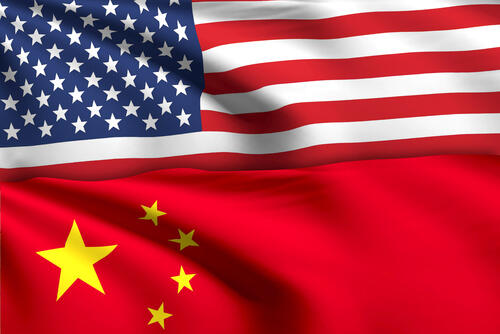
American and Chinese flags
This event is part of the 2021 Winter/Spring Colloquia series, Biden’s America, Xi’s China: What’s Now & What’s Next?, sponsored by APARC's China Program.


Via Zoom Webinar. Register at: https://bit.ly/35KfpgE

Jude Blanchette Freeman Chair in China Studies, Center for Strategic and International Studies
Seminars
-

Image
riot at capital

Social media and digital technologies have come under fire for their contribution to the development of the groups that ultimately stormed the U.S. Capitol on January 6. Following the insurrection attempt, Facebook, Twitter, Google and other major platforms have banned or suspended President Trump’s accounts. Google and Apple removed Parler from their app stores, while Amazon removed the site from its cloud hosting service, putting an indefinite end to Parler’s reach. This panel will discuss the role of social media during the Trump presidency, including the role of platform policies in fomenting or responding to the recent violence, the benefits and risks posed by steps subsequently taken, and what this means for the future of speech online.

Panelists include:

  • Nate Persily, faculty co-director of the Stanford Cyber Policy Center, director of the Center’s Program on Democracy and the Internet, and Professor at Stanford Law School
  • Daphne Keller, Director of the Cyber Policy Center’s Program on Platform Regulation
  • Alex Stamos, Director of the Cyber Policy Center’s Internet Observatory
  • Renee DiResta, Research Manager at the Cyber Policy Center’s Internet Observatory
  • Moderated by Kelly Born, Executive Director of the Cyber Policy Center


0
renee-diresta.jpg

Renée DiResta is the former Research Manager at the Stanford Internet Observatory. She investigates the spread of malign narratives across social networks, and assists policymakers in understanding and responding to the problem. She has advised Congress, the State Department, and other academic, civic, and business organizations, and has studied disinformation and computational propaganda in the context of pseudoscience conspiracies, terrorism, and state-sponsored information warfare.

You can see a full list of Renée's writing and speeches on her website: www.reneediresta.com or follow her @noupside.


Former Research Manager, Stanford Internet Observatory
0
top_pick_rsd25_070_0254a.jpg

Daphne Keller is the Director of Platform Regulation at the Stanford Program in Law, Science, & Technology. Her academic, policy, and popular press writing focuses on platform regulation and Internet users'; rights in the U.S., EU, and around the world. Her recent work has focused on platform transparency, data collection for artificial intelligence, interoperability models, and “must-carry” obligations. She has testified before legislatures, courts, and regulatory bodies around the world on topics ranging from the practical realities of content moderation to copyright and data protection. She was previously Associate General Counsel for Google, where she had responsibility for the company’s web search products. She is a graduate of Yale Law School, Brown University, and Head Start.

SHORT PIECES


ACADEMIC PUBLICATIONS


POLICY PUBLICATIONS


FILINGS

  • U.S. Supreme Court amicus brief on behalf of Francis Fukuyama, NetChoice v. Moody (2024)
  • U.S. Supreme Court amicus brief with ACLU, Gonzalez v. Google (2023)
  • Comment to European Commission on data access under EU Digital Services Act
  • U.S. Senate testimony on platform transparency


PUBLICATIONS LIST

Director of Platform Regulation, Stanford Program in Law, Science & Technology (LST)
Social Science Research Scholar
Date Label
Stanford Law School Neukom Building, Room N230 Stanford, CA 94305
650-725-9875
0
James B. McClatchy Professor of Law at Stanford Law School
Senior Fellow, Freeman Spogli Institute
Professor, by courtesy, Political Science
Professor, by courtesy, Communication
headshot_3.jpg

Nathaniel Persily is the James B. McClatchy Professor of Law at Stanford Law School, with appointments in the departments of Political Science, Communication, and FSI.  Prior to joining Stanford, Professor Persily taught at Columbia and the University of Pennsylvania Law School, and as a visiting professor at Harvard, NYU, Princeton, the University of Amsterdam, and the University of Melbourne. Professor Persily’s scholarship and legal practice focus on American election law or what is sometimes called the “law of democracy,” which addresses issues such as voting rights, political parties, campaign finance, redistricting, and election administration. He has served as a special master or court-appointed expert to craft congressional or legislative districting plans for Georgia, Maryland, Connecticut, New York, North Carolina, and Pennsylvania.  He also served as the Senior Research Director for the Presidential Commission on Election Administration. In addition to dozens of articles (many of which have been cited by the Supreme Court) on the legal regulation of political parties, issues surrounding the census and redistricting process, voting rights, and campaign finance reform, Professor Persily is coauthor of the leading election law casebook, The Law of Democracy (Foundation Press, 5th ed., 2016), with Samuel Issacharoff, Pamela Karlan, and Richard Pildes. His current work, for which he has been honored as a Guggenheim Fellow, Andrew Carnegie Fellow, and a Fellow at the Center for Advanced Study in the Behavioral Sciences, examines the impact of changing technology on political communication, campaigns, and election administration.  He is codirector of the Stanford Program on Democracy and the Internet, and Social Science One, a project to make available to the world’s research community privacy-protected Facebook data to study the impact of social media on democracy.  He is also a member of the American Academy of Arts and Sciences, and a commissioner on the Kofi Annan Commission on Elections and Democracy in the Digital Age.  Along with Professor Charles Stewart III, he recently founded HealthyElections.Org (the Stanford-MIT Healthy Elections Project) which aims to support local election officials in taking the necessary steps during the COVID-19 pandemic to provide safe voting options for the 2020 election. He received a B.A. and M.A. in political science from Yale (1992); a J.D. from Stanford (1998) where he was President of the Stanford Law Review, and a Ph.D. in political science from U.C. Berkeley in 2002.   

CV
Date Label
Seminars
-

This is a virtual event. Please click here to register and generate a link to the talk. 
The link will be unique to you; please save it and do not share with others.

As US-China competition intensifies, experts debate the degree to which the current strategic environment resembles that of the Cold War. Those that argue against the analogy often highlight how China is deeply integrated into the US-led world order. They also point out that, while tense, US-China relations have not turned overtly adversarial. But there is another, less optimistic reason the comparison is unhelpful: deterring and defeating Chinese aggression is harder now than it was against the Soviet Union. In this talk, Dr. Mastro analyzes how technology, geography, relative resources and the alliance system complicate U.S. efforts to enhance the credibility of its deterrence posture and, in a crisis, form any sort of coalition.


Photo of Oriana MastroOriana Skylar Mastro is a Center Fellow at Stanford University’s Freeman Spogli Institute for International Studies (FSI). Within FSI, she works primarily in the Shorenstein Asia-Pacific Research Center (APARC) and the Center for International Security and Cooperation (CISAC) as well. She is also a fellow in Foreign and Defense Policy Studies at the American Enterprise Institute and an inaugural Wilson Center China Fellow.
Mastro is an international security expert with a focus on Chinese military and security policy issues, Asia-Pacific security issues, war termination, and coercive diplomacy. Her research addresses critical questions at the intersection of interstate conflict, great power relations, and the challenge of rising powers. She has published widely, including in Foreign Affairs, International Security, International Studies Review, Journal of Strategic Studies, The Washington Quarterly, The National Interest, Survival, and Asian Security, and is the author of The Costs of Conversation: Obstacles to Peace Talks in Wartime (Cornell University Press, 2019).

She also continues to serve in the United States Air Force Reserve, for which she works as a Strategic Planner at INDOPACOM. Prior to her appointment at Stanford in August 2020, Mastro was an assistant professor of security studies at the Edmund A. Walsh School of Foreign Service at Georgetown University. She holds a B.A. in East Asian Studies from Stanford University and an M.A. and Ph.D. in Politics from Princeton University.


Image
American and Chinese flags
This event is part of the 2021 Winter/Spring Colloquia series, Biden’s America, Xi’s China: What’s Now & What’s Next?, sponsored by APARC's China Program.


Via Zoom Webinar. Register at: bit.ly/2MYJAdw

Oriana Skylar Mastro Center Fellow at the Freeman Spogli Institute for International Studies
Seminars
-

This event is being held virtually via Zoom. Please register for the webinar via the following link: https://bit.ly/3nNdqhW

With President Biden’s inauguration, a new era of US-Japan relations starts on January 20. Now that the cozy personal relationship between President Trump and Prime Minister Abe is in the rearview mirror, what can we expect in the Biden-Suga era? While the Biden administration is widely expected to drop Trump’s America First foreign policy and return to multilateralism and alliance-based diplomacy, its foreign policy priorities in the Asia-Pacific are still largely unknown. What role will the US-Japan alliance play in the new geo-political landscape in the region, and how would it handle the growing influence of China and build partnerships with other players in the region? This panel, featuring a leading expert on US politics and US-Japan relations, Fumiaki Kubo (University of Tokyo), and a rising star in the Liberal Democratic Party and an alum of the Ministry of Foreign Affairs, Rui Matsukawa (House of Councilors), examines these questions, moderated by the Director of APARC Japan Program, Kiyoteru Tsutsui.

SPEAKERS

Image
Portrait of Fumiaki Kubo

Fumiaki Kubo (University of Tokyo) 

Fumiaki Kubo has been the A. Barton Hepburn Professor of American Government and History at the Graduate Schools for Law and Politics, the University of Tokyo since 2003. He is affiliated with the Nakasone Peace Institute as the Executive Research Director, the Japan Institute for International Affairs as a Senior Adjunct Fellow, the 21st Century Public Policy Institute as the Director of the US Studies Project, as well as with the Tokyo Foundation as a Senior Research Scholar. He studied at Cornell University in 1984-1986, at the Johns Hopkins University in 1991-1993, and at Georgetown University and the University of Maryland in 1998-99. He was also an Invited Professor at SciencesPo in Paris in the spring of 2009, and a Japan Scholar at the Woodrow Wilson International Center for Scholars in 2014. Kubo received his B.A. in 1979 and Ph.D. in 1989 from the University of Tokyo. He is the author of many books which include: Modern American Politics (with Hitoshi Abe), Ideology and Foreign Policy After Iraq in the United States ( editor ), A Study on the Infrastructure of American Politics( editor ). In 1989, he received the Sakurada-Kai Gold Award for the Study of Politics and the Keio Gijuku Award. Kubo was the President of the Japanese Association for American Studies from 2016 to 2018.

Image
Portrait of Representative Matsukawa

Rui Matsukawa (House of Councilors)

Rui Matsukawa is a Member of the House of Councilors (Liberal Democratic Party), and her current responsibilities include Parliamentary Vice-Minister of Defense, Parliamentary Vice-Minister of Cabinet Office. She graduated from the University of Tokyo, Faculty of Law and earned an MS in Foreign Service from Georgetown. She joined the Ministry of Foreign Affairs in 1993, where she won the Southern Bluefin Tuna Case at the International Court of Justice, negotiated free trade agreements with Thailand, Philippines, and other countries, and worked on the negotiations for disarmament as a first Secretary of the Japan Delegation to the Conference on Disarmament in Geneva. She was in charge of analysis of China and the Korean Peninsula in the Intelligence and Analysis Service. She also promoted cooperation between Japan, China, and South Korea as Counsellor of the Embassy of Japan in Korea. In 2014, Ms. Matsukawa established WAW! (World Assembly for Women) to promote women’s empowerment and gender mainstreaming as the first Director of the Gender Mainstreaming Division in the Foreign Policy Bureau. In 2016, she left MOFA, and was elected to represent Osaka in the House of Councilors.

MODERATOR 

Image
Kiyoteru Tsutsui

Kiyoteru Tsutsui (Stanford University) 

Kiyoteru Tsutsui is Henri H. and Tomoye Takahashi Professor and Senior Fellow in Japanese Studies at the Walter H. Shorenstein Asia-Pacific Research Center at Stanford University, where he is also Director of the Japan Program, a Senior Fellow of the Freeman Spogli Institute for International Studies, and a Professor of Sociology. He is the author of Rights Make Might: Global Human Rights and Minority Social Movements in Japan (Oxford University Press, 2018), co-editor of Corporate Responsibility in a Globalizing World (Oxford University Press, 2016) and co-editor of The Courteous Power: Japan and Southeast Asia in the Indo-Pacific Era (University of Michigan Press, forthcoming 2021). 

Via Zoom Webinar.

Registration Link: https://bit.ly/3nNdqhW

Fumiaki Kubo, University of Tokyo
Rui Matsukawa, House of Councilors
Kiyoteru Tsutsui, Stanford University
Panel Discussions
-

* Please note all CISAC events are scheduled using the Pacific Time Zone.


Seminar Recording: https://youtu.be/JqN4Ga4DVss


About the Event: 

Much of the imagery and remote sensing analysis in the Open Source Community pertains to North Korea’s nuclear weapons pathway and military capability. However, many questions remain regarding economic and agricultural health in a nation known for denial of access to outside observation. But by applying emerging analytical and processing technology of satellite imagery and data, we can address the challenge of examining economic and environmental patterns in the North.

Machine Learning technology has been used to analyze rudimentary objects like roads or buildings on satellite imagery for years, but has yet to be successfully employed to better understand nuanced patterns of life. In our partnership with the analytics company Orbital Insight, we have undertaken a project of counting thousands of objects in satellite images taken over the past five years to uncover North Korea’s trade relationship with China.

This project includes counting number of trucks at each side of the Sino-Korean Friendship Bridge as a measure of trade activity between North Korea and China. By applying artificial intelligence to more than 300 satellite images, we observed fluctuations of truck counts, which peak during the month of November. A significant drop in the truck counts during the year of 2020 is noticed as a result of restricted traffic from the global pandemic, although as much as 30 trucks were observed in the month of June on both sides of the border. The project demonstrates the utilities of machine learning in analyzing emerging datasets. Careful monitoring of trade between the two states can aid in better understanding the China-North Korea economic relationship and how it evolves over time.

CISAC is also partnering with international organizations and geospatial systems specialists to apply data derived from public space mapping systems to better understand macro-environmental, agricultural, and water security trends over the past twenty years in North Korea. For decades, scientists of every discipline have been analyzing remotely-sensed images and data sets to extract otherwise-imperceptible insight pertaining to broad aspects of environmental health including coastal erosion, deforestation, land subsidence, and global thermal changes. But because of a post-war technology vacuum and broadly-applied sanctions against space-derived information, North Korea has never had access to this data or the advanced software and data storage architecture necessary to support it. The potential for direct collaboration with the North on environmental analysis may enhance North Korea’s ability to mitigate its own agricultural risk and potentially facilitate informal international collaboration.


About the Speaker: Allison Puccioni has been an imagery analyst for over 25 years, working within the military, tech, media, and academic communities. After honorably serving in the US Army as an Imagery Analyst from 1991 - 1997, Allison continued the tradecraft as a civilian augmentee to US and NATO operations in the Kosovo airstrike campaign, and as a Senior Analyst and Mission Planner for Naval Special Warfare Group One. After earning her Master’s Degree in International Policy, Allison established the commercial satellite imagery analysis capability for the British publication company Jane's. In 2015, Allison joined Google to assist with the establishment of applications for its commercial small-satellites. Today, Allison is the Principal and Founder of Armillary Services, providing insight on commercial imaging satellites and associated analytics to the governments, nongovernmental organizations, and the commercial sector. Concurrently, Allison manages the multi-sensor imagery analysis team at Stanford University's Center for International Security and Cooperation.

Virtual Seminar

Not in residence

0
Affiliate
AllisonPuccioni_rsd16_073_0340a.jpg

Allison Puccioni has been an imagery analyst for over 25 years, working within the military, tech, defense, media, and academic communities. After honorably serving in the US Army as an Imagery Analyst from 1991 - 1997, Allison continued the tradecraft within the Defense Industry: augmenting US and NATO operations in the Kosovo airstrike campaign, and as a Senior Analyst and Mission Planner for Naval Special Warfare Group One. After earning her Masters Degree in International Policy, Allison established the commercial satellite imagery analysis capability for the British publication Jane's, publishing Open Source imagery analysis for six years. In 2015, Allison joined Google to assist with the establishment of applications for its commercial small-satellites. Today, Allison is the Principal and Founder of Armillary Services, providing insight on commercial imaging satellites and associated analytics to the governments, nongovernmental organizations, and the commercial sector. Concurrently, Allison manages the multi-sensor imagery analysis team at Stanford University's Center for International Security and Cooperation.

CV
Allison Puccioni Principal and Founder Armillary Services
Seminars
-

* Please note all CISAC events are scheduled using the Pacific Time Zone.


Seminar Recording: https://youtu.be/TV8ye_OVdzY


About the Event: Proof that France had become the world’s fourth nuclear power exploded above the Algerian Sahara in February 1960, during the Algerian War for Independence (1954–62). Sixteen more blasts would take place before France abandoned its Saharan test sites in 1966, which had continued to host French explosions underground during the first years of Algerian Independence. Well before the first airborne detonation, and even after French testing went below ground, the likelihood that radioactive debris (known as fallout) would contaminate the desert environment and its human inhabitants animated an international controversy. Saharan fallout loomed at once as a new threat to Algerian and African sovereignty and to Cold War negotiations that promised to limit weapons testing, revealing historical intersections between African decolonization and the nuclear arms race.


About the Speaker: Austin Cooper is a Predoctoral Researcher at Stanford University’s Center for International Security and Cooperation and a PhD Candidate in History and Sociology of Science at the University of Pennsylvania.

Virtual Seminar

0
cooper.jpg

Austin R. Cooper is a Stanton Nuclear Security Fellow in the Security Studies Program at the Massachusetts Institute of Technology. He completed his PhD in History and Sociology of Science at the University of Pennsylvania. He has held fellowships at Stanford University’s Center for International Security and Cooperation and SciencesPo’s Nuclear Knowledges Program.

Affiliate
Austin Cooper Predoctoral Researcher Stanford University
Seminars
Paragraphs

Image
The Oxford World History of Empire
This is the first world history of empire, reaching from the third millennium BCE to the present. By combining synthetic surveys, thematic comparative essays, and numerous chapters on specific empires, its two volumes provide unparalleled coverage of imperialism throughout history and across continents, from Asia to Europe and from Africa to the Americas. Only a few decades ago empire was believed to be a thing of the past; now it is clear that it has been and remains one of the most enduring forms of political organization and power. We cannot understand the dynamics and resilience of empire without moving decisively beyond the study of individual cases or particular periods, such as the relatively short age of European colonialism. The history of empire, as these volumes amply demonstrate, needs to be drawn on the much broader canvas of global history.

Volume I: The Imperial Experience is dedicated to synthesis and comparison. Following a comprehensive theoretical survey and bold world history synthesis, fifteen chapters analyze and explore the multifaceted experience of empire across cultures and through the ages. The broad range of perspectives includes: scale, world systems and geopolitics, military organization, political economy and elite formation, monumental display, law, mapping and registering, religion, literature, the politics of difference, resistance, energy transfers, ecology, memories, and the decline of empires. This broad set of topics is united by the central theme of power, examined under four headings: systems of power, cultures of power, disparities of power, and memory and decline. Taken together, these chapters offer a comprehensive and unique view of the imperial experience in world history.


All Publications button
1
Publication Type
Books
Publication Date
Authors
Ian Morris
Book Publisher
Oxford University Press
Paragraphs

Image
The Oxford World History of Empire
This is the first world history of empire, reaching from the third millennium BCE to the present. By combining synthetic surveys, thematic comparative essays, and numerous chapters on specific empires, its two volumes provide unparalleled coverage of imperialism throughout history and across continents, from Asia to Europe and from Africa to the Americas. Only a few decades ago empire was believed to be a thing of the past; now it is clear that it has been and remains one of the most enduring forms of political organization and power. We cannot understand the dynamics and resilience of empire without moving decisively beyond the study of individual cases or particular periods, such as the relatively short age of European colonialism. The history of empire, as these volumes amply demonstrate, needs to be drawn on the much broader canvas of global history.

Volume I: The Imperial Experience is dedicated to synthesis and comparison. Following a comprehensive theoretical survey and bold world history synthesis, fifteen chapters analyze and explore the multifaceted experience of empire across cultures and through the ages. The broad range of perspectives includes: scale, world systems and geopolitics, military organization, political economy and elite formation, monumental display, law, mapping and registering, religion, literature, the politics of difference, resistance, energy transfers, ecology, memories, and the decline of empires. This broad set of topics is united by the central theme of power, examined under four headings: systems of power, cultures of power, disparities of power, and memory and decline. Taken together, these chapters offer a comprehensive and unique view of the imperial experience in world history.


All Publications button
1
Publication Type
Books
Publication Date
Authors
Subscribe to International Relations