International Relations

FSI researchers strive to understand how countries relate to one another, and what policies are needed to achieve global stability and prosperity. International relations experts focus on the challenging U.S.-Russian relationship, the alliance between the U.S. and Japan and the limitations of America’s counterinsurgency strategy in Afghanistan.

Foreign aid is also examined by scholars trying to understand whether money earmarked for health improvements reaches those who need it most. And FSI’s Walter H. Shorenstein Asia-Pacific Research Center has published on the need for strong South Korean leadership in dealing with its northern neighbor.

FSI researchers also look at the citizens who drive international relations, studying the effects of migration and how borders shape people’s lives. Meanwhile FSI students are very much involved in this area, working with the United Nations in Ethiopia to rethink refugee communities.

Trade is also a key component of international relations, with FSI approaching the topic from a slew of angles and states. The economy of trade is rife for study, with an APARC event on the implications of more open trade policies in Japan, and FSI researchers making sense of who would benefit from a free trade zone between the European Union and the United States.

-

This is a virtual event. Please click here to register and generate a link to the talk. 
The link will be unique to you; please save it and do not share it with others.

October 18, 4-5:00 p.m. California time/ October 19, 8-9:00 a.m. Japan time

The recent LDP Presidential Election ended with Fumio Kishida defeating Taro Kono in the final round to become the LDP President and then Prime Minister of Japan, succeeding Yoshihide Suga, who stepped down amidst mounting political challenges dealing with COVID and its economic consequences. This was a closer election than most other LDP Presidential elections with a great deal of intrigue about how the publicly popular Kono might fare against Kishida, who the senior LDP leadership preferred. What does this election process tell us about Japanese politics today, and how will LDP fare in the upcoming House of Representatives Election? Will Kishida last longer than Suga as Prime Minister, and what do opposition parties have to do to stop the dominant LDP to change Japanese politics? In this webinar, two leading experts on the topic, Rieko Kage (University of Tokyo) and Dan Smith (Columbia University), address these questions, moderated by Kiyoteru Tsutsui, Deputy Director of the Walter H. Shorenstein Asia-Pacific Research Center, where he is also Director of the Japan Program.

Panelists

Image
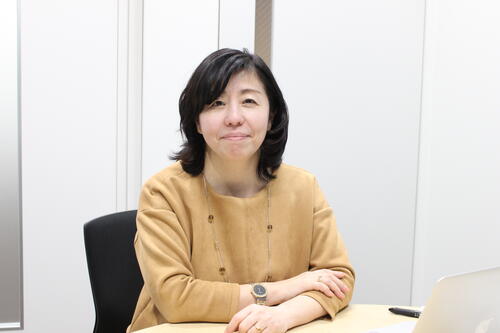
Photo of Rieko Kage
Rieko Kage is Professor of Political Science at the University of Tokyo.  She graduated from the Faculty of Law at Kyoto University and earned her Ph.D. from the Department of Government, Harvard University.  She is the author of Civic Engagement in Postwar Japan (2011) and Who Judges? Designing Jury Systems in Japan, East Asia, and Europe (2010), both of which have been published from Cambridge University Press, and she has published broadly on issues relating to judicial politics, political participation, and public opinion.  Her most recent article, "War, Democratization, and Generational Cohort Effects on Participation in Japan" is forthcoming from Electoral Studies.


Image
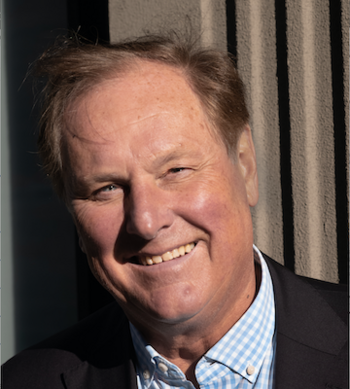
Photo of Dan Smith

Daniel M. Smith is the Gerald L. Curtis Visiting Associate Professor of Modern Japanese Politics and Foreign Policy in the Department of Political Science and School of International and Public Affairs at Columbia University. He is the author of Dynasties and Democracy (Stanford University Press, 2018), and numerous articles on Japanese politics, party politics, and elections. He is also a co-editor of the Japan Decides election series. From 2012 to 2013, he was a postdoctoral fellow at the Walter H. Shorenstein Asia-Pacific Research Center (APARC) at Stanford University.


Moderator

Image
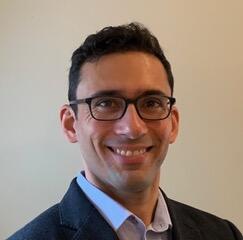
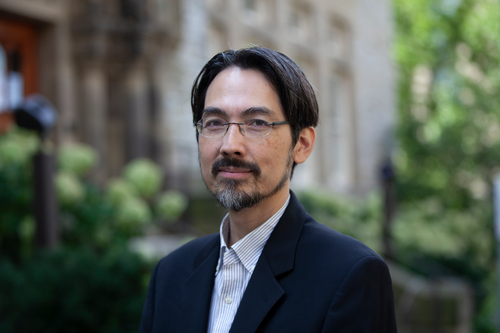
Kiyoteru Tsutsui
Kiyoteru Tsutsui is the Henri H. and Tomoye Takahashi Professor, Professor of Sociology, Senior Fellow at the Freeman Spogli Institute for International Studies, and Deputy Director of the Walter H. Shorenstein Asia-Pacific Research Center, where he is also Director of the Japan Program. He is the author of Rights Make Might: Global Human Rights and Minority Social Movements in Japan (Oxford University Press, 2018), co-editor of Corporate Social Responsibility in a Globalizing World (Oxford University Press, 2016) and co-editor of The Courteous Power: Japan and Southeast Asia in the Indo-Pacific Era (University of Michigan Press, forthcoming 2021). 

Via Zoom Webinar
Register: https://bit.ly/3icfq3j


Rieko Kage <br><i>Professor of Political Science at the University of Tokyo</i><br><br>
Dan Smith <br><i>Gerald L. Curtis Visiting Associate Professor of Modern Japanese Politics and Foreign Policy at Columbia University</i><br><br>
Kiyoteru Tsutsui <br><i>Director of the Japan Program and Deputy Director of Shorenstein APARC</i><br><br>
Seminars
Authors
News Type
News
Date
Paragraphs

The new AUKUS security partnership led to an immediate diplomatic fallout between France and the United States. But beyond the concerns about NATO and the Western alliance, or questions about great-power competition in the Pacific, some analysts see another worry: Will sharing nuclear submarine propulsion technology with Australia set back the nuclear nonproliferation regime?

What does this deal mean for nonproliferation? Have such transfers of nuclear submarine technology occurred in the past? Here are four things to know.

Read the rest at The Washington Post

Hero Image
group of people on a submarine
SYDNEY, AUSTRALIA - MAY 2: Australian Prime Minister Malcolm Turnbull (fourth left), President of France Emmanuel Macron (second left), Australian Minister for Defence Industry Christopher Pyne (centre left), Australian Minister for Defence Marise Payne (centre) and Australian Minister for Foreign Affairs Julie Bishop (right) are seen on the submarine HMAS Waller at Garden Island on May 2, 2018 In Sydney, Australia. Macron arrived in Australia on May 1 on a rare visit by a French president with the two sides expected to agree on greater cooperation in the Pacific to counter a rising China.
Brendan Esposito - Pool/Getty Images
All News button
1
Subtitle

The new AUKUS security partnership led to an immediate diplomatic fallout between France and the United States. But beyond the concerns about NATO and the Western alliance, or questions about great-power competition in the Pacific, some analysts see another worry: Will sharing nuclear submarine propulsion technology with Australia set back the nuclear nonproliferation regime?

-

All CISAC events are scheduled using the Pacific Time Zone. This event is part of the year-long initiative on “Ethics & Political Violence” jointly organized by the Center for International Security and Cooperation (CISAC) and The McCoy Family Center for Ethics in Society. This event is hosted by CISAC and is co-sponsored by McCoy Family Center for Ethics in Society.

SEMINAR RECORDING

WJP - Virtual to Public. Only those with an active Stanford ID with access to William J Perry Conference Room in Encina Hall may attend in person. 

Samuel Moyn Yale University
Seminars
-

For fall quarter 2021, CISAC will be hosting hybrid events. Many events will offer limited-capacity in-person attendance for Stanford faculty, staff, fellows, visiting scholars, and students in accordance with Stanford’s health and safety guidelines, and be open to the public online via Zoom. All CISAC events are scheduled using the Pacific Time Zone. 

REGISTRATION

(Stanford faculty, visiting scholars, staff, fellows, and students only)


Seminar Recording

About the Event: We consider how the U.S. news media reports on international affairs. Analyzing ≈40 million news articles published between 2010 and 2020, we explore whether the American news media report differently on various international affairs topics based on partisan leanings. We then analyze ≈25 million articles published by top online news sites to determine whether collective reporting shows disparities between the level of attention afforded major global issues and objective measures of their human costs (e.g. numbers of individuals killed). We find that left- and right-leaning news outlets tend to report on international affairs at similar rates but differ significantly in their likelihood of referencing particular issues. We find further strong evidence that the frequency of reporting on the international issues we study tracks only modestly with their associated human costs. Given evidence U.S. public and policymakers dependence on news reports for foreign affairs information, our findings raise fundamental questions about the influence of these reporting biases.

Draft Paper


About the Speakers: Andrew Shaver is an assistant professor of political science at the University of California, Merced. He is a CISAC affiliate and a former postdoctoral research fellow within Stanford’s political science department. He is the founding director of the Political Violence Lab and focuses broadly on contemporary sub-state conflict. His research appears in outlets including the American Political Science Review, American Economic Review, Annual Review of Sociology, and Journal of Politics. Dr. Shaver has served in different foreign affairs/national security positions within the U.S. Government. He completed his PhD in Public Affairs at Princeton University's School of Public and International Affairs.

Amarpreet Kaur is a recent graduate of University of California, Merced with a bachelor in Public Health and a minor in Political science. Kaur has been working the lab for a year under the guidance of Professor Shaver. Kaur has aspirations to go on and get a PhD in Health Policy.

Robert Kraemer is a graduate student of data science at the University of Denver. Prior to this, Kraemer earned his bachelor’s degree in political science from the University of California, Santa Barbara, and has been working in the Political Violence Lab with Professor Shaver for over a year, developing his research and analytic skills.

Virtual to Public. Only those with an active Stanford ID with access to William J Perry Conference Room in Encina Hall may attend in person. 

Andrew Shaver UC Merced
Amarpreet Kaur Political Violence Lab
Robert Kraemer University of Denver
Seminars
-

 All CISAC events are scheduled using the Pacific Time Zone. 

SEMINAR RECORDING


About the Event: How do rising powers like China manage to build power in international systems dominated by one or more established great powers? International relations theory provides some answers, but most assume emulation of successful approaches. This paper leverages the established business literature on how new companies gain market share in markets dominated by established companies to develop a new theory of power accumulation. I argue that only under very narrow circumstances can rising powers build power and influence through emulation. Instead, China has built enough power over the past 25 years to be considered a great power competitor by doing things differently. Specifically, it exploits US blind spots, maneuvers in areas of strategic uncertainty and engages in entrepreneurial actions. I demonstrate that Chinese military strategy exhibits these components in its responses to key pillars of US foreign policy strategy like global power projection, foreign military intervention, and in conventional and nuclear posture decisions. The findings have significant implications for great power competition as well as for power transition theory.


About the Speaker: Oriana Skylar Mastro is a Center Fellow at the Freeman Spogli Institute for International Studies at Stanford University where her research focuses on Chinese military and security policy, Asia-Pacific security issues, war termination, and coercive diplomacy. She is also Non-Resident Senior Fellow at the American Enterprise Institute and an inaugural Wilson Center China Fellow. She continues to serve in the United States Air Force Reserve for which she works as a strategic planner at INDOPACOM. For her contributions to U.S. strategy in Asia, she won the Individual Reservist of the Year Award in 2016. She has published widely, including in Foreign Affairs, International Security, International Studies Review, Journal of Strategic Studies, The Washington Quarterly, The National Interest, Survival, and Asian Security. Her book, The Costs of Conversation: Obstacles to Peace Talks in Wartime, (Cornell University Press, 2019) won the 2020 American Political Science Association International Security Section Best Book by an Untenured Faculty Member. She holds a B.A. in East Asian Studies from Stanford University and an M.A. and Ph.D. in Politics from Princeton University. Her publications and other commentary can be found on twitter @osmastro and www.orianaskylarmastro.com.

Virtual only.

Stanford CISAC
Stanford University
Encina Hall
Stanford,  CA  94305-6055

0
Center Fellow at the Freeman Spogli Institute for International Studies
Courtesy Assistant Professor of Political Science
Faculty Affiliate at the Walter H. Shorenstein Asia-Pacific Research Center
OrianaSkylarMastro_2023_Headshot.jpg PhD

Oriana Skylar Mastro is a Center Fellow at the Freeman Spogli Institute for International Studies and Courtesy Assistant Professor of Political Science at Stanford University, where her research focuses on Chinese military and security policy, Asia-Pacific security issues, war termination, and coercive diplomacy. She is also a nonresident scholar at the Carnegie Endowment for International Peace and a member of the Council on Foreign Relations. She was previously an assistant professor of security studies at Georgetown University. Mastro continues to serve in the United States Air Force Reserve, for which she currently works at the Pentagon as Deputy Director of Reserve Global China Strategy. For her contributions to U.S. strategy in Asia, she won the Individual Reservist of the Year Award in 2016 and 2022 (FGO).

She has published widely, including in International Security, Security Studies, Foreign Affairs, the Journal of Strategic Studies, The Washington Quarterly, the Economist, and the New York Times. Her most recent book, Upstart: How China Became a Great Power (Oxford University Press, 2024), evaluates China’s approach to competition. Her book, The Costs of Conversation: Obstacles to Peace Talks in Wartime (Cornell University Press, 2019), won the 2020 American Political Science Association International Security Section Best Book by an Untenured Faculty Member.

She holds a B.A. in East Asian Studies from Stanford University and an M.A. and Ph.D. in Politics from Princeton University.

Her publications and commentary can be found at orianaskylarmastro.com and on Twitter @osmastro.

Selected Multimedia

CV
Date Label
Seminars
-

For fall quarter 2021, CISAC will be hosting hybrid events. Many events will offer limited-capacity in-person attendance for Stanford faculty, staff, fellows, visiting scholars, and students in accordance with Stanford’s health and safety guidelines, and be open to the public online via Zoom. All CISAC events are scheduled using the Pacific Time Zone. 

REGISTRATION

(Stanford faculty, visiting scholars, staff, fellows, and students only)


Seminar Recording

About the Event: There is never a good time for a pandemic but Covid-19 may have hit at the worst possible moment. In the decade before the virus, China had grown more dictatorial and assertive; populist nationalists held power in the United States, India, and Brazil; geopolitical tensions heightened—not just between China and the United States but also within the west; and the very notion of an objective truth was increasingly called into question. In Aftershocks, Colin Kahl and Tom Wright draw on interviews with officials from around the world to document how the world responded, or failed to respond, to a global crisis in an age of rivalry and nationalism. They shed new light on China’s lack of cooperation with the international community, how the Trump administration failed to rally an international coalition to deal with the pandemic, how Covid-19 brought the EU close to collapse, the role of central banks in averting a financial crisis, and the impact on the developing world. They also provide a pathway for how the world can prepare for the next pandemic. 

Purchase Book


About the Speaker: Thomas Wright is the Director for the Center on the United States and Europe and a senior fellow at the Strobe Talbott Center for Strategy, Security, and Technology at the Brookings Institution. He is also a contributing writer at The Atlantic and a non-resident senior fellow at the Lowy Institute. His latest book, co-authored with Colin Kahl, is Aftershocks: Pandemic Politics and the End of the Old International Order (St Martin’s Press, 2021). He is also the author of All Measures Short of War: The Contest for the 21st Century and the Future of American Power (Yale University Press 2017).

Virtual to Public. Only those with an active Stanford ID with access to William J Perry Conference Room in Encina Hall may attend in person. 

Thomas Wright The Brookings Institution
Seminars
-

For fall quarter 2021, CISAC will be hosting hybrid events. Many events will offer limited-capacity in-person attendance for Stanford faculty, staff, fellows, visiting scholars, and students in accordance with Stanford’s health and safety guidelines, and be open to the public online via Zoom. All CISAC events are scheduled using the Pacific Time Zone. 


Seminar Recording                                                                                           


About the Event: The Intergovernmental Panel on Climate Change (IPCC) was founded in 1988 to provide scientific background for the 1992 UN Framework Convention on Climate Change. Since then, it has released six major assessment reports. The Sixth Assessment, released in August 2021, prompted the UN Secretary-General to call it a “code red for humanity.”

As one of 234 Lead Authors of the IPCC Sixth Assessment’s physical science report, I will present some of its main conclusions. We’ll dive below the level of headline statements to examine some major scientific innovations since the last IPCC report in 2013. I’ll talk about my personal experience of the 3-year assessment process, including the most intensive peer review in the history of science; here I will also talk about the significance and the future of peer review in general. Finally, I’ll showcase some tools this new report provides for policy analysis at the regional scale, and discuss its implications for international and global security.


About the Speaker: Paul N. Edwards is William J. Perry Fellow in International Security at the Center for International Security and Cooperation, Director of the Program on Science, Technology & Society at Stanford University. and Professor of Information and History (Emeritus) at the University of Michigan. Edwards is the author of A Vast Machine: Computer Models, Climate Data, and the Politics of Global Warming (MIT Press, 2010), The Closed World: Computers and the Politics of Discourse in Cold War America (MIT Press, 1996) and co-editor of Changing the Atmosphere: Expert Knowledge and Environmental Governance (MIT Press, 2001), as well as other books and numerous articles. He edits the MIT Press book series, Infrastructures, and co-directs the Stanford Existential Risks Initiative. Edwards served as one of 234 lead authors for the Sixth Assessment Report of the Intergovernmental Panel on Climate Change (Working Group I), released in August 2021.

Virtual to Public. Only those with an active Stanford ID with access to William J Perry Conference Room in Encina Hall may attend in person. 

Seminars
-

*For fall quarter 2021, CISAC will be hosting hybrid events. Many events will offer limited-capacity in-person attendance for Stanford faculty, staff, fellows, visiting scholars, and students in accordance with Stanford’s health and safety guidelines, and be open to the public online via Zoom. All CISAC events are scheduled using the Pacific Time Zone. This event is part of the year-long initiative on “Ethics & Political Violence” jointly organized by the Center for International Security and Cooperation (CISAC) and The McCoy Family Center for Ethics in Society. This event is hosted by CISAC and is co-sponsored by McCoy Family Center for Ethics in Society.


REGISTRATION


Seminar Recording

About the Event: Among its many profound effects on American life, the Trump presidency triggered a surge of interest in reforms that might better check the exercise of presidential power – from enhancing ethics and transparency requirements to reining in sweeping congressional delegations of substantive authority. Yet these reform efforts arise against a wholly unsettled debate about the function and effectiveness of existing checks, perhaps none more so than the role of executive branch legal counsel. With courts often deferential, and Congress often hamstrung by partisan polarization, scholars have focused on the experiences of executive branch lawyers to illuminate whether counsel functions as part of an “internal separation of powers,” an effective first-order constraint on the presidency.  Yet while these descriptive accounts are invaluable, they are also limited to the attorney side of an attorney-client relationship, leaving much unanswered about whether and why presidential advisors might heed their advice.  And while the search for signs of “constraint” is essential, this conceptual framing has tended to obscure other ways in which counsel may influence decision-making, dynamics that might prove essential for reformers to address if they are to achieve the change they seek. Aiming to help fill these gaps, this Article draws on an original survey of more than three dozen former senior U.S. national security policy officials, from the Cabinet Secretary level at the most senior, to National Security Council staff at the most junior, to examine when and why policy-making clients engage counsel’s advice surrounding the use of force, and how that advice may shape or reshape policymakers’ existing normative preferences.  Among its findings, the depth and bipartisan breadth of officials’ sense of obligation to engage counsel suggests that the existing literature may be underestimating counsel’s capacity to influence.  At the same time, as this Article describes, counsel is structurally capable of exerting that influence in multi-directional ways.  When policymakers’ own normative instincts lead them to want to avoid external limits on executive power, counsel’s insistence that such limits be observed can at times “constrain” executive action. But where, as may also arise, policymakers would prefer more external checks on presidential behavior, counsel’s permission not to may have an unintentionally encouraging effect. Indeed, when policymakers may be seeking a politically palatable justification for avoiding action, the unavailability of a narrow construction of presidential authority may deprive officials of an effectively action-limiting out. As this Article concludes, if the post-Trump goal is to improve counsel’s function as a “constraint” on power, reforms beyond simply increasing transparency or quality will be required. 

Draft Paper


About the Speaker: Deborah Pearlstein is Professor of Law and Co-Director of the Floersheimer Center for Constitutional Democracy.  Her work on the U.S. Constitution, international law, and national security has appeared widely in law journals and the popular press, including the University of Pennsylvania Law Review, the University of Michigan Law Review, the University of Texas Law Review, and the Georgetown Law Journal, as well as in The Atlantic, Foreign Policy, the Washington Post, and the New York Times. Professor Pearlstein has repeatedly testified before Congress on topics from war powers to executive branch oversight.  In 2021, she was appointed to the U.S. State Department Advisory Committee on Historical Diplomatic Documentation, a 9-member board of historians, political scientists, and U.S. foreign relations law experts who help ensure the timely declassification and publication of government records surrounding major events in U.S. foreign policy.

A magna cum laude graduate of Harvard Law School, Professor Pearlstein clerked for Judge Michael Boudin of the U.S. Court of Appeals for the First Circuit, then for Justice John Paul Stevens of the U.S. Supreme Court. Following her clerkships, she practiced at the law firm of Munger, Tolles & Olson in San Francisco, earning the Voting Rights Award from the ACLU of Southern California for her litigation work on voting systems reform following the 2000 presidential election.

From 2003-2007, Professor Pearlstein served as the founding director of the Law and Security Program at Human Rights First, where she led the organization’s efforts in research, litigation and advocacy surrounding U.S. detention and interrogation operations, and served on the first team of independent military commission monitors to visit the U.S. Naval Base at Guantanamo Bay in 2004. In addition to developing impact litigation strategies and preparing multiple briefs amicus curiae to the U.S. Supreme Court, Pearlstein co-authored a series of reports on the human rights impact of U.S. national security policy, including Command’s Responsibility, which provided the first comprehensive accounting of detainee deaths in U.S. military custody and received extensive media attention worldwide. Throughout her tenure, Professor Pearlstein worked closely with members of the defense and intelligence communities, including in helping to bring together retired military leaders to address key policy challenges in U.S. counterterrorism operations.

After leaving law practice, Professor Pearlstein held an appointment as a research scholar in the Law and Public Affairs Program at the Woodrow Wilson School for Public and International Affairs at Princeton University, as well as visiting appointments at the University of Pennsylvania Law School and Georgetown University Law Center.  She has since served as Chair of the AALS National Security Law Section, on the ABA's Advisory Committee on Law and National Security, and today serves on the editorial board of the peer-reviewed Journal of National Security Law and Policy.

Before embarking on a career in law, Pearlstein served in the White House from 1993 to 1995 as a Senior Editor and Speechwriter for President Clinton.

Virtual Only. This event will not be held in person.

Deborah Pearlstein Yeshiva University
Seminars
-

All CISAC events are scheduled using the Pacific Time Zone. This event is part of the year-long initiative on “Ethics & Political Violence” jointly organized by the Center for International Security and Cooperation (CISAC) and The McCoy Family Center for Ethics in Society. This event is hosted by CISAC and is co-sponsored by McCoy Family Center for Ethics in Society.


REGISTRATION

Seminar Recording

About the Event: This paper explores the role of cinematic representations of lawfare in shaping and disseminating the jurisdiction of humanitarian law (IHL) through advanced military technologies and data practices. Taking the 2015 British thriller ‘Eye in the Sky’ as an instance of a dominant representation of lawfare, I analyse how this representation strengthens and reaffirms misconceptions about IHL and the bureaucracy of killing. As a popular culture product – and one that is embraced by various IHL experts and organisations – ‘Eye in the Sky’ participates in the ethical, legal, and political debates about advanced military technologies, and establishes mundane data practices as a system of knowledge production through which IHL exercises its jurisdiction over facts, people, and spaces. In particular, the paper analyses how ‘Eye in the Sky’s representations of IHL’s data practices strengthen and reinforce a particular IHL narrative, which is consistent with Western countries’ narrative about their existing counterterrorism practices and their bureaucracy of killing. Based on studies from law, sociology, and communication, this paper answers the following three questions: (i) who is given the power to speak IHL (and who is not)? (ii) To whom is IHL speaking? And (iii) how do data practices shape IHL’s jurisdiction? The paper concludes that ‘Eye in the Sky’ speaks international law through the voices of drone-owning nations, and is directed to their mass publics, legitimising the existing bureaucracy of killing. At the same time, it disguises normative choices as inevitable, and erases African decision-makers, communities, and perspectives. 

Draft Paper


About the Speaker: Shiri Krebs is an Associate Professor at Deakin University’s Law School, and Co-lead, Law and Policy Theme, at the Australian Government Cyber Security Cooperative Research Centre (CSCRC). She is also an affiliated scholar at SCISAC. Her research focuses on international law and politics, cyber warfare, and human-machine interaction in legal decision-making, exploring issues at the intersection of law, science and technology. Dr Krebs’ scholarship has been published at leading international law and general law journals, and granted her several research grants and awards. Krebs earned her Doctorate and Master Degrees from Stanford Law School, as well as LL.B. and M.A., both magna cum laude, from the Hebrew University of Jerusalem.

Virtual Only. This event will not be held in person.

Seminars
Subscribe to International Relations