International Relations

FSI researchers strive to understand how countries relate to one another, and what policies are needed to achieve global stability and prosperity. International relations experts focus on the challenging U.S.-Russian relationship, the alliance between the U.S. and Japan and the limitations of America’s counterinsurgency strategy in Afghanistan.

Foreign aid is also examined by scholars trying to understand whether money earmarked for health improvements reaches those who need it most. And FSI’s Walter H. Shorenstein Asia-Pacific Research Center has published on the need for strong South Korean leadership in dealing with its northern neighbor.

FSI researchers also look at the citizens who drive international relations, studying the effects of migration and how borders shape people’s lives. Meanwhile FSI students are very much involved in this area, working with the United Nations in Ethiopia to rethink refugee communities.

Trade is also a key component of international relations, with FSI approaching the topic from a slew of angles and states. The economy of trade is rife for study, with an APARC event on the implications of more open trade policies in Japan, and FSI researchers making sense of who would benefit from a free trade zone between the European Union and the United States.

0
MIP Brad Jackson

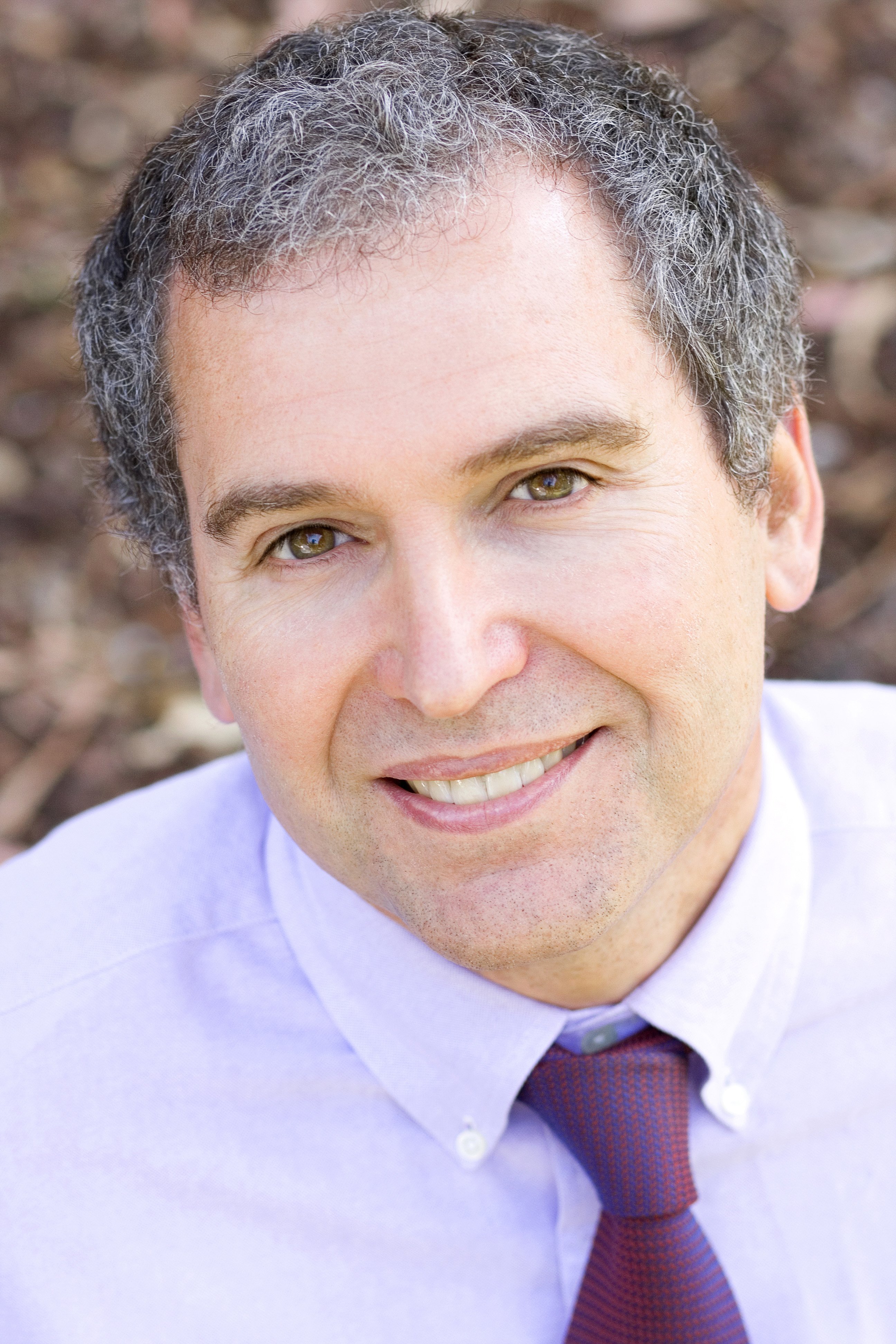
Bradley Jackson Jr. is a Master’s in International Policy candidate concentrating in the international security and cyber policy and security specializations. His areas of interest include U.S.-Russia and U.S.-China relations, foreign policy, great power competition, and American grand strategy. While at Stanford, Bradley is particularly interested in the potential implications and increasingly pertinent role of emerging and advanced technologies in all facets of national security and foreign policy, particularly with artificial intelligence. He currently works as a research assistant to Dr. Condoleezza Rice and Lieutenant General (Ret.) H.R. McMaster at the Hoover Institution, and with Ms. Marietje Schaake in the Stanford Cyber Policy Center. Bradley speaks Russian, Italian, Spanish, and recently started learning Chinese (Mandarin). He joined MIP and Stanford directly after graduating from Towson University in 2020 with a Bachelor of Arts in International Studies and a minor in Italian. Outside of academia, Bradley enjoys snowboarding, traveling, golfing, baseball, basketball, and learning languages.

Master's in International Policy Class of 2022
-

For winter quarter 2022, CISAC will be hosting hybrid events. Many events will offer limited-capacity in-person attendance for Stanford faculty, staff, fellows, visiting scholars, and students in accordance with Stanford’s health and safety guidelines, and be open to the public online via Zoom. All CISAC events are scheduled using the Pacific Time Zone. 

SEMINAR RECORDING


About the Event: With the devastating loss of life, economic disruption, and political instability it has wrought, COVID-19 has revealed that national governments and the international community are woefully unprepared to respond to pandemics—underscoring the world’s vulnerability to future catastrophic biological threats that could meet or exceed the severe consequences of the current pandemic. To effectively guard against future biological risks, leaders should take a longer-term view and recognize that, while naturally occurring pandemics remain a threat, the next global catastrophe could result from a laboratory accident or the deliberate misuse of bioscience and biotechnology.   This talk will provide a high-level overview of the broader biothreat landscape and outline actions that national leaders and the international community should take with a view to preventing catastrophic biological events—specifically by constraining capabilities and shaping the intent of powerful actors who may wish to exploit the tools of modern bioscience to cause harm. This talk will outline two priority NTI initiatives to strengthen international capabilities to prevent catastrophic biological events. We are working to develop and launch the International Biosecurity and Biosafety Initiative for Science (IBBIS), a new international organization that will focus on preventing the deliberate abuse or accidental misuse of bioscience and biotechnology by strengthening international biosecurity norms and developing innovative, practical tools to reduce risks throughout the research and development life cycle. NTI is also working to develop the concept of a new Joint Assessment Mechanism to strengthen UN-system capabilities to investigate high-consequence biological events of unknown origin. The ability to rapidly discern the source of emerging pandemics is critical to mitigating their effects in real time and protecting against future risks.
 

About the Speaker: Dr. Jaime M. Yassif is Senior Director and Lead Scientist for Global Biological Policy and Programs at NTI, where her work focuses on strengthening governance of dual-use bioscience and reducing global catastrophic biological risks. Yassif previously served as a Program Officer at Open Philanthropy, where she led the Biosecurity and Pandemic Preparedness initiative. In this role, she managed approximately $40 million in biosecurity grants, which rebuilt the field and supported work in several key areas, including developing new biosecurity programming at leading think tanks, establishing the Global Health Security Index, and initiating new biosecurity work in China and India. Prior to this, Yassif served as a science and technology policy advisor at the U.S. Department of Defense and worked on the Global Health Security Agenda at the U.S. Department of Health and Human Services.

Virtual to Public. Only those with an active Stanford ID with access to William J Perry Conference Room in Encina Hall may attend in person. 

Jaime Yassif NTI
Seminars
-
Kevin Munger photo on a flyer for the Cyber Policy Center's Winter Seminar Series Event  Does Demand Create Its Own Supply?: YouTube Politics During the 2020 Presidential Campaign

Join us on Tuesday, February 15 from 12 PM - 1 PM PT for Demand-Driven Ideology on YouTube in the 2020 Election and Beyond​ featuring Kevin Munger of Penn State University in conversation with Nate Persily of the Stanford Cyber Policy Center. This weekly seminar series is jointly organized by the Cyber Policy Center’s Program on Democracy and the Internet and the Hewlett Foundation’s Cyber Initiative.

"YouTube Politics" has evolved considerably over the past decade. Expanding on a supply-and-demand framework, we argue that the changing composition of the audience and the wider political ecosystem influences what videos get created and by whom. Of particular interest is the emergence of a second dimension, largely orthogonal to the traditional left-right divide: the pro- / anti-establishment dimension. The movement of some portion of American citizens across the first dimension towards the anti-establishment pole during the 2000s and 2010s was observed and responded to by media and political entrepreneurs. We chart this process at large scale during the 2020 US Presidential Election campaign and throughout 2021. Using data from nearly three thousand channels who discuss US Politics and a quarter-billion comments left on their videos, we plot the ideological space of YouTube Politics and argue for the insufficiency of a unidimensional model of US politics on YouTube, online, and in general.

About the Speakers:

Image
Kevin Munger
Kevin Munger is an Assistant Professor of Political Science and Social Data Analytics at Penn State University. Kevin's research focuses on the implications of the internet and social media for the communication of political information. His specialty is the investigation of the economics of online media; current research models "Clickbait Media" and uses digital experiments to test the implications of these models on consumers of political information.


Image
nate persily
Moderator: Nathaniel Persily is the James B. McClatchy Professor of Law at Stanford Law School, with appointments in the departments of Political Science, Communication, and FSI.  Prior to joining Stanford, Professor Persily taught at Columbia and the University of Pennsylvania Law School, and as a visiting professor at Harvard, NYU, Princeton, the University of Amsterdam, and the University of Melbourne. Professor Persily’s scholarship and legal practice focus on American election law or what is sometimes called the “law of democracy,” which addresses issues such as voting rights, political parties, campaign finance, redistricting, and election administration. He has served as a special master or court-appointed expert to craft congressional or legislative districting plans for Georgia, Maryland, Connecticut, New York, North Carolina, and Pennsylvania.  He also served as the Senior Research Director for the Presidential Commission on Election Administration. His current work, for which he has been honored as a Guggenheim Fellow, Andrew Carnegie Fellow, and a Fellow at the Center for Advanced Study in the Behavioral Sciences, examines the impact of changing technology on political communication, campaigns, and election administration.  He is codirector of the Stanford Cyber Policy Center, Stanford Program on Democracy and the Internet, and the Stanford-MIT Healthy Elections Project, which supported local election officials in taking the necessary steps during the COVID-19 pandemic to provide safe voting options for the 2020 election. He is also a member of the American Academy of Arts and Sciences, and a commissioner on the Kofi Annan Commission on Elections and Democracy in the Digital Age.

Nate Persily

Zoom

Kevin Munger Program on Democracy and the Internet
-

 All CISAC events are scheduled using the Pacific Time Zone. 

SEMINAR RECORDING


About the Event: The Russian military continues to mass forces near Ukraine, while the Kremlin says that the United States and NATO have addressed its secondary concerns but have ignored its key demands, such as that the Alliance foreswear further enlargement. Britain has played a critical role in NATO deliberations on how to respond to Moscow proposals and actions, and the British military is sending additional forces to bolster the Alliance's eastern flank. Sir Roderic Lyne, a former British ambassador to Russia and former foreign policy advisor to the prime minister, will describe how the crisis is viewed in London, the motivations driving Russian actions, and how the West should respond.


About the Speaker: Roderic Lyne served in the UK's Diplomatic Service for 34 years, including three postings to Moscow between 1972 and 2004, and was the last Head of the Soviet Department in the Foreign Office. In the mid-1990s he was the adviser to the Prime Minister on foreign affairs, security and Northern Ireland. Since retiring as Ambassador to the Russian Federation in 2004 he has visited Russia about fifty times as a business consultant and lecturer, and has written extensively on the subject. His most recent article was "Putin's Gamble: Must It End Up As Lose/Lose", published by Chatham House in late January. From 2009 to 2016 Roderic Lyne served on the UK's Inquiry into the Iraq conflict of 2003.

Virtual only.

Sir Roderic Lyne
Seminars
Authors
Nora Sulots
News Type
Commentary
Date
Paragraphs

Since the 2014 Russian annexation of Crimea and the onset of a Russian-backed separatist war in the Donbas region, Ukraine has been fighting a simultaneous battle for its democratic future. Pressure on Ukrainian democracy has increased, however, with the build-up of Russian military forces on Ukraine’s borders in recent months. Russia’s latest actions have prompted various reactions from the United States, the EU, and other Western allies, but the varying severity of these responses have raised concerns they may well not be sufficient to deter Putin from a further incursion into Ukraine. 

Regardless of the security guarantees that Russian President Putin claims to want, what is most at stake is the democratic future of Ukraine.


CDDRL has had a long investment in Ukraine’s success as a democracy. Our Ukrainian Emerging Leaders Program (UELP), a 10-month academic training fellowship that brings policy-makers, legal professionals, entrepreneurs, and leaders of civil society organizations from Ukraine to study at Stanford, was founded in 2016. Its goal is to help address enduring development challenges in Ukraine and across the broader region. Our two other practitioner-based training programs – the Leadership Academy for Development and the Draper Hills Summer Fellows Program (DHSF) – count hundreds of Ukrainian emerging civic leaders and social entrepreneurs among their alumni.  Most recently, in the fall of 2021, in partnership with the Freeman Spogli Institute for International Studies, CDDRL hosted former Ukrainian Prime Minister Oleksiy Honcharuk as the Bernard and Susan Liautaud Visiting Fellow

As the situation at the Russia-Ukraine border continues to evolve, we are bringing together our Ukrainian alumni to amplify their voices through public conversations about the crisis. Stay tuned for information about a forthcoming event.

Any conversation about Ukraine’s future must include Ukrainian voices.


It is not NATO or the European Union that have driven Ukraine’s political path since the dissolution of the Soviet Union in 1991. It is, of course, Ukrainians themselves who have been the driving force behind the country’s democratic path.  

Many of our program alumni have played important and influential roles in the country's political, economic, and social development, and have their own perspectives in what follows on why it is important for the international community to pay attention to what is going on in Ukraine and how the crisis is affecting them personally.


Image
Nataliya Gumenyuk

Nataliya Gumenyuk
Founding Director of the Public Interest Journalism Lab
DHSF class of 2018


As a journalist who covers conflict, today I am 100% consumed by the current situation in Ukraine. It is my job to explain what’s going on to a global audience, as well as to the Ukrainian one. Yet I and other Ukrainian professionals feel a bit trapped. The situation is so uncertain, we cannot afford to cancel all other plans; we are always busy with so many things happening, we can neither cancel nor fully engage. I am saddened that so much of our strength and energy is wasted on this situation. And on top of everything we are thinking about our families and considering various scenarios. As for myself – I am on duty.

Russia’s demands are not about Ukraine, they are about changing the international security architecture, canceling the ‘open door’ policy by NATO, which undermines the whole idea of the alliance. If Russia is allowed to invade further (and by the way Russia has already occupied parts of Ukrainian territories since 2014) – we are essentially agreeing that it’s acceptable to conquer other states by force.

The key takeaways for me are that we really should be discussing the current international relations system and to what extent it is able to protect countries outside of these alliances, and young democracies when they are threatened and bullied. This is a discussion not only about Eastern Europe.

Nataliya Gumenyuk is a Ukrainian author and journalist specializing in foreign affairs and conflict reporting. Gumenyuk is the author of the book “The Lost Island: Tales From Occupied Crimea” (2020), based on six years of reporting from the annexed peninsula. You can read some of her recent work here: 


Image
Oleksiy Honcharuk


Oleksiy Honcharuk
Former Prime Minister of Ukraine
2021 Bernard and Susan Liautaud Visiting Fellow at CDDRL and the Freeman Spogli Institute


Democracy is one of the primary threats for Putin. Russia invaded Ukraine because of our choice to be a free, democratic country. That’s why the war between Ukraine and Russia is not a regional conflict – it is an important part of a larger war for democracy. 

Global democracy has been in a recession for at least the last 15 years due to a lack of democratic leadership around the world. It looks like the West has forgotten about the real value of democracy and has taken it for granted. This was a mistake and Ukraine is already paying a big price for it. Ukraine is now a beacon of democracy for millions of people in Eastern Europe and Asia, and we cannot lose this battle. 

I want Ukraine to be a successful, free country but Putin is trying to destroy it. I'm not scared and I am ready to fight for democracy.

More from Oleksiy Honcharuk:


Image
Oleksandra Matviichuk


Oleksandra Matviichuk
Head of the Center for Civil Liberties (Ukraine)
UELP 2017-18


Russia under Putin has finally turned back into an empire. Unfortunately, the empire cannot remain stable. Putin thinks in terms of the Soviet Union. But now Russia does not have enough resources to play a full game, so the Kremlin is betting on war.

This is not about the war between Russia and Ukraine – it is about the war between authoritarianism and democracy. Thus, Ukraine acts in an unexpected role as an outpost that protects the values of the free world. Putin does not fear NATO, but the values of freedom in the post-Soviet space because it threatens his authoritarian regime.

We are preparing for a new armed attack by Russia. Recently, the President of Ukraine gave a press conference to foreign media, which raised many questions. However, there is something that the Kremlin cannot understand and that is underestimated in the West: People in America and the EU have lived for years with efficient and stable state institutions. We have never had such a luxury in Ukraine, so we are not used to relying on the government at critical moments.

I have been working in the field of human rights for more than twenty years, the last eight of which were focused on the war with Russia, so I have no illusions. Human rights defenders, journalists, and civil society activists will be the first targets of Russia's armed aggression. We have seen this before during the seizure of Crimea and Donbas when in order to gain rapid control of the region a non-violent minority was physically destroyed or driven out for their resistance. I have talked to my fellow human rights defenders, and I can say the following: We will stay in Ukraine and protect human rights as much as we can.


Image
Nataliya Mykolska


Nataliya Mykolska
Strategic transformations expert, Member of the Board Ukrhydroenergo JSC
UELP 2018-19


The Russian aggression against Ukraine and potential military invasion is not only about Ukraine. It is about democracy prevailing in the former CIS region and Ukraine being a success story. A truly independent and successful Ukraine is a major threat to Putin’s autocratic regime in Russia and his short and long-term prospects in the region. 

We, Ukrainians, are ready to fight for our values, our freedom, our dignity, our country, our land, and the future of our children. We have done so in 2014 and have continued to do so for eight years. There is no other way for us to move forward.


Image
Ivan Prymachenko


Ivan Prymachenko
Founder, Prometheus
UELP 2018-19


In 1946 George Kennan famously wrote the following about the Soviet state: "impervious to the logic of reason it is highly sensitive to the logic of force. For this reason, it can easily withdraw – and usually does when strong resistance is encountered at any point."

In 2022, this description is still fitting for the self-declared successor of the USSR – Putin's Russia. The best way to provoke Putin now is to show weakness. The best way to achieve peace is to demonstrate strength by preparing a devastating sanctions package against Russia and delivering modern weapons to Ukraine.


Image
Artem Romaniukov


Artem Romaniukov
Co-founder at SaveDnipro / SaveEcoBot, Co-founder at Civil Control Platform
UELP 2019-20


There are two competing points of view here in Ukraine on what is going on. The first is that Ukraine is a bargaining chip between Russia and "the West.” This means there will be no exacerbation of war, just bluffing.  

Second is that Putin for some reason felt that this was the right time to push for his agenda and started to raise the stakes, but "the West" appeared to be more united than ever before, providing Ukraine with lethal weapons and making strong claims. This means he may find himself in a stalemate with no choice except to invade Ukraine and become a pariah in the international community. 

It looks like president Zelensky believes in the first scenario. But the relevant emptiness on Kyiv streets in recent days shows that Ukrainians do not always share the government's view.


Image
Igor Rozkladaj


Igor Rozkladaj
Deputy Director at the Center for Democracy and Rule of Law
DHSF class of 2018


Democracy is the best thing that we have in the modern world. But democracy needs to be trained – much like muscles on your body – or else it will become weak.

In a time of economic stress, pandemic, and uncertainty people seek simple explanations and decisions– that is the Achilles' heel of democracy. And in combination with disinformation and easy money, autocratic regimes can take hold. That's how the Soviet Union and modern Russia manipulated the Western world and did it with great success.

Russia always was and still is an authoritarian country. Nowadays under the autocratic Putin regime, we see increased militarization and pressure on independent people to stop their activities or face being arrested. 

Ukrainians, whose territories have been occupied by Russia, whose language and culture was under imperial pressure, whose identity is now denied now by Russia’s leadership, whose millions of people were killed in famines and wars know the real face of this country. The reforms we have made in Ukraine since 2014 are vitally important, from anti-corruption to decommunization. This conflict is not only about Ukraine, but about stopping Putin’s vision of  “Russkyi mir” from spreading throughout the region. 

We Ukrainians have made three attempts to wrench ourselves away from Russian influence: in 1991, 2004, and 2013-14. We have been at war with "unidentified little green men" for the last 8 years. We lose our best people to protect our country from Putin’s ambitions, and yet still fight. The question is what will prevail: corruption and kleptocracy from Putin or the democratic values that millions of Ukrainians have sacrificed for.


Image
Olexandr Starodubtsev


Olexandr Starodubtsev
Deputy Head at the National Agency for Corruption Prevention
UELP 2017-18


The war that Russia started in 2014 is hybrid in nature. Misinformation and cyber-attacks by Russia have become commonplace in Ukraine since then. Of course, Ukrainians feel worried today about the latest news, but we see the support of international partners, including supplies of weapons. We hope that these weapons will not have to be used and that the latest signals from Russia are just another attempt to intimidate Ukraine and the global community.

For our part, we at the National Agency on Corruption Prevention (NACP) are preparing for a new Russian cyber-attack. The NACP maintains several strategic portals, such as a register of e-declarations of all public officials, and has access to 17 other government databases. It is important for us that these data do not fall into the hands of the enemy. The last big cyber-attack did not affect us significantly because of the high level of training of our IT specialists. Therefore, we are confident that we will be able to resist future attacks.


Image
Svitlana Zalishchuk

Svitlana Zalishchuk
Advisor to the CEO of Naftogaz Group/Foreign Policy Advisor to the Deputy Prime Minister of Ukraine on European Integration
DHSF class of 2011


While the West is trying to negotiate a de-escalation of Russia’s buildup of forces on the borders of Ukraine, Putin renegotiates the world order. It’s not only Ukraine’s NATO integration he is concerned with. Putin wants informal veto power in NATO and the EU as well as a quiet funeral ceremony for the rule-based international order. The West needs two things to counteract such a scenario. First, unity and readiness to defend its redlines, which can be costly.  Second,  a long-term comprehensive strategy to withstand Putin. Because even if we succeed in stopping his invasion now, make no mistake, it will not be his last move.

More from Svitlana Zalishchuk:

Read More

Members of the Ukrainian military carry the flag of Ukraine during the 30th anniversary of the country's independence.
News

What the Ukraine-Russia Crisis Says about the Global Struggle for Democracy

Former prime minister of Ukraine Oleksiy Honcharuk joins Michael McFaul on the World Class Podcast to analyze Russia's aggression towards Ukraine and how it fits into Vladamir Putin's bigger strategy to undermine democracy globally.
What the Ukraine-Russia Crisis Says about the Global Struggle for Democracy
Left to right: Denis Gutenko, Nariman Ustaiev, Yulia Bezvershenko -- fellows of the Ukrainian Emerging Leaders Program -- and Francis Fukuyama, senior fellow at the Freeman Spogli Institute for International Studies.
News

Stanford welcomes Ukrainian emerging leaders after COVID-19 disruption

After a hiatus due to the pandemic, fellows of the Ukrainian Emerging Leaders Program are now on campus, ready to begin their ten months attending classes and working on projects tackling issues relevant in Ukraine.
Stanford welcomes Ukrainian emerging leaders after COVID-19 disruption
Oleksiy Honcharuk
News

Oleksiy Honcharuk Appointed the Bernard and Susan Liautaud Visiting Fellow

Honcharuk, formerly the prime minister of Ukraine, will focus on examining what Western allies can do to support Ukraine in its struggle to thrive as a democracy in Eastern Europe while at Stanford.
Oleksiy Honcharuk Appointed the Bernard and Susan Liautaud Visiting Fellow
Hero Image
Ukrainian DHSF alumni with Francis Fukuyama
All News button
1
Subtitle

Many of our program alumni have played important and influential roles in the country's political, economic, and social development, and have their own perspectives in what follows on why it is important for the international community to pay attention to what is going on in Ukraine and how the crisis is affecting them personally.

Authors
Oriana Skylar Mastro
News Type
Commentary
Date
Paragraphs

This essay was originally published in Foreign Affairs magazine.

On January 30, North Korea fired an intermediate-range ballistic missile from the north province of Jagang, its seventh rocket test this year. At first glance, this may not seem like a huge deal. The rockets are not, after all, the nuclear bombs and intercontinental ballistic missiles (ICBMs) that North Korea has tested in the past. Russia is currently massing troops on the Ukrainian border, and COVID-19 cases are surging around the world thanks to the Omicron variant. By comparison, the launches may look like a lesser concern—just another routine military provocation from Pyongyang.

But the tests aren’t coming at a routine moment. Instead, they are occurring at a time of stark, rising competition between the United States and the Pacific’s other great power: China. Washington sold nuclear submarines to Australia as part of a new, trilateral security arrangement along with the United Kingdom. U.S. assistant secretary of defense Ely Ratner declared that deterring China from attacking Taiwan is “an absolute priority.” In explaining the United States’ withdrawal from Afghanistan, U.S. President Joe Biden argued Washington needed to refocus its energy and resources on the “serious competition with China.” The pivot to Asia, long elusive, is clearly underway.


Sign up for APARC newsletters to receive our experts' commentary and analysis.


In this context, North Korea’s tests take on a new meaning—and it is dangerous for U.S. ambitions. The heightened threat of North Korean missile attacks incentivizes both Japan and South Korea to avoid alienating Beijing, which they hope will help keep Pyongyang in check. (China is North Korea’s main patron and sole ally.) It also means both Japan and South Korea are likely to redouble their militaries’ focus on Pyongyang rather than support U.S. operations elsewhere in Asia. And if the United States has to bolster its armed posture on the Korean Peninsula, whether to assuage Seoul’s and Tokyo’s fears, better deter North Korea, or fight in an actual conflict, Washington will need to reposition forces designed to constrain China elsewhere. Pyongyang’s weapons program was long seen as a liability for Beijing, given the erratic and unpredictable behavior of North Korea’s leaders. Now, it is becoming an asset.

For China, this switch comes at an opportune time. Under President Xi Jinping, Beijing has grown more impatient, expansionist, and belligerent. It is increasingly possible that China will try to seize control of Taiwan, especially since the peaceful unification of the mainland and the island is clearly no longer an option. Xi is closely watching the U.S. response to North Korea’s provocations and drawing lessons about Washington’s credibility. To prevent conflict in the Korean Peninsula and keep pace in its competition with Beijing, the United States will need to come up with new ways to unite its allies and prove its resolve in the region.

Cracking Through

North Korea’s latest rockets may not be capable of reaching the continental United States, but that hardly means they aren’t dangerous. Missile defense systems cannot see low-flying objects until they are near their targets, and this year’s first and second tests were of hypersonic advanced boost-glide vehicle missiles, which can travel at low altitudes, evade radar, and maneuver to avoid last-second interception. In the third test, the North Korean military successfully launched a missile off a moving train, indicating that Pyongyang can fire rockets from a mobile system, in turn making both tracking and targeting even more difficult (especially given the country’s vast railway system). In other words, these recent tests may have neutralized U.S. missile defense capabilities, such as the U.S.-deployed Terminal High Altitude Area Defense missile system and the Aegis Ballistic Missile Defense system.

These capabilities were designed to protect Japan and, especially, South Korea. Their erosion comes at a tricky time for the United States’ relations with the latter. Biden has yet to designate a U.S. ambassador to Seoul, and he appointed a special envoy for North Korea only in May of last year. The president placed new sanctions on North Korea in December 2021, but they were human rights-related and largely viewed as symbolic. In response to January’s missile threats, the Biden administration implemented its first weapons-related sanctions, but they were relatively limited in scope. Some South Korean analysts now believe that the administration discusses North Korean issues with Seoul not because it seriously intends to resolve them but more to persuade the South Korean government to help the United States compete against Beijing. South Koreans fear that the Biden administration’s prioritization of China comes at the expense of the denuclearization of North Korea.

North Korea has explicitly tied its missiles to U.S. involvement in Taiwan.
Sungmin Cho and Oriana Skylar Mastro

This is a welcome development for Beijing. Chinese analysts view South Korea as a weak link in the United States’ East Asian alliances, and Beijing is trying to divide Washington and Seoul through a combination of compliments and threats. In August 2020, Chinese media praised South Korea’s efforts to "be objective and keep its friendship with China," and several weeks later, Chinese scholars commended South Korea’s “kindness to China” in a time of “U.S. suppression.” But after South Korean President Moon Jae-in discussed Taiwan with Biden at their May 2021 summit, China’s Foreign Ministry warned South Korea not to “play with fire.” It is telling that Chinese scholars at a government-affiliated institute are arguing openly that China needs to raise the cost of South Korea’s cooperation with the United States on Taiwan.

North Korea’s missile capabilities are helping accomplish this task. The newer rockets more effectively threaten South Korea, and they increase Seoul’s doubts about the efficacy of U.S. deterrence. North Korea has explicitly tied its menacing assets to the issues surrounding the island. Pyongyang has publicly criticized the United States policies’ on Taiwan and threatened that “tragic consequences” will result from U.S. support. “The indiscreet meddling by the U.S. into the issue of Taiwan entails a potential danger of touching off a delicate situation on the Korean peninsula,” North Korea’s vice foreign minister said in a statement. These words could make Seoul think twice about backing the United States in the Taiwan Strait.

Japan is more difficult to split from Washington. But North Korea’s activities can certainly draw some of Japan’s attention away from Beijing. Although Tokyo was getting onboard with playing a greater role in deterring China and defending Taiwan, Japan’s Ministry of Defense has identified North Korea’s military capabilities as a “grave and imminent” threat, and there is no doubt that the government’s focus will shift if Pyongyang escalates its provocations. In the White House’s statement regarding Biden’s January 21 meeting with Japanese Prime Minister Fumio Kishida, Taiwan was mentioned only once. In comparison, the two leaders cited North Korea three times, condemned the country’s recent missile tests, and committed to work with South Korea more closely. Although Tokyo could theoretically focus on both North Korea and China, in practice it might struggle. Pyongyang poses a far more direct threat to Japanese lives and territory than does Beijing, and it would be hard for Japanese leaders to concentrate on China if North Korea grows more belligerent.

Drawing the Heat

North Korea’s new capabilities don’t help Beijing just diplomatically. The tests provide tangible, military benefits. The United States has been attempting to enlist South Korea in its efforts to strengthen deterrence across the Taiwan Strait. But Pyongyang’s new missiles mean Seoul is less likely to focus its military somewhere other than North Korea, especially if it continues the provocations. Indeed, a South Korean expert on Chinese politics has argued that when Washington asks for support in its contest with Beijing, Seoul should explain that it is too busy handling Pyongyang.

To reassure its allies, the United States may also need to refocus military attention on the Korean Peninsula, reducing its ability to operate in other parts of Asia. In 2017, when North Korea conducted ICBM and nuclear tests, the United States responded by sending more strategic assets, including heavy naval power, near the Korean Peninsula. If tensions rise high enough, Washington may have to do so again, including by shifting the Seventh Fleet’s operational focus to the area. Stationed in the middle of Japan, this fleet has been one of the United States’ primary tools for deterring Beijing, conducting patrols near the Taiwan Strait and promoting freedom of navigation in the South China Sea. But given past positioning patterns, a crisis on the Korean Peninsula would also most certainly drag the fleet farther north, undermining Washington’s ability to carry out operations elsewhere.

A major war on the Korean Peninsula would prove particularly devastating to the United States’ competition with Beijing. In addition to the Seventh Fleet, the United States Forces Korea’s 28,000 soldiers, 40 F-16 fighters, 90 military aircrafts, 40 attack helicopters, and other assets would immediately become unavailable for operations beyond the peninsula. A majority of the United States Forces Japan’s aircraft, ships, and approximately 55,000 military personnel would also be deployed to Korea. Japan’s own military, which could help the United States if it needed to fight China, would grow busy providing combat support to protect U.S. naval forces—including antisubmarine operations and sea minesweeping—as U.S. troops prepared for an amphibious landing on the peninsula.

For China, a crisis on the Korean Peninsula would be a golden opportunity.
Sungmin Cho and Oriana Skylar Mastro

Beijing, by comparison, is in a better position. The United States has to worry that China will use a North Korea–spurred crisis to invade Taiwan, but the inverse isn’t true: Beijing isn’t concerned that Seoul or Washington will start a war over Taiwan if Pyongyang launches an attack. China’s commitment to North Korea is also not as comprehensive as the United States’ is to Seoul. In the event of a renewed Korean war, China plans to send mostly ground forces into the North. Its air and naval assets would remain focused across the Taiwan Strait.

For China, therefore, a crisis on the peninsula—especially one that evolves into a conflict—would be a golden opportunity to expand its power. It may even make it possible to defeat Taipei. With U.S. intelligence assets supporting troops in Korea, a Chinese amphibious force might be able to move on the island without giving the United States advanced warning. China could establish beachheads on Taiwan long before U.S. forces, bogged down on the peninsula, have time to arrive. The war’s eventual outcome would be a fait accompli.

North Korea’s latest tests may have already made a Chinese attack more likely. As Chinese media happily pointed out, Pyongyang’s January 11 missile launch briefly confused the United States Northern Command’s warning system, grounding some commercial airplanes for 15 minutes. China has the most advanced ballistic and cruise missile program in the world. If North Korea’s offensive strike capability can jeopardize the U.S. early warning system, it surely bodes well for Beijing’s ability to surprise and defeat Washington’s forces.

Better Together

To counter North Korea’s new missile threats and prevent them from helping China, the Biden administration needs a stronger North Korea strategy—one that deters further provocations, reassures South Korea, and demonstrates Washington’s continued resolve and credibility to Beijing. That means Washington must support South Korea’s efforts to advance its offensive capabilities, such as the development of nuclear-powered submarines. South Korea, meanwhile, must scale up its combined exercises with the United States. A stronger U.S.–South Korean alliance will improve the two countries’ combat readiness, which is especially critical at a time when North Korea appears to be building up to another round of ICBM and nuclear tests. Finally, closer ties would make it easier for the United States to marshal allies in its competition against China, including in the Taiwan Strait.

The United States should also use the renewed tensions on the Korean Peninsula to encourage closer Japanese–South Korean cooperation. Seoul has long had highly fraught relations with its former colonial ruler, and the two states have especially struggled to get along in recent years. But for better or worse, the Korean Peninsula, East China Sea, and Taiwan Strait are increasingly intertwined in the current era of strategic competition. Pyongyang's provocations against the United States and its allies on the peninsula can embolden the Chinese Communist Party to act in other regions. And if Beijing can weaken or defeat the United States and its Asian allies anywhere, both the Chinese Communist Party and the Kim regime will be emboldened to act on the peninsula. To cope with this changing security environment, it makes sense for strategists in Washington, Seoul, and Tokyo to package these issues together. By demonstrating greater coordination, the three countries would also make it harder for China or North Korea to fracture Washington’s East Asia alliances, regardless of the contingency.

Finally, these three states must prepare for simultaneous provocations in East Asia, including concurrent conflicts in Taiwan and on the Korean Peninsula. In consultation with one another, the United States and its allies must demonstrate a strong willingness to cooperate and take strategic risks. They should hold more trilateral defense minister meetings, more thoroughly review various contingency scenarios, and discuss how to enhance their combined capabilities. Hopefully, these countries will never need to put these plans and abilities into practice. But to deter Kim Jong Un and Xi Jinping, they need to prove that they can fight two wars—and win both—if the need arises.

Headshot of Oriana Skylar Mastro

Oriana Skylar Mastro

Center Fellow at the Freeman Spogli Institute for International Studies
Full Biography

Read More

Chinese military propaganda depicting the Second Taiwan Strait Crisis of 1958.
News

Reassessing China’s Capabilities and Goals for Strategic Competition

On the World Class podcast, Oriana Skylar Mastro argues that in order to set effective policy toward China, the United States needs to better understand how and why China is projecting power.
Reassessing China’s Capabilities and Goals for Strategic Competition
Taiwan
Commentary

America's Future in Taiwan

Intensifying threats of a military conflict over Taiwan have brought uncertainty to the stability of regional security for Southeast Asia, according to Center Fellow Oriana Skylar Mastro on radio show On Point.
America's Future in Taiwan
An Island that lies inside Taiwan's territory is seen with the Chinese city of Xiamen in the background.
Commentary

The Taiwan Temptation

Why Beijing Might Resort to Force
The Taiwan Temptation
Hero Image
President Xi and Kim Jong Un meet on a TV screen Chung Sung-Jun, Getty Images
All News button
1
Subtitle

Pyongyang’s Missiles Could Fracture America’s Alliances

Date Label
-

Time:  7:30am-8:45am  California, USA 15 February 2022 
3:30pm-4:45pm London, UK 15 February 2022
11:30pm-12:45am  Singapore, 15-16 February 2022

How does India’s civil-military relationship affect its security? Historically, civil-military relations have been characterized by an “absent dialogue,” with the military enjoying almost complete operational autonomy in planning and fighting wars. But that arrangement has produced some mixed results for Indian national security, and is coming under increasing strain in an environment of intensifying peacetime strategic competition. New Delhi recognizes the need for reform, and has made some halting progress. This webinar will examine the evolution of civil-military relations in India, the challenges with the current configuration, and the agenda for reform that will face the next Chief of Defence Staff.

Speakers: 

Image
anit_mukherjee
Anit Mukherjee is an Associate Professor at the S. Rajaratnam School of International Studies (RSIS), Nanyang Technological University, in Singapore. He is the award-winning author of The Absent Dialogue: Politicians, Bureaucrats and the Military in India, the definitive analysis of Indian civil-military relations. He is also Non-Resident Visiting Scholar at the Center for the Advanced Study of India (CASI), University of Pennsylvania, and at Centre for Social and Economic Progress (CSEP), New Delhi. Prior to his academic career, he was a Major in the Indian Army and is an alumnus of India’s National Defence Academy (NDA), Khadakwasla. Anit holds a Ph.D. from Johns Hopkins University.

Image
saawani
Saawani Raje-Byrne is a lecturer (assistant professor) in International History at the Department of War Studies, King’s College London. She is currently working on a book, based on her PhD dissertation, that presents novel theoretical analysis and detailed historical case studies of Indian civil-military relations. She previously taught at Defence Studies Department at King’s, and the Joint Services Command and Staff College at Shrivenham, and was a researcher at the Centre for Policy Research, New Delhi. She holds a PhD from King’s College London, and a BA from the University of Cambridge.

Moderated by :
Arzan Tarapore, South Asia research scholar at the Shorenstein Asia-Pacific Research Center, Stanford University

This event is co-sponsored by Center for South Asia

Via Zoom  Register at:
https://bit.ly/3HpyMMO

Seminars
-

Image
Event flyer on blue background for the event Quantum Age with photos of speakers Chris Hoofnagle and Zahra Takhshid

Join us on Tuesday, February 8 from 12 PM - 1 PM PT for “The Quantum Age” featuring Chris Hoofnagle, Faculty Director, Center for Long–Term Cybersecurity at UC Berkeley, and Zahra Takhshid, University of Denver Sturm College of Law in conversation with Kelly Born of the Hewlett Foundation. This weekly seminar series is jointly organized by the Cyber Policy Center’s Program on Democracy and the Internet and the Hewlett Foundation’s Cyber Initiative. 

Quantum technologies have provided capabilities that seem strange, are powerful, and at times, frightening. These capabilities are so different from our conventional intuition that they seem to ride the fine border between science fiction and fantasy—yet some quantum technologies can be commercially purchased today, and more are just around the corner. This discussion will explore the different kinds of quantum technologies and their legal, political, and social implications and, more broadly, the ways we can think about regulating the fast growing ecosystem of emerging technologies.

About the Speakers:

chris hoofnagle Chris Hoofnagle
Chris Jay Hoofnagle is Professor of Law in Residence at the University of California, Berkeley, School of Law, where he teaches cybersecurity, programming for lawyers and torts. He is an affiliated faculty member with the Simons Institute for the Theory of Computing, a Professor of Practice in the School of Information, and a faculty director of the Berkeley Center for Law & Technology. Hoofnagle’s new book with Simson Garfinkel, Law and Policy for the Quantum Age is now available (open access) from Cambridge University Press, which also published his first book, Federal Trade Commission Privacy Law and Policy (2016). An elected member of the American Law Institute, Hoofnagle is of counsel to Gunderson Dettmer LLP, and serves on boards for Constella Intelligence and Palantir Technologies.

Zahra Takhshid Zahra Takhshid
Zahra Takhshid is an Assistant Professor of Law at the University of Denver Sturm College of Law. Before joining DU, she was the Lewis Fellow for Law Teaching and Lecturer on Law at Harvard Law School where she taught “Common Law and Privacy Torts.” Zahra is also a Faculty Associate at the Berkman Klein Center for Internet and Society at Harvard University and has been selected as the 2021 Quantum Fellow at the Center for Quantum Networks of the University of Arizona in partnership with Yale Law School’s Information Society Project (ISP). She teaches and writes about torts, privacy, technology and the law.  A second strand of her interest is comparative and Islamic law. Zahra’s research has been published or is forthcoming in Cardozo Law Review, Minnesota Law Review Online, UCLA Journal of Islamic and Near. Eastern Law, Vanderbilt Journal of Entertainment and Technology, among others.


Image
Kelly Born
Moderator: Kelly Born is the Director of the Cyber Initiative at the William and Flora Hewlett Foundation. She leads a ten-year, $130 million grantmaking effort that aims to build a more robust cybersecurity field and improve policymaking. Previously, Kelly was executive director of the Stanford Cyber Policy Center. Prior to that, she was a Program Officer for the Madison Initiative at the William and Flora Hewlett Foundation, an 8-year, $150 million portfolio focused on improving U.S. democracy. Kelly oversaw Madison’s grantmaking on campaigns and elections, and digital disinformation. Before that, Kelly worked as a strategy consultant with the Monitor Institute, a nonprofit consulting firm, where she supported strategic planning efforts at a number of foundations. Earlier in her career, she consulted with nonprofits, the private sector, and governments in the United States, Africa, Asia, Latin America, and Europe.

Kelly Born

Zoom

Chris Hoofnagle Berkeley Center for Law & Technology
Zahra Takhshid Denver Sturm College of Law

This event is made possible by generous support from the Korea Foundation and other friends of the Korea Program.

On the heels of South Korea's presidential election, an expert panel will examine the election results and their likely policy implications.

Speakers:

Image
portrait of Jae-ho Yeom

Jae-ho Yeom is an Emeritus Professor of Policy Studies at Korea University where he also served as the 19th President. Previously, he served as President of Korean Association for Policy Studies; President of Korean Association for Contemporary Japanese Studies; and Chief Editor of Asian Research Policy. He also served in government as a leader in Inspection and Evaluation Group at the Ministry of Planning and Budget; Chair of Policy Advisory Committee at the Ministry of Foreign Affairs; Chair of Committee for Innovation and Development at the Board of Audit and Inspection of Korea; and as Advisor for Korean Presidential Commission of Science and Technology Policy. He wrote columns in major Korean newspapers, and moderated a debate show on SBS and a 2002 presidential debate. He is regarded as a scholar who has a discerning eye on social transformations, keen understanding of changing societies and corporate social values. He received a Ph.D. in Political Science from Stanford University.

Image
portrait of Eunjung Lim

Eunjung Lim is an Associate Professor at the Division of International Studies at  Kongju National University where she also serves as Vice President for International Affairs, Dean of Institute of International Language Education, and Dean of Institute of Korean Culture and Education. Her specializations include international cooperation in the Asia-Pacific, comparative and global governance, energy, nuclear, and climate change policies of East Asian countries. Since 2018, she has served as a board member of Korea Institute of Nuclear Nonproliferation and Control, and is currently a member of Policy Advisory Committee at the Ministry of Unification. Previously Dr. Lim was an Assistant Professor at the College of International Relations, Ritsumeikan University, in Kyoto, Japan. She also taught at Johns Hopkins University, Yonsei University, and Korea University. She has been a researcher and a visiting fellow at the Center for Contemporary Korean Studies at Interfaculty Initiative in Information Studies at the University of Tokyo, the Institute of Japanese Studies at Seoul National University, the Institute of Japan Studies at Kookmin University, and Institute of Energy Economics, Japan. She received a B.A. from the University of Tokyo, an M.I.A. from Columbia University and a Ph.D. from Johns Hopkins University’s School of Advanced International Studies.

Moderator: Gi-Wook Shin, director of APARC and the Korea Program, Stanford University

Via Zoom. Register at https://bit.ly/34kA4tO

Panel Discussions
Authors
News Type
News
Date
Paragraphs

Nine researchers from Stanford University and the SLAC National Accelerator Laboratory have been named Fellows of the American Association for the Advancement of Science (AAAS). AAAS describes their Fellows as “a distinguished cadre of scientists, engineers and innovators who have been recognized for their achievements across disciplines ranging from research, teaching and technology, to administration in academia, industry and government, to excellence in communicating and interpreting science to the public.”

Read the rest at Stanford News

Hero Image
Paul N. Edwards Photo Credit: Rod Searcey
All News button
1
Subtitle

Paul Edwards and eight other faculty from Stanford and SLAC are among the 564 new Fellows of the American Association for the Advancement of Science.

Subscribe to International Relations