
International Relations

FSI researchers strive to understand how countries relate to one another, and what policies are needed to achieve global stability and prosperity. International relations experts focus on the challenging U.S.-Russian relationship, the alliance between the U.S. and Japan and the limitations of America’s counterinsurgency strategy in Afghanistan.

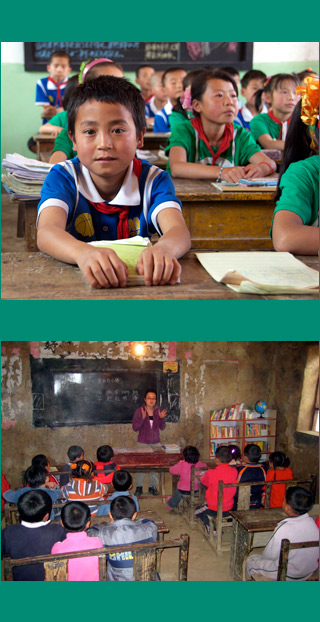
Foreign aid is also examined by scholars trying to understand whether money earmarked for health improvements reaches those who need it most. And FSI’s Walter H. Shorenstein Asia-Pacific Research Center has published on the need for strong South Korean leadership in dealing with its northern neighbor.

FSI researchers also look at the citizens who drive international relations, studying the effects of migration and how borders shape people’s lives. Meanwhile FSI students are very much involved in this area, working with the United Nations in Ethiopia to rethink refugee communities.

Trade is also a key component of international relations, with FSI approaching the topic from a slew of angles and states. The economy of trade is rife for study, with an APARC event on the implications of more open trade policies in Japan, and FSI researchers making sense of who would benefit from a free trade zone between the European Union and the United States.

-

Paul Collier will talk about how to manage the difference between helpful and damaging commercialisation, and puts forth three arguments. First, we need to face the tough reality that African food production has failed to keep pace with demand over the course of several decades, suggesting that there is a deep problem with respect to innovation and investment given the way African agriculture has been organised. Second, we need to accept that climate change, population growth, and income gains from natural resources will all stress this imbalance further: the prospect is for widening food deficits with business as usual. Third, two major changes are afoot. Globally, the model of commercial tropical agriculture pioneered in Brazil has demonstrated that output can be raised very substantially by changing the mode of organisation. Africa is now starting to open land markets to large foreign management. Superficially this looks like Brazil2, but it may instead be a wave of speculative acquisitions triggered by the price peaks of 2008.

Collier is the Director of the Centre for the Study of African Economies and Professor of Economics and Public Policy at the Blavatnik School of Government, Oxford University. He is currently Advisor to the Strategy and Policy Department of the IMF, advisor to the Africa Region of the World Bank; and he has advised the British Government on its recent White Paper on economic development policy. He has been writing a monthly column for the Independent, and also writes for the New York Times, the Financial Times, the Wall Street Journal, and the Washington Post. His research covers the causes and consequences of civil war; the effects of aid and the problems of democracy in low-income and natural-resources rich societies.

Derek Byerlee's talk will lay out a number of models of inclusive agribusiness growth, grouped into three categories (i) institutional arrangements for improving productivity of smallholders operating in spot markets, (ii) various types of contract farming arrangements, and (iii) large-scale farms that generate jobs and/or include community equity shares. The institutional and policy context as well as commodity characteristics that favor these models are discussed within a simple transactions cost framework. He will also discuss cross-cutting policy priorities to enable the growth of commercial agriculture and agribusiness. These include continuing reforms to liberalize product and input markets, access to technology and skills, stimulating financial and risks markets, securing land rights, and investment in infrastructure through public-private partnerships. 

Byerlee has dedicated his career to agriculture in developing countries, as a teacher, researcher, administrator and policy advisor. He has lived and worked for a total of 20 years in the three major developing regions-Africa, Asia, and Latin America. After beginning in academia at Michigan State University, he spent the bulk of his career at the International Maize and Wheat Improvement Center (CIMMYT). There as a economist and research manager he made notable contributions in forging a new spirit of collaboration between scientists, economists and farmers. He also published widely on efficiency of research systems, spillovers, and sustaining productivity in post green revolution agriculture. After joining the World Bank in 1994, he has applied his experience of research systems to finding innovative approaches to funding and organizing agricultural research, including emerging challenges in biotechnology policy. Since 2003, he has provided strategic direction and led policy world for the agricultural and rural sector in the World Bank.


Bechtel Conference Center

Paul Collier Director, Centre for the Study of African Economies, Oxford University Speaker
Derek Byerlee Independent Scholar, Director, 2008 World Development Report Speaker
Symposiums
-

The lost decades for China in the 1950s, 1960s and 1970s look remarkably like the lost decades of Africa in the 1980s and 1990s. Poor land rights, weak incentives, incomplete markets and inappropriate investment portfolios. However, China burst out of its stagnation in the 1980s and has enjoyed three decades of remarkable growth. In this talk Rozelle examines the record of the development of China’s food economy and identifies the policies that helped generate the growth and transformation of agriculture. Incentives, markets and strategic investments by the state were key. Equally important, however, is what the state did not do. Policies that worked and those that failed (or those that were ignored) are addressed. Most importantly, Rozelle tries to take an objective, nuanced look at the lessons that might be learned and those that are not relevant for Africa. Many parts of Africa have experienced positive growth during the past decade. Rozelle examines if there are any lessons that might be helpful in turning ten positive years into several more decades of transformation.

Scott Rozelle (main speaker). Scott Rozelle is the Helen F. Farnsworth Senior Fellow and the co-director of the Rural Education Action Program in the Freeman Spogli Institute for International Studies at Stanford University. His research focuses almost exclusively on China and is concerned with: agricultural policy, including the supply, demand, and trade in agricultural projects; the emergence and evolution of markets and other economic institutions in the transition process and their implications for equity and efficiency; and the economics of poverty and inequality, with an emphasis on rural education, health and nutrition.

Alain de Janvry (commentator). Alain de Janvry is an economist working on international economic development, with expertise principally in Latin America, Sub-Saharan Africa, the Middle-East, and the Indian subcontinent. Fields of work include poverty analysis, rural development, quantitative analysis of development policies, impact analysis of social programs, technological innovations in agriculture, and the management of common property resources. He has worked with many international development agencies, including FAO, IFAD, the World Bank, UNDP, ILO, the CGIAR, and the Inter-American Development Bank as well as foundations such as Ford, Rockefeller and Kellogg. His main objective in teaching, research, and work with development agencies is the promotion of human welfare, including understanding the determinants of poverty and analyzing successful approach to improve well-being and promote sustainability in resource use.

Bechtel Conference Center

Encina Hall East, E404
Stanford, CA 94305-6055

0
Faculty Co-director of the Stanford Center on China's Economy and Institutions
Helen F. Farnsworth Endowed Professorship
Senior Fellow at the Freeman Spogli Institute for International Studies
Senior Fellow at the Stanford Institute for Economic Policy Research
scott_rozelle_new_headshot.jpeg PhD

Scott Rozelle is the Helen F. Farnsworth Senior Fellow and the co-director of Stanford Center on China's Economy and Institutions in the Freeman Spogli Institute for International Studies and Stanford Institute for Economic Policy Research at Stanford University. He received his BS from the University of California, Berkeley, and his MS and PhD from Cornell University. Previously, Rozelle was a professor at the University of California, Davis and an assistant professor in Stanford’s Food Research Institute and department of economics. He currently is a member of several organizations, including the American Economics Association, the International Association for Agricultural Economists, and the Association for Asian Studies. Rozelle also serves on the editorial boards of Economic Development and Cultural Change, Agricultural Economics, the Australian Journal of Agricultural and Resource Economics, and the China Economic Review.

His research focuses almost exclusively on China and is concerned with: agricultural policy, including the supply, demand, and trade in agricultural projects; the emergence and evolution of markets and other economic institutions in the transition process and their implications for equity and efficiency; and the economics of poverty and inequality, with an emphasis on rural education, health and nutrition.

Rozelle's papers have been published in top academic journals, including Science, Nature, American Economic Review, and the Journal of Economic Literature. His book, Invisible China: How the Urban-Rural Divide Threatens China’s Rise, was published in 2020 by The University of Chicago Press. He is fluent in Chinese and has established a research program in which he has close working ties with several Chinese collaborators and policymakers. For the past 20 years, Rozelle has been the chair of the International Advisory Board of the Center for Chinese Agricultural Policy; a co-director of the University of California's Agricultural Issues Center; and a member of Stanford's Walter H. Shorenstein Asia-Pacific Research Center and the Center on Food Security and the Environment.

In recognition of his outstanding achievements, Rozelle has received numerous honors and awards, including the Friendship Award in 2008, the highest award given to a non-Chinese by the Premier; and the National Science and Technology Collaboration Award in 2009 for scientific achievement in collaborative research.

Faculty affiliate at the Center on Democracy, Development, and the Rule of Law
Faculty Affiliate at the Walter H. Shorenstein Asia-Pacific Research Center
Date Label
Scott Rozelle Speaker
Alain de Janvry Professor of Agricultural and Resource Economics, Goldman School of Public Policy, UC-Berkeley Speaker
Symposiums
-

For decades, earnings from farming in many developing countries, including in sub-Saharan Africa, have been depressed by a pro-urban bias in own-country policies, as well as by governments of richer countries favouring their farmers with import barriers and subsidies. Both sets of policies reduced global economic welfare and agricultural trade, and almost certainly added to global inequality and poverty and to food insecurity in many low-income countries. Progress has been made over the past three decades in reducing the trend levels of agricultural protection in high-income countries and of agricultural disincentives in African and other developing countries. However, there is a propensity for governments to insulate their domestic food market from fluctuations in international prices, and that has not waned. That action amplifies international food price fluctuations, yet when both food-importing and food-exporting countries so engage in insulating behaviour, it does little to advance their national food security. Anderson argues much scope remains to improve economic welfare and reduce poverty and food insecurity by removing trade distortions. He summarizes indicators of these trends and fluctuations in trade barriers before pointing to changes in both border policies and complementary domestic measures that together could improve African food security.

Kym Anderson is the George Gollin Professor of Economics, foundation Executive Director of the Wine Economics Research Centre, and formerly foundation Executive Director of the Centre for International Economic Studies at the University of Adelaide, where he has been affiliated since 1984. His also a Professor of Economics, Arndt-Corden Dept of Economics, Australian National University, Canberra. His research interests and publications are in the areas of international trade and development, agricultural economics, environmental economics, and wine economics. His most recent projects have focused on empirical analysis of such issues as the Doha Development Agenda of the World Trade Organization; global distortions to agricultural incentives; economics of agricultural biotechnology (GMO) policies globally; and wine globalization.

Johann Swinnen (commentator). Johan Swinnen is Professor of Development Economics and Director of LICOS Center for Institutions and Economic Performance at the University of Leuven (KUL) in Belgium. He is also Senior Research Fellow at the Centre for European Policy Studies (CEPS), Brussels, where he directs the programme on EU agricultural and rural policy. From 2003 to 2004 he was Lead Economist at the World Bank and from 1998 to 2001 Economic Advisor at the European Commission.

Bechtel Conference Center

Kym Anderson George Gollin Professor of Economics, School of Economics, University of Adelaide; Professor of Economics, Arndt-Corden Dept of Economics, Australian National University, Canberra Speaker

LICOS Center for Transition Economics
K.U.Leuven
Deberiotstraat
34 3000 Leuven, Belgium

0
Professor at the University of Leuven (KUL) in Belgium. Research Affiliate, Rural Education Action Project, FSE Visiting Scholar
js_picture_2.jpg PhD

Johan Swinnen is Professor of Development Economics and Director of LICOS Center for Institutions and Economic Performance at the University of Leuven (KUL) in Belgium. He is also Senior Research Fellow at the Centre for European Policy Studies (CEPS), Brussels, where he directs the programme on EU agricultural and rural policy. From 2003 to 2004 he was Lead Economist at the World Bank and from 1998 to 2001 Economic Advisor at the European Commission.

He is a regular consultant for these organizations and for the OECD, FAO, the EBRD, and several governments and was coordinator of several international research networks on food policy, institutional reforms, and economic development. He is President—Elect of the International Association of Agricultural Economists and a Fellow of the European Association of Agricultural Economists. He holds a Ph.D from Cornell University.  

His research focuses on institutional reform and development, globalization and international integration, media economics, and agriculture and food policy. His latest books are “Political Power and Economic Policy” (Cambridge Univ Press),  “The Perfect Storm: The Political Economy of the Reform of the Common Agricultural Policy” (CEPS),  “Global Supply Chains, Standards, and the Poor” (CABI), “Distortions to Agricultural Incentives in the Transition Economies of Europe and Central Asia” (World Bank Publications), and “From Marx and Mao to the Market” (Oxford University Press -- and Chinese translation by Beijing University Press). He is the president of The Beeronomics Society and editor of the book “The Economics of Beer” (Oxford Univ Press).

Commentator
Symposiums
-

This conference will bring together scholars of North Korea who will debate various aspects of North Korean culture from historical, comparative, and multidisciplinary perspectives.  The prominence of North Korea in world news and the media cannot be understated; yet at a time when much of the analytic energy goes into trying to predict North Korea’s next political move, to assess its military and economic strategies, or to determine the extent of an ever-growing Chinese influence, more attention needs to be paid to its expressions of art, literature, and performance culture that continues to be produced for both internal and external consumption. The presentations in this conference engage with music, graphic novels, art, science fiction, film, and ego-documents with an attempt to illuminate the ways in which North Korea remembers its past, asserts itself in the present, and imagines its future even while outside influences increasingly disrupt its once-hermetically sealed borders.

This event is co-sponsored by the Korean Studies Program at APARC and the Center for East Asian Studies (CEAS). RSVP Required.

Please register at http://ceas.stanford.edu/events/event_detail.php?id=2969.

For questions and details, please contact Marna Romanoff at romanoff@stanford.edu.


Philippines Conference Room

Conferences
News Type
News
Date
Paragraphs
Thomas Fingar, who leads the China and the World research initiative, examines the policy implications of China's view of the global order. He shares his thoughts in a new publication on security in Asia.
Hero Image
GreatHall LOGO
Ceiling of the Great Hall of the People in Beijing, the seat of China's government.
Flickr user kevinbeijing
All News button
1
-

The advent of ubiquitous networking and computation and deepening globalization since the 1990s has eroded traditional international security architectures by multiplying conflict surfaces and empowering new actors. This talk describes research in the context of track 1.5 dialogues with Russia and China that aims to develop shared frameworks for understanding escalatory models of cyber conflict, sources of instability, and feasible approaches for risk mitigation. It will argue that cyber has made deterrence much more complex, and now, increased information assurance and new legal or normative constraints on state behavior are likely necessary for effective cross-sectoral deterrence. Finally, it suggests three tasks for cyber norms or confidence and security building measures to attenuate instability.


John Mallery is a research scientist at the Computer Science & Artificial Intelligence Laboratory at the Massachusetts Institute of Technology (MIT). He is concerned with cyber policy and has been developing advanced architectural concepts for cyber security and transformational computing for the past decade. Since 2006, he organized a series of national workshops on technical and policy aspects of cyber.

CISAC Conference Room

John C. Mallery Computer Science and Artificial Intelligence Laboratory Speaker Massachusetts Institute of Technology
Seminars
Authors
News Type
News
Date
Paragraphs
As a result of the conclusion of the San Francisco Peace Treaty, the United States bears a historic responsibility for helping resolve contemporary territorial disputes in Northeast Asia, said Daniel C. Sneider in a recent Jiji Press interview.
Hero Image
SF CivicCenter LOGO
The dome of San Francisco's Civic Center, site of the San Francisco Peace Treaty.
Flickr user vivoandando
All News button
1
-

The U.S.-Japan relationship is not much in the headlines these days—and when it is the stories seem to focus on issues, such as Okinawa and beef, that have bedeviled ties seemingly for decades. But, in the midst of seismic shifts in Asia-Pacific security and global economic relations, shouldn’t the two countries be talking about something else?

Many in American industry have thought so and in 2009 the American Chamber of Commerce in Japan released a white paper calling for a new set of discussions with Japan directed at capturing the innovation and growth potential of the emerging global Internet economy. Accompanying the call were a set of over 70 specific recommendations for discussion in areas ranging from privacy, security, intellectual property, spectrum management, cyber security to competition—an agenda for the future not the past.

The paper found resonance with the new Democratic Party government in Japan and the Obama administration that were searching for a new direction and vocabulary for U.S.-Japan economic relations and were mindful that partnership with Japan in this area strengthened the U.S. hand in dealing with preemptive attempts elsewhere to define rule of the road for the Internet and “cloud computing.” 

The Dialogue was formally launched in the fall of 2010 and its third plenary session is taking place in Washington, D.C. October 16 to 19, 2012. Professor Jim Foster is participating in the Dialogue as a leading member of the U.S. private sector delegation to the talks. He will be coming to Stanford immediately following the joint industry-government meeting on October 18 (the governments will continue in closed-door session through the 19th) and will offer his analysis and insight into the discussions in Washington and their implications for future cooperation between Japan and the U.S. industry in the cloud computing field and for the two governments on challenging issues of broader Internet governance.

Jim Foster is currently a professor in the Graduate School of Media and Governance at Keio University, where he teaches and researches on U.S. foreign policy issues and global Internet policy. He is the co-director of Keio’s Internet and Society Institute. Foster worked as a U.S. diplomat from 1981 to 2006, serving in Japan, Korea, the Philippines and at the U.S. Mission to the EU. He was director for corporate affairs at Microsoft Japan from 2006 to 2011. He is a former vice president of the American Chamber of Commerce in Japan and a co-author of the ACCJ White Paper on the Internet Economy.

Philippines Conference Room

Jim Foster Professor, Keio University and Vice-Chair of the American Chamber of Commerce (ACCJ) in Japan Internet Economy Task Force Speaker
Seminars

Tensions over unresolved territorial issues and problems of wartime history in Northeast Asia are again on the rise. Japan and China are locked in an increasingly dangerous face-off over competing claims to the Senkaku/Diaoyu island group, marked by street demonstrations in China and mobilizations of maritime forces. The long-standing dispute between Japan and the Republic of Korea over the Dokdo/Takeshima islands has also resurfaced, overlain with problems over how to compensate the so-called "comfort women" from World War Two.

Subscribe to International Relations