International Relations

FSI researchers strive to understand how countries relate to one another, and what policies are needed to achieve global stability and prosperity. International relations experts focus on the challenging U.S.-Russian relationship, the alliance between the U.S. and Japan and the limitations of America’s counterinsurgency strategy in Afghanistan.

Foreign aid is also examined by scholars trying to understand whether money earmarked for health improvements reaches those who need it most. And FSI’s Walter H. Shorenstein Asia-Pacific Research Center has published on the need for strong South Korean leadership in dealing with its northern neighbor.

FSI researchers also look at the citizens who drive international relations, studying the effects of migration and how borders shape people’s lives. Meanwhile FSI students are very much involved in this area, working with the United Nations in Ethiopia to rethink refugee communities.

Trade is also a key component of international relations, with FSI approaching the topic from a slew of angles and states. The economy of trade is rife for study, with an APARC event on the implications of more open trade policies in Japan, and FSI researchers making sense of who would benefit from a free trade zone between the European Union and the United States.

-
Pauline Jones REDS Seminar

What are the longer-term implications of Russia’s renewed aggression in Ukraine for relations with its Eurasian neighbors it has often referred to as the “near abroad?”

A recent and growing literature suggests that domestic public opinion will play a decisive role in their future foreign policy choices. Based on an original mass survey with an embedded experiment, this talk examines the changes in Kazakhstani public opinion toward maintaining economic and security relations with Russia through international alliances such as the Collective Treaty Security Organization (CSTO). These changes should be viewed in light of both Russia’s war against Ukraine in February 2022 and the Russian-led CSTO’s intervention in the mass protests in Kazakhstan in January 2022. It argues that Kazakhstani public opinion has changed in significant ways — especially across ethnic lines — and that these changes are likely to impact Kazakhstan-Russian relations in general and the future of the CSTO in particular.

ABOUT THE SPEAKER

Pauline Jones is Professor of Political Science at the University of Michigan (UM) and the Edie N. Goldenberg Endowed Director for the Michigan in Washington Program. She is also Founder and Director of the Digital Islamic Studies Curriculum (DISC). Previously, she served as the Director of UM’s Islamic Studies Program (2011-14) and International Institute (2014-20). Her past work has contributed broadly to the study of institutional origin, change, and impact in Central Asia. She is currently engaged in multiple research projects: exploring how state regulation of Islam in Muslim-majority states affects citizens’ political attitudes and behavior; identifying the factors that affect compliance with health mitigation policies to combat the COVID-19 pandemic; examining the influence that evoking historical memory has on public support for foreign assistance; and developing a toolkit to assess the impact of mass protest and state narratives on domestic and foreign policy change in authoritarian regimes. She has published articles in several leading academic and policy journals, including the American Political Science Review, Annual Review of Political Science, Comparative Political Studies, Current History, and Foreign Affairs. She is author (or co-author) of five books, most recently The Oxford Handbook on Politics in Muslim Societies (Oxford 2021).


REDS: RETHINKING EUROPEAN DEVELOPMENT AND SECURITY


The REDS Seminar Series aims to deepen the research agenda on the new challenges facing Europe, especially on its eastern flank, and to build intellectual and institutional bridges across Stanford University, fostering interdisciplinary approaches to current global challenges.

REDS is organized by The Europe Center and the Center on Democracy, Development and the Rule of Law, and co-sponsored by the Hoover Institution and the Center for Russian, East European and Eurasian Studies.

Learn more about REDS and view past seminars here.


Image
CDDRL, TEC, Hoover, and CREEES logos
Kathryn Stoner
Kathryn Stoner

In-person: William J. Perry Conference Room (Encina Hall, 2nd floor, 616 Jane Stanford Way, Stanford)

Virtual: Zoom (no registration required)

Pauline Jones University of Michigan
Seminars
-

About the Event: 

The Strategic Posture Commission is a bipartisan group mandated by Congress in 2022 to examine the threat to the U.S. strategic posture in 2027-2035 and beyond. The group reported its unanimous findings and recommendations in October 2023, concluding that the United States is facing a strategic challenge requiring urgent action: a world where two nations, China and Russia, will possess nuclear arsenals on par with the United States. This outlook requires an urgent national focus and concerted actions not currently planned. Chair Madelyn Creedon and Vice Chair Jon Kyl will discuss this threat environment and present the findings and recommendations of the Commission. CISAC Director Scott Sagan will preside.

About the Speakers: 

CHAIR - Madelyn R. Creedon
The Honorable Madelyn R. Creedon had a long career in federal service; she served most recently as Principal Deputy Administrator of the National Nuclear Security Administration (NNSA) within the Department of Energy, a position she held from 2014 to 2017. She also served in the Pentagon as Assistant Secretary of Defense for Global Strategic Affairs from 2011 to 2014, overseeing policy development in the areas of missile defense, nuclear security, combatting WMD, cybersecurity, and space. Creedon served as counsel for the U.S. Senate Committee on Armed Services for many years, beginning in 1990; assignments and focus areas included the Subcommittee on Strategic Forces as well as threat reduction and nuclear nonproliferation.During that time, she also served as Deputy Administrator for Defense Programs at the NNSA, Associate Deputy Secretary of Energy, and General Counsel for the Defense Base Closure and Realignment Commission. She started her career as a trial attorney at the Department of Energy. Following retirement from Federal Service in 2017, Creedon established Green Marble Group, LLC, a consulting company, and currently serves on several advisory and other boards related to national security. She is also a non-resident senior fellow at The Brookings Institution and a research professor at the George Washington University Elliott School of International Affairs. She holds a J.D. from St. Louis University School of Law, and a B.A. from the University of Evansville.

COMMISSIONER - Gloria Duffy
Dr. Gloria Duffy has been president and CEO of The Commonwealth Club since 1996. She oversees the organizational strategy, programming, publications, outreach, membership and fundraising for the nation’s largest and oldest public affairs forum. Prior to becoming president and CEO of the Club, Duffy was U.S. Deputy Assistant Secretary of Defense and Special Coordinator for Cooperative Threat Reduction, where she led Nunn-Lugar program negotiations and oversaw U.S. assistance for the dismantling of nuclear warheads and delivery systems in the former Soviet countries, as well as the disposal of chemical weapons and reemployment of WMD scientists on civilian research.

COMMISSIONER - Rose Gottemoeller
Professor Rose Gottemoeller is a Lecturer at Stanford University's Freeman Spogli Institute for International Studies and Research Fellow at the Hoover Institute. Before joining Stanford Gottemoeller was the Deputy Secretary General of NATO from 2016 to 2019, where she helped to drive forward NATO’s adaptation to new security challenges in Europe and in the fight against terrorism.  Prior to NATO, she served for nearly five years as the Under Secretary for Arms Control and International Security at the U.S. Department of State, advising the Secretary of State on arms control, nonproliferation and political-military affairs. While Assistant Secretary of State for Arms Control, Verification and Compliance in 2009 and 2010, she was the chief U.S. negotiator of the New Strategic Arms Reduction Treaty (New START) with the Russian Federation. Prior to her government service, she was a senior associate with the Carnegie Endowment for International Peace, with joint appointments to the Nonproliferation and Russia programs. She served as the Director of the Carnegie Moscow Center from 2006 to 2008, and is currently a nonresident fellow in Carnegie's Nuclear Policy Program. At Stanford, Gottemoeller teaches and mentors students in the Ford Dorsey Master’s in International Policy program and the CISAC Honors program; contributes to policy research and outreach activities; and convenes workshops, seminars and other events relating to her areas of expertise, including nuclear security, Russian relations, the NATO alliance, EU cooperation and non-proliferation. 

VICE CHAIR - Jon L. Kyl
Senator Jon L. Kyl served 18 years in the U.S. Senate, and before that, eight years in the U.S. House of Representatives. He was elected unanimously by his colleagues in 2008 to serve as Republican Whip, a position he held until his retirement in 2013. Kyl served on the Intelligence, Judiciary, Finance and Armed Services committees among others. He was active in the Senate consideration of the Comprehensive Nuclear Test Ban Treaty, New START, and other arms limitation proposals, as well as strategic deterrence issues in numerous National Defense Authorization Acts. After retiring from the Senate, Kyl served as a member of the Board of Directors of Sandia Laboratory for three years. In 2018, he was a member of the National Defense Strategy Commission. On September 5, 2018, Kyl was appointed by Arizona Governor Doug Ducey to fill the seat of the late Senator John McCain through the end of 2018. 


 All CISAC events are scheduled using the Pacific Time Zone.

William J. Perry Conference Room

Madelyn R. Creedon
Jon L. Kyl
Rose Gottemoeller
Gloria Duffy
Seminars
Authors
Melissa Morgan
News Type
Commentary
Date
Paragraphs

If you had five minutes to speak with the president of the United States, what would you say? That’s the question Michael McFaul, director of the Freeman Spogli Institute for International Studies, posed to FSI scholars at a Stanford 2023 Reunion Homecoming event.

The discussion, “Global Threats Today: What's At Stake and What We Can Do About It,” centered around five major challenges currently facing the world: political dissatisfaction and disillusionment at home, tensions between China and Taiwan, the consequences of climate change, the ongoing war between Russia and Ukraine, and the conflict between Hamas and Israel.

Speaking to each of these areas of concern and how they overlap, FSI scholars Didi Kuo, Larry Diamond, Marshall Burke, Michael McFaul, and Amichai Magen offered their perspectives on what can be done. You can listen to their full conversation on the World Class podcast and browse highlights from their policy ideas below.

Follow the link for a full transcript of "Global Threats: What's at Stake and What We Can Do About It."


Reform the Electoral College |  Didi Kuo


One of the major problems people feel right now in American politics is that their voices aren’t heard. We live in what my colleague Francis Fukuyama calls a "vetocracy," meaning there are a lot of veto points in our system.

In a lot of other democratic institutional configurations, you have rule by the majority. But in the United States, we have an institutional configuration that allows a very small group — for example, 15 people in the House of Representatives — to hold up government in various ways. We see this in dramatic examples on the national level, but it also trickles down to the local level where you see it in issues like permitting hold-ups.

Reforming the Electoral College would be a very direct way of changing that vetocracy. The United States is one of the only advanced democracies that has this indirect system of elections. If all the votes counted equally and all the presidential candidates had to treat all of us the same and respond to us equally in all 50 states, it would do a lot to show the power of the popular vote and realign us more closely to the principle of majoritarianism that we should seek in our institutions.

Didi Kuo

Didi Kuo

Center Fellow at the Freeman Spogli Institute
Full Profile


Allow Taiwan to License Weapons Production |  Larry Diamond


My recommendation is deterrence, deterrence, deterrence. It is not inevitable that the People's Republic of China is going to launch an all-out military assault on Taiwan. But if the United States does not do more to make that a costly decision, the likelihood it will happen are exponentially higher.

Deterrence works. The United States deterred the Soviet Union from moving against West Berlin and much of Europe for decades. But it only works if you have a superior force.

To that end, the United States needs to pre-position more military force in the region. There's now a $12 billion backlog of weapons that Taiwan has ordered and paid for but hasn't received yet. That’s because the American defense production system is completely broken. This is the same reason why we can’t get weapons to Ukraine at the pace we need there.

This issue could be fixed, at least in part, if we licensed the production of some of these weapon systems directly to Taiwan. Their ability to build plants and produce these systems is much more agile than our own, and so licensing the rights to production would dramatically increase the deterrence factor against China, in addition to deepening our cooperation with allies throughout the region.

Professor Larry Diamond

Larry Diamond

Mosbacher Senior Fellow in Global Democracy at FSI
Full Profile


Pursue Climate Mitigation AND Adaptation |  Marshall Burke


There are three things we can do in response to climate change: we can mitigate, we can adapt, or we can suffer. We’re off to a good start, but we have decades of long slog ahead of us to get that right. And it's not just us; even if we do a good job, we depend on other countries to also do a good job. The Biden administration has already been engaged on some of that front, but there’s more work to do there.

And even with our best efforts, we are not going to be able to move as fast as we want or mitigate our greenhouse gas emissions as quickly as we need to avoid climate change. So, we're going to have to live with some climate change, which means adaptation. And if we can't adapt, then we're going to suffer. 

The key point is that we are very poorly adapted to today's climate, much less the climate we're going to have 30 or 50 years from now. The West Coast and California are prime examples of this. There have been monumental wildfire seasons there the last few years, and there are significant negative health impacts from smoke exposure. I see it in my own home, even as someone who studies this and should know better and do more to reduce those risks.

The point is, we're really poorly adapted to the current climate, and things are going to get a lot worse. We need to focus on mitigation; it’s still really important and we need to get it done. But at the same time, we need to figure out how to adapt and live with the changing climate that we're going to experience.

Marshall Burke

Marshall Burke

Deputy Director of the Center on Food Security and the Environment
Full Profile


Weapons for Ukraine, Sanctions on Russia |  Michael McFaul


When I was in Kyiv this September, I had a chance to meet with President Zelenskyy, and he pointed out an absolutely crazy reality. Companies in the United States and Europe are still making tens of thousands of dollars in profits from selling various technologies that ultimately end up in Russia. It’s getting in through places like Hong Kong and Kazakhstan and Belarus and Georgia, and it allows Russia to keep waging its horrific war.

At the same time, the United States is spending millions of dollars to arm Ukraine with systems to shoot down the Russian rockets that were built using the components they got from the West. That’s completely illogical, bad policy. I know it’s hard to control technology, but we have to find a better way than what we’re doing right now. If you're an American taxpayer, that is your money being wasted.

That means more and better weapons for Ukraine, faster. And that means more and better sanctions on Russia, faster. That is the way to speed the end of this war.

Michael McFaul

Michael McFaul

Director of the Freeman Spogli Institute
Full Profile


Be Confident in America |  Amichai Magen


Just a few short years ago, we were all talking about the decline of the United States. I think that is far from inevitable. People speak about the 20th century as the “American Century.” The 21st century can also be the American Century. It's in our hands.

Be bullish on America. Be confident in America. Rediscover the spirit of America for adaptation and innovation and entrepreneurship. We need to wake up from the break we’ve taken from history in the post-Cold War era and rally once again in our spirit, our research, and our intellect.

We need to find new solution structures to the great challenges of our era: environmental challenges, AI, biotechnological challenges, nuclear challenges. And we can do it. China is on the verge of demographic decline and economic decline. Russia is a very dangerous international actor, but it is not a global superpower. We must reinvent the institutions and the alliances that we need for the 21st century in order to make sure that we continue a journey towards greater peace and prosperity for all of mankind.

Amichai Magen

Amichai Magen

Visiting Fellow in Israel Studies at the Freeman Spogli Institute
Full Profile


The entire discussion, including the audience Q&A, is available to watch on FSI's YouTube channel. To stay up to date on our content, be sure to like, subscribe, and turn on notifications.

Read More

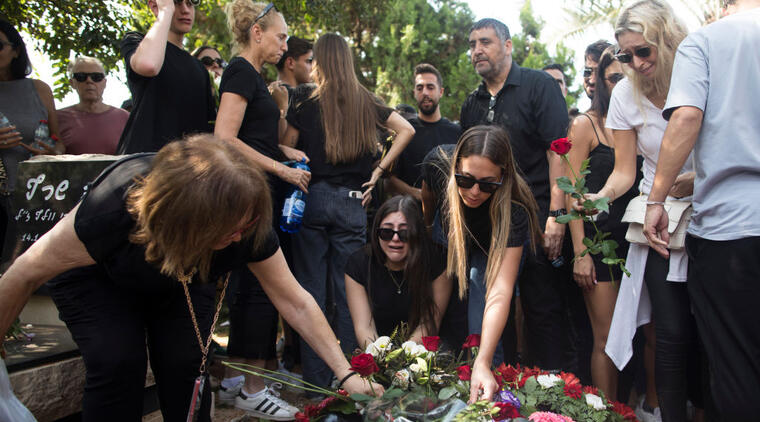
Family and friends of May Naim, 24, who was murdered by Palestinians militants at the "Supernova" festival, near the Israeli border with Gaza strip, react during her funeral on October 11, 2023 in Gan Haim, Israel. (Getty Images)
News

FSI Scholars Analyze Implications of Hamas’ Terror Attack on Israel

Larry Diamond moderated a discussion between Ori Rabinowitz, Amichai Magen and Abbas Milani on the effects of Hamas’ attacks on Israel and what the emerging conflict means for Israel and Middle Eastern geopolitics.
FSI Scholars Analyze Implications of Hamas’ Terror Attack on Israel
Michael McFaul poses with a Stanford University flag in front of a group of Ukrainian alumni during a reunion dinner in Kyiv.
Blogs

On the Ground in Ukraine: A Report from Michael McFaul and Francis Fukuyama

A trip to Kyiv gave FSI Director Michael McFaul and Olivier Nomellini Senior Fellow Francis Fukuyama the opportunity to meet with policymakers, military experts, and Ukrainian alumni of FSI's programs and fellowships.
On the Ground in Ukraine: A Report from Michael McFaul and Francis Fukuyama
Democracy Day 2023 light up marquee letters
News

Democracy Day sweeps Stanford

Thousands turned out for the student-run, campuswide event, which has grown significantly since launching in 2021.
Democracy Day sweeps Stanford
Hero Image
Amichai Magen, Marshall Burke, Didi Kuo, Larry Diamond, and Michael McFaul onstage for a panel discussion at Stanford's 2023 Reunion and Homecoming
Melissa Morgan
All News button
1
Subtitle

FSI scholars offer their thoughts on what can be done to address political polarization in the United States, tensions between Taiwan and China, climate change, the war in Ukraine, and the Israel-Hamas war.

Date Label
-

Big Data China 2nd Annual Conference (Virtual)


Prospects for China’s Growth and Foreign Relations in an Era of Competition


The event will be broadcast live from this webpage.

Big Data China logo

Tune in on December 5th to watch our annual conference! China experts in the policy and academic communities will discuss the state of the Chinese economy, pathways to manage scholarly exchanges, and the future of Chinese foreign policy.


AGENDA
 

8:00 - 8:30 am: Keynote Speech: Kevin Stein, Chair, American Chamber of Commerce in Shanghai, and Co-Chair, China Public Policy Practice, Covington & Burling
 

8:45 - 9:45 am: Panel 1: Scenarios for Chinese Growth Over the Next Decade: Key Factors and Implications


Moderator: Scott Kennedy, CSIS

Panelists:
Zhiguo He, University of Chicago Booth School of Business
Bert Hofman, NUS Lee Kuan Yew School of Public Policy
Zongyuan Zoe Liu, Council on Foreign Relations

10:00 - 11:00 am: Panel 2: Charting a Path for Scholarly Exchange in an Era of Strategic Competition


Moderator: Scott Rozelle, Stanford Center on China’s Economy and Institutions

Panelists:
Li Chenjian, Stanford University
Molly Roberts, UC San Diego
Deborah Seligsohn, Villanova University

11:15 - 12:15 pm: Panel 3: Between Backlash and Balancing: The State of China’s Foreign Relations


Moderator: Ilaria Mazzocco, CSIS

Panelists:
Yunnan Chen, Overseas Development Institute
Carla Freeman, United States Institute of Peace
Francesca Ghiretti, Adarga Research Institute


FEATURING
 

Image
Kevin Stein 2023 keynote speaker


Image
Big Data China conference panelists listed by panel.

EVENT PARTNERS
 

Image
SCCEI and CSIS logos
Conferences
-
Encina Hall backdrop with text "A Summit Discussion with Prime Minister Kishida Fumio of Japan and President Yoon Suk Yeol of the Republic of Korea"

This event is at full capacity and has closed for registration. There is no waitlist.
No walk-ins will be accepted.

The Walter H. Shorenstein Asia-Pacific Research Center (APARC) is honored to host the Prime Minister of Japan, Kishida Fumio, and the President of the Republic of Korea, Yoon Suk Yeol, for a special summit discussion. The event co-hosts are the Freeman Spogli Institute for International Studies (FSI) and Hoover Institution.

Portraits of Prime Minister Kishida Fumio of Japan and President Yoon Suk Yeol of the Republic of Korea.


Following remarks by Prime Minister Kishida and President Yoon on the challenges and future of science and technology, they will engage in a moderated conversation with Secretary Condoleezza Rice, the Tad and Dianne Taube Director of the Hoover Institution. Discussion topics include decarbonization and clean energy, quantum technology, and startup innovation.

Speakers will also include Professors Gi-Wook Shin and Kiyoteru Tsutsui, Director and Deputy Director of APARC, respectively, and Professor Michael McFaul, Director of FSI.

This historic gathering on the Stanford campus of the leaders of the two key U.S. allies in the Indo-Pacific — a convening that would have been almost unthinkable just over a year ago — follows a period in which the two leaders have made extraordinary progress in strengthening Japan-ROK bilateral relations, and is particularly significant in the aftermath of the August 2023 Camp David U.S.-Japan-ROK trilateral summit, which has been touted as the beginning of a new era in trilateral cooperation among the three allies as they seek to advance peace and prosperity in the Indo-Pacific region.

This event is available to in-person attendees and will not be livestreamed.

When registering, please be sure to read carefully the terms and conditions for attendance.

Members of the press should follow the media advisory below. For press/media inquiries, please contact aparc-communications@stanford.edu.

We will keep registrants informed of any program revisions subject to Japanese, Korean, and U.S. government protocols.

1:00 p.m. 
Registration check-in opens

1:30 p.m.
Doors to the auditorium open

2:10 p.m.
Audience seated and doors to the auditorium close

2:30 p.m.
Event begins

Welcome
Michael McFaul
Director, Freeman Spogli Institute for International Studies
Ken Olivier and Angela Nomellini Professor of International Studies, Department of Political Science
Peter and Helen Bing Senior Fellow, Hoover Institution

Remarks
The Honorable Kishida Fumio
Prime Minister of Japan

The Honorable Yoon Suk Yeol
President of the Republic of Korea

Discussion
Moderated by 
Condoleezza Rice
Tad and Dianne Taube Director, Hoover Institution
Thomas and Barbara Stephenson Senior Fellow on Public Policy, Hoover Institution
Denning Professor in Global Business and the Economy, Stanford Graduate School of Business
Senior Fellow, by courtesy, Freeman Spogli Institute for International Studies

Q&A Session
Guided by 
Kiyoteru Tsutsui
Senior Fellow, Freeman Spogli Institute for International Studies
Professor of Sociology
Henri H. and Tomoye Takahashi Professor and Senior Fellow in Japanese Studies, Walter H. Shorenstein Asia-Pacific Research Center
Deputy Director, Walter H. Shorenstein Asia-Pacific Research Center
Director, Japan Program

Closing Remarks
Gi-Wook Shin
Senior Fellow, Freeman Spogli Institute for International Studies
Professor of Sociology
William J. Perry Professor of Contemporary Korea
Director, Walter H. Shorenstein Asia-Pacific Research Center
Director, Korea Program


Hauck Auditorium
David and Joan Traitel Building
Hoover Institution
435 Lasuen Mall
Stanford, CA 94305

Panel Discussions
-

About the Speaker: Or (Ori) Rabinowitz, (PhD), a Chevening scholar, is an associate professor at the International Relations Department of the Hebrew University of Jerusalem, Israel. During the academic year of 2022-2023 she will hold the post of visiting associate professor at Stanford’s CISAC. Her research interests include nuclear proliferation, intelligence studies, and Israeli American relations. Her book, Bargaining on Nuclear Tests was published in April 2014 by Oxford University Press. Her studies were published leading academic journals, including International Security, Journal of Strategic Studies, and International History Review, as well as op-eds and blog posts in the Washington Post, Foreign Policy and Ha’aretz. She holds a PhD degree awarded by the War Studies Department of King’s College London, an MA degree in Security Studies and an LLB degree in Law, both from Tel-Aviv University. She was awarded numerous awards and grants, including two personal research grants by the Israeli Science Foundation and in 2020 was a member of the Young Academic forum of the Israeli Academy for Sciences and Humanities.  

 All CISAC events are scheduled using the Pacific Time Zone.

William J. Perry Conference Room

0
Visiting Scholar
or-rabinowitz_headshot.jpg

Or (Ori) Rabinowitz, (PhD), a Chevening scholar, is an associate professor at the International Relations Department of the Hebrew University of Jerusalem, Israel. During the academic year of 2022-2023 she will hold the post of visiting associate professor at Stanford’s CISAC. Her research interests include nuclear proliferation, intelligence studies, and Israeli American relations. Her book, Bargaining on Nuclear Tests was published in April 2014 by Oxford University Press. Her studies were published leading academic journals, including International Security, Journal of Strategic Studies, and International History Review, as well as op-eds and blog posts in the Washington Post, Foreign Policy and Ha’aretz. She holds a PhD degree awarded by the War Studies Department of King’s College London, an MA degree in Security Studies and an LLB degree in Law, both from Tel-Aviv University. She was awarded numerous awards and grants, including two personal research grants by the Israeli Science Foundation and in 2020 was a member of the Young Academic forum of the Israeli Academy for Sciences and Humanities.  

CV
Date Label
Or Rabinowitz
Seminars
-

About the Event: Professor Sanford will discuss the weaponization of the Guatemalan judicial system, gender violence and migration in a conversation about her new book Textures of Terror that investigates the unsolved murder of a female law student and the pervasive violence against Guatemalan women that drives migration. Through a father’s determined struggle and other stories of justice denied, Textures of Terror offers a deeper understanding of US Policies in Latin America and their ripple effect on migration. Professor Sanford offers an up-close appraisal of the inner workings of the Guatemalan criminal justice system and how it maintains inequality, patriarchy and impunity. Presenting the stories of other women who have suffered at the hands of strangers, intimate partners and the security forces, she reveals the deeply gendered nature of power and violence in Guatemala.

About the Speaker: A public scholar, anthropologist and internationally recognized expert on the Guatemalan Genocide, Victoria Sanford is a writer, human rights advocate and Lehman Professor of Excellence at Lehman College and the Graduate Center, City University of New York. She is the author of seven books including Textures of Terror: The Murder of Claudina Isabel & Her Father’s Quest for Justice and Buried Secrets: Truth and Human Rights in Guatemala. She served as an invited expert in the Spanish National Court’s genocide case against the Guatemalan generals and in an indigenous land rights case in the Inter-American Court of Human Rights. A John Simon Guggenheim Fellow and Bunting Peace Fellow at Harvard University’s Radcliffe Institute for Advanced Study, she has also held fellowships at the US Institute for Peace, the Virginia Foundation for the Humanities, and Fulbright Scholar awards at the Universidad Libre and Javeriana University in Bogota, Colombia, among others. To learn more about Victoria Sanford’s work, visit: https://www.victoriasanford.info/

 All CISAC events are scheduled using the Pacific Time Zone.

Victoria Sanford
Seminars
Authors
Nora Sulots
News Type
News
Date
Paragraphs

The Fisher Family Summer Fellows on Democracy and Development Program at Stanford University's Center on Democracy, Development and the Rule of Law is now accepting applications for our summer 2024 program. The deadline to apply is 5:00 pm PST on Sunday, January 14, 2024.

The program brings together an annual cohort of approximately 30 mid-career practitioners from countries in political transition who are working to advance democratic practices and enact economic and legal reform to promote human development. Launched by CDDRL in 2005, the program was previously known as the Draper Hills Summer Fellows Program. The new name reflects an endowment gift from the Fisher family — Sakurako (Sako), ‘82, and William (Bill), MBA ‘84 — that secures the future of this important and impactful program.

From Afghanistan to Zimbabwe, our program participants are selected from among hundreds of applicants every year for the significant contributions they have already made to their societies and their potential to make an even greater impact with some help from Stanford. We aim to give them the opportunity to join a global network of nearly 500 alumni from 97 countries who have all faced similar sets of challenges in bringing change to their countries.

The Fisher Family Summer Fellows Program provides an intensive 3-week on-campus forum for civil society leaders to exchange experiences and receive academic and policy training to enrich their knowledge and advance their work. Delivered by a leading Stanford faculty team composed of Michael McFaul, Kathryn Stoner, Francis Fukuyama, Larry Diamond, Erik Jensen, and more, the program allows emerging and established global leaders to explore new institutional models and frameworks to enhance their ability to promote good governance, accountable politics, and find new ways to achieve economic development in their home countries.

Prospective fellows from Ukraine are also invited to apply for our Strengthening Ukrainian Democracy and Development (SU-DD) Program, which runs concurrently with the Fisher Family Summer Fellows Program. The SU-DD program provides a unique opportunity for mid-career practitioners working on well-defined projects aimed at strengthening Ukrainian democracy, enhancing human development, and promoting good governance. Applicants to the SU-DD program will use the Fisher Family Summer Fellows Program application portal to apply and indicate their interest there. You will then be directed to a supplemental application for the SU-DD program, which will ask some additional questions specific to the SU-DD program, including requiring a detailed description of your proposed project.

Read More

2023 SU-DD Fellows
News

Empowering Ukrainian Democracy: Innovative Training Program Nurtures Projects for Recovery and Development

Meet the six fellows selected to participate in the first cohort of the Center on Democracy, Development and the Rule of Law’s Strengthening Ukrainian Democracy and Development Program.
Empowering Ukrainian Democracy: Innovative Training Program Nurtures Projects for Recovery and Development
Fisher Family Summer Fellows Class of 2023
News

Announcing the Inaugural Fisher Family Summer Fellows Cohort

In July 2023, CDDRL will welcome a diverse cohort of 33 experienced practitioners from 21 countries who are working to advance democratic practices and economic and legal reform in contexts where freedom, human development, and good governance are fragile or at risk.
Announcing the Inaugural Fisher Family Summer Fellows Cohort
Summer Fellows from the 2022 cohort pose together for a group photo.
News

The Gift of Connection: A Bright Future Lies Ahead for the Summer Fellows Program at CDDRL

A gift from alumni Sakurako, ’82, and William Fisher, MBA ’84, secures the future of the Summer Fellows Program at the Center on Democracy, Development and the Rule of Law, which provides opportunities for civic leaders from around the world to network and learn from Stanford scholars.
The Gift of Connection: A Bright Future Lies Ahead for the Summer Fellows Program at CDDRL
Hero Image
2023 Fisher Family Summer Fellows in front of fountain
All News button
1
Subtitle

The program will run from Sunday, July 21, through Friday, August 9, 2024. Applications are due by 5:00 pm PST on Sunday, January 14, 2024.

-
Amir Magdy Kamel event

Amir Magdy Kamel joins ARD to discuss his recently released book, Floundering Stability: US Foreign Policy in Egypt (University of Michigan Press, 2023). 


The United States has a record of pursuing global stability through international relations. This commitment is reflected in a US type of foreign policy that uses economic tools to pursue stability goals. To better understand the effectiveness of this notion, this talk will unpack the conceptual and contextual foundations of what Amir Magdy Kamel refers to as the US ‘Stability Policy’—how it evolved over time and how it was implemented in Egypt. From here, Kamel will reflect on what his book’s findings demonstrate for the relationship between economics and stability, along with how and why the stability policy performed the way it did in Egypt.

ABOUT THE SPEAKER


Amir Magdy Kamel currently holds visiting roles at Stanford University and the University of San Francisco. He is also an Associate Professor in the School of Security Studies and a Fellow in the Institute of Middle Eastern Studies at King's College London. His research projects focus on two areas: political and economic issues across the Middle East, including EU and US foreign policy towards the region, and transformative technologies and how they impact states and policymaking. Dr. Kamel also has over a decade of experience providing advice, analysis, and consultations to various government agencies, economic consultancies, and NGOs.

Hesham Sallam
Hesham Sallam

Encina Hall E008 (Garden Level, East)     
616 Jane Stanford Way, Stanford, CA 94305

This is an in-person event.

Amir Magdy Kamel
Seminars
Subscribe to International Relations