
 FSI researchers strive to understand how countries relate to one another, and what policies are needed to achieve global stability and prosperity. International relations experts focus on the challenging U.S.-Russian relationship, the alliance between the U.S. and Japan and the limitations of America’s counterinsurgency strategy in Afghanistan.
15th Annual Shorenstein Journalism Award Panel Discussion: Religion After Mao
Following a century of violent anti-religious campaigns, China is now filled with new temples, churches and mosques--as well as cults, sects and politicians trying to harness religion for their own ends. Driving this explosion of faith is uncertainty--over what it means to be Chinese, and how to live an ethical life in a country that discarded traditional morality a century ago and is still searching for new guideposts. Ian Johnson lived for extended periods with underground church members, rural Daoists and Buddhist pilgrims. Throughout his career in journalism and in his new book Souls of China: The Return of Religion After Mao (Pantheon/Knopf in the United States and Penguin in the U.K., both April 2017), Johnson has distilled these experiences into a cycle of festivals, births, deaths, detentions and struggle—a great awakening of faith that is shaping the soul of the world’s newest superpower. This panel discussion, featuring a keynote speech delivered by Johnson, will explore the resurgence of religion and value systems in China.
Souls of China: The Return of Religion After Mao will be available for sale.
Panelists:
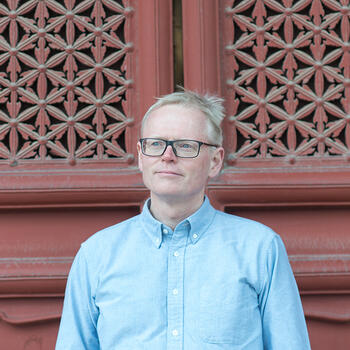
Johnson has spent over half of the past thirty years in the Greater China region, first as a student in Beijing from 1984 to 1985, and then in Taipei from 1986 to 1988. He later worked as a newspaper correspondent in China, from 1994 to 1996 with Baltimore's The Sun, and from 1997 to 2001 with The Wall Street Journal, where he covered macro-economics, China's WTO accession and social issues. In 2009, Johnson returned to China, where he writes features and essays for The New York Times, The New York Review of Books, The New Yorker, National Geographic, and other publications. He teaches undergraduates at The Beijing Center for Chinese Studies, and also runs a fellowship program there. In addition, he formally advises a variety of academic journals and think tanks on China, such as the Journal of Asian Studies, the Berlin-based think tank Merics, and New York University's Center for Religion and Media.

Schell is the author of fifteen books, ten of them about China, and a contributor to numerous edited volumes. His most recent books are: Wealth and Power, China’s Long March to the 21st Century; Virtual Tibet; The China Reader: The Reform Years; and Mandate of Heaven: The Legacy of Tiananmen Square and the Next Generation of China’s Leaders. He has written widely for many magazine and newspapers, including The Atlantic Monthly, The New Yorker, Time, The New Republic, Harpers, The Nation, The New York Review of Books, Wired, Foreign Affairs, the China Quarterly, and The New York Times, the Washington Post, and the Los Angeles Times.
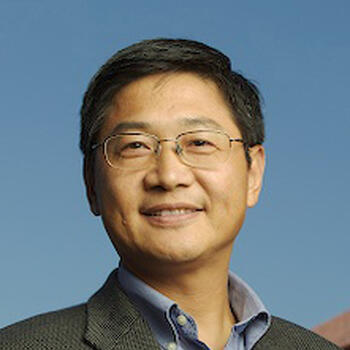
One of Zhou's current research projects is a study of the rise of the bureaucratic state in China. He works with students and colleagues to conduct participatory observations of government behaviors in the areas of environmental regulation enforcement, in policy implementation, in bureaucratic bargaining, and in incentive designs. He also studies patterns of career mobility and personnel flow among different government offices to understand intra-organizational relationships in the Chinese bureaucracy.
His recent publications examine the role of bureaucracy in public goods provision in rural China (Modern China, 2011); interactions among peasants, markets, and capital (China Quarterly, 2011); access to financial resources in Chinese enterprises (Chinese Sociological Review, 2011, with Lulu Li); multiple logics in village elections (Social Sciences in China, 2010, with Ai Yun); and collusion among local governments in policy implementation (Research in the Sociology of Organizations, 2011, with Ai Yun and Lian Hong; and Modern China, 2010).
About the Award:
The Shorenstein Journalism Award, which carries a cash prize of $10,000, honors a journalist not only for a distinguished body of work, but also for the particular way that work has helped American readers to understand the complexities of Asia. The award, established in 2002, was named after Walter H. Shorenstein, the philanthropist, activist, and businessman who endowed two institutions that are focused respectively on Asia and on the press: the Walter H. Shorenstein Asia-Pacific Research Center (Shorenstein APARC) in the Freeman Spogli Institute at Stanford University, and the Joan Shorenstein Center on the Press, Politics, and Public Policy in the Kennedy School of Government at Harvard University.
In 2011, Shorenstein APARC re-envisioned the award in recognition of the fact that Asia has served as a crucible for the role of the press in democratization in places such as South Korea, Taiwan, India, Pakistan, and Indonesia. It has also figured greatly in the emergence of social media and citizen journalism. New tests of the role of the media are emerging in China, Vietnam, and other authoritarian societies in Asia. Will the Internet be a catalyst for change, or can it also be a carrier of new forms of cyber nationalism and an instrument of authoritarian control? How are Asia’s journalists responding to that challenge?


 Damian Collins MP is a member of the House of Commons, and Chairman of the Parliamentary Select Committee for Culture, Media and Sport. He graduated in modern history from the University of Oxford, and Charmed Life, the Phenomenal World of Philip Sassoon is his first book.