International Relations

FSI researchers strive to understand how countries relate to one another, and what policies are needed to achieve global stability and prosperity. International relations experts focus on the challenging U.S.-Russian relationship, the alliance between the U.S. and Japan and the limitations of America’s counterinsurgency strategy in Afghanistan.
Foreign aid is also examined by scholars trying to understand whether money earmarked for health improvements reaches those who need it most. And FSI’s Walter H. Shorenstein Asia-Pacific Research Center has published on the need for strong South Korean leadership in dealing with its northern neighbor.

FSI researchers also look at the citizens who drive international relations, studying the effects of migration and how borders shape people’s lives. Meanwhile FSI students are very much involved in this area, working with the United Nations in Ethiopia to rethink refugee communities.

Trade is also a key component of international relations, with FSI approaching the topic from a slew of angles and states. The economy of trade is rife for study, with an APARC event on the implications of more open trade policies in Japan, and FSI researchers making sense of who would benefit from a free trade zone between the European Union and the United States.

-

Between 2010 and 2015, EU governments negotiated consecutive reforms to the governance of the eurozone which, taken together, represent perhaps the most significant deepening of European integration in modern times. What factors determined the outcome of these negotiations? Did some countries exert greater influence than others? This paper offers the first systematic assessment of bargaining success in the reform of the eurozone. It evaluates the explanatory power of three potential sources of bargaining success – power, preferences, and coalitions – based on an analysis of new and unique data on the positions of all EU member states on all key reform proposals. Its conclusions carry general importance for our understanding of power and negotiation in Europe.


Image
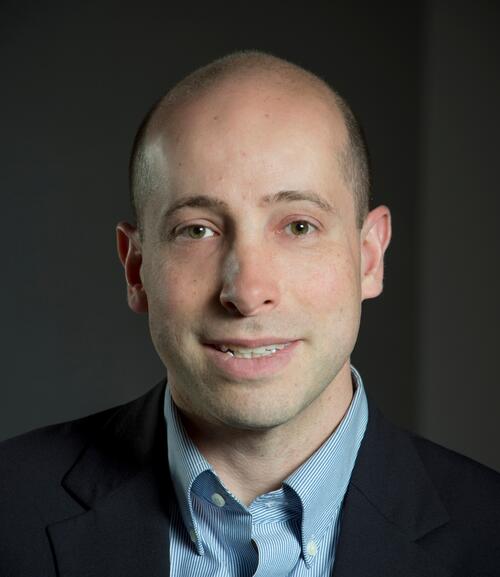
Jonas Tallberg image


Jonas Tallberg is Professor of Political Science at Stockholm University, where he directs the research group on global and regional governance, selected as a leading area of research at Stockholm University. His primary research interests are global governance and European Union politics. His most recent book is the The Opening Up of International Organizations: Transnational Access in Global Governance (Cambridge University Press, 2013), co-authored with Thomas Sommerer, Theresa Squatrito and Christer Jönsson. Earlier books include Leadership and Negotiation in the European Union (Cambridge University Press, 2006).

Tallberg has won numerous awards for his research, including the Forskraft Award for the best Swedish dissertation on international relations, the JCMS Prize for the best article in Journal of Common Market Studies, and the Friedrich Wilhelm Bessel Research Award from the German Humboldt Foundation. He has been awarded research grants from, among others, the European Research Council, Fulbright Commission, Swedish Research Council, Riksbankens Jubileumsfond, and Nordic Research Academy.

Jonas Tallberg Stockholm University
Lectures
News Type
Q&As
Date
Paragraphs

Stanford University’s Center on Democracy, Development and the Rule of Law (CDDRL) is proud to announce our three incoming fellows who will be joining us in the 2017-2018 academic year to develop their research, engage with faculty and tap into our diverse scholarly community. 

The pre- and postdoctoral program will provide fellows the time to focus on research and data analysis as they work to finalize and publish their dissertation research, while connecting with resident faculty and research staff at CDDRL. 

Fellows will present their research during our weekly research seminar series and an array of scholarly events and conferences.

Topics of the incoming cohort include policing and sectarian conflict in Iraq and Israel, global health and safety regulations and taxation in Southeast Asia.

Learn more in the Q&A below.


Image
screen shot 2017 09 22 at 2 58 37 pm
Matthew Nanes

CDDRL Postdoctoral Fellow


Hometown: Dunwoody, GA

Academic Institution: University of California San Diego

Discipline & Graduation Date:  Political Science, June 2017

Research Interests: Middle East Politics, sectarian conflict, policing and domestic security, comparative institutions

Dissertation Title: From the Bottom-Up: Policing and Sectarian Conflict in Divided Societies

What attracted you to the CDDRL Postdoctoral Fellowship program? I was drawn to the post-doctoral program at CDDRL by the broad range of experts at FSI and across the entire Stanford community. My research interests touch on a wide range of substantive and methodological issues, and I'm very excited to work with experts on a similarly broad range of areas. I was also attracted to CDDRL's focus on bridging the gap between academic scholarship and real-world policy applications.

What do you hope to accomplish during your nine-month residency at the CDDRL? My primary goal is to make progress in converting my dissertation, which is about policing and sectarian conflict in Iraq and Israel, into a publishable academic book. To this end, I intend to spend time honing my theoretical argument about the incentives and constraints generated by sectarian inclusiveness in the police and testing this argument using new and existing data. I also intend to continue progress on ongoing research on policing under low state legitimacy in the Philippines, and to lay the groundwork for follow-up research on the Iraqi police. 

Fun fact: During college, I rode a bicycle from Providence, RI to Seattle, WA


Image
screen shot 2017 09 22 at 2 59 00 pm
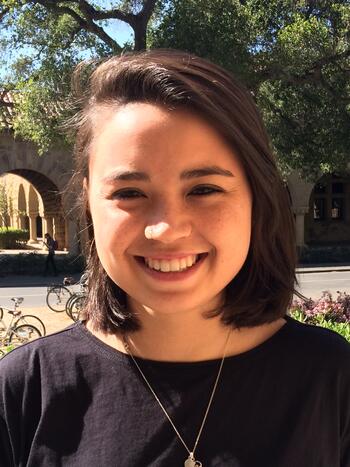
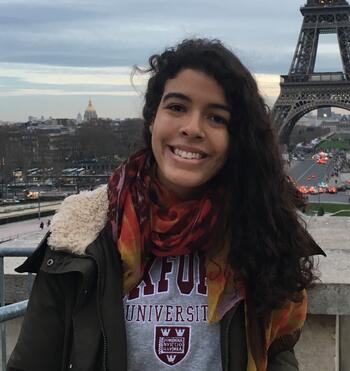
Rebecca Louise Perlman

CDDRL Pre-doctoral Fellow

Hometown: Newton, MA

Academic Institution: Stanford University 

Discipline & Expected Graduation Date:  Political Science, 2018

Research interests: Regulation, Trade, International institutions

Dissertation Title: For Safety or Profit? The Determinants of Global Health and Safety Regulations

What attracted you to the CDDRL Pre-doctoral Fellowship program? CDDRL brings together an amazing group of scholars, with a diverse set of research interests. I was eager for the opportunity to work with and learn from these individuals, through workshops and day-to-day interactions. 

What do you hope to accomplish during your nine-month residency at the CDDRL? I'm looking forward to completing my dissertation and hopefully embarking on some collaborative projects with other CDDRL fellows and/or faculty.

Fun fact: I have a cat named Khaleesi.


CDDRL Postdoctoral Fellow


Hometown: Anchorage, AK

Academic Institution: Emory University

Discipline & Graduation Date: Political Science, August 4, 2017

Research Interests: political economy of development, decentralization, taxation, local politics, Southeast Asia

Dissertation Title: Decentralization and the Politics of Local Taxation in Southeast Asia

What attracted you to the CDDRL Postdoctoral Fellowship program? I share CDDRL's concern for the links among multiple dimensions of development, and emphasize the interplay between political and economic institutions in my own research. In addition, the members of the CDDRL community combine disciplinary approaches, technical expertise, and area knowledge to address substantively important and theoretically interesting questions. I am very excited to learn from the community.

What do you hope to accomplish during your nine-month residency at the CDDRL? I will revise and expand my dissertation as I prepare it for publication. The dissertation highlights the role of strong local business associations as key institutions for resolving the distributional and monitoring challenges posed by taxation. Yet, it does not explain the origins of those associations. I will address this question by exploring the histories of local business associations in Southeast Asia, particularly those which exhibit surprising strength or weakness despite expectations to the contrary. 

Fun fact: My summer job in college was to umpire American Legion baseball.


All News button
1
Paragraphs

In this book, Gi-Wook Shin shares his observations on and provides recommendations for social maladies currently affecting Korean society. Shin sees a problematic level of superficiality in a number of aspects of today's Korea: its interpersonal relations, policies and social systems, and rules and regulations. After explaining his diagnosis in the first part of the book, Shin goes on to offer a prescription in the form of lessons that can be learned from Silicon Valley’s culture. The final section of the book touches on issues in which he specializes as an academic—and which have been of the utmost interest to Koreans in recent days—that is, South Korea’s relations with North Korea and other players on the global stage.

All Publications button
1
Publication Type
Books
Publication Date
Authors
Gi-Wook Shin
News Type
News
Date
Paragraphs

The Shorenstein Asia-Pacific Research Center (APARC) at Stanford is now accepting applications for the Shorenstein Postdoctoral Fellowship in Contemporary Asia, an opportunity made available to two junior scholars for research and writing on Asia.

Fellows conduct research on contemporary political, economic or social change in the Asia-Pacific region, and contribute to Shorenstein APARC’s publications, conferences and related activities. To read about this year’s fellows, please click here.

The fellowship is a 10-mo. appointment during the 2018-19 academic year, and carries a salary rate of $52,000 plus $2,000 for research expenses.

For further information and to apply, please click here. The application deadline is Dec. 20, 2017.

Hero Image
sb background encina
All News button
1
Authors
News Type
News
Date
Paragraphs

New research by Stanford economist Ran Abramitzky studies Norwegian immigrants to the U.S. during the late 19th and early 20th centuries who chose to return to Europe. Return migrants hailed from poorer backgrounds but ended up holding higher-paid occupations back home.


Image
Image of Ran Abramitzky
Today’s conversation about immigration and the role of immigrants in America is not so different from the conversations that took place more than 100 years ago, when European immigrants settled in cities and on farms in the United States.

That’s why Stanford economist Ran Abramitzky and his colleagues spent the past decade analyzing data on immigrants in the United States between 1850 and 1913, which was the time of the country’s largest wave of migration.

His latest research explores return migrants, those who eventually chose to come back to Europe, and how they fared when they got home. The study focuses on migrants from Norway – made possible by the availability of comprehensive new data on their activities. The research compares return migrants to both Norwegian immigrants who chose to stay in the U.S. and to the Norwegian population that never moved abroad.

The researchers found that Norwegian immigrants who returned home in the late 19th and early 20th centuries were more likely to have held lower-skilled occupations, compared with both Norwegians who never moved and those who stayed in the United States.  But upon returning to Norway, the return migrants held higher-paying occupations than Norwegians who never moved.

The findings are contrary to the popular belief that return migration mostly resulted from bad shocks, such as an illness or unemployment, said Abramitzky, an associate professor of economics at Stanford and co-author of the recently published article in the Industrial and Labor Relations Review. Instead, it appears that return migrants already hailed from poorer backgrounds before their move.

“Moving permanently to the New World was one strategy that poor European immigrants used to achieve economic success,” Abramitzky said of his joint work with Leah Boustan of Princeton University and Katherine Eriksson of the University of California, Davis. “This research suggests that temporary movement to the United States in order to accumulate savings and invest in the home country was another option available to the poor.”

Reasons for return migration

The study on return migrants is the latest piece in Abramitzky’s larger research project, which he began with his co-authors about 10 years ago, on immigration in the U.S. between 1850 and 1913.

About 30 million Europeans immigrated during the period, which scholars call the Age of Mass Migration, as America maintained open, largely unrestricted borders for European migrants until about 1914. By 1910, 22 percent of the country’s labor force was foreign-born, compared to 17 percent of today’s working population.

The same period also saw a high rate of return migration. One in three immigrants returned to their home country.

To learn which immigrants moved back and how they fared economically, Abramitzky and his colleagues needed comprehensive data on immigrants from a single country.

“It is challenging to study these types of questions because systematic data on return migrants are not typically collected,” Abramitzky said.

But Norway, which experienced a high rate of out-migration during this period, was a unique case. The country’s 1910 census asked respondents whether they spent some time in the United States, and, if so, the dates of their arrival and departure, last state of residence and last occupation held.

Because Norway recently released digital versions of those census datasets, Abramitzky and his research team chose to focus on the Scandinavian country, conducting an unprecedented analysis of individual data on return migrants to Europe during that period.

Abramitzky, Boustan and Eriksson linked the American and Norwegian census data sets to compare Norwegian migrants still living in the U.S. in 1910 with Norwegian immigrants who returned after a couple of years – as well as to Norwegians who stayed in Norway throughout this period.

The data showed that immigrants who held low-paid occupations or who came from rural parts of Norway were more likely to come back after moving to America. Once back home, the return migrants held higher-paid occupations than the Norwegians who never moved, despite hailing from poorer backgrounds.

That return migrants climbed to a higher rung on the occupational ladder may have been the result of savings accrued in the U.S., according to the researchers. Many return migrants worked as farmers, often in their town of birth. When these men – who had started out as poor farm laborers – returned to Norway, they were more likely than the non-movers to purchase and work on their own farms, a more lucrative profession made possible by the increased land they were able to buy with their savings.

These temporary moves might have been necessary, the researchers wrote, because it was difficult to borrow money in Norway, which was not as advanced financially as the U.S.

Immigration then and now

During the Age of Mass Migration, politicians and the public raised questions about immigrants that are similar to those discussed today. Can immigrants successfully integrate into America’s society and economy? Or do they remain isolated long after they settle?

Abramitzky’s past work on immigrants from 16 sending European countries provides some clues. A 2014 study showed that European immigrants arrived in the U.S. with occupations comparable to native-born Americans, and his 2016 research on cultural assimilation documented that immigrants who arrived in the early 20th century chose less foreign names for their sons and daughters as they spent more time in the United States.

Abramitzky and his collaborators are now working on a book on their years of research on immigration during that period, which may offer lessons for today’s migration policy debate.

“If we want to know how today’s newcomers will fare, we can find important clues by examining what happened to those who arrived on our shores during the greatest surge of immigration in U.S. history,” Abramitzky said. “Comparing our findings with contemporary studies can illuminate the effect of modern immigration policy on migrant selection and migrant assimilation.”


Media Contacts

Ran Abramitzky, Department of Economics: (650) 723-9276, ranabr@stanford.edu

Alex Shashkevich, Stanford News Service: (650) 497-4419, ashashkevich@stanford.edu


This article was originally published in the Stanford Report on September 12, 2017.


Hero Image
Emigrants Norway image
All News button
1
-

Michael McFaul, Director of the Freeman Spogli Institute for International Studies, Professor Political Science

and FSI Senior Fellow, Peter and Helen Bing Senior Fellow at the Hoover Institution

Francis Fukuyama, Mosbacher Director, Center for Democracy, Development, and the Rule of Law,

Larry Diamond, Senior Fellow at FSI and the Hoover Insitution

Eileen Donahoe, Executive Director, Global Digital Policy Incubator


Cordially Invite you to a conference conmemorating the launch of the 

Global Digital Policy Incubator

Friday, October 6, 2017

Bechtel Conference Center, Encina Hall

Registration / Coffee / Meet the Speakers

9:30-10:00am

Welcome to the Global Digital Policy Incubator

10:00-10:015am

When Freedom of Expression Conflicts with Democracy

Enhancing the Quality of Discourse Necessary to Sustain Democracy                  10:15-11:45am

Moderator: Larry Diamond, Senior Fellow at the Hoover Institution and FSI

Timothy Garton Ash, Hoover Institution, Stanford, Oxford University & Free Speech Debate

Francis Fukuyama, Director, Center for Democracy, Development, and the Rule of Law, Stanford

Brittan Heller, Director of Technology & Society, Anti-Defamation League

Ieva Kupce Ilves, Cybersecurity expert, former head of Cybersecurity Policy, MoD Latvia

Justine Isola, Product Policy Manager at Facebook

When Information Becomes the Weapon

Expanding notions of National Security in the Digital Context                                 12:00-1:45pm

Moderator: Michael Mcfaul, Director of FSI, former U.S. Ambassador to Russia

Toomas Ilves, Former President of Estonia

Mike Brown, Presidential Innovation Fellow, DIUX, Fformer CEO Symantec

Denis McDonough, White House Chief of Staff to former President Obama, Senior Principle, Markle Foundation

Nicole Wong, former U.S. Deputy CTO, former Google Vice President & Deputy General Counsel,

former Legal Director of Product, Twitter

Digital Platforms and Democratic Responsibility

Emerging Private Sector Roles in Protecting Freedom and Security                       2:00-3:30pm

Moderator: Larry Kramer, President of the Hewlett Foundation 

Juniper Downs, Global Head of Public Policy and Government Relations, Youtube

Daphne Keller, Director of Intermediary Liability, Center for Internet & Society, Stanford Law School

Andrew McLaughlin, Co-Founder, Higher Ground Labs, Venter Partner, Betaworks, former U.S. Dep. CTO

Nick Pickles, Senior Public Policy Manager, Twitter

Mike Posner, Director, NYU Stern Center for Business & Human Rights, former U.S. Assistant Secretary of State, Democracy, Human Rights, and Labor

Keynote Conversation 

Digital Technology, Diplomacy, and Democratic Values                                                     

Former Secretary of State Hilary Clinton

In conversation with Eileen Donahoe, Executive Director of the Global Digital Policy Incubator,

former U.S. Ambassador to the United Nations Human Rights Council

4:30 - 5:30pm

Cemex Auditorium, Knight Management Center

*event by invitation only, doors open at 3:30pm, guests must be in their seats 4:15pm*

Ticket Lottery for (Stanford students only) will open Wednesday, September 27 through the

Stanford Ticket Office 

Conferences
Paragraphs

The seventeenth session of the Korea-U.S. West Coast Strategic Forum held on June 29, 2017 in Seoul convened senior South Korean and American policymakers, scholars and regional experts to discuss North Korea policy and recent developments on the Korean Peninsula. Hosted by the Sejong Institute in association with the Shorenstein APARC, the forum continued its focus on Northeast Asian regional dynamics, the North Korea problem, and the state of the U.S.-Republic of Korea alliance. The participants engaged in candid, productive discussion about issues relating to these topics.

 
All Publications button
1
Publication Type
Policy Briefs
Publication Date
-

The International Engagement Fair will be held on Wednesday, October 11th, 2017, from 3pm to 6pm on the Crothers lawn hosted by the Freeman Spogli Institute (FSI), Global Engineering Programs (GEP) and Crothers Global Citizenship.

 
The purpose of the fair is to promote Stanford departments, programs, centers, and student organizations that offer students international opportunities abroad, international academically-focused activities or dialogue on campus, and other forms of international exchange
-

The conference is brought to you by the Shorenstein Asia-Pacific Research Center Japan Program's Stanford Silicon Valley-New Japan Project and Mistletoe, Inc.

This event is at full capacity. Please contact Amanda Stoeckicht at amst@stanford.edu if you have any questions.

As we enter the coming age of universal automation, this conference seeks to spark a discussion among thought leaders, technologists, and social entrepreneurs about the replacement of human labor by artificial intelligence and robotics and what that might mean for the future of human welfare and labor opportunities. There is increasing debate regarding the possibility of a new underclass of 'zero economic citizens.' How shall we address these challenges? Does the answer lie in lowering the cost of living? Is it the Universal Basic Income? Or something else? What might be the role of technologies for geographic mobility, sustainability, and community platforms.

Along with keynote presentations and panel discussions, the conference will also feature a startup showcase and participatory world-building exercise.

*The below program is subject to change.

Conference Program

8:30-9:00                  Registration and Breakfast

9:00-9:05                  Welcome

9:05-10:45                Keynote Presentations

Taizo Son (Mistletoe)

Marina Gorbis (Institute for the future)

Sam Altman (Y Combinator)

10:45-11:00              Coffee Break

11:00-12:15                Startup Showcase

Afero

Alesca Life

AstroScale

Binded

Cocoa Motors

Homma

Leomo

ModuleQ

Vivita

Wota

12:15-12:30              Break

12:30-13:00              Mistletoe Fellows Program Announcement

13:00-14:00              Lunch

14:00-15:15              Panel & Debate Sessions: Technology and Social Change in 2045                          

Panel 1: 

Cities of the Future: Removing Barriers to New Ideas with Innovation Districts and Regulatory Sandboxes

Moderator: Ashkan Soltani

Panelists:   Neal Gorenflo (Sheareable)

Taizo Son (Mistletoe)

           Joe Quirk (Seasteading Institute)

           Kaidi Ruusalepp (Funderbeam)           

Panel 2:

The Autonomous Lifestyle: Can Tech-Enabled Mobility Improve Welfare and Opportunity?

Moderator: Kenji Kushida (Stanford University)

Panelists:   Frances Colon (Cenadores Puerto Rico)

Steve Cousins (Savioke)

            Toshi Hoo (IFTF)        


Panel 3:

Reimagining Social Entrepreneurship: Designing Collaboration and Community

                                       Moderator:     Ernestine Fu (Alsop Louie Partners)

Panelists:    Anh Bui (Benetech)

  Chuck Eesley (Stanford University)   

  Daniel Goldman (Ignition Angels)

             Luan Niu (Enviu)


15:15-15:30             Break

15:30-17:30             Zero Economic Citizen in 2045: A World Building Exercise                  

Joshua McVeigh-Schultz (University of Southern California)

Karl Baumann (Univeristy of Southern California)

Elena Marquez Segura (UC Santa Cruz)                         

17:30-17:35             Closing Remarks

17:35-18:35             Cocktail Reception


Conferences
News Type
News
Date
Paragraphs

Image
kyou hyun kim img 3207
Kyou Hyun Kim will join the Korea Program at Stanford’s Walter H. Shorenstein Asia-Pacific Research Center (Shorenstein APARC) as the program’s 2017-18 Koret Fellow.

A career diplomat by training, Kim most recently served as senior secretary to the president for foreign affairs and national security in South Korea from October 2015 to May 2017 during which he played a key role in enacting the North Korea human rights law. He led the South Korean negotiation team for inter-Korean dialogue that led to the reunion of separated families in 2014.

"Kyou Hyun Kim brings wealth of knowledge in the Korean affairs to Shorenstein APARC. He has decades of experience in diplomacy and national security, and it is very timely that he joins the Korea Program as this year’s Koret Fellow,” said Gi-Wook Shin, director of Shorenstein APARC.

Kim’s extensive diplomatic career includes serving as first vice foreign minister (2013-14), deputy foreign minister for political affairs (2012-13), ambassador for performance evaluation, and special advisor to the minister of foreign affairs (2010-12). He also served at the South Korean embassy in the United States as minister for political affairs. His 37 years of public service was mostly dealing with South Korea’s foreign and security policies and North Korean affairs.

During his fellowship, Kim will review South Korea’s past administrations’ policies toward North Korea and aim to focus on a path leading to unification of two Koreas for permanent peace and stability in and around the Korean Peninsula.  He will also attempt to map out ways to narrow the physical, economic, societal and identity gaps between South and North Korea in order to help the South Korean public to tolerate and accept North Koreans as equal citizens in a unified Korea. His two main research questions will be (1) how to build the internal capability for socioeconomic transformation in North Korea, and (2) how to build domestic support for reunification in South Korea.

Kim received a Doctor of Dental Surgery from the School of Dentistry at Seoul National University, and a Master of Public Administration from Harvard University.

Supported by the Koret Foundation, the fellowship brings leading professionals to Stanford to conduct research on contemporary Korean affairs with the broad aim of strengthening ties between the United States and Korea.

Hero Image
kyou hyun kim img 3207
All News button
1
Subscribe to International Relations
