Stanford Health Policy Forum: Engineered Threats to Global Health
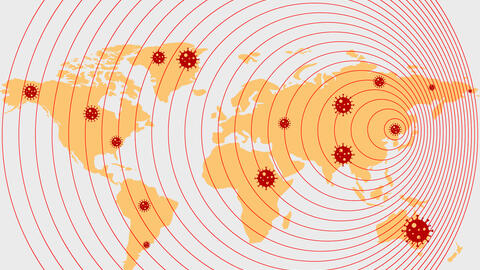
In 2024, a group of esteemed scientists publicly warned that a bacteria created entirely with mirror-image biomolecules ("mirror bacteria")—though still years away—could potentially wipe out all life on earth. Gene editing techniques open possibilities of other risks that might be intentionally generated by bad actors, such as bacteria that are immune to all antibiotics and viruses which are engineered to be highly transmissible and deadly. What policies will protect global health from these serious threats while also preserving the potential therapeutic value of manipulated molecules? Please join two leading Stanford experts for a fascinating discussion of a rapidly emerging set of high-stakes scientific, ethical, and regulatory challenges.
Speakers:
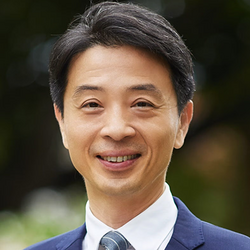
David Relman, MD, the Thomas C. and Joan M. Merigan Professor in Medicine, Professor of Microbiology & Immunology, and Senior Fellow at the Freeman Spogli Institute for International Studies at Stanford University, and Chief of Infectious Diseases at the Veterans Affairs Palo Alto Health Care System. Relman was an early pioneer in the identification of previously unrecognized microbial pathogens, in the development of molecular methods for microbial diagnosis, and in the modern study of the human microbiome.
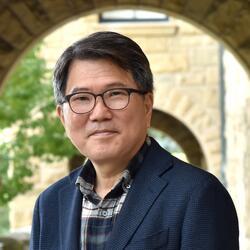
Henry T. (Hank) Greely, JD, is the Deane F. and Kate Edelman Johnson Professor of Law; Professor, by courtesy, of Genetics; and Director of the Center for Law and the Biosciences at Stanford University. He specializes in ethical, legal, and social issues arising from the biosciences, particularly genetics, neuroscience, stem cell research, and assisted reproduction. He is a founder and a past president of the International Neuroethics Society and chairs the California Advisory Committee on Human Stem Cell Research.
Clark Center Auditorium (Stanford University Campus)
318 Discovery Walk
Palo Alto, CA 94304
Space is limited. Boxed lunches will be served to registered guests following the event, on a first-come, first-served basis.
REGISTRATION IS REQUIRED
David Relman
CISAC
Stanford University
Encina Hall, E209
Stanford, CA 94305-6165
David A. Relman, M.D., is the Thomas C. and Joan M. Merigan Professor in the Departments of Medicine, and of Microbiology and Immunology at Stanford University, and Chief of Infectious Diseases at the Veterans Affairs Palo Alto Health Care System in Palo Alto, California. He is also Senior Fellow at the Freeman Spogli Institute for International Studies (FSI) at Stanford, and served as science co-director at the Center for International Security and Cooperation at Stanford from 2013-2017. He is currently director of a new Biosecurity Initiative at FSI.
Relman was an early pioneer in the modern study of the human indigenous microbiota. Most recently, his work has focused on human microbial community assembly, and community stability and resilience in the face of disturbance. Ecological theory and predictions are tested in clinical studies with multiple approaches for characterizing the human microbiome. Previous work included the development of molecular methods for identifying novel microbial pathogens, and the subsequent identification of several historically important microbial disease agents. One of his papers was selected as “one of the 50 most important publications of the past century” by the American Society for Microbiology.
Dr. Relman received an S.B. (Biology) from MIT, M.D. from Harvard Medical School, and joined the faculty at Stanford in 1994. He served as vice-chair of the NAS Committee that reviewed the science performed as part of the FBI investigation of the 2001 Anthrax Letters, as a member of the National Science Advisory Board on Biosecurity, and as President of the Infectious Diseases Society of America. He is currently a member of the Intelligence Community Studies Board and the Committee on Science, Technology and the Law, both at the National Academies of Science. He has received an NIH Pioneer Award, an NIH Transformative Research Award, and was elected a member of the National Academy of Medicine in 2011.