
-

Cosponsored by The Abbasi Program in Islamic Studies


Abstract:

Half a decade after Arabs across the Middle East poured into the streets to demand change, hopes for democracy have disappeared in a maelstrom of violence and renewed state repression. Egypt remains an authoritarian state, Syria and Yemen are in the midst of devastating civil wars, Libya has descended into anarchy, and the self-declared Islamic State rules a large swath of territory. Even Turkey, which also experienced large-scale protests, has abandoned its earlier shift toward openness and democracy and now more closely resembles an autocracy. How did things go so wrong so quickly across a wide range of regimes? In False Dawn: Protest, Democracy, and the New Middle East, noted Middle East regional expert Steven A. Cook looks at the trajectory of events across the region from the initial uprising in Tunisia to the failed coup in Turkey to explain why the Middle Eastern uprisings did not succeed.


Speaker Bio:

Image
cookfdheadshot
Steven A. Cook is Eni Enrico Mattei senior fellow for Middle East and Africa studies at the Council on Foreign Relations (CFR). He is an expert on Arab and Turkish politics as well as U.S.-Middle East policy. Cook is also the author of The Struggle for Egypt: From Nasser to Tahrir Square, which won the Washington Institute for Near East Policy's gold medal in 2012; and Ruling But Not Governing: The Military and Political Development in Egypt, Algeria, and Turkey.


[[{"fid":"228192","view_mode":"crop_870xauto","fields":{"format":"crop_870xauto","field_file_image_description[und][0][value]":"Steven Cook flyer","field_file_image_alt_text[und][0][value]":false,"field_file_image_title_text[und][0][value]":false,"field_credit[und][0][value]":"","field_caption[und][0][value]":"","thumbnails":"crop_870xauto","alt":"","title":""},"type":"media","field_deltas":{"2":{"format":"crop_870xauto","field_file_image_description[und][0][value]":"Steven Cook flyer","field_file_image_alt_text[und][0][value]":false,"field_file_image_title_text[und][0][value]":false,"field_credit[und][0][value]":"","field_caption[und][0][value]":"","thumbnails":"crop_870xauto","alt":"","title":""}},"link_text":null,"attributes":{"class":"media-element file-crop-870xauto","data-delta":"2"}}]]

Philippines Conference Room
Encina Hall, 3rd Floor
616 Serra St
Stanford, CA 94305
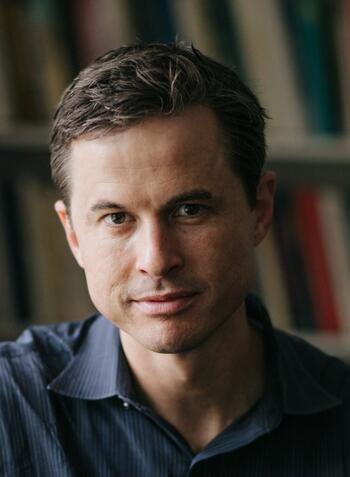
Steven A. Cook Council on Foreign Relations
Seminars
-

Abstract: The U.S. government continues to struggle with how best to defend the country from cyber attacks. Reacting out in frustration, Senator John McCain wondered aloud if the United States should consider what lessons can be learned from a new cyber defense organization in the United Kingdom called the National Cyber Security Center (NCSC). In this paper, Stuart Russell and Michael Sulmeyer examine the NCSC, its origins, its missions, and its effectiveness. They then consider how certain aspects of the NCSC might map onto the more complicated governance structure around cyber defense in the United States. Despite important differences between the United Kingdom and the United States, they conclude that there is a great deal the United States can adapt from the United Kingdom’s efforts, particularly the NCSC’s ambitious Active Defense agenda. 

Speaker Bio: Dr. Michael Sulmeyer is the Belfer Center's Cyber Security Project Director at the Harvard Kennedy School. He is also a Contributing Editor for the national security blog Lawfare. Before Harvard, he served as the Director for Plans and Operations for Cyber Policy in the Office of the Secretary of Defense. There, he worked closely with the Joint Staff and Cyber Command on a variety of efforts to counter malicious cyber activity against U.S. and DoD interests. For this work, he received the Secretary Medal for Exceptional Public Service.

Previously, he worked on arms control and the maintenance of strategic stability between the United States, Russia, and China. As a Marshall Scholar, Sulmeyer received his PhD (DPhil) in Politics from Oxford University, and his dissertation, "Money for Nothing: Understanding the Termination of U.S. Major Defense Acquisition Programs," won the Sir Walter Bagehot Prize for best dissertation in government and public administration. He received his B.A. and J.D. from Stanford University and his M.A. in War Studies from King's College London. In the mid-1990s, he was the System Operator (SysOp) of The Summit BBS in Santa Barbara, California.

William J. Perry Conference Room

Encina Hall, 2nd floor

616 Serra Street

Stanford, CA 94305

Director, Cyber Security Project Belfer Center for Science and International Affairs
Seminars
-

Abstract:

The factually dubious for-profit articles known as “fake news” were read and shared by millions of people during the 2016 U.S. presidential campaign, but little is known scientifically about who read fake news, the mechanisms by which it was disseminated, and the extent to which fact-checks reached fake news consumers. In this study, we use behavioral data to better understand the prevalence and spread of “fake news.” (Joint work with Andrew Guess and Jason Reifler.)


Speaker Bio:

Image
brendan nyan
Brendan Nyhan is a Professor in the Department of Government at Dartmouth College. His research, which focuses on misperceptions about politics and health care, has been published in journals including the American Journal of Political Science, British Journal of Political Science, Journal of Politics, Medical Care, Pediatrics, Political Analysis, Political Behavior, Political Psychology, Social Networks, and Vaccine. Before coming to Dartmouth, he was a Robert Wood Johnson Scholar in Health Policy Research at the University of Michigan. Nyhan has also been a contributor to the New York Times website, The Upshot, since its launch in 2014. He previously served a media critic for Columbia Journalism Review; co-edited Spinsanity, a non-partisan watchdog of political spin that was syndicated in Salon and the Philadelphia Inquirer; and co-authored All the President's Spin, a New York Times bestseller that Amazon.com named one of the ten best political books of the year in 2004.

William J. Perry Conference Room, Encina Hall, 2nd Floor, 616 Serra St, Stanford, CA 94305

Brendan Nyhan Professor in the Department of Government at Dartmouth College
Seminars
-

Abstract:

Although peace operations are the main policy instrument for directly protecting civilians from severe violence, only a few are designed to reflect threatened civilians’ security needs. In a forthcoming book, Humanitarian Hypocrisy: Civilian Protection and the Design of Peace Operations, I examine how four major democracies – the US, UK, France, and Australia – contribute to this situation by facilitating gaps between a force’s ambitions to protect civilians and its resources for doing so. Although missions affected by these gaps gesture toward protecting civilians, they can actually worsen their suffering. I describe these gaps as a form of organized hypocrisy and argue that their attraction lies in their ability to help leaders balance competing normative and material pressures to protect civilians while also limiting associated costs. The argument has implications both for when these gaps are most likely and for how leaders can benefit from them politically. I support it with diverse evidence based on quantitative analysis of original data and four in-depth case studies.


Speaker Bio:

Image
everett
Andrea Everett is a Visiting Scholar at CDDRL. Her research focuses on humanitarian politics and policy. Her first book, Humanitarian Hypocrisy, is forthcoming with Cornell University Press in December 2017, and her work has also been published in Security Studies and Conflict Management and Peace Science. She received her PhD from the Department of Politics at Princeton University in 2012 and has previously worked as a Visiting Assistant Professor in the Politics Department at UC, Santa Cruz and as an Assistant Professor in the Department of International Affairs at the University of Georgia. She also holds a B.A. from Stanford and studied in Berlin as a Fulbright Scholar.

Visiting Scholar at CDDRL
Seminars
-
This event is restricted to current Stanford students, faculty, staff and visiting scholars. 
The event is at capacity and RSVPs are now closed. Thank you for your understanding.
 
Abstract: Machines are increasingly helping us with cognitive tasks in addition to physical labor. Like the industrial revolution, this transition in how we use machines will have major impacts on the security of states and the character of armed conflict. How should we think about this transition? What issues should we prepare for? I will parse several broad areas where AI applications may affect elements of national power, and highlight issues we can already see emerging for national security leaders.
 
Speaker Bio: Dr. Matthew Daniels works for the Office of the Secretary of Defense and NASA. His principal areas of focus include U.S. space programs, deep space exploration, and artificial intelligence. Previously he was an engineer at NASA, where he worked on spacecraft designs and special projects for the director of NASA Ames in Mountain View, CA. Matt received his Ph.D. and M.S. degrees in engineering from Stanford and a B.A. in physics from Cornell, was a fellow at Stanford's Center for International Security and Cooperation, and is an adjunct professor at Georgetown.
 

William J. Perry Conference Room

Encina Hall, 2nd floor

616 Serra Street

Stanford, CA 94305

Advisor Department of Defense and NASA
Seminars
-

Abstract:

Modernization theory, institutional capacity, and rational choice institutionalism are the three candidate theories that explain how rich democratic states got to be rich and democratic. External development efforts will only be successful if he objectives or external and internal elites are complementary. This is only likely to be the case for 30-40 countries in the world. For the other 130 poorer countries the best that can be hoped for is good enough governance.


Speaker Bio:

Image
StephenKrasner
Stephen D. Krasner is the Graham H. Stuart Professor of International Relations at Stanford, and a Senior Fellow at the Freeman Spogli Institute, and the Hoover Institution. From February 2005 to April 2007 he was Director of the Policy Planning Staff at the Department of State. He is a member of the Board of Directors of the United States Institute of Peace, and was a member of the Foreign Policy Advisory Board of the Department of State from 2012 to 2014. He edited International Organization from 1986 to 1992. Professor Krasner is a Fellow of the American Academy of Arts and Sciences and a member of the Council on Foreign Relations. He is a Mercator Fellow at the Free University and was a Fellow at the Wissenschaftskolleg in 2000-2001. He has written or edited eight books and more than eighty articles.

CDDRL
Stanford University
Encina Hall
Stanford, CA 94305-6055

(650) 723-0676 (650) 724-2996
0
Senior Fellow at the Freeman Spogli Institute for International Studies, Emeritus
Graham H. Stuart Professor of International Relations
Senior Fellow at the Hoover Institution, Emeritus
krasner.jpg MA, PhD

Stephen Krasner is the Graham H. Stuart Professor of International Relations. A former director of CDDRL, Krasner is also an FSI senior fellow, and a fellow of the Hoover Institution.

From February 2005 to April 2007 he served as the Director of Policy Planning at the US State Department. While at the State Department, Krasner was a driving force behind foreign assistance reform designed to more effectively target American foreign aid. He was also involved in activities related to the promotion of good governance and democratic institutions around the world.

At CDDRL, Krasner was the coordinator of the Program on Sovereignty. His work has dealt primarily with sovereignty, American foreign policy, and the political determinants of international economic relations. Before coming to Stanford in 1981 he taught at Harvard University and UCLA. At Stanford, he was chair of the political science department from 1984 to 1991, and he served as the editor of International Organization from 1986 to 1992.

He has been a fellow at the Center for Advanced Studies in the Behavioral Sciences (1987-88) and at the Wissenschaftskolleg zu Berlin (2000-2001). In 2002 he served as director for governance and development at the National Security Council. He is a fellow of the American Academy of Arts and Sciences and a member of the Council on Foreign Relations.

His major publications include Defending the National Interest: Raw Materials Investment and American Foreign Policy (1978), Structural Conflict: The Third World Against Global Liberalism (1985), Sovereignty: Organized Hypocrisy (1999), and How to Make Love to a Despot (2020). Publications he has edited include International Regimes (1983), Exploration and Contestation in the Study of World Politics (co-editor, 1999),  Problematic Sovereignty: Contested Rules and Political Possibilities (2001), and Power, the State, and Sovereignty: Essays on International Relations (2009). He received a BA in history from Cornell University, an MA in international affairs from Columbia University and a PhD in political science from Harvard.

CV
Professor of International Relations at Stanford, and a Senior Fellow at the Freeman Spogli Institute, and the Hoover Institution
Seminars
-
Abstract: This talk examines the history of environmental data systems in the context of the Trump administration’s assault on environmental science. Tracking and understanding environmental change requires “long data,” i.e. consistent, reliable sampling over long periods of time. Weather observations can become climate data, for example — but only if carefully curated and adjusted to account for changes in instrumentation and data analysis methods. Environmental knowledge institutions therefore depend on an ongoing “truce” among scientific and political actors. Climate denialism and deregulatory movements seek to destabilize this truce. In recent months, with the installation of climate change deniers and non-scientist ideologues as leaders of American knowledge institutions, wholesale dismantling of some environmental data systems has begun. These developments threaten the continuity of “long data” vital to tracking climate change and other environmental disruptions with significant consequences for both domestic and international security.
 
Speaker bio: Paul N. Edwards is William J. Perry Fellow in International Security at Stanford University (from July 2017) and Professor of Information at the University of Michigan. He writes and teaches about the history, politics, and culture of information infrastructures. Edwards is the author of A Vast Machine: Computer Models, Climate Data, and the Politics of Global Warming (MIT Press, 2010) and The Closed World: Computers and the Politics of Discourse in Cold War America (MIT Press, 1996), and co-editor of Changing the Atmosphere: Expert Knowledge and Environmental Governance (MIT Press, 2001), as well as numerous articles.


William J. Perry Fellow in International Security Stanford University
Seminars
-

Abstract: What is the strategic value of cyber weapons? Even though a growing body of research has addressed the destructive potential of cyber weapons, there remains a large gap in thinking about the strategic utility of these capabilities. The purpose of this paper is to partially fill this gap, by means of assessing under what conditions 'counterforce’ and ‘countervalue’ cyber weapons can be effective. I argue that cyber weapons can provide an ‘extra option’ to leaders. The discussed cases suggest that they can be used both as an important force-multiplier enabler for conventional military assets or as independent capability. Cyber weapons can also be used to achieve a form of psychological ascendancy and can be used effectively with few casualties.

Speaker Bio: Max Smeets is a cybersecurity fellow at the Center for International Security and Cooperation and holds a DPhil in International Relations from the University of Oxford, St. John’s College. Max current book project focuses on the causes underlying cyber proliferation and restraint. The results of this research are valuable for understanding the likely changes in the future prevalence of cyber weapons. It clarifies to what degree this is an ‘inevitable’ development – and if/how it can be stopped.

Max was a College Lecturer in Politics at Keble College, University of Oxford, and Research Affiliate of the Oxford Cyber Studies Programme. He was also a Carnegie Visiting Scholar at Columbia University SIPA and a Doctoral Visiting Scholar at Sciences Po CERI. He holds an undergraduate degree from University College Roosevelt, Utrecht University, and an M.Phil in International Relations from the University of Oxford, Brasenose College.  Max has a diverse professional background, having worked for financial, political, and non-governmental organizations.


William J. Perry Conference Room

Encina Hall, 2nd floor

616 Serra Street

Stanford, CA 94305

Cybersecurity Fellow CISAC
Seminars

Title: Optimal Clinical Trials for Personalizing Medical Care: The Expected Value of Oversampling Information

Abstract: Personalizing patient care frequently involves selecting treatments based on risk predictions, with patients at lower risk being recommended less aggressive treatment or no treatment at all. Because risk predictions are uncertain, treatments selected based on them may not be optimal. Collecting additional information could, therefore, be valuable. Designing studies to collect the needed information most efficiently is important given that studies have become increasingly expensive to conduct. Methods exist to support such endeavors (i.e., expected value of sample information (EVSI)). However, to date, EVSI calculations consider only studies that estimate overall population means efficiently. Studies to support the personalization of medical care require deciding how much information to collect about which patient subgroups: on which locations along the risk spectrum should studies focus? We develop the Expected Value of Oversampling Information (EVOSI) framework by introducing EVSI into a previously proposed Expected Value of Individualized Care (EVIC) framework, narrowing prediction uncertainty where doing so maximally increases the overall value of individualized treatment choices. With the EVOSI framework, we analyze the features of patient risk subgroups that increase the value of oversampling and conduct numerical simulations to consider trade-offs between these features (i.e., how much to oversample). Results show that studies designed with EVOSI can be expected to achieve more value than those designed with EVSI at a given sample size or the same expected value as EVSI at a smaller sample size. Features that determine optimal oversampling in EVOSI include: subgroup prevalence; one’s priors on the relative distance to the threshold risk at which one should initiate treatment for each subgroup; the amount of uncertainty in these priors for each subgroup; and the amount of available sample for the new study (i.e., the new study’s total sample budget). Deciding to personalize medical care based on patients’ predicted but uncertain risks also requires decisions about collecting additional information. Such risk heterogeneity calls for an EVOSI analysis if, given available sample, the value of personalized care is to be maximized.


Please note: All research in progress seminars are off-the-record unless otherwise noted. Any information about methodology and/or results are embargoed until publication.


Encina Commons, Room 220
615 Crothers Way
Stanford, CA 94305-6006

(650) 721-2486 (650) 723-1919
0
Professor, Health Policy
jeremy-fisch_profile_compressed.jpg PhD

Jeremy Goldhaber-Fiebert, PhD, is a Professor of Health Policy, a Core Faculty Member at the Center for Health Policy and the Department of Health Policy, and a Faculty Affiliate of the Stanford Center on Longevity and Stanford Center for International Development. His research focuses on complex policy decisions surrounding the prevention and management of increasingly common, chronic diseases and the life course impact of exposure to their risk factors. In the context of both developing and developed countries including the US, India, China, and South Africa, he has examined chronic conditions including type 2 diabetes and cardiovascular diseases, human papillomavirus and cervical cancer, tuberculosis, and hepatitis C and on risk factors including smoking, physical activity, obesity, malnutrition, and other diseases themselves. He combines simulation modeling methods and cost-effectiveness analyses with econometric approaches and behavioral economic studies to address these issues. Dr. Goldhaber-Fiebert graduated magna cum laude from Harvard College in 1997, with an A.B. in the History and Literature of America. After working as a software engineer and consultant, he conducted a year-long public health research program in Costa Rica with his wife in 2001. Winner of the Lee B. Lusted Prize for Outstanding Student Research from the Society for Medical Decision Making in 2006 and in 2008, he completed his PhD in Health Policy concentrating in Decision Science at Harvard University in 2008. He was elected as a Trustee of the Society for Medical Decision Making in 2011.

Past and current research topics:

  1. Type 2 diabetes and cardiovascular risk factors: Randomized and observational studies in Costa Rica examining the impact of community-based lifestyle interventions and the relationship of gender, risk factors, and care utilization.
  2. Cervical cancer: Model-based cost-effectiveness analyses and costing methods studies that examine policy issues relating to cervical cancer screening and human papillomavirus vaccination in countries including the United States, Brazil, India, Kenya, Peru, South Africa, Tanzania, and Thailand.
  3. Measles, haemophilus influenzae type b, and other childhood infectious diseases: Longitudinal regression analyses of country-level data from middle and upper income countries that examine the link between vaccination, sustained reductions in mortality, and evidence of herd immunity.
  4. Patient adherence: Studies in both developing and developed countries of the costs and effectiveness of measures to increase successful adherence. Adherence to cervical cancer screening as well as to disease management programs targeting depression and obesity is examined from both a decision-analytic and a behavioral economics perspective.
  5. Simulation modeling methods: Research examining model calibration and validation, the appropriate representation of uncertainty in projected outcomes, the use of models to examine plausible counterfactuals at the biological and epidemiological level, and the reflection of population and spatial heterogeneity.
CV
Date Label
Seminars
-

Abstract: We live in a world where the risks from a changing climate are clear. New research highlights the magnitude of the risks and the benefits of rapid, ambitious action. We also live in a world where the technologies for addressing climate change, for limiting the amount of climate change that occurs and for dealing as effectively as possible with the changes that cannot be avoided, are increasingly mature, affordable, and rich with co-benefits. In many ways and in many places, progress in deploying solutions is dramatic. But worldwide, progress is much slower than it needs to be, if we are to avoid the worst impacts. We need to find a global accelerator pedal for climate solutions. Key enablers include steps to level the economic playing field, government investments to drive down the costs and risks of technology solutions, and novel mechanisms to spur international collaboration.

Speaker Bio: Chris Field is the Perry L. McCarty Director of the Stanford Woods Institute for the Environment and Melvin and Joan Lane Professor for Interdisciplinary Environmental Studies. His research focuses on climate change, ranging from work on improving climate models, to prospects for renewable energy systems, to community organizations that can minimize the risk of a tragedy of the commons. Field was the founding director of the Carnegie Institution’s Department of Global Ecology, a position he held from 2002 to 2016. He was co-chair of Working Group II of the Intergovernmental Panel on Climate Change from 2008-2015, where he led the effort on the IPCC Special Report on “Managing the Risks of Extreme Events and Disasters to Advance Climate Change Adaptation”  (2012) and the Working Group II contribution to the IPCC Fifth Assessment Report (2014) on Impacts, Adaptation, and Vulnerability. His widely cited work has earned many recognitions, including election to the US National Academy of Sciences, the Max Planck Research Award, and the Roger Revelle Medal.

William J. Perry Conference Room

Encina Hall, 2nd floor

616 Serra Street

Stanford, CA 94305

Chris Field Professor for Interdisciplinary Environmental Studies Woods Institute for the Environment, Stanford University
Seminars
Subscribe to Seminars