-

Co-sponsored by the Center for East Asian Studies and the Asia Health Policy Program

With rapid economic development, changes in lifestyle, epidemiologic transition and the ageing of the population, China’s primary health challenge has become Non-Communicable Diseases (NCDs). Zhejiang province—one of the wealthiest and longest-lived—illustrates how China is responding to this challenge. In Zhejiang, NCDs account for 85% of deaths; the prevalence of hypertension and diabetes are 26.7 % and 7.4%, respectively; and the age of onset of diabetes is getting progressively younger. This seminar will focus on two inter-related strategies: strengthening primary care management of chronic disease, and leveraging newly created regional “big data” platforms to improve policy. Drawing on collaborative research with Stanford’s Asia Health Policy Program, Dr. Zhong will discuss management of hypertension and diabetes patients in community health centers, as well as how Ningbo City of Zhejiang exemplifies the experience of many local governments (municipalities or counties) in building their own regional health information platforms. By gradually collecting all administrative data and other health-related information for their residents from birth to death, including medical claims, vaccination records, lifestyle behaviors, environmental and meteorological factors, and so on, more and more local policymakers seek to analyze big data to explore potential risk factors, pilot targeted interventions, and support evidence-based health policies.

Image
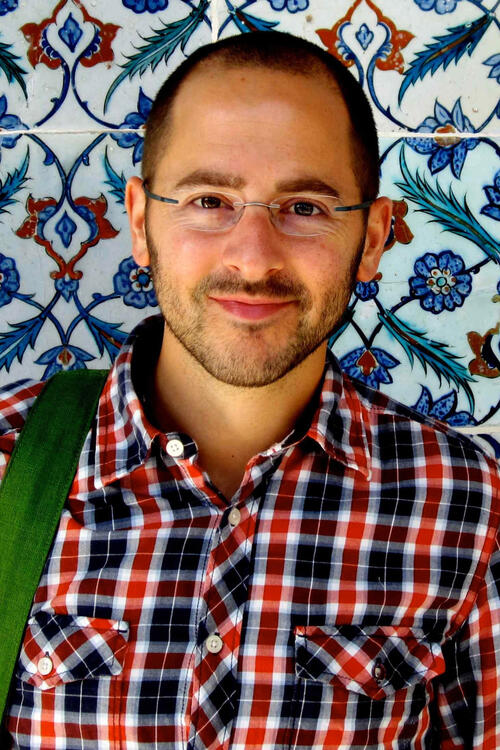
zhong jieming
Zhong, Jieming graduated from the school of public health of Zhejiang University and received his master's degree in public health (MPH) from the Chinese Center for Disease Control and Prevention. He is the director of the Department of Non-communicable Disease (NCD) Control and Prevention in the Zhejiang CDC. He served as deputy director of the Department of Tuberculosis Control and Prevention in Zhejiang CDC during 2008-2014. He is a member of the Zhejiang Preventive Medicine Association and has engaged in and chaired several international cooperation and local research projects. He has in-depth research on NCDs and TB control and prevention, and has published over 30 scientific papers in related fields.

Zhong Jieming Director of the Department of NCD Control and Prevention, Zhejiang CDC, China.
Seminars
-

Abstract: Against a backdrop of emerging and reemerging infectious diseases of natural origin, fueled by changes in land use and global climate, there is an ongoing revolution in the life sciences with growing empowerment of the individual to decipher, genetically alter, and manufacture living things. In addition to widely-touted potential benefits, these events and developments pose challenges and risks of profound harm to humans and the rest of the planet. Yet, the United States and most other nations have failed to respond with a strategic plan, sustained resources, coherent leadership, critical self-assessment, and accountability. Why is this? A selected history of recent naturally-occurring disease outbreaks and advances in the life sciences that create new risks of potential misuse will be offered, differing perspectives from the science and policy communities described, and some of the efforts to address these challenges summarized. Forward-looking proposals for efforts to mitigate risk in the life sciences will be discussed.

Speaker Bio: David A. Relman, M.D., is the Thomas C. and Joan M. Merigan Professor in Medicine, and Microbiology & Immunology at Stanford University, and Chief of Infectious Diseases at the Veterans Affairs Palo Alto Health Care System. He is also Senior Fellow at the Freeman Spogli Institute for International Studies (FSI), and served as science co-director at the Center for International Security and Cooperation from 2013-2017. He is currently director of a new Biosecurity Initiative at FSI.

Relman identified several historically important and novel microbial disease agents, and was an early pioneer in the modern study of the human indigenous microbiota (microbiome). His lab group currently examines human microbial community assembly, and community stability and resilience.

Among policy-relevant activities, Relman is currently a member of the Intelligence Community Studies Board at the National Academies of Science (NAS), served as vice-chair of the NAS Committee that reviewed the science performed for the FBI 2001 Anthrax Letters investigation, and was a member of the National Science Advisory Board on Biosecurity. He was elected to the National Academy of Medicine in 2011. 

CISAC
Stanford University
Encina Hall, E209
Stanford, CA 94305-6165

0
Senior Fellow at the Freeman Spogli Institute for International Studies
Thomas C. and Joan M. Merigan Professor
Professor of Medicine
Professor of Microbiology and Immunology
1-RSD13_085_0052a-001.jpg MD

David A. Relman, M.D., is the Thomas C. and Joan M. Merigan Professor in the Departments of Medicine, and of Microbiology and Immunology at Stanford University, and Chief of Infectious Diseases at the Veterans Affairs Palo Alto Health Care System in Palo Alto, California. He is also Senior Fellow at the Freeman Spogli Institute for International Studies (FSI) at Stanford, and served as science co-director at the Center for International Security and Cooperation at Stanford from 2013-2017. He is currently director of a new Biosecurity Initiative at FSI.

Relman was an early pioneer in the modern study of the human indigenous microbiota. Most recently, his work has focused on human microbial community assembly, and community stability and resilience in the face of disturbance. Ecological theory and predictions are tested in clinical studies with multiple approaches for characterizing the human microbiome. Previous work included the development of molecular methods for identifying novel microbial pathogens, and the subsequent identification of several historically important microbial disease agents. One of his papers was selected as “one of the 50 most important publications of the past century” by the American Society for Microbiology.

Dr. Relman received an S.B. (Biology) from MIT, M.D. from Harvard Medical School, and joined the faculty at Stanford in 1994. He served as vice-chair of the NAS Committee that reviewed the science performed as part of the FBI investigation of the 2001 Anthrax Letters, as a member of the National Science Advisory Board on Biosecurity, and as President of the Infectious Diseases Society of America. He is currently a member of the Intelligence Community Studies Board and the Committee on Science, Technology and the Law, both at the National Academies of Science. He has received an NIH Pioneer Award, an NIH Transformative Research Award, and was elected a member of the National Academy of Medicine in 2011.

Stanford Health Policy Affiliate
CV
Department of Medicine; CISAC, Stanford University
Seminars
-

Co-sponsored by the Abbasi Program in Islamic Studies and the Southeast Asia Program

For much of the 2000s, scholars and activists lauded Indonesia’s surprisingly successful transition to democracy. Unlike Yugoslavia’s disintegration into smaller ethno-nationalist states, Indonesia witnessed the political marginalization of the military, the moderation of Islamists, the resolution of some regional rebellions, and the resurgence of a vibrant, plural, civil society. Recent years, however, have made imperfections in Indonesian democracy visible to the point where the death of Indonesian democracy is imaginable if not yet underway. Prof. Menchik will outline the role that Indonesian Islamic civil society may play in the death of Indonesian democracy.

Drawing on original survey data and interviews, as well as case studies in which the preferences of Nahlatul Ulama and Muhammadiyah leaders have become visible, Prof. Menchik will argue that their values are compatible with both democracy and authoritarianism. While NU and Muhammadiyah exemplify the civic associational ties and democratic culture that are necessary for making democracy work, civic pluralism is not their only value. NU and Muhammadiyah have a hierarchy of values that they promote and defend, and they are willing to forgo civic pluralism in order to defend against the blasphemy of Islam. As a result, if Indonesian democracy dies, it will likely be a result of a coalition of Islamists and autocrats using appeals to populism and the defense of Islam in order to capture the lower classes and moderate Muslims, including many members of NU and Muhammadiyah.

Image
menchik 0917 cropped
Jeremy Menchik, in addition to his professorship at Boston University, is a BU faculty affiliate in Political Science and Religious Studies. His teaching and research focus on comparative politics and the politics of religion. His first book, Islam and Democracy in Indonesia: Tolerance without Liberalism, won the International Studies Association award for the best book on religion and international relations published in 2016. His research has appeared in scholarly journals such as Comparative Studies in Society and History, Comparative Politics, and South East Asia Research, as well as in The New York Times, The New York Review of Books, The Washington Post, and The Wall Street Journal, among other publications. 


Walter H. Shorenstein
Asia-Pacific Research Center
616 Serra St C331
Stanford University
Stanford, CA 94305-6055

(650) 724-5656 (650) 723-9741
0
Shorenstein Fellow (2011-2012)
MenchikJeremy.jpg PhD

Jeremy Menchik joins the Walter H. Shorenstein Asia-Pacific Research Center (Shorenstein APARC) from the Department of Political Science at the University of Wisconsin-Madison. His research is in the area of comparative politics and international relations with a focus on religion and politics in the Muslim world, especially Indonesia. At Shorenstein APARC, he is preparing his dissertation for publication as a book titled, Tolerance Without Liberalism: Islamic Institutions in Twentieth Century Indonesia, and developing related projects on the origins of intolerance, the relationship between religion and nationalism, and political symbolism in democratic elections.

Menchik holds an MA and a PhD in political science from UW-Madison and a BA, also in political science, from the University of Michigan. He will be an assistant professor in international relations at Boston University beginning in 2013.

Assistant Professor, Pardee School of Global Studies, Boston University
Seminars
-

Abstract: The threat of biological catastrophes-- stemming from natural, accidental or intentional causes-- looms ever larger as populations urbanize, global temperatures rise, and the access to biological weapons spreads. In fact, climate change and the increasing ease with which biological weapons may be obtained represent two significant threats to public health. As these threats materialize, they test nations’ resources, capabilities, and strength. Through an examination of the policy and scientific challenges posed by weaponized biological agents as well as by the growing public health risks stemming from climate change impacts, key gaps in bio-preparedness emerge. Bio-preparedness efforts, nationally and globally, do not currently keep pace with emerging biological risks. Will the scientific and policy communities find common ground to move the global health agenda forward through prevention, detection, and response?

Speaker Bio: Alice Hill is a Research Fellow at the Hoover Institution at Stanford University.  She previously served at the White House as Special Assistant to President Barack Obama and Senior Director for Resilience Policy on the National Security Council.  Hill led the creation of national policy regarding catastrophic risk, including the impacts of climate change and biological threats.

Hill previously served as Senior Counselor to the Secretary of the Department of Homeland Security (DHS).  She headed the DHS Biological Leadership group and led development of Department strategies and policies regarding catastrophic biological and chemical incidents, ranging from pandemics to weapons of mass destruction.  Hill also founded and was the first Chair of the Blue Campaign, an internationally recognized anti-human trafficking campaign.

Earlier in her career, Hill has served as a supervising judge on the Los Angeles Superior Court and as chief of the white-collar crime unit in the Los Angeles US Attorney’s Office.

She is a frequent speaker and has been quoted in the NY Times, Washington Post, and Los Angeles Times, among other publications. She has appeared on CBS, NPR, and MSNBC and her commentary has been published in Newsweek, LawFare, The Hill, and other media.  She has received numerous awards and commendations, including the Department of Justice’s highest award for legal accomplishment, Harvard’s Meta-Leader of the Year Award, and the San Fernando Valley Bar’s Judge of the Year.

Alice Hill Research Fellow Hoover Institution, Stanford University
Seminars
-

Image
sook kim copy
North Korean leader Kim Jong-un now boasts that his country is in the final stages of completing a nuclear weapons development program, one capable of loading nuclear warheads on an ICBM that can reach the mainland United States.

Six years after his succession to power, Kim has continued to defy international pressure, conducting four nuclear tests and firing eighty-five ballistic missiles. Recently, the world has witnessed an extraordinary, high-intensity war of words between President Trump and the North Korean leader. Military tension mounts higher than ever as we enter a new phase, arguably the most serious one in decades, in dealing with a dangerous and bellicose North Korea.

There are many questions: Will North Korea conduct an atmospheric nuclear test? When will their weapons program really be capable of hitting the continental United States? How will the U.S. government respond to that capability? Will the likely result be war on the Korean Peninsula? What about the China factor?

Ambassador Kim will discuss some of these questions through his personal experiences at the Six-Party Talks, the UN Security Council and through his contacts with North Korean officials.

Philippines Conference Room
Encina Hall, 3rd Floor
616 Serra Street
Stanford, CA 94305
Directions

Kim Sook former South Korean Ambassador to U.N; 2014-15 Pantech Fellow at APARC, Stanford University <i>former South Korean Ambassador to U.N; 2014-15 Pantech Fellow at APARC, Stanford University</i>
Seminars
-

Abstract: As the orbital space around earth becomes increasingly crowded, there is an increasing need to capture and manipulate objects ranging from satellites and antennas to “uncooperative” space debris. Robots have been proposed as a solution for clearing debris and manipulating objects in space. However, many of the traditional techniques used for robotic grasping and manipulation will not work. Gecko-inspired adhesives are promising technology, as they work in vacuum, at high and low temperatures, and do not require special hand-holds or other fixtures. Tests in microgravity and in the International Space station have shown that “gecko grippers” are a viable option for eliminating space debris in low Earth orbit and for enhancing missions in space.

Speaker Bio: Professor Mark Cutkosky applies analyses, simulations, and experiments to the design and control of robotic hands, tactile sensors, and devices for human/computer interaction. In manufacturing, his work focuses on design tools for rapid prototyping.

Mark Cutkosky Professor Department of Mechanical Engineering, Stanford University
Seminars
-

Abstract: This presentation will review research from two papers about Bitcoin.  The first paper uses data from the MIT digital currency experiment to shed light on consumer behavior regarding commercial, public and government surveillance. We find that the effect of small incentives may explain the privacy paradox, where people say they care about privacy but are willing to relinquish private data quite easily.  The second paper analyzes empirical evidence about the adoption and usage of Bitcoin, as well as forces that underly Bitcoin pricing.

Speaker Bio: Susan Athey is The Economics of Technology Professor at Stanford Graduate School of Business. She received her bachelor's degree from Duke University and her Ph.D. from Stanford, and she holds an honorary doctorate from Duke University. She previously taught at the economics departments at MIT, Stanford and Harvard.  In 2007, Professor Athey received the John Bates Clark Medal, awarded by the American Economic Association to “that American economist under the age of forty who is adjudged to have made the most significant contribution to economic thought and knowledge.” She was elected to the National Academy of Science in 2012 and to the American Academy of Arts and Sciences in 2008.  Professor Athey’s research focuses on the economics of the internet, online advertising, the news media, marketplace design, virtual currencies and the intersection of computer science, machine learning and economics. She advises governments and businesses on marketplace design and platform economics, notably serving since 2007 as a long-term consultant to Microsoft Corporation in a variety of roles, including consulting chief economist.  

Susan Athey Graduate School of Business, Stanford Institute for Economic Policy Research
Seminars
-

GROW is an automated solution to evaluate job candidates, developed by Tokyo-based people analytics startup, Institution for a Global Society (IGS). GROW was developed with the idea that the hiring process is often a missed opportunity to collect, utilize and exchange feedback that could change people’s behaviors for the better. The solution has developed into a tool that both helps students to understand their strengths and weaknesses, while at the same time assists HR in hiring based on competencies and personality traits. GROW uses artificial intelligence learning algorithms to analyze assessment data from both candidates and evaluators, looking for patterns to improve its ability to accurately screen candidates over time. In place of human intuition, GROW uses big data to develop a scientific, objective, and constantly-improving engine to recruit, screen, and develop human capital. In his presentation, Founder and CEO of IGS, Masahiro Fukuhara will speak about founding IGS, developing GROW, and the opportunities and challenges that its widespread interest has presented. 

Bio

Image

Masahiro Fukuhara is founder and CEO of Tokyo-based people analytics startup Institution for a Global Society (IGS), which he started in 2010. Prior to founding IGS, Fukuhara was managing director at asset management firm Barclays Global Investors (BGI) where he made investment decisions based on computer-driven models. Fukuhara earned his Bachelor’s degree in Economics from Keio University and MBA from INSEAD. He holds Master’s degree (with Honors) in International Finance from Grandes Ecoles HEC and Ph.D. from Tsukuba University Graduate School of Business Sciences (Ph.D. in Business Administration). He is currently a Visiting Professor at the center for FinTEK (Finance, Technology, and Economy) at Keio University as well as adjunct professor at Hitotsubashi University’s Graduate School of International Corporate Strategy.

Agenda

4:15pm: Doors open 
4:30pm-5:30pm: Talk and Discussion 
5:30pm-6:00pm: Networking

RSVP Required

 
For more information about the Silicon Valley-New Japan Project please visit: http://www.stanford-svnj.org/
 

NOTE: This event takes place during Stanford’s Homecoming Weekend. The parking slots in front of Encina Hall will not be available that day, and there may be higher demand than usual for parking on campus. Please take that into consideration when planning your travel.

Masahiro Fukuhara, Founder and CEO, Institution for a Global Society
Seminars
-

Abstract:

Since 2013, my collaborators and I have conducted research on how rumors and misinformation spread through social media during crisis events. Recently, our work has revealed how a subsection of the alternative media ecosystem facilitates the spread of disinformation—in the form of conspiracy theories or “alternative narratives” about man-made crisis events. This disinformation is often employed as part of a political agenda and poses new information security risks. In this talk, I’ll present highlights from our research on alternative narratives, describing some of the specific tactics being used to spread disinformation. I’ll also share some preliminary findings on more recent work examining the structure and dynamics of the media ecosystem that has taken shape around the ongoing crisis in Syria. Finally, I’ll discuss some of the broader implications of online disinformation for emergency and humanitarian responders as well as society at large.


Speaker Bio:

Image
kate starbird
Kate Starbird is an Assistant Professor at the Department of Human Centered Design & Engineering (HCDE) at the University of Washington (UW). Kate's research is situated within human-computer interaction (HCI) and the emerging field of crisis informatics—the study of the how information-communication technologies (ICTs) are used during crisis events. One aspect of her research focuses on how online rumors spread—and how online rumors are corrected—during natural disasters and man-made crisis events. More recently, she has begun exploring the propagation of disinformation and political propaganda through online spaces. Kate earned her PhD from the University of Colorado at Boulder in Technology, Media and Society and holds a BS in Computer Science from Stanford University.

William J. Perry Conference Room,  Encina Hall, 2nd Floor, 616 Serra St, Stanford, CA 94305

Kate Starbird Assistant Professor at the Department of Human Centered Design & Engineering (HCDE) at the University of Washington
Seminars
-

In Superficial Korea, a book recently published in South Korea, Gi-Wook Shin, professor of sociology and Shorenstein APARC director, shares his observations on and provides recommendations for social maladies currently affecting Korean society. Shin sees a problematic level of superficiality in a number of aspects of today's Korea: its interpersonal relations, policies and social systems, and rules and regulations.

Dafna Zur, assistant professor of East Asian Language and Cultures at Stanford University, will lead discussion of the book.

If you bring a copy of the book, the author will autograph it.


 Philipppines Conference Room
 Encina Hall, 3rd Floor
 616 Serra Street
 Stanford, CA 
 Directions

Department of East Asian Languages and Cultures
521 Memorial Way
Stanford, CA 94305

(650) 725-1893
0
Associate Professor, East Asian Languages and Cultures
dafnazur_1080x1080.png

Dafna Zur teaches courses on Korean literature, cinema, and popular culture. Her book, Figuring Korean Futures: Children’s Literature in Modern Korea (Stanford University Press, October 2017), traces the affective investments and coded aspirations made possible by children’s literature in colonial and postcolonial Korea. She has published articles on North Korean science fiction, the Korean War in North and South Korean children’s literature, childhood in cinema, and Korean popular culture. Her translations have been published in wordwithoutborders.org, The Columbia Anthology of Modern Korean Short Stories, and the Asia Literary Review.

Dafna Zur received her PhD and MA in Asian Studies from the University of British Columbia, and a BA from the Hebrew University of Jerusalem.

Date Label
Shorenstein APARC
Encina Hall E301
616 Jane Stanford Way
Stanford, CA 94305-6055
(650) 724-8480 (650) 723-6530
0
Senior Fellow at the Freeman Spogli Institute for International Studies
Professor of Sociology
William J. Perry Professor of Contemporary Korea
Professor, by Courtesy, of East Asian Languages & Cultures
Gi-Wook Shin_0.jpg PhD

Gi-Wook Shin is the William J. Perry Professor of Contemporary Korea in the Department of Sociology, senior fellow at the Freeman Spogli Institute for International Studies, and the founding director of the Korea Program at the Walter H. Shorenstein Asia-Pacific Research Center (APARC) since 2001, all at Stanford University. In May 2024, Shin also launched the Taiwan Program at APARC. He served as director of APARC for two decades (2005-2025). As a historical-comparative and political sociologist, his research has concentrated on social movements, nationalism, development, democracy, migration, and international relations.

In Summer 2023, Shin launched the Stanford Next Asia Policy Lab (SNAPL), which is a new research initiative committed to addressing emergent social, cultural, economic, and political challenges in Asia. Across four research themes– “Talent Flows and Development,” “Nationalism and Racism,” “U.S.-Asia Relations,” and “Democratic Crisis and Reform”–the lab brings scholars and students to produce interdisciplinary, problem-oriented, policy-relevant, and comparative studies and publications. Shin’s latest book, The Four Talent Giants, a comparative study of talent strategies of Japan, Australia, China, and India to be published by Stanford University Press in the summer of 2025, is an outcome of SNAPL.

Shin is also the author/editor of twenty-seven books and numerous articles. His books include The Four Talent Giants: National Strategies for Human Resource Development Across Japan, Australia, China, and India (2025); Korean Democracy in Crisis: The Threat of Illiberalism, Populism, and Polarization (2022); The North Korean Conundrum: Balancing Human Rights and Nuclear Security (2021); Superficial Korea (2017); Divergent Memories: Opinion Leaders and the Asia-Pacific War (2016); Global Talent: Skilled Labor as Social Capital in Korea (2015); Criminality, Collaboration, and Reconciliation: Europe and Asia Confronts the Memory of World War II (2014); New Challenges for Maturing Democracies in Korea and Taiwan (2014); History Textbooks and the Wars in Asia: Divided Memories (2011); South Korean Social Movements: From Democracy to Civil Society (2011); One Alliance, Two Lenses: U.S.-Korea Relations in a New Era (2010); Cross Currents: Regionalism and Nationalism in Northeast Asia (2007);  and Ethnic Nationalism in Korea: Genealogy, Politics, and Legacy (2006). Due to the wide popularity of his publications, many have been translated and distributed to Korean audiences. His articles have appeared in academic and policy journals, including American Journal of Sociology, World Development, Comparative Studies in Society and History, Political Science Quarterly, Journal of Asian Studies, Comparative Education, International Sociology, Nations and Nationalism, Pacific Affairs, Asian Survey, Journal of Democracy, and Foreign Affairs.

Shin is not only the recipient of numerous grants and fellowships, but also continues to actively raise funds for Korean/Asian studies at Stanford. He gives frequent lectures and seminars on topics ranging from Korean nationalism and politics to Korea's foreign relations, historical reconciliation in Northeast Asia, and talent strategies. He serves on councils and advisory boards in the United States and South Korea and promotes policy dialogue between the two allies. He regularly writes op-eds and gives interviews to the media in both Korean and English.

Before joining Stanford in 2001, Shin taught at the University of Iowa (1991-94) and the University of California, Los Angeles (1994-2001). After receiving his BA from Yonsei University in Korea, he was awarded his MA and PhD from the University of Washington in 1991.

Director, Korea Program at the Walter H. Shorenstein Asia-Pacific Research Center (APARC)
Director, Stanford Next Asia Policy Lab at APARC
Date Label
Seminars
Subscribe to Seminars