-

Co-sponsored by the Asia Health Policy Program and the Southeast Asia Program

Achieving universal health coverage is one of the UN's Social Development Goals. The four countries in the lower Mekong region, Thailand, Vietnam, Laos, and Cambodia, have made good progress on the expansion of health insurance coverage. However, the statistics on how many people are covered and protected could be misleading, especially for vulnerable populations more likely to be left out. Using data from national surveys, a cross-country analysis shows the situation regarding health service access and health care payments among vulnerable populations in the four countries. Conditions and trends in health care utilization, and health payments and their impact on vulnerable populations will be reviewed and linked to policy implications. Pitfalls and successes in a region marked by diversity and unequal opportunity will also be explored.
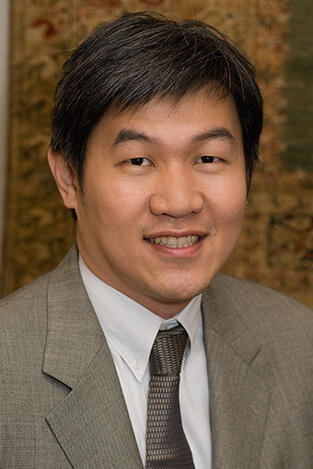
Image
piya hanvoravongchai 4x6
Dr. Piya Hanvoravongchai teaches health systems and health economics at Chulalongkorn University in Thailand. He is also a co-director of the Equity Initiative in Southeast Asia and a member of the Strategic Technical Advisory Committee of the Asia Pacific Observatory on Health Systems and Policies.

Piya Hanvoravongchai Faculty of Medicine, Chulalongkorn University, Bangkok
Seminars
-

- RSVP here - 

Abstract: Must we, should we, possess a Doomsday Machine?  For over half a century there have been two of these in the world: the U.S. and the Russian strategic nuclear systems, tightly coupled together with their respective warning systems, each poised to escalate armed conflict with the other or to preemptively launch a first strike based on strategic or tactical warning that may be a false alarm such as has occurred repeatedly.  Environmental scientists in the last decade have strongly confirmed what was first warned in 1983, that each of these alert systems, aimed as they are at hundreds of targets in or near cities, constitutes a Doomsday Machine.  Firestorms in the burning cities would loft hundreds of millions of tons of smoke and black soot into the global stratosphere--where it would not rain out and would remain for more than a decade--blocking 70% of sunlight, creating ice age conditions on earth and killing all harvest worldwide, starving nearly humans to death.  Neither the Defense Department nor the National Academy of Sciences has ever studied the actual effects, including smoke and resulting famine, to be expected from the existing plans of the Joint Chiefs of Staff for general nuclear war.  Such a study would almost surely show that China's "minimum deterrence" and no-first-use policy is dramatically less dangerous to the future of humanity, on the way to the more distant goal of universal abolition of nuclear weapons. 

Speaker bio: Daniel Ellsberg is the author of three books: The Doomsday Machine: Confessions of a Nuclear War Planner (2017), Secrets: A Memoir of Vietnam and the Pentagon Papers(2002) Risk, Ambiguity and Decision (2001) and Papers on the War (1971). Ellsberg first specialized in problems of the command and control of nuclear weapons, nuclear war plans, and crisis decision-making in the 1950s. As a high-level defense analyst,Ellsberg participated in developing operational guidance for U.S. nuclear war planning during the Kennedy administration. Since the end of the Vietnam War, Ellsberg has been a lecturer, writer and activist on the dangers of the nuclear era, wrongful U.S. interventions abroad and the urgent need for patriotic whistleblowing. In December 2006, Ellsberg was awarded the 2006 Right Livelihood Award, in Stockholm, Sweden, “. . .  for putting peace and truth first, at considerable personal risk, and dedicating his life to inspiring others to follow his example.” He received his Ph.D. in Economics from Harvard University in 1962.

Daniel Ellsberg Author
Seminars
-

Abstract: International cooperation has long been founded on the idea that securing a common factual understanding of things in the world is a prerequisite for deciding how to act in concert. However, in recent decades the very possibility of such agreement on the facts has come under attack both empirically, through persistent technical controversies around issues such as climate change and crop biotechnology, and theoretically, from demonstrations that facts and norms are co-produced to build alternate, coexisting worlds. The divergent self-understandings of these worlds, in which epistemic and normative order are interdependent, cannot be bridged by simply insisting on a singular “reality” that must be accepted by all.

In this talk, I use the longue durée case of international biotech regulation to suggest a different basis for long-term cooperation. Using epistemic subsidiarity rather than harmonization as the basis for making progress, I suggest how biotechnology risks might be handled in three regimes of subsidiarity: coexistence, cosmopolitanism, and constitutionalism. The advantages and limits of each regime will be exemplified and reflected upon.

Speaker bio: Sheila Jasanoff is Pforzheimer Professor of Science and Technology Studies at the Harvard Kennedy School. A pioneer in her field, she has authored more than 120 articles and chapters and is author or editor of more than 15 books, including The Fifth Branch, Science at the Bar, Designs on Nature, and The Ethics of Invention. Her work explores the role of science and technology in the law, politics, and policy of modern democracies. She founded and directs the STS Program at Harvard; previously, she was founding chair of the STS Department at Cornell. She has held distinguished visiting appointments at leading universities in Europe, Asia, Australia, and the US. Jasanoff served on the AAAS Board of Directors and as President of the Society for Social Studies of Science. She is a member of the Council on Foreign Relations. Her honors include a Guggenheim Fellowship, an Ehrenkreuz from the Government of Austria, membership in the Royal Danish Academy, and the Humboldt Foundation’s Reimar-Lüst award. She holds AB, JD, and PhD degrees from Harvard, and honorary doctorates from the Universities of Twente and Liège.

Sheila Jasanoff Professor of Science and Technology Studies Harvard University's Kennedy School of Government
Seminars
-

The event is jointly sponsored by the Japan Program at the Shorenstein Asia-Pacific Research Center and the Japan Foundation Center for Global Partnership.


Image
dekle photo
Through previously unexamined data from Japan, Professor Robert Dekle presents results from a preliminary study shoing the impact of robotics on Japanese labor between 1980 and 2012.

Robert Dekle is a Professor at the Department of Economics, University of Southern California. His field of research include international finance, open-economy and development, macroeconomics and the economies of Japan and East Asia.    He obtained his Ph.D in economics at Yale University and B.A in economics at the University of California, Berkeley. 

Robert Dekle, Professor of Economics, University of Southern California
Seminars
-

As the Tokyo-based co-founder and managing partner of global VC fund Fresco Capital, Allison Baum is frequently asked “Why are you in Japan?”  Indeed, with a global network of corporate partners, investors, and portfolio companies, many of them are curious to know why Fresco sees long term potential in the Japanese market. Though Japan is an advanced and well developed economy, the country is struggling with the need to innovate in the face of critical challenges such as a deflationary economy, a rapidly aging population, and an impending automation of the workforce. Fresco’s view is that this environment presents an extremely promising market opportunity for companies addressing challenges in healthcare, education and workplaces of the future. Join us as Allison shares her experience on the challenges and opportunities of expanding to Japan, bridging the cultural divide between Japan and the rest of the world, and discovering firsthand what it takes to successfully build long term partnerships in Japan.

allison_0220 copy.jpg

SPEAKER

Allison Baum, Co-founder and Managing Partner, Fresco Capital

BIO

Allison Baum is a co-founder and managing partner of Fresco Capital, a global, early stage venture capital fund investing in technology companies transforming education, healthcare, and the future of work at scale.  Prior to Fresco, Allison was an early member of the team at General Assembly, a global network for education and career transformation specialising in today’s most in-demand skills, where she developed and launched the company’s first part-time and full-time programs for technology, business, and design in New York.  In 2012, she relocated to Hong Kong to launch their first business in Asia.  Previously, she was a member of the Equity Derivatives team and Cross Asset Sales teams at Goldman Sachs in New York City.  

Allison graduated cum laude from Harvard College with a BA in Economics and a Minor in Film Studies.  She is also a member of the World Economic Forum Global Shapers community, a mentor for emerging women entrepreneurs in Southeast Asia at Wedu Global, a mentor for global social impact entrepreneurs at Endeavour Capital, and was named by Forbes as one of the 30 Top Emerging VC Managers in Asia.

AGENDA

4:15pm: Doors open 
4:30pm-5:30pm: Main Content, followed by discussion 
5:30pm-6:00pm: Networking

RSVP REQUIRED

To RSVP please go to: http://www.stanford-svnj.org/52118-public-forum/2018

For more information on the Stanford Silicon Valley-New Japan Project, please visit the project website at: http://www.stanford-svnj.org


Seminars
-

Abstract:

In the face of information pollution, legislators in seven states have drafted bills to mandate courses in "media literacy" and “digital citizenship.” But what if the problem is not the lack of media literacy--but that the media literacy we do teach is the wrong kind? Drawing on a survey of 7804 middle, high school and college students, along with a focused study of Stanford undergraduates, academics from universities in California and Washington, and professional fact checkers at the nation’s most esteemed publications, I’ll argue that our approaches to information pollution may not only be ineffectual but may exacerbate the problem. Based on promising pilot data, I’ll suggest more comprehensive and effective solutions, and how we might address this issue here on our own Stanford campus.


Speaker Bio:

Image
sam wineburg
Sam Wineburg is the Margaret Jacks Professor of Education and, by courtesy, of History & American Studies. Educated at Brown and Berkeley, he holds a doctorate in Psychological Studies in Education from Stanford and an honorary doctorate from Sweden’s Umeå University. In 2004, Wineburg founded the Stanford History Education Group (sheg.stanford.edu), whose curriculum and assessments have been downloaded five million times. His latest work focuses on how people judge the credibility of digital content, research that has been reported in the Wall Street Journal, New York Times, Washington Post, NPR, BBC, Die Zeit and translated into dozens of languages.

Wineburg’s scholarship sits at the crossroads of three fields: the psychology of learning, history, and education, and his articles have appeared in such diverse outlets as Cognitive Science, Journal of American History, Smithsonian Magazine, Washington Post and the Los Angeles Times. In 2002 his book, Historical Thinking and Other Unnatural Acts: Charting the Future of Teaching the Past won the Frederic W. Ness Award from the Association of American Colleges and Universities for work that makes the most important contribution to the “improvement of Liberal Education and understanding the Liberal Arts.” In 2013, he was named the Obama-Nehru Distinguished Chair by the US-India Fulbright Commission and spent four months crisscrossing India giving lectures about his work. His new book, Why Learn History When It’s Already on Your Phone (Chicago), will be available in September.

Sam Wineburg The Margaret Jacks Professor of Education and, by courtesy, of History & American Studies
Seminars
-

Abstract: In November 1998, ‘mujahideen’ warriors climbed the heights above Kargil in Indian held Kashmir, crossed the Line of Control, and occupied Indian military posts. These ‘mujahideens’ were really Pakistani soldiers clad in civilian garb on a secret mission. This was the beginning of the war in Kargil between two nuclear neighbors (India and Pakistan). This study critically evaluates the relationship between ‘learning’ and risk-prone behavior of Pakistan in the midst of technological maturation. Should we be confident and rely on nuclear deterrence and believe that Kargil-like crisis will never happen again? This talk will explain the story of Kargil from a theoretical lens of nuclear learning, demonstrating how difficult it has been for Pakistan to learn appropriate lessons given the firewalls of convictions, cover-ups, and confirmation biases. 

Speaker bio: Sannia Abdullah is a political scientist. Her doctoral thesis is on nuclear learning in South Asia with special reference to India-Pakistan crisis behavior. She is associated with Quaid-i-Azam University in the Department of Defense and Strategic Studies as a permanent faculty member. At CISAC, she is working on her book manuscript focusing on the evolution of Pakistan's nuclear behavior and its deterrence logic. Prior to joining CISAC, she was a visiting research scholar at Cooperative Monitory Center, Sandia National Labs (NM) where her research focuses primarily nonproliferation issues in South Asia. In 2016, she presented her research at Atlantic Council on Pakistan’s pursuit of full spectrum deterrence strategy and posture, conceptual nuances, and implied ramifications and at ISAC-ISSS, Annual Conference, University of Notre Dame. She was invited to deliver lectures at the USAFA on Pakistan’s deterrence stability and maturing force posture. She expressed her academic views at different forums including Pentagon, Lawrence Livermore National Labs, Congressional Budget Office and in some Think Tanks in Washington D.C. She had been a Nonproliferation Fellow at the Center for Nonproliferation Studies (CNS), in Monterey and a SWAMOS alumni of Columbia University (2011). Since 2010, Dr. Abdullah has been part of several Track-II dialogues and had an opportunity to learn decision-making trends through her regular participations in Table Top Exercises exploring escalation control and deterrence stability in South Asia.


CISAC, Stanford University
Seminars
-

Abstract: Clay fired bricks are a primary building material used in the rapidly expanding construction sector across South Asia. These bricks are primarily manufactured by small enterprises using inefficient, highly polluting coal-fired kilns. The black carbon and the greenhouse gases emitted by brick kilns across South Asia is comparable to the global radiative forcing of the entire US passenger car fleet. The pollution generated by these brick kilns also affect human health. In Dhaka, Bangladesh brick kilns contribute 40% of the ambient particulate matter during winter and are estimated to result in 5000 adult deaths each year. In addition, the coercive collection of topsoil as part of clay mining undermines agricultural productivity in settings of high poverty and malnutrition.

This talk will discuss why bricks are manufactured in Bangladesh using an approach that is so damaging to the environment and to public health. It will explore combined technical, financial and political strategies to transform the sector.

Speaker bio:  Prof. Luby studied philosophy and earned a Bachelor of Arts summa cum laude from Creighton University. Prof. Luby earned his medical degree from the University of Texas Southwestern Medical School at Dallas and completed his residency in internal medicine at the University of Rochester-Strong Memorial Hospital. He studied epidemiology and preventive medicine at the Centers for Disease Control and Prevention.

Prof. Luby's former positions include leading the Epidemiology Unit of the Community Health Sciences Department at the Aga Khan University in Karachi, Pakistan for 5 years and working as a Medical Epidemiologist in the Foodborne and Diarrheal Diseases Branch of the Centers for Disease Control and Prevention exploring causes and prevention of diarrheal disease in settings where diarrhea is a leading cause of childhood death.  Immediately prior to his current appointment, Prof. Luby served for 8 years at the International Centre for Diarrhoeal Diseases Research, Bangladesh (icddr,b), where he directed the Centre for Communicable Diseases. Prof. Luby was seconded from the US Centers for Disease Control and Prevention (CDC) and was the Country Director for CDC in Bangladesh.

During his over 20 years of public health work in low income countries, Prof. Luby frequently encountered political and governance difficulties undermining efforts to improve public health. His work at FSI engages him with a community of scholars who provide ideas and approaches to understand and address these critical barriers.

Stephen Luby Professor of Medicine Stanford University
Seminars
-

Abstract: The quotation in the title is taken from the memoirs of Boris Chertok, a leading Soviet missile designer.  In my talk I will examine significant shifts in Soviet thinking about nuclear war and military strategy in the 1960s and 1970s and discuss some of the implications of those shifts for strategic stability in the 1980s.  I will also explore the influence of the McNamara Pentagon on Soviet military strategy and Soviet thinking about deterrence and war-fighting.    

Speaker bio: David Holloway is the Raymond A. Spruance Professor of International History, a professor of political science, and an FSI senior fellow. He was co-director of CISAC from 1991 to 1997, and director of FSI from 1998 to 2003. His research focuses on the international history of nuclear weapons, on science and technology in the Soviet Union, and on the relationship between international history and international relations theory. His book Stalin and the Bomb: The Soviet Union and Atomic Energy, 1939-1956 (Yale University Press, 1994) was chosen by the New York Times Book Review as one of the 11 best books of 1994, and it won the Vucinich and Shulman prizes of the American Association for the Advancement of Slavic Studies. It has been translated into seven languages. The Chinese translation is due to be published later in 2018. Holloway also wrote The Soviet Union and the Arms Race (1983) and co-authored The Reagan Strategic Defense Initiative: Technical, Political and Arms Control Assessment (1984). He has contributed to the Bulletin of the Atomic Scientists, Foreign Affairs, and other scholarly journals.

Since joining the Stanford faculty in 1986 -- first as a professor of political science and later (in 1996) as a professor of history as well -- Holloway has served as chair and co-chair of the International Relations Program (1989-1991), and as associate dean in the School of Humanities and Sciences (1997-1998). Before coming to Stanford, he taught at the University of Lancaster (1967-1970) and the University of Edinburgh (1970-1986). Born in Dublin, Ireland, he received his undergraduate degree in modern languages and literature, and his PhD in social and political sciences, both from Cambridge University.

CISAC
Stanford University
Encina Hall, E214
Stanford, CA 94305-6165

(650) 723-1737 (650) 723-0089
0
Senior Fellow Emeritus at the Freeman Spogli Institute of International Studies
Raymond A. Spruance Professor of International History
0820stanford-davidholloway-238-edit.jpg PhD

David Holloway is the Raymond A. Spruance Professor of International History, a professor of political science, and an FSI senior fellow. He was co-director of CISAC from 1991 to 1997, and director of FSI from 1998 to 2003. His research focuses on the international history of nuclear weapons, on science and technology in the Soviet Union, and on the relationship between international history and international relations theory. His book Stalin and the Bomb: The Soviet Union and Atomic Energy, 1939-1956 (Yale University Press, 1994) was chosen by the New York Times Book Review as one of the 11 best books of 1994, and it won the Vucinich and Shulman prizes of the American Association for the Advancement of Slavic Studies. It has been translated into seven languages, most recently into Chinese. The Chinese translation is due to be published later in 2018. Holloway also wrote The Soviet Union and the Arms Race (1983) and co-authored The Reagan Strategic Defense Initiative: Technical, Political and Arms Control Assessment (1984). He has contributed to the Bulletin of the Atomic Scientists, Foreign Affairs, and other scholarly journals.

Since joining the Stanford faculty in 1986 -- first as a professor of political science and later (in 1996) as a professor of history as well -- Holloway has served as chair and co-chair of the International Relations Program (1989-1991), and as associate dean in the School of Humanities and Sciences (1997-1998). Before coming to Stanford, he taught at the University of Lancaster (1967-1970) and the University of Edinburgh (1970-1986). Born in Dublin, Ireland, he received his undergraduate degree in modern languages and literature, and his PhD in social and political sciences, both from Cambridge University.

Faculty member at the Center for International Security and Cooperation
Affiliated faculty at the Center on Democracy, Development, and the Rule of Law
Affiliated faculty at The Europe Center
CV
Date Label
David Holloway Professor of Political Science, Professor of History CISAC, Stanford University
Seminars
Subscribe to Seminars