Authors
News Type
Commentary
Date
Paragraphs

This article originally appeared at Brookings.


March 18 marks the fifth anniversary of Russia’s illegal annexation of Crimea, which capped the most blatant land grab in Europe since World War II. While the simmering conflict in Donbas now dominates the headlines, it is possible to see a path to resolution there. It is much more difficult with Crimea, which will remain a problem between Kyiv and Moscow, and between the West and Russia, for years—if not decades—to come.

THE TAKING OF CRIMEA

In late February 2014, just days after the end of the Maidan Revolution and Victor Yanukovych’s flight from Kyiv, “little green men”—a term coined by Ukrainians—began seizing key facilities on the Crimean peninsula. The little green men were clearly professional soldiers by their bearing, carried Russian weapons, and wore Russian combat fatigues, but they had no identifying insignia. Vladimir Putin originally denied they were Russian soldiers; that April, he confirmed they were.

By early March, the Russian military had control of Crimea. Crimean authorities then proposed a referendum, which was held on March 16. It proved an illegitimate sham. To begin with, the referendum was illegal under Ukrainian law. Moreover, it offered voters two choices: to join Russia, or to restore Crimea’s 1992 constitution, which would have entailed significantly greater autonomy from Kyiv. Those on the peninsula who favored Crimea remaining a part of Ukraine under the current constitutional arrangements found no box to check.

The referendum unsurprisingly produced a Soviet-style result: 97 percent allegedly voted to join Russia with a turnout of 83 percent. A true referendum, fairly conducted, might have shown a significant number of Crimean voters in favor of joining Russia. Some 60 percent were ethnic Russians, and many might have concluded their economic situation would be better as a part Russia.

It was not, however, a fair referendum. It was conducted in polling places under armed guard, with no credible international observers, and with Russian journalists reporting that they had been allowed to vote. Two months later, a member of Putin’s Human Rights Council let slip that turnout had been more like 30 percent, with only half voting to join Russia.

Regardless, Moscow wasted no time. Crimean and Russian officials signed a “treaty of accession” just two days later, on March 18. Spurred by a fiery Putin speech, ratification by Russia’s rubberstamp Federation Assembly and Federation Council was finished by March 21.

ATTEMPTS TO JUSTIFY

Moscow’s actions violated the agreement among the post-Soviet states in 1991 to accept the then-existing republic borders. Those actions also violated commitments to respect Ukraine’s sovereignty, territorial integrity, and independence that Russia made in the 1994 Budapest Memorandum on Security Assurances for Ukraine and 1997 Ukrainian-Russian Treaty of Friendship, Cooperation and Partnership.

In late March 2014, Russia had to use its veto to block a U.N. Security Council resolution that, among other things, expressed support for Ukraine’s territorial integrity (there were 13 yes votes and one abstention). The Russians could not, however, veto a resolution in the U.N. General Assembly. It passed 100-11, affirming Ukraine’s territorial integrity and terming the Crimean referendum invalid.

Russian officials sought to justify the referendum as an act of self-determination. It was not an easy argument for the Kremlin to make, given the history of the two bloody wars that Russia waged in the 1990s and early 2000s to prevent Chechnya from exercising a right of self-determination.

Russian officials also cited Western recognition of Kosovo as justification. But that did not provide a particularly good model. Serbia subjected hundreds of thousands of Kosovar Albanians to ethnic-cleansing in 1999; by contrast, no ethnic-cleansing occurred in Crimea. Kosovo negotiated with Serbia to reach an amicable separation for years before declaring independence unilaterally. There were no negotiations with Kyiv over Crimea’s fate, and it took less than a month from the appearance of the little green men to Crimea’s annexation.

The military seizure of Crimea provoked a storm of criticism. The United States and European Union applied visa and financial sanctions, as well as prohibited their ships and aircraft from traveling to Crimea without Ukrainian permission. Those sanctions were minor, however, compared to those applied on Russia after it launched a proxy conflict in Donbas in April 2014, and particularly after a Russian-provided surface-to-air missile downed a Malaysian Air airliner carrying some 300 passengers.

Whereas Ukrainian forces on Crimea did not resist the Russian invasion (in part at the urging of the West), Kyiv resisted the appearance of little green men in Donbas. Before long, the Ukrainians found themselves fighting Russian troops as well as “separatist” forces. That conflict is now about to enter its sixth year.

Finding a settlement in Donbas has taken higher priority over resolving the status of Crimea—understandable given that some 13,000 have died and two million been displaced in the fighting in eastern Ukraine. Moscow seems to see the simmering conflict as a useful means to pressure and distract Kyiv, both to make instituting domestic reform more difficult and to hinder the deepening of ties between Ukraine and Europe.

Resolving the Donbas conflict will not prove easy. For example, the Kremlin may not be prepared to settle until it has some idea of where Ukraine fits in the broader European order, that is, its relationship with the European Union and NATO. But Russia has expressed no interest in annexing Donbas. While the seizure of Crimea proved very popular with the broader Russia public, the quagmire in Donbas has not. The most biting Western economic sanctions would come off of Russia if it left Donbas. At some point, the Kremlin may calculate that the costs outweigh the benefits and consent to a settlement that would allow restoration of Ukrainian sovereignty there.

Moscow will not, on the other hand, willingly give up Crimea. Russians assert a historical claim to the peninsula; Catherine the Great annexed the peninsula in 1783 following a war between Russia and the Ottoman Empire. (That said, Crimea was transferred from the Russian Soviet Federative Socialist Republic to the Ukrainian Soviet Socialist Republic in 1954, and, as noted above, the republics that emerged from the wreckage of the Soviet Union in 1991 agreed to accept the borders as then drawn.)

Retaining Crimea is especially important to Putin, who can offer the Russian people no real prospect of anything other than a stagnant economy and thus plays the nationalism and Russia-as-a-great-power cards. He gained a significant boost in public popularity (much of which has now dissipated) from the rapid and relatively bloodless takeover of the peninsula. Moreover, it offers a vehicle for Russia to maintain a festering border dispute with Ukraine, which the Kremlin may see as discouraging NATO members from getting too close to Ukraine.

Kyiv at present lacks the political, economic, and military leverage to force a return. Perhaps the most plausible route would require that Ukraine get its economic act together, dramatically rein in corruption, draw in large amounts of foreign investment, and realize its full economic potential, and then let the people in Crimea—who have seen no dramatic economic boom after becoming part of Russia—conclude that their economic lot would be better off back as a part of Ukraine.

For the West, Russia’s seizure and annexation of Crimea pose a fundamental challenge to the European order and the norms established by the 1975 Helsinki Final Act. The United States and Europe should continue their policy of non-recognition of Crimea’s illegal incorporation. They should also maintain Crimea-related sanctions on Russia, if for no other reason than to signal that such land grabs have no place in 21st-century Europe.



Hero Image
steven pifer 0
All News button
1
-

Recent years have witnessed an increasing number of cyber attacks originating in Russia that target the United States, European Union and EU member-states.  In Russia’s undeclared war against Ukraine—a conflict that has claimed some 13,000 lives—Russia has employed cyber tactics on a regular basis, including release against Ukraine of the Petya and NotPetya viruses.

Those attacks had consequences far beyond Ukraine’s borders.  The NonPetya attack, initiated against a small tech firm in Ukraine, spread to global businesses and government agencies throughout Europe and crossed the Atlantic to the United States.  The West should closely examine the Ukrainian experience, as Russia perfects tactics that could be turned against Europe and the United States as well.

Improving the security of the Internet will require sharing knowledge and experience, promoting greater awareness on cyber security, developing cyber security capacities, and deepening communication and cooperation among different stakeholders.  The Panel will discuss the nature of the threat as well as what governments, international organizations and businesses should do in these areas.

Speaker Bios:

Image
stamos
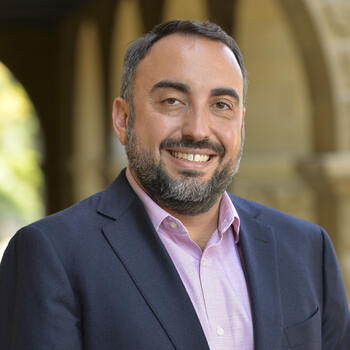
Alex Stamos is a cybersecurity expert, business leader and entrepreneur working to improve the security and safety of the Internet through his teaching and research at Stanford University. Stamos is an Adjunct Professor at Stanford’s Freeman-Spogli Institute, a William J. Perry Fellow at the Center for International Security and Cooperation, and a visiting scholar at the Hoover Institution. Prior to joining Stanford, Alex served as the Chief Security Officer of Facebook. In this role, Stamos led a team of engineers, researchers, investigators and analysts charged with understanding and mitigating information security risks to the company and safety risks to the 2.5 billion people on Facebook, Instagram and WhatsApp. During his time at Facebook, he led the company’s investigation into manipulation of the 2016 US election and helped pioneer several successful protections against these new classes of abuse. As a senior executive, Alex represented Facebook and Silicon Valley to regulators, lawmakers and civil society on six continents, and has served as a bridge between the interests of the Internet policy community and the complicated reality of platforms operating at billion-user scale.

Image
oleh derevianko
Oleh Derevianko is a business and social entrepreneur. He is the co-founder and chairman of the Board of ISSP — Information Systems Security Partners — a private international cybersecurity company founded in Ukraine in 2008 and currently operating in seven countries of Central and Eastern Europe and Middle Asia. Having a strong presence in the countries at the front line of cyber and hybrid war, such as Ukraine, and serving both private and public sectors, ISSP provides unique expertise for APT attacks analysis, detection and response. Derevianko is also a co-founder of International Cyber Academy (Kyiv), which provides worldclass learning opportunities for students who want to become skilled professionals in a world that depends on the use of cyberspace. In 2015–2016 he served as Deputy Minister, Chief of Staff at Ministry of Education and Science of Ukraine. 

Image
cortes sarah linderpix120815 scortes 0652 high res

Dr. Sarah Lewis Cortes has managed Security at American Express, Putnam Investments, Fidelity, and Biogen, among others. A postoctoral researcher at ACSO Digital Crime Lab, she performs training and consultation with the FBI and Interpol. She earned her degrees at Harvard University and Northeastern, and her research focuses on threat intelligence and the darknet, privacy and privacy law, international criminal legal treaties (MLATs), and digital forensics. At Putnam Investments, which manages over $1.3 trillion in assets, Sarah was SVP, Security. She oversaw Putnam’s recovery on 9/11 when parent company Marsh & McLennan’s World Trade Center 99th floor data center was destroyed.

Image
screen shot 2019 03 14 at 6 42 11 pm
Jason Min is the Head of Business Development at Check Point Software Technologies. In this role he sources, evaluates, and executes M&A transactions. Jason is responsible for overseeing business development and sale enablement activities that involve Check Point technology partners. Since joining Check Point in 2014, Jason has contributed to the success of Check Point’s major acquisitions and partnership growth. Prior to joining Check Point, Jason was at Highland Capital, a global venture capital firm, where he sourced and executed investments in security and software companies. Before working at Highland Capital, Jason was at General Atlantic, a $28B global private equity firm, where he focused on security and software investments across all stages of company growth.

Image
dafina toncheva usvp
Dafina Toncheva invests in emerging technologies in the enterprise space with focus on Enterprise SaaS applications and security. Dafina joined USVP in 2012 and has led investments in and joined the boards of InsideSales.com, Apptimize, Luma Health, Arkose Labs and Raken. Most recently, Dafina served on the board of Prevoty, a leader in application security, who was acquired by Imperva where USVP was the lead investor and largest shareholder. Prior to joining USVP, Dafina was a principal investor with Tugboat Ventures since 2010. Before that, she spent two years at Venrock helping to expand the firm’s investments in SaaS, virtualization, security, infrastructure and enterprise applications. Dafina led the first institutional investment round in Cloudflare which has since transformed into one of the most successful Internet security startups in Silicon Valley. 

Image
nm
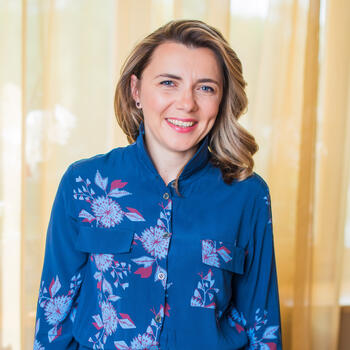
Nataliya Mykolska is the Ukrainian Emerging Leaders Fellow at Stanford Center for Democracy Development and Rule of Law. Before coming to Stanford Nataliya was the Trade Representative of Ukraine - Deputy Minister of Economic Development and Trade. In the government, Nataliya was responsible for developing and implementing consistent, predictable and efficient trade policy. She focused on export strategy and Ukrainian exportpromotion, free trade agreements, protecting Ukrainian trade interests in the World Trade Organization (WTO), dialogue with Ukrainian exporters. Nataliya was the Vice-Chair of the International Trade Council and the Intergovernmental Committee on International Trade.

Moderator: 

Image
steven pifer 0
Steven Pifer is a William J. Perry fellow at Stanford’s Freeman Spogli Institute for International Studies (FSI), where he is affiliated with FSI’s Center for International Security and Cooperation and Europe Center.  He is also a nonresident senior fellow with the Brookings Institution. A retired Foreign Service officer, Pifer’s more than 25 years with the State Department focused on U.S. relations with the former Soviet Union and Europe, as well as arms control and security issues.  He served as deputy assistant secretary of state in the Bureau of European and Eurasian Affairs with responsibilities for Russia and Ukraine (2001-2004), ambassador to Ukraine (1998-2000), and special assistant to the president and senior director for Russia, Ukraine and Eurasia on the National Security Council (1996-1997).  

-

Kleptocracy--well-organized elite corruption--has come to characterize Russia and much of the post-Communist space, and is one of the chief obstacles to democratic development as well as economic growth in Russia and Ukraine.  This panel will feature three experts who have focused on anti-corruption measures in these countries, and will discuss the origins, effects, and future of kleptocracy in the region.

Please join Charles Davidson, the publisher of The American Interest and Director of The Kleptocracy Initiative at the George Mason School of Public Policy, Jeffrey Gedmin, the editor of The American Interest, who previously was president of the Legatum Institute in London and of Radio Liberty/Radio Free Europe in Prague and Oleksandra Ustinova, Ukrainian Emerging Leaders Fellow 2019 and a leading Ukrainian anti-corruptian activist for a conversation on kleptocracy in Russia and Ukraine and how it is abetted by American institutions. The discussion will be moderated by Francis Fukuyama, CDDRL Mosbacher Director and FSI Olivier Nomellini Senior Fellow. 


This event is co-sponsored by the Center on Democracy, Development and the Rule of Law, The Humanities Center, The Europe Center and the Center for Russian, East European and Eurasian Studies. 

Image
charles davidson
Charles Davidson
 is Publisher of The American Interest magazine (co-founded with Francis Fukuyama in 2005), and Senior Policy Fellow, Schar School of Policy and Government, George Mason University.  Since 2006, co-founder of Global Financial Integrity, one of the founders of the FACT Coalition, Executive Producer of Sundance documentary We’re Not Broke, and until recently Executive Director of the Kleptocracy Initiative at Hudson Institute. The Kleptocracy Initiative has published a quiver of reports focusing on the civilizational threats we face from the marriage of authoritarianism and kleptocracy. The Kleptocracy Initiative engaged in a broad set of activities for a think tank program, from organizing the first “Klepto Tours” of London, to the premiere of “From Russia with Cash” in DC, the dubbing of a Russian documentary explaining Putin’s rise to power, the establishment of an extensive archive of primary source material, hosting many events, and serving as a platform for anti-kleptocracy convening and information sharing.  Regarding the national security threats associated with kleptocracy, Davidson has testified to the Senate Committee of the Judiciary, the Helsinki Commission, and the Subcommittee on Europe, Eurasia, and Emerging Threats. Prior to 2006, Davidson spent his career in the information technology industry, in various technical/managerial positions, as CIO of a large pan-European logistics company, and in a venture capital partnership until 2008.  Bowdoin College 1981, B.A.  Duke University 1988, MBA
 
Image
jeffrey gedmin 2008
Dr. Jeffrey Gedmin
is editor-in-chief of The American Interest, a publication of politics, public policy, and international affairs. From 2015 to 2018, he was senior adviser at Blue Star Strategies. From 2011 to 2014, Gedmin was President and CEO of the London-based Legatum Institute. Prior to joining the Legatum Institute in early 2011, Gedmin served for four years as President and CEO of Radio Free Europe/Radio Liberty (RFE/RL) headquartered in Prague. Before RFE/RL, Gedmin served as President and CEO of the Aspen Institute in Berlin. Before that, he was Resident Scholar at the American Enterprise Institute (AEI) in Washington, D.C and Executive Director of the New Atlantic Initiative. He is the author/editor of several books, including The Hidden Hand: Gorbachev and the Collapse of East Germany (1992).Gedmin also served as co-executive producer for two major PBS documentaries: "The Germans, Portrait of a New Nation" (1995), and "Spain's 9/11 and the Challenge of Radical Islam in Europe" (2007).  He is a member of the Council on Foreign Relations and serves on several advisory boards, including Georgetown University’s School of Foreign Service Masters Program, the Institute for State Effectiveness, the Kleptocracy Initiative (based at the Hudson Institute), the International Republican Institute’s Beacon Project, the Justice for Journalists Foundation, and the Tocqueville Conversations. Together with former U.S. Ambassador to the Czech Republic, Norm Eisen, Gedmin is co-chair of the Transatlantic Democracy Working Group.
 
Image
ustinova
Oleksandra Ustinova
is the head of communications and Anti-Corruption in HealthCare Projects at the Anti-Corruption Action Center (ANTAC), in Kyiv, Ukraine. ANTAC is one of the leading watchdog organizations on anti-corruption reform in Ukraine and was one of the founders of new anti-corruption institutions in Ukraine. Serving as a communication and advocacy expert over the last 10 years, Ustinova has successfully advocated for more than 20 national laws. Among them are laws that established new anticorruption and investigative bodies, that now investigate more than 500 criminal cases against politicians including Members of Parliament, Ministers, heads of the Central Election Committee, and the head of the tax service. Ustinova was the first Secretary of the Civil Oversight Council of the National Anti-Corruption Bureau of Ukraine (NABU)  - the first independent anti-corruption law enforcement institution in Ukraine. At ANTAC, Ustinova also manages the project “Anti-Corruption in Healthcare” and in 2015 advocated changes to the legislation so all medicine in Ukraine is procured via international organizations. As a result of this legislation, Ukraine has saved up to 40 percent of the state budget for medicine procurement each year.


Levinthal Hall, The Humanities Center

-

Abstract: This talk will discuss the evolution of Russian hybrid war and how the Russians executed it to perfection to seize Crimea. At the same time, it is important to understand some of the peculiarities of Ukraine to understand why the Russians are unlikely to have the same success elsewhere. The talk will describe internal balancing options that bordering nations can take to deter Russian aggression. Finally, the talk will also discuss the fits and formulation of U.S. policymaking with regards to Ukraine.


Speaker Bio: COL Liam Collins is the Director of the Modern War Institute and the Director of the Department Instruction at the United States Military Academy (USMA) at West Point. From 2016-2018, he also served Gen (ret.) Abizaid’s executive officer for his Secretary of Defense appointment as the Senior Defense Advisor to Ukraine, planning and executing meetings with senior Ukrainian and international officials to help reform Ukraine's defense establishment, and meetings with DoS, DoD, NSC, and HASC officials to inform and shape U.S. policy.

Previously, he served as the director of the Combating Terrorism Center (CTC) at West Point where he authored “The Abbottabad Documents: Bin Ladin’s Security Measures” and co-authored Letters from Abbottabad: Bin Ladin Sidelined?  both of which studied documents captured during the Abbottabad raid and released to the CTC. His work has been cited by the Assistant to the President for Homeland Security and Counterterrorism, the White House Press Secretary, The New York Times, the Associated Press, CNN, ABC News, Fox News, NPR, The Wall Street Journal and USA Today.

COL Collins is a career Special Forces officer, who has served in a variety of special operations assignments. He has conducted multiple operational deployments including Operational Nobile Anvil (Kosovo ’99), Operation Joint Forge (Bosnia ’00, ’02), Operation Enduring Freedom (Afghanistan ’01,’02,’11), Operation Iraqi Freedom (’03,’04) as well as operational deployments to South America and the Horn of Africa.

He holds a Bachelor of Science degree in Mechanical Engineering (Aerospace) from the United States Military Academy (1992), and a Master in Public Affairs and a PhD from Princeton University’s Woodrow Wilson School of Public and International Affairs.  He is also a graduate of the Army Command and General Staff College, the Special Forces Qualification Course, the Infantry Officer Advanced Course, and the Engineer Officer Basic Course.

COL Collins’ military awards and decorations include: Bronze Star Medal (with “V” device for valor and two oak leaf clusters), Defense Meritorious Service Medal (with oak leaf cluster), Meritorious Service Medal (with two oak leaf clusters), Joint Service Commendation Medal, Army Commendation Medal (with “V” device for valor and three oak leaf clusters), Army Achievement Medal (with four oak leaf clusters), Combat Infantryman’s Badge, Special Forces Tab, Ranger Tab, Sapper Tab, Military Free Fall Badge with Bronze Star (for combat jump), Master Parachutist Badge, and Air Assault Badge. He won the Army’s Best Ranger Competition in 2007 and was selected as the Army’s Coach of the Year in 2011.


Liam Collins Director of the Modern War Institute and the Director of the Department Instruction at the United States Military Academy (USMA) West Point
Seminars
Authors
News Type
Commentary
Date
Paragraphs

Today, January 14, marks the 25th anniversary of the Trilateral Statement.  Signed in Moscow by President Bill Clinton, Russian President Boris Yeltsin and Ukrainian President Leonid Kravchuk, the statement set out the terms under which Ukraine agreed to eliminate the large arsenal of former Soviet strategic nuclear weapons that remained on its territory following the collapse of the Soviet Union.

Among other things, the Trilateral Statement specified the security assurances that the United States, Russia and Britain would provide to Ukraine eleven months later in the Budapest Memorandum on Security Assurances.  Unfortunately, Russia grossly violated those assurances in 2014 when it used military force against Ukraine.

Soon after regaining independence, Ukraine’s leadership indicated its intention to be a non-nuclear weapons state.  Indeed, the July 16, 1990 declaration of state sovereignty adopted by the Rada (parliament) adopted that goal.  Kyiv had questions, however, about the terms of the elimination of the strategic weapons.

First, eliminating the intercontinental ballistic missiles (ICBMs), bombers, ICBM silos and nuclear infrastructure would cost money.  Ukraine’s economic future in the early 1990s was uncertain (the economy ended up declining for most of the decade).  Who would pay for the expensive elimination process?

Second, the strategic nuclear warheads had economic value as they contained highly enriched uranium.  That could be blended down into low enriched uranium to fabricate fuel rods to power nuclear reactors.  If Ukraine shipped warheads to Russia for dismantlement, how would it be compensated for the value of the highly enriched uranium they contained?

Third, nuclear weapons were seen to confer security benefits.  What security guarantees or assurances would Kyiv receive as it gave up the nuclear arms on its territory?

These questions were reasonable, and Kyiv deserved good answers.  In 1992 and the first half of 1993, Ukrainian and Russian officials met in bilateral channels to discuss them, along with other issues such as a schedule for moving warheads to Russia.  In parallel, U.S. officials discussed similar issues with their Ukrainian and Russian counterparts.

However, in September 1993, a Ukrainian-Russian agreement dealing with the nuclear issues fell apart.  Washington decided to become more directly involved out of fear that a resolution might otherwise not prove possible, giving birth to the “trilateral process.”  Discussions over the course of the autumn led U.S. negotiators in mid-December to believe that the pieces of a solution were ready.

In a negotiation in Washington in early January 1994, U.S. Ambassador-at-large Strobe Talbott, Ukrainian Deputy Prime Minister Valeriy Shmarov and Deputy Foreign Minister Borys Tarasyuk, and Russian Deputy Foreign Minister Georgiy Mamedov and their teams finalized answers to Kyiv’s three questions, and wrote them into what became the Trilateral Statement and an accompanying annex.

The United States agreed to provide Nunn-Lugar Cooperative Threat Reduction funds to finance the elimination of the strategic delivery systems and infrastructure in Ukraine.  Specifically, $175 million would be made available as a start.

The three sides agreed that Russia would compensate Ukraine for the value of the highly enriched uranium in the nuclear warheads transferred to Russia for elimination by providing Ukraine fuel rods containing an equivalent amount of low enriched uranium for its nuclear reactors.  In the first ten months, Ukraine would transfer at least 200 warheads, and Russia would provide fuel rods containing 100 tons of low enriched uranium.

The sides laid out in the Trilateral Statement the specific language of the security assurances that Ukraine would receive once it had acceded to the Non-Proliferation Treaty as a non-nuclear weapons state.  Although Kyiv had sought security guarantees, Washington was not prepared to extend what would have been a military commitment similar to what NATO allies have; the assurances were the best that was on offer.

Two issues—the date for transfer of the last nuclear warheads out of Ukraine and compensation for the highly enriched uranium that had been in tactical nuclear warheads removed from Ukraine to Russia by May 1992—nearly derailed the Trilateral Statement.  The sides, however, agreed to address those in private letters.

Presidents Clinton, Yeltsin and Kravchuk met briefly in Moscow on January 14, 1994 and signed the Trilateral Statement.  That set in motion the transfer of nuclear warheads to Russia, accompanied by parallel shipments of fuel rods to Ukraine.  The deactivation and dismantlement of missiles, bombers and missile silos in Ukraine began in earnest with Cooperative Threat Reduction funding.

In December 1994, Ukraine acceded to the Non-Proliferation Treaty and received security assurances from the United States, Russia and Britain in the Budapest Memorandum.  France and China subsequently provided Kyiv similar assurances.

Ukraine fully met its commitments under the Trilateral Statement.  The last nuclear warheads were transferred out of Ukraine in May 1996.

The other signatories met their commitments—with one glaring exception.  In 2014, Russia used military force to illegally seize Crimea, in violation of its Budapest Memorandum commitments “to respect the independence and sovereignty and the existing borders of Ukraine,” and “to refrain from the threat or use of force” against Ukraine.  Russian security and military forces then instigated a conflict in the Donbas region in eastern Ukraine, a conflict that has claimed more than 10,000 lives and continues to simmer.

At the time, the Trilateral Statement was seen as a major achievement in Washington, as it eliminated hundreds of ICBMs and bombers and nearly 2,000 strategic nuclear warheads that had been designed and built to strike the United States.  Not surprisingly, in light of Russia’s aggression, many in Ukraine now question the value of the Trilateral Statement and Budapest Memorandum.  They argue that, had Ukraine held on to at least some nuclear weapons, Russia would never have dared move on Crimea and Donbas.

That argument is understandable and perhaps correct (although alternative histories are not always easy to envisage).  However, had Ukraine tried to keep nuclear weapons, it would have faced political and economic costs, including:

·      Kyiv would have had limited relations, at best, with the United States and European countries (witness the virtual pariah status that a nuclear North Korea suffers).  In particular, there would have been no strategic relationship with the United States.

·      NATO would not have concluded a distinctive partnership relationship with Ukraine, and the European Union would not have signed a partnership and cooperation agreement, to say nothing of an association agreement.

·      Kyiv would have received little in the way of reform, technical or financial assistance from the United States and European Union.

·      Western executive directors would have blocked low interest credits to Ukraine from the IMF, World Bank and European Bank of Reconstruction and Development.

To be sure, one can debate the value of these benefits.  But those who now assert that Ukraine should have kept nuclear arms should recognize that keeping them would have come at a steep price.  Moreover, in any confrontation or crisis with Russia, Ukraine would have found itself alone.

Hero Image
steven pifer
All News button
1
-
Recent decades of rapid social transformations across the globe provoked tectonic shifts: minorities are more visible than ever, equality movements spread across many borders and historic milestones were achieved. However, the same globalization processes allowed hate groups to become smarter, more effective and coordinate globally. "Transborder Hate Movements" is new, but overlooked phenomenon of internationally organized effort by vast spectrum of hate groups utilizing politics and disinformation to trump equality movements all across emerging democracies and in the Global South. It is also a strengthening ideology binding millions from Russia to the US and from Brazil to Uganda. Breaking myths about what an actual frontline against civil rights inequality really looks like in 2019 is key for figuring out an adequate response. First step would be to realize that global fight against homophobia won't be winnable without fully addressing civil rights inequality in the West.


Speaker Bio:

Image
eristavi
Maxim Eristavi is the only openly gay journalist coming from Ukraine, one of the few in Eastern Europe. Self-described 'bridge-builder', his work concentrates on amplifying and explaining stories from global frontline battles for equal human and civil rights. He is a research fellow with the Atlantic Council, a DC-based foreign policy think-tank; co-founder of the Russian Language News Exchange, the biggest support network for independent journalism in Eastern Europe; policy adviser at the European Parliament; writer for Washington Post, Politico, Foreign Policy, among others and sits on the managing board of Kyiv Pride, the biggest pride event in the post-Soviet space. Eristavi is a 2015 Poynter fellow at Yale University with a focus on informational wars and pan-regional LGBTI civil rights movements. Find out more at maximeristavi.com


Seminars
Authors
News Type
Commentary
Date
Paragraphs

This piece originally appeared at Brookings.

On November 25, Russian border patrol ships attacked and seized three Ukrainian naval vessels attempting to transit from the Black Sea to the Sea of Azov via the Kerch Strait. That violated both maritime law and a 2003 Ukraine-Russia agreement that governs passage through the strait.

The attack foreshadows a Russian bid to establish unilateral control over the Kerch Strait and perhaps blockade Ukrainian ports on the Sea of Azov. Unfortunately, the United States and Europe have reacted weakly, largely limiting their responses to expressions of concern. The West should make clear that Russia will face concrete consequences if it does not release the Ukrainian naval vessels and crews and allow Ukraine free passage through the strait.

WHAT HAPPENED?

On the morning of November 25, three Ukrainian naval vessels—a tug and two small gunboats—approached the southern entrance to the Kerch Strait. After transiting the Black Sea from Odesa, they sought to pass through the strait to a Ukrainian port on the Sea of Azov, following a course taken by two other Ukrainian gunboats in September. Although they were military vessels, the Ukrainian ships had a right of innocent passage. Moreover, a 2003 agreement between Ukraine and Russia states that Ukrainian- and Russian-flagged ships, both merchant ships and state non-commercial vessels, have a right to free navigation in the Strait of Kerch and Sea of Azov, which the sides consider the internal waters of Ukraine and Russia.

While Ukrainian and Russian accounts differ as to some details of what happened, their stories coincide on key points. Russian border patrol vessels intercepted the three Ukrainian ships in the southern approach to the strait, and the Russian vessel Don rammed the Ukrainian tug Yani Kapu. Video and audio from the Don make clear the Don’s intention to ram.

The Ukrainians say the Russian vessels sought to ram the Berdyansk and Nikipol gunboats as well, but the smaller, more agile Ukrainian ships successfully maneuvered out of the way (Russian aerial photos show the sides’ ships circling and maneuvering). In the process, it appears that the Russian vessel Izumrud rammed, or was rammed by, another Russian ship, possibly the Don.

The three Ukrainian ships then maintained station for much of the day in Russian-controlled waters at the south entrance to the Kerch Strait. In the meantime, the Russians physically blocked the main passage through the strait, positioning a tanker under the central span of the Kerch bridge.

That evening, apparently having concluded that they would not be allowed passage into the Sea of Azov, the Ukrainian vessels turned south toward the Black Sea, exiting the approach to the strait. Russian border patrol vessels intercepted the Ukrainian ships, ordered them to halt and then opened fire, wounding several Ukrainian crewmen. The Russians boarded and seized the Ukrainian vessels. Crucially, as Bellingcat has showed, Ukrainian and Russian data agree that the attack took place in the Black Sea more than 12 nautical miles off the coast of Russian-occupied Crimea—that is, in international waters. The Russian action is indefensible, particularly as the Ukrainian ships clearly were heading away from the Kerch Strait when attacked.

WHAT’S AT ISSUE?

Since seizing Crimea in 2014, the Russians have moved to tighten control over the Sea of Azov. The bridge they built to link the city of Kerch in Crimea to the Taman peninsula on the Russian mainland prevents the passage of larger ships that used to call at the Ukrainian port of Mariupol on the Sea of Azov. Mariupol is Ukraine’s third busiest port, exporting steel, iron and grain. Over the past nine months, the Ukrainians have complained that Russian patrol boats have stopped, boarded and/or harassed commercial vessels bound for Ukrainian ports on the Sea of Azov as well as Ukrainian fishing boats.

Russia seems to be trying to establish unilateral control over passage through the Kerch Strait and the Sea of Azov. The Ukrainians fear that Russia will impose an economic blockade on Ukrainian ports in a bid to up the economic pressure on Kyiv. During the week of November 26, the Ukrainians reported that ships bound for Ukrainian ports on the Sea of Azov were not being permitted passage through the Kerch Strait.

THE WEST IS CONCERNED

Late on November 25, the European Union and NATO called on Russia to ensure unhindered passage for Ukrainian ships into the Sea of Azov. Officials of various Western countries began speaking up the next day, indicating various degrees of concern. With thanks to @sovietsergey, we learned that:

  • The Slovenian, Romanian, and Finnish foreign ministries and Swedish foreign minister were “deeply concerned.”
  • The Austrian foreign minister was “seriously concerned.”
  • The Dutch foreign minister was “severely concerned.”
  • The Czech foreign ministry was “highly concerned.”
  • The French foreign ministry was “profoundly concerned.”
  • The G-7 foreign ministers expressed “utmost concern.”

Some went further. The Lithuanian foreign ministry, Canadian foreign minister, and EU president “condemned” the Russian action, while the British foreign secretary “utterly condemned” it.

Washington had nothing to say on the 25th. The next day, Ambassador to the U.N. Nikki Haley and Secretary of State Mike Pompeo made strong statements, but President Donald Trump almost immediately undercut them when he seemed to take a neutral position. National Security Advisor John Bolton did not help on November 27 when spelling out topics for the planned Trump meeting with Russian President Vladimir Putin on the margins of the G-20 summit; he had to be prompted to put Ukraine on the list.

In an interview that same day, Trump suggested he might cancel the meeting with Putin. On November 28, however, U.S. and Russian officials indicated that the meeting was on, which the president reaffirmed the morning of November 29 before heading to Andrews Air Force Base. Then, from Air Force One en route to Argentina, he tweeted that the meeting was off, citing Russia’s seizure of the Ukrainian ships and sailors (most thought the more likely reason was that morning’s news of the guilty plea by his former lawyer and reports about his company’s efforts to build a Trump Tower in Moscow).

Nothing suggests that these expressions of concern and condemnation, or Trump’s on again/off again handling of his meeting with Putin, caused anxiety in the Kremlin. Putin in Argentina brushed off the complaints of his Western counterparts. One week after the attack, the Yani Kapu, Berdyansk, and Nikipol remain impounded at a Russian facility in Kerch, the ships’ crews sit in Lefortovo Prison in Moscow, and Russia continues to harass ships traveling to Ukrainian

THE WEST SHOULD GET SERIOUS

Russia’s November 25 attack on the Ukrainian ships was a test of Kyiv’s reaction. It was also a test of how the West would respond. Unfortunately, the West is failing miserably. If the United States and Europe do not wish to see Russia solidify its control over the Sea of Azov and blockade Ukraine’s ports, they have to make clear to Moscow that there will be consequences.

The West could consider military steps such as increasing the tempo of visits by NATO warships to the Black Sea (that tempo has already increased since Russia’s seizure of Crimea). The presence of NATO warships, particularly U.S. Navy vessels capable of carrying sea-launched cruise missiles, clearly irks the Kremlin.

Some have suggested that NATO send warships into the Sea of Azov. That would not prove wise. First, it could well provoke a shooting conflict in a region where Russia has geographic advantages. Second, it would violate the 2003 agreement, which requires the approval of both Ukraine and Russia for third-country naval vessels to enter the Sea of Azov. The West should not take actions that would delegitimize that agreement, as it is critical to Ukraine’s claim for open access through the Kerch Strait.

The United States and other NATO countries, on a national basis, might weigh what additional military assistance would be appropriate for Ukraine in view of Russia’s latest military escalation.

The United States and European Union should consider additional economic sanctions on Russia. They could draw on the following list of examples:

  • Prohibit U.S. and EU member state-flagged ships from calling on Russian ports on the Sea of Azov and Black Sea.
  • Prohibit ships with cargos from Russian ports in the Sea of Azov and Black Sea from entering American and European ports. (Annegret Kramp-Karrenbauer, a close political ally of German Chancellor Angela Merkel and candidate to succeed her as head of Germany’s Christian Democratic Union, has already suggested closing European ports to ships from Russian ports on the Sea of Azov.)
  • Target Russian state-owned banks or parastatal companies for specific sanctions. (In April, when the U.S. government announced sanctions on United Company Rusal, a large Russian-based aluminum producer, the company’s stock plunged by 50 percent, while the Moscow stock exchange’s index lost 8 percent. The Treasury Department subsequently eased the sanctions, but the case demonstrates that the West can inflict significant economic impacts on Russian entities.)
  • Suspend work on the Nord Stream II pipeline. The pipeline project is dubious as a commercial project. Refurbishing the existing pipeline network that transits gas through Ukraine would be less expensive, but Moscow wishes to end the transit fees it pays Kyiv and have the ability to totally shut off gas into that pipeline network.

The Kremlin tries to put on a brave face about sanctions, but they do cause economic pain, particularly for a stagnant Russian economy that is growing at less than 2 percent per year. Making Moscow understand that unacceptable actions will have growing costs is key to changing calculations in the Kremlin.

This situation cries out for leadership from Washington, and it would behoove the Trump administration to act. First, it could coordinate with European allies on sanctions that would have broad impact and signal trans-Atlantic unity in the face of Russia’s unacceptable actions. Second, administration action would forestall new congressional sanctions, which likely would be less finely targeted and more difficult to remove if/when Russia corrected its misbehavior.

If the West takes no action, it should get used to Moscow treating the Sea of Azov as a virtual Russian lake. And it should think what next steps an emboldened Moscow will attempt in its conflict with Ukraine and hybrid campaign against the West.


Hero Image
steven pifer
All News button
1
0
Visiting Practitioner, Ukrainian Emerging Leaders Program 2018-19
natalia.jpg
Nataliya Mykolska is the Trade Representative of Ukraine - Deputy Minister of Economic Development and Trade. In the government, Mykolska is responsible for developing and implementing consistent, predictable and efficient trade policy. She focuses on export strategy and promotion, building an effective system of state support for Ukrainian exports, free trade agreements, protecting Ukrainian trade interests in the World Trade Organization (WTO), dialogue with Ukrainian exporters, and removing trade barriers. Mykolska is the Vice-Chair of the International Trade Council and the Intergovernmental Committee on International Trade.   In her position, Mykolska developed and adopted the first ever Export Strategy of Ukraine: Strategic Trade Development Roadmap of Ukraine for 2017-2021. She has concluded and launched free trade agreements with Canada and Israel, and initiated additional trade preferences by the EU. Due to her efforts, Ukraine has started actively using WTO mechanisms and procedures. Moreover, the Ministry initiated WTO proceedings against Russia in response to trade aggression. Mykolska established the Export Promotion Office at the Ministry to assist Ukrainian business, help them succeed on international markets and open new markets.   Mykolska has fifteen years of experience working as a legal counsel with a focus on international trade including WTO and free trade agreements, trade financing, cross-border trade transactions and contracts, franchising and other areas. Mykolska worked with governmental institutions to bring Ukraine in compliance with international obligations, including the EU-Ukraine Deep and Comprehensive Free Trade Area. She has been recognized as the No. 1 International Trade lawyer by Ukrainian Law Firms, and was recommended by the International Who’s Who of Business Lawyers and the International Who's Who of Trade & Customs Lawyers.   Mykolska graduated from the Ivan Franko National University of Lviv Faculty of Law in 2001, and completed her Master of European Studies Program at the Europa-Kolleg-Hamburg in 2002.  
0
Visiting Scholar, Ukrainian Emerging Leaders Program, 2018-19
sasha.jpg
Oleksandra Ustinova is the head of communications and Anti-Corruption in HealthCare Projects at the Anti-Corruption Action Center (ANTAC), in Kyiv, Ukraine. ANTAC is one of the leading watchdog organizations on anti-corruption reform in Ukraine and was one of the founders of new anti-corruption institutions in Ukraine.   Serving as a communication and advocacy expert over the last 10 years, Ustinova has successfully advocated for more than 20 national laws. Among them are laws that established new anticorruption and investigative bodies, that now investigate more than 500 criminal cases against politicians including Members of Parliament, Ministers, heads of the Central Election Committee, and the head of the tax service. Ustinova was the first Secretary of the Civil Oversight Council of the National Anti-Corruption Bureau of Ukraine (NABU)  - the first independent anti-corruption law enforcement institution in Ukraine. At ANTAC, Ustinova also manages the project “Anti-Corruption in Healthcare” and in 2015 advocated changes to the legislation so all medicine in Ukraine is procured via international organizations. As a result of this legislation, Ukraine has saved up to 40 percent of the state budget for medicine procurement each year.   Ustinova is an author and anchor of the investigative TV program called “Expensive Healthcare” on the TV-channel 24. She runs her own column on corruption in the Ukrainian healthcare system in one of the top media sites, Ukrainska Pravda. Before joining ANTAC, Ustinova worked as a consultant for the Strategic Advisory Group (SAG) on Healthcare Reform in Ukraine, the All Ukrainian Network of People Living with HIV,  Patients of Ukraine, and managed communications in national advocacy campaigns for reduction of tobacco use    Ustinova has an MA in Political Science from the National University of Kyiv-Mohyla Academy.  
0
Visiting Scholar, Ukrainian Emerging Leaders Program, 2018-19
ivan.jpg
Ivan Prymachenko is an educational technology innovator and a co-founder of the largest Ukrainian massive open online courses platform Prometheus with 600,000 users. Structured as a non-profit organization, Prometheus creates and publish on its platform massive online courses from leading Ukrainian universities, companies, international organizations, and government. Prometheus also works on making its online courses a part of the curriculum of Ukrainian educational facilities in the blended learning format: twenty-two Ukrainian universities are already participating in this program. In addition, Prymachenko is a lead educational expert in the largest NGO coalition in Ukraine, the Reanimation Package of Reforms, the most influential non-governmental reform advocate in the country.    In 2011, Prymachenko saw the first massive open online courses launched by Stanford and was inspired to create similar courses in Ukraine. In 2013, while still pursuing a master’s degree, he launched the first massive open online course in post-soviet countries. In 2014, Prymachenko co-founded Prometheus and initially funded the project with six months' of his university scholarship. In four years, the volunteer initiative grew into one of the largest educational projects in independent Ukraine’s history. To date, the platform hosts 75 massive online courses from top-rated Ukrainian universities, international organizations such as United Nations Development Program, the Council of Europe, OSCE, and leading companies — Microsoft Ukraine and EY Ukraine. To support the implementation of key Ukrainian reforms, such as the public procurement system - Prozorro, Prometheus worked with the state authorities to create several governmental massive online courses and enrolled tens of thousands of civil servants as students.  
Subscribe to Ukraine