
Authors
News Type
News
Date
Paragraphs

It’s been 29 years since the Chernobyl nuclear disaster, but two nuclear security experts affiliated with the Center for International Security and Cooperation (CISAC) say there are still lessons to be learned from the worst nuclear accident of the 20th century.

In a new book by Sonja Schmid, the former CISAC science fellow argues that the consensus in the West about the cause of the disaster – that it was an inevitable result of a deeply flawed, backward Soviet system –  has precluded Western nuclear industries and policymakers from meaningfully incorporating the Soviet experience into their own practices.

The book, “Producing Power: The Pre-Chernobyl History of the Soviet Nuclear Industry”, is being praised by leading experts in the nuclear security field, including Freeman-Spogli Institute (FSI) Senior Fellow David Holloway who wrote: "[Schmid's] argument that the Soviet experience has to be incorporated into our broader understanding of the nuclear industry is both convincing and important."

Schmid was a social science research associate at Stanford University, a science fellow at CISAC, and a lecturer in the Program in Science, Technology and Society (STS) at Stanford from 2005-2007. She is now an assistant professor in Virginia Tech’s STS Department.

Schmid credits CISAC with providing resources crucial to the conception, research, and completion of “Producing Power,” including multiple travel grants to conduct research for the book, help with editing preliminary drafts, and a final book edit.

Schmid also tapped CISAC’s stable of nuclear experts. Along with Holloway, CISAC Associate Director for Research Lynn Eden mentored and supported her project. Siegfried Hecker, an FSI senior fellow, connected her with multiple Russian interviewees.

“Mentoring Sonja was a great pleasure. She came to CISAC with deep insight about the close connection between Soviet state bureaucracies and the reactor design choices that those bureaucrats made. It was an amazingly interesting and ambitious project,” Eden said.

“CISAC is a scholarly community that encourages and supports outstanding research and writing that is in some way policy-relevant,” she said. “For our pre- and post-doctoral fellows especially, we want to encourage them and help them to think deeply and/or broadly about a question that affects people’s lives, and to write clearly about it.”

Edward Geist, a MacArthur Nuclear Security Fellow at CISAC, said Schmid’s book is the first to grapple with the institutional history of Soviet nuclear power.

“The traditional accounts have tended to organize events around a ‘what went wrong’ narrative,” said Geist, whose article “Political Fallout: The Failure of the Emergency Management at Chernobyl”, appeared in the spring issue of Slavic Review. ”There’s a school of thought that emerged in the Soviet Union and was readily picked up abroad that says the Chernobyl disaster was the ultimate example of everything that was wrong with the Soviet Union,” Geist said.

This worries Geist, who specializes in nuclear power, Soviet history, and emergency management.

“As a result of having lived through the worst, Russian and Ukrainian nuclear energy industry leaders, to my mind, actually have a more realistic mindset regarding the hazards of nuclear energy than their Western counterparts,” Geist said.  “While a catastrophic nuclear accident in the United States is really unlikely, the nuclear industry claims to have made nuclear power safe through superior methods and procedures–and that attitude can forestall effective emergency planning.”

The Chernobyl disaster hurt popular trust in nuclear energy, including in the United States. The still-popular narrative that Chernobyl was a problem purely of Soviet making was spun by representatives of nuclear industries in other countries to protect their interests from popular backlash.

By detailing the decision processes and procedures behind the Soviet Union’s nuclear reactor choice, design and commercialization, Schmid aims to show that the Soviet process was rational and the product of expert input rather than an irrational byproduct of the Communist regime. Chernobyl, in short, was an accident of history rather than a byproduct of an illegitimate system and should therefore be studied by members of the Western nuclear industry and policymakers.

“The Western nuclear field has more to learn from the Soviet experience than they care to admit. The bureaucratic practices of the Soviets are not really that unique to them and can be repeated by our bureaucracies,” said Geist.

The 2011 Fukushima nuclear disaster in Japan was a case in point. Fukushima’s reactors were designed and built by Americans.

It’s Schmid’s hope that by putting Chernobyl in the context of what was a sophisticated nuclear energy bureaucracy that had many more successes than failures, much like its American counterpart, that lessons of caution can be drawn by the latter.

“What Chernobyl has demonstrated (and Fukushima has only confirmed),” writes Schmid, “is that organizing a civilian nuclear industry remains at best a high-stakes process of trial and error.”

Geist, with an eye on his field of emergency management, agrees.

“The lesson from Chernobyl and Fukushima is accidents happen no matter what procedures or levels of sophistication, but accidents need not be catastrophes if you’re willing to learn from others’ errors and incorporate them into planning.”

Hero Image
chornobyl dsc 0181 26
All News button
1
-

Due to the high interest in this event, we have moved it to a larger room.  It is now in the Oksenberg Conference Room, Encina Hall, 3rd floor.


The February Minsk II agreement introduced a fragile ceasefire in eastern Ukraine, following a year of crisis and conflict between Kyiv and Moscow.  Ukrainian President Poroshenko needs to grapple with a daunting list of critical economic and political reforms.  Russian President Putin, however, appears intent on destabilizing the Ukrainian government and has the means, including military force, to do so.  What can we expect next in the Ukraine-Russia stand-off, and how should the West respond?

Image
Steven Pifer


Steven Pifer is a senior fellow at the Brookings Institution, where his work focuses on arms control, Ukraine and Russia. A retired Foreign Service officer, his more than 25 years with the State Department included assignments as deputy assistant secretary of state with responsibilities for Russia and Ukraine (2001-2004), ambassador to Ukraine (1998-2000), and special assistant to the president and senior director for Russia, Ukraine and Eurasia on the National Security Council (1996-1997).


Co-sponsored by the Freeman Spogli Institute for International Studies and The Europe Center.

Steven Pifer Senior Fellow Speaker the Brookings Institution
Lectures
Authors
Christian E. Ollano
News Type
Q&As
Date
Paragraphs


Svitlana Zalishchuk (’11), an alumna of the Draper Hills Summer Fellow Program (DHSFP) at Stanford’s Center on Democracy, Development and the Rule of Law reflects on the challenges and motives behind her decision to run for public office in Ukraine. Amidst a transitional moment in her country’s history, Zalishchuk won a seat in Ukraine’s Parliament alongside DHSFP alumni Sergii Leshchenko ('13) and Mustafa Nayyem ('14). Before joining government, Zalishchuk led the Ukrainian NGO, Centre UA, which works to reassert citizens' influence on politics and restore freedom of speech in Ukraine.


1) What are the top challenges Ukraine faces today?

Ukraine is currently confronted with challenges on two fronts. The first is in the east of the country – the war with Russia. The second challenge is with the old system of government against corrupt and rotten institutions ­­ both struggles are an attempt to break up with Ukraine’s Soviet past.

There is an essential interdependence between these two battles. With the war in Donbass (in the east of Ukraine) it is much more difficult to implement the reforms. At the same time, without reforms it is impossible to win the war in the East.

In the end, Putin’s aim is not to control two Ukrainian regions, but to make the European idea a failed idea in Ukraine. The reunion of the Ukrainian territories in the long-term will be based on the people’s wish to live better lives in a free and democratic European country. Reforms are the most powerful weapon against this post-Soviet front.


2) How has civil society responded to the new leadership under President Petro Poroshenko?

President Petro Poroshenko was elected with more than 50 percent support of the voters. But to be a leader of a country, which has a military conflict with one of the biggest powers in the world and is going through one of the most difficult economic crises since its independence, is a monumental task.

Ukrainian society has high expectations of the new president, government and parliament – institutions that represent the shift of the political elites after the Euromaidan protests in Kyiv. But it is almost impossible to meet these expectations. The country’s decision to move toward democratic development has been made at the expense of thousands of Ukrainian lives.

Currently, the government has been facing harsh criticism for countless mistakes, a slow reform process, and lack of effort to combat corruption. Society continues to live through unprecedented self-organization. Groups of volunteers have formed across the country to perform various tasks that the state sometimes is unable to execute - such as the creation of volunteer battalions, the financing of the army, and the construction of housing for refugees. 

Still, it is a bit early to answer this question. Society is still waiting for the results of this leadership: reforms and a peaceful settlement of the conflict.


3) What challenges do you face, currently, as a member of parliament? What kind of changes do you hope to implement in your current role?

The biggest challenge is to justify people’s expectations that a new generation in politics will be able to change the country. People need to realize that real changes do not come with new faces in the government - and not even with newly adopted bills - but with well-functioning institutions. Building these will take time.

Nevertheless, we have to show that reforms are possible even in times of military conflict and economic crisis. New anti-corruption policies and measures; judicial and police reform; deregulation; constitutional reform that decentralizes the country to allow more power to local communities – these are the first steps of a long journey toward our European goal.

In the long-term, politicians with roots tracing back to the Euromaidan protests have to build their political identities alongside new political parties. The legacy of the Euromaidan protests has to be institutionalized.


4) What prompted you to run for parliament? How would you describe the transition from a journalist to politician?

Having experienced censorship for many years in Ukraine, we have chosen to fight for the freedom of speech. This meant doing a little more outside the normal responsibilities of a journalist.

We have been advocating for the Freedom of Information Bill for five years. We were demanding reform in the media sphere for ten. We were fighting against corruption not only by writing about it, but also by initiating nation-wide civic campaigns. We were on the frontline of both revolutions – Orange in 2004 and Euromaidan in 2014. After this, pursuing a career in politics seemed like a logical next step to transform this fight into a constructive continuation of reforms.


5) How has the Draper Hills Summer Fellows Program contributed – if at all- towards your new role in government?

One of the most important experiences from the Draper Hills Summer Fellows Program was the recalibration and transformation of my local way of thinking into a global way of thinking. I was able to move from only seeing a national (Ukrainian) perspective on the problems with democratic and economic reforms to seeing an understanding of how all these challenges have been faced by many countries in the world.


6) Do you have any advice for alumni members who are seeking to run for office?

I have three personal conclusions. First, politics is a team game. It is important to build or find a circle of trustworthy and like-minded people. Second, goal-oriented strategy is essential for long-term political journeys. And finally, cooperation with civil society, continuous engagement with voters and communication with people is crucial.

Pursuing a career in politics was a difficult decision for my friends and I. But life proved that there are no right decisions. You make the decisions and then you make them right.


Hero Image
svitlana
All News button
1
Authors
News Type
News
Date
Paragraphs


Mikhail Khodorkovsky, one of Russia’s most visible opposition figures, blasted the current regime and expressed his vision and hope for a new “open Russia” during a visit to Stanford during his first appearance at an American university since his release from prison in 2013. 

“Russia is not going to be able to avoid this transition period,” said Khodorkovsky, a former political prisoner of Vladimir Putin’s regime who is now living in exile in Switzerland. “And the task of this transition period is to hold fair elections.”

President Putin has created a war – not economic growth, he said. And Russia is paying for the loss of freedom inside the country and the destruction of democratic institutions with the lives of soldiers and volunteers dying in Ukraine. Even economists loyal to the Kremlin are predicting no growth for the next 10 years, he said, speaking through an interpreter.

“I’m quite confident that if there were honest elections in Russia today, then the people who would come to power would be far more left-leaning than I am,” he said. “The people in power now are intentionally dragging the people back into the Middle Ages.”


rsd15 028 0282a Mikhail Khodorkovsky's talk entitled “Russia: Back to the Future” called upon members of the Russian diaspora to help reshape their country’s future.

Khodorkovsky addressed a crowd of about 600 people during an April 13 event hosted by the Freeman Spogli Institute for International Studies and its Center on Democracy, Development, and the Rule of Law. The Russian oil magnate had funded opposition parties before his arrest in 2003. Many, including FSI Director Michael McFaul, believed Khodorkovsky’s conviction and 10-year imprisonment for tax evasion and money-laundering charges were politically motivated.


McFaul, who served as the U.S. ambassador to Russia between 2012 and 2014, recalled how the Obama administration debated theories on why Khodorkovsky was released after a presidential pardon in December 2013.

“One theory is that Putin was ready to release you because he thought you would come out a broken man,” McFaul said. “And we have witnessed today that that theory was incorrect.”

Khodorkovsky told the Stanford audience “the regime will fall as the result of internal problems and civil disobedience.”

The nation’s economic problems stemming from “capital flight, brain drain and a decline in entrepreneurial activity” will deepen, he said, and “people will gradually realize that the only thing conformism will lead to is un-freedom, poverty, and loss of self-dignity.”

Khodorkovsky launched Open Russia, a civil society movement, in 2014 following his prison release. Its goal, he said, is to help establish a democratic structure of power in Russia.


[[{"fid":"218664","view_mode":"crop_870xauto","fields":{"format":"crop_870xauto","field_file_image_description[und][0][value]":"Members of the audience were primarily drawn from the Bay Area community and part of the Russian diaspora. A lively question and answer session followed the event. (Rod Searcey)","field_file_image_alt_text[und][0][value]":false,"field_file_image_title_text[und][0][value]":false,"field_credit[und][0][value]":"Rod Searcey","field_caption[und][0][value]":"Members of the audience were primarily drawn from the Bay Area community and part of the Russian diaspora. A lively question and answer session followed the event. ","field_related_image_aspect[und][0][value]":"","thumbnails":"crop_870xauto","pp_lightbox":"","pp_description":""},"type":"media","field_deltas":{"2":{"format":"crop_870xauto","field_file_image_description[und][0][value]":"Members of the audience were primarily drawn from the Bay Area community and part of the Russian diaspora. A lively question and answer session followed the event. (Rod Searcey)","field_file_image_alt_text[und][0][value]":false,"field_file_image_title_text[und][0][value]":false,"field_credit[und][0][value]":"Rod Searcey","field_caption[und][0][value]":"Members of the audience were primarily drawn from the Bay Area community and part of the Russian diaspora. A lively question and answer session followed the event. ","field_related_image_aspect[und][0][value]":"","thumbnails":"crop_870xauto","pp_lightbox":"","pp_description":""}},"link_text":null,"attributes":{"height":"1314","width":"870","style":"margin-right: 15px; line-height: 20.0063037872314px; width: 300px; float: left; height: 378px;","class":"media-element file-crop-870xauto","data-delta":"2"}}]]


The opposition movement has struggled in its campaign, however, against a nationalistic fervor following the annexation of Ukraine’s semi­autonomous Crimean region last year.

“We often hear that the opposition in Russia doesn’t stand a chance, that this is just an impossible dream,” Khodorkovsky said. “But I bring to your attention that the entire history of humanity was based entirely on this type of dream,” he said, citing Thomas Jefferson and Martin Luther King.

“The Russia we dream of seeing is completely different,” he said. “It’s a country of clean streets; of successful, smiling, self-confident people; people who have a job they love and who don’t have to struggle for existence day in and day out.”

“It’s a country where, if you obey the law, you need not be afraid of anybody — not a prosecutor, not a judge, not the governor, not the president.  Not even the president of Chechnya,” he continued, drawing claps from the audience.

Khodorkovsky’s vision is for Russia to have an independent judiciary and an influential parliament.

In a nod to Stanford and Silicon Valley, Khodorkovsky said that with a regime change, Russia would need to quickly bring the country out from isolation with the help of people, capital and technologies.

“This is the reason why I’m here. You are the leaders of today’s technological world,” he said. “Much of what has already changed our life and will continue to change it going forward is being created right here.”

“We in Russia believe you aren’t going to start helping our authoritarian regime suffocate the opposition,” he added. “You’re not going to start passing them information and technologies that help record our conversations in the net, break into correspondence, or set up barriers.”

“On the contrary, you are going to help us to bring people the truth, to self-organize on top of the established prohibitions.”


May Wong is a freelance writer. 

Photos by Rod Searcey.

The transcript of Khodorkovsky's address is available here in English and Russian


Facebook Album


On April 13, Mikhail Khodorkovsky addressed a crowd of over 550 at an event hosted by Stanford’s Center on Democracy,...

Posted by Stanford Center on Democracy, Development, and the Rule of Law (CDDRL) on Tuesday, April 14, 2015

Hero Image
rsd15 028 0282a
Mikhail Khodorkovsky's talk entitled “Russia: Back to the Future” called upon members of the Russian diaspora to help reshape their country’s future.
Rod Searcey
All News button
1
Paragraphs

What determined Russia's national interests and grand strategy in the first decade after the Cold War? This article uses aspirational constructivism, which combines social psychology with constructivism, to answer this question. Central to aspirational constructivism are the roles that the past self and in-groups, and their perceived effectiveness play in the selection of a national identity and the definition of national interests. This article explains why Russian political elites settled on a statist national identity that focused on retaining Russia's historical status as a Western great power and hegemon in the former Soviet Union and in engaging the country in bounded status competition with the United States.

All Publications button
1
Publication Type
Journal Articles
Publication Date
Journal Publisher
Communist and Post-Communist Studies
Authors
-

Video


Speaker Bio: 

Image
 tmv2447

Mikhail Khodorkovsky is a former Russian businessman and political prisoner of Vladimir Putin’s regime. Prior to his arrest in 2003, Khodorkovsky was the head of Yukos, one of Russia’s largest oil producers, and an increasingly outspoken critic of corruption in Russian life. He began funding opposition parties and established Open Russia, a non-governmental organization promoting a strong civil society. Khodorkovsky was one of the pioneers of Internet in Russia. His company Yukos incubated numerous successful Internet entrepreneurs and investors. He financed educating Russian teachers on new technologies, computerization of schools and broadband Internet connection for schools and libraries in Russian regions. Khodorkovsky was arrested and charged with fraud and tax evasion, and sentenced to nine years in prison, which was prolonged to eleven years after the second trial. Khodorkovsky, declared a prisoner of conscience by Amnesty International, was released in December 2013. Following his release he declared that he will support political prisoners and civil society in Russia. In September 2014 Khodorkovsky re-launched Open Russia as a movement aiming to unite pro-Western Russian citizens. 


[[{"fid":"218596","view_mode":"crop_870xauto","fields":{"format":"crop_870xauto","field_file_image_description[und][0][value]":"","field_file_image_alt_text[und][0][value]":"","field_file_image_title_text[und][0][value]":"","field_credit[und][0][value]":"","field_caption[und][0][value]":"","field_related_image_aspect[und][0][value]":"","thumbnails":"crop_870xauto","pp_lightbox":false,"pp_description":false},"type":"media","attributes":{"height":1113,"width":870,"class":"media-element file-crop-870xauto"}}]]


CEMEX Auditorium

Zambrano Hall/North Building 

Graduate School of Business

Stanford University

641 Knight Way

Mikhail Khodorkovsky Former Russian businessman; Founder, Open Russia
Seminars
-

At the NATO Summit in Wales in September 2014, NATO leaders were clear about the security challenges on the Alliance’s borders. In the East, Russia’s actions threaten our vision of a Europe that is whole, free and at peace.  On the Alliance’s southeastern border, ISIL’s campaign of terror poses a threat to the stability of the Middle East and beyond.  To the south, across the Mediterranean, Libya is becoming increasingly unstable. As the Alliance continues to confront theses current and emerging threats, one thing is clear as we prepare for the 2016 Summit in Warsaw: NATO will adapt, just as it has throughout its 65-year history.

Image
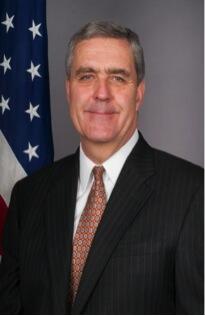
Douglas Lute, Ambassador of the United States to NATO


In August 2013, Douglas E. Lute was sworn-in as the Ambassador of the United States to the North Atlantic Treaty Organization (NATO).  From 2007 to 2013, Lute served at the White House under Presidents Bush and Obama, first as the Assistant to the President and Deputy National Security Advisor for Iraq and Afghanistan, and more recently as the Deputy Assistant to the President focusing on Afghanistan, Pakistan and India.  In 2010, AMB Lute retired from the U.S. Army as a Lieutenant General after 35 years on active duty.  Prior to the White House, he served as the Director of Operations on the Joint Staff, overseeing U.S. military operations worldwide. He served multiple tours in NATO commands including duty in Germany during the Cold War and commanding U.S. forces in Kosovo.  He holds degrees from the United States Military Academy and Harvard University.

A light lunch will be provided.  Please plan to arrive by 11:30am to allow time to check in at the registration desk, pick up your lunch and be seated by 12:00 noon.

Co-sponsored by The Europe Center, the Freeman Spogli Institute for International Studies, the Center for International Security and Cooperation and the Center for Russian, East European and Eurasian Studies.


Douglas Lute United States Ambassador to NATO Speaker
Lectures
-

Abstract: Chevaline was the codename given to a highly-secret program begun in 1970 to improve the performance of the UK's force of Polaris submarine-launched ballistic missiles in order to give them the capability to overcome Soviet ABM defenses deployed around Moscow. After much technical difficulty, delays in project timescale and cost escalation the new system was finally introduced in 1982, but it had already attracted major criticism for the expenditure involved, claims of project mismanagement, the rationale that underpinned its development, and its concealment from proper parliamentary scrutiny. This lecture will explore the background to the program, why it ran into so many problems, and how it became one of the most controversial episodes in post-war British defense policy. An understanding of the problems confronted by the attempt to improve Polaris illuminates a number of key themes and issues that are of relevance to policymakers concerned with strategic weapons programs and project management.

About the Speaker: Matthew Jones’ current research focuses on British nuclear history during the Cold War. He has also written on many different aspects of US and British foreign and defense policy in the 20th century, and has a long-standing interest in empire and decolonization in South East Asia. Jones’ first book, Britain, the United States and the Mediterranean War, 1942-44 (Macmillan, 1996), examined strains in the Anglo-American relationship by strategic issues and command problems in the Mediterranean theater. His book, Conflict and Confrontation in South East Asia, 1961-1965: Britain, the United States, Indonesia, and the Creation of Malaysia (Cambridge University Press, 2002), looks at the federation of Malaysia during British decolonization in the early 1960s. After Hiroshima: The United States, Race, and Nuclear Weapons in Asia, 1945-1965 (Cambridge University Press, 2010) addresses US nuclear policies in Asia in the period of the Korean War, confrontation with China, and early engagement in Vietnam. His current project on UK nuclear policy encompasses the development of nuclear strategy within NATO, the Anglo-American nuclear relationship, and European responses to strategic arms control. In 2008, Jones was appointed by the Prime Minister to become the Cabinet Office official historian of the UK strategic nuclear deterrent and the Chevaline program, a commission that will lead to the publication of a two-volume official history exploring British nuclear policy between 1945 and 1982. Jones’s journal articles have appeared in Diplomatic History, Historical Journal, Journal of Cold War Studies, and English Historical Review. He gained his DPhil in Modern History at St. Antony’s College, Oxford, in 1992.

Encina Hall (2nd floor)

Matthew Jones Professor of International History Speaker London School of Economics and Political Science
Seminars
-

Karen Dawisha is the author of Putin’s Kleptocracy. Who Owns Russia? and the Walter E. Havighurst Professor of Political Science and Director of the Havighurst Center at Miami University in Oxford, Ohio.

Co-sponsored by the Center for Russian, East European and Eurasian Studies, The Europe Center, and the Center on Democracy, Development and the Rule of Law.

Encina Hall 3rd Floor
616 Serra Street

Karen Daiwisha Walter E. Havighurst Professor of Political Science Speaker Miami University
Lectures
Subscribe to Russia